
The Caudate-Putamen Anomaly Hypothesis
The claim, described publicly since 2019 by Stanford pathologist Garry P. Nolan, that MRI scans of people reporting health effects after alleged proximity to anomalous craft show an unusual density of connective tissue between the head of the caudate nucleus and the putamen — and that in a small number of cases the feature was already present in scans taken before the reported encounter. This page establishes exactly which parts of that claim have been published for peer review and which have not, because the answer is not the one most readers assume.
Unpublished — No UAP Subject Has Ever Appeared in a Peer-Reviewed PaperCore Thesis
“Everything in this hypothesis divides cleanly into two halves. The general neuroscience of the caudate and putamen is real, published, replicated and uncontroversial. The specific claim that UAP-proximity patients differ in that region from anyone else has never appeared in a peer-reviewed paper, a preprint, a conference abstract, or a released dataset. Both halves are true at once, and almost every retelling of this story collapses them into one.”
Origin & History
In 2013, two men came to a laboratory at Stanford University School of Medicine and asked its director to look at some brain scans. The director was Garry P. Nolan, and at that point he had no public connection to the UFO subject at all. He was — and remains — the Rachford and Carlota A. Harris Professor in the Department of Pathology, an immunologist and systems biologist with a thirty-year record in cancer immunology, single-cell mass cytometry and high-dimensional tissue imaging, more than three hundred peer-reviewed papers, forty United States patents, and a string of biotechnology companies founded out of his own lab. Nothing in that career had anything to do with unidentified aerial phenomena, and nothing in it has since: the UAP work is a separate, later, clearly-delineated strand, and it is important to state that plainly at the outset because the credibility of the first strand is routinely borrowed to underwrite the second.
By Nolan's own account, given most fully to Stanford Magazine in July 2023, the two visitors came to him after the release of the 2013 documentary Sirius, in which he had briefly appeared in connection with the Atacama skeleton — a six-inch mummified specimen some in the UFO field had claimed was non-human, and which Nolan's own genomic analysis established was a human stillbirth with severe skeletal mutations. He declines to name the visitors. He describes one as claiming a background in the CIA and the other as an executive with an aerospace company. What they wanted, initially, was the kind of blood analysis his laboratory could do. What they brought with them were MRI scans.
The people those scans belonged to, again by Nolan's account, were pilots, intelligence officers and aerospace personnel who had reported a range of health complaints following what they described as close proximity to anomalous craft. Nolan has repeatedly characterised the referral pathway in institutional terms: unusual medical cases move up a military chain of command, and cases nobody can classify eventually land on what he has called the odd or weird desk. That is where these came from. It is a description of a real bureaucratic process, and it is also, as this page will argue at length, the single most important fact about the sample.
The Man Who Sent the Scans
Nolan did not assemble that cohort himself. The individual who did was Christopher “Kit” Green, a physician and neuroradiologist based in Detroit, Michigan, and one of the more unusual figures in this entire subject. Green's career began at the Central Intelligence Agency in 1969 as a senior division analyst for the neurosciences; in the mid-1970s he was the first analyst and programme manager for the Agency's remote-viewing research, the lineage of work later carried out at SRI International under Hal Puthoff and others and eventually terminated as STAR GATE. He rose to branch chief, deputy division director and assistant national intelligence officer for science and technology, and left the Agency in 1985 — his identity as a CIA officer remaining publicly unacknowledged until 2007. From 1985 to 2004 he was executive director for global technology policy and chief technology officer for General Motors' Asia-Pacific operations. He is a fellow of the American Academy of Forensic Sciences and holds professorial appointments in the Departments of Diagnostic Radiology and of Psychiatry and Behavioral Neurosciences at the Wayne State University School of Medicine and the Detroit Medical Center.
Green's involvement with claimed anomalous injuries is documented in Annie Jacobsen's 2017 book Phenomena, which reports that from around 2005 he had been building a structured database of individuals presenting with enigmatic injuries, burns and skin lesions they associated with anomalous encounters, and that by the time of writing he had more than one hundred active patients. Jacobsen reports that Green had teamed up with Nolan's laboratory at Stanford, and that the two were mapping the patients' DNA and immune systems looking for shared patterns. The Australian researcher Keith Basterfield, writing in December 2018 — before any of this reached a mass audience — independently traced the same collaboration from Jacobsen's text and from the public interests declared by EarthTech International's Institute for Advanced Studies at Austin, which listed brain biomarkers for cognition and intuition under stress among its life-sciences interests. At least one named UAP witness, John Burroughs of the Rendlesham Forest incident, has publicly stated that he provided biological samples to Green.
What Nolan Says He Found
Nolan's description of the finding has been consistent across five years of interviews. The initial impression, he says, was of damage — a disturbed or abnormal-looking patch in the basal ganglia. On closer examination, and after consultation, the interpretation inverted: what he was looking at was not a lesion but an excess. He describes an unusual density of connective fibres running between the head of the caudate nucleus and the putamen, the two structures that together form the dorsal striatum. His most quantitative public statement came in a December 2021 interview with Thobey Campion for Vice, where he described a normal density level as a baseline of one and said that most of the people in the study sat at five to ten times that, and in some cases up to fifteen times. He added, in the same interview, that if one looked at a hundred average people one would not see this kind of density.
Two further details from that interview matter more than anything else Nolan has said on the subject, and both are routinely dropped when the story is retold. The first is the size and composition of the cohort: around one hundred patients, almost all of them defence or government personnel or people working in the aerospace industry. The second is the basis for the claim that the feature preceded the encounter. Nolan's words are specific: for a couple of these individuals, MRIs from prior years existed, and the feature was already present. Not most. Not a substantial subgroup. A couple. That is the entire evidentiary foundation for the widely-repeated statement that the anomaly is congenital rather than acquired, and it is a foundation that anyone reporting the claim has an obligation to state at its actual size.
How It Became Public
The claim first circulated in the UFO research community around 2019 through interviews and conference talks, but it reached a general audience in December 2021 through two near-simultaneous appearances: the Vice interview above, and a long video conversation with Jesse Michels published the same day. In February 2022 Nolan discussed it at length on the Lex Fridman Podcast. In August 2022 he raised a considerably stronger version of it — brain damage and deaths among government personnel following UFO encounters — on Tucker Carlson Today. The Debrief published a profile by Micah Hanks in May 2023 connecting the caudate-putamen work to the earliest detections of what are now officially termed anomalous health incidents, the category that includes Havana Syndrome. Stanford Magazine's Sam Scott covered the origin story in July 2023. The claim has since been restated on the Joe Rogan Experience in August 2025 and in mainstream broadcast interviews including CBS News.
In that same period Nolan's institutional standing in the subject rose considerably. He co-founded the Sol Foundation with the anthropologist Peter Skafish in August 2023, holding its first symposium at Stanford that November. In June 2026 he was named to the newly-formed UAP Science Advisory Council, chaired by Avi Loeb and including, among others, the skeptic Michael Shermer. None of this bears on whether the caudate-putamen finding is correct. It bears a great deal on how widely it now circulates without being checked.
Key Arguments
The hypothesis as it is actually argued has four components, and they are of very different evidentiary quality. Taking them apart is the whole task of this page, because in every popular retelling they arrive fused into a single statement — usually some version of “a Stanford professor found that UFO witnesses have different brains, and it's peer-reviewed” — which is not true as a sentence even though every individual word in it can be traced to something real.
1. The Observation: An Excess, Not a Lesion
The primary claim is anatomical. In a set of MRI scans belonging to individuals reporting health effects after claimed proximity to anomalous craft, Nolan says he and his collaborators observed unusually dense connectivity between the head of the caudate nucleus and the putamen. He has been careful, consistently, to characterise this as the opposite of injury: the striking thing, on his account, was that the tissue was not damaged but over-connected, and that the individuals concerned were high-functioning — pilots, intelligence officers, people whose work requires rapid judgement under pressure.
This is a coherent, specific, empirically testable claim about a specific pair of subcortical structures, which is more than can be said for most assertions in this field. It is also, as stated, unverifiable by anyone outside the group that made it. No scan has been published. No anonymised imaging dataset has been deposited. No measurement protocol has been described in enough detail to replicate. The phrase “five to fifteen times normal density” has no published operational definition attached to it, and as the Physical & Material Assays section below sets out in detail, there is no single measurement in diffusion MRI for which that phrasing has an unambiguous meaning.
2. The Two Competing Interpretations, Both Offered by Nolan Himself
Nolan has consistently declined to assert a causal direction, and has publicly floated two competing framings at different times. It is worth being precise about which is which, because commentators tend to pick whichever suits their argument and present it as his settled position.
The predisposition framing. On this reading, the anatomical feature came first: some people are born with an unusually well-connected dorsal striatum, this confers something — faster intuitive processing, better pattern recognition, a lower threshold for noticing an anomalous stimulus — and that something makes them more likely to register, report, or in the strongest version somehow attract an encounter. Nolan has used the image of an antenna and, in an earlier formulation recorded by Basterfield from Jacobsen's book, of lighthouses in the dark. The evidence he offers for the ordering is the prior-scan observation: the couple of individuals whose earlier MRIs already showed the feature. He has said explicitly in that context that it appeared to be something people were born with.
The injury framing. On this reading, the encounter came first and altered the brain. This is the version Nolan has emphasised when the subject is anomalous health incidents rather than experiencer psychology — the framing in which some of the cases involve genuine, serious, sometimes fatal neurological harm, and in which the candidate mechanism is a directed-energy source of some kind, terrestrial or otherwise. It is the framing behind his strongest public statements, including on Tucker Carlson Today in 2022.
These are not compatible readings of the same data, and the hypothesis is stronger, not weaker, for Nolan having said so. What it means practically is that the claim as it stands cannot distinguish between a trait and a wound — which is exactly the question a controlled study would be designed to answer, and exactly the question a cohort of one hundred self-selected referrals with no matched comparison group cannot answer at all.
3. The Supporting Neuroscience — Which Is Real, Published, and About Nobody in Particular
The third component is a body of independent, mainstream neuroscience establishing that the caudate and putamen are centrally involved in intuition, implicit learning, planning and skill automation. This literature exists, it is substantial, and Nolan is right about it. The foundational review is Matthew D. Lieberman's 2000 paper in Psychological Bulletin, which argues that the caudate and putamen are central components of both intuition and implicit learning — a paper Nolan has personally circulated as his own supporting citation. Jessica Grahn, John Parkinson and Adrian Owen's 2008 review in Progress in Neurobiology sets out the functional division with unusual clarity: the caudate supports goal-directed behaviour through the excitation of correct action schemas and the selection of appropriate sub-goals, while the putamen handles stimulus-response and habit learning.
The most directly relevant experimental work comes from Keiji Tanaka's group at RIKEN. In 2011, Xiaohong Wan and colleagues published in Science a functional-MRI study of professional shogi players, identifying a precuneus-caudate circuit that activated during rapid generation of the best next move — the neural substrate, in their framing, of expert intuition. In 2012 the same group published a training study in the Journal of Neuroscience showing that activation in the caudate head, and not in cortical areas, tracked the development of that capability as novices learned. Carol Seger and colleagues, writing in NeuroImage in 2011, found basal-ganglia activity specifically during intuition-type judgements in a category-learning task. Mark Packard and Barbara Knowlton's 2002 Annual Review of Neuroscience survey remains the standard account of basal-ganglia learning and memory.
Every one of those studies is about the general population. Not one of them involves a UAP witness, an experiencer, or a person reporting an anomalous health incident. They establish that the region Nolan points at is genuinely important for the cognitive functions he associates with it. They establish nothing whatsoever about whether UAP-proximity patients differ from anyone else in that region. Citing them in support of the UAP claim is a category error, and it is the specific category error that has made this hypothesis seem far better evidenced than it is.
4. The Publication Question — Checked Directly, Not Taken on Report
On 22 December 2023, replying on X to a user who had asked to see the underlying research, Nolan wrote that there were by then two peer-reviewed published papers on brain morphometry from his group, plus roughly three dozen or more published papers from independent groups pointing to the caudate-putamen as playing central roles in intuition and planning. He then offered a link. The link was to a PDF of Lieberman's 2000 Psychological Bulletin paper — that is, to the general-population intuition literature, not to his own group's work.
That post is accurate. It is also, read carefully, a precise statement of the distinction this page exists to draw, and it does not say what most readers took it to say. This archive searched the literature directly rather than relying on any summary of it, and the results are set out in full below.
Searching PubMed for Nolan as an author alongside the term putamen returns exactly one result. Widening the search to brain, morphometry, caudate or subcortical across his entire 380-plus indexed publication record returns fourteen results, of which three are neuroimaging papers. Searching Europe PMC — which indexes preprints from bioRxiv and medRxiv as well as journal articles — for Nolan as an author alongside any of unidentified anomalous, UAP, experiencer, or anomalous health returns zero results of any kind. The three real papers are these:
| Paper | What It Actually Studied | UAP Content |
|---|---|---|
| Weerasekera, Ion-Mărgineanu, Green, Mody & Nolan (2023) Human Brain Mapping 44(2):801–812 PMID 36222055 |
193 healthy young and older adults from the publicly available Leipzig “LEMON” dataset. Machine-learning models relating normalised subcortical volumes to fluid intelligence, crystallised intelligence, cognitive flexibility and working memory. Caudate, putamen, thalamus, pallidum, nucleus accumbens, amygdala and hippocampus all feature as predictors, with the pattern differing by age group. | NONE |
| Weerasekera, Ion-Mărgineanu, Nolan & Mody (2024) Psychiatry Research: Neuroimaging 340:111806 PMID 38508025 |
28 adults with autism spectrum disorder from the public ABIDE II database and 38 schizophrenia patients from the public COBRE database, each against age- and gender-matched neurotypical controls. Probabilistic and local diffusion tractography of cingulate, orbitofrontal, subcortical, parahippocampal and entorhinal connections. | NONE |
| Weerasekera, Waugh, Öngür, Nolan, Mody & Du (2026) Biological Psychiatry Global Open Science 6(5):100785 PMID 42621416 |
170 participants from the public Human Connectome Project for Early Psychosis. Diffusion-MRI parcellation of the striatum into striosome-like and matrix-like compartments, compared across non-affective psychosis, affective psychosis and control groups. | NONE |
All three are real, competent, peer-reviewed neuroimaging papers. All three are first-authored by Akila Weerasekera of the Athinoula A. Martinos Center for Biomedical Imaging at Massachusetts General Hospital and Harvard Medical School, with Maria Mody of the same institution as the other recurring co-author. The 2023 paper's funding statement names Stanford University, with Nolan and Mody as principal investigators, and records that Nolan and Weerasekera were partly funded by the Rachford and Carlotta A. Harris Endowed Professorship. And the 2023 paper's third author, listed as “Green C” with an affiliation at the Department of Diagnostic Radiology, Detroit Medical Center and Wayne State School of Medicine, is Christopher Green — the same man who assembled and referred the original patient cohort.
So this is not a case of a claimant with no relevant publication record gesturing at work that does not exist. The team is real, the collaboration is real, the methodological competence is demonstrated, and the papers are exactly what Nolan said they were: peer-reviewed papers on brain morphometry. What they are not, in any of the three cases, is a study of anybody who reported a UAP encounter. Every subject in all three papers came from a public neuroimaging repository assembled for entirely unrelated purposes — healthy German adults in Leipzig, autistic adults, schizophrenia patients, early-psychosis patients. Not one UAP-proximity scan appears in any of them. The specific finding that made Nolan famous in this field has never been submitted anywhere, in any form, to anyone.
Government & Military Programs
This hypothesis is unusual among the entries in this archive in that its subjects are, by the claim's own description, almost entirely government personnel, and its data reached the researcher through a government-adjacent referral chain. That gives the institutional record more purchase here than it usually has — and it also means the record has to be handled with the same caution this site applies to official statements everywhere else, in whichever direction the evidence actually warrants.
The Referral Pipeline
The mechanism Nolan describes is a medical triage process rather than a programme: an unusual presentation that a base physician cannot classify escalates through military medical channels, and the genuinely unclassifiable residue lands with a small number of specialists cleared and willing to look at it. Green, by virtue of his CIA background, his forensic-medicine credentials and his neuroradiology practice, was one of those specialists. That is a coherent and entirely plausible account of how a hundred scans of defence and aerospace personnel end up on one desk, and nothing about it requires any anomalous premise at all.
It is also the origin of the single largest methodological problem with the entire hypothesis, which is worth stating in the plainest possible terms. A cohort assembled by referring the medically unexplained cases to a specialist who studies the medically unexplained is not a sample of anything. It is a filter applied to a population, and the filter was tuned by exactly the people most likely to notice the feature being claimed. Every individual in it arrived because something about them was already anomalous to a referring physician. There is no version of that process that yields a group whose brain measurements can be meaningfully compared against a general population, and the absence of any described matched control group scanned under the same protocol on the same machines compounds it rather than mitigating it.
The Anomalous Health Incident Record — and What Was Actually Found
The Debrief's 2023 profile reports that Nolan's caudate-putamen work led to some of the earliest detections of what are now officially termed anomalous health incidents, the category that publicly encompasses Havana Syndrome. That connection matters, because the AHI population is the one adjacent group that has been studied under proper controlled conditions, with results published in a major medical journal — and those results run in the opposite direction to the popular version of this hypothesis.
In 2019, Ragini Verma and colleagues at the University of Pennsylvania published in JAMA a neuroimaging study of forty United States government personnel with possible exposure to uncharacterised directional phenomena in Havana, against forty-eight healthy controls. That study did report differences: reduced whole-brain white-matter volume, greater ventral diencephalon and cerebellar grey-matter volumes, lower mean diffusivity in the inferior cerebellar vermis, and lower functional connectivity in auditory and visuospatial subnetworks. It did not report a caudate or putamen finding. The regions it flagged were cerebellar and diencephalic, not striatal.
In March 2024, two much larger National Institutes of Health studies were published in the same journal. Carlo Pierpaoli and colleagues scanned eighty-one AHI participants and forty-eight well-matched controls — twenty-nine of them in similar employment — using volumetric, diffusion and resting-state functional MRI, both voxel-wise and region-of-interest, with follow-up imaging six to twelve months later for forty-nine participants. After adjustment for multiple comparisons, no significant differences were found between the AHI group and controls on any MRI modality, and the study explicitly reported that it did not replicate the 2019 results. The companion study by Leighton Chan and colleagues, covering eighty-six AHI participants and thirty matched controls across clinical, biomarker and research measures, likewise found no significant differences on most measures, with the real differences being in fatigue, depression, post-traumatic stress, imbalance and neurobehavioural symptoms, and with twenty-eight per cent of participants presenting with functional neurological disorder.
Two caveats keep this from being a refutation, and both need stating. First, the NIH studies enrolled people reporting anomalous health incidents, which is an overlapping but not identical population to the one Nolan describes — his cohort is framed around alleged proximity to anomalous craft, and the two categories were not defined by the same criteria. Second, and more importantly, the published abstracts describe region-of-interest volumetric and diffusion analyses across the brain but do not itemise which regions were examined, so it cannot honestly be claimed that they constitute a targeted test of the specific caudate-putamen connectivity measure Nolan describes. What they do establish is that the best-powered, best-controlled, fully published imaging study ever conducted on the closest available population found nothing, and specifically failed to reproduce the one earlier study that had found something.
How Much Weight the Official Record Should Carry Here
This site's standing practice is to treat official government conclusions as one input among several rather than as dispositive, and the reasons are well documented: agencies investigating themselves have institutional and career incentives toward the least alarming available explanation, the classification regime prevents outside researchers from auditing methodology, and the historical record contains real examples of explanations that were later revised or shown to have been knowingly incomplete. That caution applies squarely to the Intelligence Community's own assessments about the cause of anomalous health incidents, which are institutional judgements published without the underlying evidence.
It applies with much less force to the 2024 JAMA studies, and the distinction is worth drawing rather than applying the disclaimer mechanically. Those are not official pronouncements. They are peer-reviewed research papers with named authors, stated sample sizes, described acquisition protocols, disclosed statistical methods, and a published negative result — including the unflattering admission that they failed to replicate a high-profile earlier finding from a different group. A body inclined to bury an inconvenient answer does not usually publish its own non-replication in JAMA. Treating that work as suspect simply because the NIH performed it would be motivated reasoning, not skepticism.
The caution does, however, cut in one direction that favours Nolan's position and should be acknowledged: he has consistently said that the imaging he saw belongs to identifiable government personnel, that the material carries privacy and in some cases classification constraints, and that this is why the underlying data has not been released. That is a real, non-trivial obstacle, and it is not a pretext invented for convenience — patient imaging of named intelligence and defence personnel genuinely cannot simply be posted. It is also, unavoidably, an unfalsifiable position. A claim whose supporting evidence is permanently unavailable for the same reason that makes the claim interesting is a claim nobody can ever check, and the honest description of that situation is not that it is false but that it is currently outside the reach of evidence.
Physical Evidence
The physical evidence in this hypothesis is imaging data, and the situation is easily stated: it exists, a small number of people have seen it, and nobody outside that group has. In more than five years of public discussion, no MRI slice, no tractography rendering, no volumetric measurement, no summary statistic, and no de-identified dataset from the claimed cohort has been published anywhere. There is no figure to inspect, no supplementary table to re-analyse, and no repository accession number to request. The claim is supported entirely by verbal description in interviews, talks and podcasts.
That is not a rhetorical complaint. It has a specific technical consequence. In neuroimaging, the difference between a real group effect and an artefact is almost never visible to the naked eye and almost always emerges from the details of preprocessing, registration, segmentation, thresholding and statistical correction. Two competent groups can analyse the same scans and reach different conclusions depending on choices made at a dozen points, which is precisely why the field has moved toward data sharing, preregistration and published analysis code. None of that is available here. The consequence is that the claim cannot be wrong in any checkable way, which is a different and much weaker situation than being unproven.
There is a second, subtler physical-evidence problem specific to a cohort like this one. The scans were not acquired for research. They were clinical images taken at different facilities, on different scanner makes and field strengths, with different sequences and parameters, over a span of years, for the purpose of diagnosing individual patients. Multi-site scanner variation is a large and well-characterised confound in structural and diffusion MRI — large enough that modern multi-site studies devote substantial effort to harmonisation precisely because uncorrected site effects can dwarf the biological effects being sought. Comparing a heterogeneous clinical image set against an intuition about what a normal brain looks like is not a controlled comparison, whatever the underlying tissue is actually doing.
Supporting Case Files
This section has to open with a disclosure that shapes everything in it: not one case file in this archive contains a documented caudate-putamen finding for any named witness, and neither does any other public case record anywhere. The cohort Nolan describes is anonymous by construction — serving and former defence, intelligence and aerospace personnel whose identities are protected — and no individual in it has ever been publicly identified or connected to a named incident. Listing cases here as though they supported the hypothesis would be padding.
What can honestly be offered is the set of cases in this archive where claimed physiological harm following a UAP encounter is the central documented feature. These are the evidentiary terrain on which the injury framing of this hypothesis would have to be tested, and the reason they matter is that none of them was ever followed by the kind of imaging that could have answered the question.
The Rendlesham Forest case is the only one with a direct documented connection to the research programme described on this page, and even that connection is not an imaging one: John Burroughs, one of the airmen involved, has stated publicly that he provided biological samples to Christopher Green, and he pursued a long and eventually successful effort to obtain Veterans Affairs recognition for the medical consequences he attributes to the incident. Nothing in the public record of that effort involves a caudate or putamen measurement.
Cash-Landrum is the archive's most thoroughly documented claimed radiation-injury case, with contemporaneous medical records, and it produced no neuroimaging at all — the injuries documented were dermatological, gastrointestinal and haematological, and the technology to ask a striatal question did not exist in 1980. The Colares wave produced a large number of claimed injuries investigated by the Brazilian Air Force under Operação Prato, again with no imaging. The pattern across all six is the same and it is the central structural fact about this hypothesis: the question it asks has been askable for roughly two decades, the cases it would be asked about span seventy years, and nobody has ever asked it in a form capable of producing a checkable answer.
Theoretical Alignment
Like this archive's Gifted Children Experiencer Hypothesis, this is not a claim about what UAP are. It is a claim about the people who report them, which makes it compatible with nearly every other framework catalogued here and decisive for none of them. A reader could accept the caudate-putamen finding in full and hold any position whatsoever on propulsion, origin, or whether any craft exists at all.
Its closest neighbour on this site is the Exotic Biologics Hypothesis, which already covers the same Nolan material from the biological-sample side and reaches a compatible conclusion about its publication status. The two pages should be read together: that one addresses whether any claimed non-human biological material has been properly analysed, this one addresses whether the human neurobiological claim has. The Radiation & Thermal Injury Hypothesis is the natural partner for the injury framing, since it treats the broader question of whether proximity to a UAP can cause documented physical harm; the caudate-putamen claim would be one specific, unusually precise instance of that general claim if it held.
The predisposition framing sits alongside the Psycho-Social Hypothesis in an interesting and slightly uncomfortable way. PSH holds that the report distribution is generated by perception, expectation and cultural templating rather than by craft; a neuroanatomical trait that made certain individuals more likely to notice and encode ambiguous aerial stimuli would be a mechanism PSH could absorb without modification. That is not how proponents of the caudate-putamen claim usually intend it, but it is where the predisposition version most naturally leads, and a reader should notice that the version of this hypothesis with the best supporting neuroscience is also the version least friendly to an extraterrestrial reading. It is also worth noting that the Gifted Children Experiencer Hypothesis page's own central conclusion — that the intelligence-and-experiencer link has never actually been measured — applies with equal force to the IQ correlation sometimes attributed to this finding.
It is flatly incompatible with nothing, and it neither supports nor damages the Extraterrestrial Hypothesis. A claim about the observer is silent on the object.
The Five Observables
The Five Observables framework, developed inside the Defense Intelligence Agency's AATIP program and popularised by Luis Elizondo, classifies UAP encounters by craft performance characteristics exceeding known technology. It is applied here for consistency with the rest of this archive. The honest result is that a hypothesis about the observer's basal ganglia has almost nothing to say about the kinematics of an object.
Assessment: Four of the five are N/A because this hypothesis makes no claim about craft performance and would not be falsified by any observation of one. Low observability is the single point of contact, and only in the inverted sense the predisposition framing implies. If a subpopulation genuinely does process ambiguous aerial stimuli differently — if a faster, more heavily connected striatal loop means one observer resolves a faint, brief, degraded stimulus into a structured percept while another standing beside them scans past it — then part of what the field calls low observability is a property of the observer rather than of the object. That is a genuinely interesting reframing, it is testable in a laboratory rather than requiring access to classified patients, and nobody has tested it. It is marked speculative because the proposition currently rests on no data at all.
Sensor & Instrumentation Detection Profile
No radar, optical, infrared or magnetometric sensor bears on this hypothesis. Its instrumentation is magnetic resonance imaging, and the striking thing about the situation is that the instrumentation is not merely adequate but already in the hands of the people making the claim. The three published papers discussed above demonstrate that this exact team has the full modern toolkit and knows how to use it. That makes the absence of a UAP-cohort study a choice rather than a limitation.
- T1-weighted volumetry with automated subcortical segmentation (FreeSurfer or equivalent) — the standard method for measuring caudate, putamen, pallidum, thalamus, accumbens, amygdala and hippocampal volumes, normalised to estimated total intracranial volume. This is exactly the pipeline used in the team's own 2023 Human Brain Mapping paper.
- Diffusion-weighted imaging with probabilistic and deterministic tractography — the method by which any claim about “connective density” between two grey-matter structures would actually be operationalised. The team's 2024 Psychiatry Research: Neuroimaging paper used FreeSurfer and MRtrix for precisely this.
- Diffusion-based striatal parcellation into striosome-like and matrix-like compartments — the considerably more sophisticated approach used in the team's 2026 paper, which is the closest published thing to a fine-grained analysis of internal striatal organisation that anyone in this group has done.
- Resting-state functional MRI connectivity — would distinguish a structural difference from a functional one, which the verbal claim does not currently do.
- A matched comparison cohort scanned on the same hardware under the same protocol — the one instrument in this list that has never been deployed, and the one without which none of the others produces an interpretable answer.
- Multi-site harmonisation (ComBat or equivalent) — mandatory for any analysis pooling clinical scans acquired across different facilities and scanners, which is what the described cohort consists of.
- Preregistration of the region-of-interest hypothesis — the caudate-putamen claim originated as an incidental observation on clinical scans, which makes it a post-hoc finding by construction. Preregistering it before a new cohort is scanned is the only way to convert it into a test rather than a description.
- Correction for multiple comparisons — the step at which the 2019 Havana finding did not survive in the 2024 replication attempt, and the single most common reason a striking neuroimaging result does not hold up.
The detection profile, in other words, is fully specified, entirely conventional, and demonstrably available to the researchers concerned. The obstacle is not instrumentation. It is subject access and the permission to publish what the scans of serving intelligence and defence personnel show — which is a real obstacle, and which is also why this hypothesis has remained in exactly the same evidentiary state for more than a decade.
Environmental & Geospatial Context
The geography of this hypothesis is institutional rather than geographical, and mapping it is genuinely informative about the shape of the evidence. Four places carry the entire claim.
Stanford University School of Medicine in Palo Alto is where the scans arrived in 2013 and where the Nolan Lab sits; it is also where the Sol Foundation held its first symposium in November 2023. The Department of Diagnostic Radiology at the Detroit Medical Center and Wayne State School of Medicine in Detroit, Michigan is where Green practices and where the patient database was assembled from around 2005. The Athinoula A. Martinos Center for Biomedical Imaging at Massachusetts General Hospital and Harvard Medical School in Boston is where Weerasekera and Mody work and where the actual imaging analysis in all three published papers was done. And — the detail most worth dwelling on — the subjects of the group's flagship caudate-putamen paper live in Leipzig, Germany, and have no connection to any of this: the LEMON dataset is a public resource of 193 healthy German adults collected by the Max Planck Institute for Human Cognitive and Brain Sciences for entirely unrelated research on mind-body-emotion interactions.
The geography of the claimed cohort itself is deliberately obscured and there is no dishonesty in that. These are described as serving and former United States defence, intelligence and aerospace personnel, which means the scans were acquired at military treatment facilities, Veterans Affairs hospitals, contractor-adjacent private practices and referral centres spread across the country and abroad, over a period of at least a decade. That distribution has a direct technical consequence already noted above: every scanner difference, every sequence difference, every field-strength difference and every software-version difference between those sites is a potential source of apparent between-subject variation in exactly the volumetric and diffusion measures the claim rests on. A cohort defined by where its members worked rather than by a sampling frame, imaged wherever each member happened to be treated, is close to the worst possible geography for a structural neuroimaging comparison — and this is a limitation of the situation rather than a criticism of anyone's conduct within it.
Observer Credibility & Occupational Profile
There are three groups of people whose credibility bears on this page, and conflating them is the standard error made in discussing it. This section keeps them apart.
The researchers making the claim have real, substantial, independently verifiable scientific credentials, and those credentials are in other fields. Garry P. Nolan took his PhD in genetics at Stanford in 1989 under Leonard Herzenberg and did postdoctoral work with the Nobel laureate David Baltimore at MIT, cloning NF-κB p65/RelA and developing rapid retroviral production systems. He joined the Stanford faculty in 1993, became full professor in 2009, and has held the Rachford and Carlota A. Harris endowed chair since 2011. His lab developed CODEX multiplexed tissue imaging; he has founded or co-founded Rigel, Nodality, BINA Technology, Apprise and Akoya Biosciences; he holds forty United States patents and has been named among Stanford's top twenty-five inventors; his honours include the Department of Defense Teal Innovator Award (2012), the Hans Sigrist Prize (2021), the Keio Medical Science Prize and the MD Anderson Award (both 2022), and a Stanford Lifetime Achievement Award (2024). All of that is real and none of it is in neuroscience. Nolan has himself said, repeatedly and unprompted, that he is not a brain expert by training, and the accuracy of that self-assessment is a point in his favour rather than against him.
Christopher “Kit” Green is the closer thing to a domain expert here — a board-certified physician, a fellow of the American Academy of Forensic Sciences, and a working neuroradiologist who uses brain imaging to study decision-making. His CIA background is genuine and documented. It also carries an interpretive complication that should be stated rather than glossed: the man who assembled the patient database, decided which cases were anomalous enough to refer onward, and then co-authored the resulting morphometry paper is the same man whose earlier government career was built on the study of anomalous cognition. That is not an accusation. It is an observation about who was holding the filter.
The co-authors on the published papers are working academic neuroscientists with no connection to any UAP claim. Akila Weerasekera, Maria Mody, Adrian Ion-Mărgineanu, Jeff Waugh, Dost Öngür and Fei Du publish in Human Brain Mapping, Psychiatry Research: Neuroimaging and Biological Psychiatry Global Open Science on autism, schizophrenia, early psychosis and cognitive ageing. Nothing in their published record concerns unidentified phenomena, and this page cites their work only for what it actually contains. The same applies with even more force to Matthew Lieberman, Jessica Grahn, Adrian Owen, Xiaohong Wan, Keiji Tanaka, Carol Seger, Mark Packard and Barbara Knowlton, whose intuition and basal-ganglia research is cited throughout this page and who have, so far as any public record shows, never heard of this debate.
The subjects themselves are the part of this that cuts both ways most sharply. Nolan's repeated emphasis on the cohort's occupational quality — military pilots, intelligence officers, high performers in demanding technical roles — is offered as a credibility signal, and as witness testimony it genuinely is one. As a sampling property it is the opposite. Aviators and intelligence officers are not a random draw from the population; they are a group selected, screened and trained for exactly the fast perceptual judgement and pattern recognition that the caudate and putamen are known to support. If the dorsal striatum of an experienced fighter pilot differs from that of a randomly sampled adult, the most parsimonious explanation is thirty years of occupational selection and practice, not proximity to anything. The Wan and Tanaka training studies establish directly that caudate activity tracks the acquisition of exactly this kind of expertise; the Maguire taxi-driver study established a quarter of a century ago that sustained occupational demand produces measurable structural change in the healthy adult brain. Any serious test of this hypothesis needs its control group drawn from the same occupational population, not from the general public.
Critical Response: What Actually Exists
This page searched seriously for substantive published criticism of the caudate-putamen claim from neuroscientists, from science journalists, or from organised skepticism, and the honest finding is that almost none exists. That is worth reporting as a result rather than papering over with an invented objection.
There is no paper, letter, commentary, blog post or conference response from a neuroimaging researcher addressing the claim on its merits. There is no Skeptical Inquirer piece, no Science-Based Medicine post, no Metabunk thread devoted to it. The methodological objections this page raises — referral filtering, absent controls, post-hoc region selection, multi-site scanner variation, tractography ambiguity, the two-case basis for the priority claim — are objections this page derived from Nolan's own public descriptions and the general neuroimaging literature, not objections anyone else has published. A claim of this profile, made by a scientist of this standing, in a field this heavily watched, has gone effectively unengaged by anyone in a position to evaluate it. That is a different and in some ways more damning situation than having been examined and rejected: it means the claim's current standing rests on nobody having checked.
Two things come close enough to count, and both deserve accurate statement. The first is Jason Colavito's blog post of 1 September 2022, which reports that Green — the very physician who supplied the cohort — had directly contradicted the stronger version of Nolan's claim in an email exchange on a private discussion list, stating that no aetiologies remained unknown or required exotic physics, and endorsing a message from the former CIA and ODNI science officer Ronald Pandolfi asserting that there had never been a confirmed death or injury to a United States government person caused by close proximity to an alien craft. Colavito reports that Green had by then personally reviewed some three hundred cases referred by board-certified physicians. That sourcing needs its limits stated plainly: it is a third party's report of private emails on a closed list, not a public statement by Green, and this page has not been able to obtain the primary correspondence. It is reported here because it is the only substantive on-the-record contradiction that exists and because Colavito is a named writer with a documented track record on this subject, not because it settles anything. If accurate, it means the person closest to the underlying data does not endorse the strongest form of the claim built on it.
The second is the 2024 NIH imaging work described above, which is not a critique of Nolan, does not mention him, and studied an adjacent rather than identical population — but which is the only properly controlled, properly powered, fully published neuroimaging study of anything resembling this cohort, and which found nothing.
One further point of fairness. Nolan has never claimed the UAP-specific finding is published. In the December 2021 Vice interview he made no such claim; contemporaneous coverage of that period recorded the data as preliminary and not yet peer-reviewed; and his own stated standard — publish material with defensible chain of custody, after peer review — is the one he has actually followed for his non-biological metamaterials work, which did go through peer review as Nolan, Vallée, Jiang and Lemke in Progress in Aerospace Sciences in 2022. He is not someone who refuses on principle to publish UAP-adjacent work. The gap between what he has said and what has circulated is largely a gap created by his audience, not by him — which does not relieve anyone repeating the claim of the duty to state it accurately.
Historical Precedents & Archive Matches
The idea that anomalous experience leaves a detectable mark in the body of the experiencer is considerably older than MRI, and every previous version of it has been shaped by whatever measuring instrument was newest at the time. That pattern is the most useful archival context for this hypothesis, and it is neither flattering nor dismissive — it simply establishes what the base rate of such claims has been.
In the spiritualist era the instrument was the weighing scale and the photographic plate, and the claim was that the medium's body measurably altered during a séance. In the mid-twentieth century it was the electroencephalograph, and the claim was that psychics, mediums and gifted subjects produced distinctive EEG signatures — a line of work that runs directly into the CIA-funded research Green himself oversaw in the 1970s. In the 1980s and 1990s it was temporal-lobe electrophysiology, and the claim, most associated with Michael Persinger, was that anomalous experience was generated by transient temporal-lobe activity susceptible to induction by weak magnetic fields. In each case the measuring technology was genuinely new, the underlying brain region genuinely did do what was claimed of it in the general population, and the specific anomalous-subject comparison either was never properly run or did not replicate when it was.
The current version substitutes structural and diffusion MRI for the EEG and the dorsal striatum for the temporal lobe. Its advantages over its predecessors are real: the caudate-putamen's role in intuition and skill learning is much better established than temporal-lobe microseizure theory ever was, and the researcher making the claim has a far stronger scientific record than any of his precursors. Its structural weakness is identical. The general-population neuroscience is solid; the comparison against a matched anomalous-subject group has not been run.
There is one precedent from inside mainstream neuroscience that cuts the other way and deserves equal prominence, because it establishes that this class of claim can be true. In 2000, Eleanor Maguire and colleagues published in the Proceedings of the National Academy of Sciences a structural MRI study finding that London taxi drivers had significantly larger posterior hippocampi than matched controls, with the difference correlating with years of driving experience — direct evidence of plastic structural change in the healthy adult human brain in response to sustained environmental demand. That study is the model any serious version of this hypothesis should be built on, and the comparison is instructive: Maguire's group had a defined occupational population, a matched control group scanned under the same protocol, a preregisterable anatomical hypothesis grounded in prior animal work, a dose-response relationship with years of experience, and published images and statistics that others could and did re-analyse. The caudate-putamen claim has none of those five things. The gap between the two is not a gap in plausibility; it is a gap in method.
Within this archive itself, the closest structural match is the Gifted Children Experiencer Hypothesis, which reached almost exactly the same verdict by a different route: a folk observation about experiencers being cognitively unusual, a real and substantial supporting literature about the general population, and a complete absence of the one comparison that would settle it. The two pages together suggest the field has a recurring failure mode, and it is not credulity. It is that the comparison study is always somebody else's job.
Physical & Material Assays
The assay in question is a magnetic resonance measurement, and the most useful technical service this page can perform is to be precise about what “five to fifteen times the normal density” could and could not mean, because the phrase has been repeated thousands of times without anyone asking.
MRI Does Not Count Neurons
The first thing to establish is what the measurement cannot be. Clinical and research MRI at the field strengths used in human imaging does not resolve individual neurons or axons; its voxels are on the order of a cubic millimetre and contain on the order of hundreds of thousands of cells. No MRI sequence produces a neuron count. Descriptions of the finding in terms of neural density — which appear in several published accounts of Nolan's statements — are therefore a loose paraphrase of whatever the actual measurement was, and the loose paraphrase is the version that has propagated.
What It Probably Is, and Why That Matters
The description Nolan gives — additional fibres, nerve bundles, or white-matter tracts running between the head of the caudate and the putamen — points to diffusion MRI tractography, the technique that infers the trajectory of white-matter pathways from the directional dependence of water diffusion and then reconstructs them as streamlines. A “density” in that framework is almost certainly a streamline count or a streamline density per unit volume connecting two segmented regions. This matters enormously, because a streamline count is not a measurement of tissue. It is a count of the output of a reconstruction algorithm, and it is sensitive to the acquisition parameters, the number of diffusion directions, the b-value, the voxel size, the seeding strategy, the tracking algorithm, the curvature and termination thresholds, and the segmentation of the two endpoint regions. Change any of those and the number changes, often by a large factor.
This is not a fringe objection. It is the settled view of the diffusion-imaging field itself. Derek Jones, Thomas Knösche and Robert Turner's 2013 NeuroImage paper — titled, with deliberate bluntness, “White matter integrity, fiber count, and other fallacies” — argues that diffusion tensor imaging is an approximate technique whose findings have repeatedly been given implausible interpretations, and that fibre counts in particular are among the measures most often over-read. The 2017 international tractography challenge organised by Klaus Maier-Hein and colleagues, published in Nature Communications, found that while most submitted algorithms recovered around ninety per cent of ground-truth bundles to at least some extent, the same analyses produced substantially more invalid than valid bundles, and roughly half of the false bundles appeared consistently across independent groups — systematic error, not noise.
The implication for this hypothesis is specific and not a dismissal. It is that a between-group difference in inter-regional streamline density, measured on clinical scans acquired at heterogeneous sites with unharmonised protocols and compared against an unstated baseline, is precisely the kind of finding that the diffusion-imaging literature warns can arise from the method rather than from the brain. That does not mean it did. It means that until the acquisition parameters, the tracking pipeline and the comparison cohort are published, there is no way for any reader — or any reviewer — to tell the difference.
The One Assay That Was Actually Run and Published
It is worth closing this section on what the same team's published work does establish, because it is real and it is relevant. The 2023 Human Brain Mapping analysis showed, in 193 healthy adults, that normalised subcortical volumes carry genuine predictive information about cognitive performance, and that the informative structures differ by age: caudate, thalamus, pallidum and nucleus accumbens best predicted crystallised intelligence in younger adults; putamen, pallidum and nucleus accumbens best predicted working memory in the same group; caudate and amygdala carried cognitive flexibility in older adults. That is a real, peer-reviewed finding that the dorsal striatum relates to cognitive function in ordinary people. It is the strongest published thing this hypothesis has, and it is not about this hypothesis.
Material Analysis
The material under analysis for a claim of this kind is documentary rather than physical, and it divides into three categories of sharply different quality. Each was examined directly for this page rather than taken from a summary.
The Peer-Reviewed Literature
This is the one solid category and it was verified primarily rather than by report. The three Nolan-co-authored neuroimaging papers were retrieved through the NCBI E-utilities interface, which returns clean verbatim abstracts where the PubMed web interface presents a cookie wall, and the 2023 paper's full text, author affiliations, funding statement and conflict-of-interest declaration were read directly from PubMed Central. A search of Europe PMC — which indexes bioRxiv and medRxiv preprints alongside journal articles — for Nolan as an author alongside UAP, experiencer, unidentified anomalous, or anomalous health returned zero results. The independent caudate-putamen intuition literature (Lieberman 2000; Packard and Knowlton 2002; Grahn, Parkinson and Owen 2008; Wan et al. 2011 and 2012; Seger et al. 2011) was verified the same way, citation by citation. The 2019 and 2024 JAMA anomalous-health-incident studies and the Maguire, Jones and Maier-Hein methodological papers were verified identically. Nothing in this section rests on a search-engine summary.
The Interview and Talk Corpus
The second category is Nolan's own public statements, which are the only source for the UAP-specific claim in existence. They are extensive and they are consistent, which counts for something. The December 2021 Vice interview conducted by Thobey Campion remains the single most detailed and most quantitative account, and it is the source of every number on this page that is attributed to Nolan. The December 2023 X post was verified against the platform's own syndication record, confirming the author account, the timestamp of 22 December 2023, the verbatim text, the fact that it was a reply to a user asking to see the underlying research, and the filename of the PDF offered in support. The Stanford Magazine and Debrief profiles were read in full. This corpus is a legitimate primary source for what Nolan says. It is not, and cannot be, a source for whether what he says is correct.
The Absent Category
The third category is the one that would settle the question, and it is empty. There is no dataset, no preprint, no conference abstract, no poster, no supplementary figure, no released summary statistic, and no described analysis pipeline. This is not the normal condition of a contested scientific claim; a contested claim usually has something for the opposition to attack. Here there is nothing for anyone to attack, which is why nobody has, and which is why the claim has survived a decade in an unchanged state while being repeated with increasing confidence.
What the Material Supports
- Nolan's scientific standing, funding, institutional position and publication record are exactly as described, and independently verifiable in every particular.
- Three genuine peer-reviewed brain-morphometry papers exist with Nolan as a co-author, and the collaboration behind them — Weerasekera, Mody, Green — is real.
- The caudate and putamen genuinely are central to intuition, implicit learning, planning and skill automation in the general population, with a large independent literature saying so.
- Christopher Green's referral of roughly one hundred cases is independently corroborated in Annie Jacobsen's 2017 book from reporting done before the claim became public.
- The team demonstrably possesses the imaging methodology that a proper test would require, and has used it competently on three separate public datasets.
What the Material Does Not Support
- No peer-reviewed paper, preprint or conference abstract anywhere contains a single UAP-proximity subject, on any measure.
- No matched control group scanned under the same protocol has ever been described.
- The claim that the anomaly preceded the encounter rests on prior scans for “a couple” of individuals, by Nolan's own account.
- No scan, figure, summary statistic, dataset or analysis pipeline has ever been released for independent inspection.
- The cohort was assembled by referring medically unexplained cases to a specialist in medically unexplained cases — a filter, not a sample.
- The best-controlled published imaging study of the closest available population found no significant differences and failed to replicate the earlier positive finding it was testing.
Theory Development Timeline
| Date | Development |
|---|---|
| 1969 | Christopher “Kit” Green joins the CIA as a senior division analyst for the neurosciences; by the mid-1970s he is the first analyst and programme manager for the Agency's remote-viewing research. |
| 1985 | Green leaves the CIA for General Motors, where he serves as chief technology officer for Asia-Pacific operations until 2004. His CIA identity remains publicly unacknowledged until 2007. |
| 1989–93 | Garry P. Nolan completes his PhD in genetics at Stanford under Leonard Herzenberg and postdoctoral work with David Baltimore at MIT, then joins the Stanford faculty. |
| 2000 | Matthew D. Lieberman publishes “Intuition: a social cognitive neuroscience approach” in Psychological Bulletin, arguing that the caudate and putamen are central components of both intuition and implicit learning. This is the paper Nolan will later circulate as his own supporting citation. |
| 2000 | Eleanor Maguire and colleagues publish the London taxi-driver hippocampus study in PNAS — the methodological model for how an occupational structural-difference claim should be tested. |
| 2002 | Mark Packard and Barbara Knowlton publish the standard Annual Review of Neuroscience survey of basal-ganglia learning and memory functions. |
| c. 2005 | Green begins building a structured database of individuals presenting with enigmatic injuries, burns and lesions associated with claimed anomalous encounters. |
| 2008 | Jessica Grahn, John Parkinson and Adrian Owen publish their Progress in Neurobiology review distinguishing the caudate's role in goal-directed action selection from the putamen's in stimulus-response habit learning. |
| 2011 | Xiaohong Wan and colleagues publish in Science the precuneus-caudate circuit underlying rapid intuitive move generation in professional shogi players. |
| 2012 | The same RIKEN group publishes a training study in the Journal of Neuroscience showing caudate-head activation tracking the development of intuitive expertise in novices. Nolan separately begins the Atacama skeleton analysis. |
| 2013 | Following the release of the documentary Sirius, two men — one identifying as ex-CIA, one an aerospace executive — visit Nolan's Stanford lab with MRI scans of defence, intelligence and aerospace personnel reporting health effects after claimed proximity to anomalous craft. Nolan observes the caudate-putamen feature. |
| 2017 | Annie Jacobsen's Phenomena documents Green's patient database, his hundred-plus active patients, and his collaboration with the Nolan Lab — the earliest substantial public account of the work. |
| 2017 | Klaus Maier-Hein and colleagues publish the international tractography challenge in Nature Communications, finding that leading algorithms produce more invalid than valid fibre bundles, with about half the false bundles recurring systematically across groups. |
| Dec 2018 | Keith Basterfield independently documents the Green–Nolan collaboration from Jacobsen's text and EarthTech International's declared research interests. |
| 2019 | Ragini Verma and colleagues publish in JAMA the first controlled neuroimaging study of Havana-exposed US personnel (40 patients, 48 controls), reporting cerebellar and diencephalic differences — not striatal ones. The caudate-putamen claim begins circulating in UFO research circles. |
| 10 Dec 2021 | Thobey Campion's Vice interview publishes the most quantitative public account to date: roughly 100 patients, almost all defence, government or aerospace; densities of 5x to 10x and up to 15x normal; prior-year MRIs for “a couple” of individuals already showing the feature. A long video interview with Jesse Michels appears the same day. |
| Jan 2022 | Nolan, Jacques Vallée, Sizun Jiang and Larry Lemke publish a genuinely peer-reviewed UAP-adjacent paper on isotopic and instrumental analysis of unusual materials in Progress in Aerospace Sciences — demonstrating that Nolan does publish UAP work when chain of custody permits. |
| Feb 2022 | Nolan discusses the caudate-putamen finding at length on the Lex Fridman Podcast (#262), reaching a mass general audience for the first time. |
| Aug 2022 | On Tucker Carlson Today, Nolan advances the strongest public version of the injury framing, describing brain damage and deaths among government personnel following UFO encounters. |
| 1 Sep 2022 | Jason Colavito reports that Green, on a private discussion list, contradicted that stronger claim — stating that no aetiologies remained unknown or required exotic physics, and endorsing Ronald Pandolfi's assertion that no confirmed death or injury to a US government person had been caused by proximity to an alien craft. |
| Oct 2022 | Weerasekera, Ion-Mărgineanu, Green, Mody and Nolan publish in Human Brain Mapping (issue-dated Feb 2023) the first of the group's brain-morphometry papers — 193 healthy adults from the public Leipzig LEMON dataset, no UAP content. |
| May 2023 | Micah Hanks profiles Nolan for The Debrief, connecting the caudate-putamen work to the earliest detections of anomalous health incidents. At the SALT iConnections conference the same month, Nolan gives the probability of extraterrestrial visitation as one hundred per cent. |
| Jul 2023 | Sam Scott's Stanford Magazine feature “First Contact” publishes the fullest account of the 2013 origin story. |
| Aug–Nov 2023 | Nolan co-founds the Sol Foundation with Peter Skafish; its first UAP research symposium is held at Stanford in November. |
| 22 Dec 2023 | Replying on X to a user asking to see the research, Nolan states that his group now has two peer-reviewed published papers on brain morphometry, alongside roughly three dozen independent papers on the caudate-putamen's role in intuition and planning — and links to a PDF of Lieberman's 2000 paper. |
| Mar 2024 | Two NIH studies published in JAMA — Pierpaoli and colleagues (81 AHI participants, 48 matched controls) and Chan and colleagues (86 and 30) — find no significant imaging differences after correction for multiple comparisons, and explicitly fail to replicate the 2019 findings. |
| May 2024 | Weerasekera, Ion-Mărgineanu, Nolan and Mody publish the group's second morphometry paper, on subcortical-cortical white-matter connectivity in autism and schizophrenia, using the public ABIDE II and COBRE datasets. No UAP content. |
| Aug 2025 | Nolan restates the caudate-putamen claim on the Joe Rogan Experience (#2372), reaching the largest audience it has yet had. |
| Jun 2026 | Nolan is named to the newly formed UAP Science Advisory Council, chaired by Avi Loeb and including Michael Shermer among its members. |
| 2026 | Weerasekera, Waugh, Öngür, Nolan, Mody and Du publish the group's third morphometry paper, mapping striosome-matrix imbalance in early psychosis using the public HCP-EP dataset. Thirteen years after the 2013 consultation, no UAP-proximity subject has appeared in any published study. |
Weighing the Evidence
Supporting Arguments
- The claimant is a genuinely eminent working scientist with a thirty-year peer-reviewed record, an endowed chair, forty patents and no history of fabrication in his primary field
- The referral pathway and patient database are independently corroborated by Annie Jacobsen's 2017 reporting, done before the claim entered public circulation
- The general neuroscience the claim leans on is real, substantial and independently replicated — the caudate and putamen genuinely are central to intuition, planning and skill automation
- Three real peer-reviewed brain-morphometry papers demonstrate that this specific team has, and competently applies, exactly the methodology a proper test would require
- Nolan has consistently declined to assert a causal direction, offering both the predisposition and the injury framings as open possibilities rather than settled findings
- He has published UAP-adjacent work through peer review before, in Progress in Aerospace Sciences in 2022, so the absence of publication here is not a matter of principle
- The privacy and classification constraints on imaging of serving intelligence and defence personnel are real, not a convenient excuse
- Maguire's taxi-driver study establishes that an occupationally-defined group genuinely can show a real, measurable structural brain difference
Skeptical Arguments
- Not one UAP-proximity subject appears in any peer-reviewed paper, preprint, conference abstract or released dataset anywhere — thirteen years after the observation was made
- The three published brain-morphometry papers use public repositories of healthy German adults, autistic adults, schizophrenia patients and early-psychosis patients; none contains a single relevant subject
- No matched control group scanned on the same hardware under the same protocol has ever been described, which makes “5x to 15x normal” a comparison against an unstated baseline
- The cohort was assembled by referring medically unexplained cases to a specialist in medically unexplained cases — a filter that guarantees anomaly at intake
- The claim that the feature preceded the encounter rests on prior scans for “a couple” of individuals, by Nolan's own account
- The region was selected after the observation, not before it, which makes the finding post-hoc by construction and exactly the kind that fails on correction for multiple comparisons
- The described measure is almost certainly a tractography streamline count, which the diffusion-imaging literature (Jones et al. 2013; Maier-Hein et al. 2017) specifically identifies as prone to systematic, reproducible error
- The cohort's clinical scans were acquired across many sites, scanners and protocols over years, an uncontrolled confound large enough to produce apparent structural differences on its own
- The subjects are career aviators and intelligence officers — a population occupationally selected and trained for exactly the rapid perceptual judgement the caudate and putamen support
- The best-powered controlled study of the closest available population (Pierpaoli et al. 2024, 81 vs 48) found no significant imaging differences and failed to replicate the earlier positive result
- The physician who assembled and referred the cohort is reported to have contradicted the stronger version of the claim in private correspondence
- Nolan himself has said he is not a brain expert by training, and no neuroimaging specialist outside the collaboration has ever examined the data
On balance, this hypothesis is best understood as three claims travelling under one name, and they deserve three different verdicts. As a claim about the general neuroscience of the caudate and putamen it is correct, well-published and uncontroversial — and it is also about nobody in particular. As a claim that Garry Nolan has published peer-reviewed brain-morphometry research it is literally true and widely misread: the papers exist, they are good, and their subjects are Leipzig volunteers and psychiatric-cohort participants from public repositories. As a claim that people reporting proximity to anomalous craft differ neuroanatomically from anyone else, it is entirely unpublished, entirely uncontrolled, and currently unevaluable by anyone outside the group that made it. The most useful sentence this page can offer is the one that keeps those three apart: the general science is real, the papers are real, and the UAP finding has never been submitted to anyone.
Theoretical Assessment Profile
Six-domain evaluation of this hypothesis
Conventional Explanation Candidates (CEC)
The observation requiring explanation is not a light in the sky. It is a reported pattern in a set of clinical MRI scans — a feature an experienced researcher says he repeatedly saw in a referred population and does not normally see elsewhere. That report is real as a report, and it needs accounting for. The candidates below are rated for how well each accounts for the observation as described, including, as the last entry, the hypothesis's own reading weighed by the same standard as the rest.
Referral Filtering — The Cohort Is Not a Sample
Highly PlausibleEvery member of the cohort arrived because a physician could not explain something about them, and the referral endpoint was a specialist whose stated professional interest is precisely anomalous neurological presentations. A group assembled that way is guaranteed to over-represent unusual findings of every kind, including ones with no relationship to why any individual was referred. This candidate requires no additional assumptions, accounts for the entire observation, and is not weakened by anything Nolan has publicly described. It is also, importantly, not a criticism of anybody's conduct — it is a structural property of the pipeline as he himself describes it.
No Baseline — Comparison Against an Impression
Highly Plausible“Five to fifteen times normal density” presupposes a measured normal. No control cohort scanned under the same protocol on the same hardware has ever been described, which means the comparison is against a clinical reader's expectation rather than against a distribution. Human striatal morphology and inter-regional connectivity vary widely in healthy populations, and normal-range variation looks striking when there is nothing to plot it against. This candidate and the one above compound each other rather than competing.
Occupational Selection and Expertise Effects
PlausibleThe cohort is overwhelmingly military aviators, intelligence officers and aerospace technical staff — people selected across a career for fast perceptual judgement and then trained in it for decades. Wan and Tanaka's work shows caudate activation tracking exactly this kind of skill acquisition; Maguire's taxi drivers show sustained occupational demand producing real structural change. If this cohort's dorsal striatum differs from a general-population average, prolonged expert practice is a fully sufficient explanation with a substantial independent literature behind it. Testing it requires only that the control group be drawn from the same occupations.
Tractography and Multi-Site Measurement Artefact
PlausibleThe described measure is most likely an inter-regional streamline count from diffusion tractography, computed on clinical scans acquired at many facilities on different scanners with unharmonised sequences over a decade. Jones, Knösche and Turner identify fibre counts as among the most over-interpreted measures in the field; Maier-Hein's tractography challenge found leading algorithms generating more invalid than valid bundles, with about half the false bundles recurring across independent groups. Uncorrected site and protocol variation alone can produce apparent structural differences of substantial size. Nothing published allows this to be ruled in or out.
A Real Finding Awaiting Publication
Inconclusive — Cannot Be AssessedThe possibility that the observation is exactly what Nolan says and simply cannot be published because of patient privacy and classification. This is genuinely possible and should not be dismissed: the constraints are real, the researcher is credible, the methodology exists, and he has published UAP-adjacent work through peer review before. It cannot be rated higher than inconclusive because thirteen years have passed, because de-identified aggregate statistics can generally be published where raw imaging cannot, and because nothing prevents a prospective study of consenting civilian experiencers that would carry none of these constraints. The obstacle explains the delay; it does not explain the total absence of any published aggregate.
Terrestrial Directed-Energy Injury
InconclusiveThe injury framing without the anomalous premise: some of these personnel were genuinely harmed by a conventional, terrestrial energy source — adversarial, accidental, or from their own equipment — and the brain findings are the signature of that. This is the reading the anomalous-health-incident literature was built to test, and the controlled published results do not support a distinctive imaging signature: the 2024 NIH studies found none, and the 2019 study that did find differences located them in cerebellar and diencephalic structures rather than the striatum. Not ruled out, but not currently supported by the one body of work designed to look for it.
Genuine Contact-Linked Neuroanatomy
Implausible — UnsupportedThat proximity to a non-human craft either alters the dorsal striatum or preferentially occurs to people whose dorsal striatum is already unusual. No published measurement supports it, no control comparison exists, the priority claim rests on two prior scans, and every candidate above accounts for the reported observation without requiring it. This is not a statement that it is false. It is a statement that nothing currently distinguishes it from four mundane explanations that need no new physics, no new biology, and no visitors.
Key Proponents
This section is divided into three groups, and the division is the most consequential editorial decision on this page. The first group consists of the two people who have actually advanced the UAP-specific claim. The second consists of their co-authors on the three published brain-morphometry papers — working academic neuroscientists whose papers contain no UAP content and who have made no UAP claim. The third consists of independent researchers whose general-population work is cited here as supporting literature and who have, so far as any public record shows, never addressed this subject at all. Popular treatments of this story collapse all three into one, which misrepresents the second and third groups and lends the first an authority it has not yet earned.
Proponents of the Claimed Link
Garry P. Nolan
Immunologist and systems biologist; 300+ peer-reviewed papers, 40 US patents, five companies founded. Received the original scans in 2013 and has described the caudate-putamen finding publicly since 2019. Co-author on three genuine peer-reviewed brain-morphometry papers, none of which contains a UAP subject. Has never himself claimed the UAP-specific finding is published, and says openly that he is not a brain expert by training.
Christopher “Kit” Green
Assembled the patient database from around 2005 and referred roughly one hundred cases to the Nolan Lab. CIA neurosciences analyst from 1969, first programme manager for the Agency's remote-viewing research, later assistant national intelligence officer for science and technology. Co-author on the 2023 Human Brain Mapping paper. Reported in 2022 to have contradicted the stronger, injury-and-death version of the claim in private correspondence.
Co-Authors on the Published Morphometry Papers — Not Authors of Any UAP Claim
Akila Weerasekera
First author on all three of the group's published neuroimaging papers, covering subcortical volumes and cognition in 193 healthy adults, white-matter connectivity in autism and schizophrenia, and striosome-matrix organisation in early psychosis. Every subject in that body of work came from a public research repository. Nothing in her published record concerns unidentified phenomena.
Maria Mody
Co-author on all three papers and, with Nolan, joint principal investigator on the Stanford-funded work behind the 2023 Human Brain Mapping study. Her research concerns language, autism and neurodevelopmental imaging. She has made no public statement on UAP of any kind and is cited here strictly for what the papers contain.
Adrian Ion-Mărgineanu
Machine-learning and biomedical-signal researcher, co-author on the 2023 and 2024 papers. His contribution is the predictive-modelling methodology — the random-forest feature selection that identified which subcortical volumes predict which cognitive measures. No connection to the UAP claim.
Independent Neuroscience Cited as Supporting Literature — No UAP Claim
Matthew D. Lieberman
Author of the 2000 Psychological Bulletin review arguing that the caudate and putamen are central components of both intuition and implicit learning — the single paper Nolan has personally circulated as his supporting citation. It concerns social intuition and nonverbal learning in the general population and contains no reference to anomalous experience of any kind.
Grahn, Parkinson & Owen
Authors of the 2008 Progress in Neurobiology review that established the standard functional division between the two structures at the centre of this page: the caudate supporting goal-directed action-schema selection, the putamen supporting stimulus-response habit learning. This is the reference work behind almost every claim on this page about what these regions actually do.
Xiaohong Wan & Keiji Tanaka
Authors of the 2011 Science study identifying a precuneus-caudate circuit underlying rapid intuitive move generation in professional shogi players, and of the 2012 Journal of Neuroscience training study showing caudate-head activation tracking the acquisition of that capability in novices. Together these are the strongest experimental evidence that the caudate genuinely does what proponents of this hypothesis say it does — in board-game experts, not experiencers.
Carlo Pierpaoli & Leighton Chan
Lead authors of the two 2024 JAMA studies of US government personnel reporting anomalous health incidents — the largest, best-controlled published imaging and clinical investigation of the closest available population. They found no significant differences from matched controls after correction, and reported openly that they had failed to replicate the 2019 findings. Cited here as a constraint on this hypothesis, not as a response to it; neither author has addressed Nolan's claim.
Jones, Knösche & Turner; Maier-Hein et al.
Authors respectively of the 2013 NeuroImage paper on the do's and don'ts of diffusion MRI — which identifies fibre counts as among the field's most over-interpreted measures — and the 2017 Nature Communications tractography challenge, which found leading algorithms producing more invalid than valid fibre bundles with systematically recurring false positives. Their work is the basis for this page's methodological caution about what “connective density” can be measured to mean.
Eleanor A. Maguire
Lead author of the 2000 PNAS London taxi-driver study, which found significantly larger posterior hippocampi in drivers than in matched controls, correlating with years of experience. It is cited here as the methodological model for how an occupational structural-difference claim should be built — matched controls, common protocol, prior anatomical hypothesis, dose-response, published data — and as evidence that such claims can be true.
Related Cases
Further Reading
Phenomena: The Secret History of the U.S. Government's Investigation into Extrasensory Perception and Psychokinesis
The earliest substantial published account of the patient database and the Stanford collaboration at the centre of this page, reported before the claim entered public circulation. Its pages on the forensic physician who assembled that database are the primary documentary source for how the cohort came to exist.
American Cosmic: UFOs, Religion, Technology
The religious-studies ethnography that first brought the Stanford immunologist at the centre of this page to a broad readership, following him and an anonymous intelligence-linked figure through a New Mexico field expedition. Useful less for evidence than for understanding how this research reaches the public at all.
Encounters: Experiences with Nonhuman Intelligences
The sequel, which turns directly to experiencers and the question of whether contact accounts share a phenomenological structure. Relevant here as the fullest statement of the experiencer-as-distinct-population framing that the caudate-putamen claim is usually deployed to support.
Havana Syndrome: Mass Psychogenic Illness and the Real Story Behind the Embassy Mystery and Hysteria
A UCLA neurologist and a medical sociologist argue that the anomalous-health-incident cluster is best explained as mass psychogenic illness. The direct skeptical counterweight to the injury framing on this page, written before the 2024 NIH studies that partly vindicated its authors' caution.
Gut Feelings: The Intelligence of the Unconscious
The accessible standard treatment of intuition as unconscious rule-based inference rather than mystery, drawn from a decade of Max Planck research. The best entry point into what the science actually claims about the cognitive function this hypothesis attributes to the dorsal striatum.
DISCLOSURE: Some links above are affiliate links. If you purchase through them, OverClassified receives a small commission at no additional cost to you. This helps support independent research.
Essential Viewing
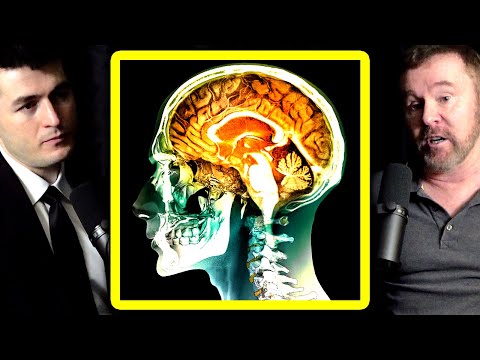
What UFO encounters teach us about the brain | Garry Nolan and Lex Fridman
The clearest short statement of the claim in Nolan's own words, excerpted from the February 2022 full-length interview. Included as a primary source for what he actually says, not as evidence that it is correct.

ANALYSING UFO EXPERIENCERS' BRAINS & ANOMALOUS MATERIALS - Garry Nolan PHD #62
A long-form interview covering both strands of Nolan's UAP work — the brain imaging and the materials analysis — and useful for hearing how he himself distinguishes what is published from what is not.
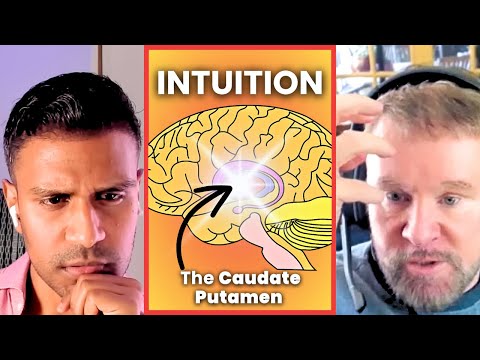
Stanford Scientist On Intuition And Brain Activity | Garry Nolan
Nolan on the intuition side of the argument specifically — the bridge between the general caudate-putamen literature and the claim he makes about his referred cohort. The clearest recorded statement of how he connects the two.
Dr. Garry Nolan and Matthew Pines, "Standards of Evidence and UAP"
Nolan and the policy analyst Matthew Pines on what should count as evidence in this field — the most directly relevant recorded discussion to the central question this page asks, from the foundation Nolan co-founded.
Sources Cited
- Weerasekera, Akila; Ion-Mărgineanu, Adrian; Green, Christopher; Mody, Maria & Nolan, Garry P. “Predictive models demonstrate age-dependent association of subcortical volumes and cognitive measures.” Human Brain Mapping, 44(2), 1 February 2023, pp. 801–812. DOI 10.1002/hbm.26100. PubMed, PMID 36222055; full text, affiliations and funding statement read at PMC9842902.
- Weerasekera, Akila; Ion-Mărgineanu, Adrian; Nolan, Garry P. & Mody, Maria. “Subcortical-cortical white matter connectivity in adults with autism spectrum disorder and schizophrenia patients.” Psychiatry Research: Neuroimaging, 340, 2024, 111806. DOI 10.1016/j.pscychresns.2024.111806. PubMed, PMID 38508025.
- Weerasekera, Akila; Waugh, Jeff L.; Öngür, Dost; Nolan, Garry P.; Mody, Maria & Du, Fei. “Noninvasive Mapping of Striosome-Matrix Imbalance in Early Psychosis.” Biological Psychiatry Global Open Science, 6(5), 2026, 100785. DOI 10.1016/j.bpsgos.2026.100785. PubMed, PMID 42621416.
- Nolan, Garry P. (@GarryPNolan). Post on X, 22 December 2023, 22:47 UTC, replying to a user asking to see the underlying research: “Look up our now two peer reviewed published papers on brain morphometry and the approximately 3 dozen or more published papers from independent groups pointing to the caudate-putamen as playing central roles in intuition and planning.” The supporting link he provided resolves to a PDF of Lieberman (2000). x.com. Author account, timestamp, verbatim text and linked filename verified against the platform's own syndication record.
- Campion, Thobey. “Stanford Professor Garry Nolan Is Analyzing Anomalous Materials From UFO Crashes.” Vice (Motherboard), 10 December 2021. The most detailed and quantitative public account of the cohort: roughly 100 patients, almost all defence, government or aerospace; 5x to 10x and up to 15x normal density; prior-year MRIs for “a couple” of individuals. vice.com.
- Scott, Sam. “First Contact.” Stanford Magazine, July 2023. The fullest published account of the 2013 lab visit, the two unnamed visitors, and the initial caudate and putamen observation. stanfordmag.org.
- Hanks, Micah. “Garry Nolan: A Stanford Professor's Quest to Resolve Unidentified Anomalous Phenomena.” The Debrief, 22 May 2023. Source for the connection between the caudate-putamen work and the earliest detections of anomalous health incidents. thedebrief.org.
- Pierpaoli, Carlo; Nayak, Amritha; Hafiz, Rakibul; et al. “Neuroimaging Findings in US Government Personnel and Their Family Members Involved in Anomalous Health Incidents.” JAMA, 331(13), 2024, pp. 1122–1134. DOI 10.1001/jama.2024.2424. 81 AHI participants vs 48 matched controls; no significant differences on any MRI modality after adjustment for multiple comparisons; explicit non-replication of the 2019 study. PubMed, PMID 38497822.
- Chan, Leighton; Hallett, Mark; Zalewski, Christopher K.; et al. “Clinical, Biomarker, and Research Tests Among US Government Personnel and Their Family Members Involved in Anomalous Health Incidents.” JAMA, 331(13), 2024, pp. 1109–1121. DOI 10.1001/jama.2024.2413. PubMed, PMID 38497797.
- Verma, Ragini; Swanson, Randel L.; Parker, Drew; et al. “Neuroimaging Findings in US Government Personnel With Possible Exposure to Directional Phenomena in Havana, Cuba.” JAMA, 322(4), 2019, pp. 336–347. DOI 10.1001/jama.2019.9269. 40 patients, 48 controls; differences reported in whole-brain white matter, ventral diencephalon and cerebellar grey matter, and cerebellar diffusivity — not in the striatum. PubMed, PMID 31334794.
- Lieberman, Matthew D. “Intuition: a social cognitive neuroscience approach.” Psychological Bulletin, 126(1), January 2000, pp. 109–137. DOI 10.1037/0033-2909.126.1.109. The paper Nolan circulates as his own supporting citation; argues the caudate and putamen are central components of intuition and implicit learning in the general population. PubMed, PMID 10668352.
- Grahn, Jessica A.; Parkinson, John A. & Owen, Adrian M. “The cognitive functions of the caudate nucleus.” Progress in Neurobiology, 86(3), November 2008, pp. 141–155. DOI 10.1016/j.pneurobio.2008.09.004. PubMed, PMID 18824075.
- Wan, Xiaohong; Nakatani, Hironori; Ueno, Kenichi; Asamizuya, Takeshi; Cheng, Kang & Tanaka, Keiji. “The neural basis of intuitive best next-move generation in board game experts.” Science, 331(6015), 21 January 2011, pp. 341–346. DOI 10.1126/science.1194732. PubMed, PMID 21252348.
- Wan, Xiaohong; Takano, Daisuke; Asamizuya, Takeshi; Suzuki, Chisato; Ueno, Kenichi; Cheng, Kang; Ito, Takeshi & Tanaka, Keiji. “Developing intuition: neural correlates of cognitive-skill learning in caudate nucleus.” Journal of Neuroscience, 32(48), 28 November 2012, pp. 17492–17501. DOI 10.1523/JNEUROSCI.2312-12.2012. PubMed, PMID 23197739.
- Seger, Carol A.; Dennison, Christina S.; Lopez-Paniagua, Dan; Peterson, Erik J. & Roark, Aubrey A. “Dissociating hippocampal and basal ganglia contributions to category learning using stimulus novelty and subjective judgments.” NeuroImage, 55(4), 15 April 2011, pp. 1739–1753. DOI 10.1016/j.neuroimage.2011.01.026. PubMed, PMID 21255655.
- Packard, Mark G. & Knowlton, Barbara J. “Learning and memory functions of the basal ganglia.” Annual Review of Neuroscience, 25, 2002, pp. 563–593. DOI 10.1146/annurev.neuro.25.112701.142937. PubMed, PMID 12052921.
- Jones, Derek K.; Knösche, Thomas R. & Turner, Robert. “White matter integrity, fiber count, and other fallacies: the do's and don'ts of diffusion MRI.” NeuroImage, 73, 2013, pp. 239–254. DOI 10.1016/j.neuroimage.2012.06.081. PubMed, PMID 22846632.
- Maier-Hein, Klaus H.; Neher, Peter F.; Houde, Jean-Christophe; et al. “The challenge of mapping the human connectome based on diffusion tractography.” Nature Communications, 8(1), 2017, 1349. DOI 10.1038/s41467-017-01285-x. PubMed, PMID 29116093.
- Maguire, Eleanor A.; Gadian, David G.; Johnsrude, Ingrid S.; et al. “Navigation-related structural change in the hippocampi of taxi drivers.” Proceedings of the National Academy of Sciences, 97(8), 2000, pp. 4398–4403. DOI 10.1073/pnas.070039597. PubMed, PMID 10716738.
- Marshall, Kelly; Sullivan, Katherine & French, Louis M. “Clinical presentation and engagement with a cognitive rehabilitation clinic in individuals reporting anomalous health incidents.” Frontiers in Neurology, 17, 2026, 1858023. DOI 10.3389/fneur.2026.1858023. PubMed, PMID 42718618.
- Nolan, Garry P.; Vallée, Jacques F.; Jiang, Sizun & Lemke, Larry G. “Improved instrumental techniques, including isotopic analysis, applicable to the characterization of unusual materials with potential relevance to aerospace forensics.” Progress in Aerospace Sciences, 128, January 2022, 100788. DOI 10.1016/j.paerosci.2021.100788. Cited as evidence that Nolan does submit UAP-adjacent work to peer review when chain of custody permits. NASA ADS record.
- Colavito, Jason. “Kit Green Contradicts Garry Nolan, Says No Evidence of Alien-Induced Brain Damage.” 1 September 2022. Reports emails on a private discussion list in which Green stated no aetiologies remained unknown or required exotic physics, endorsing Ronald Pandolfi's assertion that no confirmed US government death or injury had been caused by proximity to an alien craft. Reported here with its sourcing limitations stated: this page could not obtain the primary correspondence. jasoncolavito.com.
- Basterfield, Keith. “The work of EarthTech International, Kit Green, and Garry P. Nolan.” Unidentified Anomalous Phenomena — Scientific Research, December 2018. Independent documentation of the collaboration from Jacobsen's text and EarthTech's declared research interests, predating the claim's mass circulation. ufos-scientificresearch.blogspot.com.
- Basterfield, Keith. “Kit Green in Phenomena — the book by Annie Jacobsen.” Unidentified Anomalous Phenomena — Scientific Research, April 2018. Source, with page citations to Jacobsen pp. 394–400, for Green's CIA background, the 2005 start of the patient database, the hundred-plus active patients, and the Nolan Lab collaboration. ufos-scientificresearch.blogspot.com.
- Jacobsen, Annie. Phenomena: The Secret History of the U.S. Government's Investigation into Extrasensory Perception and Psychokinesis. Little, Brown, 2017. ISBN 978-0-316-34936-9. Primary published source for Green's patient database and the Stanford collaboration.
- Baloh, Robert W. & Bartholomew, Robert E. Havana Syndrome: Mass Psychogenic Illness and the Real Story Behind the Embassy Mystery and Hysteria. Springer, 2020. ISBN 978-3-030-40745-2.
- “Professor Garry Nolan.” Nolan Lab, Stanford University — the lab's own biography page, source for his stated title, 300-plus research articles, 40 US patents, and founded companies. web.stanford.edu.
- “Garry Nolan.” Stanford Profiles, Stanford University School of Medicine — official faculty record, source for his current title as Rachford and Carlota A. Harris Professor in the Department of Pathology and his listed honours. profiles.stanford.edu.
- Green, Christopher C. Biography, Bulletin of the Atomic Scientists — source for his CIA career from 1969, his role as first analyst and programme manager for remote-viewing research, his rise to assistant national intelligence officer for science and technology, his 1985–2004 General Motors tenure, and his Wayne State appointments. thebulletin.org.
- DiMascio, Jen. “New science advisory council forms to help US government ‘resolve the UAP mystery’.” DefenseScoop, 17 June 2026. Source for Nolan's appointment to the UAP Science Advisory Council alongside Avi Loeb as chair and Michael Shermer among the members. defensescoop.com.
- “Michael Shermer Named to White House UAP Science Advisory Council.” Skeptic, June 2026. Independent confirmation of the council's formation and membership from a source with no stake in the UAP claim. skeptic.com.
- “Stanford professor who studied impact of UFO encounters on brain unpacks new batch of Pentagon files.” CBS News — broadcast interview in which Nolan restates the brain-effects claim to a mainstream news audience. cbsnews.com.
- NCBI Entrez E-utilities (esearch and efetch against the PubMed database) and the Europe PMC REST search API — the two interfaces used to perform this page's own publication searches directly rather than through a search-engine summary. The Europe PMC query
AUTH:"Nolan GP" AND ("unidentified anomalous" OR "UAP" OR "experiencer" OR "anomalous health")returns a hit count of zero, including preprints. Europe PMC REST query.
Have corrections, additional research, or peer-reviewed sources? Help improve this entry. If a study of UAP experiencers' brain imaging has been published anywhere — journal, preprint server, conference proceedings — this page would very much like the citation.
Suggest an Edit