
Radiation & Thermal Injury Hypothesis
Across case files spanning seven decades, close-proximity UAP encounters have been reported alongside a specific, recurring injury signature: witnesses developing burns and sunburn-like erythema, blistering skin, hair loss, painful and light-sensitive eyes, and constellations of symptoms clinically indistinguishable from acute radiation sickness — and, in a smaller number of cases, the surrounding ground or vegetation itself showing scorching, compression, heating, or measurable biochemical damage. This file catalogues that injury pattern honestly, as a documented effect on bodies and environments rather than a claim about propulsion, then surveys the real, mainstream physics — non-ionizing microwave/RF thermal effects, ultraviolet/optical radiation, and ionizing radiation exposure — capable in principle of producing it, alongside the genuine conventional sources (mishandled radiological or industrial equipment, electrical arc flash, ordinary sunburn) that can produce an identical clinical picture with no exotic explanation required at all.
Real, Clinically Documented Injury Pattern — Cause Never InstrumentedCore Thesis
This file, like this site's Electromagnetic Interference / Vehicle Ignition-Kill Hypothesis, is built around a documented effect rather than a single theorist's speculative mechanism paper. Independent witnesses across decades, continents, and encounter types have reported an unusually consistent clinical picture after close-proximity UAP encounters: skin reddening and blistering resembling severe sunburn or radiation burns, hair loss, eye pain and light sensitivity, nausea and vomiting, and — in the best-documented cases — laboratory-confirmed elevated soil radioactivity or a graded biochemical injury to nearby vegetation. That injury pattern is real in the sense that it is independently, clinically, and in several cases institutionally documented; what remains genuinely unresolved is its cause. Three physically real candidate mechanisms are surveyed here — non-ionizing microwave/RF thermal coupling, ultraviolet/optical radiation producing photokeratitis, and ionizing radiation exposure producing classic acute radiation syndrome — each grounded in mainstream, independently testable biomedical and health-physics science with no connection to UAP research at all, alongside the equally real conventional sources (a mishandled radiological or industrial source, an electrical arc flash, ordinary sunburn) capable of producing the identical clinical signature. The honest problem, as with the ignition-kill pattern, is not that these mechanisms are exotic; hospitals, radiation-safety offices, and occupational-medicine clinics diagnose exactly these injury types routinely. The problem is that no reported case in this site's catalogue was accompanied by a working dosimeter, radiometer, or spectroradiometer actually recording at the moment of exposure — every case infers a field or dose from its downstream clinical or environmental effect, never from a direct, real-time measurement. As with the ignition-kill file, no single credentialed physicist unified this pattern under one name; it rests instead on a distributed record of treating physicians, government radiation-safety investigators, physical-trace researchers, and a very recent formal academic medical-literature review, a structure this file states plainly.
Origin & History
The earliest widely documented instance of this injury pattern in American ufology is also its most contested. On the night of August 19, 1952, scoutmaster D.S. “Sonny” DesVergers emerged from a Florida palmetto thicket near Military Trail, west of Lake Worth, reporting a fiery encounter with a hovering object; Project Blue Book chief Edward J. Ruppelt personally led the field investigation, and an Air Force flight surgeon's same-day examination found minor burns on DesVergers's arms and hands, possible nasal irritation, and singed hair consistent with a brief flash-heat exposure — a presentation the surgeon compared directly to a light sunburn and, in Ruppelt's own account, reproduced on the spot with an ordinary cigarette lighter. DesVergers's own credibility later collapsed under scrutiny (a concealed dishonorable Marine Corps discharge, a criminal record, a hometown reputation for exaggeration), and this site's own case file on the incident rates it Psycho-Social/Mundane; what neither Ruppelt's investigators nor an independent FBI laboratory analysis could ever fully explain, however, was why the grass roots beneath the reported hover point were charred to an estimated 300°F while the blades above them showed no heat damage, or why several minute holes burned through DesVergers's cap were assessed as “very probably” made by an electrical spark. The case's own internal split — a discredited witness alongside two still-unexplained physical findings — makes it a useful, honestly stated starting point for this file precisely because it previews the tension every subsequent case in this catalogue must navigate.
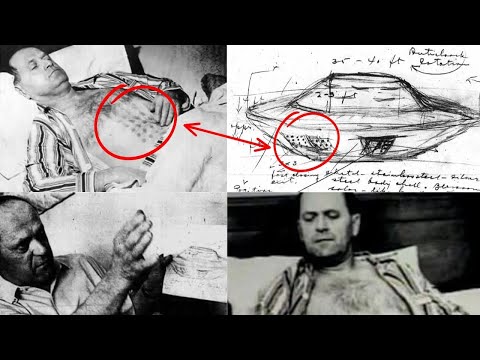
The pattern's first systematic civilian effort to treat physiological and injury reports as a dataset rather than isolated anecdotes came with NICAP's 1969 compilation Strange Effects from UFOs, the same volume this site's Electromagnetic Interference / Vehicle Ignition-Kill Hypothesis file cites as its own foundational catalogue — a reminder that both patterns were originally tracked together as a single “strange effects” category before diverging into the separate mechanical and biological literatures this site now treats as sister theories. The pattern's most rigorously instrumented case followed two years later: on May 20, 1967, prospector Stefan Michalak reported a close encounter with a landed disc in Whiteshell Provincial Park, Manitoba, and emerged with a precise, geometric grid-pattern burn across his chest that physicians would spend the next eighteen months documenting, while a five-agency Canadian government investigation confirmed radium-226 contamination in the landing-site soil at roughly fifty times background. Within three years, forestry worker Aarno Heinonen and farmer Esko Viljo were examined the same evening by Dr. Pauli Kajanoja at a rural clinic in Imjärvi, Finland, after a close encounter left both men with reddened, swollen skin and, in Viljo's case, eyes so painfully light-sensitive he described pressure behind them — a presentation Kajanoja himself remarked resembled radiation exposure, though his clinic had no instrument capable of testing for it, and soil and snow samples sent to Chalmers University of Technology in Sweden later showed only normal background radioactivity. The close of that same decade brought the pattern's best-documented American case: on December 29, 1980, Betty Cash, Vickie Landrum, and seven-year-old Colby Landrum encountered a diamond-shaped object emitting intense heat near Huffman, Texas, and developed a graded severity of blistering, hair loss, and immune suppression that tracked their proximity and duration of exposure with unusual precision. Ten days later, on January 8, 1981, retired mason Renato Nicolaï's report of a landed object on his property in Trans-en-Provence, France, brought the injury pattern's environmental side into a government laboratory for the first time: French space agency CNES's GEPAN unit found a distance-correlated chlorophyll and carotenoid deficit in nearby alfalfa consistent with a brief, intense radiation or heat pulse, without the human witness himself reporting any injury at all.
The modern cataloguing effort deepened considerably in the 1990s. Aerospace engineer and MUFON investigator John Schuessler, who had led the original Cash-Landrum field investigation, published A Catalog of UFO Related Human Physiological Effects in 1996, compiling nearly 400 individually documented cases into the closest thing this specific injury pattern has to a systematic database. It took thirty years longer for that clinical record to reach a formal, peer-reviewed medical-literature synthesis: in April 2026, forensic scientist Guodong Qin of the Guangdong Judicial Police Vocational College and pharmacologist Pengfei Zhao of China Medical University published “A Medical Review of Human Injuries from Unidentified Aerial Phenomena” in the peer-reviewed journal Perspectives in Legal and Forensic Sciences, surveying dermatological, ophthalmological, neurological, and systemic injury reports — including Cash-Landrum by name — against candidate non-ionizing electromagnetic and thermal mechanisms, while stating directly in their own introduction that research into the medical impacts of UAP encounters “remains in its early stages, lacking a systematic framework and substantial clinical data.” This file treats that statement as the single most honest one-sentence summary available anywhere in the literature it surveys.
Scientific Foundations — Candidate Mechanisms
Three physically real, independently studied bodies of biomedical and health-physics science bear directly on whether an external energy source could plausibly produce the injury pattern this file catalogues. Each is summarized below on its own terms, grounded in research and diagnostic practice that has no connection whatsoever to UAP encounters. A fourth candidate — that a known, entirely conventional physical source produced any specific reported case — is treated in this file's dedicated Conventional Explanation Candidate section rather than folded in here, so that the underlying physics and its case-by-case application are never blurred into a single verdict.
1. Non-Ionizing Microwave/RF Thermal Effects
Radio-frequency and microwave energy, even at intensities well below the threshold required to ionize tissue, can deposit heat directly into biological material — the same physical principle a microwave oven or a medical microwave-ablation catheter relies on. The relevant biomedical science is neither new nor exotic: physicist and psychologist Eleanor R. Adair spent five decades, beginning in 1960 at Yale University's John B. Pierce Laboratory and continuing through the U.S. Air Force Research Laboratory at Brooks Air Force Base, Texas, conducting the primate and human thermoregulatory studies that now anchor the IEEE's own RF human-exposure safety standards, establishing in rigorously controlled laboratory conditions exactly how much RF energy at which frequencies produces measurable tissue heating and thermoregulatory strain. This is precisely the mechanism the treating physicians in this file's strongest case invoked without any prompting from UAP researchers: the grid-pattern burns across Stefan Michalak's chest were, in this site's own case file's language, “neither a typical thermal burn… nor a chemical burn” but “consistent with a brief, intense exposure to a directed energy source — essentially microwave or infrared burns from a focused beam.” French INRA biologist Michel Bounias independently proposed a structurally identical mechanism from the vegetation side of the pattern, suggesting that a brief, intense pulse of non-ionizing electromagnetic radiation in the microwave range could plausibly account for the distance-correlated chlorophyll and carotenoid deficit he measured in alfalfa near the Trans-en-Provence trace. Neither Adair's nor Bounias's work was performed with any UAP framing at all; they are cited here because their research independently establishes that the underlying thermal-coupling physics is real, quantified, and already governs how RF exposure limits are set for workers and the public.
2. Ultraviolet/Optical Radiation — Photokeratitis and “Welder's Flash”
A second, entirely separate mechanism concerns the eyes specifically rather than the skin. Photokeratitis — commonly called “welder's flash,” “arc eye,” or, in its snow-reflected form, snow blindness — is a well-documented occupational injury in which intense ultraviolet-B or ultraviolet-C exposure damages the cornea's outer epithelial layer. Its clinical signature is distinctive and delayed: symptoms typically do not appear for six to twelve hours after exposure, then present as intense pain, a foreign-body or gritty sensation, and severe photophobia as the damaged corneal nerves are exposed, resolving within one to two days as the epithelium regenerates. That delayed-onset, self-limiting profile matches several reported case details closely: at Imjärvi, Esko Viljo's eyes became “painfully sensitive to light, with a sensation of pressure behind them” within hours of the encounter, and at Delphos, Kansas, sixteen-year-old Ronald Johnson reported temporary eye irritation and light sensitivity following his 1971 sighting. Neither case, this file notes honestly, includes a contemporaneous slit-lamp or fluorescein examination that could confirm true corneal epithelial damage rather than simple irritation, and Delphos's own 1999 chemical re-analysis identified calcium oxalate — a recognized skin and mucous-membrane irritant with no UV or radiological content at all — in the ring soil's coating, offering a plausible non-exotic alternative for that specific case's eye symptoms. The UV mechanism itself, however, is textbook occupational medicine, not a UAP-specific hypothesis: it is the same injury a welder without a proper face shield or an unprotected skier on a bright snowfield sustains routinely, with no connection to this subject at all.
3. Ionizing Radiation Exposure
The most severe candidate mechanism, and the one this file's strongest cases most directly implicate, is genuine ionizing radiation — gamma rays, neutrons, or particulate alpha/beta emission energetic enough to strip electrons from tissue and damage DNA directly. The clinical presentation of acute radiation syndrome is well characterized by health authorities with no UAP connection whatsoever: nausea, vomiting, and diarrhea beginning within minutes to days of exposure, followed by a latent period, then a return of illness whose severity — hair loss, immune suppression, blood-count abnormalities, skin damage that can appear within hours or be delayed for days — scales with absorbed dose. That is close to a point-by-point description of what treating physicians independently documented in Betty Cash's case, and it is the diagnosis the Mayo Clinic reached, at the Canadian government's own request, after its 1968 evaluation of Stefan Michalak found his symptom pattern “consistent with exposure to ionizing radiation,” even though the clinic could not specify a source or a dose. Michalak's case is also the only one in this file's catalogue where a physical dosimetry-adjacent measurement exists at all: the Whiteshell Nuclear Research Establishment's isotopic analysis of his landing-site soil confirmed radium-226 at roughly fifty times background, a real, laboratory-quantified finding rather than an inference from symptoms alone — though even that measurement was taken days after the encounter, not during it, leaving the actual dose Michalak himself absorbed an estimate rather than a direct reading.
Government & Military Programs
Official investigation of this injury pattern has run through several separate national channels, none of which coordinated with the others and none of which produced a dedicated, ongoing UAP-radiation-health research program comparable to the FAA's HIRF regime this site's ignition-kill file describes for electromagnetic interference. In the United States, the Cash-Landrum case drew a formal U.S. Army Department of the Army Inspector General (DAIG) investigation led by Lt. Col. George Sarran, who in turn consulted Dr. Peter Rank, a Fund for UFO Research board member and MUFON medical consultant, for an outside radiological opinion on the witnesses' medical records; Rank, notably, deliberately avoided public attention throughout his involvement, telling journalist Billy Cox in 1983 that “this whole UFO business attracts all sorts of psychiatrically marginal people… I don't have time for that” even as he continued privately advising DAIG. In Canada, the Falcon Lake case produced the single most extensive multi-agency government response this pattern has ever generated: the Royal Canadian Mounted Police, the Department of National Defence, the Department of Health and Welfare, the Whiteshell Nuclear Research Establishment, and the Atomic Energy Control Board all independently visited the site, collected samples, or reviewed findings within weeks of the encounter, a response Canadian law required once elevated radioactivity was confirmed. In France, the Trans-en-Provence trace was investigated directly by GEPAN, the government UAP study unit inside the national space agency CNES, whose engineer Jean-Jacques Velasco coordinated soil and vegetation sampling across four separate laboratories — a level of formal government-funded physical-trace analysis this file's own sourced literature calls almost unique in ufology's case history. Most recently, the Pentagon's All-domain Anomaly Resolution Office (AARO) stated in its Fiscal Year 2024 annual report that it had received no reports of physiological or health impacts from UAP encounters during that reporting period — a claim this file notes sits in some tension with the decades-old, independently documented clinical record it surveys here, though AARO's own report scope covered only recent reports rather than a retrospective historical review of cases like Cash-Landrum or Falcon Lake.
Physical Evidence
This file's evidentiary record splits cleanly into two structurally different categories, and only one case in its catalogue has both. The first category is direct clinical evidence on a witness's own body: Betty Cash's medical chart — documented blistering, hair loss, and blood-count abnormalities — and Stefan Michalak's grid-pattern burns, photographed and treated by more than a dozen physicians and independently confirmed by his burned shirt and undershirt, whose hole pattern matched the burn geometry exactly. The second category is indirect environmental assay: soil and vegetation sampled after the fact rather than a witness's own tissue, exemplified by the Whiteshell Nuclear Research Establishment's isotopic analysis of the Falcon Lake landing-site soil and by Michel Bounias's four-laboratory biochemical workup of Trans-en-Provence alfalfa. Falcon Lake is the only case in this file's catalogue that produced both categories of evidence together — a documented clinical injury on the witness's own body and an independently laboratory-confirmed environmental radiological finding — which is precisely why it is treated throughout this file as the pattern's single strongest case. Cash-Landrum, by contrast, produced extensive, high-quality clinical evidence but no environmental sample at all, since the encounter occurred along a public road rather than on land investigators could later test. No case in this file's catalogue, including Falcon Lake, includes a working dosimeter, radiometer, or spectroradiometer that was actually present and recording at the moment of the reported exposure — every radiological or biochemical finding here was measured after the fact, inferring dose and mechanism from what a body or a plant absorbed rather than from a direct field measurement.
Supporting Case Files
Theoretical Alignment
This theory aligns most strongly with this site's own Energy / Radiation Anomaly axis by definition, since it is itself the direct catalogue of that category rather than an inference about it; the 78% figure reflects how extensively and clinically the underlying injury pattern is documented, not any confirmed cause or origin. Its alignment with the Extraterrestrial Hypothesis is real but incidental — nothing about non-ionizing thermal coupling, UV photokeratitis, or ionizing radiation exposure requires a non-human source, and the underlying biomedical science this file draws on (Adair's RF-thermoregulation work, CDC acute-radiation-syndrome clinical criteria, occupational photokeratitis literature) was developed with zero UAP framing at all. Its weaker alignment with a purely conventional/industrial source reflects this file's own honest assessment, detailed in Conventional Explanation Candidate below, that known radiological or industrial sources fit some individual case details (DesVergers's cigarette-lighter-reproducible burns) far better than others (Falcon Lake's own government investigators explicitly found the isotopic signature at the landing site inconsistent with any known industrial, medical, or naturally occurring local source).
Sensor & Instrumentation Detection Profile
The “instrument” in most of this file's cases is the human body itself — skin, eyes, and blood chemistry registering an injury after the fact rather than a dedicated device recording a field in real time. That changes only twice in this catalogue. At Falcon Lake, RCMP officers brought a working Geiger counter to the site the day after the encounter and recorded elevated readings, which the Whiteshell Nuclear Research Establishment then followed with a full isotopic laboratory workup identifying radium-226 at roughly fifty times background — genuine, quantified instrumentation, even though it arrived a full day after Michalak's own exposure rather than during it. At Trans-en-Provence, GEPAN's four-laboratory analysis of soil compression, thermal alteration, and alfalfa pigment content functioned as a comparably rigorous instrumented aftermath, precisely quantifying a distance-correlated chlorophyll and carotenoid deficit of roughly 30 to 50 percent. No case in this file's catalogue, including these two, has ever been accompanied by a dosimeter, radiometer, or spectroradiometer that was actually present and recording at the moment of the reported exposure itself — a genuine, unresolved instrumentation gap this file states plainly rather than papering over with the strength of its after-the-fact laboratory findings.
Environmental & Geospatial Context
The cases this file surveys cluster, like the ignition-kill pattern, around rural and semi-isolated settings: Huffman, Texas's piney back roads, Whiteshell Provincial Park's boreal forest clearing, a private garden terrace above Trans-en-Provence, and a forest trail near Imjärvi, Finland. That clustering plausibly reflects two mundane factors as much as any property of the phenomenon: isolated locations are, by definition, less likely to have a nearby industrial or medical radiological source that a conventional-explanation reading could point to, while simultaneously producing fewer corroborating witnesses. Weather across this file's best-documented cases was consistently unremarkable rather than storm-associated — Falcon Lake's encounter occurred on a clear, sunny, calm May afternoon, and Trans-en-Provence's on a clear, cool, dry January afternoon with no precipitation — a pattern that, as with the ignition-kill file's own finding on Levelland, argues against a purely atmospheric-electrical (ball lightning, corona discharge) explanation for at least these two cases specifically, since both mechanisms typically require active storm conditions this file's sourced weather record does not support. No systematic correlation between reported cases in this catalogue and solar or geomagnetic-storm activity was identified in any source consulted for this file, an absence this file notes rather than reads into.
Observer Credibility & Occupational Profile
This theory's witness roster spans a wide credibility range, and this file states that honestly rather than curating only its strongest examples. At the credible end, Renato Nicolaï was assessed directly by French gendarmes, whose contemporaneous report, later summarized in GEIPAN's own published case file, held that “the behavior of the witness does not allow doubting his credibility”; Stefan Michalak, an amateur geologist and machinist, kept meticulous field notes and was examined by over a dozen physicians across two countries; and Betty Cash, Vickie Landrum, and Colby Landrum presented an internally consistent, age- and proximity-graded severity of injury across three independent witnesses that a shared fabrication would be unlikely to produce by chance. At the far more contested end, Sonny DesVergers's own credibility was thoroughly and, this file agrees, correctly demolished by Air Force investigators, even though two specific physical findings in his case were never mechanistically resolved by either the Air Force's own laboratory or independent skeptics. In between, Aarno Heinonen's same-night clinical presentation was credible and independently examined, but his subsequent two years of escalating, evidence-free contactee claims are a serious, disclosed reason for caution about extending that credibility to his later reports. The examining and investigating professionals carry their own credentials: Dr. Pauli Kajanoja as the Heinola clinic physician who examined both Finnish witnesses the same evening; Dr. Peter Rank as Director of Radiology at Methodist Hospital in Madison, Wisconsin, and a MUFON medical consultant; John Schuessler as an aerospace engineer and the Cash-Landrum case's primary MUFON investigator; Ted Phillips as a career physical-trace investigator for APRO and CUFOS; and Michel Bounias as an INRA biologist whose own doctoral research specifically examined plant trauma responses to radiation exposure before he ever encountered this case.
Historical Precedents & Archive Matches
NICAP's 1969 Strange Effects from UFOs remains this pattern's earliest systematic civilian compilation, followed by Ted Phillips's 1975 CUFOS catalog Physical Traces Associated with UFO Sightings, which documented more than 4,000 cases involving material ground or environmental effects — of which, per this file's own case-level research, fewer than fifty combined instrumented radiation measurement, multi-agency government investigation, and independent medical documentation in the way Falcon Lake did. John Schuessler's 1996 A Catalog of UFO Related Human Physiological Effects extended that cataloguing effort specifically to the clinical/injury side of the pattern, compiling nearly 400 documented cases. Jacques Vallée's 1990 case compilation Confrontations: A Scientist's Search for Alien Contact similarly treated physical-injury and physiological-effect reports as a distinct, trackable evidentiary category across dozens of personally investigated international cases rather than folklore. The Delphos, Kansas ring sighting (1971) belongs in this file's precedent record specifically as an honest complicating case: Ronald Johnson and his mother Erma Johnson reported eye irritation and skin numbness, a contemporaneous Geiger-counter reading found no abnormal radiation, and a 1999 chemical re-analysis by Erol A. Faruk and chemist Phyllis A. Budinger identified calcium oxalate, a mundane tissue irritant, in the ring soil — a genuinely useful reminder that not every reported symptom in this file's broader pattern needs an exotic mechanism to explain it. The most recent addition to this precedent record is also the first to reach a formal, peer-reviewed medical journal: Guodong Qin and Pengfei Zhao's April 2026 review in Perspectives in Legal and Forensic Sciences, which this file's own research was unable to find any earlier example of in the mainstream clinical or forensic-medicine literature.
Material Analysis
The strongest material evidence in this file's catalogue comes from Falcon Lake, where the Whiteshell Nuclear Research Establishment's isotopic analysis of landing-site soil confirmed radium-226 at approximately fifty times background — a real, laboratory-quantified radiological finding, corroborated by Stefan Michalak's own burned shirt and undershirt, whose hole pattern independently matched the grid-shaped burn on his chest. Canadian government investigators explicitly noted that the specific isotopic signature detected was inconsistent with any known industrial, medical, or naturally occurring local source of radiation — a finding this file treats as significant precisely because it originates from a government radiation-safety process with every institutional incentive to identify a mundane source, and did not. At Trans-en-Provence, GEPAN's Note Technique n°16 documented mechanical soil compression consistent with roughly four to five tons of pressure, transient heating estimated at 300 to 600°C, and Michel Bounias's distance-correlated chlorophyll and carotenoid pigment deficit of roughly 30 to 50 percent in nearby alfalfa, all independently confirmed across four separate laboratories. Cash-Landrum's material record, by contrast, is entirely clinical rather than environmental — medical charts, blood work, and photographed blistering — since the encounter site itself was a public road that yielded no comparable soil or vegetation sample. This file draws no conclusion about ultimate cause from any of these findings; it notes only that in at least two of its three headline cases, credentialed laboratories operating with no UAP-advocacy incentive of any kind independently confirmed a real, quantifiable physical anomaly at the reported site.
Theory Development Timeline
| Date | Development |
|---|---|
| Aug. 19, 1952 | The Sonny DesVergers Scoutmaster Case produces the pattern's earliest widely documented American instance — sunburn-comparable flash burns alongside charred grass roots and cap burns never fully explained, despite the witness's own later-discredited credibility. |
| 1969 | NICAP publishes Strange Effects from UFOs, the pattern's first systematic civilian compilation, tracking physiological and electromagnetic-interference reports together as a single category. |
| May 20, 1967 | The Falcon Lake Incident produces this pattern's single most rigorously instrumented case: a geometric grid-pattern burn, laboratory-confirmed elevated radium-226, and a five-agency Canadian government investigation. |
| 1975 | Ted Phillips publishes Physical Traces Associated with UFO Sightings for CUFOS, cataloguing more than 4,000 ground-trace cases. |
| Jan. 7, 1970 | The Imjärvi Incident in Finland produces same-night clinical examination by Dr. Pauli Kajanoja of two witnesses presenting radiation-exposure-like symptoms, with subsequent laboratory testing finding only normal background radioactivity. |
| Nov. 2, 1971 | The Delphos Ring Sighting produces reported eye irritation alongside a negative Geiger-counter reading, later linked to a mundane chemical irritant identified in 1999. |
| Dec. 29, 1980 | The Cash-Landrum Incident produces this pattern's best-documented multi-witness clinical case, with an age- and proximity-graded severity of blistering, hair loss, and immune suppression. |
| Jan. 8, 1981 | The Trans-en-Provence Sighting brings the pattern's environmental side into a national government laboratory for the first time via France's GEPAN unit. |
| 1982 | Attorney Peter Gersten files the Cash-Landrum federal lawsuit; Dr. Peter Rank continues privately advising the U.S. Army's DAIG investigation while avoiding public attention. |
| 1983 | GEPAN publishes Note Technique n°16 on Trans-en-Provence, documenting mechanical compression, transient heating, and the distance-correlated alfalfa pigment deficit. |
| 1990 | Jacques Vallée publishes Confrontations: A Scientist's Search for Alien Contact, treating physical-injury reports as a distinct trackable evidentiary category across dozens of personally investigated cases. |
| 1996 | John Schuessler publishes A Catalog of UFO Related Human Physiological Effects, compiling nearly 400 documented cases into MUFON's dedicated injury database. |
| 1999 | Chemist Phyllis A. Budinger's re-analysis of preserved Delphos ring soil identifies calcium oxalate, a mundane tissue irritant, offering a non-exotic explanation for that case's reported eye and skin symptoms. |
| Nov. 2024 | The Pentagon's All-domain Anomaly Resolution Office states in its Fiscal Year 2024 annual report that it received no reports of physiological or health impacts from UAP encounters during that period. |
| April 7, 2026 | Guodong Qin and Pengfei Zhao publish “A Medical Review of Human Injuries from Unidentified Aerial Phenomena” in Perspectives in Legal and Forensic Sciences, the first formal peer-reviewed medical-journal synthesis of this injury pattern. |
Weighing the Evidence
Supporting Arguments
- Independent, occupationally and geographically diverse witnesses across seven decades report a clinically consistent injury signature — erythema, blistering, hair loss, eye pain and photophobia, and radiation-sickness-like systemic symptoms — not a single anecdote or a single case type
- Two of this file's three headline cases produced credentialed-laboratory-confirmed physical anomalies (Falcon Lake's isotopic radium-226 finding; Trans-en-Provence's four-laboratory soil and pigment analysis) from investigators with no UAP-advocacy incentive
- Cash-Landrum's three witnesses show an internally consistent, age- and proximity-graded severity gradient that would be a genuinely unusual coincidence for a fabricated or misattributed account
- Every candidate mechanism (non-ionizing RF thermal coupling, UV photokeratitis, ionizing radiation exposure) is grounded in real, mainstream, independently testable biomedical and health-physics science already used in clinical diagnosis and occupational-safety standards
Skeptical Arguments
- No reported case in this file's catalogue was accompanied by a working dosimeter, radiometer, or spectroradiometer actually recording at the moment of exposure, leaving every case's proposed cause an inference from after-the-fact clinical or environmental effect rather than a direct field measurement
- This pattern's earliest and one of its most publicized cases (Sonny DesVergers) involved a witness whose credibility was thoroughly discredited, and whose reported burns a flight surgeon reproduced on the spot with an ordinary cigarette lighter
- At least one case in this file's precedent record (Delphos) reported eye and skin symptoms later linked to a mundane chemical irritant rather than any form of radiation
- No single credentialed proponent or long-standing peer-reviewed research program unifies this theory; its first formal medical-journal synthesis appeared only in 2026 and explicitly describes the field as lacking a systematic framework and substantial clinical data
Conventional Explanation Candidate
This section rates the most commonly proposed conventional explanations for the pattern individually, since — as with this site's other physics-literate files — blending a strong mechanism-level physics case with a weak specific-instance case into a single verdict would understate genuine complexity in both directions.
Biomedical Science: Non-Ionizing, UV, and Ionizing Radiation Can Injure Tissue This Way
Strongly SupportedRigorously established, clinically diagnosed, mainstream medicine and health physics, independent of any UAP claim. Not in dispute among physicians or radiation-safety professionals.
A Known, Mishandled Radiological or Industrial Source
Case-DependentA real, documented category of hazard — the 1987 Goiânia, Brazil cesium-137 accident shows an actual scavenged medical source can produce this exact clinical picture with zero exotic explanation. But Falcon Lake's own government investigators explicitly found the isotopic signature at the site inconsistent with any known local industrial, medical, or natural source, and no case in this file's catalogue has ever identified an actual missing or mishandled source at the reported location.
Electrical Arc Flash or Simple Sunburn Misattribution
Plausible for Isolated/Minor CasesReal physics (arc flash can exceed 35,000°F; an FBI lab found DesVergers's cap holes “very probably” spark-caused) that fits minor, single-witness burn reports reasonably well. Considerably weaker as a general explanation for Cash-Landrum's severe, graded, multi-witness blistering or Michalak's precise geometric grid pattern.
A Genuine, Unidentified Radiation or Thermal Source Causing Real Injury
Unconfirmed, Not Ruled OutConsistent with the Mayo Clinic's own Falcon Lake finding and the Whiteshell isotopic assay; never confirmed by a real-time dosimetry reading taken during any reported case.
Theoretical Assessment Profile
Six-domain evaluation of this hypothesis
Key Proponents
Ted Phillips
Catalogued more than 4,000 cases of physical ground and environmental effects associated with UAP sightings, establishing physical-trace documentation as a distinct field-investigation methodology.
John Schuessler
Led the original Cash-Landrum field investigation and published the 1996 catalog compiling nearly 400 documented UFO-related human physiological-effect cases.
Dr. Peter Rank
Provided the U.S. Army's DAIG investigation with an outside radiological assessment of the Cash-Landrum medical records while deliberately avoiding public attention throughout his involvement.
Michel Bounias
Conducted the central biochemical analysis of the Trans-en-Provence case, documenting a distance-correlated chlorophyll and carotenoid deficit and proposing a non-ionizing microwave-range pulse as a candidate mechanism.
Eleanor R. Adair
Spent five decades establishing the human and primate thermoregulatory research that anchors current RF/microwave exposure safety standards — work with no connection to UAP research, cited here as the mainstream biomedical foundation for this theory's non-ionizing thermal mechanism.
Guodong Qin
Lead author of the first formal peer-reviewed medical-journal review of UAP-associated human injuries, published April 2026.
Pengfei Zhao
Corresponding author of the 2026 medical review surveying dermatological, ophthalmological, and systemic UAP-associated injury reports against candidate physical mechanisms.
Related Cases
Further Reading
The Cash Landrum Incident
The definitive book-length investigation of the pattern's best-documented American case, written by its primary MUFON field investigator.
When They Appeared: Falcon Lake 1967
The inside story of Canada's most rigorously investigated UAP injury case, combining decades of researcher Chris Rutkowski's own inquiry with the Michalak family's firsthand account.
Confrontations: A Scientist's Search for Alien Contact
Vallée's personal investigation of forty international UAP cases, treating physical-injury and physiological-effect reports as a distinct, trackable evidentiary category.
Microwaves and Thermoregulation
The standard scientific reference on how non-ionizing electromagnetic radiation deposits thermal energy in biological tissue — the mainstream physics this theory's non-ionizing candidate mechanism relies on, written with no UAP framing at all.
Physical Traces Associated with UFO Sightings: A Preliminary Catalog
CUFOS's foundational catalog of ground-trace and environmental-effect cases, establishing physical-trace documentation as a distinct methodology within UFO field investigation.
DISCLOSURE: Some links above are affiliate links. If you purchase through them, OverClassified receives a small commission at no additional cost to you. This helps support independent research.
Essential Viewing

Sources Cited
- "Acute Radiation Syndrome," Centers for Disease Control and Prevention, Radiation Emergencies.
- "Photokeratitis," Wikipedia.
- "Welding - Radiation and the Effects On Eyes and Skin," Canadian Centre for Occupational Health and Safety.
- "Goiânia Accident," Wikipedia.
- "Overview of the Radiological Accident in Goiânia," International Atomic Energy Agency, INIS Repository.
- "Electrical - Electric-Arc Flash Hazards," Occupational Safety and Health Administration.
- "Eleanor R. Adair," Wikipedia.
- "Eleanor Adair Named 2007 D'Arsonval Award," The Bioelectromagnetics Society.
- Lin, J.C. "The Microwave Auditory Effect," peer-reviewed bioelectromagnetics research summary, Semantic Scholar.
- "Cash–Landrum Incident," Wikipedia.
- "Falcon Lake Incident," Wikipedia.
- "Trans-en-Provence Case," Wikipedia.
- "Who's Who in the Cash-Landrum UFO Case," Blue Blurry Lines.
- "Dr. Peter Rank," Blue Blurry Lines archive.
- Schuessler, J.F. A Catalog of UFO Related Human Physiological Effects, MUFON, 1996 (Internet Archive).
- Qin, G. & Zhao, P. "A Medical Review of Human Injuries from Unidentified Aerial Phenomena," Perspectives in Legal and Forensic Sciences 3(1), 2026. DOI: 10.70322/plfs.2026.10001.
- "Fiscal Year 2024 Consolidated Annual Report on UAP," All-domain Anomaly Resolution Office, U.S. Department of Defense.
- Schuessler, J.F. & Pratt, B. The Cash Landrum Incident.
- Rutkowski, C. & Michalak, S. When They Appeared: Falcon Lake 1967, 2019.
- Vallée, J. Confrontations: A Scientist's Search for Alien Contact, 1990.
- Adair, E.R. (ed.) Microwaves and Thermoregulation, Academic Press.
- Phillips, T. Physical Traces Associated with UFO Sightings: A Preliminary Catalog, CUFOS, 1975.
- "The Cash-Landrum Incident," case file, OverClassified. /case-files/cash-landrum.html
- "The Falcon Lake Incident," case file, OverClassified. /case-files/falcon-lake.html
- "The Trans-en-Provence Sighting," case file, OverClassified. /case-files/trans-en-provence-1981.html
- "Sonny DesVergers Scoutmaster Case," case file, OverClassified. /case-files/sonny-desvergers-scoutmaster-case.html
- "The Imjärvi Incident," case file, OverClassified. /case-files/imjarvi-incident.html
- "The Delphos Ring Sighting," case file, OverClassified. /case-files/delphos-ring-1971.html
- National Investigations Committee on Aerial Phenomena (NICAP) archive.
Have corrections, additional research, or peer-reviewed sources? Help improve this entry.
Suggest an Edit