
Physical Traces Associated with UFO Sightings
A Preliminary Catalog
Core Thesis
Physical Traces Associated with UFO Sightings: A Preliminary Catalog is not an argument in the conventional sense — it is a database given the shape of a book. Compiled by field investigator Ted Phillips and published by the newly founded Center for UFO Studies (CUFOS) in 1975, it lists several hundred reported UFO encounters, drawn from the United States and dozens of other countries, in which witnesses described the object leaving some kind of physical mark behind: scorched or flattened vegetation, compressed or hardened soil, circular "nests" of matted grass, and in a smaller number of cases apparent landing-gear impressions or chemically altered ground. Each entry is given a case number, a date, a location, a brief narrative summary, and a citation to the original investigating source, organized chronologically rather than by trace type or geography. Phillips's underlying claim is a narrower and more procedural one than most books on this list make: that UFO research had, by the early 1970s, accumulated a real body of physical, potentially laboratory-testable evidence sitting largely uncatalogued and unconnected across scattered local newspaper morgues, NICAP files, and individual investigators' notebooks, and that simply gathering it into one indexed, cross-referenceable place was itself a genuine scientific contribution — a preliminary step, as his own subtitle honestly concedes, toward treating ground-trace evidence as a distinct evidentiary category rather than an afterthought to eyewitness testimony. This site's own Delphos, Kansas ring case file already cites the catalog directly: Phillips personally investigated Delphos, and the 1975 catalog situates that single, intensively studied case inside the much larger dataset his fieldwork was simultaneously building.
About the Author
Ted R. Phillips Jr. was born January 20, 1942, in Sedalia, Missouri, and spent most of his life in that state. He had no academic background in the physical or social sciences; he trained as an engineer, worked as a professional photographer, and held jobs on the Vanguard satellite program and as a field engineer on the Minuteman missile project, alongside a stint as an inspector for the Missouri State Highway Department. That technical, hands-on background — closer to applied engineering than to laboratory science — shaped the character of his UFO research from the outset: Phillips's own descriptions of his method leaned on physical measurement (compression testing of soil at reported landing sites, photographic documentation, sample collection) rather than statistical or psychological analysis of witness testimony, the kind of forensic approach he later compared explicitly to a television crime-scene investigation.
Phillips began investigating UFO reports in 1964, at age twenty-two, and his entry point into the field's most consequential relationship came through one of ufology's most famous cases: the April 1964 Lonnie Zamora landing sighting at Socorro, New Mexico, whose landing-gear impressions and scorched brush were among the earliest ground traces to draw serious scientific attention. Investigating that case brought Phillips into contact with J. Allen Hynek, the Northwestern University astronomer then serving as Project Blue Book's scientific consultant, and the two began a working relationship that lasted until Hynek's death in 1986. It was Hynek, in 1968, who suggested that Phillips concentrate specifically on physical-trace cases rather than general field investigation — steering him toward what became his defining specialty within a field then dominated almost entirely by testimony collection.
Phillips worked in this niche for the rest of his life, moving from the Aerial Phenomena Research Organization (APRO) into Hynek's newly founded Center for UFO Studies and eventually founding his own Center for Physical Trace Research in 1998. Over more than four decades he personally investigated hundreds of ground-trace reports and built a private database that, by his own later account, grew to more than 4,000 catalogued cases across more than 90 countries — a scale the 1975 catalog profiled here represents only an early, published fraction of. He presented at the first MUFON symposium and repeatedly thereafter, contributed a position statement to Ronald Story's Encyclopedia of UFOs arguing that the trace data he had gathered pointed toward "a nonterrestrial origin," and was included, alongside Hynek, Jacques Vallée, and astronaut Gordon Cooper, in a small delegation that met with the United Nations Secretary-General to discuss the UFO question. Phillips died in Missouri on March 10, 2020, at age seventy-eight.
Historical Context & Origins
The catalog arrived at a genuine inflection point for American ufology's institutional structure. The U.S. Air Force closed Project Blue Book in December 1969, following the University of Colorado's Condon Report, ending two decades of official government UFO investigation and scattering both the case files and the researchers who had worked adjacent to them. J. Allen Hynek, who had spent that same period as Blue Book's scientific consultant while growing steadily more convinced a genuine residue of unexplained cases remained, responded by founding the Center for UFO Studies (CUFOS) in 1973 together with Sherman J. Larsen, a former National Investigations Committee on Aerial Phenomena (NICAP) member — explicitly conceived, in ufologist James W. Moseley's own characterization, as the first serious attempt to organize a private research body dedicated to scientific-style UFO investigation rather than advocacy or entertainment. Phillips's catalog, published by CUFOS just two years later in 1975, was among the young organization's first substantial monograph-length publications, and its existence reflects Hynek's specific institutional bet: that whatever legitimacy Blue Book's official imprimatur had given UFO research, the field's actual survival as anything resembling a scientific pursuit would depend on private researchers doing the archival and evidentiary spadework the Air Force had abandoned.
Physical-trace evidence occupied an unusually contested rung within ufology's own internal hierarchy of evidence at the time Phillips began his specialization. Eyewitness testimony — the field's dominant currency since the 1947 Kenneth Arnold sighting launched the modern era — was, and remains, vulnerable to the standard objections of misperception, memory distortion, and outright fabrication, objections Hynek himself had spent years articulating from inside Blue Book before his own view shifted. A reported ground mark, by contrast, seemed to promise something eyewitness accounts alone could not: an artifact that persisted after the encounter ended, that could in principle be measured, sampled, and independently re-examined by a party with no stake in the original story. That promise was real, but only partly redeemable in practice — a burned or flattened patch of vegetation is also, as this catalog's own critics would point out, exactly the kind of evidence a hoaxer can manufacture cheaply and a natural process (fungal fairy rings, lightning strikes, animal bedding, agricultural machinery) can produce by ordinary means. Phillips built his career, and this catalog, in the gap between that promise and that vulnerability.
The catalog also landed amid a specific institutional split in how American ufology approached trace cases. APRO, the Aerial Phenomena Research Organization Phillips worked with early on, and NICAP had each accumulated trace reports through their own regional investigator networks for years without any single, consolidated, cross-referenced published index. Phillips's 1975 catalog was explicitly framed as "preliminary" precisely because it represented a first attempt to gather that scattered material — drawn from historical sources reaching back well before the modern UFO era began in 1947, as well as contemporary APRO, NICAP, and CUFOS field reports — into one indexed reference a researcher could actually consult case by case, rather than a claim that the underlying investigative work was newly complete or definitively verified.
Core Arguments & Key Concepts
The catalog's organizing principle is chronological rather than thematic: each entry carries a sequential case number, a date, a location, a short narrative summary of the sighting and the trace it reportedly left, and a citation identifying the original investigating source or publication the entry was drawn from. This format makes the book function less like a persuasive essay and more like an annotated index card file bound between covers — a structure Phillips carried directly from his own field-investigation habits, and one that later, larger physical-trace databases (including his own private 4,000-plus-case archive at the Center for Physical Trace Research) scaled up considerably but never fundamentally departed from.
Within that format, Phillips's own analytical framework organized reported traces into a small number of recurring physical categories: scorched, blackened, or otherwise thermally altered vegetation and soil; mechanically flattened or swirled "nest" patterns in grass, reeds, or crops, often circular or figure-of-eight in shape; compacted, hardened, or unusually dried ground, sometimes persisting for weeks; and, in a minority of cases, discrete impressions consistent with landing-gear or support-leg contact points, frequently arranged in symmetrical patterns of three or four. He treated these categories as physically distinct signatures worth separating analytically, rather than lumping every reported mark into one undifferentiated "UFO evidence" bucket — an implicit argument that if ground traces were ever going to be taken seriously as scientific evidence, they needed the same kind of typological discipline any other physical-evidence discipline would apply to its own raw data.
Phillips's stated conclusion, developed across his broader career and summarized explicitly in his contribution to Ronald Story's Encyclopedia of UFOs, was that the accumulated trace data indicated "a nonterrestrial origin" for at least a meaningful subset of the phenomena described — a claim considerably more confident than the catalog's own "preliminary" framing might suggest, and one this entry's Critical Reception section addresses directly. Crucially, Phillips never argued that every catalogued case supported that conclusion equally, or that the catalog itself constituted proof; his position, consistent across decades of interviews and presentations, was that the accumulated weight and internal consistency of hundreds of independently reported, geographically and temporally scattered trace cases was itself the evidentiary argument — a case for taking the category seriously as a whole rather than any single entry settling the matter alone.
The catalog's international scope is also a deliberate structural argument in itself. Rather than confining itself to well-known American cases, Phillips's entries reach across dozens of countries and back into the pre-1947 historical record, formally including, for instance, the 1966 Tully, Queensland saucer-nest case in Australia as one of the catalog's earliest non-American entries. That geographic and temporal spread was itself part of Phillips's implicit case: that ground-trace reports were not a narrow, culturally specific American phenomenon of the flying-saucer era, but a recurring pattern with much broader reach — though, as later critics observed, casting that wide a net also meant absorbing cases of wildly uneven investigative quality into a single dataset.
Key Cases & Evidence Discussed
The catalog's most consequential single entry, in hindsight, is one Phillips added to his own personal investigative record almost as soon as it happened. On December 4, 1971 — thirty-two days after sixteen-year-old Ronald Johnson reported a glowing, mushroom-shaped object hovering over his family's sheep farm near Delphos, Kansas — Phillips made his first site visit and documented a ring of dry, water-repellent soil that remained visibly outlined even against snow cover weeks later. This site's own exhaustively researched Delphos Ring Sighting case file covers the case's full subsequent history — Erol A. Faruk's 1989 chemical analysis, Phyllis Budinger's more cautious 1999 re-examination, the Sturrock Panel's 1997 review, and the competing fungal-ring and sheep-trough explanations — in far greater depth than a single catalog entry ever could; what the 1975 catalog captures is Delphos at its earliest documented moment, filed by the same investigator who would go on to track the case personally for well over a decade, publishing further findings in the MUFON UFO Journal in 1985.
The catalog's inclusion of the January 19, 1966 Tully, Queensland saucer-nest sighting — in which banana farmer George Pedley reported a saucer-shaped object rising from Horseshoe Lagoon, leaving behind a swirled mat of flattened reeds that inspired a wave of similar "nest" reports across Australia for years afterward — represents Phillips's earliest attempt to formally connect an American-centered field investigation tradition to a comparable international case. The Tully nests remain, alongside Delphos, one of the two ground-trace cases most frequently invoked whenever later researchers discuss what a well-documented physical trace looks like, and Phillips's own catalog entry helped establish that comparison by placing the two cases inside the same reference work only a few years after each occurred.
Read against this site's own case files, the catalog's format also throws into relief just how much investigative depth a single trace case can eventually accumulate that a preliminary 1975 entry could not have anticipated. The Trans-en-Provence sighting, investigated six years after Phillips's catalog appeared by France's CNES/GEPAN space-agency scientists, produced laboratory-documented mechanical compression, thermal alteration, and a measurable chlorophyll gradient in nearby alfalfa — the kind of rigorous, government-funded chemical and biological workup that Phillips's own field notes, gathered case by case with a camera and a soil sample bag rather than an institutional laboratory behind him, could rarely match, and that represents the trace-case tradition's methodology maturing considerably beyond where his 1975 catalog left it. The more recent Flavin domed-cylinder sighting (1996), by contrast, illustrates the opposite and more common outcome for a reported close encounter: despite a same-morning gendarmerie response, a physical trace search turned up nothing, and GEIPAN closed the case unexplained on witness testimony alone — a reminder that Phillips's own catalog, however large it eventually grew, was always cataloguing the minority of encounters that left something physical behind, not encounters generally.
This site's own Radiation & Thermal Injury Hypothesis theory file cites Phillips's 1975 catalog directly as one of the two earliest formal attempts (alongside NICAP's own 1969 injury-pattern review) to systematically document a related category of physical evidence: burns, erythema, and radiation-sickness-like symptoms reported by witnesses in close-proximity encounters, several of which overlap with the catalog's own ground-trace entries where a reported burn accompanied a scorched or thermally altered landing site.
Critical Reception & Controversies
The most detailed published methodological critique of Phillips's catalog comes from within ufology's own more skeptically minded wing rather than from outside science. British researcher Paul Fuller's analysis, published on the Project 1947 research site, credits the catalog's ambition — organizing genuinely scattered material into one chronological, cited reference — while raising pointed concerns about the underlying data quality: many of the earliest entries, Fuller notes, carry no indication whether the original case was ever investigated by anyone with scientific training, or investigated at all beyond a local newspaper's own brief writeup; cases drawn from 1950s-era press coverage are, in his assessment, particularly unreliable given the era's routine editorial assumption that any strange sighting must involve a genuine spacecraft; and reports drawn from Spanish-language and South American media sources warranted, in his view, especially heightened skepticism, since some were later shown to be outright fabrications picked up uncritically by researchers working from secondhand translations. Fuller's broader conclusion — that a meaningful share of the catalog's several hundred entries reflect contributor bias and insufficiently critical original investigation rather than uniformly rigorous fieldwork — is a genuine structural criticism of exactly the kind a preliminary, single-investigator-compiled catalog spanning multiple countries and decades of loosely sourced secondary reports was always going to be vulnerable to.
Mainstream and skeptical treatment of physical-trace evidence as a category has generally been more measured than dismissive, but it has consistently stopped well short of endorsing Phillips's own "nonterrestrial origin" conclusion. The 1997 Sturrock Panel, a four-day scientific workshop convened by physicist Peter A. Sturrock under the Society for Scientific Exploration specifically to review the strongest available physical evidence for UFO reports — ground traces prominent among the categories examined, with Delphos itself submitted as a test case — reached a conclusion that reads as the field's most authoritative independent verdict on exactly the evidentiary category this catalog represents: physical trace evidence was judged worth continued scientific study, not proof of anything, an assessment that neither validated skeptics' reflexive dismissal of ground traces as uniformly explainable nor Phillips's own confident reading of the same material. Individual skeptical researchers have generally focused their specific counter-explanations case by case rather than attacking the trace-evidence category wholesale — longtime professional skeptic Philip J. Klass's proposed sheep-trough explanation for the Delphos ring's chemical signature, discussed at length in this site's own Delphos case file, is a representative example of that pattern: a specific, testable mundane mechanism proposed against a specific case, rather than a categorical argument that ground-trace evidence as a whole is inherently worthless.
A separate, more basic definitional problem runs through both the catalog and the broader trace-evidence literature it helped found: the persistent difficulty of distinguishing a genuine anomalous trace from a naturally occurring "fairy ring" (a well-documented fungal-mycelium growth pattern that produces circular marks in grass through entirely mundane biology) or, later, from deliberately hoaxed crop formations. Fuller's critique flags this circularity directly — a catalog built to document unexplained ground traces has an inherent structural difficulty excluding traces that a more skeptical investigator, examining the same physical site with different assumptions, might have classified as an ordinary natural or human-made phenomenon from the outset. The catalog does not resolve that tension so much as document, honestly if unevenly, several hundred cases where a contemporary investigator judged it was not yet resolved.
Influence & Legacy
On this site specifically, the catalog already functions as working research infrastructure rather than a historical curiosity: it is cited directly in the case files for the Delphos Ring Sighting, the Flavin Domed Cylinder Sighting, the Trans-en-Provence Sighting, and the Tully Saucer Nests Sighting, and in the Radiation & Thermal Injury Hypothesis theory file, where it is credited as one of the pattern's two earliest formal catalogers.
More broadly, the catalog's practical legacy lies less in any single conclusion it reached than in the methodology it helped normalize: chronological, cited, cross-referenceable case documentation as the baseline standard for what a serious physical-trace investigation should produce, rather than an isolated anecdote filed away in one investigator's personal notes. Phillips's own career after 1975 scaled that same basic approach considerably — his personal database eventually grew past 4,000 catalogued cases across more than 90 countries, and he formalized the specialty institutionally by founding the Center for Physical Trace Research in 1998, a dedicated successor organization to the ad hoc, individual-investigator model the 1975 catalog had grown out of. The chemical-analysis tradition that followed his own fieldwork at Delphos specifically — Erol Faruk's 1989 organic-chemistry workup and Phyllis Budinger's more advanced 1999 re-analysis of the same preserved soil samples — is a direct, traceable extension of the evidentiary chain Phillips's own 1975 fieldwork began, carried forward by scientists working in disciplines (organic chemistry, analytical spectroscopy) entirely outside ufology itself.
The catalog's underlying premise — that ground-trace evidence deserved dedicated, systematic, cross-case documentation rather than ad hoc individual write-ups — also anticipated, and arguably helped legitimize, the more resource-intensive institutional trace investigations that followed it in later decades, most notably France's CNES/GEPAN program (later GEIPAN), whose scientifically staffed, government-funded investigation of the 1981 Trans-en-Provence case represented a considerably more rigorous execution of the same basic idea Phillips had been pursuing with a camera, a soil-sample bag, and a chronological card index a decade earlier. Within CUFOS's own institutional history, the catalog stands as one of the young organization's first substantial monograph publications, helping establish physical-trace documentation as one of the Center's recognized specialties alongside its better-known casework on sighting reports and its later peer-reviewed Journal of UFO Studies.
The Book
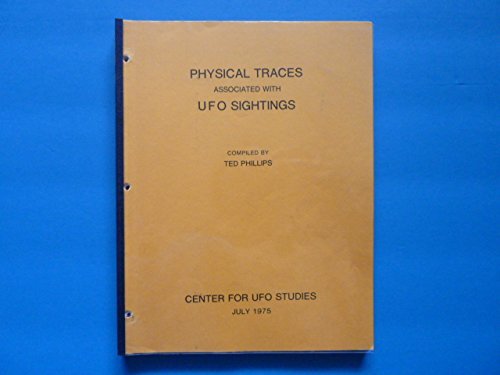
As an Amazon Associate, OverClassified may earn from qualifying purchases made through this link, at no extra cost to you.
Why This Is Essential Reading
Physical Traces Associated with UFO Sightings earns its place on this list not as a persuasive argument but as raw evidentiary infrastructure — the first serious attempt to gather ufology's scattered ground-trace reports into one indexed, cited, cross-referenceable catalog, compiled by the field investigator who would go on to personally document the Delphos, Kansas ring within weeks of its discovery and spend the following four decades building that preliminary 1975 dataset into a private archive of more than 4,000 cases across more than 90 countries. Ted Phillips's own confident reading of that data — a "nonterrestrial origin" for a meaningful share of it — goes well beyond what the 1997 Sturrock Panel's more measured, methodologically independent review of the same evidentiary category was willing to conclude, and Paul Fuller's detailed critique of the catalog's own source reliability is a legitimate, unresolved limitation this entry takes seriously rather than glosses over. What makes the book essential regardless is the working standard it set: that a reported UFO ground trace is not just an anecdote to be believed or disbelieved on the strength of a witness's sincerity, but a physical site that can be numbered, dated, cited, and revisited — the same basic discipline this site's own Physical & Material Assays sections on individual case files still apply, and the same discipline that let a soil sample collected at Delphos in the 1970s still be chemically re-analyzed with better instruments two decades later. A preliminary catalog, faithfully read as exactly that, rather than as a closed case.
Related Cases & Theories
Essential Viewing
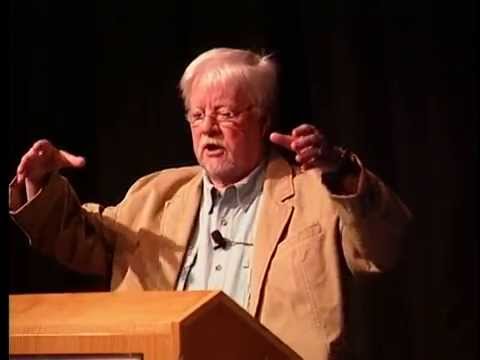
TED PHILLIPS - The Physical Evidence for Unidentified Flying Objects
Mutual UFO Network (MUFON) — Phillips presenting the results of his decades-long physical-trace research program directly, summarizing the methodology and case patterns that grew out of the 1975 catalog, verified via YouTube oEmbed before inclusion.
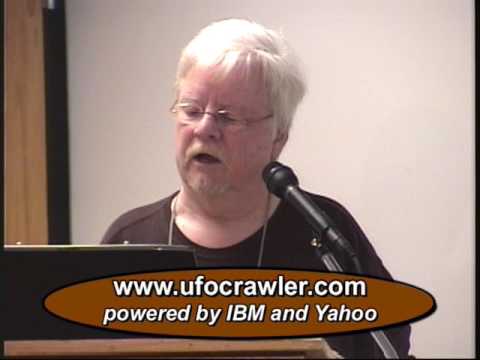
UFO Physical Traces - Ted Phillips 4/14/2007
Minnesota MUFON — A regional MUFON chapter presentation by Phillips on ground-trace case investigation, covering the same trace categories and documentation standards the 1975 catalog established, verified via YouTube oEmbed before inclusion.
Sources Cited
- Phillips, Ted. Physical Traces Associated with UFO Sightings: A Preliminary Catalog. Center for UFO Studies, 1975 (144 pp.).
- "Books." Center for UFO Studies (official CUFOS publications list, confirming the catalog's July 1975 publication and CUFOS imprint). cufos.org
- "Physical traces associated with UFO sightings: A preliminary catalog: Phillips, Ted." Amazon.com (verified product listing matching title and author; ASIN B0006CM7F8). amazon.com
- "Physical traces associated with UFO sightings." Open Library (bibliographic record: publisher, date, format). openlibrary.org
- Fuller, Paul. "Ted Phillips' Trace Catalogue." Project 1947 (detailed methodological critique of the catalog's source reliability and case-quality variance). project1947.com
- "Founder of the Center for UFO Physical Trace Research, Ted Phillips Has Died." The UFO Chronicles, April 2020 (obituary and career retrospective). theufochronicles.com
- Randle, Kevin. "Ted Phillips Has Died." A Different Perspective, March 2020 (obituary tribute from a fellow UFO researcher). kevinrandle.blogspot.com
- "Theodore R. ‘Ted’ Phillips." Sedalia Democrat obituary via Legacy.com (birth date, birthplace, and death date). legacy.com
- "Ted Phillips." Coast to Coast AM guest biography (career summary: CUFOS, Center for Physical Trace Research, UN delegation). coasttocoastam.com
- "Hard UFO Evidence: The Ted Phillips Story." Anomalien, (career overview, investigative methodology, and landing-trace weight/mass estimation technique). anomalien.com
- "Center for UFO Studies." Wikipedia (CUFOS founding history: J. Allen Hynek, Sherman J. Larsen, 1973 founding, post-Blue Book context). en.wikipedia.org
- This site's own case file: Delphos Ring Sighting, personally investigated by Phillips beginning December 4, 1971, and this catalog's most consequential entry in hindsight.
- This site's own case file: Tully Saucer Nests Sighting, catalogued by Phillips as one of the earliest non-American entries.
- This site's own case file: Trans-en-Provence Sighting, investigated by France's CNES/GEPAN using methods that extended the trace-documentation tradition this catalog helped found.
- This site's own case file: Flavin Domed Cylinder Sighting, a case where a physical trace search found nothing, illustrating the more common outcome trace investigators face.
- This site's own theory file: Radiation & Thermal Injury Hypothesis, which credits this 1975 catalog as one of the earliest formal documentations of UAP-associated physical injury patterns.
- This site's own key-figures profile: Ted Phillips, covering his full field-investigation career and CUFOS/Center for Physical Trace Research affiliations.
- This site's own resources library: Full Reading List, where this 1975 catalog (ASIN B0006CM7F8) is cited across 4 case-file pages and 1 theory file.
Have corrections, additional research, or peer-reviewed sources? Help improve this entry.
Suggest an Edit