
The Trans-en-Provence Sighting
At around 5:00 PM on January 8, 1981, Renato Nicolaï, a former building-site foreman in his fifties, living on an invalidity pension and building a cement shelter for a water pump on his property near Trans-en-Provence, a small commune in France's Var department, heard a light whistling and watched a lead-gray object shaped like two upturned plates drop onto the terrace behind his house, rest there for a few seconds, and climb away over the trees to the north-east, all in about thirty to forty seconds. What made the case extraordinary was not the sighting itself — a single, uncorroborated witness account of a landed craft is one of ufology's most common report types — but what happened next: neighbours alerted the gendarmerie, who photographed and sampled the marks the next morning, and the case was referred to GEPAN, the UAP study unit inside CNES, France's national space agency. GEPAN, whose field investigator Jean-Jacques Velasco visited the site forty days later, sent soil samples to a CNES laboratory and four outside laboratories, and wild alfalfa to INRA biochemist Michel Bounias. Its Note Technique n°16 (March 1983) concluded that the analyses showed "un évènement de grande ampleur" — a substantial event involving mechanical pressure, heating below 600°C and pigment changes in the plants — but that the possible interpretations were "too diverse and vague" to confirm the witness's account. Skeptics have argued since the 1980s that the marks were tire skids. GEPAN's successor, GEIPAN, still classifies the case as unidentified (category D).
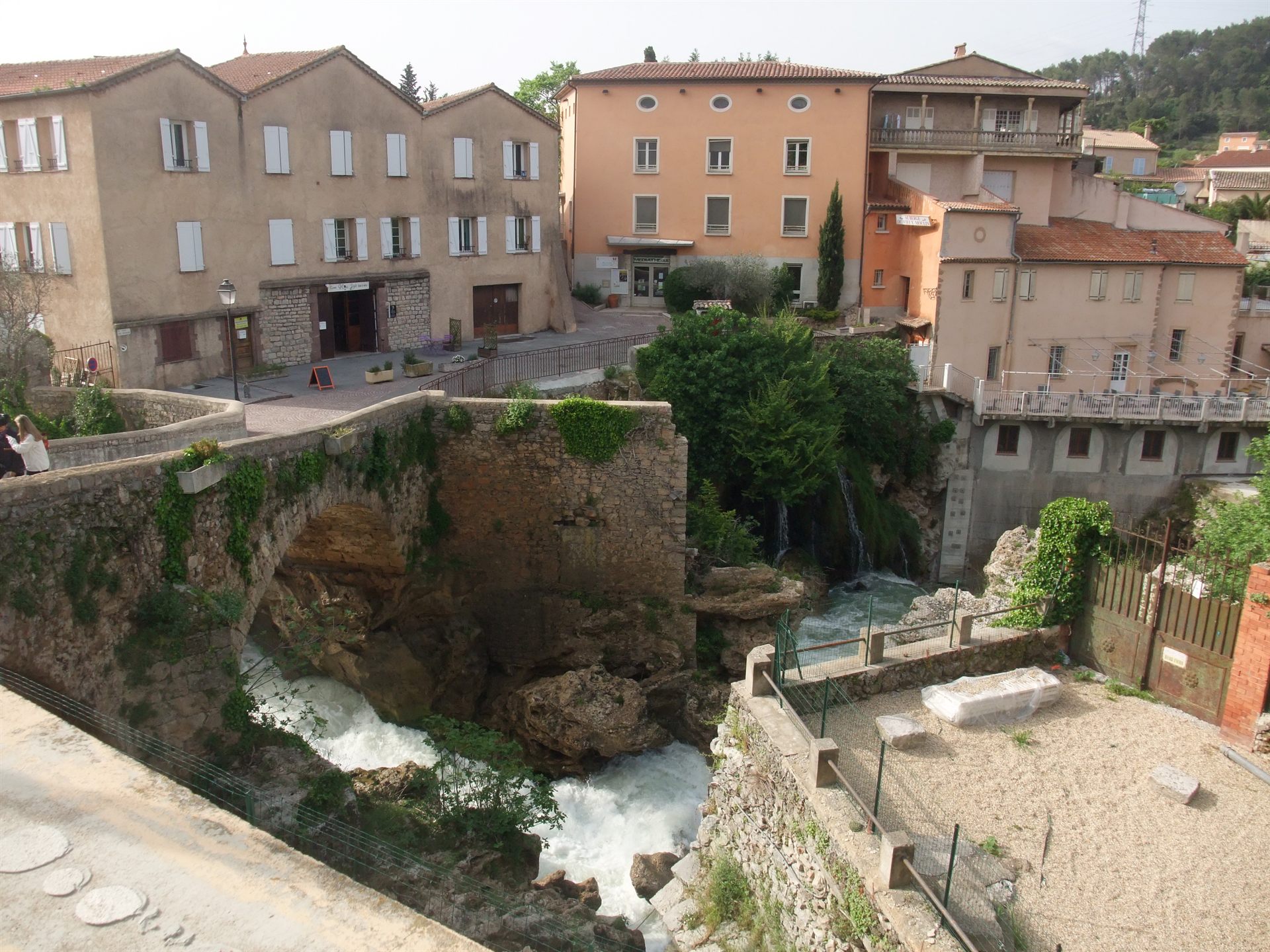
Pictured: the village of Trans-en-Provence, Var, France — the commune where Renato Nicolaï's property is located, not the actual landing site, which sat on private land outside the town center. No public-domain or rights-clear photograph of the original 1981 trace or the witness's terrace is known to exist; GEPAN's own site photographs remain held within CNES/GEIPAN's archival case file rather than freely licensed.
Theoretical Alignment
Trans-en-Provence occupies an unusual position among UAP hypotheses because its strongest evidence was gathered not by ufologists but by a national space agency's own engineers and a government agricultural-research biologist working with standard laboratory instruments. That distinction pushes its Extraterrestrial Hypothesis alignment higher than almost any single-witness sighting could earn on testimony alone: GEPAN's laboratories reported compacted, striated soil, heating below 600°C, traces of iron, zinc and phosphate, and alfalfa whose pigment levels varied with distance from the marks. It is capped at 30% because GEPAN's own report said the soil findings could not be quantified and were open to interpretations "too diverse and vague" to confirm the witness, because two of its own laboratories offered mundane readings of the deposits (combustion residue; a rubbed primer paint), and because a real conventional candidate — tire skids on a terrace reached by a vehicle track — was never tested. The Interdimensional Hypothesis has little to offer a case built around a physical, metallurgically mundane-sounding craft description and a conventional compression/heating signature, earning only a residual score. The Psycho-Social Hypothesis explains the sighting portion about as well as it explains any single, sincere witness account, but it cannot on its own generate a laboratory-measured chlorophyll gradient correlated with physical distance from a specific point in a field — whatever produced that pattern was a real, external physical or chemical process, not a trick of memory, which is precisely why this case has remained a fixture of "best physical evidence" discussions in ufology for more than forty years even as its central cause remains formally unresolved.
Background
By January 1981, French ufology had a formal government partner that no other country's UFO research community could claim. In 1977, engineer Claude Poher, with the approval of then-CNES director general Yves Sillard, established the Groupe d'Etudes des Phénomènes Aérospatiaux Non-identifiés (GEPAN) as a small technical unit inside the Centre National d'Etudes Spatiales (CNES), France's national space agency, headquartered in Toulouse. GEPAN's mandate was narrow but genuinely unusual for a government body: to collect, systematically investigate, and scientifically evaluate reports of unidentified aerospace phenomena submitted through France's national gendarmerie, which had been directed to forward such reports rather than dismiss them outright. Unlike the U.S. Air Force's Project Blue Book, which had closed in December 1969 amid persistent criticism that its investigations were shallow and its conclusions predetermined, GEPAN was conceived from the outset as a scientific research group empowered to commission real laboratory analysis of physical evidence when a case warranted it — a mandate that would be tested directly, and unusually thoroughly, by the events in a small hillside garden in the Var four years later.
Renato Nicolaï (called "Colini" in GEPAN's report), an Italian-born man who had come to France about twenty years earlier, had no connection to any of this institutional history and, by GEPAN's account, knew the word "OVNI" only from television. He told the gendarmes he had worked for the firm S.C.N.I. until it closed, had not worked since November 1979, and drew an invalidity pension after a heart attack in 1973; GEPAN describes him as a former works foreman ("conducteur de travaux"). Most accounts give his age as 55; Rossoni, Maillot and Déguillaume give 52. He and his wife lived on a terraced hillside property about two kilometres from the village of Trans-en-Provence, in the Var, and on the afternoon of January 8, 1981 he was building a cement shelter for a water pump behind the house.
Complete Timeline
| Date | Event |
|---|---|
| 1977 | Claude Poher establishes GEPAN within CNES, France's national space agency, as a formal government unit to scientifically investigate UAP reports referred through the national gendarmerie. |
| January 8, 1981, ~5:00 PM | Renato Nicolaï, building a cement water-pump shelter behind his house near Trans-en-Provence, hears a light whistling and sees an object at the height of a large pine descend onto the flat terrace behind the house. |
| Same afternoon | By his statement to the gendarmes, the object rests on the ground for a few seconds, then rises with the same light whistling, raising a little dust, and leaves over the trees toward the north-east; he sees openings or "feet" underneath and no flame or smoke. The whole observation lasts about 30–40 seconds; he is never closer than about 30 m. That evening his wife thinks he is joking. |
| January 9, 1981 | In the morning he shows his wife the marks; she telephones neighbours, who advise calling the gendarmerie and then alert it themselves. Gendarmes from the Draguignan company arrive at about 11:30, take his statement, photograph the marks, and sample soil and wild alfalfa about 1.5 m from the centre. They describe "two concentric circles," 2.20 m and 2.40 m across, with two diametrically opposed sections of about 0.80 m bearing black striations "similar to skid marks." |
| January 10–13, 1981 | Heavy rain falls over the weekend of 10–11 January. GEPAN learns of the case on the 12th and, after consulting the gendarmerie, decides not to go immediately, asking for the samples to be sent to laboratories. A private investigator visits on the 13th. |
| January 23, 1981 | At the biochemical laboratory's request, gendarmes take control alfalfa samples about 20 m from the marks. |
| February 17, 1981 | GEPAN, with Jean-Jacques Velasco as its field investigator, visits 40 days after the sighting: a brief reconstruction with the witness, topographic notes, photographs, eight vegetation samples at measured distances and a control soil sample. |
| 1981–1983 | Soil is examined at a CNES laboratory and by four outside laboratories (SNEAP at Boussens, the Rangueil science faculty in Toulouse, the LAMMA laboratory at Metz and an analytical laboratory at Pau); the plants are analyzed by Michel Bounias at INRA's Avignon-Montfavet biochemistry laboratory. |
| March 1, 1983 | GEPAN issues Note Technique n°16 ("Enquête 81/01 – Analyse d'une trace"). It reports strong mechanical pressure, surface striation, heating that "did not exceed 600°" and traces of iron, zinc and phosphate, and pigment and sugar changes in the alfalfa that vary with distance; it concludes that "un évènement de grande ampleur" occurred, but that the interpretations remain "too diverse and vague" to confirm the witness's account. |
| 1988 | GEPAN is restructured and renamed SEPRA (Service d'Expertise des Phénomènes de Rentrée Atmosphérique) within CNES, continuing to maintain the Trans-en-Provence file among its most significant unresolved cases. |
| Nov. 7, 1989 | On the TF1 programme Ciel, mon mardi!, Nicolaï says, as quoted by Rossoni, Maillot and Déguillaume: "J'ai vu... c'est un conte disons!" ("I saw... it's a tale, let's say!"), adding that scientists had found something on the ground and "moi aussi dans la nuit je rêve" ("I dream at night too"). |
| 1990 | The Journal of Scientific Exploration (Vol. 4, No. 1) publishes Velasco's "Report on the Analysis of Anomalous Physical Traces: The 1981 Trans-en-Provence UFO Case" (pp. 27–48) and Bounias's paper on the plant analyses (pp. 1–18), making the case's technical findings available in English. |
| 1997 | Velasco presents the case to Peter Sturrock's scientific review panel at Pocantico, New York; the panel suggests garden tools or a metal watering barrel as possible sources of the iron residues. |
| 2005 | SEPRA is restructured again into GEIPAN (Groupe d'Etudes et d'Informations sur les Phénomènes Aérospatiaux Non identifiés), with an explicit new mandate for public transparency. |
| 2007 | GEIPAN begins publicly releasing its historical case archive, including the Trans-en-Provence file, and skeptical French researchers David Rossoni, Éric Maillot, and Éric Déguillaume publish Les OVNI du CNES: 30 ans d'études officielles (1977–2007), offering the case's most detailed published critique. |
| 2007–present | GEIPAN's online case file keeps the case in category D, stating that "un phénomène important inhabituel s'est produit ce jour là, et l'enquête n'a pas permis d'en déterminer l'origine" (the page was last updated in June 2021). |
A Whistle on the Terrace: Renato Nicolaï's Sighting
Renato Nicolaï's statement to the gendarmes on January 9, reproduced in GEPAN's Note Technique n°16, is short. At about 5 p.m., as it was getting cooler, a light noise, "une sorte de petit sifflement," made him turn, and he saw a craft at the height of a large pine at the edge of the flat terrace behind his house, descending toward the ground without rotating. He moved to the wall of a small outbuilding, from where he could see over its roof, and saw the craft resting on the ground. "Aussitôt" it rose, still whistling lightly, and once above the trees left "assez rapidement" toward the north-east. As it rose he saw four openings underneath, with no flame or smoke, and it raised a little dust; he was about thirty metres from the landing place. He described it as shaped like "deux assiettes renversées, l'une contre l'autre" (two plates upturned against each other), about 1.5 metres high, "la couleur du plomb" (the color of lead), with a ridge around its circumference, and underneath two round parts that "could have been reactors or feet," projecting about 20 centimetres, and two other circles like trapdoors. He then found a circle about two metres across with what looked like skid marks ("traces de ripage") at certain points.
GEPAN's reconstruction on February 17 added detail and some variation. The approach was quick and direct, with no stops; the witness compared the impact to "a stone falling on the ground," and the noise to a fairly strong breath of wind. He estimated the craft at about 2.5 metres across and 1.70–1.80 metres high, and saw four small circles underneath, the size of a mason's bucket. After resting on the ground for a few seconds it rose vertically a few metres, tilted over the terrace wall, and climbed away. GEPAN estimated the whole observation at 30 to 40 seconds and the distance at never less than about 30 metres, and noted that the diameter-to-height ratios in his two drawings and his spoken estimate differed considerably. According to Rossoni and colleagues, the gendarmes' first message to GEPAN said the object had stayed "à 1 m du sol" (one metre off the ground), and within two days the witness told private investigators that it had struck the terrace wall. He reported no physical effects on himself.
The Gendarmerie's First Investigation
Nicolaï did not call the gendarmerie himself. By his statement and GEPAN's report, his wife thought he was joking that evening; the next morning he showed her the marks, she telephoned neighbours, and they advised calling the gendarmes and, per GEPAN, alerted them themselves. Rossoni and colleagues quote him regretting that his wife had been "si bavarde": "she told a neighbour, who told another... So I had to inform the gendarmes." His own first interpretation, which he kept until GEPAN's visit, was that he had seen an unknown military craft from the nearby Canjuers training camp ("c'est sans doute un engin militaire, il y en a à côté"). The gendarmes of the Draguignan company arrived at about 11:30 on January 9, took his statement, photographed the marks and took a soil sample and two samples of wild alfalfa. Their report described "two concentric circles," 2.20 m and 2.40 m in diameter, forming a ring about 10 cm wide, on which two diametrically opposed sections of about 0.80 m showed "black striations similar to skid marks." Rossoni and colleagues argue that only those two arcs were actually visible, that the full ring was the gendarmes' dotted-line extrapolation, and that the gendarmerie's first telex compared the marks to tire skids. The gendarmerie referral then routed the case to CNES in Toulouse.
Jean-Jacques Velasco and GEPAN's Site Investigation
Jean-Jacques Velasco, an engineer working within GEPAN's small technical team at CNES, traveled to Trans-en-Provence for GEPAN's on-site investigation on February 17, 1981, forty days after the sighting. GEPAN had learned of the case on January 12 and, after heavy rain that weekend, had decided not to go at once, relying on the gendarmerie's samples. On February 17 the marks were still visible as "a zone of arcs of a circle," lighter than the surrounding ground in places, with soil compacted into a crust about a centimetre thick; GEPAN attributed their survival to the lack of rain since the 11th and to the fact that this part of the property was rarely used. Because the witness was the only one, the visit concentrated on collecting samples: GEPAN took eight vegetation samples at measured distances from the centre and a control soil sample a few metres away, and did a short reconstruction with the witness, who was very tired. Velasco and continued to manage the case's investigation and eventual publication for years afterward, ultimately becoming one of the most prominent figures in the history of French government UFO research — he would go on to lead GEPAN's successor agency, SEPRA, later in the 1980s. Velasco's own retrospective assessment of the case, published in both GEPAN's internal technical notes and his later peer-reviewed 1990 paper, consistently held that Trans-en-Provence represented the strongest physical-trace evidence GEPAN had gathered in its history, without ever claiming the evidence proved an extraterrestrial or otherwise exotic origin.
Four Laboratories, One Ring: The Mechanical and Thermal Findings
The soil sample from the marks and the control sample were first examined under a microscope at a CNES laboratory, which found strongly compacted, calcareous earth with curved surface striations where silica grains had been abraded, and a flint that had been pressed in and planed flush. They then went to four outside laboratories. The SNEAP laboratory at Boussens found free iron or iron oxide in a black deposit and judged that "a body of large mass" had rubbed the ground, with heating during the friction; because the calcite grains were not altered, the heating "did not exceed 600°." The Rangueil science faculty in Toulouse found a monocrystalline compound not present in the control soil and failed to reproduce it by heating soil to 1,000° for two hours. The LAMMA laboratory at Metz found phosphate signatures and a polymeric carbon matrix and suggested the black particles were "résidus de combustion" (combustion residues). The analytical laboratory at Pau found an ordinary clay-limestone soil, little different from the control, with zinc and phosphate the only measurable additions, which it interpreted as possibly coming from "a black primer paint based on carbon black" that had been rubbed on the ground. GEPAN's synthesis listed strong mechanical pressure, "probably due to an impact," surface striation and erosion, heating "perhaps following the impact" that "did not exceed 600°," and small amounts of iron, phosphate and zinc. It also stated that the conditions of the ground "hardly allowed a precise quantitative assessment of mass, pressure, heating." The often-quoted figures of four to five tonnes and 300–600°C are not in Note Technique n°16: Velasco later told Robert Roussel that the object "could weigh between 4 and 5 tonnes," and later still put its mass at 500–700 kilograms; skeptics note that the 600° figure is only an upper limit.
Michel Bounias and the Alfalfa Chlorophyll Gradient
The case's single most distinctive and most debated finding came not from the soil itself but from the ordinary wild alfalfa growing in and around it. Michel Bounias, a biochemist at the Avignon-Montfavet centre of France's Institut National de la Recherche Agronomique (INRA), whose doctoral thesis (Lyon, 1972) concerned the effects of temperature and light on photosynthetic pigments and amino acids and who had also published on gamma-irradiated seedlings, analyzed leaves of wild alfalfa (Medicago minima) taken about 1.5 m from the centre on January 9, control samples taken about 20 m away on January 23, and GEPAN's distance series of February 17. In the samples near the marks, "whatever the age of the leaves," chlorophyll A was 33% lower, chlorophyll B 28% lower and pheophytin 31% lower; beta-carotene was down 50–57% and violaxanthin "-80% in young leaves." Sugars and amino acids also differed, and most of the differences varied with distance in ways that fitted logarithmic curves. His own summary was that, still detectable forty days after the event, "the chlorophyll and carotenoid equipment is weakened by 30 to 50% in active forms." Later, Bounias reported that some disturbances were still found, attenuated, in samples taken two years later; skeptics read this as pointing to a persistent local cause rather than a one-off event, and Bounias afterwards emphasized a progressive return to normal. Bounias himself proposed that a brief, intense pulse of non-ionizing electromagnetic radiation, potentially in the microwave range, offered a physically plausible mechanism for disrupting photosynthetic pigment synthesis in exactly this kind of spatially graded pattern, though he was careful to present this as his own working hypothesis for how such damage might occur, not as a demonstrated cause of the Trans-en-Provence trace specifically. GEPAN's report treated the biochemical findings with caution, stating that current knowledge of the traumas plants can suffer remained "trop parcellaires" (too fragmentary) to give a precise interpretation of "this remarkable set of results," while taking them as further confirmation of a substantial event at the spot. Critics note that the plants were growing beside a building site: Michel Figuet learned from the witness that an outbuilding had been built about twenty metres away in the month before the sighting, and no test was made for cement in the samples.
GEPAN's Official Conclusion and the "Major Event" Finding
When GEPAN published Note Technique n°16, dated March 1, 1983, its language was restrained. It found nothing in the witness's successive accounts or behavior suggesting invention or exaggeration, but added that "the absence of proof is not proof of absence" and that this did not certify the testimony. On the soil, it said it had been possible to show "qualitatively the occurrence of a substantial event that caused mechanical deformation, heating, and perhaps some trace deposition of materials," but that the possible interpretations "(impact, friction...) remain too diverse and vague" to be a definitive confirmation of the witness's narrative. "It remains to be seen," it wrote of the plant results, "whether this corresponds to the description provided by the witness." This combination of confident physical description paired with an openly unresolved causal conclusion is precisely what has kept the case scientifically credible to researchers who remain skeptical of most UFO claims: GEPAN was not asserting an extraordinary origin, only that something real and measurable, beyond what any witness account alone could establish, had left its mark on that specific patch of ground. Under the classification system GEPAN and its successor agencies have used since, refined over the following decades into a four-tier A through D scale weighing both a report's inherent "strangeness" and the internal consistency of its evidence, Trans-en-Provence was placed in Category D — cases in which the underlying phenomenon remains unidentified after a genuine, completed investigation, as opposed to cases dismissed for lack of workable data. GEIPAN, the successor agency that began publicly releasing its historical case archive in 2007, still lists the case as D; its online summary (last updated in 2021) says that "an important, unusual phenomenon occurred that day, and the investigation did not make it possible to determine its origin."
Jacques Vallée, the Sturrock Panel, and International Reception
Trans-en-Provence quickly became a touchstone case for researchers arguing that ufology's future depended on physical, laboratory-testable evidence rather than testimony alone. Jacques Vallée, the computer scientist and astronomer whose own research emphasized physical and statistical evidence, has cited GEPAN's handling of the case as a model (this site's book breakdown attributes an extended discussion to his 1990 Confrontations). Velasco's own 1990 paper and Bounias's companion paper in the Journal of Scientific Exploration, the journal of the Society for Scientific Exploration, placed the case's technical findings before an English-language audience. In 1997 Velasco presented the case to the scientific review panel convened by physicist Peter Sturrock at Pocantico, New York, with funding arranged through Laurance Rockefeller; the panel's report proposed garden tools or a metal watering barrel as possible prosaic sources of the iron residues. The case has since been cited across numerous popular and academic summaries of ufology's physical-evidence record, described by Popular Mechanics (Jim Wilson, "When UFOs Land," May 2001) as "perhaps the most completely and carefully documented sighting of all time" — a description this catalogue treats as a widely repeated editorial judgment rather than a scientific finding in its own right, but one that reflects how unusual it remains, even decades later, for a national government's own scientists to have directly managed a UFO case's physical evidence chain from gendarmerie collection through peer-reviewed publication.
The Tire-Track Theory and the Hoax Question
No honest account of Trans-en-Provence can ignore its most substantial skeptical challenge. Éric Maillot argued in articles of the 1990s that the marks were not a circle but two arcs, plus a straight imprint that published descriptions left out, and that they looked like tire skids; he reported that braking and wheel-spin tests with his own car on clay-limestone ground produced polishing, fine ferrous striations and a black granular deposit like those in GEPAN's micrographs. In Les OVNI du CNES: 30 ans d'études officielles (1977–2007) (2007), David Rossoni, Maillot and Éric Déguillaume set out the case at length: the gendarmerie's first telex compared the marks to ordinary tire skids, a phrase GEPAN left out of its note; photographs taken on January 13 show wheel tracks running from the entrance of the dirt track into the marked area; an outbuilding had been built about twenty metres away in the previous month, which implies vehicles, building materials and cement on the site; and the black deposit's components (a carbon-black matrix, zinc, phosphates) are those of tire rubber. They also argue that GEPAN never checked the marks against the witness's own car, that the object as described (feet the size of buckets, not rotating) could not have made two 80-cm skid arcs, and that a vehicle maneuvering on the terrace is the likeliest source. They question the witness as well, describing him as a known joker who told his wife that evening that extraterrestrials had brought back their missing cat, and quoting his 1989 television remark that it was "un conte" (a tale); the neighbour who alerted the gendarmes later said she had seen and heard nothing from her garden, and the mayor told Paris Match in 1997 that the contradictions in the story suggested "a masquerade." The same authors point to a later case: in 1987 Bounias analyzed plants for GEPAN at Nort-sur-Erdre and again suggested "a traumatic factor acting at a distance," in a case they say was later shown to be a children's invention.
Proponents answer that the gendarmes, the witness and GEPAN all saw the marks as fresh, that the witness had no interest in UFOs and first took the craft to be military, that GEPAN found nothing in his successive accounts suggesting invention, and that the pigment changes followed distance from the marks in a regular way. They also point out that the skeptics' own tests were informal: no one has published a controlled experiment showing that a vehicle skidding on that terrace reproduces the full set of soil and plant findings, just as GEPAN never tested the tire hypothesis. On Bounias, the 1981 pigment measurements were made with standard extraction chemistry and stand on their own, whatever one thinks of his interpretation of them or of the later Nort-sur-Erdre case. Neither side of this dispute has produced the kind of dispositive, head-to-head experimental test that would definitively settle the matter, and that unresolved tension — genuinely rigorous physical evidence on one side, a genuinely plausible if never fully tested conventional alternative on the other — is precisely why GEIPAN itself still carries the case as Category D, while its critics regard it as a probable misidentified tire mark.
Legacy: A Government Space Agency's Own Trace Case
More than four decades after Renato Nicolaï's brief encounter on his own garden terrace, Trans-en-Provence remains one of the very few UFO cases in the world investigated from the ground up by a national government's own dedicated scientific unit, using standard forensic-laboratory methodology rather than the volunteer, civilian-organization framework that produced most of ufology's other landmark physical-trace cases. GEPAN's successor agencies, SEPRA and then GEIPAN, have continued to maintain the file as one of their most cited examples of a genuinely unresolved Category D case, releasing it as part of their 2007 public-archive initiative and keeping it in category D. It appears regularly in international surveys of ufology's strongest physical evidence, is frequently paired with Delphos, Kansas as the two most laboratory-scrutinized landing traces on record, and continues to generate both dedicated documentary coverage and renewed skeptical re-examination in France, where the Observatoire Zététique's critique remains the most substantial published counter-argument. Nicolaï himself gave interviews to the press and television over the following years, including the 1989 TF1 appearance quoted above, but never elaborated his account; GEPAN's technical note remains the case's primary record.
Circumstantial Evidence
- Local gendarmes examined, photographed, and sampled the marks on the morning after the sighting, before any delay could apply; they also described black striations "similar to skid marks."
- GEPAN found nothing in the witness's successive accounts or behavior suggesting invention, exaggeration or distortion, while noting that this did not certify the testimony.
- Several laboratories examined the soil; they agreed on compaction, striation and heating below 600°C, but offered differing readings of the black deposit (iron from a heavy rubbing body; combustion residue; a primer paint).
- Michel Bounias's chlorophyll and carotenoid pigment reductions in nearby alfalfa followed a smooth, physically plausible gradient correlated with distance from the trace center, a pattern difficult to attribute to random measurement noise or investigator expectation.
- Nicolaï did not contact the gendarmerie himself (neighbours did), and his own interpretation was a secret military craft, details read by proponents as inconsistent with a witness seeking UFO-related publicity and by skeptics as a story that got out of his hands.
- GEIPAN still classifies the case as D (unidentified after investigation).
- The Observatoire Zététique's tire-track counter-theory has never been confirmed through a controlled experimental replication reproducing the trace's full mechanical, thermal, and biochemical signature, leaving it a plausible but unproven alternative.
Key Witnesses
Renato Nicolaï
A former works foreman in his fifties, out of work since 1979 and on an invalidity pension after a 1973 heart attack, Nicolaï was building a cement shelter for a water pump behind his house when he saw a lead-gray object shaped like two upturned plates land on the terrace, rest for a few seconds, and depart. He was the sole witness to the object itself. Neighbours alerted the gendarmerie the next morning; he himself took the craft to be military. GEPAN found no sign of invention in his accounts; skeptics describe him as a joker and quote his 1989 television remark that it was "un conte."
Jean-Jacques Velasco
GEPAN's field investigator, credited with the agency's site visit of February 17, 1981, forty days after the sighting, when vegetation and control soil samples were taken at measured distances. Velasco later wrote the case's 1990 English-language paper in the Journal of Scientific Exploration, headed GEPAN from 1983 and its successor SEPRA from 1988, and presented the case to the Sturrock panel in 1997. His later estimates of the object's mass ranged from 4–5 tonnes to 500–700 kg.
Michel Bounias
An INRA biochemist (Avignon-Montfavet) whose doctoral thesis dealt with the effects of temperature and light on plant pigments and amino acids, Bounias conducted the case's biochemical analysis, reporting chlorophyll reductions of about 30% and larger carotenoid losses in wild alfalfa near the marks, with differences that varied with distance. His findings remain the case's most distinctive and most debated piece of physical evidence.
The Five Observables Assessment
The Five Observables framework, developed by former AATIP director Luis Elizondo, is designed to classify witnessed UAP flight performance against the limits of known technology. Trans-en-Provence, like other landed physical-trace cases in this catalogue, is a difficult structural fit for that framework: it is a brief, close-range, single-witness landing and departure, not an instrumented flight-dynamics event with tracked speed, altitude, or maneuvering data. Most of the observables below reflect what a single witness impressionistically described over thirty to forty seconds rather than anything independently measured, and the assessment says so plainly rather than inferring performance characteristics no instrument ever recorded.
Assessment: Anti-Gravity Lift is rated speculative because Nicolaï described the object descending, resting on the ground and ascending with no reported propeller noise or exhaust plume (he did say it raised a little dust) — consistent with a genuinely novel lift mechanism, but based entirely on one witness's brief visual impression rather than any instrumented measurement. Instant Acceleration is similarly speculative: the object's final ascent was described as rapid and essentially vertical, but no timed or instrumented measurement of its actual speed or acceleration exists. Hypersonic Velocity is rated absent, since no witness or investigator ever claimed the object reached extreme speed comparable to cases involving trained radar or aviation observers. Low Observability is rated present, distinctively for this catalogue, because the object was consistently described as producing only a faint whistling sound with no visible engine flare, exhaust, or bright self-illumination — genuinely quiet and visually unobtrusive for its reported size, a detail corroborated indirectly by the fact that no other resident of the small commune reported seeing or hearing it during its brief appearance. Trans-Medium travel does not meaningfully apply to a case that took place entirely near ground level over a garden terrace with no medium transition of any kind, marking this as fundamentally a landed CE2 physical-trace report rather than a flight-performance data point. As with Delphos, the case's true evidentiary weight rests almost entirely on the ground it left behind, not on any performance characteristic of the object while airborne.
Evidence Assessment
Supporting Anomalous Origin
- Gendarmerie investigators examined, photographed, and sampled the marks the next morning, corroborating their physical existence and freshness without having witnessed the object.
- GEPAN found nothing in the witness's successive accounts suggesting invention or exaggeration.
- Several laboratories agreed that the soil had been compacted, striated and heated (to no more than 600°C), and GEPAN concluded that a substantial event had occurred there.
- Michel Bounias's alfalfa pigment analysis found a smooth, distance-correlated chlorophyll and carotenoid deficit, a pattern difficult to attribute to measurement noise or investigator bias.
- Nicolaï took the craft for a military device and did not report it himself; neighbours did.
- GEIPAN still classifies the case as D.
Supporting Conventional Explanation
- The sighting of the object itself rests on a single witness with no independent corroboration of its appearance or flight behavior.
- The gendarmes themselves compared the striations to skid marks; photographs show wheel tracks entering the area; an outbuilding had just been built nearby; and the black deposit's zinc, phosphate and carbon-black matrix match tire rubber, according to Rossoni, Maillot and Déguillaume.
- Two of GEPAN's own laboratories gave mundane readings of the deposit (combustion residue; a rubbed primer paint), and GEPAN said its soil findings could not be quantified and were too "diverse and vague" to confirm the witness.
- Heavy rain fell on 10–11 January and GEPAN's own visit came forty days later; some plant disturbances were still present two years on.
- The witness gave varying accounts (hovering one metre up, landing, striking the wall), and in 1989 called the story "un conte" on television.
- Michel Bounias later applied a similar "traumatic factor" interpretation to plants in the 1987 Nort-sur-Erdre case, which his critics say was a children's invention.
- No controlled experimental replication has ever definitively shown that an ordinary vehicle cannot reproduce the ring's combined mechanical, thermal, and chemical signature.
Why "Disputed"
The Trans-en-Provence Sighting earns a DISPUTED classification because it combines an unusually strong institutional and physical-evidence record with the same fundamental single-witness limitation that constrains nearly every landing case in this catalogue. On the strength side: this is the rare UFO case in which a national government's own scientific agency, not a volunteer civilian investigator, managed the entire physical-evidence chain, from gendarmerie photography and sample collection on the morning after the sighting, through GEPAN's own site visit forty days later, to analysis by four outside soil laboratories and an INRA biochemist. Those laboratories reported compaction, striation, heating below 600°C and distance-related pigment changes, and GEPAN, notably, did not overstate this into a claim of extraordinary origin, publishing a cautious conclusion that its successor GEIPAN still carries as category D. On the other hand, the sighting itself still rests on one uncorroborated witness for every detail of the object's appearance and behavior; a physically coherent alternative explanation — tire skids, which the gendarmes themselves mentioned, on a terrace with wheel tracks and a recent building site nearby — has been argued in detail and never tested by GEPAN; two of GEPAN's own laboratories gave mundane readings of the deposit; the witness's accounts varied and he later called the story "a tale"; and Michel Bounias's interpretive approach was later applied to the 1987 Nort-sur-Erdre case, which his critics regard as a children's invention. That is precisely the profile of a genuinely disputed case: not one built on weak or superficial evidence, but one in which credentialed government scientists on one side and equally serious, methodologically careful skeptics on the other have examined the same physical record directly and still reached no final consensus.
Sensor & Instrumentation Detection Profile
No radar, aircraft, or automated government sensor detected the Trans-en-Provence object as it happened; the entire encounter took place over roughly thirty to forty seconds on a private rural terrace with no aviation or military facility positioned to record it. What sets this case apart from the overwhelming majority of UFO reports is what happened in the weeks and months afterward: rather than relying on witness memory alone, French gendarmes collected soil and plant samples on the morning the report reached them, and GEPAN subsequently sent those samples, along with samples gathered during its own site visit, to laboratories for physical, chemical, and biological analysis. The instrumentation was accordingly all analytical: optical microscopy, electron microprobe and electron microdiffraction, and ion-bombardment and spark-source mass spectrometry on the soil (which identified compaction, striation, an upper heating limit of 600°C, and traces of iron, phosphate and zinc; GEPAN said no precise quantitative estimate of mass, pressure or heating was possible), and, in Michel Bounias's work at France's National Institute for Agronomic Research (INRA), pigment-extraction chemistry applied to alfalfa leaf samples collected at set distances from the trace. As with Delphos, Kansas, Trans-en-Provence is not an instrumented sighting in the radar-visual sense; it is an instrumented aftermath, in which the physical record left behind, not any direct measurement of the object itself, carries the case's entire evidentiary weight.
Environmental & Geospatial Context
Trans-en-Provence is a small hillside commune in the Var department of the Provence-Alpes-Côte d'Azur region of southeastern France, threaded by the Nartuby river and set among the terraced, olive- and vine-covered slopes typical of inland Provençal countryside, a short distance inland from the Mediterranean coast near Draguignan. Nicolaï's property sat on one of the area's characteristic stepped garden terraces, with an upper level where he was building a cement shelter for a water pump, and a broad flat terrace behind and below him, reached by vehicles from a dirt track, where the object reportedly descended. GEPAN's weather data from the nearest station, 17 km to the south-west, give 6.8°C, 30% humidity, a south-east wind of 2 m/s, 2/8 cloud and good visibility at about 5 p.m.; heavy rain followed on the weekend of 10–11 January. GEPAN learned from the army light aviation (ALAT) that an Alouette II helicopter had flown over the area at about 200 m around 4:30 p.m., and that the only notable activity at the nearby Canjuers military camp was inert tank-gun firing at a range more than 25 km to the north. Nicolaï was alone at the critical moment; the neighbour who later alerted the gendarmes said she had seen and heard nothing from her garden. GEPAN described the terrace as practically never used except for pétanque, but skeptics point to wheel tracks running into the marked area and to an outbuilding built about twenty metres away in the month before — details central to the tire-skid counter-theory discussed later in this file.
Observer Credibility & Occupational Profile
The case rests on a single named witness with no documented prior interest in UFOs and no obvious motive to fabricate an elaborate, physically corroborated hoax. Renato Nicolaï, in his fifties at the time, was a former works foreman out of work since 1979 and on an invalidity pension after a 1973 heart attack; on the afternoon of January 8, 1981 he was building a cement shelter for a water pump. GEPAN's report concluded that nothing in his successive accounts or behavior suggested "invention, exaggeration or distortion," while noting that this did not certify the testimony, and that his limited French made it hard to separate his words from those of the investigators who wrote them down. He did not call the gendarmerie himself: his wife told neighbours, who did. He believed he had seen a military device from the nearby Canjuers camp, a detail proponents read as inconsistent with someone seeking UFO-related publicity. Skeptics describe him as a known joker and quote his remark on television in 1989 that it was "un conte." GEPAN's note referred to him as "Colini," and early published accounts used "Renato Collini," before his real name entered the public record. Working against a completely frictionless credibility assessment is the same limitation present in nearly every trace case: Nicolaï was the only person who saw the object itself, meaning the sighting narrative cannot be cross-checked against a second independent account the way multi-witness cases can, and the entire evidentiary weight of the case therefore shifts onto the physical trace and its subsequent laboratory analysis rather than resting on testimony corroboration.
Physical & Material Assays
Trans-en-Provence is, above nearly every other consideration, a physical-evidence case, and the material record is unusually well documented for exactly the reason that a national space agency's own engineers, rather than volunteer investigators, managed the chain of custody. The gendarmes recorded two concentric circles, 2.20 and 2.40 meters in diameter, forming a band about ten centimeters wide, on which two diametrically opposed sections of about 80 cm showed black striations "similar to skid marks"; the photographs show those two arcs, and skeptics argue the full ring was an extrapolation. Gendarmes photographed and sampled the site the next morning; GEPAN's own site visit on February 17, 1981, forty days after the sighting, found the arcs still visible with a crust about a centimetre thick and took further samples. Note Technique n°16 (March 1983), later presented in English by Velasco in the Journal of Scientific Exploration in 1990, reported strong mechanical pressure "probably due to an impact," surface striation, heating that "did not exceed 600°," and small amounts of iron or iron oxide, phosphate and zinc, while stating that a precise quantitative estimate of mass, pressure or heating was not possible. The laboratories' readings of the black deposit ranged from a heavy body rubbing the ground to combustion residue to a rubbed primer paint; skeptics argue that its components match tire rubber.
The case's most distinctive physical finding, however, came from vegetation rather than soil. Michel Bounias, a biologist at France's Institut National de la Recherche Agronomique (INRA) with prior doctoral research on plant trauma responses to radiation exposure, analyzed wild alfalfa samples taken at increasing distances from the marks, comparing them with control samples taken about twenty meters away. He reported chlorophyll A 33% lower, chlorophyll B 28% lower and pheophytin 31% lower near the marks, with beta-carotene down 50–57% and violaxanthin down 80% in young leaves, differences that diminished with distance; he later reported some disturbances still present, though attenuated, two years later. GEPAN's own report characterized the biochemical findings cautiously, noting that current knowledge of plant traumas was "too fragmentary" to support a precise interpretation, while treating the results as further evidence of a substantial event at the spot. Bounias himself proposed that a brief, intense burst of non-ionizing electromagnetic radiation, potentially in the microwave range, could plausibly disrupt photosynthetic pigment production in exactly this kind of pattern, though this remained his own working hypothesis rather than a proven mechanism.
Historical Precedents & Archive Matches
Trans-en-Provence belongs to the same narrow evidentiary category as a small number of other internationally significant Close Encounter of the Second Kind cases in which a witnessed landing left a measurable physical trace subjected to real laboratory analysis. It is most frequently compared to the November 1971 Delphos, Kansas ring case in the United States, in which physical-trace investigator Ted Phillips and, decades later, two independent chemists documented a persistent, chemically distinct soil ring — a case sharing Trans-en-Provence's structural DNA of a single rural witness, a durable physical mark, and genuinely contested chemistry. It is also regularly discussed alongside the January 1966 Tully, Australia "saucer nests" case and the April 1964 Socorro, New Mexico landing investigated directly by police officer Lonnie Zamora and the U.S. Air Force, both of which established plaster-cast and photographic ground-trace documentation as a serious investigative practice years before GEPAN existed. What sets Trans-en-Provence apart from all of these American cases is institutional: it is the product of an actual government space agency's in-house scientific investigation unit, rather than of civilian or military ad hoc field investigation, making it arguably the closest thing in the international case record to a UFO investigation conducted with the resources, laboratory access, and procedural rigor of a genuine state scientific inquiry. Within France itself, GEPAN and its successor agencies GEIPAN went on to investigate several other notable landing and trace reports, including the October 1982 Nancy-Amancé ("L'Amarante") case, but no French case since has matched Trans-en-Provence's combination of biochemical, mechanical, and thermal findings converging on a single, tightly bounded physical site.
Material Analysis
Trans-en-Provence's entire evidentiary case is a material analysis, making this section the functional core of the file. The marks, drawn by the gendarmes as a ring 2.2–2.4 meters across and about ten centimeters wide, with two opposed 80-cm sections of black striations, were photographed and sampled by the gendarmerie the morning after the sighting and sampled again by GEPAN, with Jean-Jacques Velasco as field investigator, on February 17, 1981. The soil went to a CNES laboratory and four outside laboratories, whose findings, summarized in GEPAN's Note Technique n°16 of March 1983, were strong compaction "probably due to an impact," surface striation, heating that "did not exceed 600°," and small amounts of iron, phosphate and zinc, with no quantitative estimate of mass or temperature. A parallel biochemical analysis by INRA biochemist Michel Bounias found chlorophyll and carotenoid reductions in wild alfalfa near the marks that diminished with distance. GEPAN's own report treated the plant findings with explicit caution.
Supporting a Genuine Anomaly
- Several laboratories, rather than a single analyst, agreed on compaction, striation and limited heating of the soil.
- The alfalfa pigment deficit varied with distance from the marks, a pattern not easily explained by chance or investigator expectation.
Supporting a Natural or Mundane Origin
- The marks' two-arc geometry, the gendarmes' own "skid marks" description, nearby wheel tracks and the deposit's tire-like chemistry are consistent with tire skids, according to skeptical researchers.
- GEPAN's own report stated that knowledge of plant traumas was "too fragmentary" for a precise interpretation of Bounias's findings, and that its soil findings could not be quantified.
- Roughly forty days passed before the most detailed site investigation, leaving a window in which weather or foot traffic could have altered the trace prior to full documentation.
Conventional Explanation Candidates
Three distinct terrestrial explanations have been proposed for the Trans-en-Provence case across more than four decades of investigation and critique, and each deserves individual evaluation rather than being treated as a single undifferentiated "skeptical" position.
1. Ordinary Vehicle Tire Marks
The first and most substantial candidate, developed most thoroughly by researchers affiliated with the Observatoire Zététique and published in Les OVNI du CNES (2007), holds that the two arcs were skid marks from an ordinary vehicle maneuvering on the terrace — possibly the witness's own car or vehicles used for the outbuilding built nearby the month before — citing the gendarmes' "skid marks" description, wheel tracks visible on January 13, and the black deposit's tire-like chemistry. This candidate deserves serious consideration because it requires no exotic mechanism at all, only mundane, well-documented rural vehicle use.
Where the Tire-Track Theory Falls Short
Its weakness is that it has been tested only informally: Maillot's skid tests with his own car reproduced the micro-appearance of the striations, but no one has measured a candidate vehicle's tires against the marks or shown that a skid accounts for the plant findings, and the theory requires the witness either to have invented the landing or to have misattributed fresh marks. GEPAN, for its part, never tested it either.
2. Delayed Investigation and Sample Contamination
The second candidate holds that the roughly forty-day gap between the sighting and Jean-Jacques Velasco's most detailed site investigation allowed weather exposure, foot traffic, or other environmental factors to alter the site in ways that could have been mistaken for, or contributed to, the trace's unusual chemical and thermal profile. This candidate deserves consideration because analytical delays are a genuine, well-recognized source of error in any field-evidence investigation, UFO-related or otherwise.
Where the Delayed-Investigation Theory Falls Short
Gendarmes had already photographed and sampled the site the morning after the sighting, before the heavy rain of 10–11 January and well before GEPAN's visit, so the marks' basic character was recorded close to the time. The theory also does not explain why plant changes would vary regularly with distance from the marks, though a building site twenty metres away is a possible common cause that was never examined.
3. Hoax or Fabrication by the Witness
The third candidate holds that Nicolaï staged the entire event, including artificially producing the ground trace, whether using a vehicle, a heated tool, or some other deliberate method. This candidate deserves consideration because deliberate fabrication is among the most common explanations proposed for isolated single-witness physical-trace cases generally.
Where the Hoax Theory Falls Short
GEPAN found nothing in Nicolaï's successive accounts suggesting invention; he did not report the case himself and did not seek publicity; and a deliberate hoax would have to have produced marks and plant changes that laboratories could not readily explain. On the other hand, the skeptics' version needs no deliberate fabrication of evidence at all — only a joke or misattribution attached to existing tire marks, which, they argue, then grew once neighbours called the gendarmes — and the witness's own 1989 remark that the story was "un conte" is consistent with that reading, though ambiguous.
Each conventional candidate offers a mundane mechanism for part of the case, and none has been tested directly against the site's physical evidence to the point of confirmation or elimination; equally, GEPAN's own laboratories did not establish anything about the marks that requires an unconventional cause.
Related Cases
Confirmed Documents & Official Records
France's national space agency's own public case archive, including the GEPAN investigation summary, classification (Category D), and links to the underlying technical documentation held by CNES.
UNCLASSIFIED / PUBLIC ARCHIVEGEIPAN's own published explanation of the four-tier classification system used to rate Trans-en-Provence and every other case in its archive.
UNCLASSIFIED / PUBLIC ARCHIVESearch Government Archives Directly
Further Reading — Recommended Literature
Confrontations: A Scientist's Search for Alien Contact
Discusses the Trans-en-Provence case at length as a model of rigorous physical-trace investigation, from one of ufology's most methodical researchers.
Ovnis : L'Évidence
Written by the GEPAN engineer who personally led the Trans-en-Provence site investigation and went on to head France's official UFO study unit, SEPRA, drawing on decades of government case files.
Les OVNI du CNES : 30 ans d'études officielles (1977–2007)
The case's most detailed published skeptical critique, including the tire-track counter-theory and a methodological review of GEPAN's history, from French researchers affiliated with the Observatoire Zététique.
DISCLOSURE: Some links above are affiliate links. If you purchase through them, OverClassified receives a small commission at no additional cost to you. This helps support independent research.
Essential Viewing

1981: Trans en Provence Case UFO Landed
A focused English-language case history covering Renato Nicolaï's sighting and GEPAN's physical-trace investigation.

Le Seul OVNI Validé Par La Science ?
A French-language analysis examining GEPAN's scientific methodology and why the case remains officially unresolved.
L'OVNI de Trans-en-Provence
A French-language documentary short revisiting the site, the witness's account, and the GEPAN investigation.
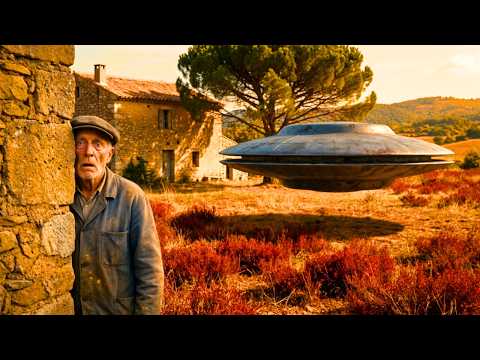
1981. Cet Incident OVNI en France Reste Inexplicable Même Aujourd'hui
A French-language retrospective on why the case remains classified as unresolved more than four decades later.
Sources
- GEIPAN / CNES. "TRANS-EN-PROVENCE (83) 08.01.1981" (official case file). cnes-geipan.fr
- GEIPAN / CNES. "Classification" (official A/B/C/D methodology). cnes-geipan.fr
- GEIPAN / CNES. "Its history" (GEPAN/SEPRA/GEIPAN institutional history since 1977). cnes-geipan.fr
- GEIPAN / CNES. "Mission & Geipan." cnes-geipan.fr
- CNES. "GEIPAN" project overview. cnes.fr
- Velasco, Jean-Jacques. "Report on the Analysis of Anomalous Physical Traces: The 1981 Trans-en-Provence UFO Case," Journal of Scientific Exploration, Vol. 4, No. 1, pp. 27–48 (1990). scientificexploration.org
- "Trans-en-Provence case," Wikipedia. en.wikipedia.org
- "Affaire de Trans-en-Provence," Wikipédia (French). fr.wikipedia.org
- "GEIPAN," Wikipedia. en.wikipedia.org
- "Trans-en-Provence," Wikipedia (commune). en.wikipedia.org
- The Black Vault Case Files. "Trans-en-Provence, France, Physical Trace Case – January 8, 1981." theblackvault.com
- Bibliotecapleyades. "UFO Briefing Doc – 1981: Physical Trace Case in Trans-en-Provence, France." bibliotecapleyades.net
- Observatoire Zététique / Book-e-book. "13. « Trans-en-Provence » (1981)," excerpt from Les OVNI du CNES. zetetique.fr
- Association française pour l'information scientifique (AFIS). "Trente ans d'études du CNES, OVNI et extra-terrestres." afis.org
- Rossoni, David, Éric Maillot, and Éric Déguillaume. Les OVNI du CNES: 30 ans d'études officielles (1977–2007), Book-e-book, 2007. amazon.com
- Britannica. "Today in History – January 8: UFO Sighting at Trans-en-Provence, France." britannica.com
- RealClearHistory. "Did UFO Land in Trans-en-Provence?" realclearhistory.com
- Cosmoquest / 365 Days of Astronomy. "April 21st: The Trans-en-Provence UFO Case." cosmoquest.org
- ARTL▼RK. "The Trans-en-Provence UFO Sighting." artlark.org
- Infinity Explorers. "The Trans-en-Provence UFO Encounter." infinityexplorers.com
- Moonlit Myths (Substack). "The Trans-en-Provence UFO." moonlitmyths.substack.com
- Think About It Docs. "1981: Trans-en-Provence Physical Trace Case." thinkaboutitdocs.com
- Amazon.com. "Confrontations: A Scientist's Search for Alien Contact," Jacques Vallée. amazon.com
- Amazon.com. "Ovnis : L'Évidence," Jean-Jacques Velasco. amazon.com
- Wikimedia Commons. "File: Trans en Provence.jpg" (CC BY-SA 2.0, hero image source). commons.wikimedia.org
- Clark, Jerome. The UFO Encyclopedia, 4th Edition, Relevant Information (entry on the Trans-en-Provence case; not checked for this revision).
- Vallée, Jacques. Confrontations: A Scientist's Search for Alien Contact, Ballantine Books, 1990 (its treatment of this case was not checked for this revision).
- GEPAN / CNES. Note Technique n°16, "Enquête 81/01 – Analyse d'une trace," CT/GEPAN-00013, 1 March 1983 (transcription). marcogee.free.fr
- Bounias, Michel. "Biochemical Traumatology as a Potent Tool for Identifying Actual Stresses Elicited by an Unidentified Source," Journal of Scientific Exploration, Vol. 4, No. 1, pp. 1–18 (1990).
- Gross, Patrick. "About the Trans-en-Provence case" (Maillot's critique, gendarmerie photographs). ufologie.patrickgross.org
- Wilson, Jim. "When UFOs Land." Popular Mechanics, May 2001.
Corrections (October 2026)
A fact-check against GEPAN's Note Technique n°16 (1983), GEIPAN's online case file and the critique in Rossoni, Maillot and Déguillaume's Les OVNI du CNES (2007) found that the earlier version of this page overstated the physical findings and misstated how the case began. Note Technique n°16 does not give a compression of "four to five tons" or heating of "300–600°C": it says no quantitative estimate of mass, pressure or heating was possible and gives only an upper heating limit of 600°; the tonnage is a later Velasco estimate he subsequently revised to 500–700 kg. The laboratories did not report "no conventional vehicle tread patterns"; the gendarmes themselves described the striations as "similar to skid marks," and two laboratories gave mundane readings of the deposit. The quotation attributing to the gendarmes the judgment that the witness's behavior "does not allow doubting his credibility" was not found; GEPAN's own, more guarded conclusion is now quoted. Nicolaï did not report the sighting himself (his wife told neighbours, who alerted the gendarmes), and by his account the object landed rather than hovered.
Following this review, the rating was changed from Disputed 64 to Disputed 50 (October 27, 2026), because the higher rating had rested partly on claims corrected or removed above.
Other corrections: the witness was a former works foreman on an invalidity pension rather than a "retired mason" (his age is given as 55 in most accounts, 52 in one); GEPAN's site visit came after heavy rain and a deliberate decision not to go immediately; the control plants were taken at 20 m, not 10 m; Bounias's thesis concerned temperature and light, not radiation "in collaboration with the atomic energy commission"; the Nort-sur-Erdre case dates from 1987, not 1997; the Nancy-Amancé case from October 1982, not January; the Sturrock workshop was not convened by the Society for Scientific Exploration; GEIPAN's "periodic re-reviews" were not documented and are replaced by its current online classification; a "tractor" and a neighbour's recollection attributed to the skeptics were not found in their work; and the publisher of the fourth edition of Jerome Clark's UFO Encyclopedia is corrected from Visible Ink Press to Relevant Information. The skeptical case, the witness's 1989 television remark, the weather and air-traffic checks, and the laboratories' individual findings were added.
See something inaccurate? Have additional information or sources?
Suggest an Edit →Last Updated: August 2026