
UFOs: The Evidence
Jean-Jacques Velasco's 2004 Insider Case for the Extraterrestrial Hypothesis, Written From Inside France's Own Official UFO Unit
Core Thesis
OVNIS l'évidence ("UFOs: The Evidence") is not a committee report like this site's own COMETA Report essential-reading entry — it is a single career government investigator's personal case, made in his own name, published by Carnot Éditions on April 8, 2004, as 220 pages co-written with journalist Nicolas Montigiani. Its author, Jean-Jacques Velasco, had by 2004 spent nearly three decades inside CNES's GEPAN and SEPRA units — France's unusual, sustained official government UAP study program — rising from technician to the office's director. Where COMETA's roughly thirty retired generals and engineers hedged their conclusion as merely the "most probable" explanation for a residual case category, Velasco's own book goes further: drawing on SEPRA's internal statistics from roughly 6,000 cases reviewed since 1977, he argues that some 13 percent display flight performance no conventional explanation accounts for, states his own preference for the extraterrestrial hypothesis without COMETA's reservations, and proposes a correlation between UFO sightings and military nuclear activity. The book appeared during the same year CNES formally dissolved SEPRA and replaced it with GEIPAN — a sequence of events this article treats carefully as a documented timeline, not a proven causal claim.
About the Author
Jean-Jacques Velasco was born in 1946 and trained not as a scientist with an advanced research degree but as an optical technician, holding a Brevet de Technicien Supérieur (a French higher technical diploma) in optics; he worked on France's SPOT Earth-observation satellite program before Claude Poher recruited him into the newly founded GEPAN (Groupe d'Étude des Phénomènes Aérospatiaux Non-identifiés) at CNES in 1977. Velasco spent the next four years as GEPAN's field investigator, most notably leading the February 17, 1981 on-site investigation of the Trans-en-Provence landing and coordinating the multi-laboratory soil and plant analysis that followed. In 1983, following director Alain Esterle's resignation, Velasco succeeded him as GEPAN's director, advancing internally from technician to what CNES designated "in-house engineer" status — a promotion this article notes honestly rather than inflating into a formal engineering degree he did not hold, since some later secondary coverage has described him simply as an "engineer" without that distinction.
When GEPAN was reorganized into SEPRA (Service d'Expertise des Phénomènes de Rentrée Atmosphérique) on January 1, 1988, Velasco continued as its director, running the office with reduced staff and resources through the 1990s and into the 2000s — making him, for roughly two decades, one of the very few people in the world whose actual government job was investigating UFO reports. During the same period he served for over a decade as Socialist mayor of a small commune in the Haute-Garonne department, the same department that hosts CNES's own Toulouse headquarters, running his UFO-investigation office and a local elected post concurrently. Velasco presented Trans-en-Provence's physical-trace evidence at physicist Peter Sturrock's 1997 Pocantico workshop, documented at length in this site's own Sturrock Panel case file, and was one of the named external contributors consulted by the COMETA committee in 1999, giving him a direct hand in both of French ufology's central government-linked documents.
Co-author Nicolas Montigiani, born in 1973, is a French investigative journalist and photographer who has served as director of publication for the French magazine Science et Inexpliqué. He came to the UFO subject somewhat differently than Velasco: his own prior book, Crop Circles: Manoeuvres dans le ciel (2003), argued after field research in Wiltshire and Hampshire that most English crop formations resulted from secret British military testing of laser- or maser-equipped balloon technology, not extraterrestrial activity — a conventional, if unconfirmed, explanation rather than an exotic one. His pairing with Velasco on OVNIS l'évidence, and later on 2007's Troubles dans le ciel, marked Montigiani's shift toward openly favoring the extraterrestrial hypothesis for at least a residual portion of the UFO phenomenon, working from Velasco's own institutional case files rather than independent field investigation.
SEPRA was formally dissolved in 2004, the same year this book appeared, and CNES completed Velasco's transition to its "Culture Spatiale" (Space Culture) outreach department by mid-2005, around the time CNES launched SEPRA's successor, GEIPAN (Groupe d'Études et d'Informations sur les Phénomènes Aérospatiaux Non identifiés). This article treats Velasco's decades of hands-on field and laboratory case management as genuine and well-documented, while noting plainly, in the spirit of this site's own COMETA entry, that his credibility here rests on institutional access and firsthand casework rather than on a formal scientific research career — a distinction his own critics have not hesitated to raise.
Historical Context & Origins
By 2004, France's GEPAN/SEPRA program was already the longest continuously operating official government UAP study effort in the world, and Velasco was its longest-serving director, having led it in one form or another since 1983. OVNIS l'évidence arrived five years after the 1999 COMETA report, to which Velasco had personally contributed case material and consultation, and it can be read as Velasco finally publishing, under his own name and without a committee's editorial hedging, the fuller argument COMETA's authors had built partly on his own GEPAN and SEPRA fieldwork.
The book's timing sits at an unusually consequential institutional moment: Velasco was, at the time of writing, still SEPRA's serving director, and the book's publication coincided almost exactly with CNES's decision to dissolve SEPRA and reorganize its UFO-study function into GEIPAN, formally established the following year with an explicitly more cautious, terminology-neutral institutional posture (adopting COMETA's own recommended "PAN" framing over "OVNI"). Several secondary sources covering this transition have described Velasco's public, unreserved extraterrestrial-hypothesis advocacy in this book as a contributing factor CNES leadership cited in deciding to restructure the office away from a single outspoken director's personal conclusions — a characterization this article reports as widely repeated in secondary coverage rather than as an officially confirmed institutional rationale, since CNES's own public statements on the reorganization have not explicitly named the book as a cause.
OVNIS l'évidence also arrived into a French ufological landscape still processing COMETA's mixed reception — a credentialed committee report mocked in the mainstream press yet taken more seriously abroad — and Velasco's book, by contrast, offered readers a first-person insider account from the one person who had personally managed the underlying government case files COMETA and countless secondary sources had only summarized. Montigiani's own recent immersion in French UFO-adjacent research through his 2003 crop-circle book gave the pairing a working journalist's narrative sensibility that a purely institutional document like COMETA could not offer.
Core Arguments & Key Concepts
The book's central statistical claim, drawn from Velasco's own SEPRA case files, holds that of roughly 6,000 UAP reports GEPAN and SEPRA formally investigated between 1977 and the early 2000s, approximately 13 percent displayed aeronautical performance characteristics — extreme acceleration, silent hovering, right-angle turns at speed — that Velasco argues no known aircraft, natural phenomenon, or hoax convincingly explains, a residual category he presents as the book's titular "evidence." This figure is presented as Velasco's own institutional statistic rather than an independently peer-reviewed dataset, and this article treats it accordingly: as the claim of the office's own director rather than a figure independently audited by outside statisticians before publication.
Unlike COMETA's carefully hedged language distinguishing "the phenomenon is real" from "we know what it is," Velasco states his own preference for the extraterrestrial hypothesis directly and without that same reservation, arguing that the residual 13-percent category is most economically explained by genuine non-human craft rather than by classified human technology, natural phenomena not yet catalogued, or systematic investigative error. This is the book's clearest point of departure from the COMETA report it otherwise resembles in evidentiary source material: a single, institutionally credentialed voice choosing to go further than the committee document he had helped supply with case data.
The book's second major argument proposes a statistical correlation between UFO sighting frequency and proximity to military nuclear installations — citing sightings clustered near French nuclear missile and storage sites as well as historical American cases, in the same evidentiary territory this site's own UFOs & Nukes essential-reading entry covers in far greater depth from an American vantage point — and interprets that correlation as suggestive of extraterrestrial monitoring of human nuclear activity, a hypothesis Velasco does not claim to have proven but presents as worth serious institutional follow-up.
Structurally, the book walks through a small set of case studies Velasco personally investigated or supervised at GEPAN/SEPRA, using them to build the statistical and interpretive case above rather than presenting new fieldwork; its evidentiary base, like COMETA's, is drawn from GEPAN/SEPRA's existing institutional archive rather than newly gathered data specific to the book itself.
Key Cases & Evidence Discussed
The Trans-en-Provence landing (Case File #099, January 1981) anchors the book's physical-evidence argument, presented in far more personal detail than any secondary source could offer since Velasco was the GEPAN engineer who conducted the February 17, 1981 site investigation and coordinated the multi-laboratory soil and plant analysis himself. The book treats the case's mechanical compression, thermal, and chlorophyll-deficit findings as the clearest example of the residual, genuinely unexplained category his statistical argument rests on.
Velasco discusses a case widely referred to in French ufological literature as the "amarante déshydratée" (dehydrated amaranth) incident, involving reported electromagnetic-style effects on vegetation investigated under SEPRA; this site has not independently catalogued this specific case as its own file, and this article accordingly does not extend it a site-internal case-file cross-link, citing instead the secondary sources that describe Velasco's own account of it.
The book also revisits the January 28, 1994 Air France Flight 3532 sighting (Case File #196), in which Captain Jean-Charles Duboc's crew reported a large object near Coulommiers alongside a disputed radar track — a case Velasco's SEPRA formally investigated and that COMETA's own authors separately drew on the same year Velasco was consulting for their committee.
Because Velasco was a named external contributor to the 1999 COMETA report, documented in depth in this site's own COMETA Report Context case file (Case File #124), this book functions in part as Velasco's own fuller, less hedged treatment of case material COMETA's committee had already summarized five years earlier under its own more cautious institutional voice.
Critical Reception & Controversies
The most detailed contemporary technical critique came from Robert Alessandri, published on the French ufology-review site univers-ovni.com, who characterized the book's underlying statistical methodology as fundamentally flawed. Alessandri argued that Velasco's presentation of the roughly-13-percent figure involved selectively excluding low-report years from the underlying dataset, constructing graphs that visually overstated the trend, and that the proposed nuclear-site correlation more plausibly reflected the simple historical coincidence of radar technology's development and deployment accelerating during and after World War II — the same era nuclear weapons testing began — rather than any genuine extraterrestrial surveillance pattern. Alessandri further noted that Velasco, despite the book's claims to institutional rigor, had not made SEPRA's underlying case archive available for independent statistical verification by outside researchers at the time of publication.
A broader and more systematic critique came three years later from French researchers David Rossoni, Éric Maillot, and Éric Déguillaume, affiliated with the Observatoire Zététique skeptical-inquiry group, in their 2007 book Les OVNI du CNES: 30 ans d'études officielles (1977–2007) — the same skeptical rebuttal this site's own Trans-en-Provence case file already cites as that case's most detailed published critique. Their broader argument, reviewing nine of GEPAN/SEPRA's own "remarkable cases" including Trans-en-Provence and Air France 3532, holds that despite the office's stated methodological rigor, its directors — first Claude Poher, then Velasco — rarely subjected their strongest cases to the same exhaustive search for conventional explanations they claimed to apply, making the extraterrestrial-hypothesis conclusions both men eventually reached, in Velasco's case explicitly in this book, scientifically premature by the researchers' own standard.
A separate line of criticism concerns institutional propriety rather than statistics: because Velasco was still SEPRA's serving director when the book was published, some commentators have questioned whether a sitting government office head should publish a personal, unreserved advocacy book drawing on that office's own non-public case files, distinct from an ordinary academic's right to publish personal conclusions. This site notes, without asserting a firm causal claim, that CNES's decision to dissolve SEPRA and create the more institutionally cautious GEIPAN followed within roughly a year of this book's release, a sequence widely remarked upon in secondary French ufological commentary.
Even sympathetic readers within ufology have distinguished this book's evidentiary standard from COMETA's: where COMETA's authors explicitly limited themselves to describing the extraterrestrial hypothesis as merely "most probable," reviewers across the ufological spectrum have generally read Velasco's book as staking a firmer personal claim, which has made it a more frequently cited target for statistical critique than the more hedged COMETA text it partly draws from.
Influence & Legacy
OVNIS l'évidence remains one of the very few books in the international UFO/UAP literature written by a career government official, in his own name, while still serving in the post that generated the underlying case files — a distinction that separates it from both COMETA's committee-authored hedging and the far more common genre of retired-official memoirs published years after leaving office. That firsthand institutional access is the book's most durable legacy, regardless of how its statistical claims have fared under scrutiny.
Velasco and Montigiani followed this book with Troubles dans le ciel in 2007, continuing the same collaborative approach and extending Velasco's public advocacy years after his formal SEPRA role had ended, suggesting the pairing's 2004 book functioned as the opening statement of a longer authorial partnership rather than a one-off release.
The book's most concrete institutional legacy is circumstantial but well documented: SEPRA's dissolution and GEIPAN's 2005 creation, adopting a more cautious, statistically modest public posture than Velasco's own book had modeled, followed within about a year of its publication — a sequence this site's own COMETA Report essential-reading entry also references in describing GEIPAN's 2005 founding and its explicit 2007 non-endorsement of COMETA's own conclusions.
Within the skeptical wing of French ufology, this book has become a recurring reference point precisely because of its statistical claims: Robert Alessandri's critique and the Observatoire Zététique's broader 2007 review of GEPAN/SEPRA/GEIPAN's thirty-year history both use it as a case study in how an insider's institutional authority can outrun the statistical rigor that authority is presumed to guarantee, a tension this site's own Trans-en-Provence case file discusses in the specific context of the tire-track counter-theory to Velasco's own ground-trace findings.
The Book
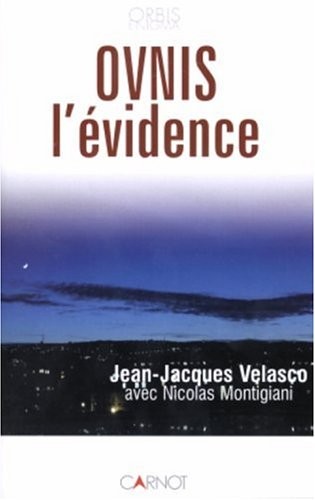
UFOs: The Evidence
Jean-Jacques Velasco's 2004 Insider Case for the Extraterrestrial Hypothesis, Written From Inside France's Own Official UFO Unit
Find on Amazon →As an Amazon Associate, OverClassified may earn from qualifying purchases made through this link, at no extra cost to you.
Why This Is Essential Reading
OVNIS l'évidence earns its place on this list as the personal, unreserved counterpart to this site's own COMETA Report entry: where COMETA is a hedged committee document assembled by roughly thirty credentialed outsiders drawing partly on Velasco's own casework, this 2004 book is the case files' actual custodian speaking in his own name, at the very end of his tenure running the office that produced them. Its genuine strength is unmatched firsthand access — nearly three decades managing GEPAN and SEPRA's investigations, including personally leading the Trans-en-Provence site work this site's own case file treats as one of ufology's most carefully documented physical-trace cases. Its real limitations are equally well documented: a statistical argument critics including Robert Alessandri and the Observatoire Zététique's Rossoni, Maillot, and Déguillaume have identified as methodologically flawed, a nuclear-correlation hypothesis with a more mundane historical rival explanation, and a publication timeline that coincided, whether as cause or consequence, with CNES's own decision to retire the office Velasco had led in favor of the more cautious GEIPAN. Read alongside this site's own Trans-en-Provence and Air France 3532 case files and the COMETA Report entry, this book is essential precisely because it shows what happens when the same underlying government case record is presented first by a hedging committee and then, five years later, by the one man who had personally managed that record from the field.
Related Cases & Theories
Essential Viewing
L'ex-directeur du GEPAN brise le silence (J.J Velasco)
Biomécanique — Jean-Jacques Velasco, speaking after his GEPAN/SEPRA career, on his own investigations and conclusions about the UFO phenomenon. Verified via YouTube oEmbed before inclusion.
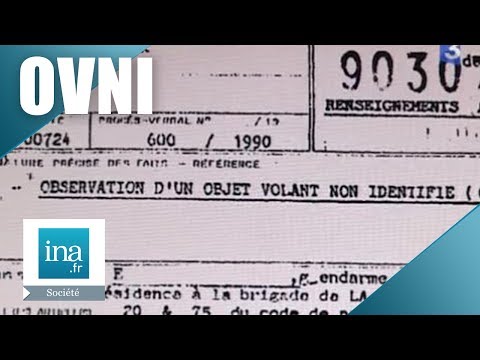
Le CNES ouvre ses archives sur les OVNI | Archive INA
INA Société — France 3's March 22, 2007 national evening news segment on CNES opening its historical UFO case archive to the public, featuring Velasco identified as GEPAN's former director. Verified via YouTube oEmbed before inclusion.
Sources Cited
- Velasco, Jean-Jacques, and Nicolas Montigiani. OVNIS l'évidence. Carnot Éditions, April 8, 2004, 220 pp. (ISBN 2-84855-054-6 / 9782848550541). amazon.com
- Open Library. "Ovnis L'Evidence" — bibliographic record and cover art used to verify this edition's ISBN and physical description.
- "Jean-Jacques Velasco." Wikipédia (French-language biography, GEPAN/SEPRA career timeline, publications). fr.wikipedia.org
- rr0.org. "Jean-Jacques Velasco" — detailed independent biographical timeline of Velasco's GEPAN and SEPRA career.
- "Nicolas Montigiani." Wikipédia (French-language biography, prior crop-circle research, collaboration with Velasco). fr.wikipedia.org
- Alessandri, Robert. "Jean-Jacques Velasco: Ovnis l'évidence", univers-ovni.com — the most detailed published statistical and methodological critique of this specific book.
- Observatoire Zététique. "Les OVNI du CNES, trente ans d'études officielles (1977–2007)" — overview of the group's systematic review of GEPAN/SEPRA/GEIPAN's thirty-year case record.
- Rossoni, David, Éric Maillot, and Éric Déguillaume. Les OVNI du CNES: 30 ans d'études officielles (1977–2007), Book-e-book, 2007. amazon.com
- Observatoire Zététique / Book-e-book. "13. « Trans-en-Provence » (1981)," excerpt from Les OVNI du CNES. zetetique.fr
- INA (Institut National de l'Audiovisuel). "Les archives du CNES sur les ovnis", France 3 national evening news, March 22, 2007, featuring Velasco as former GEPAN/SEPRA director. Verified via YouTube oEmbed before inclusion.
- CNES. "GEIPAN" project overview page, describing GEIPAN's 2005 founding as SEPRA's institutional successor.
- This site's own case file: Trans-en-Provence Sighting (Case File #099), for the full investigation Velasco personally led and this book's central physical-evidence case.
- This site's own case file: COMETA Report Context (Case File #124), documenting Velasco's role as a named external contributor to the 1999 committee report.
- This site's own case file: Air France Flight 3532 / Capt. Duboc Sighting (Case File #196), a case this book revisits from SEPRA's own investigative file.
- This site's own essential-reading entry: UFOs and Defense: What Should We Prepare For? (The COMETA Report) (ER-129), the hedged committee-authored counterpart to this book's unreserved personal argument.
- This site's own key-figures entry: Jean-Jacques Velasco, for his full GEPAN/SEPRA career biography.
- This site's own resources library: Full Reading List, where this title is already cited under its canonical ISBN on this site's own Trans-en-Provence case file.
Have corrections, additional research, or peer-reviewed sources? Help improve this entry.
Suggest an Edit