
UFOs and Defense: What Should We Prepare For?
The 1999 COMETA Report — Reading the Document a Committee of French Generals Actually Wrote
Core Thesis
The COMETA report is not, strictly, a book in the conventional sense any more than the Condon Report is — it is a 90-page private defense-policy study, drafted over roughly three years by a committee of French retired and serving generals, an admiral, weapons engineers, a physicist, a police official, and space-agency figures operating under the banner of an association they formally incorporated only weeks before releasing it, and it exists today primarily in the 2003 Éditions du Rocher print edition this article treats as its citable book form. Titled Les OVNIs et la Défense: À quoi doit-on se préparer? ("UFOs and Defense: What Should We Prepare For?"), it was personally delivered to French President Jacques Chirac and Prime Minister Lionel Jospin before its July 16, 1999 public release, and its headline finding — that the extraterrestrial hypothesis is the "most probable" explanation for a residual category of well-documented, radar-corroborated cases — has made it one of the most frequently cited documents in international UFO/UAP literature. This site's own Case File #124, COMETA Report Context, already covers the report's full institutional history, its authors' individual credentials, its press reception, and its DISPUTED classification in exhaustive detail; this article's narrower job is describing what the report itself actually says and how it is actually built, section by section, as a document a reader can sit down and read.
About the Author
The COMETA report has no single author in the conventional sense; it is a collective work credited to the association COMETA (Comité d'Études Approfondies, "Committee for In-Depth Studies"), chaired by retired French Air Force General Denis Letty. Letty's own career included fighter squadron command flying Mirage III and Mirage F1 aircraft, base command at Strasbourg, air operations command during French military operations in Chad and Mauritania, and a posting as chief of the French military liaison mission to NATO allied forces at Ramstein. As an auditor (graduate) of the Institut des Hautes Études de Défense Nationale (IHEDN), Letty assembled the informal study circle around 1996 that eventually incorporated as COMETA on February 24, 1999, drawing its membership overwhelmingly from IHEDN's alumni network at the École Militaire in Paris.
The report's published, non-exhaustive membership list names roughly a dozen core committee members alongside Letty: Air Force General Bruno Lemoine; Admiral Marc Merlo; weapons engineer General Pierre Bescond; weapons engineer and physicist General Alain Orszag; honorary engineer general Dr. Jean Dunglas; Christian Marchal, chief engineer of the Corps des Mines and research director at ONERA, France's national aerospace research agency; Michel Algrin, a doctor of political science and practicing lawyer; and Denis Blancher, a chief commissioner in the French national police. External contributors credited by name include Jean-Jacques Velasco, then the serving head of SEPRA at CNES, France's national space agency; photo-analysis specialist François Louange; former Air France technical director Edmond Campagnac; and several serving and former military and civilian pilots, including Jean-Charles Duboc. The book's preface was written by retired General Bernard Norlain, IHEDN's own former director, and its scientific preamble by André Lebeau, a former president of CNES. This article, in line with the site's own case file, is careful about a detail independent researcher Patrick Gross has separately documented: several members later described in popular coverage simply as "retired" were, per his research, still professionally active in relevant fields when the report was written, complicating the "consensus of elder statesmen with nothing left to prove" framing that circulates in secondary accounts.
None of COMETA's members had any documented prior professional specialization in UAP investigation as a discipline; their collective credibility rests entirely on adjacent defense, engineering, aerospace, and scientific careers rather than on any pre-existing ufological expertise, a distinction the report's own authors do not obscure. What none of the source material located for this article could verify is any COMETA member named "Alain Boyer"; no independently corroborated membership list, including the report's own published roster and Patrick Gross's detailed independent documentation, includes that name, and this article does not include him among the report's credited contributors on that basis.
Historical Context & Origins
By the mid-1990s, France already had, and still has, the longest continuously operating official government UAP study program of any nation: CNES engineer Claude Poher founded GEPAN (Groupe d'Études des Phénomènes Aérospatiaux Non-identifiés) inside the space agency in 1977, and its successor SEPRA, headed through most of the 1990s by Jean-Jacques Velasco, had already investigated cases like the 1981 Trans-en-Provence landing under a genuine multi-laboratory scientific protocol. COMETA did not invent a new investigative methodology; it explicitly adopted GEPAN's own four-part case-analysis framework (witness, testimony, physical environment, psychosociological environment) and GEPAN/SEPRA's four-tier A–D case classification, and its central argument builds directly on the fact that GEPAN and its successors had themselves reported a persistent residual "Category D" (unexplained despite adequate data) percentage across two decades of official case review.
The report's authors were also writing against a backdrop of genuine institutional frustration inside France's defense-and-aerospace establishment: a sense, expressed most directly in André Lebeau's scientific preamble, that a rare but collectively and reliably observed phenomenon deserved ordinary scientific treatment regardless of a researcher's personal beliefs about its ultimate cause, and that France's existing study apparatus was under-resourced relative to the seriousness of the question. Letty's IHEDN study circle began meeting informally around 1996 specifically to examine the UAP question's national-security dimensions — not as ufology, but as a defense-planning exercise: what should French air-defense doctrine, and French diplomacy, actually do if some fraction of these cases really do involve technology beyond current human capability.
COMETA formally incorporated as a nonprofit association under French law on February 24, 1999, only months before the finished report's release, capping roughly three years of informal committee work, case review, and consultation with Velasco and outside specialists. The finished 90-page document was personally delivered to President Jacques Chirac and Prime Minister Lionel Jospin at Hôtel Matignon before its wider public release as a special supplement to the French weekly magazine VSD on July 16, 1999 — a delivery sequence its authors clearly intended to lend the document gravity, and one secondary coverage has since, repeatedly and inaccurately, mistaken for evidence that the French government itself had commissioned or endorsed it. It had not: COMETA was, at every point in its existence, a private nonprofit association, never a government commission or ministry body.
Core Arguments & Key Concepts
Because this entry covers a defense-policy report rather than a conventional argumentative trade book, its "core arguments" section describes how the document is actually built, not a thesis an individual author set out to persuade a reader of. The finished report is organized into three parts plus a conclusion. Part One presents a selection of case studies its authors judged particularly well-documented, drawing on both French and foreign material: the 1981 Trans-en-Provence landing, the September 1976 Tehran incident, the 1957 RB-47 electronic intercept case, the 1980 Bentwaters–Lakenheath radar-visual case in England, a French military Mirage IV pilot account, a 1994 Air France Flight AF 3532 encounter, and the 1965 Valensole close encounter, among others.
Part Two steps back from individual cases to review the existing state of official and scientific knowledge on the subject — principally GEPAN/SEPRA's own institutional history and case statistics in France, and a survey of other countries' government engagement, or lack of it, with the subject. Part Three is the report's actual argument-and-recommendation section: an assessment of what a residual UAP category might mean for national air-defense doctrine, a discussion of possible motives and technologies under the assumption the extraterrestrial hypothesis were true, and a set of five concrete policy recommendations, the most consequential of which urged broadening official French terminology from "OVNI" (UFO) to the wider "PAN" (Phénomènes Aérospatiaux Non-identifiés) framing — the one recommendation the French government eventually adopted, years later, when SEPRA was reorganized into GEIPAN in 2005.
The report's own language on its central conclusion is more hedged, on the page, than most summaries of it suggest. It states that the "almost certain physical reality" of unidentified flying objects displaying extraordinary performance characteristics is established by the case record its authors reviewed, and that among competing explanations for a residual, unexplained category, the extraterrestrial hypothesis "appears to be the most 'probable' or 'credible'" — while explicitly distinguishing that judgment from any claim of proof, and from any specific claim about visitor intent or contact. Reading the report's actual "Findings" section rather than secondary paraphrases of it is the clearest way to see that distinction the report itself draws between "the phenomenon is real" and "we know what it is," a distinction that has frequently collapsed in how the document circulates online.
A structural feature of the report worth noting for any reader approaching the book directly: its evidentiary base is entirely secondhand. COMETA conducted no independent case investigation, laboratory testing, or original data collection of its own; every physical-trace and radar claim it makes is inherited, with attribution, from prior official investigations — above all GEPAN's own 1981 laboratory work at Trans-en-Provence. The report's contribution is argumentative and institutional synthesis, not new observational or forensic evidence, a distinction its own authors did not conceal but which its reputation has often obscured.
Key Cases & Evidence Discussed
This report's organizing subject is inseparable from this site's own Case File #124, COMETA Report Context, which documents the committee's full institutional history, its timeline from the 1996 IHEDN study circle through the 2007 GEIPAN archival publication, and its DISPUTED classification at a depth this article does not repeat. Where that case file weighs whether COMETA functioned as a credible scientific body, this article's narrower job is describing what a reader actually encounters inside the report's own 90-page text.
The Trans-en-Provence landing (January 1981) receives the report's most substantive physical-evidence treatment, cited for GEPAN's own multi-laboratory soil and plant analysis — mechanical ground compression consistent with several tons of pressure, localized heating, trace phosphate and zinc deposits, and a measured chlorophyll deficit in nearby alfalfa — evidence COMETA correctly attributes to Jean-Jacques Velasco's original GEPAN fieldwork rather than claiming as its own.
The September 1976 Tehran incident, in which Iranian F-4 Phantom crews reported instrument and weapons-system failures while approaching a bright object, and the July 1957 RB-47 electronic intercept case over the U.S. Gulf Coast, supply the report's strongest international radar and electronic-countermeasure evidence, both cited at length in Part One's case-study section.
The report's discussion of a 1994 Air France Flight AF 3532 encounter draws on testimony from Captain Jean-Charles Duboc, who was later interviewed directly by COMETA under Letty's chairmanship after reporting the sighting to SEPRA — one of the few instances where a report contributor's own firsthand testimony, rather than archival case review, fed directly into the document's content.
Critical Reception & Controversies
If COMETA's authors expected their collective defense and engineering credentials to buy the report a respectful hearing in the French press, the reception was close to the opposite. Even before the July 1999 public release, Libération greeted news of the group's existence with a punning headline, "Ovni soit qui mal y pense" (February 21, 1999). After release, the satirical weekly Le Canard enchaîné ran "Frappes chirurgicales contre les Martiens" ("Surgical strikes against the Martians," July 21, 1999), and journalist Marc Traverson published a more substantive but still dismissive review in L'Express, "Ovnis: un rapport délirant" ("UFOs: a deranged report," August 5, 1999), quoting sociologist Pierre Lagrange's assessment that the report uncritically revived material other researchers already considered folklore. Notably, France's two most prominent national dailies, Le Monde and Le Figaro, did not cover the report's release at all — a genuine silence, not muted coverage, that COMETA's sympathizers have read as tacit acknowledgment of the report's seriousness and skeptics have read as ordinary professional disinterest in a document that did not meet standard journalistic evidentiary bars.
The most sustained technical critique came from Claude Maugé, a mathematics and physics teacher affiliated with the University of Nice Sophia-Antipolis's zeteticism (skeptical-inquiry) laboratory, who published a detailed commentary in the French skeptical journal Inforespace in June 2000. Maugé argued that COMETA's authors, whatever their genuine defense and engineering credentials, lacked the specific investigative training and methodological rigor UAP case analysis actually requires, and that the report's case selection favored dramatic, hard-to-explain-sounding accounts over the far larger body of cases conventional analysis resolves cleanly — a selection-bias critique distinct from, and more substantive than, the press's simple mockery.
A separate and recurring line of criticism concerns the report's own framing as an argument from authority: because COMETA's central persuasive asset is the collective professional standing of its named contributors rather than new evidence or peer-reviewed analysis, critics have pointed out that impressive credentials in defense, engineering, or aerospace administration do not, by themselves, constitute expertise in UAP case investigation as a discipline — a criticism that does not depend on doubting any individual member's sincerity or actual career record. A related and more specific dispute concerns COMETA's own formal status: skeptic Claude Maugé and other commentators have noted that COMETA was, at every point, a private nonprofit association rather than any kind of officially chartered body, and that some press and popular coverage describing it as an "official French report" or a body with genuine institutional backing beyond its members' individual resumes has overstated its actual standing.
Reception outside France followed a different, quieter track. Journalist Leslie Kean wrote the first substantial English-language account of the report, published in the Boston Globe on May 21, 2000, with edited versions appearing in the Irish Times and in VSD itself; despite Kean's expectation that the story would generate real news attention in the United States, it produced comparatively little follow-up coverage at the time, a gap she has separately attributed to the U.S. government's tight control over public discussion of unexplained sightings in that period. Gildas Bourdais's 2000 International UFO Reporter summary, published by the Center for UFO Studies, became for many English-speaking readers their primary point of access to the report's actual contents, and his generally sympathetic framing contributed to a popular international reputation for the document somewhat more authoritative than its private, unofficial status actually supports.
Influence & Legacy
The report's most concrete, verifiable institutional legacy is one specific recommendation among its five: the proposal to broaden official terminology from "OVNI" (UFO) to the wider "PAN" (Phénomènes Aérospatiaux Non-identifiés) framing was substantively adopted when CNES reorganized SEPRA into GEIPAN (Groupe d'Études et d'Informations sur les Phénomènes Aérospatiaux Non identifiés) in 2005 — a real, traceable piece of follow-through, even as the report's other four recommendations, including a proposed high-level government decision-making structure and discreet diplomatic contact with the United States, were never publicly confirmed as implemented.
On May 11, 2007, GEIPAN published an archival copy of the report on its own website, accompanied by an explicit public statement that doing so "does not signify in any way an approval of the report by CNES" — the single clearest documentary evidence available that COMETA was never, at any point, an official French government report, despite how frequently it continues to be described that way in secondary and tertiary UFO literature.
The report's underlying argument — that France's unexplained UAP residue deserved sustained, credentialed, methodologically serious study — found a second institutional life through an entirely separate organization: in 2008, Michel Scheller, then president of the 3AF (Association Aéronautique et Astronautique de France), created the SIGMA Commission specifically to revisit the UAP question using working aerospace engineers and scientists, and its successor SIGMA2 continues publishing technical progress reports on GEIPAN's own Category D cases as recently as 2021 — the closest thing COMETA's 1999 recommendations ever received to genuine, ongoing scientific follow-through.
In the English-language UFO/UAP literature, this book's afterlife has been disproportionate to its actual documented institutional weight. Leslie Kean's influential 2010 book UFOs: Generals, Pilots, and Government Officials Go on the Record situates COMETA within a broader international pattern of credentialed officials speaking on the subject, and Kean's own entry into UFO journalism traces directly to her 2000 assignment covering it. This site's own UFO Briefing Document essential-reading entry (ER-089) documents a more direct genealogical link in the other direction: former U.S. Ambassador to France Evan Galbraith's wife Marie Galbraith's 1995 Rockefeller-funded UFO Briefing Document was distributed in Paris to figures including CNES, and COMETA's own authors explicitly modeled their methodology on that earlier American compilation, crediting it by name in their own text.
The Book
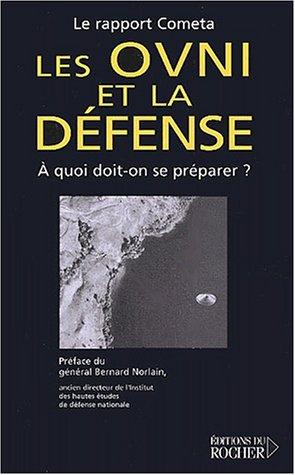
UFOs and Defense: What Should We Prepare For?
The 1999 COMETA Report — Reading the Document a Committee of French Generals Actually Wrote
Find on Amazon →As an Amazon Associate, OverClassified may earn from qualifying purchases made through this link, at no extra cost to you.
Why This Is Essential Reading
UFOs and Defense: What Should We Prepare For? earns its place on this list not because it is a conventional book — at 90 original pages, expanded to 221 in its 2003 Éditions du Rocher print edition, it is closer in form to a defense-policy white paper than to a trade title — but because it remains one of the most institutionally distinctive documents in the entire UAP literature: a private committee of roughly thirty credentialed retired and serving French generals, an admiral, weapons engineers, a physicist, space-agency officials, and a police official, adopting an existing government research agency's own case-classification methodology and concluding, in carefully hedged language, that the extraterrestrial hypothesis was the most probable explanation for a residual, unexplained category of cases. Its genuine strengths — verifiable senior credentials, a direct consultative link to SEPRA's own serving director, and a real, traceable piece of policy follow-through in GEIPAN's 2005 terminology change — are real. Its real limitations are equally documented: it is a private nonprofit association's advocacy document, not a government-commissioned study, its own government's space agency explicitly declined to endorse it when archiving it in 2007, and its most substantive technical critic identified real methodological weaknesses in its case selection that neither COMETA nor its later defenders have directly rebutted. Read alongside this site's own COMETA Report Context case file for the full institutional history this article does not repeat, this report is essential precisely because it is the clearest available test case for a question that recurs across UAP literature: how much should a claim's credibility rest on the credentials of the people making it, versus the independently verifiable evidence behind it — and COMETA is unusually well-documented on both sides of that question at once.
Related Cases & Theories
Essential Viewing
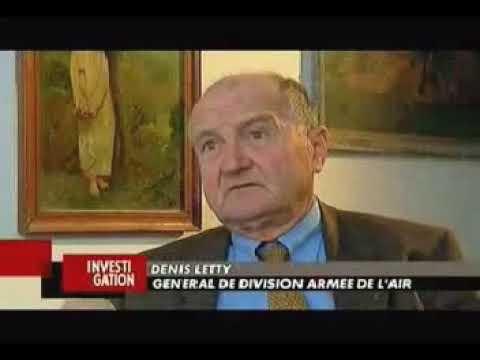
UFO / OVNI - Le général Denis Letty sur le Rapport Cometa
Topsy Kretts 23 — General Denis Letty, the COMETA committee's own chairman, speaking directly about the report he assembled and the case for taking its residual unexplained category seriously. Verified via YouTube oEmbed before inclusion.
![1999 🇲🇫 #UFOB [EDIT] The French Cometa UFO Report](/images/thumbs/9BzyQ9GGdrc.jpg)
1999 🇲🇫 #UFOB [EDIT] The French Cometa UFO Report
UFOB | Your UAP Library — An English-language overview of the COMETA report's 1999 origins, its committee structure, and its extraterrestrial-hypothesis conclusion. Verified via YouTube oEmbed before inclusion.
Sources Cited
- COMETA (Association). Les OVNI et la Défense: À quoi doit-on se préparer? Éditions du Rocher, 2003, 221 pp., preface by Général Bernard Norlain (ISBN 2-268-04592-7 / 9782268045924). amazon.com
- GEIPAN / CNES. "À propos de la publication du rapport COMETA" (May 11, 2007) — GEIPAN's official statement explicitly denying that archiving the report constitutes CNES endorsement.
- GEIPAN / CNES. Rapport COMETA (full scanned French-language text, as archived by GEIPAN).
- "COMETA report." Wikipedia (formation history, membership, ISBN of the 2003 Éditions du Rocher edition, findings, and reception). en.wikipedia.org
- Archive.org. "UFOs and Defense: What Should We Prepare For?" (English translation, full text), used to verify the report's own stated membership list, methodology, and exact conclusions language.
- Patrick Gross. "UFOs at Close Sight: French Report COMETA, 1999" — detailed independent documentation of the report's membership, case selections, and reception.
- Claude Maugé. "Commentaire sur COMETA," Inforespace, no. 100 (June 2000), p. 78 — the most substantive contemporary technical critique of the report's methodology and case selection.
- Marc Traverson. "Ovnis: un rapport délirant," L'Express, August 5, 1999 (archived). lexpress.fr
- Center for UFO Studies (CUFOS). Gildas Bourdais. "The French Report on UFOs and Defense: A Summary", International UFO Reporter, Summer 2000.
- Kean, Leslie. "Strange Aircraft Just Won't Go Away" and related COMETA coverage, Boston Globe, May 21, 2000; syndicated in the Irish Times and VSD (France).
- Kean, Leslie. UFOs: Generals, Pilots, and Government Officials Go on the Record. Harmony Books, 2010 (comparative context on international credentialed UAP testimony; this site's own essential-reading entry).
- Swords, Michael, and Robert Powell. UFOs and Government: A Historical Inquiry. Anomalist Books, 2012 (institutional history of GEPAN/SEPRA/GEIPAN; this site's own essential-reading entry, ER-010).
- 3AF (Association Aéronautique et Astronautique de France). SIGMA2 Commission overview, describing the successor scientific-engineering study effort that continued COMETA's core recommendation for rigorous UAP research.
- CNES. "GEIPAN" project overview page, describing GEIPAN's official mandate and institutional history, including its 2005 adoption of "PAN" terminology.
- Institut des Hautes Études de Défense Nationale (IHEDN). Official Site — the state defense-studies institute from which the majority of COMETA's membership was drawn.
- This site's own case file: COMETA Report Context (Case File #124), for the full institutional history, timeline, DISPUTED classification, and press-reception detail this article does not repeat in depth.
- This site's own key-figures entry: General Denis Letty, for his full biography and role chairing this committee.
- This site's own resources library: Full Reading List, where this title's 2003 print edition is already cited under its canonical ISBN across multiple case-file pages.
Have corrections, additional research, or peer-reviewed sources? Help improve this entry.
Suggest an Edit