
The Tehran UFO Incident
In the early hours of September 19, 1976, after residents of Tehran phoned in reports of a bright light, the Imperial Iranian Air Force sent two F-4 Phantom II interceptors after it. The first crew reported losing instruments and radio as they closed. The second crew reported a radar lock and smaller lights that seemed to come out of the main one, and its pilot said his weapons control panel went dead as he tried to fire a missile. The account reached Washington in a teletype from the U.S. Defense Attaché Office, and a Defense Intelligence Agency evaluator called it “an outstanding report” and “a classic.” Skeptics point to Jupiter, meteors and unreliable avionics.
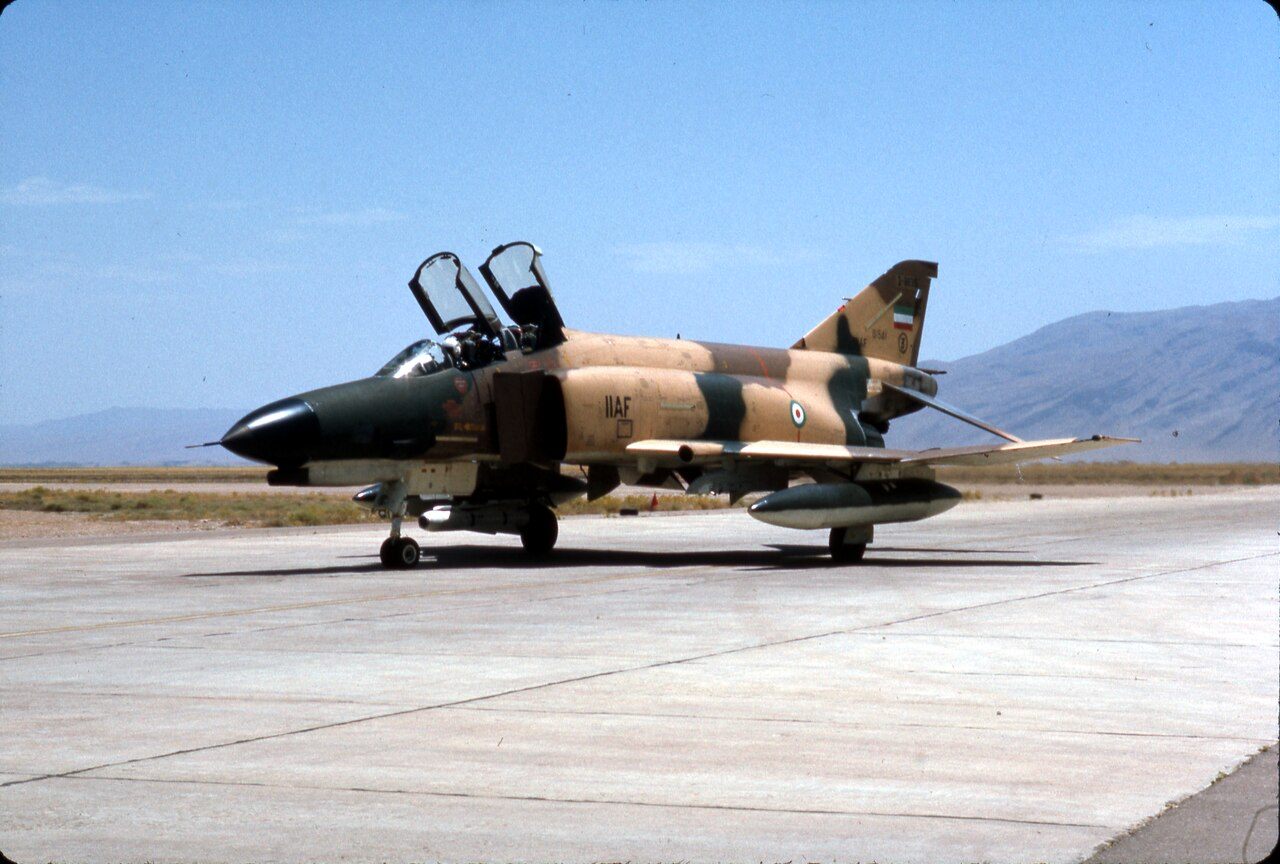
Pictured: a McDonnell Douglas F-4 Phantom II of the type flown by the two Imperial Iranian Air Force crews scrambled that night. It is not a photograph of either aircraft involved or of the object. No photograph or film of the object is known, and the Iranian Air Force's own records of the incident have never been released.
Theoretical Alignment
Proponents read the Tehran incident as an encounter with a technology far beyond 1976 capabilities, most often extraterrestrial. They cite an object that appeared to keep its distance from an F-4 on radar, smaller lights that left it and rejoined it, and avionics and weapons failures that came and went with the aircraft's approach. The DIA evaluator's remark that the case “meets all the criteria necessary for a valid study of a UFO phenomenon” is often quoted as official endorsement. It was an evaluation of the report's quality and interest, not a finding about what the object was. Skeptics, led by Philip J. Klass, read the same record as a bright planet (Jupiter) seen by excited crews, with meteors and an unreliable aircraft supplying the rest. The case still turns on one second-hand U.S. account of the second crew's debriefing, because the Iranian Air Force's own investigation has never been released.
Background
In September 1976 Iran was a close U.S. ally under Shah Mohammad Reza Pahlavi. The Imperial Iranian Air Force (IIAF) flew American aircraft, including F-4D and F-4E Phantom IIs. American contractors such as Westinghouse helped maintain their avionics, and U.S. Air Force officers of the Military Assistance Advisory Group (MAAG) advised the IIAF. That is why the incident was documented in Washington at all. A MAAG officer, Lt. Col. Olin Mooy, sat in on the debriefing of the second F-4's crew, and his account went out as a teletype from the U.S. Defense Attaché Office (USDAO) in Tehran.
The teletype was originally classified CONFIDENTIAL. Its later release under the Freedom of Information Act, together with a DIA evaluation form, made it one of the best-known official UFO documents. NICAP's UFO Investigator reported the case in November 1976. Charles Huffer, a teacher at the Berlin American High School, obtained the three-page message from the DIA on August 31, 1977, after an initial denial and an appeal. Earlier versions of this page credited the release to Citizens Against UFO Secrecy in 1977. CAUS was not involved in that release.
Complete Timeline
| Date | Event |
|---|---|
| Sept 18, 1976 (from about 10:30 PM) | According to his later interviews, Mehrabad Airport's night tower supervisor, Hossein Pirouzi, begins receiving calls from residents of the Shemiran area of northern Tehran. At about 11:15 PM he looks with binoculars and sees a bright light himself. His radar is under repair. |
| Sept 19 (about 12:30 AM) | The IIAF command post receives “four telephone calls” and calls BG Yousefi, assistant deputy commander of operations. He looks for himself, sees “an object in the sky similar to a star bigger and brighter,” and orders an F-4 scrambled from Shahrokhi AFB (USDAO teletype). |
| Sept 19 (1:30 AM) | The first F-4 takes off and heads for a point about 40 NM north of Tehran. The object is “easily visible from 70 miles away.” At about 25 NM the crew lose all instruments and communications, break off, and regain them after turning away. |
| Sept 19 (1:40 AM) | The second F-4 launches. The backseater gets a radar lock at 27 NM, 12 o'clock high. The return is “comparable to that of a 707 tanker,” and the target appears to hold at 25 NM. |
| Sept 19 (shortly after) | A second, smaller light appears to come out of the first and head for the F-4. The pilot tries to fire an AIM-9; his weapons control panel goes off and he loses UHF and interphone. A third light appears to descend to the ground and light up an area 2–3 km across. |
| Sept 19 (daylight) | The crew are flown by helicopter to the presumed landing area, a dry lake bed. They find nothing there but pick up a “beeper signal” near a house whose occupants recall a loud noise and a bright light “like lightning.” Radiation checks are said to be under way. |
| Sept 20–21, 1976 | The Tehran Journal reports the jet chase. On September 21 Kayhan International prints an “official source” denying that the object chased the jets or showed coloured lights. |
| Sept 23, 1976 | The USDAO Tehran teletype (230630Z SEP 76; IR 6 846 0139 76; released by Col. Frank B. McKenzie, Defense Attaché) goes to the DIA, with copies to the Secretary of State, CIA, NSA, White House and the service chiefs. |
| Oct 12, 1976 | The DIA evaluator, Roland B. Evans, rates the report “High (Unique, Timely, and of Major Significance)” and calls it “an outstanding report.” |
| Aug 31, 1977 | Charles Huffer obtains the three-page message from the DIA under FOIA. |
| 1983 | Philip J. Klass's UFOs: The Public Deceived argues for Jupiter, equipment malfunction and pilot error. |
| Nov 12, 2007 | Parviz Jafari speaks at the National Press Club in Washington, D.C., at an event organised by Leslie Kean and James Fox. His account appears in Kean's 2010 book. |
The Incident
Civilian Reports and the Tower
Two sources describe the start of the night. The USDAO teletype says only that at about 12:30 AM on September 19 the IIAF command post “received four telephone calls from citizens living in the Shemiran area of Tehran saying that they had seen strange objects in the sky. Some reported a kind of bird-like object while others reported a helicopter with a light on. There were no helicopters airborne at that time.” The fuller account comes from Hossein Pirouzi, the night supervisor in Mehrabad's control tower, who was interviewed three and four months later for reporter Bob Pratt. Bruce Maccabee later used those interviews to reconstruct events. In that account the calls began at about 10:30 PM on September 18. One caller described “a strange object like a sun in the sky” changing through orange, red and yellow. At about 11:15 PM Pirouzi took binoculars out onto the tower terrace and saw a bright object to the north-east. Its apparent shape seemed to change, and it appeared to move about. Mehrabad's radar was being repaired that night, so the tower had no radar picture.
The General
The teletype says the command post called “BG Yousefi, assistant deputy commander of operations.” After telling a caller “it was only stars,” and after speaking to Mehrabad tower, he “decided to look for himself. He noticed an object in the sky similar to a star bigger and brighter. He decided to scramble an F-4 from Shahrokhi AFB to investigate.” Maccabee's account adds that Yousefi first checked with the radar stations at Babolsar and Shahrokhi, and that neither had a target in that position. He then watched from the roof of his house in northern Tehran. Earlier versions of this page said Mehrabad's radar “detects the target” at 12:30 AM. Neither source supports that: the airport radar was out of service and the military ground radars saw nothing.
First Intercept Attempt
“At 0130 hrs on the 19th the F-4 took off and proceeded to a point about 40 NM north of Tehran. Due to its brilliance the object was easily visible from 70 miles away. As the F-4 approached a range of 25 NM he lost all instrumentation and communications (UHF and intercom). He broke off the intercept and headed back to Shahrokhi. When the F-4 turned away from the object and apparently was no longer a threat to it the aircraft regained all instrumentation and communications” (USDAO teletype). Mooy did not interview this crew. Maccabee notes that only a short, second-hand version of the first pilot's story was available to him. Most accounts, including Wikipedia's and this site's key-figure file, name the first pilot as Lt. Yadollah (“Yaddi”) Nazeri, who said in a 1994 television interview that the object outpaced him even at Mach 2. Early newspaper reports and some later reconstructions assign names and sequences differently.
Second Intercept
“At 0140 hrs a second F-4 was launched. The backseater acquired a radar lock on at 27 NM, 12 o'clock high position with the VC (rate of closure) at 150 NMPH. As the range decreased to 25 NM the object moved away at a speed that was visible on the radar scope and stayed at 25 NM. The size of the radar return was comparable to that of a 707 tanker. The visual size of the object was difficult to discern because of its intense brilliance. The light that it gave off was that of flashing strobe lights arranged in a rectangular pattern and alternating blue, green, red and orange in color. The sequence of the lights was so fast that all the colors could be seen at once” (USDAO teletype). By his own later account, the pilot was Major Parviz Jafari, a squadron commander, and his backseater was First Lt. Jalal Damirian. Earlier versions of this page quoted the “DIA Report” as saying the object's “brilliance was so intense that it could be easily seen from a distance of 70 miles.” That composite joined two sentences from different paragraphs of the attaché's message (the 70-mile remark concerns the first F-4), and it was not a DIA statement.
The Weapons Failure
“The object and the pursuing F-4 continued on a course to the south of Tehran when another brightly lighted object, estimated to be one half to one third the apparent size of the moon, came out of the original object. This second object headed straight toward the F-4 at a very fast rate of speed. The pilot attempted to fire an AIM-9 missile at the object but at that instant his weapons control panel went off and he lost all communications (UHF and interphone). At this point the pilot initiated a turn and negative G dive to get away. As he turned the object fell in trail at what appeared to be about 3–4 NM. As he continued in his turn away from the primary object the second object went to the inside of his turn then returned to the primary object for a perfect rejoin” (USDAO teletype). The teletype does not say when the panel and radios came back, except that the crew had regained them by the next phase.
The “Landing”
“Shortly after the 2nd object joined up with the primary object another object appeared to come out of the other side of the primary object going straight down, at a great rate of speed. The F-4 crew had regained communications and the weapons control panel and watched the object approach the ground anticipating a large explosion. This object appeared to come to rest gently on the earth and cast a very bright light over an area of about 2–3 kilometers.” The crew descended from 26,000 to 15,000 feet to mark its position. They “had some difficulty in adjusting their night visibility for landing,” so they orbited Mehrabad a few times before landing.
The Approach to Mehrabad
The teletype records more interference on the way in: “each time they passed through a mag. bearing of 150 degree from Mehrabad they lost their communications (UHF and interphone) and the INS fluctuated from 30 degrees–50 degrees. The one civil airliner that was approaching Mehrabad during this same time experienced communications failure in the same vicinity (Kilo Zulu) but did not report seeing anything.” On long final, the crew saw “another cylinder shaped object (about the size of a T-bird at 10M) with bright steady lights on each end and a flasher in the middle.” The tower reported no other known traffic. It did not see the object pass over the F-4, but picked it up “after the pilot told them to look between the mountains and the refinery.”
The Follow-Up
“During daylight the F-4 crew was taken out to the area in a helicopter where the object apparently had landed. Nothing was noticed at the spot where they thought the object landed (a dry lake bed) but as they circled off to the west of the area they picked up a very noticeable beeper signal. At the point where the return was the loudest was a small house with a garden. They landed and asked the people within if they had noticed anything strange last night. The people talked about a loud noise and a very bright light like lightning. The aircraft and area where the object is believed to have landed are being checked for possible radiation. More information will be forwarded when it becomes available” (USDAO teletype). No further U.S. message on the case is known. Brian Dunning reports that Mooy attributed the beeper to an emergency beacon from an American C-141 transport, and that such beacons were often ejected in turbulence over the mountains north of Tehran. Newspaper reports said police were notified and searched, but no result was published.
The DIA Evaluation
The attaché's message was an intelligence information report. The Defense Intelligence Agency's response to it was a one-page “Defense Information Report Evaluation” form, dated October 12, 1976, completed by evaluator Roland B. Evans. On the form, the information's reliability is ticked as “Confirmed by other sources,” its value as “High (Unique, Timely, and of Major Significance),” and its usability as “Potentially Useful” for current intelligence. The typed remarks read:
“An outstanding report. This case is a classic which meets all the criteria necessary for a valid study of a UFO phenomenon: a) The object was seen by multiple witnesses from different locations (i.e., Shemiran, Mehrabad, and the dry lake bed) and viewpoints (both airborne and from the ground). b) The credibility of many of the witnesses was high (an air force general, qualified aircrews, and experienced tower operators). c) Visual sightings were confirmed by radar. d) Similar electromagnetic effects (EME) were reported by three separate aircraft. e) There were physiological effects on some crew members (i.e. loss of night vision due to the brightness of the object). f) An inordinate amount of maneuver-ability was displayed by the UFO's.”
The evaluation is notable for an intelligence form: it uses the term “UFO” without embarrassment and lists reasons the report deserved attention. But it is an assessment of how complete and interesting the report was, written by a desk evaluator in Washington from the teletype alone. It is not an investigation. Its criteria repeat the teletype's claims rather than testing them. “Confirmed by radar” rests on the second crew's airborne lock, since no ground radar reported the object. “Three separate aircraft” counts the two F-4s and the airliner, whose radio trouble the teletype places in the same sector as the F-4's on its landing approach, and which saw nothing.
The DIA Report and Its Significance
The Tehran documents are often called the most important official UFO papers ever released. They are certainly among the most quoted. Their significance is easy to overstate, though. Earlier versions of this page described a “four-page DIA evaluation report, originally classified SECRET,” a “DIA Form 77 dated September 19,” and a “handwritten” assessment. In fact the teletype is a three-page message dated September 23, classified CONFIDENTIAL. The evaluation is a separate typed one-page form dated October 12. Both are routine products of the intelligence reporting system: an attaché passing on what an allied air force told him, and an evaluator grading it.
The distribution list is equally routine. The teletype went “for action” to the DIA, with information copies to the Secretary of State, CIA, NSA, White House, the Joint Chiefs and the service chiefs, and U.S. commands in Europe and the Middle East. Wikipedia notes that this was standard for reports from the sensitive Middle East area. The White House on the list was the Ford White House, not a sign that the President read it. Earlier versions of this page said that Jimmy Carter's science adviser, Frank Press, “reportedly reviewed the case,” that the DIA ranked it among the most significant events of the Cold War, that there were parallel State Department cables, that NSA held related signals intelligence, and that new CIA and DIA documents were released in 2020. No source for any of these has been found, and they have been removed.
Several later documents do exist. The DIA routing slip and the evaluation, the Joint Chiefs message, and a retelling titled “Now You See It, Now You Don't!” by Capt. Henry S. Shields of HQ USAFE in the Air Force's MIJI Quarterly (on meaconing, intrusion, jamming and interference) were later posted in the NSA's UFO FOIA collection. Dunning argues that the MIJI piece simply re-tells Mooy's message rather than adding independent information.
Multiple Objects and the Ground Report
In the teletype, the second crew saw three things leave or approach the main light. A second light “came out of the original object” and headed for them, then rejoined the main light. A third went “straight down” and appeared to settle on the ground, lighting an area 2–3 km across. A “cylinder shaped object” then passed over the F-4 on its final approach. The “landing” was the only part followed up on the ground: a helicopter visit to a dry lake bed the next day found nothing, and the beeper led the crew to a house where people remembered a noise and a flash.
Earlier versions of this page placed the landing “on a dry lake bed in the Shahriyar area,” and in another section “southeast of Tehran.” They also said that IIAF investigators reached it “at first light,” that Iranian National Police and several civilian witnesses saw “a bright object settling near the lake bed,” and that the helicopter detected radio-frequency interference. The teletype names no town and records no police or civilian landing witnesses; its “beeper signal” is not described as interference. Those details have been removed. Newspapers did report a police search, but its result was never published.
A light that seemed to fall and light up the ground has ordinary candidates. Brian Dunning notes that September 19 fell within the activity of several minor meteor showers. A bright fireball seen from an aircraft can appear to “come out of” a brighter light near it and to strike the ground. Whether that explains the crew's description of the light coming “to rest gently” cannot be tested, because the lake bed was never found to show anything.
Comparative Analysis with Other Military Intercept Cases
Tehran is often grouped with other cases in which aircraft or military systems were said to be affected near a UFO. The comparisons are looser than they are usually presented. In the Mansfield, Ohio helicopter case of October 18, 1973, an Army Reserve UH-1H crew reported a grey, cigar-shaped object, a loss of radio contact and an unexplained climb. Their aircraft was unarmed, so there was no weapons failure to compare. At Malmstrom AFB in March 1967, flights of Minuteman missiles went off alert, and some former personnel later connected those failures with UFO reports. The connection is disputed, and the official records of the failures do not establish it. Earlier versions of this page said the Malmstrom failures were “physically consistent only with” a technology no human could produce in 1967; that claim has been removed.
Earlier versions of this page also said that Project Blue Book's Special Report No. 14 (1955) had identified a pattern of unexplained instrument failures near UFOs, and that Tehran's “Unknown status” set it apart among Blue Book's roughly 700 unknowns. Neither is right. Special Report No. 14 was a statistical study of sighting characteristics, not of electromagnetic effects. And Blue Book closed in 1969, seven years before Tehran, so the Iranian case was never a Blue Book “Unknown” at all. Both passages have been removed.
The genuinely comparable cases are other night-time interceptor chases of bright lights, such as the 1952 Washington jet scrambles. In those cases, pursuing pilots repeatedly reported that the lights vanished or pulled away as they approached.
The Legacy in Middle Eastern UAP Research
The Tehran case is the best-known UFO incident in the Middle East. It reached a wide audience through the U.S. FOIA release and the books that followed, notably Lawrence Fawcett and Barry Greenwood's Clear Intent (1984) and Timothy Good's Above Top Secret (1987). In Iran, the case was reported by the Tehran Journal, Kayhan International and the Persian-language Ettela'at within days. Lt. Gen. Shapour Azarbarzin, a former IIAF commander, is quoted as estimating the object's speed at Mach 3 in a January 4, 1977 interview. Several Iranian participants, among them Nazeri in 1994 and Jafari from the 2000s, later spoke on Western television and at conferences. The TV series Sightings covered the case in 1994.
Earlier versions of this page said that BG Yousefi gave “several interviews” after the revolution consistent with the DIA report, that President Ahmadinejad referred to UFOs in speeches, that the case was cited in congressional briefings and in an AARO historical review, and that former Pentagon officials called it “the historical baseline.” No source for any of these has been found, and they have been removed. AARO's published historical report (Volume 1, 2024) is about U.S. government programs and does not analyse the Tehran incident.
The Weapons Systems Failure: Technical Analysis
The teletype gives three equipment events. The first F-4 lost “all instrumentation and communications” at about 25 NM and regained them after turning away. The second F-4's “weapons control panel went off” and its UHF and interphone failed at the moment the pilot tried to fire. On the landing approach the second F-4 lost UHF and interphone, and its INS fluctuated, each time it crossed a particular bearing from Mehrabad, where an airliner also had radio trouble.
Two very different explanations are offered. Proponents, including Bruce Maccabee, argue that failures which recovered by themselves on two aircraft, timed to their approach to the object, point to some deliberate or field effect from the object. Maccabee interviewed two Westinghouse avionics engineers in 1982. They told him the Iranians had found no fault in either jet, and that when they themselves were allowed to examine the aircraft four days later they also found none, with the same radar serial numbers installed. One said he had never seen such a “self-repairing” failure.
Klass, citing other American technicians, reported that only the first F-4 reported equipment failures, and that it had a long history of electrical outages and had been repaired about a month before. A McDonnell Douglas repair supervisor suggested to him that the second F-4's radar may have been in “manual track” mode, so the crew could have misread a radar lock. Klass also noted that the weapons-panel failure came at a moment of high stress, when the pilot could simply have made a switching error. The recurring loss of radio on a fixed bearing from Mehrabad, shared with an airliner, looks more like a ground-based interference source or a radio dead zone than an effect of the object.
Earlier versions of this page stated as fact that the failure required wideband energy “exceeding any known 1976-era electronic warfare system,” and that maintenance crews had found “no conventional mechanical explanation.” The first is speculation. The second ignores the conflicting accounts of the first aircraft's maintenance history. Both have been reworded.
The Witness Testimony Network
The documentary chain is short. The teletype rests on the debriefing of one crew, with a second-hand summary of the other, written by an American officer who saw nothing himself. Pirouzi's interviews, given three to four months later, add the tower's view and the earlier timeline. BG Yousefi's own observation is recorded only in the teletype's summary. The pilots' fuller first-person accounts come from much later: Nazeri in 1994, and Jafari at the 2007 National Press Club and in Kean's 2010 book. Those later accounts add drama and detail, and they do not always agree with the 1976 teletype or with each other about names, sequence and distances.
Earlier versions of this page described Yousefi as receiving “continuous radio communication” throughout the engagement, and the attaché's report as “filed within 24 hours” after his own “contemporaneous assessment”. In fact the message went out on September 23, four days later, and the attaché's office relayed what the IIAF crew said. Earlier versions also said that “crew members never recanted” and that “dozens” of civilians phoned in. The teletype records four calls, and Pirouzi describes four before he went out to look for himself.
The Government Response
What official interest there was is visible in three documents: the attaché's information report, the DIA evaluation, and the Joint Chiefs message. They show the report was read and graded, and the MIJI article shows it was used as an object lesson in interference. They do not show a follow-up investigation. The teletype promised “more information ... when it becomes available,” and no further U.S. message on the radiation checks or the beeper is known. Maccabee considered it reasonable to assume further inquiry by the USAF or IIAF, but no record of one has surfaced. In Tehran, on September 21, Kayhan International printed an “official source” account in which the pilot saw only a very bright light that “soon disappeared,” with no coloured lights and no chase. Pirouzi publicly contradicted it in the Persian press.
The Object’s Final Departure
The teletype says nothing about how the main object left. According to Pirouzi, it climbed upward and disappeared from view at about 4:00 AM. Earlier versions of this page described a departure “toward the Caspian Sea” tracked for “several additional minutes” by Mehrabad radar at supersonic speed. Mehrabad's radar was out of service that night, and no source describes such a track, so that passage has been removed. A slow climb and fade at around 4:00 AM is, for what it is worth, how a bright planet behaves as dawn approaches or as it passes behind haze. It is not how a craft leaving at speed behaves.
The Continuing Relevance
Tehran matters because it is one of very few cases in which a foreign air force's encounter was reported into the U.S. intelligence system in real time, and in which the paperwork has been released. It shows how such reports were handled: relayed, graded, distributed and filed. It also shows how much a single document can come to carry. Much of the case's reputation rests on the DIA evaluator's enthusiastic remarks, which are often quoted as if they were findings. The core questions are still open, and could be settled only by Iranian records: the radar data, the crews' debriefings, the maintenance logs of the two aircraft, and the result of the radiation checks.
Legacy
The Tehran incident is consistently ranked among the most compelling military UFO encounters. The Daily Telegraph and The Guardian have both included it in lists of the top sightings. Parviz Jafari spoke at the November 12, 2007 National Press Club event organised by journalist Leslie Kean and filmmaker James Fox, alongside military and government officials from other countries, and his account appears in Kean's book UFOs: Generals, Pilots, and Government Officials Go on the Record (2010).
The case is significant less as proof that something disabled a fighter's weapons than as a demonstration of how military UFO reports travel: from an allied air force, through an attaché, into the U.S. system, and then into public view decades later.
Key Witnesses
- BG Yousefi — IIAF assistant deputy commander of operations (identified by this site as Nader Yousefi; the teletype gives only “BG Yousefi”). He looked at the object himself and ordered the scramble.
- Major Parviz Jafari — By his own later account, pilot of the second F-4 and a squadron commander. The teletype's account of the weapons panel failure is his crew's. He later became a general.
- First Lt. Jalal Damirian — Weapons systems officer (backseater) in the second F-4. According to the teletype, “the backseater” acquired the radar lock at 27 NM.
- Lt. Yadollah Nazeri — Pilot of the first F-4 as most accounts name him. He lost instruments and communications at about 25 NM.
- Hossein Pirouzi — Night supervisor, Mehrabad control tower. He took the civilian calls, saw the object through binoculars, and relayed Yousefi's orders to the pilot.
Key Witnesses
Major (later General) Parviz Jafari
By his own account, Jafari piloted the second F-4. In the attaché's teletype, which is based on that crew's debriefing, the backseater locked onto a target at 27 NM that kept its distance at 25 NM. A smaller light came out of the main one and headed toward the jet. When the pilot tried to fire an AIM-9, “his weapons control panel went off” and he lost all communications, so he turned away in a negative-G dive. The crew then watched a third light appear to settle on the ground. Jafari told his story at the National Press Club on November 12, 2007, and in Leslie Kean's 2010 book, and he went on to become a general. His later accounts are more dramatic than the 1976 teletype, and Maccabee's reconstruction, which draws on the 1976 Tehran press, describes a 23-year-old “Lt. Jafari” flying the first jet.
First F-4 Crew (Lt. Yadollah Nazeri)
The first F-4 took off from Shahrokhi AFB at 1:30 AM and headed for a point about 40 NM north of Tehran. At a range of about 25 NM it lost “all instrumentation and communications (UHF and intercom),” and regained them after turning away. Its crew were not interviewed by the U.S. officer, so the teletype gives only a brief second-hand summary. Klass reported that this aircraft had a long history of electrical outages. A Westinghouse engineer who examined it four days later found no fault.
Hossein Pirouzi and the Mehrabad Tower
The night supervisor at Mehrabad tower, aged 35 with 13 years' experience, according to his interviews. He took the first civilian calls from about 10:30 PM, saw the light through binoculars at about 11:15 PM, and alerted the IIAF duty officer at about 12:30 AM. His radar was under repair, so the tower's observations were visual only. On the second jet's approach the tower saw the cylinder-shaped object only after the pilot told them where to look. Pirouzi publicly contradicted the “official source” denial printed in Kayhan International.
The Five Observables Assessment
The Five Observables framework is applied to the characteristics in the Tehran record. Every item rests on aircrew perception and one airborne radar lock, with no recorded data:
Assessment: The teletype describes a light that kept its distance on radar and smaller lights that moved fast and “rejoined” it. Those impressions depend on distance judgements made at night from a fast jet, so lift and acceleration are speculative. No speed was measured: a target holding at 25 NM ahead of an F-4 implies only that it was moving away at about the jet's own speed, or was much farther off than it seemed. Hypersonic speed is not documented. The ground radars at Babolsar and Shahrokhi saw nothing, which could suggest low observability or could mean there was no solid target. Earlier versions of this page scored lift, acceleration, hypersonic speed and low observability as “Present” and “Confirmed.”
Evidence Assessment
Supporting Anomalous Origin
- Two military aircrews, a general and a tower supervisor all saw a bright light, and the civilian reports came before the military became involved
- The second F-4's backseater reported a radar lock at 27 NM with a return “comparable to that of a 707 tanker”
- Both F-4s reported equipment failures that recovered on their own; the second reported its weapons control panel failing as the pilot tried to fire
- A civil airliner reported communications failure in the same sector as the F-4 on its approach
- Westinghouse engineers who examined both jets four days later found no avionics faults (Maccabee interviews, 1982)
- The DIA evaluator rated the report “High” value and “an outstanding report”
- The account was relayed by a U.S. officer at the time, within days, rather than assembled years later
Supporting Conventional Explanation
- Jupiter was very bright and well up in the sky that night; the general's first impression was “similar to a star bigger and brighter” (Klass; Oberg)
- No ground radar saw the object: Mehrabad's was under repair, and Babolsar and Shahrokhi had no target
- Klass reported the first F-4 had a long history of electrical outages; a McDonnell Douglas supervisor suggested the radar lock could have been misread in “manual track” mode
- Several meteor showers were active; a fireball could account for a light that “came out of” the main one and fell to the ground (Dunning)
- The “beeper” was attributed by Mooy to a C-141 emergency beacon (per Dunning), and the lake bed showed nothing
- Radio losses on a fixed bearing from Mehrabad, shared with an airliner, suggest a ground-based interference zone
- The U.S. account is second-hand, from one crew's debriefing; the IIAF's own records have never been released
Why “Credible”
The Tehran case is rated CREDIBLE. Its documentation is unusually strong: the scrambles, the crews' reports of equipment failure and the radar lock are recorded in a contemporaneous U.S. military message, which was formally evaluated by the DIA and has since been released. That is unusually strong documentation of what was reported.
It stops short of Verified because the documents confirm what was reported, not the object itself. The documents are second-hand accounts of crew testimony. No ground radar confirmed a target. The equipment failures are contested by people who maintained the aircraft. And Jupiter, a meteor and a misread radar lock remain candidate explanations that have not been ruled out. Earlier versions of this section said the event was “confirmed by independent radar systems” and that the DIA had “endorsed” it as a genuine UFO. Neither is correct.
Sensor & Instrumentation Detection Profile
The only radar detection in the record is airborne: the second F-4's backseater “acquired a radar lock on at 27 NM, 12 o'clock high position with the VC (rate of closure) at 150 NMPH,” after which the target “moved away at a speed that was visible on the radar scope and stayed at 25 NM.” Maccabee later asked a Westinghouse radar engineer about it. The engineer had first suggested a ground return from a mountain peak, but rejected that idea once he read that the lock had lasted many seconds; at 150 knots closure, going from 27 to 25 NM takes about 48 seconds. Klass's informant offered the opposite reading: in “manual track” mode, the crew could have mistaken what they were seeing for a lock.
There was no ground radar confirmation. According to Pirouzi, Mehrabad's radar was being repaired that night, and in Maccabee's account the general checked with the radar stations at Babolsar and Shahrokhi, neither of which had a target. Earlier versions of this page said that Mehrabad radar “detects the target,” that Shahrokhi radar tracked the object and both intercepts, and that there were “multiple simultaneous independent radar confirmations.” These claims are contradicted by the sources and have been removed. The F-4 crews' instruments also recorded nothing: no gun-camera film, radar film or cockpit recordings are known.
The documented equipment effects are the crews' reports of instrument, radio and weapons-panel failures, the INS fluctuation on approach, and the airliner's radio failure. None was recorded by an instrument independent of the aircraft affected.
Environmental & Geospatial Context
Tehran sits at about 1,200 metres on the southern slopes of the Alborz range, whose peaks to the north rise above 5,000 metres. That terrain matters for both radar coverage and visual angles: the Babolsar radar lay beyond the mountains, and the object was first seen over Shemiran in the north of the city. Mehrabad Airport, in the west of the city, was busy with civil and military traffic. Shahrokhi Air Base, from which the first F-4 launched, lies about 250 km west-south-west of Tehran. The second F-4 landed at Mehrabad.
The sky that night is central to the skeptical case. Jupiter, one of the brightest objects in the night sky, was well up in the early morning hours. A thin waning crescent Moon (about 21% illuminated) rose in the east during the early morning. The computed reanalysis indicates mainly clear skies. Several minor meteor showers were active (Dunning, citing Kronk). Earlier versions of this page described the night as “calm” with “no significant moon,” and called the IIAF crews “among the IIAF's most experienced pilots”. None of these is sourced. Brian Dunning, citing Klass, reports that American technicians said “the Shahrokhi pilots never flew at night.”
Observer Credibility & Occupational Profile
The observers were a general, two military aircrews, a senior air traffic controller with his trainees, and several civilians. As witnesses go that is a strong group, and the DIA evaluator counted it in the report's favour. Their observations were also made under difficult conditions: at night, of a point of light with no reference for distance, from fast jets, by crews scrambled in the early hours to chase it. The general's first impression, that it was “similar to a star bigger and brighter,” is consistent with a planet. According to Klass's American sources, as Dunning reports them, the Shahrokhi pilots “never flew at night.” The aircrews' accounts reached the U.S. record only second-hand, through Mooy's sitting in on one debriefing. Their later first-person versions (Nazeri, 1994; Jafari, 2007 onwards) are vivid but were given decades afterwards. Earlier versions of this page said the pilots' identities were “obscured for their protection,” that they had “hundreds of hours” on type, and that Yousefi observed from “the Shahrokhi command post.” None of this is sourced, and the last contradicts the record: he watched from Tehran.
Physical & Material Assays
No physical evidence was recovered. The only ground inspection on record is the crew's helicopter visit the next day: “Nothing was noticed at the spot where they thought the object landed (a dry lake bed).” The teletype says the aircraft and the area “are being checked for possible radiation,” but no result was ever reported. The nearest thing to a material assay of the aircraft is the Westinghouse engineers' inspection four days later, which found the avionics working normally. Klass's sources instead stressed the first jet's history of electrical faults. Earlier versions of this page said IIAF personnel reached the site “at first light” and that “post-flight maintenance inspection” found “no conventional mechanical explanation.” The first is unsourced. The second gives only one side of conflicting accounts.
Historical Precedents & Archive Matches
The Tehran documents came out in the late-1970s wave of FOIA releases that also produced the 1975 SAC base overflight documents and, through the Ground Saucer Watch lawsuit, the CIA's UFO papers. Fawcett and Greenwood's Clear Intent (1984) reproduced and discussed them. Bruce Maccabee wrote the most detailed proponent reconstruction (“Iranian Jet Case,” 2006), drawing on Bob Pratt's Pirouzi interviews and his own interviews with the Westinghouse engineers. NARCAP's Technical Report 8 (Ted Roe, 2002) cited the case for aviation safety. Klass (1983), Bridgstock (2009) and Dunning (Skeptoid #315, 2012) gave the skeptical case. Earlier versions of this page attributed to J. Allen Hynek the description “one of the most reliable and well-documented sightings in the history of the UFO phenomenon,” in “correspondence that was later published,” and cited a “Hynek consultative report” of December 1976. They also said Jacques Vallée had matched the effects to his own case pattern. None of these could be traced, and they have been removed.
Earlier versions also described a 2020 release of new CIA and DIA documents showing the case was briefed to senior officials within 48 hours, with follow-up requests through diplomatic channels. No such release has been found, and that passage has been removed.
Material Analysis
The Tehran incident produced no recoverable physical material: no debris, no landing traces and no residues. The material case consists entirely of reported effects on the aircraft and their equipment, recorded second-hand in the attaché's teletype.
F-4 Phantom Weapons System Failure
According to the teletype, when the second F-4's pilot “attempted to fire an AIM-9 missile at the object ... at that instant his weapons control panel went off and he lost all communications (UHF and interphone).” He turned away in a negative-G dive, and by the time the third light descended the crew “had regained communications and the weapons control panel.” This is the single most-cited element of the case. It rests on the crew's account of an event under acute stress. No instrument recorded it, and the aircraft showed no fault afterwards. Earlier versions of this page added technical claims, including “both systems failed simultaneously” for the seeker and release circuit, intercom jamming between named crew members, and a failure that “occurred independently on both F-4s.” Only the second aircraft reported a weapons-panel failure.
Electromagnetic Effects on Avionics
The first F-4 “lost all instrumentation and communications (UHF and intercom)” at about 25 NM and regained them after turning away. The teletype gives no more detail. Earlier versions of this page named the systems affected (AN/APQ-120 radar, AN/ASN-63 INS) and concluded the jamming exceeded “any known 1976-era electronic warfare system.” Those are inferences, not reported facts. Klass's sources said this particular aircraft had a long record of electrical outages and had been repaired about a month before.
The DIA Evaluation: What It Documents
The DIA evaluation of October 12, 1976 counts “similar electromagnetic effects (EME) ... reported by three separate aircraft” among the report's strengths. The third aircraft is the airliner approaching Mehrabad, which lost communications “in the same vicinity (Kilo Zulu)” as the F-4 on its landing approach “but did not report seeing anything.” The evaluation documents that these effects were reported. It does not establish their cause.
The Secondary Object and Ground Descent
The crew saw a light appear to go “straight down, at a great rate of speed,” and “come to rest gently on the earth,” lighting an area 2–3 km across. A daylight helicopter visit found nothing at the dry lake bed. The beeper led to a house whose occupants recalled “a loud noise and a very bright light like lightning.” No radiation result was reported.
Supporting Anomalous Origin
- Two aircraft reported equipment failures that recovered without repair, timed to their approach to the light
- An airliner reported a communications failure in the same sector
- Westinghouse engineers found no avionics faults in either jet four days later
- The DIA evaluator considered the report of “High” value
Supporting Conventional Explanation
- Klass's sources reported that the first jet had a long history of electrical outages
- The failures were reported, not recorded; the weapons-panel loss came at a moment of extreme stress
- The approach-path radio losses recurred on a fixed bearing and also affected an airliner, suggesting a ground-based cause
- No material debris, residue or soil anomaly was found anywhere
The Conventional Explanation Candidate: Jupiter, Equipment Malfunction, and Classified Platform
The Tehran record is a U.S. attaché's account of an Iranian crew's debriefing, evaluated but not investigated by the DIA. Any explanation, conventional or not, has to work with that thin record. Here is how the main candidates fare.
Jupiter (the initial light)
PlausibleKlass (1983) and James Oberg proposed that the light first reported from Shemiran, and chased by the crews, was Jupiter. Jupiter was brilliant and well up in the sky that night, and the general's own first impression was of something “similar to a star bigger and brighter.” A planet would explain why the jets could never close on the light, and Pirouzi's report that it climbed and faded at about 4:00 AM. Jupiter does not explain the radar lock, the lights that seemed to leave the main one, or the equipment failures, so it needs other explanations to go with it. Earlier versions of this page rated Jupiter “Ruled Out,” citing a “ground radar return at Shahrokhi” that no source records.
Equipment Malfunction, Misread Radar and Meteors
InconclusiveKlass's informants said the first F-4 had a long record of electrical outages, and a McDonnell Douglas supervisor suggested the second jet's radar was in “manual track” mode, making the “lock” a misreading. Klass suggested the weapons-panel loss was pilot error under stress. Dunning adds that several meteor showers were active, so a fireball could be the light that “came out of” the main one and plunged to the ground, and he cites Mooy's view that the beeper was a C-141's emergency beacon. Against this: the Westinghouse engineers who examined both jets told Maccabee they found no faults, and a radar engineer told Maccabee a lock lasting nearly a minute was unlikely to be a ground return. Each element has a plausible mundane cause, but the combination has never been demonstrated. Earlier versions of this page rated this explanation “Implausible,” saying the failures were “identical” and “simultaneous” on both aircraft, which the teletype does not say.
Classified Reconnaissance Platform
ImplausibleA secret aircraft or balloon over Tehran has occasionally been suggested. No evidence supports it. An allied air force chasing a U.S. platform over its own capital would have generated exactly the documents the attaché's office would not have sent to the DIA as a UFO report. Nor would any such platform explain the multiple lights. Nothing in the record points to one.
No single explanation accounts for everything in the teletype, but the teletype itself is a second-hand summary, and some of its most striking elements (the “perfect rejoin,” the gentle landing) are crew impressions of lights at night. Proponents see a coherent pattern of an object reacting to the jets. Skeptics see a planet, a meteor and some faulty or mishandled equipment, given shape by an anxious night. Without the Iranian records, neither reading can be confirmed. Earlier versions of this page closed with claims that Jimmy Carter's science adviser had reviewed the case and that the DIA ranked it among the Cold War's most significant UFO events; these were unsourced and have been removed.
Related Cases
Confirmed Documents & Official Records
The primary document: a three-page message (230630Z SEP 76) from the U.S. Defense Attaché Office, Tehran, to the DIA, with information copies to the Secretary of State, CIA, NSA, White House and service chiefs. It is based on Lt. Col. Olin Mooy's attendance at the second crew's debriefing. Released by the NSA's FOIA office as the “Joint Chiefs of Staff report concerning the sighting of a UFO in Iran on 19 September 1976.”
UNCLASSIFIED (FOIA released)One-page evaluation form by Roland B. Evans: reliability “Confirmed by other sources,” value “High (Unique, Timely, and of Major Significance),” and the remark “An outstanding report. This case is a classic which meets all the criteria necessary for a valid study of a UFO phenomenon.” NICAP's case directory links the routing slip and evaluation.
UNCLASSIFIED (FOIA released)The CIA received an information copy of the attaché's message. No separate CIA analysis of the incident is known; this is a search tool, not a Tehran-specific record.
Search toolThe National Archives' research guide to UFO/UAP records held across federal record groups, including the UAP Records Collection (Record Group 615). It is a general guide; NARA has not identified a Tehran-specific file.
Research guideSearch Government Archives Directly
Further Reading — Recommended Literature
UFOs: Generals, Pilots, and Government Officials Go on the Record
Includes Parviz Jafari's first-person account of the second intercept, written more than thirty years after the event.
Clear Intent: The Government Coverup of the UFO Experience
Reproduces and discusses the FOIA-released government UFO documents of the 1970s, including the Tehran attaché message and its distribution list.
Iranian F-14 Tomcat Units in Combat
Background on the Imperial Iranian Air Force of the 1970s, whose F-4 Phantom squadrons flew the 1976 intercepts. The book is about the F-14 fleet and does not deal with the UFO case.
DISCLOSURE: Some links above are affiliate links. If you purchase through them, OverClassified receives a small commission at no additional cost to you. This helps support independent research.
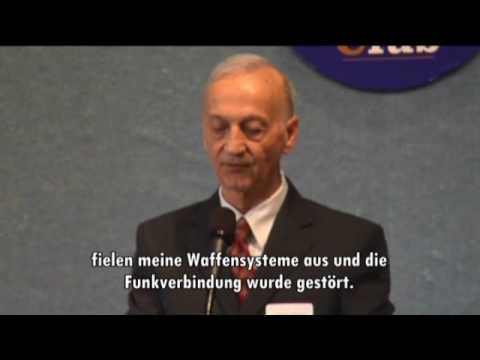
Essential Viewing
Sources
- U.S. Defense Attaché Office, Tehran. Message 230630Z SEP 76, “Reported UFO Sighting,” IR 6 846 0139 76, to DIA (info SECSTATE, CIA, NSA, White House, CSAF, CNO, CSA). CONFIDENTIAL, declassified. Released via the NSA FOIA UFO collection. nsa.gov
- Defense Intelligence Agency. Defense Information Report Evaluation of IR 6 846 0139 76 (evaluator Roland B. Evans), October 12, 1976. Declassified.
- Shields, Capt. Henry S. (HQ USAFE/INOMP). “Now You See It, Now You Don't!” MIJI Quarterly (USAF). Released via the NSA FOIA UFO collection.
- NICAP. “Iranian F-4 Phantom Jet Chase,” case directory (FOIA history: Charles Huffer, DIA release of August 31, 1977; links to the DIA routing slip and evaluation). nicap.org
- NICAP. “Tehran, Iran/F-4 Incident,” case summary report. nicap.org
- Maccabee, Bruce. “Iranian Jet Case, September 19, 1976” (2006), drawing on the Pirouzi interviews and the author's 1982 interviews with Westinghouse engineers. nicap.org
- Klass, Philip J. UFOs: The Public Deceived. Prometheus Books, 1983.
- Dunning, Brian. “The Tehran 1976 UFO.” Skeptoid #315, June 19, 2012. skeptoid.com
- Bridgstock, Martin. Beyond Belief: Skepticism, Science and the Paranormal. Cambridge University Press, 2009.
- Roe, Ted. NARCAP Technical Report 8, 2002.
- Kean, Leslie. UFOs: Generals, Pilots, and Government Officials Go on the Record. Harmony Books, 2010 (Jafari's account).
- Jafari, Parviz. Remarks at the National Press Club, Washington, D.C., November 12, 2007.
- Tehran Journal, September 20, 1976; Kayhan International, September 21, 1976 (as quoted in Maccabee 2006).
- Fawcett, Lawrence & Greenwood, Barry. Clear Intent: The Government Coverup of the UFO Experience. Prentice-Hall, 1984.
- Good, Timothy. Above Top Secret: The Worldwide UFO Cover-Up. Sidgwick & Jackson, 1987.
- National Security Agency. “The U.S. Government & 'The Iran' Case,” FOIA release. nsa.gov
- “1976 Tehran UFO incident.” Wikipedia (used as a pointer only: Nazeri 1994 interview, Azarbarzin 1977 interview, Klass summary).
Corrections (October 2026)
This page was fact-checked against the original USDAO teletype and DIA evaluation in October 2026. Corrected: the documents' dates, length and classification (a three-page CONFIDENTIAL message of September 23, 1976 and a separate one-page evaluation of October 12, 1976, not a "four-page SECRET DIA Form 77" of September 19); the FOIA release (Charles Huffer, August 1977, not CAUS); the wording of the DIA remarks; Jafari's rank in 1976 (Major, not Lieutenant); BG Yousefi's role (on the key-figures page he had been listed as an F-4 pilot); and the distance at which the first F-4 lost instruments (25 NM, not 40). Removed, because no source could be found or the documents contradict them: ground radar tracking by Mehrabad and Shahrokhi; a composite "DIA Report" quote; the Shahriyar landing site with police and civilian witnesses; helicopter-detected RF interference; a radar-tracked departure toward the Caspian; maintenance findings presented as one-sided fact; claims about Blue Book Special Report No. 14, AARO, Congress, Ahmadinejad, State Department cables, a 2020 document release, Frank Press and Hynek's and Vallée's remarks; and fabricated source entries (Shahrokhi logbooks, Mehrabad transcripts, cockpit audio, a New York Times article, a Hynek report).
Following this review, the rating was changed from Verified 88 to Credible 62 (October 26, 2026), because the higher rating had rested partly on claims corrected or removed above.
See something inaccurate? Have additional information or sources?
Suggest an Edit →Last Updated: June 2026