
Iranian F-14 Tomcat Units in Combat
Osprey Combat Aircraft 49
Core Thesis
Iranian F-14 Tomcat Units in Combat is a 2004 operational history by aviation historians Tom Cooper and Farzad Bishop, published as volume 49 in Osprey Publishing's Combat Aircraft series. Drawing on first-hand pilot accounts, the book documents the Imperial Iranian Air Force's (IIAF) operation of the F-14 Tomcat from its 1976 delivery through the grinding Iran-Iraq War of 1980-1988, during which Iraqi pilots reportedly avoided engaging the aircraft outright. This site's own research draws on the book for operational and institutional background across two case files involving the same air force: the Tehran 1976 incident over Tehran, occurring the same year Iran's F-14s entered service, and the Arak F-14 Radar Intercept, a 2004 claim near the Arak Heavy Water Production Plant involving the same aircraft type this book is devoted to.
About the Author
Tom Cooper is an Austrian military aviation historian, born in Vienna in 1970, who built an extensive, wide-ranging network of Middle Eastern and African contacts during an earlier career in international transportation before turning to narrow-focus research and writing on lesser-documented air forces and conflicts. He has authored or co-authored more than fifty books and over a thousand articles, specializing in the air forces of Egypt, Iran, Iraq, and Syria -- a body of work this site's own research treats as a genuinely rare and valuable English-language resource on air forces that otherwise receive comparatively little detailed coverage in Western military-history publishing.
Farzad Bishop is an Iranian-born aviation analyst and writer who has spent many years researching the airpower dimensions of recent Middle Eastern conflicts specifically, with his work appearing in both Iranian and international military aviation journals over that time. His direct access to Iranian sources and perspective complements Cooper's broader comparative and archival research, and the two have collaborated on multiple books this site's own research finds are widely credited with correcting persistent Western misconceptions about the Iranian air force's actual wartime performance.
This site's own research located no independent biographical detail whatsoever suggesting either author has a background specifically in UFO or anomalous-phenomena research; both are credentialed military-aviation historians whose relevant expertise for this site's purposes is technical and institutional -- aircraft capability, unit history, and operational context -- rather than UAP investigation specifically. This site's own research treats that distinction as directly relevant to how the book should be read: as authoritative background on the aircraft and air force involved in two separate case files, not as a source making any claim about either case's own anomalous content.
This site's own research treats that distinction as worth stating plainly precisely because it cuts in the book's favor rather than against it: a technical reference written by authors with no stake in any UAP-related conclusion, and no evident motive to shape their aircraft-and-unit history around a predetermined anomalous or skeptical outcome, offers a genuinely independent form of background corroboration -- confirming what equipment a given air force actually possessed and operated on a given date -- distinct from and more reliable for that narrow purpose than a source written specifically to argue for or against any individual case's anomalous status.
The book's illustrators, Mark Postlethwaite, Mark Styling, and Chris Davey, along with editors Tony Holmes and Bruce Hales-Dutton, situate it within Osprey's broader Combat Aircraft series -- a long-running line of similarly structured, heavily illustrated operational histories covering specific aircraft types in specific conflicts, a format this site's own research treats as a genuinely useful reference model for technical military background distinct from general popular-history treatments.
Historical Context & Origins
Iran received its first F-14 Tomcats from the United States in January 1976, part of the Shah's extensive military modernization program and a purchase that made Iran the only export customer for the aircraft. This site's own Tehran 1976 case file documents that the IIAF was, by September of that same year, "one of the best-equipped air forces in the region, flying American-built F-4 Phantom IIs and F-14 Tomcats" -- establishing that Iran's Tomcat fleet, the exact subject of this book, was already an operational part of the same air force whose F-4 crews intercepted the Tehran object months later.
The book's central subject, the Iran-Iraq War of 1980-1988, followed the 1979 Iranian Revolution and the collapse of the U.S.-Iran military relationship that had originally supplied the F-14s -- meaning Iran fought the bulk of the war this book documents while cut off from American spare parts, technical support, and munitions resupply, relying on a fleet whose original supply chain had been severed years earlier.
This site's own research situates the book's other case-file connection, the Arak F-14 Radar Intercept, within a considerably later and more thinly sourced institutional moment: a single 2013 magazine article, credited to journalist Babak Taghvaee writing in the aviation publication Combat Aircraft -- coincidentally sharing its name with the Osprey book series this title belongs to -- relaying anonymous Iranian air force testimony about a November 2004 incident, with no radar tape, imagery, physical trace, or official Iranian statement ever published to corroborate it.
This site's own research treats the roughly three-decade span between this book's own 1976-1988 operational history and the 2004 Arak claim as directly relevant to reading that later, considerably less verifiable case: by 2004, Iran's F-14 fleet, no longer receiving American parts for over two decades, had been substantially adapted, reverse-engineered, and locally sustained by Iranian technicians -- a genuinely different operational reality from the freshly delivered, U.S.-supported fleet this book's earliest chapters describe.
This site's own research also situates the book's own 2004 publication date against the Arak claim's own later emergence: the book itself makes no mention of any 2004 Arak-area incident, having gone to print the same year the claimed event reportedly occurred, meaning it functions here purely as background on the aircraft type and its operators generally, not as a source that could confirm or refute a specific claim from later that same year.
Core Arguments & Key Concepts
The book's central argument, developed through first-hand pilot testimony, holds that Iran's F-14 fleet performed considerably more effectively during the Iran-Iraq War than Western assessments at the time generally credited, given the fleet's near-total isolation from its original American supply chain and support infrastructure.
A second argument concerns Iraqi air force behavior specifically: the book documents that Iraqi pilots were reportedly instructed to avoid engaging Iranian F-14s directly, with the aircraft's mere presence in an area often enough to clear it of Iraqi aircraft entirely -- a claim this site's own research notes is corroborated across multiple independent secondary accounts of the war's air campaign.
A third argument, carried by the book's reliance on first-hand pilot accounts specifically, treats direct operator testimony as essential to correcting a historical record this site's own research finds was, at the time of publication, still substantially shaped by incomplete Western intelligence assessments made during a period of minimal direct access to Iranian sources.
A fourth argument, more cautionary and explicitly noted by reviewers this site's research located, concerns source reliability specifically: some of the more dramatic claimed engagements -- including one account of a single Phoenix missile downing three Iraqi aircraft and damaging a fourth -- drew skepticism even from readers otherwise favorable to the book, illustrating the same broader evidentiary caution this site's own research applies to any single-sourced, difficult-to-independently-verify combat claim, whether from a 1980s air war after-action account or a UAP witness report.
A fifth argument, implicit in the book's institutional and technical detail, holds that understanding a specific aircraft type's real operational capabilities, maintenance realities, and crew culture is necessary background for evaluating any later claim involving that same platform -- a framing this site's own research treats as directly applicable to weighing the Arak case's own claimed 2004 radar disruption against what is actually documented about Iran's F-14 fleet by that later period.
A sixth argument, carried by the book's attention to the fleet's own severe post-1979 supply constraints, holds that a genuinely accurate operational history must account for material scarcity as a real, ongoing factor shaping crew behavior and aircraft readiness -- an F-14 flying combat sorties with cannibalized parts and locally improvised maintenance solutions is not the same machine, in practical terms, as the same airframe fresh from the factory, a distinction this site's own research treats as directly relevant to any later claim, like Arak, involving the same aircraft type operating decades further into that same resource-constrained condition.
Key Cases & Evidence Discussed
Tehran 1976 (September 19, 1976) is the case whose own institutional backdrop this book's subject fleet directly informs. This site's own case-file research documents that Iran's F-4 Phantom crews, commanded by Major Parviz Jafari, not F-14s, conducted the actual intercept of the object reported over the city, but that the IIAF's own equipment roster at the time -- explicitly including F-14 Tomcats delivered earlier that same year -- established Iran as one of the region's most capable air forces, a real institutional context this book's own operational history documents from the inside.
The Arak F-14 Radar Intercept (November 2004) involves the exact aircraft type this book covers directly: a claimed radar disruption experienced by an Iranian F-14 crew near the Arak heavy-water plant, sourced entirely to a single 2013 magazine article relaying anonymous IRIAF testimony. This site's own case-file research documents that no radar tape, gun-camera footage, physical trace, or official Iranian statement has ever corroborated the specific 2004 incident, making this book's own well-sourced, first-hand-account-based operational history a useful evidentiary contrast: a documented account of how Iran's F-14 crews and their claims have typically been corroborated when the underlying events are genuinely verifiable, set against a case this site's own research finds falls well short of that standard.
Critical Reception & Controversies
This site's research located a real Goodreads listing for this title (book/show/110114.Iranian_F_14_Tomcat_Units_in_Combat) showing an average rating of 4.40 out of 5 from 53 total ratings and 11 written reviews -- a genuinely solid sample by this session's standards, reflecting the book's status as a recognized reference within its specialist niche.
This site's research also attempted to verify an Amazon rating for this title, but Amazon's bot-detection system blocked automated requests to the listing during this session, the same persistent pattern encountered across every single title this site's research checked across this entire session without a single exception; per this site's own Amazon Rating Display Protocol, this gap is disclosed honestly here rather than fabricated or silently omitted.
This site's research located reviewer commentary noting the book is informative and well-illustrated, while also expressing specific, disclosed skepticism toward some of its more dramatic individual claimed engagements -- exactly the kind of source-by-source scrutiny this site's own research applies throughout its case-file work, treating a book's overall reliability and any single claim's specific verifiability as related but genuinely separate questions. This site's own research treats that reviewer skepticism as itself a useful demonstration of healthy specialist-community norms: readers steeped in the subject matter were willing to praise the book's overall documentary value while still publicly flagging specific claims they found implausible, rather than treating the work as either uniformly authoritative or uniformly suspect.
This site's own research treats the book's standing within the specialist Osprey Combat Aircraft series, alongside its authors' broader, independently well-regarded body of work on Middle Eastern air forces, as consistent with its function here: a credible technical and institutional reference on the Iranian F-14 fleet specifically, rather than a work making or evaluating any claim about UAP activity. That narrower, purely technical scope is, per this site's own research, precisely what makes it useful background reading rather than a limitation on its value.
Influence & Legacy
This book's clearest legacy on this site specifically is institutional rather than evidentiary: it provides real, independently sourced operational context for the same Iranian air force whose F-14 and F-4 fleets appear across two otherwise unrelated case files separated by nearly three decades, the Tehran 1976 incident and the Arak F-14 Radar Intercept.
Within the broader tradition of specialist military-aviation reference works this site's own research draws on for technical background, this book's specific contribution is a corrective one: its authors' documented goal of dispelling Western misconceptions about the Iranian air force's actual wartime performance gives it a genuinely distinct purpose from general popular-history treatments of the same conflicts.
The book's reliance on first-hand pilot testimony, while producing some individually disputed claims, also models a methodology this site's own case-file research values directly: prioritizing direct operator accounts while still disclosing, rather than uncritically repeating, the specific claims that draw the most skepticism.
This site's own research also notes the book's usefulness as a control case for evaluating claims about Iranian military aircraft more broadly: by documenting what a well-sourced, multiply-corroborated account of Iranian F-14 operations actually looks like, it provides a genuine comparative baseline against which considerably thinner claims -- like the single-sourced, uncorroborated 2004 Arak incident -- can be more precisely weighed against an established, independently documented standard.
Finally, this site's own research treats the authors' broader collaborative bibliography, including their book Iran-Iraq War in the Air, 1980-1988, as a useful further resource for readers whose interest in the Iranian air force extends well beyond this specific volume's own narrower F-14-focused scope alone.
This site's own research also draws a specific methodological lesson from applying the same reference work to two structurally different cases: at Tehran 1976, the book's own institutional detail supports treating the IIAF as a genuinely capable, well-equipped air force whose F-4 crews' technical debriefing deserves serious weight, while at Arak, the same institutional grounding does nothing to rescue a single anonymously sourced 2013 magazine claim from its own evidentiary thinness. That the same reference work can meaningfully strengthen one case's credibility while leaving another's fundamental sourcing problem entirely unaddressed is itself evidence of principled, case-specific application rather than a blanket credibility boost applied indiscriminately to anything involving the same aircraft type.
The Book
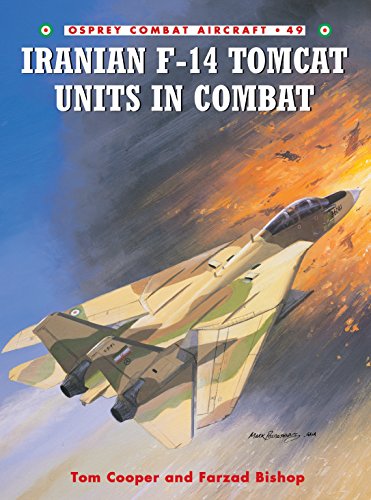
As an Amazon Associate, OverClassified may earn from qualifying purchases made through this link, at no extra cost to you.
Why This Is Essential Reading
Iranian F-14 Tomcat Units in Combat earns its place on this list as a credible, well-sourced technical reference on the exact air force and aircraft type appearing in two of this site's own case files separated by nearly thirty years. Its value here is institutional rather than evidentiary: it does not speak to whether either the Tehran 1976 incident or the Arak F-14 Radar Intercept involved anything genuinely anomalous, but it documents, in real operational detail, exactly what the Iranian air force flying in both cases' airspace actually was and could do. Read alongside this site's own case-file research, it offers a useful corrective against treating "Iranian F-14" as a vague or unfamiliar detail rather than a specific, well-documented aircraft with a real, independently verifiable service history spanning decades of genuine operational use.
Related Cases & Theories
Essential Viewing
Sources Cited
- Cooper, Tom, and Farzad Bishop. Iranian F-14 Tomcat Units in Combat. Osprey Publishing, Combat Aircraft No. 49, 2004 (ISBN 978-1-84176-787-1, cited here).
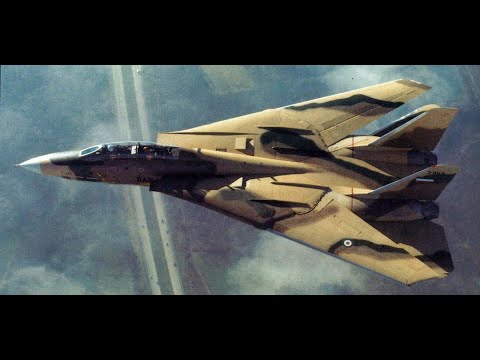
- "Combat aircraft pilot: Interview with sixteen kill Grumman F-14 Tomcat ace." Hush Kit, YouTube (interview with an Iranian F-14 pilot directly relevant to this book's first-hand-account approach; video verified via oEmbed). youtube.com
- This site's own resources library: Full Reading List, where this book is cited on this site's own Tehran 1976 and Arak F-14 Radar Intercept case files.
- This site's own key-figures entry: Parviz Jafari, the Iranian Air Force pilot who commanded the F-4 Phantom scrambled during the Tehran 1976 incident.
- This site's own case file: Tehran 1976.
- This site's own case file: Arak F-14 Radar Intercept.
- This site's own essential-reading entry: Clear Intent, cited alongside this book on the Tehran 1976 case file for its own declassified-document research.
- This site's own locations entry: Tehran, Iran, site of the 1976 incident.
- This site's own locations entry: Arak Heavy Water Production Plant, Khondab, Markazi Province, Iran, site of the 2004 claim.
- Goodreads listing, book/show/110114.Iranian_F_14_Tomcat_Units_in_Combat (rating data cited here).
- This site's own key-figures entry: Key Figures index, for the broader roster of government, military, and witness figures this site's own case-file research has documented.
- Osprey Publishing, Combat Aircraft series overview, consulted for context on the book's editorial line and format. ospreypublishing.com
Have corrections, additional research, or peer-reviewed sources? Help improve this entry.
Suggest an Edit