
Clear Intent
The Government Coverup of the UFO Experience
Core Thesis
Filing Freedom of Information Act requests against the Air Force, CIA, FBI, and NSA through the early 1980s, Connecticut police lieutenant Lawrence Fawcett and FOIA specialist Barry J. Greenwood assembled roughly 3,000 pages of declassified government UFO documents and let them, rather than witness testimony, carry the book's argument: that internal Air Force, NORAD, and intelligence-community paper trails — not saucer lore — showed a government that had never stopped taking UFO reports seriously long after Project Blue Book's 1969 public closure, and had built a quiet, unpublicized apparatus for tracking incidents like the October–November 1975 wave of intrusions at Strategic Air Command nuclear bases. With a foreword by Dr. J. Allen Hynek, Clear Intent does not ask readers to trust the authors' interpretation so much as to read the documents themselves, reproduced or directly quoted throughout — a methodological choice that predates by more than three decades the FOIA-driven UAP journalism the subject enjoys today.
About the Author
Lawrence Anthony Fawcett was born June 21, 1939, in Brooklyn, New York, and served in the United States Army before joining the Coventry, Connecticut Police Department, where he started the department's canine unit and its Police Explorers program and retired in 1994 as a lieutenant. Alongside his police career, Fawcett spent roughly two decades investigating UFO reports, holding memberships in the National Investigations Committee on Aerial Phenomena (NICAP) and the Aerial Phenomena Research Organization (APRO), serving as the New England Early Warning coordinator for the University of Colorado's Air Force-sponsored Condon Committee study, sitting on the national board of directors of the Center for UFO Studies (CUFOS), and working as assistant director and chief investigator for Citizens Against UFO Secrecy (CAUS) — the organizational base from which Clear Intent was researched. Fawcett died September 19, 2010, in Niantic, Connecticut, at age 71.
Barry J. Greenwood has pursued UFO research since 1964, working for decades in U.S. Postal Service station administration and finance while investigating cases as Massachusetts MUFON's state section director for ten years. From the late 1970s onward he specialized specifically in government-document research, filing FOIA requests and carefully preserving each request's cover letters and agency responses — a chain-of-custody discipline he has since described as essential to distinguishing genuine declassified material from the fabricated "leaked" documents, including the MJ-12 papers, that proliferated in ufology starting in the same era. Greenwood edited Just Cause, the newsletter of Citizens Against UFO Secrecy, from 1984 to 1998, later edited the U.F.O. Historical Revue from 1998 to 2015, contributed to the 2012 anthology UFOs and Government: A Historical Inquiry, and co-launched the National UFO Historical Records Center with researcher David Marler in 2022. He is a Fellow of the British Interplanetary Society and maintains one of the largest private archives of historical UFO material in existence, including the CAUS papers, Raymond Fowler's case files, and the Air Force's own 1952 Project Blue Book press-clipping service.
The two men met through CAUS in the late 1970s and combined Fawcett's police-investigator's instinct for building a case file with Greenwood's specialized FOIA methodology, spending several years jointly filing requests and, where agencies stonewalled, escalating to FOIA lawsuits before assembling the results into Clear Intent in 1984. They returned to the same material eight years later for The UFO Cover-Up: What the Government Won't Say, published by Simon & Schuster's Fireside imprint in 1992 — whose own title-page note states plainly that it was "originally published as Clear Intent," making it a retitled reissue of the same underlying investigation rather than a distinct sequel.
Historical Context & Origins
When Fawcett and Greenwood began compiling Clear Intent, UFO research in America was operating in a genuine institutional vacuum. Project Blue Book had closed in December 1969 following the University of Colorado's 1968–69 Condon Report, and the Air Force's official public position ever since had been that UFOs posed no threat to national security and warranted no further government study. What that position did not account for, and what CAUS's FOIA campaign was specifically built to expose, was that Blue Book's closure had not actually ended federal interest in the subject — other agencies, including NORAD, the CIA, the FBI, and the NSA, kept collecting and processing UFO-related reports through channels the public closure never touched.
The book arrived into a UFO literature still dominated by witness-testimony narratives — the register Keyhoe had established decades earlier and that books like Richard Hall's The UFO Evidence had refined into a screened evidentiary compilation, but still fundamentally built on what people said they saw. Fawcett and Greenwood's CAUS-era FOIA campaign, filed against the Air Force, CIA, FBI, and NSA through the late 1970s and early 1980s, took a different tack entirely: rather than gathering more witness accounts, it went after the internal government paperwork generated when those agencies received, forwarded, or investigated a report, on the theory that a bureaucracy's own private correspondence about UFOs would be harder to dismiss than any civilian's affidavit.
That campaign benefited from timing. The Freedom of Information Act had been substantially strengthened by 1974 amendments passed over President Ford's veto in the aftermath of Watergate, and by the early 1980s CAUS and allied researchers had built enough FOIA litigation experience — including a well-known 1980 lawsuit that forced the CIA to release over 900 pages of previously withheld UFO-related documents — to make a book-length documentary compilation like Clear Intent possible for the first time. The book's own foreword, contributed by J. Allen Hynek, the former Air Force consultant turned CUFOS founder, lent it the endorsement of ufology's most credentialed living scientific figure at the moment of publication.
Core Arguments & Key Concepts
The book's structural argument is that a documentary record, read case by case, shows sustained and often anxious government attention to UFO reports at sensitive military sites long after Blue Book's closure supposedly ended official interest. Its most extensively documented case is the October–November 1975 wave of intrusions at Northern Tier Strategic Air Command bases — Loring AFB, at Loring Air Force Base in Limestone, Maine, Wurtsmith AFB in Michigan, Malmstrom and Minot AFB in the northern Plains, and CFS Falconbridge, at Canadian Forces Station Falconbridge in Ontario — where Fawcett and Greenwood's FOIA requests to the Air Force, NORAD, and the Boston FBI field office produced Office of Special Investigations teletypes, base radar logs, Security Option 3 alert message traffic, and a November 11, 1975 CINCNORAD message naming all five installations as sites of "reliable military personnel" reporting "suspicious objects."
A second load-bearing case is the June 1968 incident the book frames around General George S. Brown's later public remarks: a declassified III Marine Amphibious Force intelligence summary describing unresolved "unidentified, slow-moving UFO's" tracked near the DMZ off North Vietnam in the days before a U.S. Air Force F-4 mistakenly fired on the Australian destroyer HMAS Hobart. According to this site's own citation record, Clear Intent is the single work most responsible for bringing both Brown's 1973 press-conference statement and the III MAF summary itself into wider UFO literature, even though — as this site's own case file on the incident details — Brown's actual words explicitly rejected the "UFO" framing the book's chapter title implies.
The book's argument is deliberately restrained about what the underlying documents prove. Fawcett and Greenwood do not claim the paper trail demonstrates an extraterrestrial presence; their claim is narrower and, by design, harder to dismiss — that named military and intelligence personnel, writing for internal government audiences with no public reputation to protect, repeatedly described contacts and objects they could not identify and treated some of them, particularly the ones near nuclear storage sites, as genuine security concerns rather than dismissible nonsense. The book's rhetorical strategy throughout is to let the reader draw that inference from the documents' own institutional register rather than argue it directly.
A third throughline is the book's own account of the FOIA process itself as evidence: chapters describing agency stonewalling, "glomarization" (neither-confirm-nor-deny) responses, and outright contradictory answers to nearly identical requests function as a parallel argument that the government's institutional behavior around UFO records was itself inconsistent with its public claim of having lost interest in the subject. Greenwood's later writing on document provenance describes this working method explicitly: he and Fawcett "filed FOIAs and kept cover letters to establish the sources of the information as authentic," a chain-of-custody discipline built specifically to distinguish their material from the fabricated documents, including the MJ-12 papers, that were beginning to circulate in ufology during the same years.
Key Cases & Evidence Discussed
The book's most extensively documented material concerns the Loring AFB Nuclear Storage Area intrusions (Case File #064, October 1975), where the book's own FOIA-obtained OSI teletypes and radar logs remain, per this site's own case file, among the best-documented single incidents in the broader Northern Tier wave — material this site's case file credits directly to "Fawcett & Greenwood, Clear Intent" in its own evidence listing.
The book folds Loring together with the wider 1975 SAC Base Intrusion Wave (Case File #205) and the CFS Falconbridge Radar/Visual Incident (Case File #190, November 1975), whose Canadian dimension — a CINCNORAD message naming Falconbridge alongside four American bases — is one of this site's own key-figures entry's specific citations to the authors' research.
The HMAS Hobart / DMZ Vietnam Incident (Case File #177, June 1968) receives a full chapter built around the declassified III Marine Amphibious Force intelligence summary and General Brown's later public statement — the case this site's own resources library specifically credits Clear Intent with bringing into "the wider UFO literature," even as the book's chapter title arguably overstates a UFO framing that Brown's own on-record words rejected.
The Tehran UFO Incident (Case File #018, September 1976) — the radar-and-visual case in which two Imperial Iranian Air Force F-4 Phantom crews reported instrumentation failures approaching an unidentified object, and which the U.S. Defense Intelligence Agency itself called "a classic which meets all the criteria necessary for a valid study of the UFO phenomenon" — is covered in its own dedicated chapter, and remains one of the few cases this book discusses that this site classifies as VERIFIED rather than DISPUTED.
Beyond the cases with dedicated files on this site, Clear Intent also devotes chapters to the January 1969 Chu Lai Egg-Shaped Object Incident and to a 1980 witness account connected to the Bentwaters/Rendlesham Forest events in England — contacted through CAUS under the pseudonym "Art Wallace" while the book was in preparation, later identified as Larry Warren — material that situates Clear Intent as an early documentary bridge between the 1970s FOIA campaigns and cases that would define UFO research for the following decade.
Critical Reception & Controversies
Clear Intent was reviewed on publication by Government Publications Review, where D. L. Lapham of the University of Central Florida assessed it in the journal's January 1985 issue (vol. 12, no. 3, pp. 264–265) — a notable placement in itself, since a library-science journal built to evaluate the reliability of government-document research treated the book as a legitimate subject for that kind of scrutiny rather than dismissing it as UFO paperback fare.
The book also drew attention from the era's leading professional UFO skeptic: Philip J. Klass, an electrical engineer and author of UFOs Explained, reviewed Clear Intent in the Committee for Skeptical Inquiry's own journal, Skeptical Inquirer (vol. 9, no. 2, Winter 1984/85) — material Klass's own archived papers at the American Philosophical Society later held annotated material "removed from" the book, evidence he engaged with its FOIA documents closely enough to keep his own marked-up copy.
A different kind of endorsement came several years later, from an unlikely direction: reviewing Curtis Peebles's 1994 skeptical history Watch the Skies! for Publishers Weekly, the trade critic wrote that Peebles's "often superficial coverage of close encounters, abduction cases, reports of crashed UFOs and other sightings… should be weighed against careful investigative works such as Timothy Good's Above Top Secret and Larry Fawcett and Barry Greenwood's Clear Intent" — a mainstream trade publication explicitly holding up the FOIA-document method against a competing debunking narrative a decade after Clear Intent's own publication.
Reader reception has remained positive but measured: on Goodreads the book holds a 3.58-star average from nineteen ratings, with reviewers consistently describing its lawyerly, document-driven approach rather than any dramatic narrative voice — one reviewer characterized the authors as "clear-headed lawyer guys who are bothered by all the UFO tomfoolery, so they do the lawyer thing and file endless FOIA requests," a description that captures both the book's core method and its genre-atypical restraint.
The book's more durable critical standing rests less on any single review and more on how later UFO historians have used it: unlike testimony-driven books whose central claims can only be assessed by trusting a witness, Clear Intent's FOIA-obtained documents are independently verifiable against the same National Archives and agency FOIA reading rooms Fawcett and Greenwood drew from, which is why this site's own case files for Loring, Falconbridge, and the HMAS Hobart incident all cite the book as a primary evidentiary source rather than a secondary interpretive one — the interpretation of what the documents mean remains genuinely disputed, as reflected in this site's own DISPUTED classification for most of the cases involved, but the documents' authenticity itself has not been a serious point of contention.
Influence & Legacy
Clear Intent's most concrete influence on this site is directly measurable: under its 1984 Prentice-Hall paperback ISBN, the book is cited across resources.html in connection with 7 separate case-file pages, including the 1975 SAC Base Intrusion Wave, the CFS Falconbridge Radar/Visual Incident, and the Chu Lai Egg-Shaped Object Incident, making it one of this site's most frequently cited single sources for Cold War-era military UFO cases specifically.
Within the FOIA-document tradition it helped establish, Clear Intent functioned as a proof of concept: Greenwood's chain-of-custody methodology — filing requests and preserving the agency cover letters that authenticated each release — became a template later researchers used explicitly to distinguish genuine declassified material from the fabricated "leaked" documents, most notoriously the MJ-12 papers, that spread through ufology in the years immediately following the book's publication. Greenwood has continued to make that argument directly in his own later writing, describing unattributed anonymous leaks as a threat to the field's credibility precisely because they lack the documentary chain Clear Intent insisted on.
The authors themselves treated the book as an ongoing project rather than a closed one: in 1992, Simon & Schuster's Fireside imprint reissued the same underlying investigation, updated and retitled, as The UFO Cover-Up: What the Government Won't Say — its own title-page verso stating it was "originally published as Clear Intent" — extending the book's FOIA-built case to a wider mass-market paperback audience eight years after the original release.
Greenwood's individual career after Clear Intent reads as a continuation of the same methodology at institutional scale: editing CAUS's Just Cause newsletter through 1998, later editing the U.F.O. Historical Revue, contributing to the 2012 scholarly anthology UFOs and Government: A Historical Inquiry alongside Michael Swords and Robert Powell, and co-founding the National UFO Historical Records Center with researcher David Marler in 2022 — an archive built, by Greenwood's own description, specifically to preserve exactly the kind of provenance-verified original documentation Clear Intent pioneered using thirty-eight years earlier.
The Book
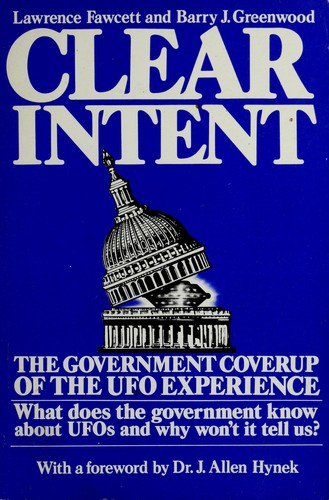
As an Amazon Associate, OverClassified may earn from qualifying purchases made through this link, at no extra cost to you.
Why This Is Essential Reading
Clear Intent earns its place on this list as this site's clearest early example of the FOIA-document method that its own most heavily cited case files still depend on: rather than asking readers to trust witness testimony or an author's narrative voice, Lawrence Fawcett and Barry J. Greenwood built their case entirely from roughly 3,000 pages of declassified Air Force, NORAD, CIA, FBI, and NSA paperwork, obtained through years of Freedom of Information Act requests and, where necessary, litigation, and largely let the documents speak for themselves. That method produced a book whose underlying evidence has held up better under scrutiny than its genre's testimony-driven alternatives — the documents' authenticity has not been seriously challenged even by skeptics like Philip Klass, even though what those documents actually prove about the 1975 Northern Tier wave, the HMAS Hobart incident, and the other cases collected here remains genuinely disputed, as this site's own DISPUTED classifications for those cases reflect. Read Clear Intent as the primary source it functions as on this site: the book this site's own case files for Loring, Falconbridge, and the HMAS Hobart incident cite directly for their evidentiary record, and the clearest single demonstration of how a documented government paper trail, however incomplete, can outlast the specific conclusions any one investigator draws from it.
Related Cases & Theories
Essential Viewing
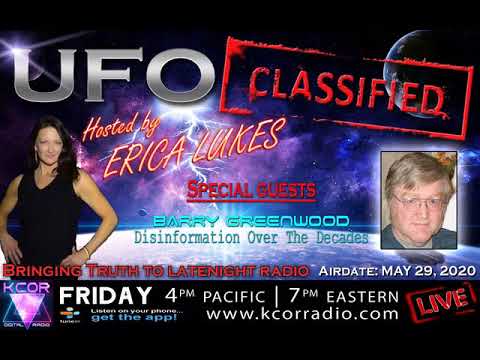
Barry Greenwood | UFO Disinfo
UFO Classified with Erica Lukes — Greenwood discusses the role of disinformation in ufology since the late 1940s and the provenance standards, developed during his Clear Intent-era FOIA research, that he uses to separate genuine declassified documents from fabricated ones. Verified via YouTube oEmbed before inclusion.
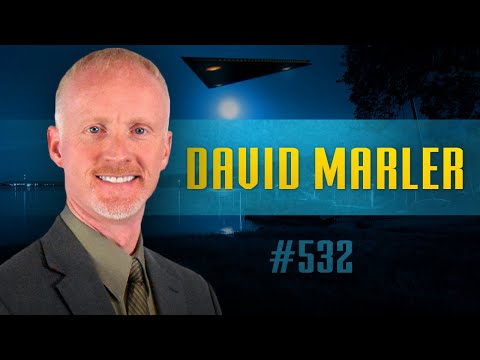
David Marler & Barry Greenwood, National UFO Historical Records Center Launch
Podcast UFO Live Shows — Greenwood and fellow researcher David Marler discuss launching the National UFO Historical Records Center, an archival project extending the document-preservation methodology Greenwood developed while co-authoring Clear Intent. Verified via YouTube oEmbed before inclusion.
Sources Cited
- Fawcett, Lawrence & Greenwood, Barry J. Clear Intent: The Government Coverup of the UFO Experience. Prentice-Hall, 1984 (ISBN 9780131366497 / 0131366491, matching the paperback edition already cited on this site's own resources library). amazon.com
- Fawcett, Lawrence & Greenwood, Barry J. Clear Intent, full digitized text. Hosted by NICAP. nicap.org
- "Clear intent: the government coverup of the UFO experience." Internet Archive (1984 first edition scan, bibliographic record: Prentice-Hall, 294 pp., bibliography and index). archive.org
- Fawcett, Lawrence & Greenwood, Barry J. The UFO Cover-Up: What the Government Won't Say. Simon & Schuster/Fireside, 1992 ("Originally published as Clear intent"). archive.org
- Lapham, D. L. Review of Clear Intent: The Government Cover-up of the UFO Experience. Government Publications Review, vol. 12, no. 3 (1985), pp. 264–265. stars.library.ucf.edu
- Klass, Philip J. Review of Clear Intent. Skeptical Inquirer, vol. 9, no. 2 (Winter 1984/85). skepticalinquirer.org
- "Watch the Skies!: A Chronicle of the Flying Saucer Myth." Publishers Weekly review of Curtis Peebles's book (citing Clear Intent as a comparison work). publishersweekly.com
- "Clear Intent: The Government Coverup of the Ufo Experience." Goodreads (reader ratings and reviews, 3.58-star average, 19 ratings). goodreads.com
- "Barry Greenwood." Center for UFO Studies (CUFOS) biography: FOIA research career, CAUS/Just Cause editorship, archive holdings, and bibliography. cufos.org
- Greenwood, Barry. "UFO Documents: Provenance and Credibility." Blue Blurry Lines, June 2020 (Greenwood's own account of the FOIA cover-letter chain-of-custody method used in Clear Intent and his critique of unattributed "leaked" documents). blueblurrylines.com
- "Beyond Clear Intent ~ Lawrence Fawcett Interview." Alien Hub forum (Fawcett biography: birth June 21, 1939, Brooklyn, NY; Coventry, CT police career; NICAP/APRO/CUFOS/CAUS involvement; death September 19, 2010, Niantic, CT). alienhub.com
- "SHOW #471 Notes: Barry Greenwood, David Marler & Jan Aldrich." Podcast UFO. podcastufo.com
- Fawcett, Lawrence & Greenwood, Barry J. "Intrusions at Loring AFB – 1975," excerpted from Clear Intent, pp. 16–26. Hosted by NICAP. nicap.org
- This site's own case file: Loring AFB Nuclear Storage Area, for the 1975 case whose evidence section directly credits this book.
- This site's own case file: HMAS Hobart / DMZ Vietnam Incident, the case this site's resources library credits this book with bringing into wider UFO literature.
- This site's own case file: The Tehran UFO Incident, for the VERIFIED 1976 case this book covers in a dedicated chapter.
- This site's own key-figures entry: Lawrence Fawcett & Barry J. Greenwood, for their joint biography and further case connections.
- This site's own resources library: Full Reading List, where this exact 1984 paperback edition (ISBN 0131366491) was already cited across 7 case-file pages prior to this entry.
Have corrections, additional research, or peer-reviewed sources? Help improve this entry.
Suggest an Edit