
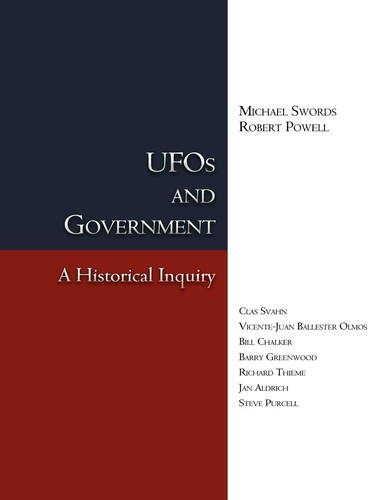
UFOs and Government
A Historical Inquiry
Core Thesis
The decades-long relationship between UFO reports and the governments that received them is best reconstructed not from ufology's secondhand lore but from the declassified paper trail itself — Air Force case files, panel transcripts, internal memoranda, and contemporaneous interviews — and when that documentary record is laid out chronologically and country by country, it shows a genuine, internally serious investigative effort (Project Sign's early scientific caution, a handful of persistent scientists and officers who wanted the phenomenon studied properly) that was nevertheless overridden again and again by bureaucratic self-interest, inter-agency turf protection, and, after the 1953 Robertson Panel, a deliberate public-relations campaign to shrink the problem rather than solve it — a pattern the book's nine authors document was neither a single grand cover-up nor a simple case of institutional incompetence, but both at once.
About the Author
Michael D. Swords earned a B.S. in chemistry from the University of Notre Dame in 1962, an M.S. in biochemistry from Iowa State University in 1965, and a Ph.D. from Case Western Reserve University in 1972, before spending thirty years as a professor of natural science and environmental studies at Western Michigan University, where his teaching centered on human biology, the history and philosophy of science, and scientific methodology. He was drawn into organized ufology in 1978 after attending a lecture by astronomer J. Allen Hynek, and went on to spend two decades in scholarship and service to the Center for UFO Studies (CUFOS), the Hynek-founded research organization, including a term editing its peer-reviewed Journal of UFO Studies. That combination — a working research scientist's training applied for decades to CUFOS's archive of declassified case files — is the credential UFOs and Government is built on; Swords served as the project's lead historian and primary author of its United States chapters, the bulk of the book's roughly 580 pages.
Swords assembled the book's other eight contributors as "The UFO History Group," a collaboration that took more than four years to research, write, and edit. Robert Powell, a chemist by training with a 28-year engineering-management career at Advanced Micro Devices (where he helped develop the company's first flash-memory technology and holds four nanotechnology patents), served as MUFON's director of research from 2007 to 2017 and helped write and edit the book alongside Swords; the two are listed as its lead co-authors on the cover. Powell also contributed several of its international chapters. Two years after this book's publication, Powell co-founded the Scientific Coalition for UAP Studies (SCU), through which he later directed the organization's technical re-analyses of the 2013 Aguadilla CBP infrared video and the Ubatuba magnesium fragments, and in 2024 published his own solo book, UFOs: A Scientist Explains What We Know (And Don't Know).
The remaining seven contributors filled clearly divided roles rather than serving as generic co-authors. Journalist and CAUS veteran Barry Greenwood, NSA-alumnus-turned-writer Richard Thieme, and researcher Jan Aldrich — credited as the book's primary content consultant — served as consultants and contributing writers on the U.S. chapters; Aldrich's decades of archival Project Blue Book document-collecting fed directly into the book's case-file citations. The international chapters were written by specialists in their own countries' records: Australian researcher Bill Chalker, Spanish researcher Vicente-Juan Ballester Olmos, and Swedish journalist Clas Svahn (with Powell contributing additional country material). Steve Purcell served as the book's photo and illustration editor, supplying the images, charts, and reproduced documents that run throughout the text. The finished book carries a foreword by Jerome Clark, author of this site's own UFO Encyclopedia entry, who called it "the first credible, comprehensive overview of official UFO history in many years."
Historical Context & Origins
By 2012, UFO literature already had two well-established but structurally different approaches to the government-secrecy question. One was the narrative single-author argument, exemplified by Richard Dolan's UFOs and the National Security State (2000), which built a sustained case for deliberate, coordinated concealment. The other was skeptical debunking history in the mold of Curtis Peebles's Watch the Skies! (1994), which treated the secrecy itself as incidental fuel for a culturally driven myth rather than the story's center. UFOs and Government deliberately staked out a third position: a team-researched, document-first chronicle that let the declassified paper trail itself determine whether the government's UFO conduct looked more like cover-up or foul-up, without committing in advance to either side's preferred conclusion.
The project also arrived at a specific institutional moment for its lead author. Swords had spent the 1990s and 2000s publishing case-by-case historical studies through CUFOS and the Journal of UFO Studies — close, document-based work on individual episodes like the Robertson Panel and the early Project Sign years — but nothing that assembled that scholarship into one continuous institutional history. Recruiting Powell, then in the middle of his decade running MUFON's national research effort, along with Aldrich's archival document collection and the international contributors' access to non-U.S. records, let Swords convert years of piecemeal CUFOS-published research into a single synthesized reference the field had not previously had in this form.
The book also had unusually direct access to the era's participants: its authors interviewed surviving figures connected to the government's UFO programs and drew on Air Force case files beyond what earlier popular histories like Edward Ruppelt's insider account or Donald Keyhoe's advocacy books had used, giving the 2012 book a documentary base that postdated decades of intervening Freedom of Information Act releases those earlier, first-generation accounts never had access to.
Core Arguments & Key Concepts
The book opens its American narrative with the wartime and immediate postwar antecedents — the WWII "foo fighters" reported by Allied pilots and Sweden's 1946 "ghost rocket" wave — before the June 1947 press coverage of the modern sighting wave drew the armed services in, and traces the resulting sequence of official U.S. investigations: Project Sign (1948–1949), whose staff split between members who treated the objects as possible genuine anomalies and members who bent the evidence toward conventional explanations from the outset; Project Grudge (1949–1951), where the second faction won out and the phenomenon was institutionally redefined as a problem of public perception rather than an open scientific question; and Project Blue Book (1951–1969), headquartered at Wright-Patterson Air Force Base under Captain Edward Ruppelt, which handled the large 1952 sighting wave before gradually withering into a records-processing operation.
A central argument concerns the Robertson Panel of January 1953: the book documents, from CIA-convened-panel records, that the panel's public national-security rationale — that UFO reports could clog military communication channels during an actual Soviet attack — produced a specific recommended remedy, a public debunking campaign using the mass media, and that from 1953 to 1969 implementing that recommendation became a driving force behind the Air Force's UFO posture, actively displacing the scientific study some Project Sign personnel had originally wanted.
The book gives similarly detailed, primary-source treatment to the Air Force's 1966 University of Colorado study under physicist Edward U. Condon, documenting the internal rancor that split the Condon Committee (several members were fired or resigned before completion) and the December 1968 conclusion — written by Condon largely without the fired members' input — that effectively closed Project Blue Book in 1969 despite evidence that Condon's own findings did not fully support his summary judgment.
Roughly a third of the book steps outside the United States to compare how other governments handled the same phenomenon, and the comparison is itself an argument: France's CNES-affiliated GEPAN program is presented as the case of a government that built a genuinely scientific investigative structure, while Australia and Spain are shown largely mirroring the American pattern of convenient, evidence-diverging explanations, and Belgium's response to its own massive 1989–1990 sighting wave and Sweden's earlier 1946 ghost-rocket investigation are treated as two more distinct national case studies in how much science, versus how much reassurance, a government chooses to bring to the same underlying reports.
The book closes its American narrative by bringing the story forward from Blue Book's 1969 closure to the present, covering the Air Force's continued refusal to formally investigate civilian sightings, the 1997 disclosure by former Arizona governor Fife Symington that he had personally witnessed the 1997 Phoenix Lights object after publicly mocking the sightings in office, and the 2008 Stephenville, Texas sightings and the local and federal response to them — the book's most recent case material, extending its documentary approach into the era its lead editor, Robert Powell, was investigating firsthand as MUFON's director of research.
Key Cases & Evidence Discussed
The Robertson Panel (Case #226, January 1953) receives the book's most extended institutional treatment, presented as the specific hinge point where the CIA-convened panel's public-relations recommendation reoriented over a decade and a half of subsequent Air Force UFO policy toward managing public perception rather than pursuing scientific study.
The Roswell Incident (Case #001, July 1947) and the Air Force's own later investigative responses to it are examined as part of the book's account of how the government's UFO posture, and public scrutiny of that posture, continued to evolve for decades after Blue Book's formal 1969 closure.
The Condon Committee and its resulting Condon Report (Case #227, 1966–1968) is documented in detail from the internal committee correspondence and dissenting-member accounts the authors obtained, tracing the rancorous split among its own scientists that preceded the report's field-ending conclusion.
The 2008 Stephenville Lights sighting (Case #051) closes the book's American narrative, discussed through the lens of co-author Robert Powell's own contemporaneous work as MUFON's director of research documenting the case's radar and witness data.
The 1997 Phoenix Lights (Case #002) appears for its unusual official coda: the book documents then-Governor Fife Symington's 2007 public admission that he had personally witnessed the triangular object a decade after mocking the sightings at a press conference while in office.
Critical Reception & Controversies
The book's most substantive scholarly notice came from David M. Jacobs's review in the Journal of Scientific Exploration (Vol. 28, No. 2, 2014, pp. 397–402), which called it "an important book for all who are interested in the U.S. government's interface with the UFO phenomenon," praising its "wealth of documentation" and concluding it "is an essential tool for all interested in UFOs and UFO history." Jacobs specifically credited the book with resolving physicist James McDonald's 1968 open question of whether the government's conduct amounted to "a cover-up or a foul-up," writing that UFOs and Government "greatly clarifies what happened — there was a continuing cover-up of the raw information and this cover-up resulted in a monumental foul-up of the investigation."
Academic library reviewers reached a similarly favorable, if more measured, verdict. CHOICE, the American Library Association's review journal for academic libraries, ran a review by R. Fritze describing the book as "a straightforward study of the limited topic of government responses to sightings of UFOs" and noting that although its nine authors are part of the UFO research community, "they are not advocates of fringe theories" and their "narrative is firmly based on the available sources," concluding with a formal "Summing Up: Recommended" for academic library collections. The Center for UFO Studies' own recommended-reading page separately calls it, more bluntly, "the definitive account of how the US government and others have (mis)handled the UFO problem."
Working researchers were candid about the book's central limitation even while praising it: Jacobs's review specifically notes the U.S. chapters' "thirty-one years" of close attention (1940s–1969) dwarfs the comparatively short chapter-length treatment given to Brazil, the Soviet Union, and Belgium, which he describes as offering only "a glimpse into their programs" rather than the same document-level depth applied to the American case — a genuine breadth-versus-depth tradeoff built into a book whose lead author and majority of source material are American.
Reader response outside the specialist press has been positive on substance but notably split on execution. On Goodreads, where the book holds a 4.5-plus average rating, five-star reviewer Jim Huinink called it an "astonishingly detailed history" while still faulting its "turgid writing style" and organization as making the material "extra difficult to plod through," and three-star reviewer Daniel Z. acknowledged "the obvious amount of work that went into this survey" while describing the prose itself as "consistently clunky" — a recurring reader complaint that the book's evidentiary thoroughness comes at the cost of readability for anyone outside its core audience of researchers.
No reviewer located in researching this article, skeptical or otherwise, has seriously disputed the book's core documentary claims about Project Sign, the Robertson Panel, or the Condon Committee; the dispute that does exist runs almost entirely along the axis Jacobs's review names directly — whether the pattern the documents show adds up to intentional cover-up, bureaucratic foul-up, or, as the book itself and its reviewers most often conclude, an inseparable mixture of both.
Influence & Legacy
The book's most concrete, independently verifiable influence is documented on this very site: this exact 2012 first edition, under its canonical ISBN 1933665580, is cited across resources.html in connection with 18 separate case-file pages — spanning cases from the COMETA Report and the Air France Flight 3532 sighting to the Condon Report, the Belgian UFO Wave, and the Falcon Lake Incident — reflecting its ongoing use here as a working government-policy source rather than a novelty citation.
For its two lead authors, the book anchored (rather than capped) careers that have continued in the same documentary vein: Swords remained a CUFOS board member and continued publishing case-based UFO history until his death, while Powell's 2014 co-founding of the Scientific Coalition for UAP Studies extended the book's evidentiary, document-first methodology into SCU's later technical re-analyses of cases like the 2013 Aguadilla CBP infrared video, and into his own 2024 solo book on the scientific case for UAP.
Jerome Clark's foreword prediction — that "every responsible treatment of UFOs and government will have to cite UFOs and Government prominently among its sources" — is borne out by the book's continued citation in subsequent scholarship, including its own listing in Western Michigan University's ScholarWorks institutional repository as a work of public-affairs and public-policy scholarship, a categorization few other UFO-history titles receive.
The book's collaborative model — a lead historian coordinating specialist contributors on discrete national chapters rather than one author attempting global coverage alone — also stands as a structural precedent within ufology's own literature, distinct from the single-author reference-catalog approach of Jerome Clark's own UFO Encyclopedia and the single-author narrative-argument approach of Richard Dolan's UFOs and the National Security State, giving this site's own Essential Reading list three structurally different answers to the same government-secrecy question.
The Book
As an Amazon Associate, OverClassified may earn from qualifying purchases made through this link, at no extra cost to you.
Why This Is Essential Reading
UFOs and Government earns its place on this list for the same reason David Jacobs's Journal of Scientific Exploration review singled it out: it is a document-first history built by nine researchers with direct archival and institutional access — CUFOS's own decades of case files, MUFON's national research apparatus, and country-specific specialists on the international side — rather than a single writer's argument about what the government's UFO conduct meant. Its verified reception bears out its evidentiary strength: CHOICE's formal "Recommended" for academic libraries, CUFOS's own "definitive account" endorsement, and Jerome Clark's foreword all converge on the same point independent of this site's own extensive citation of it. What that same reception also documents honestly is the tradeoff such thoroughness carries: readers who praise its research just as consistently flag its "turgid" and "clunky" prose, and its own reviewers note the U.S. chapters' documentary depth is not matched by the shorter international sections. Read it as what its own foreword and harshest admiring reviewers both call it — an essential documentary reference for how the American and a handful of other governments actually handled UFO reports, not a book built for easy cover-to-cover reading.
Related Cases & Theories
Essential Viewing
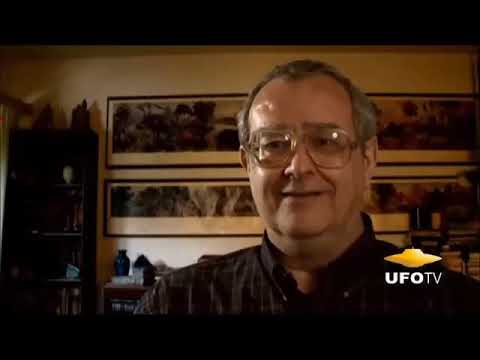
Prof. Michael D. Swords on UFOs & Scared Scientists
Dr Dee — Michael D. Swords discusses the government and scientific establishment's institutional reluctance to seriously engage the UFO subject, the same institutional pattern this book documents from primary sources.
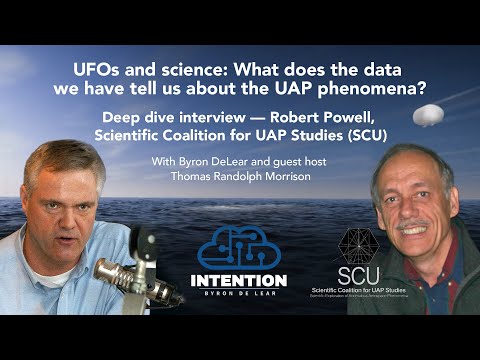
EP9 Deep Dive Interview - Robert Powell, Scientific Coalition for UAP Studies (SCU)
Byron DeLear — Robert Powell discusses his UAP research background, including his MUFON and Scientific Coalition for UAP Studies work that grew directly out of the research underlying UFOs and Government.
Sources Cited
- "UFOs and Government: A Historical Inquiry" by Michael D. Swords and Robert Powell. Western Michigan University ScholarWorks (official institutional bibliographic record, publisher, ISBN, department listing). scholarworks.wmich.edu
- "Michael D. Swords." Center for UFO Studies (official CUFOS board biography: education, career, CUFOS roles). cufos.org
- "Robert Powell." Center for UFO Studies (official biography: engineering career, MUFON, SCU co-founding). cufos.org
- "Recommended Books." Center for UFO Studies (CUFOS's own description of the book as "the definitive account of how the US government and others have (mis)handled the UFO problem"). cufos.org
- "UFOs and Government: A Historical Inquiry." Amazon.com (ISBN 1933665580 / 9781933665580, full nine-author listing, product page). amazon.com
- "UFOs and Government: A Historical Inquiry." AbeBooks (ISBN 9781933665580, bibliographic record, Jerome Clark foreword excerpts). abebooks.com
- Jacobs, David M. "UFOs and Government: A Historical Inquiry by Michael Swords and Robert Powell" (book review). Journal of Scientific Exploration, Vol. 28, No. 2 (2014), pp. 397–402. journalofscientificexploration.org
- Fritze, R. "UFOs and Government: A Historical Inquiry" (book review). CHOICE: Current Reviews for Academic Libraries, American Library Association, 2013 ("Summing Up: Recommended").
- "UFOs and government : a historical inquiry." Internet Archive (digitized copy, table of contents, foreword excerpts). archive.org
- "UFOs and Government: A Historical Inquiry by Michael Swords." Goodreads (reader ratings and reviews, including Jim Huinink and Daniel Z. reviews quoted in this article). goodreads.com
- This site's own resources library: Full Reading List, where this exact 2012 edition (ISBN 1933665580) is cited across 18 separate case-file pages.
- This site's own case file: The Robertson Panel, for the 1953 panel this book treats as the turning point toward official debunking policy.
- This site's own case file: The Condon Report, for the 1968 study this book documents as effectively ending Project Blue Book.
- This site's own case file: Stephenville Lights Sighting, for the case this book's own co-author Robert Powell investigated directly.
- This site's own key-figures entry: Michael Swords, for his full biography and case connections.
- This site's own key-figures entry: Robert Powell, for his full biography and case connections.
Have corrections, additional research, or peer-reviewed sources? Help improve this entry.
Suggest an Edit