
Watch the Skies!
A Chronicle of the Flying Saucer Myth
Core Thesis
The flying saucer phenomenon is best studied not as a question of what witnesses actually saw but as an American cultural myth in the anthropological sense — a socially meaningful story, not necessarily a false one — that took shape around Kenneth Arnold's June 1947 sighting and was then sustained for decades by an underlying reality of misidentified conventional aircraft, atmospheric phenomena, hoaxes, and psychological and social pressures, all amplified by a Cold War national-security apparatus whose genuine secrecy around programs like the U-2 gave the myth's cover-up narrative just enough real substance to keep growing.
About the Author
Curtis Peebles was born on May 4, 1955, in San Diego, California, and developed an early interest in airplanes, rockets, and the American space program as a teenager. He earned a Bachelor of Arts in history from California State University, Long Beach, in 1985, and began freelance writing for Analytical Systems and Materials, an aeronautical engineering firm, as early as 1977 — a technical-writing apprenticeship that ran in parallel with his historical research for most of his working life.
By the time Watch the Skies! appeared in 1994, Peebles was already established as a Cold War aerospace historian rather than a UFO writer working his way into the subject from outside. His first book, Guardians: Strategic Reconnaissance Satellites (1987), predated Watch the Skies! by seven years and dealt with exactly the kind of classified American surveillance program — reconnaissance hardware built and flown in total secrecy — whose real-world existence he would go on to argue had fed UFO suspicions for decades. He served during the 1990s as an aerospace historian for the Smithsonian Institution, the same institutional home that published Watch the Skies! through its Smithsonian Institution Press imprint.
Peebles continued writing Cold War secrecy history alongside and after his UFO book, publishing Dark Eagles: A History of Top Secret U.S. Aircraft Programs and The Corona Project: America's First Spy Satellites, both in 1997, followed later by Twilight Warriors: Covert Air Operations Against the USSR and The Moby Dick Project: Reconnaissance Balloons over Russia — a body of work on classified U-2, CORONA, and high-altitude balloon programs that gave him direct documentary knowledge of the exact secret hardware Watch the Skies! argues was repeatedly mistaken for flying saucers. In 2000 he joined NASA's Dryden Flight Research Center (renamed the Armstrong Flight Research Center in 2014) as a staff historian, a post he held until 2013, producing oral histories of test pilots and engineers and, in 2014, his final book, Probing the Sky: Selected NACA Research Airplanes and Their Contributions to Flight. He was a Fellow of the British Interplanetary Society and a member of the Flight Test Historical Foundation.
Peebles's skepticism was never a hidden editorial slant; he stated it plainly in his own author's voice: "I am a skeptic. I believe flying saucer reports are misinterpretations of conventional objects, phenomena, and experiences." That reputation made him a recurring on-camera source for UFO television programming, including A&E's 1997 documentary Where Are All the UFOs?, the syndicated series UFO Diaries, the History Channel's Unsolved History: Area 51 and History's Mysteries, the 2004 UFO Files episode "Roswell: Final Declassification," and the 2013 documentary Mirage Men, in which he appears credited as an aviation historian. Diagnosed with progressive memory loss in August 2013, Peebles died on June 25, 2017, at age 62.
Historical Context & Origins
Watch the Skies! arrived in 1994, three years after the Soviet Union's dissolution formally ended the Cold War whose secrecy the book argues had done so much to fuel UFO belief in the first place. The early 1990s were a genuine hinge moment for exactly this kind of history: the CIA's CORONA spy-satellite program, still classified when Peebles was researching the book, was declassified the following year in 1995, and the U-2 and OXCART (SR-71) programs whose sunlight-reflecting high-altitude test flights the book identifies as a major source of Cold War-era UFO reports had only recently begun receiving fuller official acknowledgment. Peebles was, in effect, writing UFO history at the first moment enough of the underlying classified record had become available to actually test the secrecy-fed-the-myth thesis against documents rather than speculation.
The book also entered a UFO-literature landscape still working through the Majestic 12 documents controversy that had split the field since the papers' 1987 surfacing, and it followed a decade in which the believer side of ufology had produced increasingly elaborate cover-up narratives — Kevin Randle and Donald Schmitt's Roswell crash-retrieval books, Timothy Good's internationally sourced Above Top Secret (1987) — against a comparatively thin shelf of skeptical, source-cited counter-histories. David M. Jacobs's academic The UFO Controversy in America (1975) and the ongoing work of engineer-turned-skeptic Philip J. Klass were the closest existing models for the kind of documentary skepticism Peebles set out to write, but neither had attempted Peebles's specific project: a single continuous chronological narrative treating the entire flying-saucer belief system itself, from 1947 to the early 1990s, as the object of historical study.
Smithsonian Institution Press's decision to publish the book gave it an institutional imprimatur unusual for UFO skepticism, which had more often appeared through specialty presses (Prometheus Books, home to much of Klass's and other CSICOP-affiliated writing) than through a museum-affiliated academic press. That placement positioned Watch the Skies! from the outset as a work aimed at least partly at a general historical readership rather than only at ufology's own internal audience of believers and skeptics — a positioning reflected in its subsequent notice in mainstream academic history journals rather than only specialty UFO periodicals.
Core Arguments & Key Concepts
Peebles frames his entire subject with a single explanatory image, describing the flying saucer myth as a mirror held up to postwar America: its recurring waves and changing character track, in his account, the paranoia of the 1950s, the social turmoil of the 1960s, the self-focused culture of the 1970s, and the more nihilistic tone of the 1980s and early 1990s. That framing is the book's organizing device rather than a single argued claim — each period's UFO reports and belief patterns are read against the broader anxieties of the decade that produced them, so that the myth's evolution becomes evidence about American culture rather than about anything in the sky.
Structurally, the book opens with only brief attention to pre-1947 antecedents — the Great Airship Wave of 1896–97, Charles Fort's catalog of anomalies, wartime "ghost rocket" reports, and the pulp-fiction Shaver Mystery in Amazing Stories — before treating Kenneth Arnold's June 1947 sighting near Mount Rainier as the true birth of the modern myth, then follows the belief system chronologically through the Cold War decades and into the abduction-narrative and cattle-mutilation waves of the 1980s and early 1990s.
A central through-line is Peebles's account of the myth's early institutional architects: Marine Corps Major Donald Keyhoe, whose bestselling 1950s books first popularized the extraterrestrial-spacecraft-and-cover-up narrative, and True magazine editor Ken Purdy, whom Peebles credits with a substantial hand in shaping Keyhoe's specific argument that flying saucers were interplanetary craft the government was actively concealing — a claim about the myth's commercial and editorial origins as much as its psychological ones.
On the government-secrecy side of the thesis, Peebles argues that real classified programs did more to fuel UFO suspicion than any actual cover-up of extraterrestrial contact. The Robertson Panel of January 1953 receives extended, page-by-page treatment as the moment official policy shifted toward public-education and "debunking" efforts rather than open investigation. Separately, the CIA's own 1997 internal history of the agency's UFO involvement, written by staff historian Gerald K. Haines and citing Peebles's book directly, corroborates the book's specific claim that secret U-2 and OXCART reconnaissance flights — silver aircraft flying at 60,000 feet, high enough to catch sunlight in ways that produced fiery-looking objects to observers below — accounted for over half of all UFO reports from the late 1950s through the 1960s, with Air Force investigators deliberately citing implausible natural explanations rather than reveal the classified programs.
Peebles also directly addresses the era's most contested individual claims rather than sidestepping them: he treats the Roswell Incident skeptically as a mundane debris recovery inflated by decades of retrospective testimony, and he dismisses the Majestic 12 documents as fabrications, devoting substantial endnote space — nearly fifty pages of notes drawn from declassified government records, contemporaneous press coverage, and the pro-UFO literature itself — to laying out the documentary basis for both judgments rather than asserting them without support.
Key Cases & Evidence Discussed
The Kenneth Arnold Sighting (Case #007, June 1947) anchors the book's chronology as the true starting point of the modern flying saucer myth, discussed at the Mount Rainier site where Arnold reported nine crescent-shaped objects, with Peebles treating the surrounding press coverage as the moment the myth's basic vocabulary and public appetite were established.
The Robertson Panel (Case #226, January 1953) receives some of the book's most detailed institutional treatment, cited on this site's own case file among the sources documenting how the CIA-convened scientific panel's recommendations shifted official policy toward public debunking rather than continued open investigation.
The Twining Memo (Case #276, September 1947) is discussed as part of the book's early chronology of the Air Force's internal reaction to the Arnold sighting and the wave of reports that followed it, tracing the military's shift from dismissing the reports to taking them seriously enough to investigate.
The Green Fireballs phenomenon (Case #156, 1948) and the twin radar-and-visual Washington, D.C. UFO Flap (Case #015, July 1952) both appear in the book's account of the early Cold War waves that Peebles connects directly to the escalating public anxiety his "mirror of postwar America" framework is built around.
The Roswell Incident (Case #001, July 1947) receives skeptical treatment late in the book, where Peebles argues the case's evidentiary record does not support the extraterrestrial-crash interpretation that later testimony and the Majestic 12 documents controversy built up around it.
Critical Reception & Controversies
Trade press reception at publication was pointedly mixed. Publishers Weekly's February 1994 review credited Peebles's central claim — that UFO sightings stem from "misinterpretations of conventional objects, atmospheric phenomena, drama, delusional experiences, or else hoaxes" — but faulted the book itself for "highly selective reporting, distortions and omissions" and superficial treatment of abduction and crash-retrieval claims, concluding the interpretive "myth" framework Peebles built the book around actually "contradicts the evidence he himself presents," and recommending readers weigh it against fuller believer-side accounts like Timothy Good's Above Top Secret and Fawcett and Greenwood's Clear Intent.
The specialty UFO press was, if anything, more openly divided. An unsigned review in Strange Magazine called the book "flawed in essential ways, yet containing a wealth of informative data," praising its chapters on Donald Keyhoe and NICAP as written "a la Tom Wolfe's journalistic style" while criticizing Peebles's thin treatment of pre-1947 myth origins — the 1896–97 airship wave, Charles Fort, the Shaver Mystery — as a "Top 40" history rather than a genuinely deep one. The same review quoted ufologist George Earley's blunt dissent that Watch the Skies! is "as skewed a picture of saucer history as has ever been painted," before ultimately recommending the book anyway as, in its own words, ufology's "cod liver oil" of the 1990s — bitter but useful medicine for a field it judged too willing to believe.
Skeptic-aligned readers were considerably warmer. A 1998 review by book blogger Christian Sauvé called it "a significant book" that takes "a hard look at the whole UFO hysteria in a carefully thoughtful manner," arguing that Peebles's "credibility is strengthened by the fact that he doesn't try to explain everything," and praising the book as simultaneously scholarly and "compulsively readable." The same review was candid about the book's limits, predicting it "probably won't convert true believers into skeptics" while still calling it a "must-read for sceptics."
The book also received notice well outside ufology's usual review venues: it was reviewed in two mainstream academic history journals, The American Historical Review (December 1995, with the review credited to historian Richard Gid Powers of the College of Staten Island, CUNY) and The Journal of American History (September 1995) — a level of attention from professional academic historians that few other books on this site's Essential Reading list, on either side of the belief divide, have received.
Influence & Legacy
The book's most concrete, independently verifiable influence is documented on this very site: this exact 1994 Smithsonian Institution Press edition is cited across resources.html in connection with 43 separate case-file pages — a citation footprint built on cases spanning the Kenneth Arnold sighting, the Robertson Panel, the Twining Memo, and dozens of Cold War-era radar-visual and hoax cases, reflecting its ongoing use here as a working skeptical-context source rather than a novelty citation.
The book's specific claim about classified U-2 and OXCART reconnaissance flights explaining a majority of late-1950s and 1960s UFO reports was independently corroborated three years later in the CIA's own declassified internal history of its UFO involvement, "CIA's Role in the Study of UFOs, 1947-90," written by agency historian Gerald K. Haines and published in Studies in Intelligence in 1997 — a rare case of a skeptical ufology book's central secrecy argument being confirmed by the intelligence agency it concerned, using documents Peebles himself could not have fully accessed in 1994.
Within ufology's own literature, Watch the Skies! has become one of the field's standard skeptical reference points, routinely cited and debated alongside Philip J. Klass's body of work as foundational to organized UFO skepticism — a reputation reflected in this site's own extensive use of it as a source specifically for the mundane, misidentification, and hoax explanations that stand as the necessary counterweight to the site's larger case-file library.
Peebles's parallel career writing the declassified history of the exact secret aircraft and satellite programs — U-2, CORONA, OXCART — that his UFO book argues fed the myth gives Watch the Skies! a documentary credibility most contemporaneous skeptical UFO writing lacked, and that credibility has only grown as more of the Cold War secrecy record he was writing about at the edges of his career has since been declassified in full.
The Book
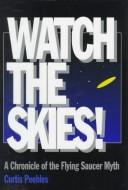
As an Amazon Associate, OverClassified may earn from qualifying purchases made through this link, at no extra cost to you.
Why This Is Essential Reading
Watch the Skies! earns its place on this list less for a single knockdown argument than for the discipline of its method: treating the flying saucer phenomenon itself, rather than any specific sighting, as the historical subject worth explaining, and doing so as a working Cold War aerospace historian with direct documentary knowledge of the classified U-2, OXCART, and CORONA programs his thesis leans on. That documentary grounding is real and has been independently corroborated, most notably by the CIA's own 1997 internal history citing this exact book. It is also, as reviewers from Publishers Weekly to Strange Magazine to named critics like George Earley have specifically documented, a selective and sometimes thin history — strong on the Cold War secrecy machinery Peebles knew best, thinner on the pre-1947 cultural roots of the belief system and on giving abduction and crash-retrieval claims their fullest hearing. Read it as what its own best reviewers concluded it is: a genuinely useful, occasionally overreaching skeptical counterweight, not a final verdict on every case it touches.
Related Cases & Theories
Essential Viewing
Mirage Men: How the US Government Faked an Alien Invasion | Full Documentary
BingeWorthy Documentaries — The 2013 documentary examining U.S. government disinformation and UFO belief, in which Curtis Peebles appears on camera as an aviation historian.
UFO Files S01E04 - Roswell Final Declassification
The UFO File — The 2004 History Channel UFO Files episode examining the Roswell Incident and its declassified Air Force investigation record, featuring Curtis Peebles.
Sources Cited
- "Curtis Peebles." Wikipedia (biography, career, bibliography, TV appearances, self-description quote). en.wikipedia.org
- "Watch the Skies!: A Chronicle of the Flying Saucer Myth." AbeBooks (Smithsonian Institution Press, 1994 first ed., ISBN 9781560983439, bibliographic record). abebooks.com
- "Watch the Skies!: A Chronicle of the Flying Saucer Myth." Amazon.com (ISBN 1560983434, product listing). amazon.com
- "Watch the Skies!: A Chronicle of the Flying Saucer Myth." Publishers Weekly, review, February 28, 1994. publishersweekly.com
- "Watch the Skies: a Chronicle of the Flying Saucer Myth." Strange Magazine (strangemag.com), unsigned book review (quotes George Earley). strangemag.com
- Sauvé, Christian. "Watch the Skies! A Chronicle of the Flying Saucer Myth, Curtis Peebles." Personal book-review blog, May 1998. christian-sauve.com
- Powers, Richard Gid. "Watch the Skies! A Chronicle of the Flying Saucer Myth by Curtis Peebles." The American Historical Review, Vol. 100, No. 5 (December 1995), p. 1730 (review). academic.oup.com
- "Watch the Skies! A Chronicle of the Flying Saucer Myth by Curtis Peebles." The Journal of American History, Vol. 82, No. 2 (September 1995), p. 781 (review notice).
- Haines, Gerald K. "CIA's Role in the Study of UFOs, 1947-90." Studies in Intelligence, Central Intelligence Agency, 1997 (declassified history citing Peebles's book and the U-2/OXCART explanation for Cold War-era UFO reports). sgp.fas.org
- "Watch the skies!" Open Library (Smithsonian Institution Press, 1994 edition record, 342 pp.). openlibrary.org
- "Watch the skies! : a chronicle of the flying saucer myth." Internet Archive (digitized copy). archive.org
- This site's own resources library: Full Reading List, where this exact 1994 edition (ISBN 1560983434) is cited across 43 separate case-file pages.
- This site's own case file: The Robertson Panel, for the 1953 panel this book treats as the turning point toward official debunking policy.
- This site's own case file: The Kenneth Arnold Sighting, for the 1947 case this book treats as the myth's true origin point.
- This site's own case file: The Roswell Incident, for the case this book treats skeptically relative to its later cultural inflation.
- This site's own key-figures entry: Curtis Peebles, for his full biography and case connections.
Have corrections, additional research, or peer-reviewed sources? Help improve this entry.
Suggest an Edit