
The UFO Encyclopedia
4th Edition (2-Volume Set)
Core Thesis
The UFO Encyclopedia does not argue a single thesis so much as enact an editorial philosophy: that after seven decades of UFO reports the field is large, contested, and evidentially uneven enough to deserve a comprehensive, alphabetically organized reference catalog — thousands of entries on individual cases, investigators, debunkers, government programs, organizations, and theories — assembled and adjudicated case by case by one working historian rather than argued as a single continuous narrative, with Jerome Clark's own decades-long evolution from Jungian-inflected skepticism toward a source-citing, evidence-weighted openness to the extraterrestrial hypothesis built directly into how individual entries are written.
About the Author
Jerome Clark was born on November 27, 1946, in Canby, Minnesota, and studied at South Dakota State University and Moorhead State College before building a career spent almost entirely inside institutional ufology rather than alongside it. He served as an editor of both Fate magazine, the long-running paranormal digest, and the International UFO Reporter (IUR), the flagship journal of the J. Allen Hynek Center for UFO Studies (CUFOS), and he remains a longtime member of the CUFOS board — the organization founded by astronomer J. Allen Hynek in 1973 that has anchored the more historically minded, document-based wing of American ufology ever since.
Clark's early work was notably more skeptical of the extraterrestrial hypothesis (ETH) than the encyclopedia he later became known for. Writing with cryptozoologist Loren Coleman — their 1975 book The Unidentified proposed a Jungian, folklore-adjacent framework for UFO reports closer to the psychosocial reading this site's own Essential Reading entry on Carl Jung's Flying Saucers describes — Clark spent the 1970s arguing against a literal nuts-and-bolts spacecraft interpretation. By 1988 he had publicly recanted that position as "naive," concluding that a subset of well-witnessed, radar-corroborated cases resisted any purely psychological or folkloric explanation. That documented reversal, rare in a field where public figures rarely admit changing their minds, is part of what gives the encyclopedia's individual case judgments their credibility: Clark built the book's evidentiary standards out of his own earlier mistake.
The encyclopedia that resulted has run since 1990 through four editions and one condensed spinoff. Alongside it Clark has written or co-written more than a dozen other books, including Encyclopedia of Strange and Unexplained Physical Phenomena (1993), Strange Skies: Pilot Encounters with UFOs (2003), Unnatural Phenomena: A Guide to the Bizarre Wonders of North America (2005), Hidden Realms, Lost Civilizations, and Beings from Other Worlds (2010), the multi-edition Unexplained! Strange Sightings, Incredible Occurrences, and Puzzling Physical Phenomena (3rd ed., 2012), and, with Coleman again, Cryptozoology A to Z (1999). A condensed single-volume version of the UFO encyclopedia, The UFO Book: Encyclopedia of the Extraterrestrial (1997), won the Benjamin Franklin Award in the Science/Environment category in 1998.
In 2008 the Society for Scientific Exploration gave Clark its biennial Dinsdale Award, its citation praising him "for his prolific publications and editorial work on anomalies, concentrating especially on the UFO phenomenon, which have brought to the general publication comprehensive and trustworthy information presented from a sophisticated perspective." Folklorist David Clarke has separately described Clark's approach as "admirably even-handed and realistic," with "extensive coverage of other viewpoints" despite Clark's own settled belief that some UFO reports likely do involve genuine extraterrestrial visitation. Away from ufology, Clark is also a working country and folk songwriter; his songs have been recorded or performed by Emmylou Harris, Mary Chapin Carpenter, and Tom T. Hall, and he has collaborated with the folk duo Robin and Linda Williams.
Historical Context & Origins
When Clark began the project in the late 1980s, American ufology had narrative histories built around a single investigator's perspective — Edward Ruppelt's Air Force insider account, Donald Keyhoe's advocacy books, Timothy Good's internationally sourced Above Top Secret (1987) — and J. Allen Hynek's own case-classification system (Close Encounters of the First, Second, and Third Kind), but nothing organized as a true reference work: an alphabetical catalog a researcher could consult the way a historian consults a biographical dictionary, covering cases, investigators, debunkers, government programs, and organizations side by side regardless of which side of the belief line they fell on.
Clark built that catalog first as three separate standalone volumes rather than one book: UFOs in the 1980s (Apogee Books, Detroit, 1990), The Emergence of a Phenomenon: UFOs from the Beginning through 1959 (Omnigraphics, 1992), and High Strangeness: UFOs from 1960 through 1979 (Omnigraphics, 1996) — a decade-long, single-author undertaking published volume by volume as each section reached completion, rather than commissioned and delivered as one finished manuscript.
Omnigraphics revised and combined the three volumes into a single omnibus second edition in 1998, retitled The UFO Encyclopedia: The Phenomenon from the Beginning, the title still used for the third edition this site separately cites in its library under a different ISBN. A condensed, single-volume spinoff aimed at general readers, The UFO Book: Encyclopedia of the Extraterrestrial, appeared with Visible Ink Press in 1997 and won the Benjamin Franklin Award the following year.
A third edition followed from Omnigraphics in 2018, roughly 1,200 pages across two volumes with close to sixty new entries extending the catalog through the 2017 New York Times story on the Pentagon's Advanced Aerospace Threat Identification Program (AATIP) — the story that, alongside 2020's official Pentagon UAP footage release, reopened mainstream press and congressional interest in the subject after decades of dormancy.
The fourth edition — the one cited throughout this site's own resources library and covered in this article — arrived from a new publisher, Relevant Information, LLC, in December 2024: a two-volume, 3,340-page set with more than 100 new entries, its first edition to credit a named contributor, UFO case researcher Brad Sparks, alongside Clark. Its publisher describes the expansion as covering newly declassified documents from the United States, Brazil, and other countries, secret government programs, and "expanded global UFO/UAP community perspectives" — content that directly extends the catalog into the 2022–2024 congressional UAP hearings and the creation of the Pentagon's All-domain Anomaly Resolution Office (AARO), material that postdates every earlier edition.
Core Arguments & Key Concepts
Structurally the encyclopedia is a true A-to-Z reference: thousands of alphabetically ordered entries ranging from short case summaries to long survey essays on organizations, theories, government programs, and individual countries' UFO histories, cross-referenced throughout and supported by photographs, illustrations, timelines, a bibliography, and an index — the format of a library reference set rather than a book meant to be read start to finish.
The encyclopedia's defining editorial trait, and the reason library reviewers have returned to it across three decades of editions, is its refusal to write from either side of ufology's usual believer/skeptic divide. Choice magazine's review put it plainly: "the articles are factual and balanced, with neither a believer's nor a skeptic's viewpoint predominating," recommending the book "for public libraries and undergraduate collections." That is a genuinely unusual position for a reference work whose sole author has an openly stated personal belief in extraterrestrial visitation — the balance is a discipline Clark imposes on the writing, not a reflection of having no point of view.
That discipline shows up concretely in individual entries rather than only in the encyclopedia's stated mission. On the Gorman Dogfight (1948), for instance, Clark judges the Air Force's weather-balloon explanation "seems plausible" and calls the case, after the Thomas Mantell crash, "the most overrated UFO report in the early history of the phenomenon" — a skeptical verdict rendered from inside a reference work most of whose author's other entries argue for taking UFO reports seriously, and exactly the kind of case-by-case, non-doctrinaire judgment the encyclopedia's reputation is built on.
For most of its publication history the encyclopedia was, in the words of Clark's longtime correspondent David Halperin, "nearly single-handedly" written — one person producing well over a thousand pages of researched, cross-referenced reference prose across four editions. The fourth edition's credited contribution from researcher Brad Sparks marks the first real departure from that solo-author model, though the great majority of the text, and its editorial voice, remains Clark's own.
Because each edition revises and expands the last rather than starting over, the encyclopedia's coverage is also a visible record of one editor's four-decade judgment about what belongs in the field's history. Reviewers have treated that continuity as both the book's strength and its limitation: the 2018 third edition drew criticism in the Journal of Scientific Exploration for functioning, in reviewer John B. Alexander's words, as "a representation of cases as selected by the chief editor" rather than a truly exhaustive catalog — a critique the fourth edition's 100-plus new entries and extended scope address only in part, since the underlying editorial hand is still a single historian's, not a committee's.
Key Cases & Evidence Discussed
The Roswell Incident (Case #001, July 1947) anchors the encyclopedia's coverage of American ufology's most litigated case, discussed at the Roswell Army Air Field debris-recovery site the case is built around — the kind of long, evidence-weighing individual entry reviewers have singled out as the book's real strength, distinct from its more mixed record on comprehensiveness.
The Carson Sink Incident (Case #070, 1952) is discussed on this site's own resources page in language drawn directly from this edition: the encyclopedia situates Carson Sink "among the small set of Project Blue Book 'Unidentified' cases anchored by exceptionally credentialed military-pilot testimony and a documented, contemporaneous investigative effort" — exactly the pattern of radar-and-testimony-corroborated case the encyclopedia's editorial voice treats as its strongest evidentiary category.
The Gorman Dogfight (Case #039, October 1948) receives one of the encyclopedia's more openly skeptical entries: Clark's own published judgment that the weather-balloon explanation "seems plausible" and that the case is, after Thomas Mantell, "the most overrated UFO report in the early history of the phenomenon."
The Great Airship Wave of 1896–1897 (Case #228) reflects Clark's own original field research rather than secondhand synthesis: his 1977 investigation corroborated an elderly Kansas woman's account that rancher Alexander Hamilton's famous 1897 "cattle lasso" airship story had been fabricated to win a local tall-tale contest, establishing it as the wave's most thoroughly documented confirmed hoax.
Beyond these, an independent 2025 review of the fourth edition specifically highlighted its treatment of "classic cases" spanning Roswell through the 1980 Rendlesham Forest incident (Case #004) as evidence of the encyclopedia's continued range across the full seven-decade case history, from the earliest postwar sightings to Britain's best-documented military encounter.
Critical Reception & Controversies
Library and reference-review sources have followed the encyclopedia across three decades with a consistent, specific kind of praise: Library Journal's review of the original edition called Clark "a respected UFO authority" providing "a much-needed update of the field" in what it judged "the most thorough treatment yet of this puzzling phenomenon," recommending it "be considered by larger public and academic libraries." Choice magazine separately found the entries "factual and balanced, with neither a believer's nor a skeptic's viewpoint predominating," recommending it "for public libraries and undergraduate collections." American Reference Books Annual called the revised edition "highly recommended," and Fortean Times co-founder Bob Rickard wrote that "few books on ufology are more valuable than this massive enterprise from ufology's foremost historian."
The most substantive academic critique came from retired U.S. Army researcher John B. Alexander's review of the third edition in the Journal of Scientific Exploration. Alexander credited it as "a massive undertaking" drawing on "competent researchers with international reputations" that "does provide considerable depth to the cases selected," but identified "glaring omissions that are hard to reconcile with an encyclopedia" claiming comprehensiveness — arguing the book functions as "a representation of cases as selected by the chief editor" rather than a genuinely complete reference. His sharpest specific example was the absence of Lt. Col. Philip Corso, whose bestselling (and widely disputed) 1997 book The Day After Roswell "sold more than any other UFO publication by a great margin" yet went unmentioned in the 2018 edition, which Alexander also faulted for material that stopped short of events after December 2017.
A 2023 review on the Substack Books Your Parents Warned You About reached a similarly mixed verdict on the third edition: praising Clark's unusually accessible, narrative-driven prose for an encyclopedia format and its "meticulous documentation" and comprehensive bibliographies, while criticizing "too many misspelled words and too much incorrect punctuation," uneven entry length (a four-page NASA entry against extensive Close Encounter anecdotes), and specific omissions including Area 51 and Zecharia Sitchin. The review also noted visible personal bias in Clark's own judgments — open skepticism toward the 1950s contactee movement and George Adamski specifically, alongside evident sympathy for the Betty and Barney Hill abduction case.
Skeptics have pushed back harder on Clark's own belief position than on the encyclopedia's prose. CSICOP co-founder Paul Kurtz argued that "Clark attacks skeptics for being closed-minded and dogmatic, yet he is easily impressed by questionable evidence" — a pointed dissent from within organized skepticism that stands in some tension with the same book earning "balanced" marks from library-trade reviewers, and a reminder that the encyclopedia's even-handed reputation describes its editorial voice more than it resolves the underlying evidentiary disputes.
Early response to the fourth edition itself has been enthusiastic if less formal: a March 2025 review on the blog David's Basement of the Bizarre called it "not merely a book" but "a monumental achievement in the study of unidentified flying objects," praising its scholarly rigor and objectivity over sensationalism and calling it "the definitive encyclopedia on the subject" and "critically important" to the field, predicting it will remain "a cornerstone of UFO literature for generations to come."
Influence & Legacy
The encyclopedia's most concrete, directly measurable influence is documented on this very site: this exact fourth edition is cited across resources.html in connection with 86 separate case files — more than any other single title in this site's 562-book library, and roughly double the citation count of the next most-used reference. It functions here as working infrastructure rather than a novelty citation, the role this site's own library description of the book gives it directly in connection with the Carson Sink Incident and dozens of other files.
For Clark personally, the encyclopedia has been the anchor of a career built almost entirely around it: the 2008 Dinsdale Award from the Society for Scientific Exploration cited his "prolific publications and editorial work on anomalies" by name, and the 1998 Benjamin Franklin Award for the condensed UFO Book spinoff extended that same reputation to a wider general-reader audience the multi-volume set was too large and expensive to reach.
More broadly, the encyclopedia has functioned for over three decades as something close to a shared factual baseline in a field otherwise defined by disagreement — a reference researchers on both sides of the belief divide cite for basic case facts and chronology even when they draw opposite conclusions from them, the practical result of the same "neither a believer's nor a skeptic's viewpoint predominating" balance Choice identified as its defining trait.
The fourth edition's extension into the 2022–2024 congressional UAP hearings and the Pentagon's All-domain Anomaly Resolution Office places the book at the center of the most significant renewed institutional UFO interest since Project Blue Book's 1969 closure — directly answering the "nothing after December 2017" criticism the third edition drew from reviewers like John B. Alexander, and extending Clark's now 34-year documentary project into the same disclosure-era moment this site's other Essential Reading titles on government secrecy, including UFOs and the National Security State and UFO: The Inside Story, are chronicling from their own angles.
The Book
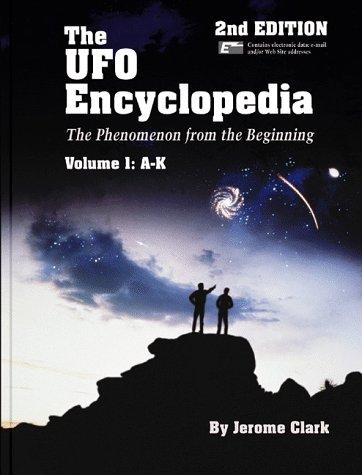
As an Amazon Associate, OverClassified may earn from qualifying purchases made through this link, at no extra cost to you.
Why This Is Essential Reading
The UFO Encyclopedia earns its place on this list for a different reason than any other title here: it isn't an argument at all, and its "thesis," such as it is, is a working method — catalog the field's cases, people, programs, and theories with the same evidentiary discipline regardless of which side of the belief line they fall on. That discipline is real and independently documented, from Choice magazine's "neither a believer's nor a skeptic's viewpoint predominating" to Clark's own willingness to call the Gorman Dogfight "the most overrated UFO report in the early history of the phenomenon." It is also, as reviewers from John B. Alexander to Books Your Parents Warned You About have specifically documented, a single historian's four-decade judgment call about what belongs in the record rather than a truly exhaustive, committee-vetted reference — a limitation worth weighing against the fact that this site alone leans on it 86 times. Read individual entries for their evidence and sourcing, not as the last word on any case, and treat its scale and its 2024 update into the AARO era as exactly what they are: the most useful single starting point in ufology's literature, not its final judgment.
Related Cases & Theories
Essential Viewing
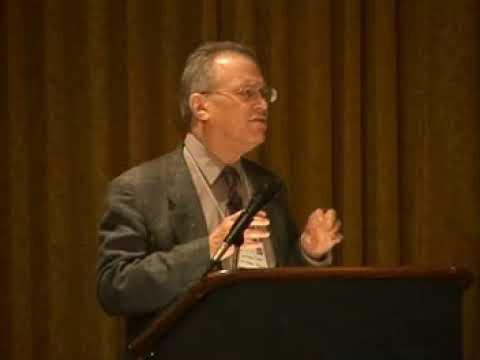
Dinsdale Award Lecture | Jerome Clark
Society for Scientific Exploration — Clark's 2008 Dinsdale Award lecture to the Society for Scientific Exploration, delivered on receiving the award for his editorial and research work on UFOs and other anomalies.
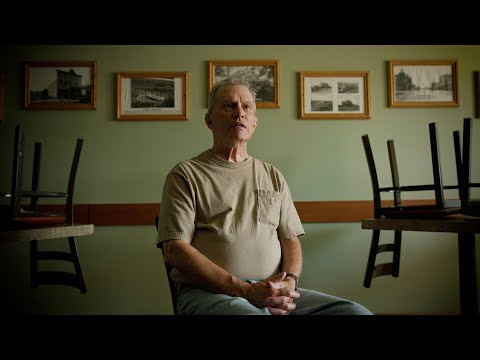
Researcher Jerome Clark on his favorite Fortean novel
mandate33 — A preview clip from the documentary FORTEANS featuring Jerome Clark speaking directly to camera about his decades in anomalies research.
Sources Cited
- "Jerome Clark." Wikipedia (biography, career, Library Journal/Choice review quotes, Paul Kurtz critique). en.wikipedia.org
- "Jerome Clark." Center for UFO Studies (official CUFOS board/consultant biography page). cufos.org
- "The UFO Encyclopedia, Fourth Edition — The Ultimate Guide to UFO/UAP Releasing December 2024." PR Newswire (official publisher press release, page count, contributor credit, content scope). prnewswire.com
- "The UFO Encyclopedia, 4th Ed." Relevant Information, LLC (publisher product page, page count, price, description). relevantinformation.com
- "The UFO Encyclopedia, 4th Ed. (2-Volume Set)." Amazon.com (ISBN 9781954866225, product listing). amazon.com
- "UFOs in the 1980s (The UFO Encyclopedia, Volume 1)." Amazon.com (Apogee Books, 1990, first-edition volume 1 bibliographic record). amazon.com
- "The Emergence of a Phenomenon: UFOs from the Beginning Through 1959 (The UFO Encyclopedia)." Amazon.com (Omnigraphics, 1992, first-edition volume 2 bibliographic record). amazon.com
- "The UFO Encyclopedia." AbeBooks (3rd ed., Omnigraphics, 2018 listing with Fortean Times/Bob Rickard and American Reference Books Annual review blurbs). abebooks.com
- Alexander, John B. "The UFO Encyclopedia: The Phenomena from the Beginning (3rd ed., 2 vol.) by Jerome Clark." Journal of Scientific Exploration, book review. journalofscientificexploration.org
- "Books Your Parents Warned You About: The UFO Encyclopedia." The Observer Magazine (Substack, review of 3rd ed.). theobservermagazine.substack.com
- Albaugh, David. "The Mothership of UFO Knowledge: Jerome Clark's Encyclopedia Lands Again!" David's Basement of the Bizarre, March 11, 2025 (review of 4th ed.). basementofthebizarre.com
- Halperin, David. "My Friend Jerry — Jerome Clark — and 'The UFO Encyclopedia.'" davidhalperin.net (personal reminiscence and assessment by a longtime correspondent). davidhalperin.net
- "Dinsdale Memorial Award 2008: Jerome Clark." Cryptomundo (Society for Scientific Exploration award citation, full text). cryptomundo.com
- "Dinsdale Award Lecture | Jerome Clark." Society for Scientific Exploration, YouTube. youtube.com
- This site's own resources library: Full Reading List, where this exact 4th-edition ISBN is cited across 86 separate case-file pages.
- This site's own case file: Gorman Dogfight, for Clark's own published "most overrated" judgment on the case.
- This site's own case file: The Great Airship Wave of 1896-1897, for Clark's original 1977 hoax investigation.
- This site's own key-figures entry: Jerome Clark, for his full biography and case connections.
Have corrections, additional research, or peer-reviewed sources? Help improve this entry.
Suggest an Edit