
UFOs: The Public Deceived
Philip J. Klass's Combative 1983 Sequel, Turning His Case-by-Case Method on Travis Walton, Val Johnson, and the Kaikōura Lights
Core Thesis
UFOs: The Public Deceived is Philip J. Klass's direct sequel to his 1974 UFOs Explained, applying the same case-by-case, records-and-interviews method to the decade of "best cases" that had made headlines since — while sharpening the earlier book's investigative-effort argument into something closer to a prosecutor's brief. Across 31 chapters and 310 pages, Klass opens by refuting proponents' claims of an active CIA/government UFO cover-up (drawing on the 80,000 pages of Project Blue Book files transferred to the National Archives in 1976 and the nearly 1,000 CIA documents released under the Freedom of Information Act in 1978), then works chapter by chapter through the specific mundane causes — misidentified aircraft, malfunctioning radar, astronomical objects, and, with increasing frequency, direct hoax accusation — he assigns to the 1976 Tehran jet-fighter case, the 1973 Coyne helicopter incident (reaffirming his 1978 explanation), the 1975 Travis Walton abduction claim, the 1979 Val Johnson patrol-car incident, the December 1978 Kaikōura Lights off New Zealand, and the 1947 Roswell saucer-crash claim, freshly revived by a 1980 Charles Berlitz and William Moore book. Klass closes with a Louis Pasteur epigraph — "The greatest derangement of the mind is to believe in something because one wishes it to be so" — and a hard number: roughly 98 percent of UFO reports, he concludes, are honest misidentifications of prosaic objects, and the remaining 2 percent are self-delusions or hoaxes by people who like to spin tall tales and become instant celebrities.
About the Author
This site's companion entry on Klass's 1974 UFOs Explained already covers his electrical-engineering background, his three-decade Aviation Week & Space Technology career, and his 1976 role co-founding CSICOP's UFO Subcommittee in full, so this entry takes a narrower, later-career angle: what had changed about Klass's own public methods by 1983. A decade of case-by-case investigation had made him ufology's most quoted professional skeptic, and by the early 1980s his skepticism had visibly sharpened from published rebuttal into private pressure campaigns against the researchers and witnesses he'd concluded were unreliable. UFO historian Kevin Randle has documented one especially concrete example directly relevant to this era: in August 1980, ahead of nuclear physicist Stanton Friedman's move to Canada, Klass sent an unsolicited letter to Canadian scientists warning them that Friedman would "begin accusing them of UFO coverups" — a preemptive characterization Randle cites as representative of a broader pattern of Klass lobbying witnesses' and researchers' employers, colleagues, and government contacts rather than confining his skepticism to print.
The clearest, most self-documented illustration of Klass's reputation at the exact moment UFOs: The Public Deceived reached bookstores came from Klass himself. In October 1983, the same year this book appeared, James W. Moseley published Klass's own "Last Will and Testament of Philip J. Klass" in his long-running newsletter Saucer Smear — a mock bequest addressed "to ufologists who publicly criticize me… or who even think unkind thoughts about me in private," leaving them what it called THE UFO CURSE: "No matter how long you live, you will never know any more about UFOs than you know today.… As you lie on your own deathbed you will be as mystified about UFOs as you are today." Whether read as gallows humor or as a genuine expression of the friction Klass had accumulated with the field he'd spent fifteen years investigating, the "curse" instantly became one of ufology's most quoted in-jokes and a permanent, dated marker of just how personal the dispute between Klass and the researchers behind this book's central cases — Travis Walton's and Val Johnson's chief among them — had become by 1983.
Historical Context & Origins
Klass published UFOs: The Public Deceived nine years after UFOs Explained, and its own structure announces it as a direct sequel rather than a new project: reviewer Elmer Kral, writing in the Skeptical Inquirer, described the book as covering "the major UFO reports and events since his earlier books, including the so-called ‘best cases’ advanced by many UFO proponents." The intervening decade had reshaped the field's center of gravity — Project Blue Book's roughly 80,000 pages of files had been transferred to the National Archives in 1976 and made available on microfilm without restriction, and the CIA released nearly 1,000 UFO-related documents under the Freedom of Information Act in 1978, with other agencies releasing more. Rather than settling the government-secrecy question, that declassification wave gave proponents new primary documents to interpret; Klass's opening five chapters respond directly to Ground Saucer Watch director William Spaulding's media claims (amplified by a January 1979 New York Times feature and an NBC-TV "Tomorrow" show appearance) that the released CIA files proved a "massive" cover-up, arguing instead that the roughly 192 pages the CIA and NSA still withheld most plausibly protected Cold War-era intelligence sources rather than evidence of extraterrestrial visitation.
The book also arrived into a UFO-literature landscape reshaped by a specific 1980 publication: Charles Berlitz and William L. Moore's The Roswell Incident, which resurrected the 1947 Roswell crashed-saucer story as a live subject for the first time in over three decades. Klass's Chapter 30 responds directly to that revival, four years before the 1984-surfaced Majestic-12 documents would give Roswell an entirely new, and far more contested, evidentiary layer that this book itself predates.
A structural target running through several chapters is the financial architecture of tabloid UFO coverage: the National Enquirer's annual "Blue Ribbon Panel" — which by this period included proponents J. Allen Hynek, James A. Harder, Leo Sprinkle, and Frank Salisbury as judges — awarded $5,000 to the original observers of each year's selected "best case," including the 1971 Delphos, Kansas report, the 1973 Coyne helicopter sighting, the 1975 Travis Walton abduction, and the 1976 Tehran jet-fighter incident. Klass uses the panel's own membership and cash award as evidence that the field's most publicized "best cases" carried a built-in financial incentive for witnesses and a credibility problem for the proponents selecting them.
Klass also directly critiques Stanford astrophysicist Peter A. Sturrock's widely reported 1977 survey of American Astronomical Society members on UFO reports, arguing press coverage in the New York Times and Christian Science Monitor overstated a modest, ambiguous result — and notes, with evident skepticism, that Sturrock had gone on to found the Society for Scientific Exploration, a body Klass predicts would repeat what he considered his ufological predecessors' mistakes.
Core Arguments & Key Concepts
The book's organizing continuity with UFOs Explained is deliberate: rather than proposing a new framework, Klass extends his existing "UFOlogical Principle #1" — that honest, even technically trained witnesses routinely misperceive brief aerial events — to a fresh set of cases that had become famous specifically because they resisted easy explanation the first time around. What distinguishes this book structurally is how much more space it devotes to witness motive and media incentive rather than pure technical reconstruction, reflecting nine additional years spent, in Klass's own view, watching sensational claims outrun careful reporting.
The first five chapters mount a direct, document-based rebuttal of the government-cover-up thesis, quoting CIA records through mid-1976 to argue the agency's only substantive UFO involvement was the five-member Robertson Panel it convened for four days in January 1953, after which the CIA "lost interest in the subject a few weeks later." Klass concedes 57 CIA pages and 135 NSA pages remained classified as of publication, but argues their most plausible content was the protection of Cold War-era human intelligence sources rather than proof of extraterrestrial contact — while also predicting that genuine evidence of visitation, once confirmed, would generate so much internal government paperwork that "it will be impossible to keep the startling fact from the public."
A second argument, extending the witness-motive lens from UFOs Explained's Socorro chapter, runs through the book's treatment of tabloid and network incentives: Klass cites Center for UFO Studies statistics that over 90 percent of UFO reports (many from law-enforcement officers) resolve to misidentifications, and pairs that figure with a granular accounting of who profited from specific unresolved reports staying unresolved — the National Enquirer's $5,000 Blue Ribbon Panel awards, a $1,000 Enquirer payment to Val Johnson, and the book contracts and speaking fees Klass argues flowed to Travis Walton and his associates.
A third argument concerns hypnosis and forensic evidence: Klass challenges the abduction-research reliance on hypnotic regression directly through psychologist Leo Sprinkle's own published acknowledgment that hypnosis-safeguard standards developed for criminal courts existed, paired with Sprinkle's argument that they didn't apply to UFO cases because there was "no crime, no criminal, no victim" — a distinction Klass treats as a convenient methodological escape hatch rather than a genuine scientific justification.
The book's closing argument, delivered in its final chapter under the Pasteur epigraph "the greatest derangement of the mind is to believe in something because one wishes it to be so," reduces three decades of UFO reporting to a specific ratio: roughly 98 percent honest misidentification of prosaic, sometimes unfamiliar objects, and roughly 2 percent self-delusion or deliberate hoax by people Klass describes as wanting to "spin tall tales and become instant celebrities" — a considerably harder, more individually accusatory framing than the more diffuse "witnesses misperceive" thesis that organized UFOs Explained nine years earlier.
Key Cases & Evidence Discussed
The Travis Walton Abduction (Case File #009, 1975) receives the book's single most extensive treatment, spanning Chapters 18 through 23. Klass argued the November 1975 disappearance near Snowflake, Arizona was a financial fabrication tied to logging-crew foreman Mike Rogers's lapsed U.S. Forest Service contract, pointed to the small puncture mark found in the crease of Walton's elbow as consistent with a staged sedative injection, and made significant use of a polygraph examination administered by Arizona examiner John J. McCarthy on November 15, 1975, whose "gross deception" result APRO co-director James Lorenzen withheld from the public until Klass circulated a 17-page white paper the following June. This site's own case file on the incident preserves Klass's argument and the physical-evidence dispute as genuinely unresolved rather than settled by either side.
The Val Johnson Incident (Case File #161, 1979) gets the book's Chapter 24, where Klass argued — on p. 227 of this exact edition, per this site's own case file citation — that the Marshall County, Minnesota deputy sheriff had deliberately damaged his own patrol car and simulated his facial injuries to fabricate a UFO attack. Sheriff Dennis Brekke and colleagues who worked alongside Johnson pushed back on the theory at the time, and Minnesota's own historical retrospectives on the case have continued to treat it as one of the more credible UFO encounters in American law-enforcement history — a genuine, still-unresolved dispute this site's own file documents in full.
The Kaikōura Lights (Case File #060, December 1978) occupy Chapters 25 through 27, which reviewer Elmer Kral notes Klass himself calls the "best-documented UFO incident of all time" before explaining the footage, shot off the Kaikōura coast, as most likely the lights of the region's commercial squid-jigging fleet. Physicist Bruce Maccabee, who had already published a peer-reviewed photometric analysis of the same footage in Applied Optics in 1979, directly rebutted the squid-boat theory, finding no independent confirmation that boats were operating in the sighted area at the sighted time; this site's own case file additionally notes that neither Klass's explanation nor a similar 2000 re-analysis by former DSIR scientist William Ireland resolves the New Zealand Department of Scientific and Industrial Research's own contemporaneous finding that ground radar returns were "not coincident" with what pilots and observers were independently reporting.
The Tehran UFO Incident (Case File #018, September 1976) gets Chapter 14, where Klass attributed the Iranian Air Force jet-fighter encounter over Tehran airspace to electrical-electronic equipment malfunction, inadequate pilot training for night intercept missions, celestial objects, and a possible meteor from the Aquarid or Southern Piscid showers active that week.
The Coyne Helicopter Incident (Case File #049, 1973) receives Chapters 16 and 17, in which Klass reaffirms rather than originates his explanation: he had first proposed an Orionid meteor fireball combined with startled pilot control input in 1978, touching off a public dispute carried out partly through OMNI magazine's letters pages with CUFOS investigator Jennie Zeidman, whose own field report concluded the case remained unexplained.
The 1947 Roswell Incident (Case File #001) is addressed in Chapter 30, where Klass explains the crashed-saucer report as debris from a balloon-borne radar-calibration device combined with rumor and hoax — an early skeptical position, predating both the 1994 Air Force Mogul-balloon report and the 1984-surfaced Majestic-12 documents that would later dominate Roswell's evidentiary debate.
Critical Reception & Controversies
Contemporary reception from the organized-skepticism community was strongly favorable. Reviewing the book for the Skeptical Inquirer (Winter 1983-84), former pro-UFO field investigator Elmer Kral concluded "I think Philip Klass does indeed ‘talk sense,’" and recommended it be placed "on the shelf of every library… alongside the UFO books of the late eminent scientists Donald H. Menzel and Edward U. Condon." Kral's praise was not unqualified: he noted the book contained "three or four chapters that could be organized more clearly and five or six paragraphs that contain some humor that a few readers may misinterpret," a specific, named structural critique from within the same skeptical community that otherwise endorsed the book's conclusions.
Pushback from within ufology itself was sharper and more specific than the reception UFOs Explained had drawn nine years earlier, consistent with Klass's own more combative reputation by this point. Researcher Karl Pflock, who was himself skeptical of the Travis Walton story, nonetheless criticized Klass's methodology in these exact chapters: Pflock argued Klass "implicitly accepts the accuracy of the Walton witnesses' publicized descriptions" when it supported his collusion theory, while separately dismissing the same witnesses' reliability elsewhere in his argument — a specific, documented charge of selective skepticism from a critic who shared Klass's ultimate hoax conclusion but not his method of reaching it.
The broader pattern of letter-writing campaigns UFO historian Kevin Randle has since documented — Klass privately contacting employers, colleagues, and government contacts of researchers and witnesses he'd concluded were unreliable — forms the backdrop against which this book's own case chapters were received. Val Johnson's own sheriff, Dennis Brekke, publicly vouched for Johnson's credibility and sobriety against Klass's self-inflicted-damage theory, and neither that theory nor Klass's Walton chapters produced the kind of unambiguous physical proof his earlier Socorro hoax theory had claimed and later research undermined — a pattern this site's own entry on UFOs Explained already documents Jerome Clark and Allan Hendry criticizing in Klass's investigative record more broadly.
The book's reception is inseparable from its author's own self-authored public image that same year: October 1983's "UFO Curse," published in Saucer Smear, was read by some in the field as confirmation that Klass had grown too combative to be taken as a neutral investigator, and by his defenders — Kral's Skeptical Inquirer review chief among them — as simply Klass refusing to let credulous UFO reporting go unanswered, whatever the personal cost to his relationships within the field he covered.
Influence & Legacy
Klass extended this book's method into two further titles before his 2005 death: UFO Abductions: A Dangerous Game (1989), which revisited the Travis Walton case yet again alongside newer abduction claims, and The REAL Roswell Crashed-Saucer Coverup (1997), which returned to the Roswell chapter this book had opened in 1983 with three additional decades of Majestic-12 and Air Force Mogul-report material to contend with.
Within this site's own catalogue specifically, this exact 1983 Prometheus Books first edition (ISBN 0879753226 / 9780879753221) is cited across resources.html in connection with the Berkshire UFO Wave, the Val Johnson Incident, and the Vandenberg AFB Missile Incident case files, plus this site's Psycho-Social Hypothesis theory page — giving it a citation footprint alongside UFOs Explained as one of this site's two most institutionally load-bearing Klass titles.
More broadly, this book cemented Klass's position as the field's default reference-point skeptic for cases through the mid-1980s, cited on nearly every subsequent skeptical treatment of Travis Walton, Val Johnson, and the Kaikōura Lights that followed it. But its legacy runs in both directions: the same combative methods this entry's Critical Reception section documents — the letter campaigns, the selective-skepticism charge from Karl Pflock, the self-authored "UFO Curse" — also helped cement, within parts of ufology, a lasting counter-narrative that organized skepticism itself could shade into personal campaigning rather than neutral investigation, an accusation that has followed the skeptical wing of UFO research for the four decades since.
The Book
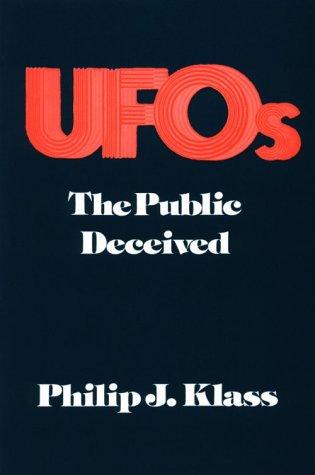
UFOs: The Public Deceived
Philip J. Klass's Combative 1983 Sequel, Turning His Case-by-Case Method on Travis Walton, Val Johnson, and the Kaikōura Lights
Find on Amazon →As an Amazon Associate, OverClassified may earn from qualifying purchases made through this link, at no extra cost to you.
Why This Is Essential Reading
UFOs: The Public Deceived earns its place on this list as the clearest demonstration of what Philip J. Klass's method looked like once it had a decade of institutional weight and personal history behind it: the same case-by-case, records-first approach this site's entry on UFOs Explained already documents, now turned on Travis Walton, Val Johnson, and the Kaikōura Lights with considerably more confidence and considerably less patience for the researchers who disagreed with him. That confidence produced real, checkable findings — the withheld McCarthy polygraph result in the Walton case chief among them — but it also produced the documented letter-writing campaigns Kevin Randle has cataloged, the selective-skepticism charge Karl Pflock leveled at the Walton chapters specifically, and, in October of the very year this book appeared, Klass's own self-authored "UFO Curse," a document that reads today as much as evidence about its author's reputation as anything about UFOs themselves. Read this book, as this entry's own companion entry on UFOs Explained recommends of Klass generally, as a genuinely rigorous and genuinely fallible source — and read its Travis Walton and Val Johnson chapters specifically alongside this site's own case files on both incidents, where the physical evidence, the polygraph disputes, and the witnesses' own communities' continued support for their accounts remain exactly as unresolved as Klass left them in 1983.
Related Cases & Theories
Essential Viewing
The UFO Curse of Philip J. Klass
Tom Owens UAP — A look at the October 1983 "Last Will and Testament" curse Klass published in Saucer Smear the same year this book appeared, and what it reveals about his reputation within ufology by that point. Verified via YouTube oEmbed before inclusion.
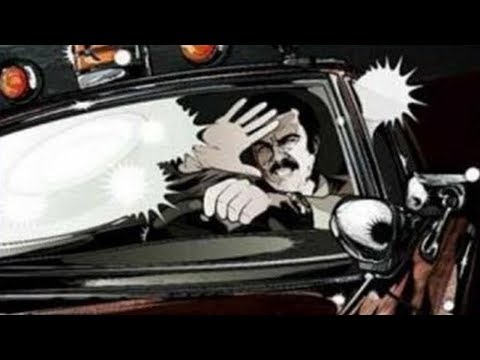
The Mysterious UFO Encounter Incident by Deputy Sheriff Val Johnson in 1979
FindingUFO — A detailed account of the 1979 Val Johnson patrol-car incident this book's Chapter 24 argues was a self-inflicted hoax, one of this book's most contested individual cases. Verified via YouTube oEmbed before inclusion.
Sources Cited
- Klass, Philip J. UFOs: The Public Deceived. Prometheus Books, Buffalo, NY, 1983 (ISBN 9780879753221 / 0879753226, cited here, matching this exact edition already cited across this site's own resources library). archive.org
- Kral, Elmer. "A Time to Talk Sense About UFOs" (review of UFOs—The Public Deceived). The Skeptical Inquirer, Vol. 8, No. 2, Winter 1983-84, pp. 168-172. skepticalinquirer.org
- "Philip J. Klass." Wikipedia (biography; documents the 1980 Stanton Friedman letter, the 1975 J. Allen Hynek dispute, and the October 1983 "UFO Curse" published in Saucer Smear). en.wikipedia.org
- Randle, Kevin. "Philip Klass and His Letter Writing Campaigns." A Different Perspective, September 2011 (documents Klass's 1980 letter to Canadian officials regarding Stanton Friedman and his broader pattern of contacting witnesses' and researchers' employers). kevinrandle.blogspot.com
- Sheaffer, Robert. "Travis Walton vs. Philip J. Klass." Bad UFOs, February 2012 (documents Klass's investigation chapters and the disputed bribery allegation against witness Steve Pierce). badufos.blogspot.com
- Sheaffer, Robert. "The Selling of the Travis Walton ‘Abduction’ Story." debunker.com (documents Karl Pflock's selective-skepticism critique of Klass's Walton chapters). debunker.com
- This site's own case file: The Travis Walton Abduction, which cites this exact book directly and documents Klass's puncture-mark and polygraph arguments in full.
- This site's own case file: The Val Johnson Incident, which cites this exact book to p. 227 for Klass's self-inflicted-damage hoax theory.
- This site's own case file: The Kaikōura Lights, which documents Klass's squid-boat explanation and Bruce Maccabee's contemporaneous rebuttal.
- This site's own case file: The Tehran UFO Incident, for the case this book addresses in its Chapter 14.
- This site's own case file: The Coyne Helicopter Incident, which documents Klass's reaffirmed meteor/pilot-error explanation and the OMNI magazine dispute.
- This site's own case file: The Roswell Incident, for the case this book addresses in its Chapter 30.
- This site's own essential-reading entry: UFOs Explained, Klass's 1974 methodological predecessor to this book, including the site's documented criticism of Klass's investigative record from Jerome Clark and Allan Hendry.
- This site's own key-figures entry: Philip J. Klass, for his broader site-wide case connections beyond this book.
- This site's own resources library: Full Reading List, where this exact 1983 edition (ISBN 0879753226) is cited across multiple case-file pages.
Have corrections, additional research, or peer-reviewed sources? Help improve this entry.
Suggest an Edit