
The Travis Walton Abduction
On the evening of November 5, 1975, a seven-man logging crew in the Apache-Sitgreaves National Forest near Turkey Springs, Arizona, reported a glowing disc hovering near the road. Forestry worker Travis Walton approached the craft and was struck by a powerful beam of energy, after which he vanished. After a police search and polygraph tests of the crew, Walton reappeared five days later, saying he had been taken aboard a craft. The case rests on the crew's consistent testimony; it is shadowed by an overdue logging contract, Walton's failed first polygraph and the crew boss's 2021 description of the event as staged, which he later retracted. It is one of the most publicized and most disputed abduction cases.
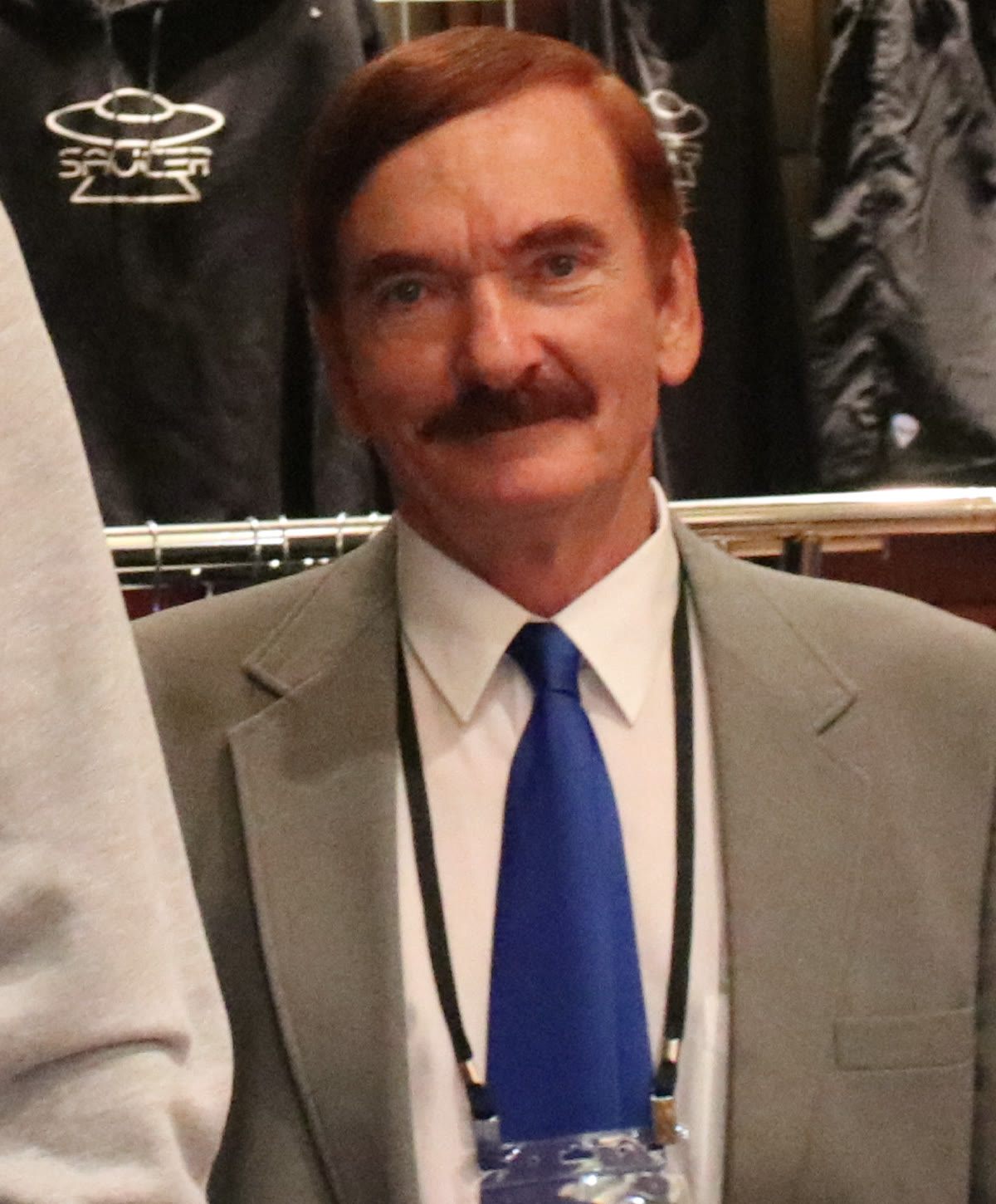
Pictured: Travis Walton himself, photographed at the 2019 International UFO Congress in Phoenix, Arizona — more than four decades after the November 1975 encounter. This is a genuine photo of the man at the center of the case, but no photograph exists of the actual incident, the craft, or the Turkey Springs clearing as it appeared that night; the only contemporaneous visual records are the crew's later sketches and the site photos taken during the law-enforcement search.
Theoretical Alignment
Proponents align the case with the Extraterrestrial Hypothesis (ETH) on the strength of the crew's consistent account and polygraphs; the conventional reading is a staged hoax, supported by the contract motive, Walton's failed first polygraph and the crew boss's 2021 statements.
Background
The Apache-Sitgreaves Contract and the Logging Crew
In the autumn of 1975, a seven-man crew was thinning trees in the Apache-Sitgreaves National Forest under a U.S. Forest Service contract held by 28-year-old crew boss Mike Rogers of Snowflake, Arizona. In 1974 Rogers had won the federal contract for an area known as Turkey Springs, about 12 miles south of Heber, by underbidding two other contractors. The job called for thinning 1,277 acres by August 1975. Rogers obtained an extension to November 10. On October 16 a Forest Service inspector concluded that the job could not be finished by that deadline. Failure could bring a $2,500 penalty and disqualification from future bids. On October 20 Rogers wrote to his contracting officer: "I cannot honestly say whether or not we will finish on time... I have had considerable trouble keeping a full crew on the job." This financial pressure later became a primary pillar of the skeptical argument: an abduction, skeptics suggest, could be treated as an "Act of God" that excused the delay (contract details as summarized on Wikipedia from Klass's research).
(An earlier draft of this page gave the contract a Forest Service "code 03-1049" and described 1,200 acres, a clearing rate of under 15 acres a day, a performance bond and blacklisting. These details could not be sourced and have been replaced with the documented figures above.)
The crew were young local men: Mike Rogers (crew boss, 28), Travis Walton (22, a close friend of Rogers), Steve Pierce (17), Ken Peterson, John Goulette, Allen Dalis and Dwayne Smith (names and ages per Jerome Clark). Rogers and the Walton family were interested in UFOs; the sheriff later described Travis, his brother Duane and their mother as "longtime students of UFOs." According to Klass, Travis had told his mother shortly before not to worry if he were ever taken by a UFO. (An earlier draft said the crew had "no history of interest in UAPs" and named the seventh man "Dwayne Johnston"; both statements were wrong.) On the evening of November 5, 1975, the crew finished work around dusk and set off in Rogers's International Harvester pickup along the forest roads.
It was late autumn at about 7,500 feet, and the temperature was falling toward freezing.
Complete Timeline
| Date | Event |
|---|---|
| October 20, 1975 | NBC broadcasts The UFO Incident, a TV movie about the Betty and Barney Hill abduction. The same day, Mike Rogers writes to the Forest Service that he cannot say whether the Turkey Springs contract will be finished by its November 10 deadline. |
| November 5, 1975 (c. 18:15) | The Sighting & Beam Strike. The seven-man logging crew reports a glowing disc hovering near the road at Turkey Springs. Travis Walton approaches it and, according to the crew, is struck by a bluish beam; the crew flee, return about 15 minutes later and find nothing. |
| November 5, 1975 (c. 19:45) | The crew calls the police from Heber. Deputy Chuck Ellison, Sheriff Marlin Gillespie and Deputy Ken Coplan meet them there; a search runs until after midnight. |
| November 7–9, 1975 | Searches of the Turkey Springs area, including nearly 50 people on November 7 and a helicopter on November 8, find nothing. Walton's mother twice asks for the search to be stopped. On November 8 Rogers and Duane Walton give a recorded interview to a UFO group. |
| November 10, 1975 | Six crew members are polygraphed by C. E. “Cy” Gilson (Arizona DPS) on whether they harmed Walton and whether they saw an object. Five pass; Allen Dalis's result is inconclusive. Wikipedia dates the tests to November 11; the Arizona Daily Sun ran "Lie Detector Tests Face 6 Holbrook Men" on November 10. |
| November 10–11, 1975 (about midnight) | The Return call. Travis Walton (whose own account times the call at 12:05 a.m.) makes a collect call from a gas-station pay phone in Heber. Grant Neff and Duane Walton pick him up. |
| November 11, 1975 | A hypnotherapist, Lester Steward, notes a lesion in Walton's right elbow crease. That afternoon APRO-arranged physicians Dr. Howard Kandell and Dr. Joseph Saults examine him at Duane's home in Glendale. Sheriff Gillespie interviews him there that night. |
| November 14–15, 1975 | With the National Enquirer paying for a Scottsdale hotel suite, Walton is hypnotized (Nov 14) and then fails a polygraph by John J. McCarthy (Nov 15), whose result the Enquirer and APRO do not publish. |
| February 1976 | Travis and Duane Walton pass polygraphs by George Pfeifer, arranged through APRO. |
| 1978 | Walton publishes The Walton Experience; crew member Steve Pierce voices suspicion that the event was a hoax. |
| February 1993 | Cy Gilson administers a follow-up polygraph test to Travis Walton (report dated February 4, 1993, commissioned by researcher Jerry Black); according to Walton, Gilson also retested Mike Rogers and Allen Dalis, and all three scored as truthful. The other crew members were not part of these retests. |
| March 12, 1993 | Paramount releases Fire in the Sky. |
| 2008 | Travis Walton appears on The Moment of Truth game show, where his claim of a UFO abduction is judged deceptive by the show's polygrapher. |
| c. 2015 | Soil samples from the site are analyzed; the report is published by The Black Vault in 2017 (Phyllis Budinger collection). |
| March–July 2021 | Mike Rogers renounces his status as a witness, describes the event as "a staged thing" in a call recorded by producer Ryan Gordon (released July 2021), then retracts. |
The Abduction Incident
The Encounter at Turkey Springs
At about 6:15 p.m. on November 5, the crew was driving out of the forest after work in Rogers's International Harvester pickup when they saw a glow through the trees. Rounding a bend, they saw, in Walton's account and the crew's descriptions, a glowing disc about 15 to 20 feet across and about 8 feet high, hovering some 15 to 20 feet above a slash pile near the road. Rogers stopped the truck.
Travis Walton got out and walked toward the object while the others shouted at him to come back. In Walton's account, the object began to wobble and make a sound. The crew say a bluish-green beam then shot from it and struck Walton, lifting him off his feet and throwing him backward. Believing he had been killed, Rogers drove off. (An earlier draft of this page described the object's profile, surface, lack of seams and "organic" glow in detail, and said the men felt static electricity with their hair standing on end. It also described a "high-pitched" transformer-like sound and a beam that struck Walton "directly in the chest." These details are not in the sources consulted and have been removed.)
The Flight and Return to the Clearing
Some distance down the road the crew stopped and, after some argument, went back to look for Walton, about fifteen minutes later. They found nothing: neither Walton nor the light. They then drove to Heber, and at about 7:45 p.m. one of the crew called the police. Deputy Chuck Ellison, Sheriff Marlin Gillespie and Deputy Kenneth Coplan met them in Heber. Rogers and two others went back to Turkey Springs with the officers, while the other three, unwilling to return, drove home in Rogers's truck. The group searched until shortly after midnight, when Gillespie paused the search until dawn. (An earlier draft named which crew members argued for and against going back and said the crew reported to Ellison at a "forest boundary near Snowflake." No source supports the first claim, and the second was wrong: they met in Heber. Both have been corrected.)
At about 1:30 a.m., Deputy Coplan went with Rogers to tell Walton's mother. Coplan said he was struck by how calmly she took the news: "Well, that's the way these things happen."
The Five-Day Search
The Homicide Investigation and Public Backlash
Sheriff Gillespie and Undersheriff Ken Coplan were skeptical of the crew's story and suspected that Walton might have been harmed by his coworkers. On November 7 a search party of nearly fifty people combed Turkey Springs without finding Walton or any sign of an altercation. After a few hours, Walton's mother told the officers: "I don't think there is any use of looking any further. He's not around here. I don't think he's on this earth." Gillespie dismissed the volunteers. On November 8, after Rogers and Duane Walton complained, he organized a second search with a helicopter. The search continued until the afternoon of November 9, when Walton's mother again asked that it be stopped.
On November 8 a member of a Phoenix UFO group recorded a 65-minute interview with Rogers and Duane Walton. In it, neither man expressed fear for Travis, and both were confident he would return. Duane said he, Travis and their mother had long agreed that if they saw a UFO they would "immediately get directly under the object," and that Travis "knows where he's at and I know where he's at." Rogers said the contract was "seriously behind schedule... Monday the time is up... I hope they take that into account." By November 10 the story was in papers across the U.S., the U.K. and Canada (chronology as summarized on Wikipedia from contemporaneous reporting).
To resolve the question of foul play, the crew agreed to polygraph examinations by the Arizona Department of Public Safety, scheduled for November 10 at Holbrook.
The Navajo County Sheriff's Investigation Records
What the Record Shows
The sheriff's records of the search have not been published, and this site has not seen them. What is known of the investigation comes from contemporaneous press reports, Klass's research and the participants' later accounts, summarized above. (An earlier draft of this page gave a case number ("75-1049"), the site's township, range and section, the intersection where the crew met Deputy Ellison, a verbatim dispatcher's log, the sheriff's radio frequency ("155.370 MHz"), "electromagnetic interference" near the clearing, 100-acre search sectors, a wind-chill of −10°C, dogs that "refused to track," and a command post with more than fifty searchers. None of these details could be sourced, the meeting place was wrong, and they have been removed. The search party of "nearly 50" on November 7 is documented.)
The Return: The Heber Gas Station
The Disoriented Collect Call
Around midnight on the night of November 10–11 (Walton's own account puts the call at 12:05 a.m.), five days after his disappearance, Travis Walton made a collect call from a pay phone at a gas station in Heber to his sister's home in Taylor. Her husband, Grant Neff, answered; he later said he first thought the caller was drunk. Neff picked up Duane Walton and drove to Heber, where they found Travis in or near the phone booth, weak and disoriented. Walton has said he believed only a few hours had passed. Because Walton had given his name to the operator, she recognized it and alerted Sheriff Gillespie, who sent a deputy, Glen Flake, to the family's ranch house. Flake arrived at 2:00 a.m. to find Duane transferring fuel between cars. Neither man mentioned that Travis had been found (as summarized on Wikipedia from contemporaneous reporting).
Duane did not tell the sheriff for most of the next day. He took Travis to the Phoenix area, first to a hypnotherapist and then to Duane's home in Glendale, where APRO-arranged doctors examined him. That evening Duane informed Sheriff Gillespie, who drove four hours to Glendale and arrived at 11 p.m. The Waltons insisted that the interview not be recorded. Travis and Duane then moved into a Scottsdale hotel suite paid for by the National Enquirer, and on November 14 Travis skipped a police polygraph appointment. Duane defended these decisions as protecting his brother. The sheriff and the skeptics saw them as keeping Travis from questioning.
(An earlier draft of this page quoted dialogue from the collect call, described Travis as "collapsed inside the glass pay phone booth" and "curled on the floor," said he suffered visual hallucinations and light sensitivity and kept looking at the sky for "monsters," and said Duane took him home to Taylor to avoid journalists at "the local hospital." No source was found for those details, and the account of where he was taken was wrong. They have been removed.)
The Medical Examinations and Physical Symptoms
The Medical Examinations and Physical Symptoms
On November 11, Duane took Travis first to a hypnotherapist, Lester Steward, who said Travis needed a medical examination with lab tests before any hypnosis. Steward described him as "very confused," reminiscent of drug addicts he had treated, and noted a small lesion on the inside crease of his right elbow. UFO researchers then arranged a house call at Duane's home in Glendale by two physicians associated with APRO, Dr. Howard Kandell and Dr. Joseph Saults, who arrived at 3:00 p.m. Duane would not let them use a camera or tape recorder, or ask Travis about his experience. Reported findings:
- Weight loss: Walton said he had lost about ten pounds.
- Urinalysis: Accounts of the tests report no trace of drugs and no acetone. Someone who had gone five days without food would normally show ketones, and skeptics cite this result against Walton's account (Skeptoid #94).
- Puncture mark: A small red mark in the crease of his right elbow, which the doctors estimated to be 24 to 48 hours old. Skeptics such as Philip J. Klass argued it pointed to a hypodermic injection; supporters suggested it could be a mark from a procedure during the abduction.
Supporters also note that Walton showed no frostbite or exposure injuries despite five nights of freezing temperatures, which they take to show he was kept indoors; skeptics agree that he was kept indoors, but not by aliens. (An earlier draft of this page said his blood chemistry showed "elevated ketone levels" and ketosis, dated the examination to November 12, and described him as clean and unscratched with no dirt. The ketone claim is the opposite of what is reported, the date was November 11, and no source was found for the other details. All have been corrected or removed.)
The Polygraph Record
The Cy Gilson DPS Tests (November 10, 1975)
On November 10, 1975, Arizona Department of Public Safety examiner C. E. "Cy" Gilson tested the six crew members: Mike Rogers, Steve Pierce, Ken Peterson, John Goulette, Allen Dalis and Dwayne Smith. The tests were part of the missing-person investigation and were designed to find out whether the men had harmed or killed Walton. According to Klass and Shermer, they asked four relevant questions: three about violence against Walton or knowledge of his whereabouts, and one about whether the men had seen an object they believed to be a UFO.
Gilson judged five of the six men truthful and Allen Dalis's result inconclusive. Hours later, Walton telephoned from Heber, ending the homicide inquiry. Proponents regard the crew's results as the strongest evidence in the case, because men accused of murder had every reason to tell the truth. Skeptics reply that the tests addressed murder, not a staged UFO event, and that the crew's results say nothing about Walton's own role.
(An earlier draft of this page quoted three exam questions and a concluding sentence from Gilson's report, and described GSR channels "flat and stable," control questions about "childhood thefts," a two-hour pre-test interview, buffer questions and a "formal DPS certification." This site could not verify the quotations or any of those procedural details, and they have been removed. Wikipedia dates the tests to November 11, but the Arizona Daily Sun ran "Lie Detector Tests Face 6 Holbrook Men" on November 10, 1975, and Walton was back by the early hours of November 11.)
The McCarthy Polygraph and the Later Tests
Travis Walton’s own polygraph history is more complex. On November 15, 1975, he was tested by John J. McCarthy, a freelance examiner whose involvement was arranged by a UFO group and the National Enquirer. McCarthy concluded that Walton was engaged in "gross deception" and had tried to "beat the machine" by holding his breath. APRO and the Enquirer did not publish the result, and when Philip J. Klass uncovered it he cited it as evidence of a cover-up. Walton and APRO argued that McCarthy's test was flawed, citing his hostile questioning and Walton's fragile state.
In February 1976 Travis and Duane Walton were tested by George Pfeifer, an examiner arranged through APRO, and both passed; Klass criticized the questions. Cy Gilson administered a further polygraph to Travis Walton on February 4, 1993, in an examination commissioned by researcher Jerry Black and scored with a computerized method developed at the University of Utah. Gilson's report judged Walton truthful (posterior probabilities of .964 and .961). Walton has written that Gilson also retested Mike Rogers and Allen Dalis in 1993 and that both scored as truthful. In 2008, however, a polygrapher for the Fox game show The Moment of Truth judged Walton deceptive when he said he had been abducted. Walton and his supporters criticized the show's methods.
Clinical Regression Hypnosis
The Dr. James Harder Sessions
On the night of November 14, 1975, at the Scottsdale hotel and in the presence of National Enquirer reporters, a doctor associated with APRO, identified in most accounts as Dr. James Harder, the APRO research director and a Berkeley engineering professor, held a two-hour session with a hypnotized Walton. Earlier, on November 11, a hypnotherapist named Lester Steward had seen Walton and declined to hypnotize him, saying he needed medical tests first. Walton's account of what happened aboard the craft is mostly his conscious recollection, first told publicly on Phoenix's KOOL-TV on November 22, 1975 and then in his 1978 book:
- The examination room: He woke in a hospital-like room, lying on a table, in pain and with difficulty breathing.
- The small beings: Three short, bald humanoids with very large eyes stood over him. He says he fought them off, and they left the room.
- The human-like figures: He wandered into another room, where he found a chair and a display of stars. A human-looking man wearing a helmet led him to a large hangar-like area with other craft, where three more humans placed a clear mask over his face, and he blacked out. He remembers nothing more until he found himself on a road near Heber with a craft departing above him.
Supporters see Walton's distress in telling the story as evidence of a genuine experience; skeptics note that the story's elements were familiar from UFO literature and from the Hill case dramatized on NBC that October. (An earlier draft of this page presented these details as hypnosis findings and added physiological observations: a pulse of 140, a back-arching spasm, doubled breathing, sulphur or formaldehyde odours, and Harder's "non-leading approach." It also said the details "matched" the Barney Hill case "suggesting a common physical environment." None of this could be sourced, and it has been removed.)
The National Enquirer and APRO vs. GSW
The Tabloid Financing Controversy
A major point of criticism is the involvement of the National Enquirer. The tabloid had offered since 1972 a prize for proof of extraterrestrial visitation, $100,000 by 1975, which was never awarded. Shortly after Walton's return, the paper paid for Travis and Duane to stay in a suite at the Sheraton Inn in Scottsdale in exchange for exclusive access. Its reporters were present at the November 14 hypnosis session, and it arranged, with a UFO group, the November 15 McCarthy polygraph, which it did not publish. It then awarded Walton and the crew $5,000 for the "best UFO case of the year" and publicized only the favourable test results (Klass; Shermer).
The Enquirer's panel of UFO advisers, which judged the award, included astronomer J. Allen Hynek and APRO's James Harder. Skeptics such as Philip J. Klass argued that the arrangement gave the Waltons and APRO a clear interest in the story, and that keeping Travis away from police questioning protected it. Proponents note that the $5,000 was shared among the crew and came after the fact.
The case also divided UFO organizations. APRO, led by Coral and Jim Lorenzen, backed it. Ground Saucer Watch, led by William Spaulding, called it a hoax early on and later attacked APRO over the suppressed McCarthy polygraph. Within four months of the incident, investigator Raymond Fowler, who believed in abductions, suggested that some crew members might have been the victims of a hoax by others. (An earlier draft named an Enquirer reporter and described a specific GSW statement and APRO editorial; those details could not be confirmed and have been removed.)
Movie Adaptation vs. First-Hand Narrative
Cinematic Dramatization of the Experience
On March 12, 1993, Paramount Pictures released Fire in the Sky, based on Travis Walton's book The Walton Experience. It was written by Tracy Tormé and directed by Robert Lieberman, with D. B. Sweeney as Walton and Robert Patrick as Mike Rogers, and Walton made a cameo. The film's sequence aboard the craft departs completely from Walton's account. Walton is shown trapped in an organic cocoon and subjected to graphic medical procedures.
According to accounts of the production, Paramount decided that Walton's account was "too fuzzy and too similar to other televised close encounters" and had Tormé write a "flashier, more provocative" abduction sequence. Walton has said the film's onboard scenes do not reflect his experience. On the film's opening day, Walton and Mike Rogers appeared on CNN's Larry King Live together with Philip J. Klass.
(An earlier draft of this page attributed a "too boring" quotation to Tormé, and asserted that Walton's book describes control consoles with "levers and dials" and that he has "remained consistent in his clinical descriptions for decades." The quotation could not be found, and the other two claims are characterizations rather than sourced facts; all three have been removed.)
Key Researchers
- APRO (Coral and Jim Lorenzen) — The Tucson-based Aerial Phenomena Research Organization backed the case, arranged Walton's medical visit and his February 1976 polygraph, and was a party to the Enquirer arrangement.
- Philip J. Klass — Aviation Week senior editor who led the skeptical investigation of the case, uncovered the McCarthy polygraph, and argued that the abduction was a hoax motivated by the contract (UFOs: The Public Deceived, 1983).
- Robert Sheaffer and Charlie Wiser — Skeptical researchers who reported on Mike Rogers's 2021 statements and set out the Gentry Tower hypothesis.
(An earlier version of this list named Leslie Kean and Ross Coulthart and said Coulthart "analyzed the original polygraph charts" in In Plain Sight. No evidence of either journalist's work on the Walton case was found, and both entries have been removed.)
Key Witness Profiles
Primary Sighting Witnesses (The Logging Crew)
Travis Walton
Travis Walton, then 22, is the man the crew say was struck by a bluish beam. He reappeared five days later saying he had been aboard a craft. He told his story publicly from late November 1975, in The Walton Experience (1978; expanded as Fire in the Sky, 1996), in the 1993 film of that name, and in decades of interviews and conferences. He failed his first polygraph (McCarthy, November 1975), passed later ones (Pfeifer, 1976; Gilson, 1993), and was judged deceptive on a 2008 television polygraph. He has always maintained that the encounter was real.
Mike Rogers
Mike Rogers, 28, held the Turkey Springs thinning contract and was driving the crew's truck. A close friend of Walton, he said he watched the beam strike from the driver's seat before driving away in panic, and he reported the disappearance that night. Rogers passed Cy Gilson's November 1975 polygraph and, according to Walton, a 1993 retest, and for decades rejected claims that the crew staged the incident to escape the contract. That changed in 2021. On March 19, 2021, after a falling-out with Walton, Rogers posted on Facebook that he was “no longer to be considered a witness” to Walton's “supposed abduction.” On April 30, 2021 he phoned producer Ryan Gordon, who recorded the call (as Arizona law permits) and released the audio in early July 2021. On the recording Rogers says the two had talked about “creating a UFO hoax” and that “it was all deliberate, it was all a staged thing.” Within days he retracted the statement, and on the UFO Classified program on July 16, 2021 he insisted there had been no hoax, while adding that he “didn't actually see Travis abducted.” He took the tree-core samples later cited as physical evidence (1998–99). Rogers died in February 2026.
Steve Pierce
Steve Pierce, 17 in 1975, was the youngest member of the crew. He passed Cy Gilson's 1975 polygraph. As early as 1978 he expressed suspicion that the incident had been a hoax. He recalled that Rogers kept the crew working past their usual 4:00 p.m. finish that day, that Walton slept in the truck rather than working, and that Rogers was absent from the worksite for about two hours. In 2026, after visiting the Gentry lookout tower with producer Ryan Gordon, he reportedly said he was now certain it had been a hoax staged by Walton (as summarized on Wikipedia). (An earlier draft of this page said Pierce "consistently maintained" the encounter was real and that investigators tried to coerce a false confession from him; no source supports either claim.)
Ken Peterson
Ken Peterson was a member of the thinning crew. He passed Cy Gilson's November 1975 polygraph, which included a question on whether he had seen an object. He has largely stayed out of the public eye. (An earlier draft said he "passed all polygraph examinations" and had "confirmed his original testimony in subsequent interviews"; he is known to have taken only the 1975 test, and no later interviews were found.)
John Goulette
John Goulette was a member of the thinning crew. He passed Cy Gilson's November 1975 polygraph examination, on the questions of whether he had harmed Walton and whether he had seen an object. A polygraph is not testimony under oath. (Details in an earlier draft about where he sat in the truck and how he described the object's surface could not be sourced and have been removed.)
Allen Dalis
Allen Dalis was the crew member whose November 1975 polygraph Cy Gilson judged inconclusive. According to Walton, Dalis passed a retest by Gilson in 1993. (An earlier draft said Dalis had "a history of local minor offenses" and was "heavily interrogated" by the sheriff; these claims could not be sourced and have been removed.)
Dwayne Smith
Dwayne Smith was the seventh member of the crew and one of the six tested by Cy Gilson in November 1975, who judged him truthful. He has rarely spoken publicly. (Earlier versions of this page and of the site's Key Figures card named him "Dwayne Johnston." Jerome Clark's encyclopedia and other accounts give his name as Dwayne Smith.)
Law Enforcement & Official Investigators
Sheriff Marlin Gillespie
Sheriff Marlin Gillespie met the crew in Heber on the night of November 5 and led the search and missing-person investigation. He suspected foul play and arranged the crew's polygraph tests. He described Walton, his brother Duane and their mother as "longtime students of UFOs." After Walton's return Gillespie insisted on seeing him and drove four hours to Duane's home in Glendale, arriving at 11 p.m. on November 11, where the Waltons refused to let the interview be recorded. (An earlier draft said Gillespie "accepted their story" and later "defended the crew's credibility"; no source was found for those claims, and they have been removed.)
Deputy Chuck Ellison
Deputy L. C. "Chuck" Ellison took the crew's call at about 7:45 p.m. on November 5. With Sheriff Gillespie and Deputy Kenneth Coplan he met the men in Heber, after which Rogers and two others went back to Turkey Springs with the officers to search. (An earlier draft said he met them at a "forest boundary" and quoted his impressions of their emotional state; those details could not be sourced and have been removed.)
Dr. Howard Kandell
One of two physicians, the other being Dr. Joseph Saults, who examined Travis Walton at Duane Walton's home on the afternoon of November 11, 1975, at the request of UFO researchers. Duane would not let them photograph, record or question Travis about his experience. They noted a small red mark in the crease of his right elbow, which they estimated at 24–48 hours old. Accounts of the urinalysis report no drugs and no acetone. Both doctors were associated with APRO.
Dr. James Harder
Dr. James Harder (1926–2006) was a professor of civil engineering at UC Berkeley and APRO's director of research. He hypnotized Walton in November 1975 and served on the National Enquirer's panel of UFO advisers. He was a strong advocate of the case.
The Five Observables Assessment
The Five Observables framework, developed by former AATIP director Luis Elizondo, is used to classify UAP encounters based on performance characteristics that exceed known technology:
Assessment: No observable is established. Hovering without visible propulsion rests on the crew's description alone. The crew say they drove away immediately after the beam and did not see the object leave, so there is no observation of acceleration. (An earlier version said the craft "shot upwards and out of sight in a fraction of a second"; that is not in the crew's accounts.) Low observability is absent: the object was brightly lit.
Evidence Assessment
Supporting Anomalous Origin
- Six crew members reported the same event to police within hours, and five of the six passed Arizona DPS polygraph examinations; the sixth, Allen Dalis, was inconclusive.
- Walton reappeared after five days, as the crew had insisted he might, and the search found no evidence of foul play.
- Walton passed later polygraphs (Pfeifer, 1976; Gilson, 1993), and, by Walton's account, so did Rogers and Dalis in 1993.
- Walton has told essentially the same core story for 50 years.
- Soil and tree-core analyses decades later reported differences between the site and controls (contested; see Material Analysis).
Supporting Terrestrial Origin
- The crew was far behind on a Forest Service contract due on November 10, which an "Act of God" might excuse; Rogers himself raised the contract in a November 8 interview.
- Travis Walton failed his first polygraph test with John J. McCarthy ("gross deception"), which the Enquirer and APRO did not publish.
- NBC broadcast The UFO Incident, about the Barney Hill abduction, on October 20, 1975; the Waltons had discussed wanting to board a UFO.
- Accounts of the urinalysis report no acetone, contrary to what five days without food would produce; a hypnotherapist who saw Walton that day noted a puncture-like lesion in his elbow.
- Crew member Steve Pierce voiced suspicions of a hoax as early as 1978; crew boss Mike Rogers described the event as "a staged thing" in a recorded 2021 call before retracting.
- No physical debris or contemporaneous trace evidence was recovered from the site.
Why "Disputed"
The Travis Walton case is classified as DISPUTED. Six crew members told police the same story within hours, and five of them passed polygraph tests meant to establish that they had not killed Walton. Walton then reappeared five days later. But there is also real evidence of a hoax: an overdue contract that an "Act of God" might excuse; an abduction drama shown on national television two weeks before; a family that had talked about wanting to go aboard a UFO; Walton's failed first polygraph, which was kept quiet; a urinalysis that did not show the ketones expected after five days without food; a crew member's later doubts; and the crew boss's recorded 2021 statement that it was "all a staged thing," which he retracted within days. No physical evidence from 1975 supports an anomalous event.
Rating change (October 2026). This case was previously rated CREDIBLE, 72 on this page and 71 in the case index. Its justification, under a heading that read "Why Verified," called the soil and tree-ring analyses "strong, multi-disciplinary proof." It also relied on medical "ketosis," radio interference at the clearing, and crew members with no prior interest in UFOs. Those claims are either false or unsupported, and the page omitted most of the evidence pointing to a hoax. Score: 72 → 45 (page and index).
Sensor & Instrumentation Detection Profile
No instrument recorded the object. The only instruments in the case are polygraphs, applied to the crew in November 1975, to Walton in November 1975, February 1976, 1993 and 2008, and the doctors' examination of Walton on November 11, 1975. Polygraph results are not generally accepted as scientific evidence of truthfulness.
Environmental & Geospatial Context
High-altitude pine forest at about 7,500 feet on the Mogollon Rim, some 12 miles south of Heber, on a cold November evening just after sunset. The site lay within the crew's thinning contract. The Gentry fire lookout tower, which some researchers link to the events, stood nearby.
Observer Credibility & Occupational Profile
Travis Walton (22) and the six other members of the logging crew: Mike Rogers (28, crew boss), Ken Peterson, John Goulette, Steve Pierce (17), Allen Dalis and Dwayne Smith. They were young local men from Snowflake and Heber. Rogers and the Waltons were known UFO enthusiasts. In 1971 Travis Walton and Rogers's younger brother pleaded guilty to forging stolen checks; they served probation, and the records were later cleared (as summarized on Wikipedia from 1971 court reporting).
Physical & Material Assays
No physical trace was found in 1975. A soil analysis about 40 years later found more iron-oxide particles at the site than in controls, and tree cores taken in 1998–99 are said to show faster growth after 1975 (see Material Analysis). (An earlier summary here said that soil showed "anomalous drying" and that pine needles showed accelerated growth; neither is in any source and both have been removed.)
Historical Precedents & Archive Matches
One of the most publicized and most polygraphed abduction cases. It followed by two weeks NBC's The UFO Incident (October 20, 1975), about the Betty and Barney Hill case, and it is often compared with the 1973 Pascagoula case.
Material Analysis
Soil Magnetic Particle Analysis
No physical trace of the object was found during the 1975 search. About 40 years later, soil samples from the clearing and nearby control sites were analyzed by elemental analysis (EDX) and X-ray diffraction (XRD). The resulting report, "Analysis of Soil Samples from the Travis Walton Abduction Site," was published by The Black Vault in April 2017 as part of its Phyllis Budinger collection. The soils are mainly quartz, mica and feldspar.
The report found more iron-oxide particles (hematite, ilmenite and magnetite) in the site soils than in the controls, more at the surface than below it, and higher exchangeable cations at the site. The sample nearest the spot where Walton was said to have been struck had fewer particles than the other site samples, though still more than the controls. The laboratory speculated that a craft's propulsion system might have drawn iron particles upward. It called a UFO connection "very speculative," noting that the samples were taken 40 years after the event, after a major forest fire in 2002, and that differences in soil composition such as clay content could affect the results. It also said the site was under-sampled and recommended further work.
(An earlier draft of this page dated the sampling to November 2015, credited it to Budinger personally, and described a "magnetic drag" procedure, particles of 10–50 microns, "highly spherical" particles indicating heating, anomalous iron-titanium ratios, and controls taken 100 metres away. Those details are not in the published report and have been removed.)
Tree Ring Growth Anomalies
The same report notes that wood cores were taken from trees at the site by Mike Rogers in the winter of 1998–99 and reached the laboratory in September 2012. According to the report, the rings of the site trees are wide from 1975 for about fifteen years while control trees' rings are not, and they are elliptical rather than concentric, wider on the side facing the UFO's reported position. The report itself does not analyze the tree rings, and it describes some testing as incomplete.
- What is claimed: faster growth after 1975 at the site trees, and asymmetric rings wider on the side facing the clearing.
- What is not established: no published dendrochronological analysis, no independent replication, and no chain of custody for the cores beyond Rogers, who in 2021 described the event as staged.
- An obvious alternative: the crew was there to thin the forest. Removing competing trees typically increases the growth of those left standing, and trees at the edge of a clearing often grow asymmetrically toward the light.
(An earlier draft attributed tree-core work to "G. Cope Shellhorn and others" in 1993 and described "immunity to rot" in post-1975 wood. No source was found for either claim, and both have been removed. The area burned in the 2002 Rodeo–Chediski fire.)
The Debate
Supporting Anomalous Origin
- Five of the six crew members tested passed Cy Gilson's Arizona DPS polygraph examinations, including the question on seeing an object; Allen Dalis's result was inconclusive.
- A soil analysis decades later found more iron-oxide particles at the site than in control samples.
- Tree cores taken in 1998–99 are said to show faster, asymmetric growth after 1975.
Supporting Conventional Origin
- The soil samples were taken about 40 years after the event and after a major fire; the lab itself calls any UFO link "very speculative."
- The tree-ring claims are unpublished, rest on cores collected by a crew boss who later called the event staged, and have an ordinary explanation: the crew was thinning the forest.
- No physical trace was found in 1975.
- The red spot in the crease of Walton's right elbow could be a mark from a conventional hypodermic needle; a hypnotherapist who saw Walton that day compared his state to that of drug users he had treated.
Assessment: The physical-trace evidence in this case is weak. It was gathered decades later by people involved in the case and has not been independently analyzed or published in the scientific literature. (An earlier version of this paragraph described "soil telemetry logs and tree ring data" as "strong proof of an electromagnetic or radiation footprint"; that overstated the evidence and has been replaced.)
The Conventional Explanation Candidate: Staged Hoax
The Financial Motivation Argument
The main conventional explanation is that the incident was a hoax, devised by Travis Walton and Mike Rogers and possibly involving others. The motive skeptics propose is the forestry contract. In 1974 Rogers had won, by underbidding two competitors, a federal contract to thin 1,277 acres at Turkey Springs by August 1975. He obtained an extension to November 10. On October 16 a Forest Service inspector concluded that the job could not be finished in time, and failure could bring a $2,500 penalty and disqualification from future bids. On October 20 Rogers wrote to his contracting officer that he could not "honestly say whether or not we will finish on time." Klass and Michael Shermer argue that an "Act of God" such as an abduction would excuse the delay. In a recorded interview on November 8, Rogers said: "This contract we have is seriously behind schedule. In fact, Monday the time is up... I hope they take that into account." (Contract details and quotes as summarized from Klass's sources on Wikipedia.)
Two other circumstances are cited. On October 20, 1975, NBC broadcast The UFO Incident, a dramatization of the Barney Hill abduction story; Rogers later said he had watched part of it. And the Waltons were UFO enthusiasts. Duane Walton said in the November 8 interview that he, Travis and their mother had agreed that if they ever saw a UFO they would "immediately get directly under the object," and that Travis was "not even missing. He knows where he's at and I know where he's at."
The hoax hypothesis gained new weight in July 2021, when producer Ryan Gordon released a recording of an April 30, 2021 phone call in which crew boss Mike Rogers described the event as “all deliberate” and “a staged thing” (as reported by skeptic Robert Sheaffer on July 3, 2021). Rogers, who had already declared on March 19, 2021 that he should no longer be considered a witness, retracted the remarks within days and later insisted on air that the abduction was not a hoax. Researcher Charlie Wiser, building on Gordon's work, has argued that the Gentry fire lookout tower near the site supplied the "UFO" light and later hid Walton; the tower was reportedly never searched (Sheaffer, July 17, 2021). Crew member Steve Pierce had voiced suspicions of a hoax as early as 1978, and in 2026 reportedly said he was now certain of it. Reports in 2026 that Rogers, who died that February, made a deathbed confession rest on a second-hand relay of a family member's account and have not been independently verified. (An earlier draft of this page said the Forest Service did not void the contract and forced Rogers to finish the work; no source was found for that, and it has been removed.)
The Polygraph Evidence — Both Directions
Both sides lean on polygraphs. Skeptics, led by Philip J. Klass, point to the first test of Travis Walton, by John J. McCarthy on November 15, 1975, which McCarthy concluded showed "gross deception" and an attempt to beat the machine by holding his breath; the National Enquirer and APRO, who had arranged it, did not publish it. They argue that the crew's 1975 tests were designed to find out whether the men had killed Walton, not to probe the UFO claim, and asked only four relevant questions. Proponents reply that McCarthy's methods were criticized; that Travis and Duane Walton passed tests by George Pfeifer in February 1976; that five of the six crew members passed Cy Gilson's 1975 DPS tests (Allen Dalis was inconclusive); and that Walton, and by Walton's account Rogers and Dalis, passed Gilson's 1993 retests. A 2008 television polygraph on The Moment of Truth judged Walton deceptive. Polygraph results are not accepted as reliable evidence of truthfulness by most scientists, and Rogers's recorded 2021 description of the event as “a staged thing” shows that a passed polygraph did not settle the question.
Ball Lightning / Plasma Hypothesis
Another conventional theory is that Walton was struck by a natural electrical phenomenon such as ball lightning. On this view, the "disc" was a luminous plasma and the "beam" a discharge that knocked him unconscious. But the crew described a structured object, about 15–20 feet across, watched for some time before the strike. Ball lightning would also not explain a five-day disappearance in freezing forest. The hypothesis has few advocates.
Staged Hoax
PlausiblePLAUSIBLE. The motive (the overdue contract), the context (a nationally broadcast abduction drama two weeks earlier, and a family that had discussed going aboard a UFO), Walton's failed first polygraph, the absence of acetone in his urine after five days supposedly without food, and the crew boss's recorded 2021 description of the event as staged all support it. Against it: six crew members told a consistent story to police and passed or nearly passed polygraphs designed to catch a murder; Rogers retracted his 2021 statement; and no direct proof of how a hoax was staged has been produced.
Ball Lightning / Plasma Hypothesis
ImplausibleBall lightning cannot account for the structured object, about 15–20 feet across, that six men described, nor for the five-day disappearance of Walton, who would have been at serious risk of exposure in the freezing forest if left unconscious on the ground.
Related Cases
Confirmed Documents & Official Records
The sheriff's office ran the 1975 search and missing-person investigation under Sheriff Marlin Gillespie. Its case records are not digitized, and this site has not seen them; the link is the agency's landing page. (An earlier version of this card gave a case number, "75-1049," that could not be sourced and has been removed.)
PUBLIC RECORDThe November 10, 1975 examinations of six crew members by DPS examiner Cy Gilson, who judged five truthful on the questions asked (whether they had harmed Walton or knew where he was, and whether they had seen an object) and Allen Dalis inconclusive. The charts are not digitized; the link is the agency's landing page.
PUBLIC RECORDSearch Government Archives Directly
Further Reading — Recommended Literature
Fire in the Sky: The Walton Experience
Walton's expanded autobiographical account of his disappearance, the media aftermath, and the movie adaptation.
UFOs: The Public Deceived
The principal skeptical investigation of the case. Klass sets out the logging contract deadline, the suppressed McCarthy polygraph and the National Enquirer's role, and argues the abduction was a hoax.
UFOs and Government: A Historical Inquiry
A historical survey of U.S. government involvement with UFO reports. Background reading on official responses to UFO claims; it is not a study of the Walton case.
DISCLOSURE: Some links above are affiliate links. If you purchase through them, OverClassified receives a small commission at no additional cost to you. This helps support independent research.
Essential Viewing
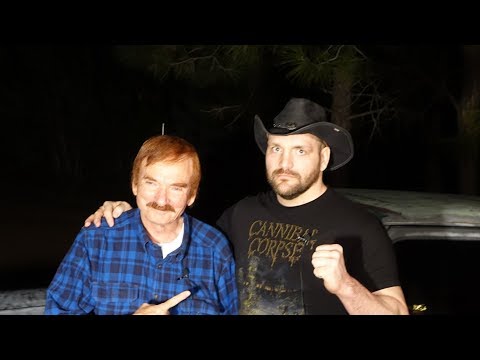
Travis Walton Interview: The UFO Abduction
Long-form interview with Travis Walton detailing his abduction experience, the physical aftermath of the energy strike, and the crew's experience.
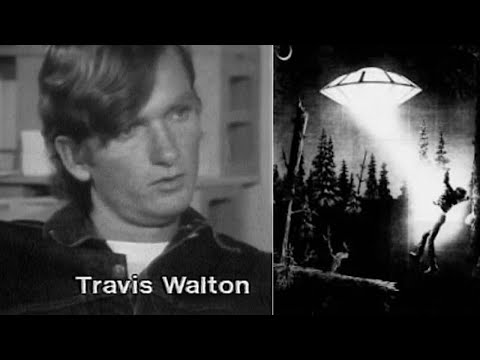
First Interview with Travis Walton (1975)
Original archival TV interview recorded in 1975 shortly after Travis Walton returned from his five-day disappearance.

BuzzFeed Unsolved: The Travis Walton Abduction
A detailed retrospective of the Travis Walton case, highlighting the polygraph tests, search logistics, and skeptical counterarguments.
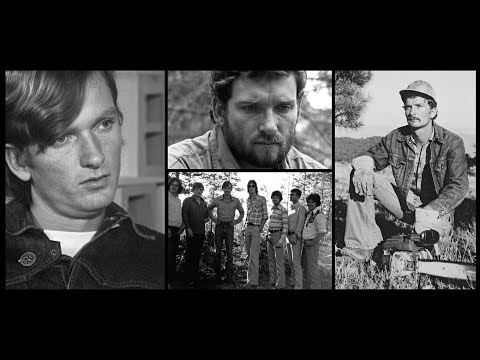
The Ralph Anderson Tapes: Stepbrother Reacts (1975)
Archival tapes of Travis Walton's stepbrother Ralph Anderson reacting to the ongoing search and abduction allegations in 1975.

TRAVIS - The True Story of Travis Walton
Full presentation and documentary feature examining the evidence, witness testimonies, and tree ring growth anomalies.
Sources
- Walton, Travis. The Walton Experience, Berkley Publishing Group, 1978; expanded as Fire in the Sky: The Walton Experience, Marlowe & Company, 1996.
- Klass, Philip J. UFOs: The Public Deceived, Prometheus Books, 1983 (chapters on the Walton case, including the McCarthy polygraph and the Forest Service contract).
- Klass, Philip J. UFO Abductions: A Dangerous Game, Prometheus Books, 1989.
- Clark, Jerome. "Walton abduction case," in The UFO Encyclopedia, 2nd ed., Omnigraphics, 1998 (crew names and ages).
- Gilson, C. E. Arizona DPS polygraph examinations of Mike Rogers, Ken Peterson, John Goulette, Steve Pierce, Allen Dalis and Dwayne Smith, November 10, 1975; as described by Klass (1983) and Walton (1996). The charts are not published online.
- McCarthy, John J. Polygraph examination of Travis Walton, November 15, 1975 ("gross deception"); as described by Klass (1983).
- Gilson, Cy. Polygraph examination report on Travis Walton commissioned by researcher Jerry Black, February 4, 1993. nicap.org
- "Analysis of Soil Samples from the Travis Walton Abduction Site (Apache-Sitgreaves National Forest, Near Heber Arizona)." Report UT095, Phyllis Budinger collection, published by The Black Vault, April 9, 2017. theblackvault.com
- Dunning, Brian. "The Travis Walton Abduction." Skeptoid #94. skeptoid.com
- NICAP (National Investigations Committee on Aerial Phenomena). "UFO Casebook 1975," chronology entry documenting the November 5, 1975 Apache-Sitgreaves National Forest close encounter and alleged abduction. nicap.org
- Dingman, Sam. "His Arizona UFO abduction story became legend. After 50 years, he's sick of attempts to debunk it," KJZZ (Arizona NPR affiliate), July 3, 2025. kjzz.org
- Sheaffer, Robert. "The Travis Walton 'UFO Abduction' Story — Meltdown!" Bad UFOs, July 17, 2021 (the Gentry Tower hypothesis of Charlie Wiser and Ryan Gordon). badufos.blogspot.com
- Sheaffer, Robert. "Mike Rogers Says that he is ‘No Longer to be Considered a Witness to Travis Walton's Supposed UFO Abduction’," Bad UFOs, March 21, 2021. badufos.blogspot.com
- Sheaffer, Robert. "Crew Chief Mike Rogers Confesses the Travis Walton Hoax!" Bad UFOs, July 3, 2021. badufos.blogspot.com
- Metabunk. "Travis Walton case: Crew boss confesses hoax," discussion thread including a transcription of the Rogers–Gordon call. metabunk.org
- Shermer, Michael. Commentary on the Walton case and the polygraph, as quoted in the Wikipedia article "Travis Walton incident."
- "Travis Walton incident," Wikipedia (used as a pointer to sources only: contract dates and penalty, search chronology, the November 8 Rogers–Duane Walton interview, the return and medical visit, the hypnosis session, Steve Pierce's statements). en.wikipedia.org
- Walton, Travis. The Official Travis Walton Web Site — supplemental case documentation, witness statements, and updates. travis-walton.com
Corrections (October 2026)
A fact-check of this page found invented detail throughout the narrative, and it has been removed or attributed. Removed: a Forest Service contract "code 03-1049," 1,200 acres and a 15-acres-a-day rate (the contract was for 1,277 acres); a Navajo County "case number 75-1049," a quoted radio-dispatch log, a search frequency of 155.370 MHz with "electromagnetic interference" at the clearing, search sectors, temperatures and dogs that "refused to track"; static electricity at the scene; the wording and conduct of Gilson's questions, GSR readings, a "two-hour pre-test interview" and a "formal DPS certification"; dialogue for the collect call; hallucinations and light sensitivity after the return; "elevated ketone levels" (accounts of the urinalysis report no acetone); and the hypnosis details (a pulse of 140, a back-arching spasm, sulphur odours, a "non-leading approach"). Also removed: tree-ring work attributed to "G. Cope Shellhorn" in 1993 and "immunity to rot"; spherical particles and anomalous EDX ratios in the soil report; a "too boring" quotation from Tracy Tormé; claims that Leslie Kean and Ross Coulthart had analysed the case; a 1976 Skeptical Inquirer article; Harder "transcript logs"; and Tormé's "production notes." Corrected: the seventh crew member was Dwayne Smith, not "Dwayne Johnston"; the crew reported to Deputy Ellison in Heber, not at a forest boundary; the medical visit was on November 11; the crew were not without interest in UFOs (Rogers and the Waltons were known UFO enthusiasts). Added: the February 1976 Pfeifer tests, the October 1975 NBC film The UFO Incident, Steve Pierce's later doubts, and the Gentry Tower hypothesis. The rating was changed from Credible (72; 71 in the index) to Disputed (45). The reasons are given under "Why Disputed."
See something inaccurate? Have additional information or sources?
Suggest an Edit →Last Updated: October 25, 2026