
Betty & Barney Hill Abduction
The first widely publicized UAP abduction case in modern history. A sincere couple\'s 1961 roadside sighting was followed, more than two years later, by an abduction account recovered under hypnosis, which their own psychiatrist judged a fantasy.
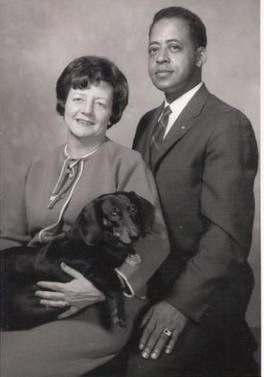
Pictured: Betty and Barney Hill in a formal studio portrait — the real witnesses at the center of the September 1961 case. This is not a photograph of the abduction itself, which by its nature left no photographic record; the case rests on the Hills' own testimony, Betty's hypnosis-derived star map, and Dr. Benjamin Simon's recorded sessions, not on any photographic evidence of the encounter.
Theoretical Alignment
The Betty and Barney Hill case provides some of the strongest alignment with the Extraterrestrial Hypothesis in early American UFO history, primarily because the case introduced elements — the physical examination, the star map, the communicating entities, the missing time — that were not part of the public UFO mythology in 1961. Betty Hill had no knowledge of the Zeta Reticuli star system when she drew her star map under hypnosis; that system would not be catalogued in a form accessible to the public until later. The fact that her map was subsequently matched to an actual stellar configuration by astronomer Marjorie Fish in 1969 is one of the most intriguing data points in the case. The Psycho-Social Hypothesis holds that the Hills’ experience was real as a psychological event but generated by cultural conditioning and hypnotic confabulation rather than physical contact with non-human beings.
Complete Timeline
| Date | Event |
|---|---|
| Sept 19, 1961 | About 10:30 PM: Just south of Lancaster, NH, Betty Hill notices a moving light below the Moon and Jupiter while the couple are driving south on U.S. Route 3. |
| Sept 19–20, 1961 | Near Indian Head, Barney views a craft through binoculars and says he sees figures in its windows. The Hills flee, hear beeping sounds, and arrive home in Portsmouth about dawn. |
| Sept 21–22, 1961 | On a friend's advice, the Hills report the sighting to Pease AFB; the base's report goes to Project Blue Book, which later carries the case as "insufficient data." |
| Oct 21, 1961 | NICAP investigator Walter Webb interviews the Hills for six hours and concludes they are telling the truth about what they saw. |
| Nov 1961 | Betty writes down the dreams she began having ten days after the drive. On Nov 25, NICAP interviewers point out the drive's missing hours. |
| Jan 4 – June 6, 1964 | Dr. Benjamin Simon conducts hypnosis sessions; both describe an examination aboard the craft, and Betty later draws a "star map." Simon concludes the abduction was most likely a fantasy. |
| Oct 25, 1965 | The Boston Traveler publishes the story against the Hills' wishes ("UFO Chiller: Did THEY Seize Couple?"); UPI carries it worldwide the next day. |
| 1966 | John G. Fuller publishes The Interrupted Journey, excerpted in Look. |
| Dec 1974 | Astronomy magazine publishes "The Zeta Reticuli Incident," on Marjorie Fish's star-map identification. |
| Oct 20, 1975 | NBC airs The UFO Incident, with James Earl Jones and Estelle Parsons. |
| July 2011 | New Hampshire places a historical marker on Route 3 in Lincoln. |
The Narrative
On the night of September 19, 1961, Betty Hill, a social worker, and her husband Barney Hill, a postal worker, were driving south along U.S. Route 3 through the White Mountains of New Hampshire, returning home to Portsmouth from a vacation in Niagara Falls and Montreal. Just south of Lancaster, at about 10:30 PM, Betty noticed a bright light below the Moon and Jupiter that seemed to move upward and grow brighter. They stopped several times to watch it through binoculars. About a mile south of Indian Head, they said, it descended toward their 1957 Chevrolet Bel Air and hovered about 80 to 100 feet up.
Barney stepped out of the car with binoculars and walked toward it. He reported a large, silent craft, "like a huge pancake," with a row of windows, through which he saw eight to eleven humanoid figures in dark uniforms looking at him. Fearing capture, he ran back to the car, and they drove off. They then heard a series of beeping or buzzing sounds that seemed to make the car vibrate, followed later by a second series. They arrived home in Portsmouth about dawn, with only fragmentary memories of a 35-mile stretch of road. Their watches never worked again, Barney's binocular strap was torn, and the toes of his shoes were scraped. Two months later, NICAP interviewers pointed out that the drive had taken about seven hours instead of about four.
Psychiatric Hypnosis and the Star Map
Ten days after the drive, Betty began having vivid dreams of being taken aboard a craft; she wrote them down in November 1961. Troubled by Barney's anxiety and Betty's dreams, the Hills began seeing Boston psychiatrist and neurologist Dr. Benjamin Simon in December 1963. Under hypnosis between January and June 1964, each separately recounted being taken aboard the craft by small, grey-skinned humanoids with large eyes, separated, and given a medical examination.
Betty recalled being shown a map by the beings' leader, and after a post-hypnotic suggestion she drew it. From 1968, schoolteacher and amateur astronomer Marjorie Fish analyzed the map with 3D models of nearby stars and concluded that it showed the view from the double star Zeta Reticuli, about 39 light-years away. Fish later abandoned that identification after Hipparcos satellite data revised the distances of key stars.
Key Figures
Betty & Barney Hill
A respected interracial couple from Portsmouth, New Hampshire, both active in the NAACP and civil rights work. Betty was a social worker; Barney worked for the Post Office. They did not seek publicity, and they tried to stop the 1965 newspaper story that made them famous. Barney died in 1969. Betty spent the rest of her life involved with UFO research until her death in 2004, although her later reports of frequent sightings cost her credibility with many researchers.
Dr. Benjamin Simon
The Boston psychiatrist who hypnotized the Hills from January to June 1964. Simon believed the Hills were honest, "neither lying nor insane," but concluded that the abduction narrative was most likely a fantasy. On his view it came from Betty's post-sighting dreams, which Barney had absorbed. He published his view in Psychiatric Opinion in 1967.
Marjorie Fish
An Ohio schoolteacher who, from 1968, spent years building three-dimensional star models to match Betty Hill's drawing, and concluded that it showed the view from Zeta Reticuli. Terence Dickinson presented her work in Astronomy magazine in December 1974. That began a debate that included a rebuttal by Carl Sagan and Steven Soter. After Hipparcos satellite data revised the distances of key stars, Fish publicly rejected her own identification.
Evidence & Debate
Supporting Points & Corroboration
- Prompt report: The Hills reported the sighting to Pease AFB within days and to NICAP within weeks; NICAP's Walter Webb judged them truthful about what they saw.
- Hypnosis Audio: Dr. Simon's recordings capture intense distress from Barney while describing the abduction; Simon judged the Hills sincere.
- Physical details: Barney's binocular strap was torn and his shoes scraped; Betty's dress was torn and stained with a pink powder; Betty reported that shiny spots on the car made a compass spin. All of these were the Hills' own observations.
- Stanton Friedman and Kathleen Marden: Their 2007 book Captured!, written by the nuclear physicist and Betty's niece, defends the case from the family papers. (An earlier version of this point claimed Pease AFB "radar logs confirmed" anomalous targets during the encounter; no such record could be found, and the Air Force's summary of the case mentions no radar.)
Contradicting Points & Skeptics
- Hypnosis Construct: The psychiatrist who hypnotized the Hills concluded that the abduction was most likely a fantasy derived from Betty's dreams, which she had described to Barney long before hypnosis.
- Outer Limits Influence: Barney first described the beings' "wraparound eyes" on February 22, 1964, twelve days after The Outer Limits aired "The Bellero Shield," whose alien has such eyes (Kottmeyer, 1990).
- Star Map: Marjorie Fish abandoned her Zeta Reticuli identification after Hipparcos satellite data; Sagan showed that the "match" depended on the connecting lines.
- The Air Force file: Blue Book carried the case as "insufficient data," calling the object "in all probability Jupiter." Jim Macdonald matched the light's appearances to a beacon on Cannon Mountain.
The Hypnosis Sessions and Dr. Simon’s Assessment
The hypnosis sessions conducted by Dr. Benjamin Simon from January 4 to June 6, 1964 are the most extensively analyzed part of the case. Simon was a Boston psychiatrist and neurologist who had used hypnosis to treat combat neuroses during World War II. He was not a UFO researcher. The Hills first saw him on December 14, 1963, on the advice of Barney's psychiatrist, Dr. Duncan Stephens (Boston Public Library). By then they had been troubled for two years by Barney's anxiety, Betty's dreams and the gap in their memory of the drive. (An earlier draft said they were referred by "their physician, Dr. Patrick Quirke"; that could not be confirmed.)
Simon hypnotized Betty and Barney separately and gave each a post-hypnotic suggestion to forget the session's content until he removed it, so that neither could consciously compare accounts between sessions. Both described being taken aboard a craft and examined by beings with large eyes and greyish skin, and then returned to their car. Betty described a long needle inserted into her navel, which she was told was a pregnancy test. Barney described a cup-like device placed over his groin. Proponents later compared Betty's procedure to amniocentesis, which was then in limited clinical use. (An earlier draft said amniocentesis was "not yet in clinical use in 1961"; it was already used in the 1950s. Characterizations of Simon's questioning as "open-ended" and "non-leading" have also been removed, since they are judgments not found in the sources.)
Simon's own assessment was that the Hills were sincere, not lying, and not insane, but that the abduction account was most likely a fantasy. On his reading, it grew from Betty's dreams, which she had described to Barney and written down in November 1961, more than two years before hypnosis, and Barney absorbed and elaborated it. He set out this view in Psychiatric Opinion in 1967 and in correspondence with Philip Klass. Proponents answer that Barney's account contains details not in Betty's dream notes. Skeptics note that Betty's dreams and her hypnotic account themselves differed in significant ways, including the beings' appearance, and that Barney's "wraparound eyes" first appeared on February 22, 1964, twelve days after The Outer Limits broadcast "The Bellero Shield" (Kottmeyer, 1990).
Zeta Reticuli and the Star Map
Betty Hill said the leader of the beings showed her a map of "trade routes" and "expeditions." She drew it after a post-hypnotic suggestion from Dr. Simon. The map became one of the most analyzed astronomical claims in UFO history when Ohio elementary-school teacher and amateur astronomer Marjorie Fish began studying it in 1968, after reading Fuller's book. Fish built a three-dimensional bead-and-thread model of nearby Sun-like stars, using distances from the 1969 Gliese catalogue, and examined it from thousands of viewpoints over several years. She concluded that the only match was the view from the double star Zeta Reticuli.
Fish sent her work to Walter Webb, who passed it to Terence Dickinson, editor of Astronomy. Dickinson did not endorse it, but in December 1974 he opened the magazine's first debate on a UFO report with an article, "The Zeta Reticuli Incident." Carl Sagan and Steven Soter replied that the freedom to choose the viewpoint and the connecting lines made the match close to inevitable; in a 1980 episode of Cosmos, Sagan showed that without its lines the map bore no resemblance to the real stars. David Saunders, a psychologist and statistician who had served on the Condon Committee, argued that the match was "at least 1,000 to 1 against" chance. Later, data from the Hipparcos satellite showed that some of the stars in Fish's interpretation were much farther away than previously thought, and that her selection criteria would have to be applied differently. Fish herself then rejected her hypothesis in a public statement.
The Zeta Reticuli system consists of two Sun-like stars, Zeta1 and Zeta2 Reticuli, about 39 light-years away in the southern constellation Reticulum. Observations with the Herschel space telescope later detected an infrared excess around Zeta2 Reticuli consistent with a debris disk. No planets have been confirmed in either system. (An earlier draft dated the disk detection to the Infrared Space Observatory in 1996; that could not be confirmed and has been corrected.)
The Cultural Template and the Abduction Phenomenon
The Betty and Barney Hill case established a narrative template for alien abduction that has been both a strength and a weakness for later research. It gave a detailed early account against which later reports could be compared. But the story's wide dissemination, through Fuller's book, the 1975 NBC television movie and decades of coverage, created a pool of narrative detail that could shape later witnesses' accounts. Separating independent reports from ones shaped by the Hill story remains the central methodological problem of abduction research.
Dr. John Mack, the Harvard psychiatrist, worked with some two hundred people who reported abductions and described thirteen of them in detail in Abduction: Human Encounters with Aliens (1994). He argued that cultural contamination could not explain the consistency he found; critics disagreed. In 1994–95 a Harvard Medical School committee appointed by Dean Daniel Tosteson reviewed his clinical work for more than a year. It reaffirmed his academic freedom while criticizing aspects of his methods. Mack was killed by a drunk driver in London in 2004.
The "grey" alien of popular culture, with a large head, large eyes, small nose and mouth and greyish skin, owes much to the Hill case and to the sketches based on Barney's descriptions. Its later ubiquity is itself an argument skeptics raise against the independence of later reports.
The NICAP Investigation
After calling Pease Air Force Base, Betty wrote to Donald Keyhoe of the National Investigations Committee on Aerial Phenomena (NICAP). NICAP sent Walter Webb, an astronomer at Boston's Hayden Planetarium, who interviewed the Hills for six hours on October 21, 1961. Barney told him he had developed a "mental block" about part of the experience. Webb concluded that "they were telling the truth and the incident probably occurred exactly as reported except for some minor uncertainties and technicalities." His report to NICAP, dated October 26, 1961, is the earliest detailed record of their account. On November 25, 1961, NICAP's C. D. Jackson and Robert Hohmann interviewed them again and pointed out the length of the trip: seven hours for a drive that should have taken about four. It was the first time the Hills considered that time was missing.
Project Blue Book's file on the case is separate from NICAP's work: it came from the Hills' report to Pease AFB. Blue Book carried the case as "insufficient data," with the object "in all probability Jupiter." (An earlier draft said Keyhoe had brought the case to Blue Book and that Hynek later described Blue Book's posture as "deliberately designed to minimize the appearance of anomaly." Neither claim could be sourced, and both have been removed.)
Betty's Dreams and the Road to Publicity
Betty's dreams are central to the case because they came first. Ten days after the drive she began a series of vivid dreams that lasted five nights. When she wrote them down in November 1961, they described a roadblock, men surrounding the car, being walked through the forest at night with Barney following as if in a trance, and an examination aboard a craft. The men in the dreams were about five feet to five feet four inches tall, wore matching blue uniforms with caps like military cadets', and looked nearly human, with black hair, dark eyes, prominent noses, bluish lips and greyish skin. Under hypnosis in 1964, Betty's account followed her dreams in outline but differed in the beings' appearance, the technology and the order of events (as summarized on Wikipedia from Fuller).
The Hills spoke about the experience to friends and small groups, including a talk in Quincy, Massachusetts in late 1963, but did not seek publicity. In 1965 Boston Traveler reporter John H. Luttrell obtained a tape of that talk and notes of their interviews with UFO investigators. His front-page story ran on October 25, 1965, over the Hills' objections; United Press International picked it up the next day. Only then did the Hills cooperate with John G. Fuller on a book.
The Legacy for Abduction Research
Abduction research grew directly out of this case, through Fuller's book, Budd Hopkins's work in the 1970s and 1980s, David Jacobs, and John Mack. Every later survey starts with the Hills. Most psychologists who have studied abduction reports attribute them to sleep paralysis, hypnosis and cultural transmission; proponents argue that these explanations leave much unexplained. (An earlier draft of this section said Mack's subjects were free of fantasy-proneness and false-memory signatures, described his death as leaving "two books," and credited Jeffrey Kripal with founding a "Registry for Exceptional Human Experiences." These claims could not be sourced or were inaccurate, and they have been removed.)
The Lasting Scientific Questions
The central question is the "missing time." Did the Hills lose two to three hours of awareness, and if so, why? Their own reckoning is that the drive took about seven hours instead of about four. That figure was first pointed out to them by NICAP interviewers two months later, and it depends on stops and speeds they could only estimate. Skeptics note that the Hills drove slowly to watch the light, stopped several times and took side roads, and that fatigue and fear can fragment memory. Proponents argue that both witnesses share the same gap. (An earlier draft claimed that a shared amnesic episode has never been described in the clinical literature, that Simon's methods "argue against full hypnotic construction," and that the ring of warts was "documented by his physician" and "a physiological fact that cannot be explained." None of these claims is supported by a source, and they have been removed.)
The New Hampshire Historical Legacy
The case is now part of New Hampshire's cultural heritage. In July 2011 the New Hampshire Division of Historical Resources placed a state historical marker on U.S. Route 3 in Lincoln, near the site of the craft's first close approach (NHPR, 2014). Betty Hill's papers are held by the University of New Hampshire, her alma mater. (An earlier draft described the Indian Head Resort as a longtime gathering place for UFO researchers and said that "researchers who have visited" had confirmed the terrain matched the Hills' account. No source was found for either claim, and both have been removed.)
The Impact on American Civil Rights History
The Hill case has a dimension rarely discussed in UFO research: its connection to the civil rights movement. Barney Hill was a Black man and Betty a white woman. When they married, interracial marriage was still banned in many states; sixteen states still had such laws when the Supreme Court struck them down in Loving v. Virginia in 1967. Both were active in the NAACP. Barney served on the New Hampshire advisory committee to the U.S. Commission on Civil Rights. Under hypnosis he spoke of his fear of hostility as a Black man on a lonely road at night, a factor some writers think shaped his reactions that night.
James Earl Jones's portrayal of Barney in NBC's The UFO Incident (1975) brought this side of the story to a mass audience. (An earlier draft said interracial marriage was illegal in sixteen states "in 1961," and speculated about how bias shaped investigators' responses. The first claim was inaccurate, since there were more such states in 1961, and the speculation could not be sourced.)
The Aftermath and Long-Term Impact
Barney Hill died on February 25, 1969, at age 46, of a cerebral hemorrhage. His death was not medically attributed to the encounter, though Betty believed its stress had harmed his health. Betty Hill died of cancer on October 17, 2004, at age 85. She remained publicly engaged with the UFO community for decades, and in later years reported frequent further sightings, which many researchers did not accept. She remained convinced that her 1961 experience was real.
The Dr. Simon Protocol and Its Limitations
Simon's sessions followed the therapeutic practice of 1964. They would not satisfy modern standards for memory research, which show that hypnosis can create or elaborate memories that feel real to the subject. That critique applies to the abduction account, not to the sighting the Hills reported consciously in 1961. A fair assessment treats the sighting as testimony from two sincere witnesses and the abduction as a hypnotic narrative that its own hypnotist did not believe.
The Interrupted Journey and Cultural Legacy
John G. Fuller’s 1966 book The Interrupted Journey: Two Lost Hours "Aboard a Flying Saucer" brought the Hill case to a mass audience and was excerpted in Look. Fuller was a Saturday Review columnist who had just written Incident at Exeter. Simon and the Hills gave him access to the session tapes. The book established the abduction narrative that later reports followed. (An earlier draft called Fuller a "Look magazine journalist" with aviation experience; he was a Saturday Review columnist.)
NBC's 1975 television movie The UFO Incident, starring James Earl Jones as Barney Hill and Estelle Parsons as Betty Hill, took the story to millions who had never read the book. It aired on October 20, 1975 and was followed by a rise in abduction reports. Two weeks later came the Travis Walton case, whose crew boss said he had watched part of the film.
Betty Hill continued her public engagement with the UFO community until shortly before her death in 2004. (An earlier draft said she "continued to visit the area of the original encounter annually"; that could not be confirmed and has been removed.)
The Five Observables Assessment
Assessment: Because the Hill incident was primarily a visual and testimonial case from 1961, physical sensor data is limited. The craft demonstrated silent hovering (anti-gravity lift) and local illumination, suggesting speculative ratings on anti-gravity and low observability. Hypersonic speed and trans-medium travel were not witnessed during the encounter.
Why "Disputed"
The Betty and Barney Hill abduction is classified as DISPUTED (50/100). On one side are two sincere and credible witnesses who reported a frightening sighting within days and never sought publicity. Their account of the sighting was found truthful by the first investigator, and a few physical details fit their story: a torn strap and dress, scuffed shoes, and marks on the car.
On the other side, the case's central weaknesses are substantial and well documented. The abduction narrative rests on hypnotic regression more than two years after the event, preceded by Betty's dreams. The psychiatrist who conducted it concluded that it was most likely a fantasy. Barney's distinctive description of the beings' eyes followed a television broadcast by twelve days. Marjorie Fish's Zeta Reticuli match was abandoned by Fish herself. The physical traces were all observed by the Hills, and the dress stains have an ordinary explanation. No radar or independent witness corroboration is documented, and the Air Force considered the light probably Jupiter.
Rating change (October 2026). This case was previously rated CREDIBLE, 68/100. That rating rested in part on a "corroborating Pease Air Force Base radar detection," which could not be sourced; on a star-map match whose author later rejected it; and on a misstatement of Dr. Simon's conclusion. Without those, the evidence is genuinely contested. Score: 68 → 50.
Sensor & Instrumentation Detection Profile
No instrument recorded the object. The Hills reported the sighting to Pease Air Force Base in Portsmouth by telephone, on the advice of a friend, a local police chief. The base's report went into Project Blue Book. The Air Force's 1963 summary says the sighting "was investigated by officials from Pease AFB," that the case "is carried as insufficient data," that "no direction (azimuth) was reported and there are inconsistencies in the report," and that the object "was in all probability Jupiter." It mentions no radar. Proponents, notably Kathleen Marden and Stanton Friedman, cite an unidentified radar return at Pease that night. This site has not seen that record. Pease is some 80 miles from Indian Head, and no radar return has been tied to the Hills' location. (An earlier draft of this page said Pease's radar logs "confirmed" fast-moving targets during the encounter, that a "Base Operations Officer" filed a report of an unusual return, and that a "1965 FOIA request" revealed a detection. These claims could not be sourced, and the FOIA did not take effect until 1967. They have been removed.)
Betty Hill reported that the car's trunk lid had shiny, circular spots that had not been there before. When she held a compass over them, she said, the needle spun. This was her own test; no investigator measured or photographed the effect. (An earlier draft said investigators "confirmed the compass deflection.") Similar claims of electromagnetic effects appear in other cases, such as Deputy Val Johnson’s 1979 encounter in Minnesota.
According to Fuller's account, Barney later developed a ring of warts in his groin, where he said under hypnosis a cup-like device had been placed, and had them removed. The account rests on the Hills and Fuller; no medical record of the warts has been published.
Environmental & Geospatial Context
The Hills were driving home to Portsmouth from Niagara Falls and Montreal, south on U.S. Route 3 through the White Mountains. Betty first saw the light just south of Lancaster at about 10:30 PM. They stopped at a picnic area south of Twin Mountain, watched the light pass Cannon Mountain and the Old Man of the Mountain in Franconia Notch, and had their closest encounter about a mile south of Indian Head, near Lincoln. Their memories are fragmentary for the 35 miles between Indian Head and Ashland. They arrived home about dawn. The 178-mile drive from Colebrook should have taken about four hours; they reached home seven hours after leaving it.
The Air Force noted that Jupiter was low in the southwest and "a strong inversion in the area." In July 2011 the New Hampshire Division of Historical Resources placed a historical marker near the site of the first close approach. (An earlier draft said their itinerary was "confirmed by hotel records" and that the valley's acoustics made the object's silence "even more remarkable." Neither claim could be sourced, and both have been removed.)
Observer Credibility & Occupational Profile
Betty Hill was a social worker with the New Hampshire Division of Welfare; Barney Hill worked for the U.S. Post Office in Boston. Both were active in the NAACP, and Barney served on the New Hampshire advisory committee to the U.S. Commission on Civil Rights. Betty was white and Barney was Black, at a time when marriages like theirs were still illegal in many states; sixteen states still banned them when the Supreme Court struck those laws down in 1967.
The Hills did not seek publicity. They told friends and UFO investigators, but they refused to cooperate with a Boston Traveler reporter in 1965 and asked that his story not run. It ran on October 25, 1965. Walter Webb, who interviewed them for six hours on October 21, 1961, concluded that "they were telling the truth." Later, Betty's public claims of repeated sightings eroded her credibility with many in the UFO community. Robert Sheaffer describes her 1980 presentation of slides of "blips, blurs, and blobs" at a New York conference.
Dr. Benjamin Simon, the Boston psychiatrist who conducted the hypnosis sessions, had used hypnosis to treat combat neuroses during World War II. He was not a UFO researcher. He judged the Hills honest, "neither lying nor insane," but concluded that the abduction was most likely a fantasy rooted in Betty's dreams. (An earlier draft of this page said Simon's assessment was that the account "was not confabulated" and that his judgment "has never been seriously challenged." That reverses his actual conclusion, and the passage has been corrected.)
Physical & Material Assays
Betty Hill’s dress was torn at the hem, zipper and lining, with a pinkish powder that later stained it. Five laboratories have examined it over the years. Chemist Phyllis Budinger's analysis in 2001–2004 attributed the pink discoloration to mould and identified the residue as an ordinary protein and a natural glycerol-ester oil (see Material Analysis). The dress is preserved at the University of New Hampshire.
Barney found that the leather strap of his binoculars was torn and that the toes of his best shoes were scraped; under hypnosis, he said the strap broke as he ran back to the car. Both were the Hills' own observations. (An earlier draft said Walter Webb examined their belongings "within days," that the eyepieces were scratched, and that the shoes suggested he had been "dragged." Webb met them a month later, and the other two details are not in the sources; all three have been removed.)
The star map Betty drew after hypnosis was compared by Marjorie Fish with the Zeta Reticuli region. Fish later abandoned that identification after Hipparcos data (see Material Analysis).
Historical Precedents & Archive Matches
The Betty and Barney Hill case is the founding document of the modern alien-abduction narrative: a sighting on a lonely road, missing time, a medical examination by beings with large eyes, a return with no memory, and recovery of the story under hypnosis. The thousands of abduction reports made after Fuller's The Interrupted Journey (1966) and NBC's The UFO Incident (1975) share that structure. Researchers disagree on whether this reflects cultural transmission or a consistent phenomenon.
Project Blue Book carried the Hill case as "insufficient data," noting that "no direction (azimuth) was reported," and called the object "in all probability Jupiter." (An earlier draft said that J. Allen Hynek found no conventional explanation and that the case was a turning point in his move away from skepticism. No source supports this, and it has been removed.)
The social dimensions of the case extend beyond UFO research. As an interracial couple in 1961, the Hills told their story at the intersection of the UFO phenomenon and the civil rights era. Barney Hill died on February 25, 1969, of a cerebral hemorrhage, aged 46. Betty Hill continued to lecture and give interviews until shortly before her death on October 17, 2004, aged 85. The 1975 television movie The UFO Incident, starring James Earl Jones and Estelle Parsons, brought the story to a mass audience. It aired on October 20, 1975, two weeks before the Travis Walton incident.
Material Analysis
The Betty and Barney Hill case produced no craft debris. The material evidence consists of items the Hills themselves kept or noticed, plus Betty Hill's star map drawing.
Betty Hill's Dress
When Betty took out the dress she had worn that night, she found it torn at the hem, zipper and lining, with a pinkish powder on it. She hung it on the clothesline, the powder blew away, and she threw the dress out before retrieving it. Over the years, five laboratories have examined it. The dress is now preserved with the Hill papers at the University of New Hampshire's Milne Special Collections. The most detailed analysis was by chemist Phyllis Budinger in 2001–2003, with DNA follow-up in 2004. She identified mould or mildew as the cause of the pink discoloration and found the residue to consist of an ordinary protein and a natural glycerol-ester oil. Those are identifiable biochemical classes, although their specific source remains unconfirmed. (An earlier draft of this page described a 1977 University of Cincinnati analysis arranged by Leonard Stringfield, which found the powder matched no known substance, and "chemical staining" matching no household chemical. No source was found for either, and both have been removed.)
The Star Map and Marjorie Fish Analysis
After a post-hypnotic suggestion from Dr. Simon, Betty Hill drew a map of stars she said she had been shown aboard the craft. In 1968, after reading John G. Fuller's The Interrupted Journey, Ohio schoolteacher and amateur astronomer Marjorie Fish began building bead-and-thread models of nearby Sun-like stars, using distances from the 1969 Gliese catalogue. After studying thousands of viewpoints over several years, she concluded that the map matched the view from Zeta Reticuli, a pair of Sun-like stars about 39 light-years away. Walter Webb sent her work to Terence Dickinson, editor of Astronomy, who opened a debate on it in the December 1974 issue without endorsing it. Carl Sagan and Steven Soter replied that the match was a chance alignment; in a 1980 episode of Cosmos, Sagan showed that without the connecting lines the map bore no resemblance to the real stars. David Saunders defended the match as "at least 1,000 to 1 against" chance.
The question was later settled against the match. The Hipparcos satellite's measurements showed that some stars in Fish's interpretation are much farther away than had been thought, and that some she had included or excluded would have to be treated differently under her own criteria. Fish herself rejected her hypothesis in a public statement.
Hypnotic Regression Recordings
Dr. Simon recorded the sessions, held from January 4 to June 6, 1964, on tape. They document the separate recollections of Betty and Barney under hypnosis. Barney's recordings show intense distress. Simon accepted that the Hills sincerely believed their accounts, but he concluded that the abduction story was most likely a fantasy derived from Betty's dreams, which Barney had heard her describe.
Supporting Anomalous Origin
- The Hills reported their sighting within days, to Pease AFB and then to NICAP's Walter Webb, who judged them truthful about what they saw.
- The emotional intensity of Barney Hill's hypnosis recordings suggests genuine distress.
- The torn dress, binocular strap and scuffed shoes are consistent with the Hills' later accounts (though all were observed by the Hills themselves).
Supporting Conventional Explanation
- Marjorie Fish abandoned her Zeta Reticuli identification after Hipparcos data; Sagan showed that the "match" depended on the connecting lines.
- Hypnotic regression is widely regarded by modern psychology as unreliable for memory recovery, and the hypnotist himself judged the abduction a fantasy.
- The dress stains were identified as mould acting on ordinary organic residues (Budinger).
- No independent laboratory has published peer-reviewed findings confirming an anomalous origin for any of the physical materials.
The Conventional Explanation Candidate: Misidentified Light, Stress, and Hypnotic Confabulation
The conventional explanations address the two phases separately. The first is the initial sighting: a light that followed the car and a craft seen near Indian Head. The second is the abduction narrative, which emerged in Betty's dreams and then under hypnosis more than two years later.
Astronomical or Beacon Misidentification (the Sighting)
PossibleBetty first saw the light near the Moon and Jupiter, and the Air Force's 1963 summary judged it "in all probability Jupiter," which was low in the southwest and set at about the time the object disappeared. Jim Macdonald, who lives in the area, reconstructed the route and found that an aircraft warning beacon on Cannon Mountain appears and disappears from the road at the points where the Hills describe the object appearing and disappearing. Neither explanation accounts for Barney's description of a structured craft with figures at Indian Head, which proponents treat as decisive. (An earlier version rated this explanation "Ruled Out" on the strength of the Pease radar claim, which could not be sourced.)
False Memory via Hypnosis (the Abduction)
PlausibleThis was Dr. Simon's own conclusion: the Hills were honest, but the abduction was most likely a fantasy that grew from Betty's dreams, which Barney had heard her describe. Betty's dreams began ten days after the drive and she wrote them down in November 1961, more than two years before hypnosis. Hypnotic regression is widely regarded as unreliable for recovering memories, and Barney's "wraparound eyes" first appear twelve days after The Outer Limits aired "The Bellero Shield." The physical items cited against this explanation (a torn binocular strap and dress, scuffed shoes, shiny spots on the car) are the Hills' own observations. The dress stains were later identified as mould acting on ordinary organic residues.
Psychological Episode (Anxiety / Fatigue)
PossibleA long night drive, fatigue and a frightening sighting may account for the fragmented memory of the drive between Indian Head and Ashland. Skeptics also point to Barney's anxiety about being an interracial couple on a remote road in 1961. Against this, both Hills describe the gap, and they were awake and driving.
The case separates into two phases. The initial sighting is supported only by the Hills' own testimony; the Air Force considered it insufficient data and probably Jupiter. The abduction narrative emerged first in Betty's dreams and then under hypnosis, and the psychiatrist who conducted the hypnosis did not believe it. (An earlier version of this paragraph said the sighting had "physical corroboration via radar and multiple witnesses along Route 3." No source supports either claim, and both have been removed.)
Related Cases
Confirmed Documents & Official Records
Project Blue Book case 1961-09-8303388. It includes the report from Pease Air Force Base and a 1963 summary stating that the case "is carried as insufficient data," that "no direction (azimuth) was reported and there are inconsistencies in the report," and that the object "was in all probability Jupiter." The link is NARA's UFO records guide.
UNCLASSIFIED (declassified)Betty Hill's papers, tapes and related items, held by the University of New Hampshire, her alma mater. This is the primary archive for the case. (An earlier version of this card described "FOIA-released Pease AFB radar logs" from a "1965 FOIA request." No such records are known, and the Freedom of Information Act did not take effect until 1967. The card has been replaced.)
PUBLIC ARCHIVESearch Government Archives Directly
Further Reading — Recommended Literature
The Interrupted Journey: Two Lost Hours "Aboard a Flying Saucer"
The foundational, authorized account of the Hill abduction, detailing the regression sessions with Dr. Simon and the couple's personal history.
UFOs and Abductions: Challenging the Borders of Knowledge
An academic essay collection on abduction research from proponents and critics, useful for placing the Hill case, the first widely publicized abduction, within the later literature.
Captured! The Betty and Barney Hill UFO Experience
The proponents' account, written by Betty Hill's niece Kathleen Marden and Stanton Friedman, drawing on the family's papers and the hypnosis tapes.
DISCLOSURE: Some links above are affiliate links. If you purchase through them, OverClassified receives a small commission at no additional cost to you. This helps support independent research.
Essential Viewing
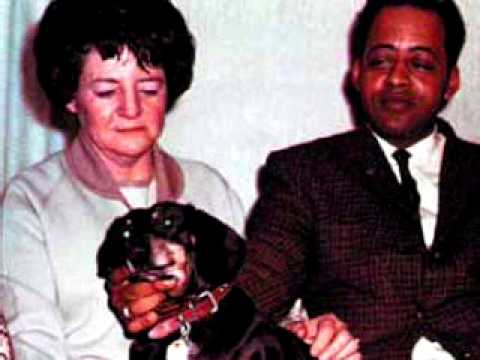
Barney Hill Hypnosis - Complete
The complete archival audio recording of Barney Hill's regressive hypnosis session with psychiatrist Dr. Benjamin Simon, in which Barney recounts his account of being examined aboard the craft.
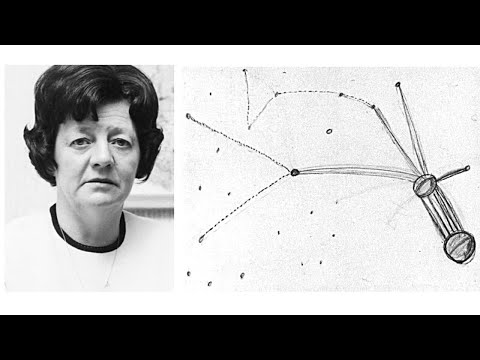
Betty Hill's Hypnosis Session and Lie Detector Test
Archival audio of Betty Hill's regressive hypnosis session conducted by Dr. Benjamin Simon, presented alongside coverage of the polygraph examination the couple underwent to test their credibility.

Can Their Chilling 1961 Experience Be Explained By Science?
BBC's Uncanny podcast walks through the Hills' 1961 New Hampshire encounter, the hypnotic regressions, and Betty's star-map claim, weighing them against proposed scientific and psychological explanations.
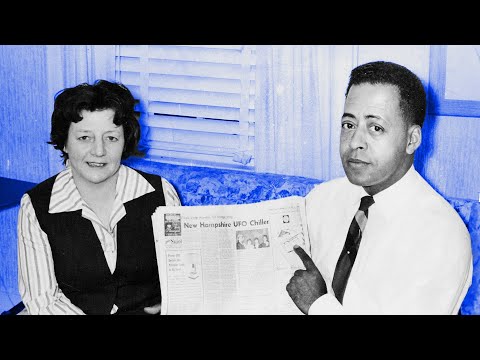
Was It Aliens Or False Memory Effect?
BuzzFeed Unsolved Network revisits the Hills' September 19, 1961 encounter on Route 3 near Indian Head, contrasting the abduction narrative with the false-memory and confabulation hypothesis.
Sources
- Fuller, John G. The Interrupted Journey: Two Lost Hours "Aboard a Flying Saucer", Dial Press, 1966 (excerpted in Look, October 1966).
- Marden, Kathleen, & Friedman, Stanton. Captured! The Betty and Barney Hill UFO Experience, New Page Books, 2007.
- U.S. Air Force, Project Blue Book. Case file 1961-09-8303388 (Lincoln, New Hampshire), including the 1963 summary: "carried as insufficient data... No direction (azimuth) was reported... the object was in all probability Jupiter." National Archives microfilm, via archive.org.
- Webb, Walter N. "A Dramatic UFO Encounter in the White Mountains, N.H." Report to NICAP, October 26, 1961 (later revised). nicap.org
- Simon, Benjamin. Article on the Hill case in Psychiatric Opinion, 1967 (as cited in the Wikipedia article), and his correspondence with Philip J. Klass (in the Sheaffer documents, 2015): his conclusion that the abduction was most likely a fantasy.
- Dickinson, Terence. "The Zeta Reticuli Incident." Astronomy, December 1974; with the following year's correspondence, including Carl Sagan and Steven Soter's reply and David Saunders's defence. rr0.org
- Kottmeyer, Martin. "Entirely Unpredisposed." Magonia, January 1990 (the "Bellero Shield" comparison).
- Colavito, Jason. On The Outer Limits episodes of February 1964 and Barney Hill's sessions, 2012.
- Macdonald, James D. Reconstruction of the Hills' route and the Cannon Mountain beacon, as summarized by Robert Sheaffer and in the Wikipedia article.
- Sheaffer, Robert. Release of 48 pages of Hill–Simon–Klass documents, December 23, 2015.
- Mack, John E. Abduction: Human Encounters with Aliens, Scribner, 1994.
- Menzel, Donald H. & Taves, Ernest H. The UFO Enigma: The Definitive Explanation of the UFO Phenomenon, Doubleday, 1977.
- Milne Special Collections and Archives. "Using the Betty & Barney Hill Collection," University of New Hampshire Library. library.unh.edu
- "Marking History: The Betty and Barney Hill Incident in Lincoln," New Hampshire Public Radio, March 28, 2014. nhpr.org
- "The Abduction of Betty and Barney Hill," Boston Public Library (blog). bpl.org
- Schwarcz, Joe. "An Alien Abduction? Hardly a Convincing One," Office for Science and Society, McGill University, September 1, 2023. mcgill.ca
- "Barney and Betty Hill incident," Wikipedia (used as a pointer to sources only). en.wikipedia.org
Corrections (October 2026)
A fact-check of this page found that several of its strongest claims could not be sourced or were wrong. Removed: Pease AFB "radar logs" confirming fast-moving targets during the encounter, a "1965 FOIA request" (the Freedom of Information Act dates from 1967), and an "ADC radar contacts" log in the sources. The Air Force's own summary of the case mentions no radar and carries it as insufficient data, "in all probability Jupiter." Also removed: "multiple witnesses along Route 3"; investigators who "confirmed" the compass deflection on the car (the test was Betty's own); Webb examining their belongings "within days" (he met them on October 21); scratched binocular eyepieces; hotel records; terrain acoustics; a Hynek "turning point"; a "Registry for Exceptional Human Experiences" founded by Jeffrey Kripal; a 1996 ISO debris disk; amniocentesis as "not yet in clinical use"; Sagan's Cosmic Connection (1973) as a critique of a 1974 article; and a "University of Cincinnati" dress analysis. Corrected: Dr. Simon concluded the abduction was most likely a fantasy derived from Betty's dreams, not that it was "not confabulated"; Marjorie Fish began in 1968, her work was published by Terence Dickinson, and she later rejected her own identification after Hipparcos data; the dress's pink stains were identified by Phyllis Budinger in 2001–2004; Fuller wrote for the Saturday Review. The rating was changed from Credible (68) to Disputed (50); see "Why Disputed."
See something inaccurate? Have additional information or sources?
Suggest an Edit →Last Updated: October 25, 2026