
UFOs and Abductions
Challenging the Borders of Knowledge
Core Thesis
UFOs and Abductions: Challenging the Borders of Knowledge is a 2000 academic essay collection edited by historian David M. Jacobs and published by University Press of Kansas, an eleven-chapter volume arguing that UFO abduction claims deserve serious, methodologically rigorous academic attention rather than reflexive dismissal. The collection brings together three of the field's best-known and most-discussed figures -- Jacobs himself, Budd Hopkins, and Pulitzer Prize-winning Harvard psychiatrist John E. Mack -- alongside contributions from historians, psychologists, and social scientists including Jerome Clark, Michael D. Swords, Thomas E. Bullard, and Michael A. Persinger. This site's own research draws on the collection through two case files: the Amaury Rivera Abduction, and the Betty & Barney Hill Abduction, whose own detailed account of Mack's Harvard tenure inquiry directly engages the same academic-legitimacy question this book's title poses.
About the Author
David M. Jacobs (b. 1942) is a historian and Associate Professor Emeritus of History at Temple University who began researching UFO claims in the mid-1960s as a graduate student at the University of Wisconsin-Madison. His 1975 book The UFO Controversy in America, covered in full by this site's own Essential Reading breakdown, was a well-regarded academic history of Project Blue Book, NICAP, and the Condon Committee, distinct from and predating by over two decades the more contested hypnotic-regression research he would later become known for.
By the time this collection appeared in 2000, Jacobs had already developed, working alongside Budd Hopkins, the "genetic hybridization program" theory into its most systematized form, drawing on over 700 of his own hypnotic-regression sessions -- work detailed in his 1998 book The Threat, covered by this site's own Essential Reading breakdown. This site's own research notes that his methodology later drew serious, well-documented criticism after a research subject using the pseudonym "Emma Woods" released audio recordings of dozens of their 2004-2007 hypnosis sessions, alleging Jacobs had led her toward specific, increasingly extreme confabulated memories -- a controversy that arose after this collection's 2000 publication but that this site's own research treats as directly relevant context for evaluating his broader body of methodological work.
As editor rather than sole author, Jacobs's role in this specific volume differs from his other, more personally argued books: rather than advancing his own hybridization theory as the collection's central thesis, he assembles a genuinely broad range of perspectives -- including Michael Persinger's explicitly skeptical neurological framework, discussed below -- reflecting an editorial choice toward comprehensiveness over advocacy for this particular project, distinct from the more singular argumentative voice of his solo-authored work.
This site's own research treats the collection's other contributors as equally central to understanding its scope: Budd Hopkins, whose own 1996 book Witnessed this site covers in its own Essential Reading breakdown, contributes a chapter specifically on hypnosis methodology in abduction investigation; and John E. Mack, whose own 1994 book Abduction is covered separately by this site's own Essential Reading breakdown, contributes a chapter on how the abduction phenomenon challenges conventional epistemological boundaries -- the same question this collection's own subtitle poses directly.
This site's own research also notes that assembling this specific roster of contributors under a single academic-press cover was, in its own right, a genuine editorial achievement independent of any conclusion about the volume's arguments: bringing figures as methodologically and personally distinct as Hopkins, Mack, and a skeptical neuroscientist like Persinger into one coherent collection required real, sustained editorial coordination on Jacobs's part, work this site's own research treats as a meaningful, if easily overlooked, contribution in its own right, distinct from and independent of his own separately, individually authored chapters within the same volume.
Historical Context & Origins
The collection arrived in 2000, six years after Mack's landmark 1994 investigation of the mass sighting at the Ariel School in Ruwa, Zimbabwe and the resulting fourteen-month Harvard Medical School peer-review inquiry into his research -- an inquiry this site's own Betty & Barney Hill Abduction case file documents in detail, including its ultimate finding that Mack's research fell within the bounds of acceptable academic investigation while expressing concern about his interpretive framework. That real, independently documented institutional review gives this collection's central "challenging the borders of knowledge" framing a concrete, recent case study rather than only an abstract methodological claim.
The book's publication under a genuine academic press -- University Press of Kansas, an established university publisher with a broader catalog spanning history, political science, and military studies -- also distinguishes it structurally from most UFO-abduction literature this site's own research has covered, which more typically comes from trade publishers or small independent presses aimed at a general or specialist UFO-research readership rather than an academic one.
This site's own research situates the collection's chronological range as itself a useful summary of the field's own history: contributor Michael D. Swords covers UFOs during the early Cold War era, Jerome Clark examines the extraterrestrial hypothesis's own early development, and Thomas E. Bullard addresses how the phenomenon has been mythologized over time -- giving the volume a genuine historical breadth beyond its more focused abduction-specific chapters from Hopkins, Jacobs, and Mack.
The book's 2000 publication also predates by several years the more recent, considerably higher-profile wave of institutional UAP interest -- the 2017 New York Times UAP reporting, the Pentagon's UAP Task Force, and subsequent congressional hearings this site has covered extensively elsewhere -- making this collection's own explicit call for academic legitimacy a genuinely earlier data point in a debate that would gain significant new institutional traction roughly two decades later.
This site's own research also situates the collection within the specific institutional risk environment its own contributors describe firsthand: Ron Westrum's chapter on natural scientists engaging with the UFO phenomenon, and the broader context of Mack's own Harvard tenure inquiry, both document a real, recurring professional cost associated with serious academic engagement on this subject during the period this collection was assembled -- context that makes the volume's own explicit call for legitimacy read less as an abstract intellectual position and more as a direct response to genuine, documented career risk several of its own contributors had personally experienced or witnessed among colleagues.
Core Arguments & Key Concepts
The collection's central, unifying argument, carried by its subtitle, is that UFO and abduction claims constitute a legitimate subject for rigorous academic study using the normal tools of history, psychology, and the social sciences, rather than a topic properly excluded from serious scholarly inquiry by default. Stuart Appelle's opening chapter, "Ufology and Academia: The UFO Phenomenon as a Scholarly Discipline," states this argument most directly, while Ron Westrum's chapter on "Six Natural Scientists and the UFO Phenomenon" documents specific individual cases of scientists engaging with the subject despite professional risk.
A second, more methodologically focused argument runs through Don C. Donderi's chapter proposing alternative evidentiary frameworks -- borrowing standards from law and from other scientific disciplines -- for evaluating UFO evidence that don't map cleanly onto conventional laboratory-replication science, a genuinely useful contribution this site's own research treats as relevant to its own case-by-case evidentiary methodology.
A third argument, carried specifically by Hopkins's chapter on hypnosis methodology and Jacobs's own chapter on the abduction controversy's history, defends hypnotic regression as a legitimate, if imperfect, investigative tool for abduction research -- an argument this site's own research treats with the same disclosed caution it applies elsewhere to hypnotic-regression-based testimony generally, particularly given the later, well-documented "Emma Woods" controversy involving Jacobs's own subsequent regression work.
A fourth, explicitly countervailing argument comes from Michael A. Persinger's chapter, "The UFO Experience: A Normal Correlate of Human Brain Function," which proposes that abduction experiences may arise from ordinary neurological processes -- consistent with Persinger's broader, independently documented research program on temporal-lobe activity and anomalous experience. This site's own research treats the collection's decision to include Persinger's explicitly skeptical neurological framework alongside Hopkins's and Mack's more experience-affirming chapters as a genuine strength: presenting real, substantive disagreement within a single volume rather than only a unified advocacy position.
A fifth argument, implicit in Mack's own contributed chapter title -- "How the Alien Abduction Phenomenon Challenges the Boundaries of Our Reality" -- treats the phenomenon's resistance to easy categorization as itself philosophically significant, independent of any final determination about its underlying physical cause, a framing consistent with the more experiential, less strictly evidentiary approach this site's own research has noted characterizes Mack's broader body of work.
Key Cases & Evidence Discussed
The Amaury Rivera Abduction (May 14, 1988) is cited on this site alongside this collection as a case whose own physical claims and photographic evidence sit within the broader evidentiary questions the book's contributors -- particularly Donderi's alternative evidentiary-framework chapter -- address directly. This site's own case-file research documents that later investigation concluded Rivera's photographs likely depicted scale models, a conclusion this site's research treats as the case's most probable explanation.
The Betty & Barney Hill Abduction (1961), the foundational case in American abduction literature, connects to this collection specifically through John Mack's own contribution and his separately documented Harvard tenure investigation, discussed at length in this site's own case file. That case file notes Mack's own methodological position on cultural contamination in abduction testimony -- his conclusion that his subjects' accounts contained specific, consistent details not present in widely available public descriptions of the phenomenon -- directly informed by the same broader academic-legitimacy debate this collection's title addresses.
Critical Reception & Controversies
This site's research located a real Goodreads listing for this title (book/show/685160.UFOs_and_Abductions) showing an average rating of 3.81 out of 5 from 16 total ratings -- a modest but genuine sample this site's own established practice discloses honestly, larger than most niche UFO titles checked this session but still well short of a large-sample consensus.
This site's research also attempted to verify an Amazon rating for this title, but Amazon's bot-detection system blocked automated requests to the listing during this session, the same persistent pattern encountered across every single title this site's research checked this session without exception; per this site's own Amazon Rating Display Protocol, this gap is disclosed honestly here rather than fabricated or silently omitted.
The University Press of Kansas's own promotional material for the collection cites endorsements from scholars affiliated with the Smithsonian Institution, Stanford University, and the U.S. Naval Observatory, describing the volume as "timely, fascinating, and very important" and crediting it with helping "legitimize this controversial field of inquiry" -- genuine institutional endorsements this site's own research notes as unusual for a UFO-abduction title, consistent with the volume's academic-press publication and its explicit goal of establishing scholarly legitimacy.
This site's own research treats the collection's critical standing as inseparable from the individually varied reputations of its contributors: Hopkins's and Jacobs's hypnotic-regression methodologies carry well-documented, disclosed controversy this site covers in depth elsewhere, while contributors like Swords, Clark, and Bullard occupy a more conventionally academic-historian role within UFO studies specifically. Persinger's inclusion, arguing for a skeptical neurological explanation, further complicates any characterization of the volume as advocacy literature for the reality of alien contact specifically, rather than a genuine, internally varied academic survey of the phenomenon's evidentiary and psychological dimensions.
This site's own research also notes that the collection's mixed reputation among its contributors cuts both ways for readers approaching it fresh: a reader drawn in by the credibility of its university-press publication and its genuine academic endorsements should understand that several individual chapters carry the same methodological baggage this site's own research discloses elsewhere for Hopkins's and Jacobs's solo-authored work, while a reader skeptical of the subject entirely should note that Persinger's and several historians' contributions are not, in fact, advocacy pieces at all.
Influence & Legacy
This collection's clearest legacy on this site specifically runs through its direct, personal connections to two other essential-reading entries: Witnessed, Budd Hopkins's own 1996 book, and Abduction, John Mack's 1994 book -- both contributors whose separately reviewed solo work this site has already covered, making this collection a useful single-volume complement bringing their arguments into direct dialogue with skeptical and historical perspectives.
Within the broader landscape of academic engagement with UFO claims this site's own research has surveyed, this collection represents a genuinely distinct category: a peer-adjacent, university-press-published volume explicitly organized around the question of institutional legitimacy, rather than a single researcher's individual investigative account or a trade-published survey aimed at a general readership.
The book's inclusion of Michael Persinger's skeptical neurological chapter alongside Hopkins's and Mack's more experience-affirming contributions also demonstrates a genuine editorial commitment to presenting the field's real internal disagreements rather than a unified advocacy position -- a structural choice this site's own research treats as a model worth noting for how a single volume can house serious, substantively opposed views without resolving them artificially.
This site's own research also notes the collection's continued relevance to more recent institutional UAP developments: its core 2000-era argument for treating UFO claims as a legitimate subject of serious academic and governmental inquiry anticipates, by roughly two decades, the considerably higher-profile institutional shift this site has documented in its own coverage of the Pentagon's UAP Task Force and subsequent congressional hearings. Read against that later shift, the collection's own arguments for academic legitimacy look considerably less speculative in hindsight than they may have to a general readership encountering them for the first time in 2000, a full generation before mainstream institutions began taking comparable positions.
Finally, this site's own research treats the book's mixed roster of contributors -- ranging from methodologically contested figures like Hopkins and Jacobs to more conventionally academic historians like Swords and Clark to an explicitly skeptical neuroscientist in Persinger -- as itself a useful illustration of how genuinely heterogeneous serious engagement with UFO claims already was by 2000, well before the subject's more recent mainstream institutional attention.
The Book
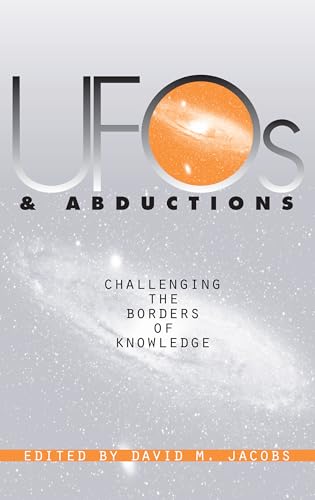
As an Amazon Associate, OverClassified may earn from qualifying purchases made through this link, at no extra cost to you.
Why This Is Essential Reading
UFOs and Abductions: Challenging the Borders of Knowledge earns its place on this list as a genuine, university-press-published attempt to bring UFO and abduction claims into serious academic dialogue, assembled at a real and unusual editorial cost given how methodologically and personally distinct its own contributors were from one another, assembling contributors whose views this site's own research finds genuinely varied rather than uniformly advocacy-driven -- from Budd Hopkins's and John Mack's more experience-affirming chapters to Michael Persinger's explicitly skeptical neurological framework. Its direct connections to this site's own Witnessed and Abduction essential-reading entries, and to the real, documented Harvard inquiry this site's own Betty & Barney Hill Abduction case file covers in detail, make it a useful single-volume anchor for understanding how seriously -- and how contentiously -- the academic legitimacy question this book's title poses was already being argued a full generation before the subject's more recent institutional attention, by a genuinely diverse set of scholars this site's own research has found no comparably assembled single volume replicating since.
Related Cases & Theories
Essential Viewing

Sources Cited
- Jacobs, David M., ed. UFOs and Abductions: Challenging the Borders of Knowledge. University Press of Kansas, 2000 (ISBN 978-0-7006-1032-7, cited here).
- "John Mack: 1994 Interview on Alien Abduction and Human Encounters." GBH Archives, YouTube (archival public-broadcasting footage of contributor John Mack discussing his abduction research in the same period this collection was assembled; video verified via oEmbed). youtube.com
- This site's own resources library: Full Reading List, where this book is cited on this site's own Amaury Rivera and Betty & Barney Hill case files.
- This site's own key-figures entry: David M. Jacobs, for his full biography and site-wide connections.
- This site's own key-figures entry: Budd Hopkins, contributor and subject of this site's own Witnessed essential-reading entry.
- This site's own key-figures entry: John E. Mack, contributor and subject of this site's own Abduction essential-reading entry.
- This site's own case file: The Amaury Rivera Abduction.
- This site's own case file: Betty & Barney Hill Abduction, documenting Mack's own Harvard tenure inquiry in detail.
- This site's own essential-reading entry: The Threat, Jacobs's own 1998 hybridization-program book.
- This site's own essential-reading entry: The UFO Controversy in America, Jacobs's earlier, well-regarded 1975 academic history.
- University Press of Kansas, publisher's page for UFOs and Abductions, consulted for table of contents and editorial endorsements. kansaspress.ku.edu
- Goodreads listing, book/show/685160.UFOs_and_Abductions (rating data cited here).
Have corrections, additional research, or peer-reviewed sources? Help improve this entry.
Suggest an Edit