
Abduction
Human Encounters with Aliens
Core Thesis
Abduction: Human Encounters with Aliens is Harvard psychiatrist John E. Mack's clinical account of more than a hundred self-identified "experiencers" he interviewed and, in most cases, hypnotically regressed between 1990 and 1994 — distilled in the book itself into thirteen detailed case narratives drawn from that larger pool. Mack's central claim was narrower than his critics often assumed and broader than his supporters sometimes wanted: his clinical screening found no meaningful pattern of psychopathology among his subjects, which led him to conclude that whatever was generating these strikingly consistent, emotionally overwhelming accounts, it was not delusion, fraud, or ordinary mental illness. Rather than adjudicating whether the encounters were literal physical events, Mack increasingly framed the phenomenon as "ontologically shocking" — something that did not fit comfortably into either a purely physical or a purely psychological category, and that Western materialist science, in his view, lacked the conceptual vocabulary to properly investigate. That refusal to simply diagnose his subjects away, combined with his unmatched academic pedigree, is what made the book impossible for either camp — believers or skeptics — to fully claim, and what turned its publication into a genuine institutional crisis at Harvard Medical School within months of its release.
About the Author
John E. Mack was born October 4, 1929, in New York City. He graduated Phi Beta Kappa from Oberlin College in 1951 and earned his M.D. cum laude from Harvard Medical School in 1955. After training and practicing psychiatry through the early 1960s, he returned to Harvard Medical School in 1964, founded the psychiatry department at Cambridge Hospital and served as its chief through the 1970s, and became a full professor of psychiatry in 1972, a position he held for the rest of his life. Long before UFOs entered his work, Mack had already built a serious, independently distinguished academic career studying adolescent psychology, teenage suicide, and the psychology of dreams, publishing more than 150 scientific articles and eleven books.
Mack's outside-the-UFO-field credibility rested on one achievement above all others: in 1977 he won the Pulitzer Prize for Biography for A Prince of Our Disorder: The Life of T.E. Lawrence, a psychobiography of Lawrence of Arabia. That prize, and the psychiatric-biography method behind it — reading a subject's own words and testimony closely, on the assumption that a person's account of their own extraordinary experience carries real evidentiary and psychological weight — is the direct methodological throughline into his later abduction work, a connection Mack's own defenders and critics alike have pointed to as either his greatest strength or his central blind spot depending on which side they were arguing.
In 1983 Mack founded the Center for Psychology and Social Change in Cambridge, Massachusetts, and by 1990 he had begun clinically interviewing people who described being abducted by non-human beings, eventually working with more than a hundred such "experiencers" over four years of research that fed directly into this book. In June 1992 he co-chaired, alongside MIT physicist David E. Pritchard, the Abduction Study Conference held at MIT — a five-day gathering of researchers, clinicians, and abductees, including Budd Hopkins and David Jacobs, whose nearly 150 transcribed presentations were later published as Alien Discussions (1995) — the closest the field came in this era to a formal academic convening. In 1993, with $250,000 in annual funding for four years from philanthropist Laurance Rockefeller, Mack founded the Program for Extraordinary Experience Research (PEER) at Cambridge Hospital, an organization built around supportive, non-pathologizing clinical engagement with anomalous experience; PEER operated until 2002 and was succeeded by the John E. Mack Institute, which continues to archive and promote his work.
Seven months after this book's April 1994 publication, Mack undertook what became his single most consequential field investigation: in November 1994 he traveled to Ruwa, Zimbabwe, with researcher Dominique Callimanopulos to investigate the mass sighting reported by dozens of children at the Ariel School two months earlier. Over two days he and Callimanopulos interviewed close to fifty of the children individually, without hypnosis, and concluded their accounts showed no evidence of coordinated deception, mass hysteria, or psychiatric disturbance — a case this book does not itself contain, since it postdates the book's publication, but one that became central to his subsequent public reputation and to his 1999 follow-up, Passport to the Cosmos: Human Transformation and Alien Encounters (Crown), which pushed his framework further toward treating the abduction experience as continuous with shamanic and mystical states of consciousness — a framing this site's DMT & Psychedelic Contact Hypothesis theory file draws on directly.
Mack died on September 27, 2004, struck by a drunk driver near the junction of Totteridge Lane and Longland Drive in London while walking home after dinner during a conference on the legacy of T.E. Lawrence — the same subject that had won him his Pulitzer a generation earlier. He was pronounced dead at the scene. The driver, Raymond Czechowski, pleaded guilty to careless driving while under the influence of alcohol and was sentenced to six months' imprisonment and a three-year driving ban; Mack's family wrote the court requesting leniency, stating they held no ill will once they understood the collision was accidental rather than malicious. In 2021, journalist Ralph Blumenthal — a former New York Times reporter who also co-broke the 2017 Pentagon UAP-program story — published The Believer: Alien Encounters, Hard Science, and the Passion of John Mack (High Road Books/University of New Mexico Press), a full posthumous biography built from Mack's own archives, journals, and psychiatric notes, which renewed public attention on Mack's career just as the government UAP-disclosure wave was bringing a new cohort of credentialed insiders into public view.
Historical Context & Origins
By the time Mack began interviewing self-identified abductees in 1990, hypnotic regression was already the field's dominant investigative method, and had been for nearly three decades. Psychiatrist Benjamin Simon's 1964 hypnosis sessions with Betty and Barney Hill had first modeled the technique as a tool for recovering an abduction narrative, and artist-investigator Budd Hopkins's casework through the 1980s, beginning with his 1981 book Missing Time, had built an entire private-investigator ecosystem around it well before a Harvard-credentialed psychiatrist arrived to lend the method institutional legitimacy it had never previously had.
Mack's entry into the field therefore landed at a specific and, in retrospect, precarious moment for hypnosis as a memory-recovery tool. Through the late 1980s and early 1990s, American psychology and psychiatry were consumed by the "memory wars" — a bitter, high-stakes dispute over recovered-memory therapy in cases of alleged childhood sexual abuse and, at its most extreme, the Satanic-ritual-abuse panic, both of which turned substantially on whether hypnotically or therapeutically "recovered" memories reflected real events or were confabulated under suggestion. Cognitive researchers including Elizabeth Loftus were, by the early 1990s, already publishing experimental work demonstrating that false memories could be implanted through suggestive questioning alone. Mack's book arrived directly into that argument, applying the same recovery technique to a claim — literal alien contact — where, unlike contested child-abuse allegations, the underlying reality was not seriously in dispute among scientists, which is precisely what let critics use his abductees as a clean test case against hypnotic regression generally.
The book's own immediate professional context was the June 1992 Abduction Study Conference at MIT, which Mack co-chaired with physicist David E. Pritchard specifically to give the subject a formal interdisciplinary hearing — convening researchers, clinicians, folklorists, and abductees themselves rather than leaving the subject to popular paperbacks alone. Abduction: Human Encounters with Aliens, published by Scribner on April 20, 1994, arrived less than two years later as Mack's own full public statement of the clinical framework he had been developing across that period: a synthesis, aimed at a general readership, of four years of interviews with more than a hundred experiencers, distilled into thirteen detailed case narratives.
Core Arguments & Key Concepts
Mack's first and most load-bearing claim was diagnostic: across his clinical screening of dozens of subjects, he found no significant pattern of psychosis, dissociative disorder, or other psychiatric illness that could account for the abduction accounts. This was the foundation everything else in the book rested on — Mack was explicit, repeatedly and publicly, that he was not dealing with mentally ill people telling fabricated stories, and that conventional psychiatric explanations simply did not fit the population he had actually examined.
His second claim concerned method. Mack relied heavily on hypnotic regression to elicit detailed abduction narratives, and in the book's appendix he directly acknowledged the discipline's own warnings that hypnosis can produce inaccurate or confabulated memories. His counter-argument was that, in his experience, abduction material recovered under hypnosis closely paralleled what the same subjects reported through ordinary conscious recall — and that independent subjects, many unknown to each other, converged on strikingly similar physical and narrative details. Critics, discussed at length below, argued this consistency was better explained by a shared cultural script circulating through UFO literature and Mack's own leading questions than by a shared underlying reality.
Mack's third and most theoretically ambitious claim was his refusal to resolve the phenomenon into either a literal physical event or a purely psychological one. He described the abduction experience as "ontologically shocking" — a genuine rupture in a subject's assumptions about the nature of reality that Western materialist science, in his account, lacked the conceptual tools to properly categorize, let alone explain away. This is the move that most distinguished Mack from a straightforward believer like Hopkins: Mack was less interested in proving abductions were extraterrestrial spacecraft visitations than in insisting the experiences were real in whatever sense mattered clinically, and that the question of their ultimate physical status could be held open indefinitely without invalidating the subjects' distress or the phenomenon's significance.
His fourth claim was therapeutic and, ultimately, the one with the most lasting institutional influence: Mack argued that abductees benefited from a non-pathologizing clinical stance — being met with acceptance and structured exploration rather than diagnosis and dismissal — and that many of his subjects reported the encounters, however terrifying, as ultimately transformative, reshaping their sense of ecological and cosmic connectedness. That framework, formalized through PEER beginning in 1993, treated the abduction narrative less as a symptom to be resolved than as an experience to be integrated, a therapeutic model with echoes well beyond ufology in the broader field of "anomalous experience" support.
Key Cases & Evidence Discussed
Abduction is organized around Mack's own clinical population rather than a catalogue of named historical incidents: its evidentiary core is thirteen detailed, pseudonymous case narratives drawn from more than a hundred people Mack interviewed between 1990 and 1994, so its clearest connections to this site's own case-file library run through the researchers and conferences the book represents rather than through specific cases the text itself analyzes.
The book's most direct professional touchstone is the Abduction Study Conference Mack co-chaired at MIT in June 1992 with physicist David E. Pritchard — a five-day interdisciplinary gathering, later published as the proceedings volume Alien Discussions (1995), that brought Mack into direct professional contact with Budd Hopkins, David Jacobs, MUFON investigator David Webb, and dozens of the field's other leading researchers and self-identified experiencers.
This site's own case file on the Allagash Waterway Abduction (Case File #045, 1976) documents that same 1992 MIT conference directly, noting it was "chaired by physicist David E. Pritchard and co-chaired by Harvard psychiatrist John E. Mack" and that the case sat squarely within the ferment surrounding it; this exact edition of Abduction (ISBN 0345393007) is cited on that case file, and on the Buff Ledge Encounter (Case File #087) file as well, as comparative context for evaluating hypnotically recovered testimony against the wider pattern Mack's clinical population also displayed.
The book itself predates and does not discuss Mack's most famous single field investigation, the September 1994 mass sighting at the Ariel School (Case File #010) in Ruwa, Zimbabwe, which he investigated that November, seven months after publication, without hypnosis and with markedly different methodology than the book's hypnosis-centered case studies — a distinction worth holding onto precisely because the site's own citation record (a later 2007 Scribner reissue of this same title, a bibliographically distinct edition from the one cited here) links this title to that case file's bibliography regardless. This entry's About the Author section above covers that Zimbabwe investigation directly.
The 2007 reissue is likewise cited on the Prospect Kentucky Abduction (Case File #024) case file as "comparative clinical frameworks for missing-time reports" — the same general use this entry's directly-cited 1995 edition serves on the Allagash and Buff Ledge files, underscoring that Mack's clinical framework, more than any single case he personally investigated, is what this site's own case files consistently reach for when a hypnotically recovered abduction narrative needs a documented clinical comparison point.
Critical Reception & Controversies
Trade and popular reception at publication leaned favorable to genuinely enthusiastic, driven substantially by Mack's own credentials. The New York Times Book Review called the book "fascinating, suggestive, and even inspiring," a line Ballantine printed directly on the cover of the paperback edition cited here. Kirkus Reviews, in its March 1, 1994 notice, was more measured: it credited Mack's "impressive credentials" and "sophisticated interpretation" while stating plainly that the reviewer remained "reluctant to discard several centuries of accumulated knowledge to accommodate" what the review characterized as a psychological rather than literal truth — a fair summary of how much of the scientifically literate press ultimately positioned the book.
The book's publication triggered a genuine, unprecedented institutional crisis at Harvard Medical School. In May 1994, Dean Daniel C. Tosteson appointed a peer-review committee — chaired by Dr. Arnold "Bud" Relman, the former editor of The New England Journal of Medicine — to examine Mack's clinical and research methods, the first time in Harvard's history that a tenured professor faced this kind of formal peer inquiry. The committee's draft report was sharply critical on procedural grounds, warning at one point that communicating to a patient that a "close encounter" experience "might well have been real" was "professionally irresponsible." After fourteen months, Tosteson issued a public statement on August 3, 1995, that reaffirmed "Dr. Mack's academic freedom to study what he wishes and to state his opinions without impediment" and confirmed he remained "a member in good standing of the Harvard Faculty of Medicine" — no sanction, no tenure action — while still pressing him on clinical-research standards, including whether his work with experiencers required the kind of formal human-subjects protocol normally mandated for research rather than ordinary clinical care. Attorneys Roderick MacLeish Jr. and Daniel Sheehan represented Mack through the inquiry.
That formal outcome did not erase real, lasting reputational cost. Relman himself told the Los Angeles Times in 2001 that Mack was "not taken seriously by his colleagues anymore" — a blunt assessment, from the very academic who had chaired the committee that cleared him of sanction six years earlier, that the investigation's chilling effect persisted well past its official resolution even though no disciplinary action was ever taken.
The most direct and damaging methodological challenge came from inside Mack's own research population. Donna Bassett, a freelance writer, posed as an abductee beginning in September 1992, was hypnotized by Mack three times, and exposed her infiltration in Time magazine's April 25, 1994 cover story "The Man From Outer Space," by James Willwerth, published the same month as the book itself. Bassett reported that Mack conducted sessions in a darkened room at his own home rather than a clinical setting, supplied her with UFO literature before hypnosis, and asked leading questions; she and fellow subjects, she said, coined the term "overlay" for the way participants embellished their accounts over successive sessions. Bassett repeated her account at a 1994 conference of the Committee for the Scientific Investigation of Claims of the Paranormal (CSICOP), where she directly confronted Mack alongside longtime UFO skeptic Philip J. Klass.
Cognitive-psychology critics pressed the same structural concern from the outside. Memory researcher Elizabeth Loftus of UC Irvine said Mack "underestimated his own role in creating the recollections and beliefs" of his subjects, and anomalistic psychologist Chris French of Goldsmiths, University of London, later summarized the core problem with hypnotic regression generally: "you get pretty much what you expect to get." Skeptics Robert A. Baker and Robert Sheaffer separately argued and publicly demonstrated that hypnotized subjects were highly suggestible and could be led to "recall" entirely fabricated events. This is precisely the methodological weakness Harvard psychologist Susan A. Clancy would later address with peer-reviewed cognitive-science rigor in her own 2005 study, Abducted: her sleep-paralysis-plus-cultural-scripting-plus-hypnotic-suggestion model was built, in significant part, as a direct scientific answer to exactly the kind of hypnosis-dependent casework Mack's book represents, and this site's own entry on her book treats Mack's investigative legacy as the implicit target of her entire argument.
Influence & Legacy
Mack's most durable institutional legacy is the clinical model PEER formalized between 1993 and 2002: a supportive, non-diagnostic therapeutic stance toward people reporting anomalous experiences, treating the encounter as something to be integrated rather than a symptom to be eliminated. The John E. Mack Institute has continued that work since his death, archiving his research and case material and promoting the same experiencer-centered framework to a new generation of clinicians and researchers.
The book's direct sequel, Passport to the Cosmos (1999), pushed Mack's framework toward an explicitly consciousness-centered interpretation, drawing parallels between abduction accounts and shamanic and psychedelic states — a connection this site's own DMT & Psychedelic Contact Hypothesis theory file cites directly as part of its evidentiary base, extending Mack's influence well past the 1994 book that first established his reputation.
Mack's Ariel School investigation has itself continued generating fresh attention decades later: the 2022 documentary Ariel Phenomenon, directed by Randall Nickerson, located and re-interviewed the school's child witnesses as adults and restored Mack's original 1994 interview tapes, using his fieldwork as primary-source material for an audience that mostly encountered the case for the first time through the film rather than through Mack's own writing.
Ralph Blumenthal's 2021 biography The Believer renewed serious public and journalistic interest in Mack specifically because its publication landed in the middle of the U.S. government's 2017–2021 UAP-disclosure wave, a period that brought a new cohort of credentialed scientists and former officials into public UAP discourse under conditions strikingly similar to the institutional caution Mack had navigated decades earlier — the same broader realignment this site's own entry on Diana Walsh Pasulka's American Cosmic documents from the scientist-insider side. The Los Angeles Review of Books's own 2021 reassessment, reviewing Blumenthal's biography, situated Mack retrospectively as a genuine forerunner of that later, more institutionally comfortable engagement with the UAP subject.
The Harvard investigation itself remains a frequently cited landmark case in discussions of academic freedom and tenure protection for researchers working on unconventional or reputationally risky subjects — a documented instance in which a major research university investigated a tenured faculty member's public claims and ultimately declined to discipline him, even while making clear through both its committee's language and Relman's later remarks that the professional cost of the work was real regardless of the formal outcome.
The Book
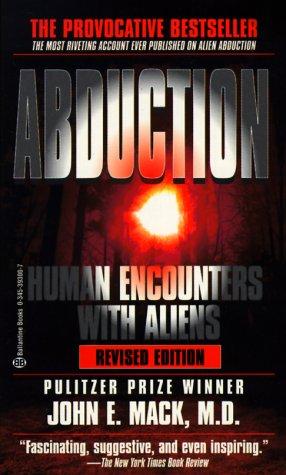
As an Amazon Associate, OverClassified may earn from qualifying purchases made through this link, at no extra cost to you.
Why This Is Essential Reading
Abduction: Human Encounters with Aliens earns its place on this list because no other book here was written by someone with John E. Mack's specific combination of credentials and institutional exposure: a Pulitzer Prize-winning Harvard Medical School professor of psychiatry who took the abduction phenomenon seriously enough clinically to trigger the first tenured-faculty peer-review investigation in his university's history — and who came through it with his academic freedom formally intact, even as his own committee chairman later conceded, years afterward, that his standing among colleagues never fully recovered. Mack's refusal to diagnose his subjects as mentally ill, paired with his equally firm refusal to simply endorse their accounts as literal extraterrestrial contact, is the book's genuine intellectual contribution: it treats the abduction experience as clinically and humanly real without resolving what, ultimately, it is. That same refusal is exactly where this entry's Critical Reception section shows the book's real vulnerability — Donna Bassett's undercover exposé of his interview methods, and the broader hypnotic-suggestion critique from Elizabeth Loftus, Chris French, and Robert Baker, describe a research design that could not reliably distinguish a recovered memory from a collaboratively constructed one. Read against, rather than instead of, those documented limitations — and ideally read alongside Susan Clancy's Abducted, the peer-reviewed cognitive-science rebuttal this book's methodology helped provoke a decade later — Abduction is essential as the fullest, most credentialed statement of the position that abductees are neither liars nor lunatics, and as a case study, entirely on its own terms, of how far institutional science was and was not willing to follow that claim.
Related Cases & Theories
Essential Viewing

John Mack: 1994 Interview on Alien Abduction and Human Encounters
GBH Archives — A 1994 broadcast interview with Mack discussing this book on its release, his clinical approach to abductees, and his refusal to reduce the phenomenon to either straightforward belief or straightforward diagnosis, verified via YouTube oEmbed before inclusion.

Alien Abductions and the Passion of John Mack with Ralph Blumenthal
ThinkingAllowedTV — Ralph Blumenthal, author of the 2021 biography The Believer, discusses Mack's career, the Harvard investigation, and his research legacy on New Thinking Allowed, verified via YouTube oEmbed before inclusion.
Sources Cited
- Mack, John E. Abduction: Human Encounters with Aliens. Charles Scribner's Sons, 1994; Ballantine Books pbk., 1995 (ISBN 0345393007, cited here). openlibrary.org
- "John E. Mack." Wikipedia (biography: education, Harvard career, Pulitzer Prize, Harvard investigation, death). en.wikipedia.org
- "Biography of John E. Mack, M.D." John Mack Institute (career timeline, Center for Psychology and Social Change, PEER founding). johnemackinstitute.org
- "Program for Extraordinary Experience Research (PEER)." John Mack Institute (PEER's founding, Rockefeller funding, 1993–2002 operation). johnemackinstitute.org
- "Mack's Research Is Under Scrutiny." The Harvard Crimson, April 17, 1995 (contemporary reporting on the peer-review committee). thecrimson.com
- "HMS Takes No Action Against 'UFO Doctor'." The Harvard Crimson, August 4, 1995 (reporting on the investigation's conclusion and Dean Tosteson's statement). thecrimson.com
- "'Kooky' or not, Harvard won't censure its 'UFO professor'." The Baltimore Sun, August 4, 1995 (wire coverage of the investigation's outcome). baltimoresun.com
- Willwerth, James. "The Man From Outer Space." Time, April 25, 1994 (Donna Bassett's undercover exposé of Mack's interview methods). time.com
- "The Harvard Professor & the UFOs." Psychology Today, March 1994 (contemporary profile of Mack and his research methods). psychologytoday.com
- "ABDUCTION." Kirkus Reviews, March 1, 1994 (contemporary trade review). kirkusreviews.com
- "Professor of Psychiatry at HMS Mack Dies at 74." Harvard Gazette, September 2004 (obituary, death circumstances). news.harvard.edu
- Blumenthal, Ralph. The Believer: Alien Encounters, Hard Science, and the Passion of John Mack. High Road Books / University of New Mexico Press, 2021 (posthumous biography drawn from Mack's archives and papers). books.google.com
- "John E. Mack and the Unbelievable UFO Truth." Los Angeles Review of Books, 2021 (reassessment of Mack's career on the occasion of Blumenthal's biography). lareviewofbooks.org
- This site's own case file: The Ariel School Encounter, Mack's most consequential personal field investigation, undertaken seven months after this book's publication.
- This site's own case file: Allagash Waterway Abduction, which documents the 1992 MIT Abduction Study Conference Mack co-chaired and cites this exact edition directly.
- This site's own case file: Buff Ledge Encounter, which likewise cites this exact edition.
- This site's own essential-reading entry: Abducted by Susan A. Clancy, the peer-reviewed false-memory rebuttal this book's hypnosis methodology helped provoke.
- This site's own resources library: Full Reading List, where this 1995 Ballantine paperback edition (ISBN 0345393007) is cited across 2 case-file pages.
Have corrections, additional research, or peer-reviewed sources? Help improve this entry.
Suggest an Edit