
The UFO Controversy in America
The First Academic History of American Ufology
Core Thesis
The UFO Controversy in America is a revised University of Wisconsin–Madison Ph.D. dissertation in American intellectual history, published by Indiana University Press with a foreword by J. Allen Hynek, and it argues its case almost entirely through institutional chronology rather than through any claim about whether UFOs are real: from the 1896–97 airship wave and the June 1947 Kenneth Arnold sighting through Project Sign, Project Grudge, Project Blue Book, the Robertson Panel, the rise of the civilian National Investigations Committee on Aerial Phenomena (NICAP), and the Condon Committee's 1968 report, David M. Jacobs traces UFOs as a recurring test case in how American government, science, and media institutions handle a claim that will not go away and cannot be definitively settled. Jacobs's own explicit framing, carried into the book from his dissertation, treats the phenomenon's reality as secondary to the sociopolitical fact of the controversy itself — making this less a book about flying saucers than a book about how mid-century American institutions manage contested, low-status claims, a distinction that separates it sharply from the abduction-focused, hypnosis-based books Jacobs would write two decades later.
About the Author
David M. Jacobs was born August 10, 1942, and began collecting Wisconsin UFO sighting reports for civilian research organizations after arriving at the University of Wisconsin–Madison in 1966 to pursue graduate study in American history. He completed his doctoral dissertation in intellectual history in 1973 under a diplomatic-history-focused department, having switched his original dissertation topic — women in pre-1915 American films — to the UFO controversy instead. According to his own official biography, the resulting Ph.D. was only the second ever granted in the United States on a UFO-related theme. Indiana University Press published a revised version of that dissertation as The UFO Controversy in America in 1975, with a foreword contributed by astronomer and former Project Blue Book scientific consultant J. Allen Hynek — a significant early endorsement, since Hynek's own transition from Blue Book insider to the field's most credentialed advocate for serious scientific study was itself still unfolding in the mid-1970s.
Jacobs moved to Temple University in Philadelphia, where he spent 36 years as a history professor specializing in twentieth-century American popular culture, directed the university's American Studies program, and taught "UFOs in American Society" for more than 25 years — by his own account, and by contemporary press coverage, the only university-accredited course of its kind in the country. His UFO research came at a real professional cost: Jacobs has said he was passed over for promotion to full professor twice and attributed it directly to his subject matter, telling The Philadelphia Inquirer in 2014, "I was not rewarded for my views," and recalling that a university donor once threatened to withdraw support over his continuing to teach the course. He retired from Temple in 2011.
Beginning in 1986, roughly a decade after this book's publication, Jacobs shifted his own research method entirely: he began conducting hypnotic-regression interviews with self-described alien abductees, eventually logging more than 1,200 sessions with upwards of 150 subjects over three decades, and directed the privately run International Center for Abduction Research. That research produced Secret Life (1992), The Threat (1998), and Walking Among Us (2015), each arguing for a progressively more elaborate covert alien–human hybridization program — conclusions built, working alongside Budd Hopkins, on the same hypnotic-regression methodology mainstream memory science regards as unreliable and prone to producing confabulated rather than recovered memories. That later work drew serious, specific ethical criticism after a research subject using the pseudonym "Emma Woods" released audio recordings of their 2004–2007 hypnosis sessions and publicly alleged Jacobs had led her toward increasingly extreme, confabulated claims — a controversy this site's own key-figures entry on Jacobs documents directly, and one that sits in real tension with the same historian's earlier, far more measured scholarly reputation.
That tension is the honest starting point for this article: The UFO Controversy in America predates the abduction research and the Emma Woods controversy by roughly a decade and belongs to a different phase of Jacobs's career entirely — the work of an intellectual historian cataloguing how American institutions managed a contested claim, not yet the work of a hypnotist building a hybridization theory from regression testimony. The book's own reputation, addressed on its own terms below, should not be read as vindicating or excusing what came after it, nor should the later controversy be read backward into a 1975 academic monograph that a foreword-writing Hynek, an academic press's peer-review process, and subsequent library and scholarly reviewers all judged on its own, considerably narrower terms.
Historical Context & Origins
When Jacobs began his dissertation research in the late 1960s, the UFO subject had already accumulated two distinct literatures with almost no overlap: journalistic and advocacy books by figures like Donald Keyhoe, written from inside the civilian research organizations pressing for disclosure, and official Air Force material from Project Blue Book and its predecessors, written to close cases rather than analyze the controversy as a social phenomenon. What did not yet exist, in 1973 when Jacobs defended his dissertation, was a work of professional academic history treating the UFO controversy itself — not the underlying phenomenon, but the recurring institutional argument over how seriously to take it — as a legitimate subject for a history department. According to Jacobs's own official biography, his Ph.D. was only the second ever granted in the United States on a UFO-related theme, a measure of how far outside normal academic practice the subject sat even as a dissertation topic.
The book's timing put it right at the end of the period it covers: the Condon Committee's 1968 report and the Air Force's December 1969 closure of Project Blue Book had, by the time Jacobs was finishing his research, already brought the first great wave of official American UFO investigation to a close, giving his dissertation a natural endpoint and giving the finished book, published just six years after Blue Book's closure, the advantage of being written close enough to its subject to draw on still-fresh institutional memory and interviews, but late enough to see the full arc of Sign-Grudge-Blue Book-Condon as a completed sequence rather than an unfolding one.
Indiana University Press's decision to publish the revised dissertation mattered structurally as much as substantively: according to Jacobs's own official biography, it was the first sympathetic book on the existence of UFOs ever published by an academic press, a status that gave the book an institutional credibility neither the Keyhoe-era advocacy literature nor the Air Force's own dismissive public output could claim, and one J. Allen Hynek's foreword reinforced by lending the imprimatur of the field's most credentialed working scientist to a first-time historian's academic monograph.
The book also arrived just as ufology's civilian wing was itself in transition. NICAP, the organization Jacobs's own chapter six specifically covers rising through the mid-to-late 1950s, was by the mid-1970s well past its peak influence under Keyhoe, while the Center for UFO Studies — the more historically minded, document-based research body Hynek would found in 1973, the same year Jacobs completed his dissertation — represented the newer institutional model Jacobs's own historian's approach was closer in spirit to than to the advocacy tradition NICAP had represented.
Core Arguments & Key Concepts
The book's ten chapters, following the original dissertation's structure closely, trace a strict chronology rather than an argument organized by theme: "The Mystery Airship: Preliminaries to the Controversy" opens with the 1896–97 wave of reported phantom airships, the same episode this site's own Great Airship Wave case file covers independently; "The Modern Era Begins" moves to Kenneth Arnold's June 1947 sighting near Mount Rainier and the Air Force's first attempts to reduce the resulting "flying saucer" reports to a manageable problem; and "The 1952 Wave" covers the summer sighting surge, including the Washington, D.C. radar-visual cases, that first forced the controversy into sustained national press attention.
A middle sequence of chapters follows the government-versus-civilian-research structure that gives the book its real argumentative shape: "The Robertson Panel and Its Effects on Air Force UFO Policy" covers the CIA-convened January 1953 scientific panel this site's own Robertson Panel case file documents directly, and which Jacobs treats as the moment official skepticism became institutionalized policy rather than case-by-case judgment; "Contactees, Clubs, and Confusion" surveys the 1950s contactee movement's parallel, largely separate track; and "1954 to 1958: Continued Skirmishes and the Rise of NICAP" and "The Battle for Congressional Hearings" trace Donald Keyhoe's NICAP as it pushed, ultimately with only partial success, for the open congressional hearings the Air Force spent more than a decade avoiding.
The book's final chapters carry its central case study: "1965: The Turning Point in the Controversy" covers the sighting wave, including the March 1966 Michigan swamp gas episode, that finally produced the first open congressional hearing in April 1966; "The Condon Committee and Its Aftermath" is the book's climax, walking through the University of Colorado study's internal infighting, its director Edward Condon's publicly stated skepticism before the study had concluded, and the fallout after physicist James McDonald and others accused the committee of having prejudged its own outcome; and "1973: Echoes of the Past" brings the chronology up to the dissertation's own completion date, closing on a controversy Jacobs presents as institutionally unresolved rather than settled by Condon's 1968 negative verdict.
Structurally, the book is an institutional history rather than an evidentiary one: it spends comparatively little space assessing whether any specific sighting represents a genuine anomaly, and far more space tracing how the Air Force, NICAP, the Robertson Panel, and the Condon Committee each defined, managed, and ultimately failed to resolve "the UFO problem" as a policy and public-relations matter. That framing — treating the controversy, not the phenomenon, as the actual subject — is the book's most consistently noted structural choice among reviewers and later assessments alike, and the trait that most clearly marks it as a work of intellectual and institutional history rather than either advocacy or debunking.
Key Cases & Evidence Discussed
Kenneth Arnold's June 1947 sighting near Mount Rainier, Washington — the event this site's own Kenneth Arnold case file (Case File #007) documents in full — anchors the book's second chapter as the episode that coined "flying saucer" in American press coverage and forced the Army Air Forces to begin what became Project Sign.
This site's own Robertson Panel (Case File #226, January 1953) receives one of the book's most detailed single-episode treatments, with an entire chapter devoted to the CIA-convened scientific panel's recommendation that the Air Force actively work to reduce public interest in UFO reports — a policy decision Jacobs treats as the controversy's real institutional turning point, predating the more famous Condon Report by fifteen years.
This site's own Condon Report (Case File #227, 1968) is the book's climactic case study, with Jacobs's chapter walking through the University of Colorado committee's internal disputes, director Edward Condon's public statements of skepticism before the study concluded, and the ensuing controversy over whether the report's methodology matched its stated even-handed mandate.
The book's account of the 1896–97 wave of reported phantom airships, covered in its opening chapter as "preliminaries to the controversy," overlaps directly with this site's own Great Airship Wave of 1896–1897 (Case File #228), though Jacobs's treatment predates the more skeptical hoax-focused folklore research later historians, including Jerome Clark, would conduct on individual airship-wave incidents.
The March 1966 Michigan UFO wave (Case File #168), and Hynek's widely mocked "swamp gas" explanation for it, is the book's central example of the sighting wave that directly produced the first open congressional UFO hearing in April 1966, the subject of the book's own "1965: The Turning Point" chapter.
Critical Reception & Controversies
The book's most substantial contemporary academic review appeared in the Journal of American History in December 1977, written by James P. Tate of the United States Air Force Academy — a reviewer whose own institutional position, evaluating a book substantially about his own service branch's UFO-investigation record, gives the review's specific judgments particular weight, though the full text of Tate's assessment sits behind an academic paywall and this site cites it here for its existence and venue rather than its verbatim conclusions.
Later, less formal assessments have converged on a consistent judgment: a 2020s retrospective from the UFO Timeline Project describes the book as having "sold out" its print run, an unusual outcome for an academic monograph in this subject area, and calls it a work that became "a go-to historical account for early researchers and skeptics alike" — a genuinely bipartisan reputation, cited by believers and debunkers for the same underlying chronology rather than for opposing interpretations of it.
The book's own back-cover blurb on its mass-market Signet paperback reprint — a separate, bibliographically distinct edition from the Indiana University Press hardcover cited throughout this article — carried a jacket endorsement attributed to science-fiction author Arthur C. Clarke, calling it "one of the few volumes ever published on the subject that is worth reading," a backhanded compliment about the surrounding UFO literature that doubled as praise for Jacobs's own comparative rigor.
The book's specific limitation, apparent in hindsight rather than to its original reviewers, is temporal: because it was researched as a dissertation completed in 1973 and revised for a 1975 publication date, its chronology stops entirely before the modern Roswell mythology existed in anything like its current form — the word "Roswell" does not appear in the book at all, since the crash-retrieval narrative most associated with that case today was not revived and popularized until Charles Berlitz and William Moore's 1980 book The Roswell Incident, five years after Jacobs's book went to press. Readers coming to this book expecting an account of ufology's now-dominant crash-retrieval mythology will not find one; the book's subject is the institutional battle over sighting reports and government investigation policy, not crash-retrieval claims, which barely registered as a mainstream ufological subject in the period it covers.
The book's greatest ongoing tension is not with any specific critic but with its own author's subsequent career: because Jacobs became, from the late 1980s onward, one of ufology's most ethically contested figures over his hypnotic-regression abduction methodology, later readers inevitably approach this earlier, methodologically conventional academic history already primed to distrust its author — an association this site's own honest treatment of both phases of Jacobs's career, in the About the Author section above, is meant to address directly rather than let stand unaddressed.
Influence & Legacy
The book's most concrete, verifiable influence is its citation on this site's own resources library, where this exact Indiana University Press edition (ISBN 0253190061) is cited across 14 separate case-file pages — including this site's own Aurora UFO Crash, Carson Sink Incident, and Condon Report case files — reflecting its continued use here as a secondary source for the institutional history of American government UFO investigation specifically.
For the historiography of ufology as a field, the book's most lasting influence was structural rather than argumentative: it demonstrated that the UFO controversy could sustain a legitimate academic-press treatment written to professional historical standards, opening space that later, more encyclopedic works — including Jerome Clark's The UFO Encyclopedia, also covered on this site's own Essential Reading shelf — would later occupy on a much larger scale.
Jacobs's own subsequent career complicates any simple account of the book's legacy: the same historian who wrote this careful, source-citing institutional history went on, a decade later, to build a research program around hypnotic regression that drew serious ethical criticism, most concretely in the Emma Woods controversy this site's own key-figures entry on David Jacobs documents directly. The two bodies of work are frequently, and reasonably, evaluated on separate terms by researchers who cite this 1975 book for its institutional chronology while treating Jacobs's abduction research as a distinct and far more contested body of claims.
The book's foreword author, J. Allen Hynek, founded the Center for UFO Studies in 1973, the same year Jacobs completed the dissertation this book was drawn from — two roughly simultaneous efforts, one academic-historical and one scientific-investigative, to give the UFO controversy a more rigorous institutional home than either the Air Force's dismissive Blue Book apparatus or the advocacy-driven civilian research groups had managed to provide.
The Book
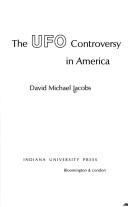
As an Amazon Associate, OverClassified may earn from qualifying purchases made through this link, at no extra cost to you.
Why This Is Essential Reading
The UFO Controversy in America earns its place on this list as this site's earliest-published title and its clearest example of the UFO subject receiving genuine, peer-reviewed academic treatment: a University of Wisconsin history dissertation, published by an academic press with a foreword from J. Allen Hynek, and reviewed in the Journal of American History — a level of institutional legitimacy few other books on this shelf can claim. Its chronology of Project Sign through Project Grudge, the Robertson Panel, NICAP, and the Condon Committee remains a genuinely useful institutional map, cited on this site's own resources library across 14 separate case files. It is also, honestly, a book whose author's later career — the hypnosis-based abduction research and the Emma Woods controversy that followed a decade after this book's publication — inevitably colors how it gets read today, even though the book itself predates all of that and was judged on its own, considerably narrower and more defensible terms by its original academic reviewers. Read it as what it actually is: the first serious academic history of how American institutions managed the UFO controversy through 1973, not a preview of the researcher David Jacobs would later become.
Related Cases & Theories
Essential Viewing
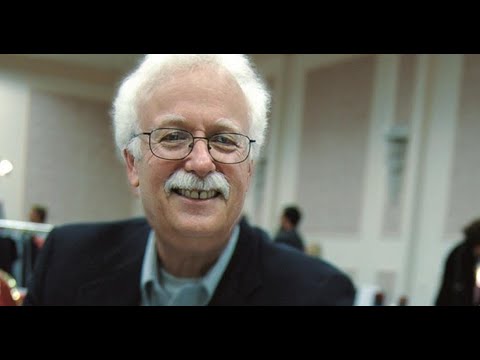
David Jacobs (12-07-17) Adventures of an Abduction Researcher
UPARS — A career-retrospective talk in which Jacobs discusses his own path from academic historian to abduction researcher, useful context for the trajectory this article traces between his 1975 dissertation-based book and his later, more contested work. Verified via YouTube oEmbed before inclusion.
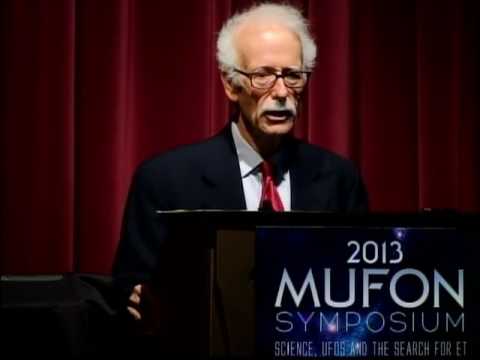
UFOs and Abductions | David Jacobs, PhD Lecture
David Jacobs Interviews — A recorded lecture by Jacobs discussing his decades of UFO research, offering a sense of how he now frames the field he first wrote about academically in 1975. Verified via YouTube oEmbed before inclusion.
Sources Cited
- Jacobs, David Michael. The UFO Controversy in America. Indiana University Press, 1975 (ISBN 0253190061 / 9780253190062, cited here, matching this site's own resources library citations). amazon.com
- "The UFO controversy in America." Internet Archive (full digitized scan of the Indiana University Press 1975 first edition, Brown University Library copy; publisher, ISBN, and LCCN metadata). archive.org
- Full text: "David Jacobs The UFO Controversy In America." Internet Archive (searchable OCR text, table of contents, chapter titles). archive.org
- Tate, James P. "UFO Controversy in America. By David Michael Jacobs." Journal of American History, Vol. 64, No. 3, December 1977, p. 844 (contemporary academic review). academic.oup.com
- "David M. Jacobs." Wikipedia (biography: birth date, education, Temple University career, bibliography, Emma Woods controversy). en.wikipedia.org
- "Bio." DavidMichaelJacobs.com, official author biography (dissertation history, "second Ph.D." and "first sympathetic academic-press book" claims, Temple University career details). davidmichaeljacobs.com
- Ginsberg, Maggie. "Aliens among Us." On Wisconsin Magazine, Summer 2021 (UW–Madison years, dissertation origin, later abduction research, retirement). onwisconsin.uwalumni.com
- DiFilippo, Dana. "Space aliens walk among us? Indeed, claims retired Temple prof." The Philadelphia Inquirer, July 15, 2014 (Temple career, promotion denial, dissertation topic switch, abduction research). inquirer.com
- "David M. Jacobs: A Comprehensive Profile." UFO Timeline Project (assessment of the 1975 book's academic reception and print-sale performance, contrast with later abduction research). ufotimelineproject.com
- "The Aliens In Her Mind." Grey Faction (documentation of the Emma Woods hypnotic-regression controversy). greyfaction.org
- "The UFO Trail: Central Issues of the Emma Woods Case." ufotrail.blogspot.com (independent researcher's documentation of the 2004–2007 hypnosis-session recordings and allegations). ufotrail.blogspot.com
- "The Ufo Controversy in America." Archive.org metadata record (publisher, ISBN, LCCN 74011886, page count, Brown University Library provenance). archive.org
- This site's own resources library: Full Reading List, where this exact edition (ISBN 0253190061) is cited across 14 case-file pages.
- This site's own case file: The Robertson Panel, the subject of this book's own dedicated chapter.
- This site's own case file: The Condon Report, this book's climactic case study.
- This site's own key-figures entry: David M. Jacobs, for his full biography, the Emma Woods controversy, and case connections beyond this book.
Have corrections, additional research, or peer-reviewed sources? Help improve this entry.
Suggest an Edit