
Captured!
The Betty and Barney Hill UFO Experience
Core Thesis
Captured! The Betty and Barney Hill UFO Experience is not a retelling of the 1961 New Hampshire abduction case — that book, John G. Fuller's The Interrupted Journey, had already existed for forty-one years by the time this one appeared. It is, instead, a rebuttal built by the people best positioned and least neutral to write one: Kathleen Marden, Betty Hill's niece and, after Betty's 2004 death, the literary executor holding her aunt's private papers, correspondence, and the original Dr. Benjamin Simon hypnosis tapes; and Stanton T. Friedman, the nuclear physicist and veteran civilian Roswell investigator who had personally interviewed both Hills over many hours across several decades. Where Fuller wrote a documentary account of a case still unfolding, Marden and Friedman wrote a point-by-point legal brief against everything ufology's skeptics had published about that case in the intervening four decades — the Zeta Reticuli star map's statistical problems, Marjorie Fish's own later doubts about her match, Martin Kottmeyer's theory that Barney's hypnotically recovered alien eyes came from a 1964 television episode, and the accumulated damage to Betty Hill's personal credibility from her far more extravagant later-life UFO claims. The book's real subject is not the 1961 encounter itself but the fight over what that encounter means, fought from deep inside the family that lived it.
About the Author
Kathleen Marden was thirteen years old on the morning of September 20, 1961, when her aunt Betty Hill telephoned the family to report that she and Barney Hill had encountered a "flying saucer" while driving home through New Hampshire's White Mountains the night before. That phone call put Marden inside the case's inner circle before it was a case at all, and she remained there for the rest of Betty's life, holding a level of direct, decades-long access to the Hills that no outside researcher, including Fuller and Friedman, ever had.
Marden's professional background sits outside ufology entirely: she holds a bachelor's degree in social work and spent years working as an educator and education services coordinator, pursuing graduate studies alongside a working career unrelated to UFO research. Her formal involvement with organized ufology began later and grew steadily rather than suddenly — she began volunteering for the Mutual UFO Network in 1991, served roughly a decade as MUFON's Director of Field Investigator Training, and since 2011 has served as founder and director of MUFON's Experiencer Resource Team, which she grew from a handful of volunteers to several dozen trained specialists, including psychiatric and psychological consultants holding PhDs and MDs. MUFON named her its Researcher of the Year in 2012, dedicated its 2015 International Symposium Proceedings to her and her team, and the International UFO Congress gave her its Lifetime Achievement Award in 2021. She also became, in her own later practice, a master-level practitioner of Quantum Healing Hypnosis Technique — a striking continuity with the very tool, hypnotic regression, whose reliability sits at the center of both her aunt's case and this book's most contested claims.
It was Betty Hill's death on October 23, 2004, that made Captured! possible in the specific form it took. As trustee of Betty's estate, Marden inherited her aunt's personal papers and correspondence and personally transcribed the original 1964 hypnosis-session tapes Dr. Benjamin Simon had recorded — the same primary material Fuller had worked from at one remove in 1966, now available to Marden directly and without a journalist's mediation. She subsequently donated two archival collections built from this material to the Milne Special Collections and Archives Department at the University of New Hampshire Library, formalizing what had until then been a family archive into a research resource other investigators could consult. This direct custodianship of the case's primary documents, rather than any new investigative discovery, is the specific asset that separates this book's evidentiary claims from every other book written about the Hill case by someone outside the family.
Stanton T. Friedman brought a very different kind of standing to the collaboration. A nuclear physicist who spent his early career on classified nuclear and fusion propulsion work for General Electric, General Motors, Westinghouse, and McDonnell Douglas, Friedman eventually left industry physics to become ufology's most visible full-time civilian researcher, best known on this site and elsewhere for reviving the Roswell case in 1978 through his interview with Jesse Marcel and for coining the phrase "Cosmic Watergate." By 2007 he had delivered more than 700 lectures at over 600 universities and had, by his own and others' account, spent many hours across several decades in direct conversation with both Hills, coming away convinced that, in his own words, "by no stretch of the imagination could anyone who knows them conclude that they were nuts." His chapters in Captured! apply the same investigative habits — interviewing witnesses directly, chasing down primary documents, publicly re-litigating specific skeptical claims one at a time — that had defined his Roswell work for three decades already.
The Marden–Friedman partnership outlived this single book. The two went on to co-author Science Was Wrong (2010) and Fact, Fiction, and Flying Saucers (2013), continuing to work together until Friedman's death on May 13, 2019, at age 84. Captured! itself remained in print long enough to receive a 60th Anniversary Edition in 2021, marking six decades since the Hills' encounter rather than any anniversary of the book itself, published under both original authors' names with a new foreword by physicist Dr. Bruce Maccabee, even though Marden alone was left to oversee the update two years after her co-author's death.
Historical Context & Origins
When John G. Fuller published The Interrupted Journey in 1966, hypnotic regression still carried broad, largely unchallenged scientific respectability, and no organized body of skeptical literature about the Hill case existed for him to answer. Marden and Friedman wrote into the opposite situation entirely. By 2007 the case had absorbed more than four decades of specific, named critiques Fuller could never have addressed: astronomer Carl Sagan's 1980 Cosmos-era dismissal of the Zeta Reticuli star map as a statistically unremarkable pattern match; Martin Kottmeyer's 1990 essay proposing that Barney's hypnotically recovered description of the aliens' wraparound eyes derived from a science-fiction television episode broadcast twelve days before he first described them; and the broader "memory wars" backlash against hypnotic regression that swept through mainstream American psychology and psychiatry across the late 1980s and 1990s, a reckoning this site's own Missing Time entry covers in detail. Where Fuller's book had helped establish hypnotic regression's credibility within ufology, Marden and Friedman were writing after that credibility had been systematically dismantled across psychology generally, forcing them to defend not just the specific facts of one case but an entire evidentiary category.
Betty Hill's death in October 2004 removed the last living direct participant able to speak for the case in her own voice, and it did so at a moment when her personal credibility, distinct from the underlying 1961 event, had already become a genuine liability for researchers who wanted to defend the case. In her later decades Betty had reported hundreds of subsequent UFO sightings, described organizing an "Invisible College" of scientists who supposedly studied UFOs with her without ever publishing their findings, and by some contemporaneous accounts became difficult for even sympathetic researchers to present as a fully credible witness. Marden, who had known her aunt her entire life and had access to material no outside biographer possessed, was uniquely positioned to write the family's answer to that specific problem before the primary sources securing it were lost or scattered.
The genre Fuller had founded had also, by 2007, moved well past the Hill case itself without directly defending it. Budd Hopkins's 1981 Missing Time, John E. Mack's 1994 Abduction, and, just two years before Captured!, Susan Clancy's 2005 Abducted had each built successor frameworks or rebuttals on top of the Hill case as a founding data point, without any of them devoting a full book to defending the founding case's own original evidentiary record against the specific critiques that had accumulated against it. Captured! is, in effect, the first book-length work organized specifically around that defensive project.
Core Arguments & Key Concepts
The book's most distinctive structural choice is that it is organized as rebuttal literature rather than narrative reconstruction. Instead of retelling the encounter chronologically the way Fuller did, Marden and Friedman devote extended sections to specific, named skeptical claims — misidentification of a bright planet or the moon, ordinary sleep deprivation, the star map's statistical weaknesses, the Outer Limits contamination theory — and answer each in turn. This is a fundamentally different kind of book than The Interrupted Journey: Fuller was building a case's public record from scratch, while Marden and Friedman are defending an already-public record against a specific, itemized list of forty years of objections to it.
A second, more personal argument runs through Marden's own chapters: that a great deal of what casual readers think they know about the Hills is simply factually wrong, and that her direct family access lets her correct it. She has stated flatly, elsewhere and in material drawn on for the book, that characterizations of Betty as someone who had "been interested in UFOs all of her life" or was a "science fiction fan" before 1961 are false, insisting instead that Betty was a serious professional — a Maine State welfare department social worker — whose account deserves to be read against her actual biography rather than a caricature of it.
The book's most consequential interpretive move is how it handles Betty's declining later-life credibility rather than ignoring it. Marden's own account, as later summarized by skeptic Robert Sheaffer after a 2015 UFO symposium in New Hampshire where researchers who had known Betty personally would not describe her as a fully credible witness in her later years, attributes Betty's much more extravagant post-1961 claims — the hundreds of subsequent sightings, the unpublished "Invisible College" of scientist-collaborators, a casually reported "Hi, Guys!" greeting to visiting aliens — to psychological stress following Barney Hill's death in 1969, which Marden suggests left Betty "somewhat unhinged" in the decades that followed. This lets the book argue that the well-corroborated 1961 case and Betty's much shakier later reputation are separable questions, rather than treating her later credibility problems as evidence against the original account.
On the star map specifically, the book continues Stanton Friedman's decades-long defense of Marjorie Fish's 1974 Zeta Reticuli identification, but not as an uncomplicated victory lap. Friedman's consistent public position — the same one he took when directly challenged on the point after the book's publication — was to concede that more precise stellar-distance data from the European Space Agency's Hipparcos satellite mission had undermined several of the specific star matches Fish's original bead-and-string model depended on, while still maintaining that the identification of Zeta 1 and Zeta 2 Reticuli themselves as "the base" of the map remained sound. It is a partial retreat presented as a continued defense, rather than the simple rebuttal the book's promotional framing suggests.
On the Outer Limits theory specifically, the book's rebuttal is more direct but narrower in scope: Friedman argued the Hills "were far too busy" with the stress of their sighting's aftermath to have been watching science-fiction television in February 1964, and Betty herself, when later asked directly, maintained she had never seen the episode Kottmeyer identified. Both are witness-credibility arguments rather than answers to the twelve-day timing coincidence itself, which is the specific detail Kottmeyer's theory turns on and which the book does not independently refute on its own terms.
Key Cases & Evidence Discussed
Captured! has the same single underlying subject as Fuller's The Interrupted Journey — this site's own Betty & Barney Hill Abduction case file (Case File #006, September 1961) — but it approaches that shared subject from the opposite direction. Readers of this site should treat Fuller's book as the source for the case's original documentary record and this one as the source for the case's defense against everything written about that record since; the two are complementary rather than redundant, and this entry deliberately does not re-summarize the encounter itself, which Fuller's own entry covers in full.
Because Marden inherited and personally transcribed Dr. Benjamin Simon's original 1964 hypnosis tapes, the book is able to draw on the same primary material this site's own case file cites, but at one fewer remove than Fuller's 1966 account, which worked from Simon's cooperation rather than direct family custody of the tapes themselves. This is the book's clearest connection to the case file's own "Interrupted Journey and Cultural Legacy" section, which credits Fuller's access to those same transcripts with creating "a narrative template that influenced virtually every subsequent abduction report."
The book's engagement with Betty's post-1961 reputation connects directly to material this site's own Abducted entry on Susan Clancy documents from the opposite direction: that entry's Critical Reception section records Marden's own separate, published critique of Clancy's Harvard research sample, arguing it was drawn overwhelmingly from unvetted, self-identified abductees who could not be meaningfully compared to a single well-documented case like the Hills'. Captured! is the book-length version of the same defensive project that critique represents in miniature: protecting the Hill case's specific evidentiary standing against being lumped in with less-corroborated later claims, whether Clancy's lab sample or Betty's own later, less credible reports.
Friedman's chapters also situate the Hill case within the broader civilian-investigation ecosystem he had spent thirty years building around Roswell, applying the same document-first, direct-interview methodology to the Hills that had defined his Roswell work since his 1978 interview with Jesse Marcel — treating the Hill case less as an isolated abduction report and more as a second, parallel case study in what happens when a well-documented anomalous claim is subjected to decades of sustained public skepticism.
Critical Reception & Controversies
The book's most prominent critical notice came from within the skeptical press itself: Skeptical Inquirer published a review by longtime UFO columnist Robert Sheaffer, titled "Over the Hill on UFO Abductions," in its November/December 2007 issue (Volume 31, No. 6) — placing the book's most detailed critical reading in the same publication, and often the same specific columnist, that has furnished the sharpest skeptical commentary on nearly every other Hill-case-adjacent book this site's Essential Reading library covers, including Fuller's own.
Sheaffer's broader, long-running position on the underlying case, developed across decades of his own "Psychic Vibrations" column and later his Bad UFOs blog, is that the Hills are effectively the "poster children" for an ordinary explanation involving sleep deprivation and a misperceived astronomical object during a long, stressful overnight drive — a framing that treats the entire evidentiary edifice this book defends as built on a foundational misperception rather than a genuine encounter, independent of any specific chapter-by-chapter rebuttal it offers.
The star map defense is the book's most exposed position on close examination. Friedman's own public concession — that more precise Hipparcos-satellite stellar-distance data undermined roughly six of the fifteen specific star matches in Marjorie Fish's original model, even as he continued to insist that Zeta 1 and Zeta 2 Reticuli remained "the base" of a valid identification — is not the clean vindication of Fish's work the book's title and framing imply. It is a partial retreat under new astronomical data, held together by continued advocacy for the two stars the original identification was named after, and it leaves open exactly the question a purely statistical critique like Sagan's originally raised: how much of a match survives once its weakest components are removed.
The Outer Limits rebuttal draws a similarly qualified assessment. Both Friedman's claim that the Hills were too preoccupied to have watched television that week and Betty's own later denial of having seen the episode are witness-testimony arguments, not an independent refutation of the twelve-day timing Kottmeyer's theory turns on — a coincidence writer Jason Colavito later extended to additional February 1964 science-fiction broadcasts airing in the same narrow window. Readers looking for the book to resolve that specific coincidence on documentary grounds, rather than on the Hills' own credibility, will not find that resolution here.
General reader reception has been split in a way that reflects the book's genre more than its argument: some reviewers describe it as essential reference material for anyone seriously engaging with the case's decades of accumulated controversy, while others found its point-by-point structure repetitive on the page, with at least one reader review suggesting its core content "could have probably been told succinctly in 100 pages" rather than its full 319-page length. The book reads less as a narrative in Fuller's tradition and more as an annotated defense brief, which is precisely what it was built to be.
The most basic critical observation about the book is also the most obvious one: Kathleen Marden's family relationship to Betty Hill is simultaneously the book's greatest evidentiary asset and its most unavoidable source of potential bias. No other author writing about this case has ever had direct custody of Betty's private papers and the original hypnosis tapes; no other author writing about this case has also spent a lifetime personally invested in defending her aunt's reputation. The book does not fully resolve that tension, and does not claim to — it simply discloses the relationship on its cover and lets readers weigh the access against the interest themselves.
Influence & Legacy
Captured! cemented Kathleen Marden's position as the field's most prominent living authority on the Hill case specifically, running in parallel with her institutional rise at MUFON: her 2012 Researcher of the Year award, the 2015 International Symposium Proceedings dedicated to her Experiencer Resource Team, and the 2021 International UFO Congress Lifetime Achievement Award all followed the book's publication and drew directly on the credibility it built for her as both a family witness and a working researcher in her own right.
The Marden–Friedman collaboration this book began continued for the rest of Friedman's life, producing Science Was Wrong (2010) and Fact, Fiction, and Flying Saucers (2013) before his death in 2019, and the book itself outlived that partnership: its 2021 60th Anniversary Edition, published under both original authors' names with a new foreword by Dr. Bruce Maccabee, kept the defense the two of them built in 2007 in active circulation for a new generation of readers encountering the case for the first time, fourteen years after the original edition and two years after one of its authors had died.
The book's advocacy work is directly, measurably active elsewhere on this site: this site's own Abducted entry on Susan Clancy documents Marden's separate published critique of Clancy's Harvard research sample as one of three independently arrived-at objections to that book's methodology, alongside Stanton Friedman's own critique and a rebuttal from Budd Hopkins's Intruders Foundation — concrete evidence that the defensive project Captured! represents in book form continues to shape how competing, later abduction scholarship gets received and cross-examined.
More broadly, the book's donation of Betty Hill's papers and the transcribed Simon hypnosis tapes to the University of New Hampshire's Milne Special Collections and Archives Department ensured the case's primary documentary record would outlive both original 1961 participants and both of this book's authors, converting what had been a private family archive into a standing research resource — a quieter but arguably more durable legacy than any single argument the book makes chapter by chapter.
The Book
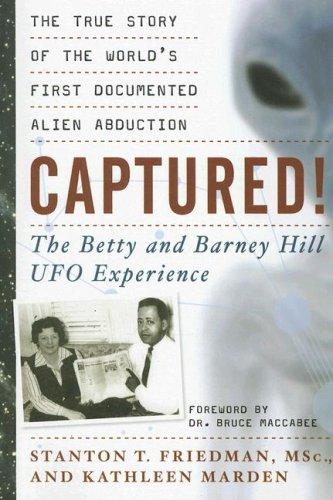
As an Amazon Associate, OverClassified may earn from qualifying purchases made through this link, at no extra cost to you.
Why This Is Essential Reading
Captured! earns its place on this list not because it replaces John Fuller's The Interrupted Journey, but because it does something Fuller's founding 1966 account structurally could not: answer, in specific and named detail, forty years of skeptical scholarship that did not yet exist when Fuller was writing. Kathleen Marden's direct custody of her aunt's private papers and the original hypnosis tapes, and Stanton Friedman's decades of firsthand interviews with both Hills, give this book an evidentiary intimacy no outside researcher could match — and this entry's own Critical Reception section documents exactly what that intimacy costs: a star-map defense that concedes real ground to Hipparcos-era data while still defending its foundational stars, an Outer Limits rebuttal built on witness denial rather than documentary refutation, and a family relationship that is simultaneously the book's greatest asset and its most obvious source of bias. Read alongside Fuller's original account, rather than instead of it, Captured! is essential precisely because it shows what defending a forty-year-old case against its own accumulated skeptical record actually looks like from the inside — genuine new archival material, real point-by-point engagement with real critics, and the unresolved tension of a niece writing her aunt's vindication.
Related Cases & Theories
Essential Viewing
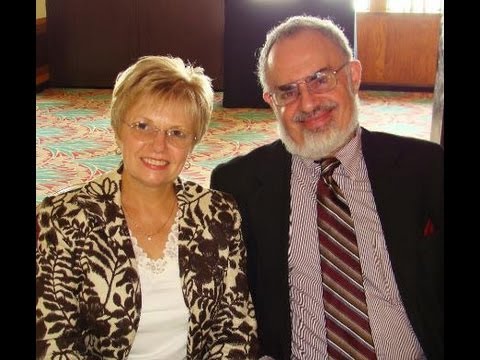
Kathleen Marden & Stanton Friedman: Alien Abduction - The Betty and Barney Hill Case
John Staples — A joint presentation by both authors on the Hill case and its evidence, recorded together years after the book's publication, verified via YouTube oEmbed before inclusion.
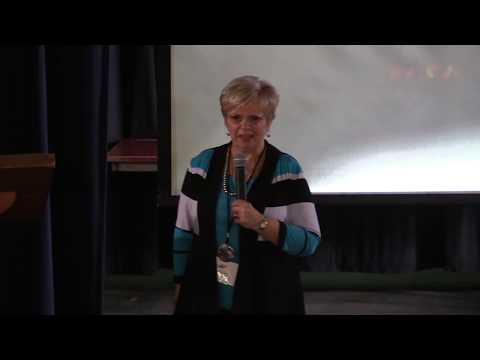
Kathleen Marden: The Betty and Barney Hill Story and Its Far-Reaching Impact
Exeter TV — Kathleen Marden's own lecture at the Exeter UFO Festival on the case's history and legacy, delivered from the same family-insider perspective that shapes this book, verified via YouTube oEmbed before inclusion.
Sources Cited
- Marden, Kathleen, and Stanton T. Friedman. Captured! The Betty and Barney Hill UFO Experience: The True Story of the World's First Documented Alien Abduction. New Page Books, 2007 (ISBN 9781564149718 / 1564149714, cited here). archive.org
- Open Library book record for ISBN 9781564149718 (publisher, publication date of July 23, 2007, and cover art source). openlibrary.org
- "Kathleen Marden." International UFO Congress biography page (career, MUFON roles, awards, Betty Hill family relationship). ufocongress.com
- Kathleen Marden's own author site (list of books co-authored with Stanton Friedman and solo works). kathleen-marden.com
- "Barney and Betty Hill incident." Wikipedia (case background, the book's place in the case's historiography, Kottmeyer's Outer Limits theory, and Robert Sheaffer's sleep-deprivation critique). en.wikipedia.org
- Sheaffer, Robert. "Over the Hill on UFO Abductions." Book review of Captured!, Skeptical Inquirer, Vol. 31, No. 6, November/December 2007. skepticalinquirer.org
- Sheaffer, Robert. "Betty Hill's Last Hurrah — A Secret UFO Symposium in New Hampshire." Bad UFOs blog, May 2015 (documents researchers' assessment of Betty Hill's later-life credibility and summarizes Marden's own explanation, from Captured!, that grief following Barney Hill's 1969 death left Betty "somewhat unhinged"). badufos.blogspot.com
- "Goodbye, Zeta Reticuli." Airminded, November 5, 2008 (documents the Hipparcos-era re-analysis of Marjorie Fish's star map and Stanton Friedman's own on-record concession that several of Fish's original star matches no longer hold, while maintaining Zeta 1 and Zeta 2 Reticuli as "the base"). airminded.org
- "Captured! The Betty and Barney Hill UFO Experience." Goodreads (reader reception, page count, and publication details). goodreads.com
- "Captured! The Betty and Barney Hill UFO Experience (60th Anniversary Edition)." Amazon.com product listing (2021 reissue details, foreword by Dr. Bruce Maccabee). amazon.com
- This site's own case file: Betty & Barney Hill Abduction (Case File #006), the shared underlying case both this book and Fuller's The Interrupted Journey are built on.
- This site's own case file: The Exeter UFO Incident (Case File #083), John G. Fuller's other 1966 New Hampshire book and the shared regional and chronological context for the Hill case.
- This site's own essential-reading entry: The Interrupted Journey by John G. Fuller, the 1966 founding account this book was written to defend forty-one years later.
- This site's own essential-reading entry: Abducted by Susan A. Clancy, whose Critical Reception section documents Kathleen Marden's own separate published critique of Clancy's research sample.
- This site's own essential-reading entry: Missing Time by Budd Hopkins, for the broader "memory wars" hypnotic-regression critique this book was written against.
- This site's own key-figures entry: Kathleen Marden, for her broader site-wide career and case connections beyond this book.
- This site's own key-figures entry: Stanton Friedman, for his broader site-wide career and case connections beyond this book.
- This site's own resources library: Full Reading List.
Have corrections, additional research, or peer-reviewed sources? Help improve this entry.
Suggest an Edit