
Missing Time
A Documented Study of UFO Abductions
Core Thesis
Missing Time: A Documented Study of UFO Abductions is the book that gave the modern alien-abduction narrative its name, its diagnostic method, and its investigative template. Working from letters he received after a 1976 newspaper article about a UFO sighting he had personally investigated, New York artist Budd Hopkins noticed the same strange detail recurring across otherwise unconnected witness accounts: an unaccountable gap of minutes or hours — "missing time" — that the witnesses themselves usually hadn't consciously registered as significant until Hopkins pointed it out. His central and, in retrospect, field-defining claim was that this gap was not incidental but diagnostic: a reliable signal that an abduction experience had occurred and, crucially, that hypnotic regression could safely and productively recover the suppressed memory of what happened during it. Built around seven case histories assembled with the help of psychologist Aphrodite Clamar, who conducted most of the book's hypnosis sessions, Missing Time treated the consistency of detail across independently regressed, mutually unacquainted subjects — small grey-skinned beings, examination tables, a focus on reproductive material — as evidence that something external and patterned was generating the accounts, rather than a shared cultural script or the hypnosis process itself. That argument, and the investigative method built to support it, would directly shape every major abduction researcher who followed, for better and for considerably worse.
About the Author
Budd Hopkins was born Elliot Budd Hopkins on June 15, 1931, in Wheeling, West Virginia, and earned a B.A. in art history from Oberlin College in 1953 before settling in New York City. There he fell in with the city's abstract-expressionist circle, meeting and befriending Franz Kline, Mark Rothko, Robert Motherwell, and Willem de Kooning while working a low-level job selling tickets at the Museum of Modern Art. His own hard-edge geometric abstractions, which combined precise painted shapes with the gestural, atmospheric brushwork of second-generation Abstract Expressionism, won him serious and independently documented critical recognition years before UFOs entered his life at all: his first solo show opened in New York in 1956, CBS featured him among fifteen painters in its first television special on American art in 1963, and in 1976 — the same year he began writing the book that would make him famous for something else entirely — he received a Guggenheim Fellowship for painting. His work now sits in the permanent collections of the Whitney Museum of American Art, the Solomon R. Guggenheim Museum, the Museum of Modern Art, the Metropolitan Museum of Art, and Boston's Museum of Fine Arts, among others.
Hopkins's path into ufology began with his own sighting. In August 1964, driving from Truro to a cocktail party in Provincetown on Cape Cod with his first wife and a friend, he watched a dark, elliptical, lens-shaped object hover and then accelerate away against the wind over roughly three minutes — a sighting several other guests at the same party, including the poet Mary Oliver, said they had independently noticed similar objects around the Cape that same summer. Dissatisfied with the response he got after reporting the sighting to nearby Otis Air National Guard Base, Hopkins came away suspecting an official cover-up rather than an official non-answer, joined the National Investigations Committee on Aerial Phenomena, and began reading seriously in ufological literature — the seed of a research career that, by his own later account, transformed how he used the circle as a visual motif in his paintings as well.
The book itself grew out of a specific investigation. In 1975, New Jersey resident George O'Barski reported watching small humanoid figures step from a landed craft and take soil samples at North Hudson Park in North Bergen; Hopkins investigated the case personally alongside fellow researcher Ted Bloecher, and his account of it ran in The Village Voice on March 1, 1976, under the headline "Sane Citizen Sees UFO." The article's publication triggered a wave of reader correspondence from other self-described witnesses, a meaningful fraction of which described the same unexplained detail: a period of time during their own sighting that they could not consciously account for. Hopkins, working with psychologist Aphrodite Clamar to conduct hypnotic regression on a subset of these correspondents, assembled the resulting case material into Missing Time, published by Richard Marek Publishers in 1981.
The book's commercial and cultural success reshaped the rest of Hopkins's career. His 1987 follow-up, Intruders: The Incredible Visitations at Copley Woods, spent four weeks on The New York Times bestseller list and was adapted into a 1992 CBS television miniseries starring Richard Crenna. In 1989 he founded the Manhattan-based Intruders Foundation to coordinate abduction research and run a monthly free support group for self-identified experiencers. Working with historian David Jacobs, he developed the increasingly systematized "genetic hybridization program" theory this site's own Genetic Hybridization Program Hypothesis file examines directly, and in 1991–92 he partnered with Jacobs and Harvard psychiatrist John E. Mack on a Roper Organization poll of nearly 6,000 Americans, whose results Hopkins argued suggested millions of undiagnosed abduction experiences — a methodologically contested claim that nonetheless pushed the field toward large-scale, quantified assertions it had never previously attempted. His 1996 book Witnessed: The True Story of the Brooklyn Bridge UFO Abductions documented the Linda Cortile case, which he considered the most thoroughly corroborated abduction of his career.
Hopkins died on August 21, 2011, at his home in Manhattan, of complications from cancer; he was 80. His New York Times obituary, by Margalit Fox, credited him as the movement's central popularizer while noting the deep and lasting scientific skepticism his methods had drawn. His third wife, documentary filmmaker Carol Rainey, who had worked closely with him on his later casework, went public after his death with the allegation that the Cortile case's key corroborating evidence had been fabricated, and separately published her own broader critique of the hypnotic-regression methodology — the same technique this 1981 book had first built into a research method — that both Hopkins and Jacobs had relied on throughout their careers.
Historical Context & Origins
When Hopkins began investigating the O'Barski case in 1975, the abduction narrative already had one towering precedent but no general theory. Psychiatrist Benjamin Simon's 1964 hypnosis sessions with Betty and Barney Hill, popularized in John G. Fuller's 1966 book The Interrupted Journey, had established that hypnotic regression could surface a detailed abduction account from two credible, non-sensationalist witnesses. But the Hill case stood largely alone as a singular, extraordinary event; no researcher had yet proposed that abduction experiences might be substantially more common than realized, hidden behind an ordinary-seeming gap in memory that a wider population of witnesses were unknowingly carrying around. That reframing — missing time as a searchable, recognizable symptom rather than a one-off mystery — is the specific conceptual move Missing Time made, five years before John E. Mack brought Harvard credentials to the same method and more than two decades before Susan Clancy built a peer-reviewed rebuttal to it.
The book's actual origin was narrower and more accidental than its eventual influence suggests. Hopkins's March 1, 1976 Village Voice article on the George O'Barski North Hudson Park sighting, investigated with researcher Ted Bloecher, was written as a single case report, not a theoretical statement. Its publication produced an unanticipated flood of correspondence from readers describing their own sightings, and it was only in sorting through those letters that Hopkins began noticing how many independently written accounts mentioned an unexplained span of missing time. Working with psychologist Aphrodite Clamar, who conducted hypnotic regression on several of the correspondents, Hopkins assembled seven of the resulting case histories — including that of a witness identified in the book as Steven Kilburn, hypnotically regressed roughly five years after his original 1973 sighting — into the manuscript Richard Marek Publishers released in 1981.
The book landed in a specific cultural window that helped it succeed on terms later abduction researchers would not have available. Steven Spielberg's 1977 film Close Encounters of the Third Kind had recently pushed the public UFO imagination decisively toward personal, close-range contact rather than distant lights in the sky, giving general readers an existing visual vocabulary for the kind of narrative Hopkins was describing. And Missing Time arrived nearly a decade before the bitter "memory wars" over recovered-memory therapy and hypnotically "recovered" abuse allegations fully consumed American psychology and psychiatry through the late 1980s and 1990s — the same controversy this site's own entries on Mack's Abduction and Clancy's Abducted describe in full. That timing gave Hopkins's hypnosis-centered method roughly a decade to become entrenched as ufology's default investigative tool before it faced anything like the scientific scrutiny hypnotic regression would eventually receive across psychology generally.
Core Arguments & Key Concepts
Hopkins's foundational claim was diagnostic: an unaccounted-for gap in conscious memory surrounding a UFO sighting — missing time — was not a trivial lapse but a specific, searchable indicator that an abduction experience had occurred beneath conscious awareness. This inverted the usual evidentiary logic of ufology up to that point, which had generally required a witness to consciously report an extraordinary experience before an investigator took interest; Hopkins instead argued investigators should treat an ordinary-seeming memory gap itself as the flag worth pursuing.
His second claim was methodological: hypnotic regression, conducted by cooperating psychologists rather than by Hopkins himself, could safely and reliably retrieve what missing time was concealing. Hopkins repeatedly emphasized that the professionals he worked with, including Aphrodite Clamar, began each case skeptical of the abduction hypothesis specifically, and he treated their skepticism as a safeguard lending the resulting testimony additional credibility — a framing his critics, discussed at length below, read very differently.
His third claim concerned pattern and corroboration. Hopkins argued that the striking consistency of specific physical and narrative details — small grey-skinned beings, an examination or operating table, unexplained "scoop mark" scars discovered on the body afterward — recurring across witnesses who had never met each other and, in his account, had no prior exposure to a shared abduction script, was best explained by a real, external, patterned phenomenon rather than coincidence, suggestion, or cultural cross-contamination.
His fourth claim was interpretive and would prove the most consequential for his later career: that these encounters were not random or exploratory but purposive, organized around some form of sustained biological examination and, in Hopkins's reading, the collection of reproductive material — the earliest published seed of the "genetic hybridization program" theory he would develop far more elaborately with David Jacobs across the following two decades.
Running underneath all four claims was a throughline traceable directly to Hopkins's own 1964 sighting: that official indifference or dismissal was itself circumstantial evidence of concealment rather than evidence that nothing worth investigating had happened, a suspicion of institutional silence that shaped how he read every subsequent case, including his own subjects' initial reluctance to come forward.
Key Cases & Evidence Discussed
Missing Time is built around seven pseudonymous case histories drawn from the letters Hopkins received after his 1976 Village Voice article, rather than a catalogue of previously famous incidents, so its clearest connections to this site's own case-file library run through the researchers, methods, and later cases it set in motion.
The book's own seed investigation was the George O'Barski case: a 1975 sighting at North Hudson Park in North Bergen, New Jersey, that Hopkins investigated in person alongside researcher Ted Bloecher and wrote up for The Village Voice in March 1976 under the headline "Sane Citizen Sees UFO" — the article whose reader mail directly produced the missing-time pattern this book is built around. Among the book's seven regressed case subjects is a witness identified as Steven Kilburn, hypnotically regressed roughly five years after an original 1973 sighting.
This exact 1988 Ballantine paperback edition (ISBN 0345353358) is cited directly on two of this site's own case files: the Allagash Waterway Abduction (Case File #045, 1976), which credits this book with helping drive "the broader wave of abduction research that had accelerated across American ufology through the 1980s," and the Berkshire UFO Wave / Thom Reed (Case File #072) file, which cites it as "the pioneering study that helped establish 'missing time' as a recognized abduction indicator" behind the Reed family's own hypnosis-elaborated account.
A separate, bibliographically distinct 1983 Berkley paperback edition of this same title (ISBN 0425057518) is cited on two further case files: the Fort Benning Abduction Case (Case File #132), and the Stanford, Kentucky Abduction (Case File #216), which credits the book as the text that "first systematized 'missing time' as a diagnostic marker of abduction cases" only five years after that 1976 Kentucky encounter. The Fort Benning file goes further still: researchers connected to Hopkins's own investigative team personally interviewed primary witness John Vasquez in the early 1990s and ultimately declined to pursue the case, with one participating researcher privately describing the account as "extremely convoluted."
Hopkins's later, most personally significant field investigation — the 1989 Linda Cortile "Brooklyn Bridge" case, documented in his 1996 book Witnessed and covered on this site's own Linda Cortile "Brooklyn Bridge" Abduction file (Case File #290) — postdates Missing Time by nearly a decade and applies the same hypnosis-centered method this 1981 book first codified to what Hopkins himself considered the most thoroughly corroborated case of his career, a claim his own former wife and collaborator, Carol Rainey, would later publicly dispute.
Critical Reception & Controversies
Missing Time was, in critic Frederick Crews's later description, "wildly popular" on release, and its success is widely credited with pulling American ufology's center of gravity away from distant-lights sightings and toward the personal, hypnosis-driven abduction narrative that would dominate the genre for the next two decades. That popular success is also precisely what drew sustained, substantive scientific criticism, much of it aimed at Hopkins by name rather than at the abduction phenomenon in the abstract.
The most comprehensive book-length rebuttal came from veteran aerospace journalist and UFO skeptic Philip J. Klass, whose 1988 book UFO Abductions: A Dangerous Game devoted the bulk of its argument specifically to Hopkins, including a detailed chapter on the dangers of using hypnotherapy to "unlock" abduction memories and an extended case that the technique made it dangerously easy to implant, rather than recover, a detailed and convincing false narrative.
University of Kentucky psychologist Robert A. Baker pressed the same concern from inside mainstream psychology. Baker argued that hypnosis functions as "nothing except the turning on of the human imagination" under relaxation and suggestion, and that a subject working with a respected authority figure will, in his words, "rake his memory" and construct a convincing false narrative to match whatever scenario the hypnotist has already suggested is likely. Of Hopkins's subjects specifically, Baker put it bluntly: "These people are literally talked into believing they've been abducted."
Memory researcher Elizabeth Loftus delivered the most direct, documented critique of Hopkins's actual technique. Watching a taped 1997 hypnosis session with a child that aired on PBS's NOVA episode "Kidnapped by UFOs?," Loftus identified Hopkins's own words to his subjects — "Your body has its own memories," pressing further with "No, you can remember more, you can remember more" — as textbook suggestive technique rather than neutral memory retrieval, noting there is "no good scientific support" for a body holding memories the conscious mind cannot access. Watching the session unfold, she concluded: "you could just see it. It's the first few steps down that royal road to the creation of a false memory."
Literary and cultural critic Frederick Crews, writing in The New York Review of Books in 1998 as part of his broader "Memory Wars" critique of recovered-memory therapy, grouped Hopkins among the field's "leading abduction boosters" and accused him and his peers of making only "token gestures of caution" against hypnotic confabulation while exercising, in practice, none. Crews also noted a less flattering biographical detail: Hopkins had initially dismissed early abduction accounts brought to him as implausible before embracing them enthusiastically once the material proved commercially and professionally successful — a shift Crews characterized as mercenary rather than scientifically motivated, and one he linked directly to the same confabulation dynamics driving contemporaneous recovered-memory-of-abuse cases.
A subtler, internally documented problem concerned the psychologists Hopkins himself relied on. By his own published account, the hypnotists who worked on his cases — Aphrodite Clamar among them — began each session skeptical that abduction claims reflected anything real, yet consistently "uncovered" detailed abduction narratives from their subjects regardless. Hopkins treated this pattern as evidence of investigative rigor; critics read the identical fact as evidence that the hypnotic process itself, not investigator bias alone, was generating the content, since skeptical hypnotists produced believer-grade narratives just as reliably as sympathetic ones.
That criticism did not stay confined to outside skeptics. This site's own Fort Benning Abduction Case file documents that researchers connected to Hopkins's own investigative team, after personally interviewing primary witness John Vasquez in the early 1990s, found his account "extremely convoluted" and privately suspected it might be "a sophisticated psy-op" rather than a genuine anomalous experience — a rare instance of Hopkins's own methodology producing internal doubt about a case built using his own techniques.
The critique also arrived, eventually, from within his own household. Hopkins's third wife, documentary filmmaker Carol Rainey, who worked closely with him through much of his later career, published her own broader critique of the hypnotic-regression methodology underlying both his and David Jacobs's genetic-hybridization research after his 2011 death, arguing the technique risked implanting rather than recovering memories — a conclusion that traces directly back to the method this 1981 book first built into a repeatable research process.
Influence & Legacy
"Missing time" itself is Missing Time's most durable legacy: the phrase entered ufology's working vocabulary as the field's default first diagnostic marker for a possible abduction, and it remains active infrastructure on this site specifically, cited directly across four separate case files — Allagash Waterway Abduction, Berkshire UFO Wave / Thom Reed, Fort Benning Abduction Case, and Stanford, Kentucky Abduction — as the founding reference point for exactly the investigative pattern each of those later cases followed.
Institutionally, the book's success built the infrastructure the rest of Hopkins's career ran on: the bestselling 1987 follow-up Intruders, the Manhattan-based Intruders Foundation he founded in 1989, and his partnership with historian David Jacobs on the "genetic hybridization program" theory this site's own Genetic Hybridization Program Hypothesis file documents in full — a theory whose earliest published statement is this 1981 book's own claim about a reproductive focus behind the examinations its subjects described.
Its most direct forward influence runs to John E. Mack's 1994 Abduction: Human Encounters with Aliens, this site's own entry on which notes that Hopkins's casework through the 1980s "had built an entire private-investigator ecosystem" around hypnotic regression "well before a Harvard-credentialed psychiatrist arrived to lend the method institutional legitimacy it had never previously had." The two researchers crossed paths directly at the June 1992 Abduction Study Conference at MIT, which Mack co-chaired, and which Hopkins attended as one of the field's most established working investigators.
A generation later, Susan Clancy's 2005 Abducted built its entire false-memory framework as, in significant part, a direct answer to exactly the hypnosis-dependent casework this book pioneered; that this site's own Clancy entry documents Hopkins's own Intruders Foundation publishing a pointed rebuttal to her book, titled "The Faith-Based Science," shows the two camps still actively contesting the ground Hopkins staked out here in 1981, more than two decades and two more books later.
The methodology's most damaging downstream consequence arrived through Hopkins's own collaborator: David Jacobs's continued use of the same hypnotic-regression technique drew a serious, well-documented controversy after research subject "Emma Woods" released recordings of their sessions alleging he had led her toward increasingly extreme confabulated memories — a controversy this site's own key-figures entry on Jacobs treats as "a central case study in broader concerns about hypnotic regression's reliability," and one whose roots trace directly back to the investigative template this book first established.
Hopkins died in 2011 remembered, in his New York Times obituary's own phrase, as ufology's central popularizer of the abduction narrative — a legacy that is genuinely double-edged on the documented record: the same book that built the field's working vocabulary and investigative method also became, within less than a decade of its publication, the central and still-unresolved case study in exactly the hypnotic-suggestion critique that would eventually run straight through Mack's Harvard-credentialed defense of the method and into Clancy's peer-reviewed rebuttal of it.
The Book
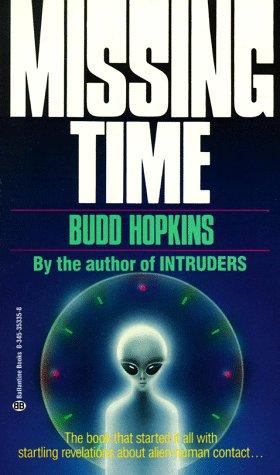
As an Amazon Associate, OverClassified may earn from qualifying purchases made through this link, at no extra cost to you.
Why This Is Essential Reading
Missing Time earns its place on this list as the genuine point of origin for both halves of the abduction-literature debate this site's other Essential Reading entries on the subject represent. Budd Hopkins was not a psychiatrist, psychologist, or trained clinician of any kind — he was a critically established New York painter working entirely outside his professional field — and this book is essential precisely because of what that outsider status let him do: assemble, from a flood of reader mail after a single newspaper article, the first sustained argument that missing time itself was a searchable clinical marker, and the first repeatable hypnosis-based method for investigating it. That method's real, documented cost is exactly what this entry's Critical Reception section lays out in detail: Philip Klass's book-length rebuttal, Robert Baker's confabulation research, and Elizabeth Loftus's own-camera critique of Hopkins's leading, pressuring hypnotic technique describe an investigative process that could not reliably distinguish a recovered memory from one it had just helped construct. Read as the founding document it actually is — and ideally read alongside John E. Mack's Abduction, which borrowed this book's method and lent it institutional credibility a decade later, and Susan Clancy's Abducted, the peer-reviewed rebuttal this book's methodology helped provoke a generation after that — Missing Time is essential not because its central claims have held up, but because nearly everything the field would spend the next four decades arguing about, on both sides, starts here.
Related Cases & Theories
Essential Viewing

Budd Hopkins: Pioneering UFO Abduction Investigator Shares New Discoveries, Patterns & Cases (2004)
RVMLResourceCenter — A 2004 recorded talk in which Hopkins presents the case patterns and hypnotic-regression methodology his four-decade research career was built on, directly tracing back to this 1981 book, verified via YouTube oEmbed before inclusion.
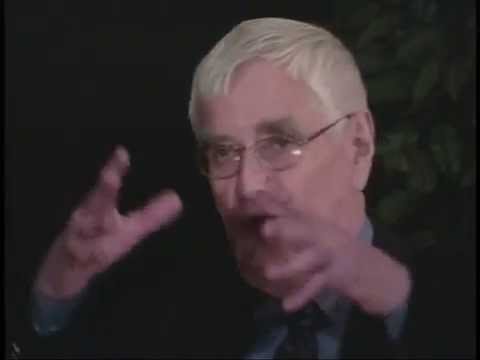
BUDD HOPKINS - UFO Abduction Cases: The Medical Evidence
Mutual UFO Network (MUFON) — A MUFON-hosted presentation by Hopkins on the physical and medical evidence component of his abduction casework, the same category of "scoop mark" scarring first documented in this book, verified via YouTube oEmbed before inclusion.
Sources Cited
- Hopkins, Budd. Missing Time: A Documented Study of UFO Abductions. Richard Marek Publishers, 1981; Ballantine Books mass-market pbk., 1988 (ISBN 0345353358, cited here). openlibrary.org
- "Budd Hopkins." Wikipedia (biography: education, art career, UFO research entry, Intruders Foundation, death). en.wikipedia.org
- Fox, Margalit. "Budd Hopkins, Abstract Expressionist Artist, Dies at 80." The New York Times, August 25, 2011 (obituary). nytimes.com
- Bucciero, Joe. "Budd Hopkins: Abstract Art and UFOs." The New York Review of Books, March 1, 2024 (career-spanning assessment of his art and UFO research, including the 1964 Cape Cod sighting). nybooks.com
- Crews, Frederick. "The Mindsnatchers." The New York Review of Books, June 25, 1998 (critical assessment of Hopkins within the broader recovered-memory "Memory Wars"). nybooks.com
- "The UFO in Truro." The Provincetown Independent, December 27, 2023 (contemporary detail on Hopkins's 1964 Cape Cod sighting). provincetownindependent.org
- "NOVA: Hopkins." PBS NOVA, February 27, 1996 (profile of Hopkins's sighting and investigative methodology). pbs.org
- "Kidnapped by UFOs?" PBS NOVA transcript, April 1, 1997 (Elizabeth Loftus's and Robert Baker's on-camera critique of Hopkins's hypnosis technique). pbs.org
- Klass, Philip J. UFO Abductions: A Dangerous Game. Prometheus Books, 1988 (book-length critique focused substantially on Hopkins's hypnosis methodology).
- Baker, Robert A. "The Aliens Among Us: Hypnotic Regression Revisited." Skeptical Inquirer, 1987/88 (confabulation critique of hypnotic-regression abduction research). centerforinquiry.org
- "The North Hudson Park UFO Landings — The Alien Encounter of George O'Barski." UFO Insight (background on the 1975 case and 1976 Village Voice article that directly produced this book). ufoinsight.com
- "Intruders Foundation: Budd Hopkins UFO Abduction Research Foundation." Archived via Wayback Machine (foundation's own description of its mission and founding). web.archive.org
- This site's own case file: Allagash Waterway Abduction, which cites this exact 1988 Ballantine edition directly.
- This site's own case file: Berkshire UFO Wave / Thom Reed, which likewise cites this exact edition.
- This site's own case file: Fort Benning Abduction Case, which documents Hopkins's own investigative team personally interviewing and declining to pursue primary witness John Vasquez.
- This site's own essential-reading entry: Abduction by John E. Mack, the Harvard-credentialed successor study this book's method directly enabled.
- This site's own essential-reading entry: Abducted by Susan A. Clancy, the peer-reviewed false-memory rebuttal this book's hypnosis methodology helped provoke a generation later.
- This site's own resources library: Full Reading List, where Budd Hopkins's Missing Time is cited across multiple case-file pages.
Have corrections, additional research, or peer-reviewed sources? Help improve this entry.
Suggest an Edit