
The UFO Experience
A Scientific Inquiry
Core Thesis
After twenty years as the U.S. Air Force's own scientific consultant on unidentified flying objects, J. Allen Hynek argues that a genuine, irreducible residue of UFO reports — after hoaxes, misidentifications, and insufficient data are eliminated — resists conventional explanation and deserves serious scientific study on the evidence's own terms, without first assuming or ruling out any particular origin for the phenomenon.
About the Author
Josef Allen Hynek was born May 1, 1910, in Chicago, and earned his PhD in astrophysics at the University of Chicago's Yerkes Observatory in 1935. He taught at Ohio State University before moving to Northwestern University, where he chaired the astronomy department for years and worked on early U.S. satellite tracking programs.
In 1948 the U.S. Air Force recruited Hynek as scientific consultant to Project Sign, its first formal UFO study — reportedly chosen precisely because he had no prior interest in the subject and could lend the project a credible, skeptical scientific face. That consulting role continued through Project Grudge and then Project Blue Book, running from 1952 until the program's closure in December 1969, giving Hynek roughly two decades of direct access to Air Force case files that few outside researchers ever saw.
Hynek's own position shifted substantially over those two decades, from a dismissive skeptic content to explain sightings away to a public advocate arguing a genuine unexplained residue merited real scientific attention. That shift is inseparable from one specific episode: at a March 25, 1966 Detroit press conference following the Michigan “Swamp Gas” UFO Wave, Hynek offered a hedged, partial explanation the press reduced to a punchline — a moment he later called one of his deepest professional regrets, telling Omni magazine in 1985, "I was a thorough skeptic, and I'm afraid I helped to engender the idea that it must be nonsense, therefore it is nonsense."
A year after this book's publication, Hynek founded the Center for UFO Studies (CUFOS) in 1973, formalizing a civilian research effort outside Air Force control. He went on to serve as a technical consultant on Steven Spielberg's 1977 film Close Encounters of the Third Kind — a title drawn directly from the classification system this book introduced — and appears in a brief cameo. Hynek died of a brain tumor on April 27, 1986, in Scottsdale, Arizona, at age 75.
Historical Context & Origins
Hynek wrote and published The UFO Experience in 1972, directly in the wake of the Condon Report — the University of Colorado UFO Project's 1968 conclusion, commissioned by the Air Force, that further scientific study of UFOs was not justified. That report led directly to Project Blue Book's closure in December 1969, ending the same program Hynek had spent two decades consulting for.
Hynek publicly disagreed with the Condon Report's own conclusions, calling its introduction "singularly slanted" and arguing it downplayed an inconvenient detail buried in its own data: the study's own investigators had been unable to adequately explain more than a quarter of the cases they examined, even while officially recommending against further research. The UFO Experience channels that specific disagreement into a structured argument rather than a rebuttal essay, built on the one resource Hynek uniquely possessed — twenty years of raw, unpublished Air Force case material most ufologists and skeptics alike never had access to.
The book found a receptive audience: it reportedly reached its fourth printing by May 1973, a genuine commercial success for a science-themed book on a subject most of the scientific establishment still treated as a career liability to engage with seriously.
Core Arguments & Key Concepts
Hynek's central methodological move is a filtering argument rather than a proof: start from the full population of UFO reports, systematically eliminate hoaxes, misidentified aircraft, astronomical objects, and cases with insufficient data to evaluate at all, and examine what remains. Hynek estimated that roughly 20 to 25 percent of reports survived this filtering as genuinely unexplained even after rigorous scrutiny — not proof of any particular origin, in his framing, but a residue large and consistent enough to demand a real scientific research program rather than dismissal.
The book's most lasting contribution is the Close Encounter classification system, which Hynek first outlined in a December 1969 address to the American Association for the Advancement of Science and formalized here. Close Encounters of the First Kind are visual sightings at close range with no physical interaction; Close Encounters of the Second Kind involve measurable physical effects — scorched ground, electromagnetic interference, stalled engines; Close Encounters of the Third Kind involve witnesses reporting observed occupants or entities. The scheme gave ufology, for the first time, a shared vocabulary for describing report severity rather than an undifferentiated pile of "sightings."
Alongside the Close Encounter scale, Hynek proposed a two-axis rating framework for evaluating individual reports: a "strangeness" score for how anomalous and inexplicable a report's specific details are, and a separate "probability" score for witness reliability and corroborating evidence. Rating cases on both axes independently was Hynek's attempt to replace gut-level credibility judgments with something closer to a repeatable evaluation method — a genuinely methodological contribution distinct from the classification scheme itself.
Hynek deliberately refused to speculate about the phenomenon's ultimate origin — extraterrestrial or otherwise — insisting the only defensible scientific claim was that a genuine unexplained phenomenon existed and deserved study, not a conclusion about what it ultimately was. That refusal put him at odds with both hardline skeptics, who wanted the subject closed, and convinced ufologists, who wanted him to endorse the extraterrestrial hypothesis outright — a position of studied caution he held for the rest of his career.
The book is also, by its own title's implication, a sustained critique of how the U.S. government had investigated the phenomenon for two decades: Hynek argued that what the Air Force called scientific investigation under Projects Sign, Grudge, and Blue Book was, by his own direct experience running much of it, rarely rigorous science at all.
Key Cases & Evidence Discussed
Hynek examines specific Blue Book-era cases throughout the book to illustrate his classification system and rating framework rather than relying on abstract argument alone. The Socorro, New Mexico encounter involving police officer Lonnie Zamora — a Close Encounter of the Second Kind with physical ground traces Hynek personally investigated — is among the cases he considered most resistant to conventional explanation in the entire Blue Book file.
The Betty and Barney Hill case, already the most publicized abduction account in American ufology by the time this book appeared, and the Exeter, New Hampshire sightings, a radar-adjacent, multi-witness case from the same Blue Book era, both appear as illustrations of how Hynek's strangeness-and-probability framework was meant to separate strong cases from weak ones rather than treating every report as equally credible.
The book also revisits Hynek's own 1966 Michigan “Swamp Gas” press conference from the inside, using his most publicly mocked moment as a case study in why hasty, incomplete explanations offered under press pressure do more damage to genuine scientific inquiry than admitting a case remains unresolved.
Critical Reception & Controversies
The book received a rare honor for a UFO title: a review in the journal Science, titled "Reopening the Question," written by planetary scientist Bruce C. Murray (later director of NASA's Jet Propulsion Laboratory) and published in the August 1972 issue — itself a sign of how unusually seriously Hynek's credentials as a working astronomer forced the mainstream scientific press to engage with a book on this subject, whatever the review's specific verdict.
That mainstream engagement did not translate into a broad shift within the scientific establishment. Despite the book's public success and Hynek's own standing as a credentialed astronomer, his Northwestern colleagues and the wider astronomy and physics community generally continued to treat sustained UFO research as a reputational risk, and no significant mainstream research program followed from the book's argument.
Critics have also noted a specific methodological gap: Hynek's oft-cited estimate that 20 to 25 percent of reports resisted explanation was never accompanied by a fully transparent, reproducible statistical methodology in the book itself, a limitation compounded by the fact that Blue Book's own case-closure standards had been applied inconsistently by different directors across its twenty-year run — meaning some of the "unexplained" residue Hynek worked from was itself a product of uneven government recordkeeping rather than uniform scientific rigor.
Influence & Legacy
The Close Encounter classification system introduced here became ufology's standard working vocabulary almost immediately and remains in active use, unmodified in its basic three-tier structure, more than fifty years later. Its clearest mainstream crossover came five years after publication, when director Steven Spielberg named his 1977 film Close Encounters of the Third Kind directly after Hynek's own category and invited Hynek to serve as a technical consultant, with a brief on-screen cameo.
A year after the book appeared, Hynek founded the Center for UFO Studies (CUFOS) in 1973, converting the book's public argument into a standing civilian research institution independent of Air Force oversight — one of the most durable organizations in the field's history and still active today.
Hynek's insistence on evidentiary caution over origin speculation gave later, more explicitly pro-extraterrestrial researchers a genuinely credentialed scientific reference point to build on. This site's own Extraterrestrial Hypothesis theory page lists Hynek among its key proponents and cites this book directly, even though Hynek himself never formally endorsed the extraterrestrial hypothesis in his own writing — a distinction the book itself insists on and later readers have not always preserved.
Hynek's public disagreement with the Condon Report's methodology also aligned him with physicist James E. McDonald, whose own 1968 congressional testimony made a parallel scientific case for serious UFO study during the same period — two credentialed scientists arriving independently at the same institutional critique.
The Book
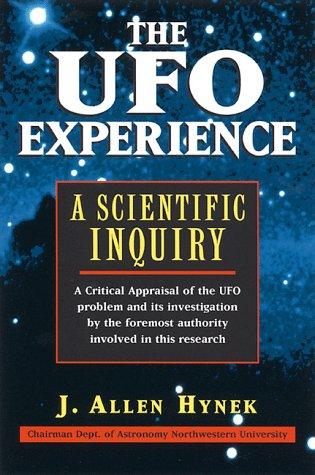
As an Amazon Associate, OverClassified may earn from qualifying purchases made through this link, at no extra cost to you.
Why This Is Essential Reading
The UFO Experience earns its place on this list because it is the field's foundational methodology text rather than another catalog of sightings: it is the book that taught ufology how to evaluate a report — through a shared classification vocabulary and an explicit two-axis rating framework — rather than simply collecting them. Hynek wrote it from a position almost no one else in the field's history has occupied, twenty years inside the exact government program he ultimately broke with in public, which gives even its weaker methodological claims (like the unreplicated 20-25 percent estimate) a documentary weight most competing books from the same era simply don't have. Reading it alongside Operation Trojan Horse, published two years earlier, shows two credentialed researchers reaching the same institutional conclusion — that the government's own investigation had failed on its own terms — while landing in almost opposite places on what, if anything, the phenomenon itself actually is.
Related Cases & Theories
Essential Viewing
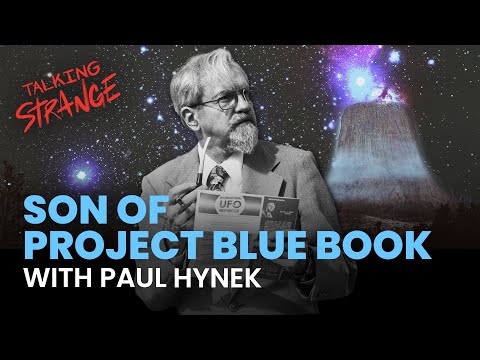
Project Blue Book's J. Allen Hynek's Son Paul On His Famous Father | Talking Strange
Den of Geek — Hynek's son Paul discusses his father's real career, the gap between the History Channel dramatization and the actual man, and the making of this book.
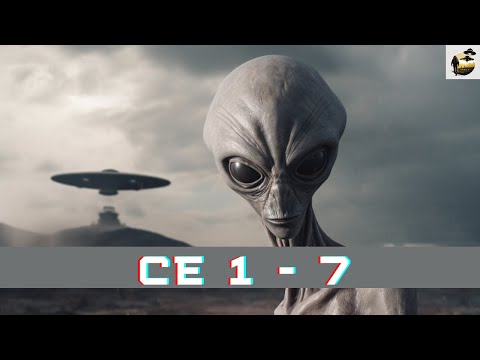
Close Encounters: 7 Classifications of ET Contact
Paranormal Travel — A walkthrough of Hynek's Close Encounter classification system and the later extensions researchers have added to his original three-tier scale.
Sources Cited
- “The UFO Experience: A Scientific Inquiry.” Amazon (Da Capo Press edition listing). amazon.com
- “J. Allen Hynek.” Wikipedia. en.wikipedia.org
- “Close encounter.” Wikipedia. en.wikipedia.org
- “Condon Report.” Encyclopedia.com. encyclopedia.com
- Murray, B. C. (1972). “Reopening the Question: The UFO Experience. A Scientific Inquiry.” Science, 177(4050), 688–689. science.org
- “Meet J. Allen Hynek, the Astronomer Who First Classified UFO 'Close Encounters'.” HISTORY. history.com
- “J. Allen Hynek — Project Blue Book, Quotes & Facts.” Biography.com. biography.com
- “CUFOS: The J. Allen Hynek Center for UFO Studies.” Enigma Labs. enigmalabs.io
- “UFOs at Close Sight: Astronomer J. Allen Hynek Review of the Condon Report.” Patrick Gross UFO Archive. ufology.patrickgross.org
- “How Did 'Close Encounters of the Third Kind' Receive Input From Astronomer Dr. J. Allen Hynek?” The Take. the-take.com
- “Hynek, J. Allen (Joseph Allen), 1910-1986.” Northwestern University Archival and Manuscript Collections. findingaids.library.northwestern.edu
- “The UFO Experience.” Smithsonian Institution catalog record. si.edu
- This site's own theory file: The Extraterrestrial Hypothesis, which lists Hynek as a key proponent and cites this book directly.
- This site's own case file: Socorro / Lonnie Zamora Encounter, one of the cases Hynek personally investigated.
- This site's own case file: The James E. McDonald Congressional UFO Testimony, for the parallel scientific critique of the Condon Report.
- This site's own key-figures entry: J. Allen Hynek, for his full biography and case connections.
Have corrections, additional research, or peer-reviewed sources? Help improve this entry.
Suggest an Edit