
Operation Trojan Horse
The Classic Breakthrough Study of UFOs
Core Thesis
The UFO phenomenon is not a recent, extraterrestrial development but the latest costume worn by a much older, non-human intelligence Keel calls the "ultraterrestrials" — an indigenous Earth presence that has manipulated human perception and belief for millennia, previously appearing as fairies, demons, and angels, and now arriving in the guise of flying saucers precisely because that is the costume a technological age expects to see.
About the Author
John Alva Keel was born Alva John Kiehle on March 25, 1930, in Hornell, New York, and raised by his grandparents in nearby Perry. He showed writing ambition early, publishing his own science-fiction fanzine and a newspaper column by age fourteen. In 1947 he moved to Greenwich Village, working as associate editor of Poets of America (1947–1949) and editor of Limelight (1949–1951) while contributing to early television and radio programs including Grand Central Station.
Drafted in 1951, Keel served with the American Forces Network in Frankfurt. After his 1954 discharge he traveled extensively through the Middle East and Asia, supporting himself writing for men's adventure magazines — material that became his first book, Jadoo (1957), which he promoted by performing with live cobras at Manhattan's Midtown Aquarium.
His entry into ufology was almost accidental: in 1966, Playboy commissioned Keel to write a UFO article, which the magazine ultimately rejected. The assignment nonetheless hooked him, and he spent the following years crisscrossing the country on his own money, interviewing witnesses directly rather than working from secondhand reports — a fieldwork-first approach that set him apart from most of his desk-bound ufological contemporaries and gave his case files an unusually firsthand texture.
Keel was, by his own description and by every account of his career, a working journalist rather than an academic or credentialed scientist. He held no science degree and conducted no peer-reviewed research; his authority rested entirely on volume and persistence of fieldwork. He nonetheless briefly held two minor federal advisory roles during the exact period he was writing this book — technical advisor to the Library of Congress (1968–69) and special consultant to the Office of Scientific Research and Bureau of Radiology (1968–71) — before consulting for the Department of Health, Education and Welfare.
He died July 3, 2009, at Mount Sinai Hospital in Manhattan. Despite later rumors that he died alone and forgotten, friends and his biographer were actively involved in his care and present at his death. The 2002 film adaptation of his 1975 book The Mothman Prophecies, starring Richard Gere, had already reintroduced his work to a new generation and prompted new editions of his earlier books, including this one.
Historical Context & Origins
Keel wrote Operation Trojan Horse during the same 1966–1969 stretch of independent fieldwork that produced his most famous investigation: repeated visits from New York to Point Pleasant, West Virginia, chasing the wave of sightings and entity encounters that would become known as the Mothman case. That fieldwork is the book's real engine — its electromagnetic-effects theory and its "window area" concept were both derived directly from what Keel experienced and measured (informally, with no instrumentation beyond his own senses and a compass) in the field, years before he turned the same material into the narrative account that became The Mothman Prophecies in 1975.
The book arrived at a specific inflection point for American ufology. The field had spent the 1950s and '60s dominated by what researchers call the "nuts-and-bolts" extraterrestrial hypothesis — the assumption that UFOs were literal, physical spacecraft piloted by beings from other planets. The University of Colorado's federally funded Condon Report, released in January 1969 while Keel was still finishing the manuscript, had just concluded that further scientific study of UFOs was unlikely to be justified — a verdict that led directly to Project Blue Book's 1969 closure and left a credibility vacuum in mainstream ufology that Operation Trojan Horse, published the following year by G.P. Putnam's Sons, stepped directly into.
Keel's timing meant the book landed as a genuine shock to the field's working assumptions rather than a minor variation on them. Where the extraterrestrial hypothesis required distant alien engineers and interstellar travel, Keel's ultraterrestrial framework required neither — only a non-human intelligence that had, in his account, been native to Earth and manipulating human belief systems throughout recorded history, adjusting its apparent form to match whatever supernatural vocabulary a given era found credible.
Core Arguments & Key Concepts
The book's title is its own thesis statement: like the original Trojan Horse, Keel argues, the UFO phenomenon presents a technological, seemingly benign facade that conceals a much older and more ambiguous intelligence operating with its own, not necessarily benevolent, agenda. His central concept, "ultraterrestrials," describes non-human beings indigenous to Earth rather than visitors from another planet — intelligences capable of manipulating matter and human perception directly, which he argued had appeared throughout history as fairies, demons, angels, and other folkloric beings long before the 20th century gave them the vocabulary of flying saucers.
Two field-derived concepts do most of the book's actual argumentative work. The first is the "window area" — a specific geographic location, identified through Keel's own Point Pleasant fieldwork, where sightings and entity encounters recur in disproportionate clusters over time rather than distributing evenly or randomly. The second, more specific still, is what Keel called the "Zone of Fear": a precise, repeatable patch of ground within Point Pleasant's abandoned wartime munitions site — the "TNT area" — where he reported being able to walk in and out of a sudden, localized sense of dread in real time, which he theorized was an electromagnetic effect acting directly on the brain rather than a subjective or psychological reaction.
That electromagnetic framework generalizes across the whole book: Keel proposed the intelligence behind the phenomenon operated "at the very highest possible point of the frequency spectrum," and cited a recurring pattern of vehicle ignition failures, radio static, and flickering streetlights reported by witnesses in close proximity to sightings as physical, if crude, evidence of a genuine field effect rather than pure suggestion.
The book is also the source of one of ufology's most durable pieces of folklore: Keel is widely credited with coining and popularizing the term "Men in Black" for the shadowy figures reported intimidating witnesses after an encounter, whom he treated as another manifestation of the same underlying ultraterrestrial intelligence rather than a separate phenomenon or, as many later investigators would argue, ordinary impersonators exploiting a receptive audience. Alongside the MIB material, Keel alleged the existence of what he called "silence groups" — an organized, non-specific effort to intimidate or quiet witnesses — a claim considerably vaguer and less evidenced than his electromagnetic material, and one later critics have singled out as the book's least substantiated thread.
Running beneath all of it is Keel's cross-cultural argument: that modern UFO contact reports track the same underlying structure as older folklore and religious visionary traditions — the biblical and apocryphal "Watchers," medieval accounts of demons and incubi, fairy and changeling folklore — which he read not as coincidence but as evidence that every era simply describes the same non-human presence using whatever belief system its own culture supplies.
Key Cases & Evidence Discussed
Operation Trojan Horse draws its evidentiary base from Keel's own multi-year, self-funded field interviews conducted across the United States between roughly 1966 and 1969, rather than from a single flagship case. The Point Pleasant, West Virginia investigation that generated the book's electromagnetic and window-area theories is the clearest example, though Keel reserved the full narrative account of that case — the Mothman sightings themselves — for his later, better-known 1975 book.
One case this site documents directly did pass through Keel's own reporting during this exact period: the November 1965 Long Prairie, Minnesota “Tin Can” encounter, which Keel profiled for True: The Man's Magazine in 1967 — an article whose framing helped fix the case's popular nickname nationally, and a useful illustration of how Keel's journalistic reach shaped which regional sightings became widely known ufological reference points, independent of his own theoretical framework.
Witness accounts of Men in Black encounters, gathered across Keel's various regional investigations, supply the book's other major evidentiary thread — first-person reports of unsettling visits from unidentified figures following a sighting, which Keel treated as data points for the same underlying intelligence rather than isolated, unrelated incidents.
Critical Reception & Controversies
Reviewing the 2013 Anomalist Books reprint, Fortean researcher Peter Rogerson credited the book's genuine pioneering significance — part of what he called forteana's "golden age" — for successfully "blowing the cobwebs off nuts and bolts ufology" at a moment the field badly needed a new direction. He was equally direct about its real shortcomings, singling out the book's complete lack of a bibliography as a specific, checkable deficiency, and noting that critics "taking Keel at his most literal" had identified numerous factual errors over the decades since first publication.
The book's central interpretive ambiguity has never fully resolved, even among sympathetic readers: it remains genuinely unclear whether Keel intended "ultraterrestrials" as a literal claim about electromagnetic, interdimensional beings, or as a deliberately loose metaphor for — in Rogerson's framing — humanity's own "perceptual failings, prejudices, belief systems and other manacles of the mind." Skeptical investigator Robert Sheaffer captured the same unease from the other direction, expressing concern that "Keel may actually believe in a great deal of the stuff" rather than presenting it as a heuristic or literary device — a worry rooted precisely in how the book never firmly commits to either reading.
The book's influence also proved historically contingent rather than permanent. Rogerson notes that Keel's framework fell out of favor during the 1980s, when the field's center of gravity shifted back toward literal, physical-craft narratives amid the resurgence of Roswell-style crash-retrieval claims — a reminder that even an influential paradigm shift in ufology can itself be superseded by an older one returning to fashion.
Because the original 1970 and 1996 editions carry no footnotes or source bibliography, independently verifying many of Keel's specific field claims — particular witness names, dates, or the precise circumstances of individual encounters — is difficult using the book alone; readers seeking primary documentation generally have to cross-reference his claims against his own later, more detailed case-specific books or against independent investigators' contemporaneous accounts of the same events.
Influence & Legacy
Operation Trojan Horse is the direct theoretical source of what this site catalogues as the Ultraterrestrial Hypothesis: the proposal that UAP intelligences are Earth-indigenous and perception-manipulating rather than interstellar visitors. Keel's "window area" concept, in particular, remains an active analytical framework — this site's own Egregore & Collective Thoughtform Hypothesis treats it as a close conceptual cousin of its own claim that sustained local attention can correlate with a self-perpetuating cluster of anomalous reports.
Keel arrived at much of this territory independently of, but in close historical parallel with, astronomer Jacques Vallée, whose 1969 book Passport to Magonia proposed a related folklore-continuity model the year before Operation Trojan Horse was published. The two researchers' near-simultaneous, independently developed arguments gave the folklore-continuity critique of nuts-and-bolts ufology far more weight than either book could have carried alone, and later researchers — including Ivan T. Sanderson, whose own Society for the Investigation of the Unexplained was investigating adjacent Fortean territory in the same period — worked the same general seam of non-extraterrestrial, Earth-indigenous explanations for anomalous phenomena.
The book's own popular afterlife runs through Keel's later, better-known work: he formalized the "ultraterrestrial" terminology in Our Haunted Planet (1971), then applied the full framework narratively to his own Point Pleasant fieldwork in The Mothman Prophecies (1975) — the book most readers now associate with Keel, and the one adapted into the 2002 film that reintroduced his ideas, Operation Trojan Horse included, to a mainstream audience three decades after original publication.
This site's own Foo Fighter Continuity Hypothesis file, which argues for a persistent, decades-spanning non-human presence rather than a recent arrival, sits in the same general lineage Keel's book helped establish: the idea that whatever produces UAP reports has been present and active long before the modern UFO era gave it a name.
The Book
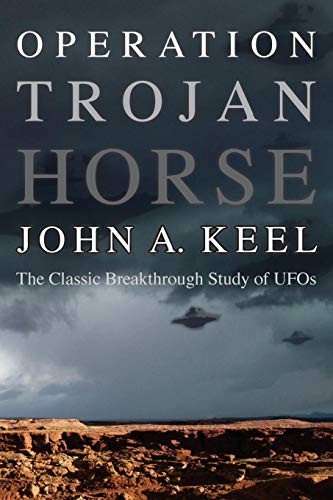
As an Amazon Associate, OverClassified may earn from qualifying purchases made through this link, at no extra cost to you.
Why This Is Essential Reading
Operation Trojan Horse earns its place on this list not because its claims are proven — many of its central ones, including the "silence groups" allegation, remain thin on independent evidence — but because it is the ur-text of an entire alternative branch of ufology that is still actively in use. Its core analytical tools — window areas, electromagnetic field effects, cross-cultural folklore continuity — show up directly in this site's own theory pages more than half a century after publication, doing real interpretive work rather than surviving as historical curiosities. Just as valuable is what the book models about how to read fringe research at all: even its most sympathetic reviewers hold it to real standards, flagging its missing bibliography and its unresolved literal-versus-metaphorical ambiguity rather than treating Keel's fieldwork as beyond question. A reader who finishes it having learned to ask those same questions of every other book on this list has gotten the most important thing it has to teach.
Related Cases & Theories
Essential Viewing
Art Bell Classic Interview: John A. Keel
Coast to Coast AM archive (2002) — A rare extended radio interview with Keel discussing his fieldwork and the ideas underlying his books, including this one.
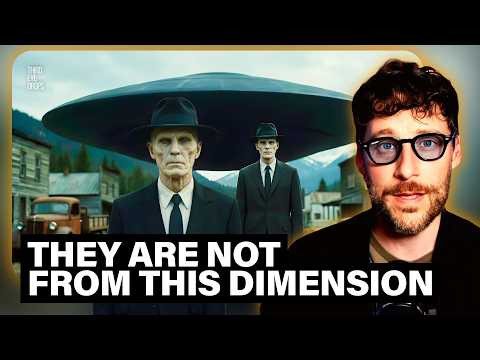
Ultraterrestrials: The Ancient Intelligence Behind UFOs
THIRD EYE DROPS with Michael Phillip — A walkthrough of the ultraterrestrial concept this book introduced and its continuity with older folklore traditions.
Sources Cited
- “Operation Trojan Horse (book).” Wikipedia. en.wikipedia.org
- “John Keel.” Wikipedia. en.wikipedia.org
- “OPERATION TROJAN HORSE: The Classic Breakthrough Study of UFOs.” Amazon (Anomalist Books edition listing). amazon.com
- “John A. Keel: A Brief Biography.” johnkeel.com (official estate site). johnkeel.com
- “Biography:John Keel.” HandWiki. handwiki.org
- “A Brief Look at the Life & Ideas of John A. Keel.” New Dawn Magazine. newdawnmagazine.com
- Rogerson, P. “Review: Operation Trojan Horse.” Magonia Review of Books. mrobsr.blogspot.com
- “John Keel Has Died.” Cryptomundo / Cryptozoonews. cryptozoonews.com
- “Window areas and how to find magnetic faults near you.” Chris Amandier, Medium. medium.com
- “The TNT Area.” TheMothMan Wikia. themothman.fandom.com
- “John Keel.” TheMothMan Wikia. themothman.fandom.com
- “McClintic Wildlife Management Area.” Wikipedia. en.wikipedia.org
- “Robert Sheaffer.” Wikipedia. en.wikipedia.org
- “Philip J. Klass.” Wikipedia. en.wikipedia.org
- This site's own theory file: The Ultraterrestrial Hypothesis, for the direct theoretical throughline from this book.
- This site's own theory file: Egregore & Collective Thoughtform Hypothesis, for the “window area” concept's continued analytical use.
- This site's own case file: Long Prairie “Tin Can” Encounter, for Keel's own period reporting on a specific case.
Have corrections, additional research, or peer-reviewed sources? Help improve this entry.
Suggest an Edit