
UFOs Explained
The Aviation Week Editor's Case-by-Case Blueprint for Mundane-Explanation UFO Skepticism
Core Thesis
UFOs Explained makes a single, repeated methodological claim across dozens of individual cases: that “unexplained” UFO reports are, in Philip J. Klass's own framing, cases where investigators have simply not yet worked hard enough to find the mundane, checkable explanation that is almost always available. Klass formalized this as his "UFOlogical Principle #1" — that honest, intelligent witnesses experiencing a brief, unexpected aerial event, especially one primed by prior UFO publicity, will routinely and sincerely misperceive balloons, aircraft, meteors, planets, or electrical phenomena as something far stranger than what actually occurred. Where his first book, UFOs — Identified (1968), had leaned heavily on a single physical hypothesis — that many sightings were ball lightning or atmospheric plasma discharges near high-tension power lines — UFOs Explained broadens the toolkit considerably, working case by case through radar malfunction, anomalous propagation, Perseid meteor activity, comparative photographic analysis, and, increasingly, direct hoax accusation, while explicitly ruling extraterrestrial visitation out from the start rather than treating it as one hypothesis among several.
About the Author
Philip J. Klass (1919–2005) was born in Des Moines, Iowa, and graduated from Iowa State College in 1941 with a bachelor's degree in electrical engineering — a credential this site's own key-figures entry on him already notes directly, and one that separates him from many of ufology's literary skeptics: Klass's background was in hardware, not journalism or philosophy of science. He spent roughly a decade as an avionics engineer at General Electric before joining Aviation Week & Space Technology in 1952, where he served as senior avionics editor for thirty-four years until his 1986 retirement, remaining a contributing editor for years afterward. He is widely credited with coining the term "avionics" itself, and his non-UFO output during that career — including the 1971 book Secret Sentries in Space, on U.S. reconnaissance-satellite programs — reflects a working technical journalist covering classified and cutting-edge aerospace systems for a trade readership, not a generalist writer parachuting into the UFO subject from outside.
Klass's entry into ufology dates to the mid-1960s, after reading John G. Fuller's bestselling account of the 1965 Incident at Exeter. Noting that a number of reported sightings clustered near high-voltage power lines, he proposed that atmospheric plasma discharges or ball lightning could account for a meaningful share of UFO reports — the thesis of his first UFO book, UFOs — Identified (1968). That plasma hypothesis drew immediate technical pushback: physicist James E. McDonald and the panel of plasma-physics consultants the Condon Committee separately assembled to evaluate it both judged the theory scientifically unsupported for the cases Klass cited it against. By the time UFOs Explained appeared six years later, Klass had already moved away from leaning on a single physical mechanism, applying instead the broader, case-specific toolkit of conventional astronomical, meteorological, and mechanical explanations — plus, increasingly, direct scrutiny of witness credibility — that would define the rest of his career.
In 1976 Klass became a founding fellow of the newly formed Committee for the Scientific Investigation of Claims of the Paranormal (CSICOP, now the Committee for Skeptical Inquiry), alongside Carl Sagan, Isaac Asimov, Paul Kurtz, Ray Hyman, James Randi, Martin Gardner, and Sidney Hook, and served on its executive council. Within CSICOP he went on to found and chair its dedicated UFO Subcommittee together with Robert Sheaffer and engineer James Oberg — the same founding partnership this site's own Bad UFOs entry on Sheaffer documents from the other side — making Klass and Sheaffer's working relationship one of organized skepticism's longest-running institutional collaborations rather than a coincidence of shared subject matter. Klass also edited the Skeptics UFO Newsletter for decades and remained the field's most visible, most frequently quoted professional skeptic through the 1970s, '80s, and '90s, investigating cases from Roswell to the Majestic-12 documents (which he was among the first to argue were forged) to Travis Walton's 1975 abduction claim, which he argued was a financial fabrication tied to a lapsed logging contract.
Klass's reputation inside ufology was, and remains, sharply contested in a way this site's own key-figures entry on him gestures toward but does not resolve in his favor: UFO historian Jerome Clark — whose own UFO Encyclopedia is this site's single most-cited reference work — has written that Klass argued for hoax explanations more often than nearly any other prominent skeptic, while rarely producing direct evidence to support the accusation rather than circumstantial motive. Allan Hendry, the Center for UFO Studies' own chief field investigator, went further, criticizing what he called Klass's modus operandi of "suppressing and distorting evidence, unscientific reasoning, ad hominem attacks, [and] smear campaigns." Klass died of cancer on August 9, 2005, in Cocoa, Florida, at 85, having spent nearly four decades as, in the words of multiple retrospectives on his career, arguably the single most influential and most prolific UFO skeptic of the twentieth century.
Historical Context & Origins
Klass published UFOs Explained in 1974, at the midpoint of American ufology's most institutionally active decade: the Condon Report (1969) had already delivered its mixed, contested government verdict; Socorro (1964), Lakenheath-Bentwaters (1956), and McMinnville (1950) were already established as the field's hardest, most frequently re-litigated cases; and Project Blue Book itself had been shut down in December 1969, leaving a documentary vacuum that both believer and skeptical writers were racing to fill with their own synthesizing accounts. Klass's own first book, UFOs — Identified (1968), had staked out a narrower, single-mechanism position on plasma and ball lightning that the Condon Committee's own consulted physicists had already found wanting by the time UFOs Explained went to press, giving the second book real internal pressure to broaden its explanatory toolkit rather than double down on the first.
The book arrived into a UFO-literature landscape still dominated by believer-side and government-report writing rather than sustained, book-length skeptical synthesis: aside from Donald Menzel's earlier astronomer's-eye critiques and the Condon Report's own (contested) conclusions, there was comparatively little in print applying Klass's specific case-by-case, records-and-interviews method across a wide sample of famous individual cases in one volume. This site's own Watch the Skies! entry on Curtis Peebles's 1994 history independently identifies "the ongoing work of engineer-turned-skeptic Philip J. Klass" as one of the closest existing models Peebles had to work from two decades later — direct, site-verified evidence that Klass's 1970s output, this book chief among it, occupied a genuine gap in the literature rather than joining an already-crowded skeptical shelf.
Structurally and rhetorically, UFOs Explained also functions as a direct rebuttal to the growing "scientific respectability" wing of ufology that figures like J. Allen Hynek were building in the same years, with Hynek's own Center for UFO Studies founded the year before, in 1973. Klass's insistence, formalized as his "UFOlogical Principle #1," that even sincere, technically credentialed witnesses routinely misperceive brief aerial events was pitched squarely against the growing argument that pilot, military, and scientist witnesses deserved a presumption of reliability ordinary civilian witnesses did not — a fault line this site's own case files on Lakenheath-Bentwaters and the Pascagoula abduction of Charles Hickson both still document in unresolved form.
The book received a positive contemporary trade review from Kirkus Reviews, which called it "one of the sanest books on the subject" and specifically credited Klass's critique of front-page sighting coverage paired with buried, unread retraction and explanation stories — a media-incentive criticism that has remained a recurring theme in skeptical UFO writing ever since, echoed decades later in this site's own Bad UFOs entry on Sheaffer's parallel complaint that solved cases rarely get the same attention as the original sighting.
Core Arguments & Key Concepts
The book's organizing device is Klass's set of ten "UFOlogical Principles," inductive rules of thumb distilled from years of case investigation rather than a single deductive theory. The most quoted, "UFOlogical Principle #1," holds that honest, intelligent, and even professionally trained observers will routinely and sincerely misidentify balloons, aircraft, planets, meteors, or electrical phenomena as something anomalous when the sighting is brief, unexpected, and made without instruments — especially once prior UFO publicity has primed the observer for what an anomalous object is supposed to look like. Unlike his 1968 book's narrower plasma/ball-lightning hypothesis, this principle is deliberately mechanism-agnostic: it explains why a witness misperceives something without committing Klass in advance to any single physical culprit, letting each chapter propose a different conventional cause tailored to its specific case.
A second, closely related argument concerns investigative effort rather than witness psychology: Klass repeatedly contends that a UFO case remains "unexplained" chiefly because no one has yet done the patient records-and-interviews work — pulling flight logs, checking astronomical almanacs, requesting radar tapes, re-interviewing secondary witnesses — to find the specific conventional explanation, not because the sighting genuinely defies one. This is the same investigative posture this site's own Bad UFOs entry documents Robert Sheaffer inheriting directly from Klass decades later, down to Sheaffer's own recurring practice of reopening supposedly "solved" or "unsolved" cases with newly available records.
A third argument, more legally and journalistically inflected than scientific, is Klass's direct scrutiny of witness credibility and financial motive: rather than treating a witness's sincerity as evidence of accuracy, Klass systematically asks who stood to gain — publicity, book contracts, tourism revenue, media payments — from a given report being believed. His Socorro chapter's hoax theory (discussed below) and his later, post-publication pursuit of Travis Walton's abduction claim both apply this same motive-first lens, a method Jerome Clark and Allan Hendry, discussed in Critical Reception below, both argued Klass leaned on more heavily than the evidence in any single case could actually support.
A fourth, more purely technical argument runs through the book's photographic and radar cases specifically: Klass repeatedly argues that apparent "impossible" performance — a radar target's extreme calculated speed, a photographed object's apparently anomalous size or motion — is almost always an artifact of an assumed distance or altitude that the original data never actually established, making the same comparative-measurement approach this site's own Mariana UFO Film and McMinnville UFO Photographs case files document him applying directly to two of this site's own most-contested photographic cases.
Key Cases & Evidence Discussed
The Lakenheath-Bentwaters Incident (Case File #015, 1956) receives one of the book's most detailed technical treatments, cited on this site's own case file directly to pp. 214–215: Klass argued the radar-visual case reduced to a combination of anomalous propagation off temperature-inverted air layers, a malfunctioning, newly installed MTI unit at the RAF Lakenheath radar station unfamiliar to its operators, and the unusually active Perseid meteor shower documented that same August night. This site's own file preserves the case's most direct challenge to that explanation: retired RAF controller Freddie Wimbledon's 1978 Sunday Times letter disputing the radar-malfunction account from firsthand recollection of simultaneous, multi-set solid returns, a rebuttal this site's own research treats as a genuine, still-unresolved complication rather than a settled skeptical win.
The Socorro Landing (Case File #029, 1964) is the site of the book's most aggressive and most subsequently disputed single explanation: Klass proposed that patrolman Lonnie Zamora colluded with Socorro, New Mexico's mayor, Holm Bursum, to stage a hoax UFO landing as a tourism-driven economic boost for land Klass identified as Bursum's own property. UFO historian Kevin Randle's later property-records research found the parcel had in fact passed through the Delia Harris estate and the Richardson family rather than ever belonging to Bursum — a documented factual error at the center of Klass's stated financial motive, and exactly the kind of specific, checkable claim this site's own case file on the incident treats as still genuinely unresolved rather than closed by either side.
The Pascagoula Abduction (Case File #016, 1973) of Charles Hickson and Calvin Parker at Pascagoula, Mississippi gets an early, direct skeptical treatment in this book, months after the October 1973 encounter: Klass flagged inconsistencies in Hickson's description of the creatures' mouths (variously a "hole" and a "slit") and challenged the polygraph test Hickson passed as administered by an inexperienced operator rather than the more rigorous police examiner Hickson later declined to sit for — an argument this site's own case file on the incident notes remains contested against the consistency of the men's account and the unedited police recording of their real-time terror.
Klass's comparative-photograph argument for the Mariana UFO Film (Case File #058, 1950) — directly comparing a still photograph of sunlight reflecting off an aircraft fuselage against frames of Nick Mariana's Great Falls footage to argue for a jet-reflection explanation — and his and Robert Sheaffer's shadow-timing critique of the McMinnville UFO Photographs (Case File #037, 1950), which placed the Trents' garage-shadow geometry at roughly 8:20 a.m. rather than their claimed early-evening sighting time, both belong to the same broader argument this book pioneered: that a photograph's apparent anomaly usually dissolves once its assumed shooting conditions are independently tested rather than taken on the photographer's word.
Critical Reception & Controversies
Contemporary trade reception was genuinely favorable. Kirkus Reviews called UFOs Explained "one of the sanest books on the subject," praising Klass's "UFOlogical Principle #1" and his critique of a press that gave sightings front-page coverage while burying the mundane explanations that so often followed; the reviewer suggested even a scientifically engaged UFO investigator like J. Allen Hynek would benefit from reading it. Multiple bookseller listings for the title also carry a jacket-blurb quote attributed to science-fiction author and satellite-communications pioneer Arthur C. Clarke, calling the book "a welcome breath of sanity in a field where it is sadly lacking" — a characterization this site's own research could not independently trace to a specific original publication venue, though it recurs consistently across independent secondary listings.
Reception from within ufology itself, and from some fellow skeptics, has been considerably harsher and more specific than the trade press's praise. UFO historian Jerome Clark — author of this site's own most-cited reference work, The UFO Encyclopedia — has written that Klass reached for hoax explanations more readily than almost any other prominent skeptic while rarely furnishing direct evidence for the accusation rather than circumstantial motive, a criticism the Socorro chapter's disputed land-ownership claim illustrates about as concretely as any single case in Klass's whole bibliography could. Allan Hendry, the Center for UFO Studies' own chief field investigator and author of the widely respected UFO Handbook (1979), went further still, characterizing what he called Klass's modus operandi as involving "suppressing and distorting evidence, unscientific reasoning, ad hominem attacks, [and] smear campaigns" — a specific methodological complaint from a fellow investigator working the same raw case material, not a generic believer-side dismissal.
The book's earlier, narrower plasma and ball-lightning hypothesis — carried over as background from 1968's UFOs — Identified and still present in places in this book's own case-by-case reasoning — drew its own specific technical rebuttal: physicist James E. McDonald and the panel of plasma-physics consultants the Condon Committee itself assembled both concluded the mechanism could not plausibly account for the electromagnetic and visual signatures reported in the specific cases Klass had cited it against, a rare instance of one of organized science's own UFO-skeptical investigations finding a leading skeptic's proposed physics wanting rather than merely finding a believer's case unproven.
Even readers sympathetic to organized skepticism have sometimes drawn an unfavorable generational comparison at Klass's expense: a reader review of Robert Sheaffer's 2015 Bad UFOs, cited directly on this site's own entry for that later book, judged that Sheaffer "is no Philip Klass in his writing abilities nor in continuing the latter's in-depth investigations leading to plausible solutions of puzzling cases" — a backhanded compliment that, whatever its fairness to Sheaffer, at least confirms Klass's own ground-up investigative method, imperfect as individual applications of it (Socorro chief among them) later proved to be, set the standard later skeptics were still being measured against four decades on.
Influence & Legacy
The most direct, documented throughline from this book runs to Robert Sheaffer: the two co-founded CSICOP's UFO Subcommittee together with engineer James Oberg in the years immediately following this book's publication, an institutional partnership this site's own Bad UFOs entry documents from Sheaffer's side in detail, and Sheaffer's own four-decade "Psychic Vibrations" column and case-reopening method — identify the mundane explanation first, keep checking back as new records surface — is a direct methodological descendant of the case-by-case, records-first approach this book established.
A second, independently verifiable throughline runs to Curtis Peebles's 1994 Watch the Skies!: this site's own entry on that book identifies "the ongoing work of engineer-turned-skeptic Philip J. Klass" as one of the closest existing models Peebles had for the kind of documentary, source-cited skepticism he set out to write at book length, placing this book as genuine infrastructure for the next generation's most institutionally prestigious skeptical history rather than merely an influence claimed after the fact.
Klass's own post-1974 career extended this book's method into some of ufology's highest-profile subsequent controversies: he was among the earliest and most persistent voices arguing the 1984-surfaced Majestic-12 documents were a modern forgery, he directly investigated Travis Walton's 1975 abduction claim as a probable financial fabrication tied to a lapsed logging contract, and he continued publishing case-by-case skeptical books — UFOs: The Public Deceived (1983), UFO Abductions: A Dangerous Game (1989), The REAL Roswell Crashed-Saucer Coverup (1997) — through the end of his life in 2005, each one extending this book's founding method to a new decade's most prominent cases.
Within this site's own catalogue specifically, this exact 1974 Random House edition (ISBN 0394492153) is cited across up to 11 separate case-file pages spanning cases from 1956 through 2022, making it, alongside this site's Bad UFOs and Watch the Skies! entries, one of the three most institutionally load-bearing skeptical secondary sources in the entire 562-title reading library — a citation footprint this site's own research treats as the clearest available evidence of the book's continuing working relevance, distinct from and in addition to its considerable historical importance.
The Book
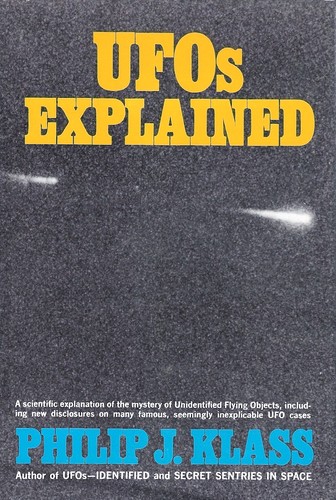
UFOs Explained
The Aviation Week Editor's Case-by-Case Blueprint for Mundane-Explanation UFO Skepticism
Find on Amazon →As an Amazon Associate, OverClassified may earn from qualifying purchases made through this link, at no extra cost to you.
Why This Is Essential Reading
UFOs Explained earns its place on this list as the founding document of a method, not merely of a conclusion: Philip J. Klass is the direct institutional and methodological ancestor of both Robert Sheaffer, his own hand-picked CSICOP UFO Subcommittee co-founder, and, at one remove, Curtis Peebles, whose own landmark history this site already documents citing Klass's "ongoing work" as one of its own closest available models. That lineage is genuine and well-documented — but so is this book's real cost of doing business: Klass's Socorro hoax theory, argued here with real specificity and real confidence, rested on a land-ownership claim later research showed to be factually wrong, and critics as credentialed as CUFOS's own chief field investigator, Allan Hendry, and UFO historian Jerome Clark both went on record accusing Klass of reaching for hoax explanations faster than his evidence could support. Read this book, in other words, exactly the way its own "UFOlogical Principle #1" asks every UFO witness to be read: as a genuinely rigorous, genuinely important, and genuinely fallible source, whose specific individual claims — Lakenheath's radar malfunction, Socorro's tourism hoax, Pascagoula's inexperienced polygraph operator — deserve exactly the same checkable, case-by-case scrutiny Klass spent his own career demanding of everyone else's.
Related Cases & Theories
Essential Viewing
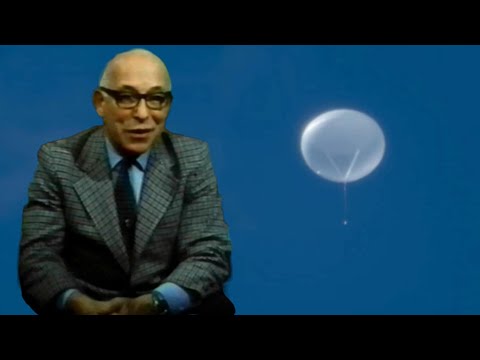
Philip J. Klass on Balloons & UFOs in 1982
Tom Owens UAP — Archival 1982 footage of Klass himself demonstrating and explaining balloon misidentification as a conventional UFO explanation, verified via YouTube oEmbed before inclusion.
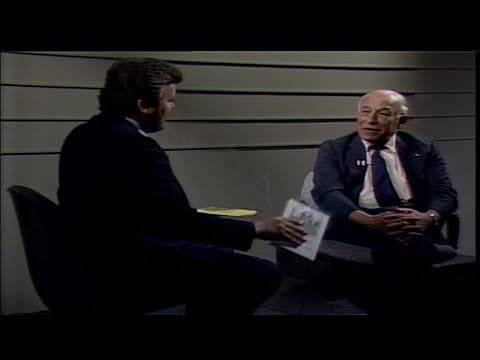
Mystery Wire - Philip Klass Interview - 1989
Mystery Wire — A 1989 on-camera interview with Klass discussing his skeptical investigative method and specific UFO cases, verified via YouTube oEmbed before inclusion.
Sources Cited
- Klass, Philip J. UFOs Explained. Random House, 1974 (ISBN 9780394492155 / 0394492153, cited here, matching the edition already cited across this site's own resources library). archive.org
- "Philip J. Klass." Wikipedia (biography: birth/death, education, Aviation Week career, entry into ufology, books, CSICOP founding, the "UFO curse," documented criticism from Jerome Clark and Allan Hendry). en.wikipedia.org
- "Klass, Philip J. 1919–2005." Encyclopedia.com (biography; credits Klass with coining the term "avionics"; career and bibliography summary). encyclopedia.com
- "Philip J. Klass." Skeptical Inquirer author page (contributor bio and bibliography of Skeptical Inquirer articles, 1977–2000). skepticalinquirer.org
- "UFOs Explained." Kirkus Reviews (contemporary 1974 trade review: "one of the sanest books on the subject"; discussion of "UFOlogical Principle #1" and media-coverage critique). kirkusreviews.com
- Randle, Kevin. "Philip Klass and the Socorro UFO Landing." A Different Perspective, September 2011 (documented property-records rebuttal of Klass's Bursum land-ownership hoax theory). kevinrandle.blogspot.com
- "Committee for Skeptical Inquiry." Wikipedia (CSICOP's 1976 founding, founding fellows, and history). en.wikipedia.org
- "Robert Sheaffer." Wikipedia (documents Sheaffer, Klass, and James Oberg as founding members of CSICOP's UFO Subcommittee). en.wikipedia.org
- "UFOs Explained." AbeBooks listing (ISBN 9780394492155 / 0394492153, Random House, 1974; bibliographic details and bookseller-listed jacket-blurb quotes). abebooks.com
- "UFOs Explained." Amazon.com product listing for ISBN 0394492153 / 9780394492155 (edition cited here, matching this site's own resources library citation). amazon.com
- This site's own case file: The Lakenheath-Bentwaters Incident, which cites this exact book directly to pp. 214–215 for Klass's radar-malfunction/anomalous-propagation explanation.
- This site's own case file: The Socorro Landing, for the case underlying Klass's disputed Bursum land-ownership hoax theory.
- This site's own case file: The Pascagoula Abduction, for Klass's polygraph and witness-consistency critique of Charles Hickson's account.
- This site's own case file: The McMinnville UFO Photographs, which documents Klass's and Robert Sheaffer's shadow-timing critique in detail.
- This site's own case file: The Mariana UFO Film, which documents Klass's comparative jet-reflection photograph argument.
- This site's own essential-reading entry: Bad UFOs, Robert Sheaffer's 2015 skeptical casebook and the direct methodological and institutional descendant of this book, including the CSICOP UFO Subcommittee co-founded with Klass.
- This site's own essential-reading entry: Watch the Skies!, Curtis Peebles's 1994 history, which this site's own research documents naming Klass's "ongoing work" as one of its own closest available models.
- This site's own essential-reading entry: The UFO Encyclopedia, Jerome Clark's reference work and the source of this site's documented criticism of Klass's hoax-first methodology.
- This site's own key-figures entry: Philip J. Klass, for his broader site-wide case connections beyond this book.
- This site's own resources library: Full Reading List, where this exact 1974 edition (ISBN 0394492153) is cited across up to 11 separate case-file pages.
Have corrections, additional research, or peer-reviewed sources? Help improve this entry.
Suggest an Edit