
Ball Lightning & Atmospheric Plasma Hypothesis
Proposes that a meaningful subset of glowing-orb and light-ball UAP sightings are genuine, if poorly understood, atmospheric electrical phenomena — ball lightning, St. Elmo's fire, or related self-organizing plasma generated by thunderstorms — rather than craft, distinct from the geologically-driven Earth Lights hypothesis.
Real Phenomenon, Contested ScopeCore Thesis
Ball lightning is not folklore. It is a real, if exceedingly rare, atmospheric electrical phenomenon that a Chinese field team spectroscopically recorded for the first time in history during a 2012 thunderstorm, publishing their results in Physical Review Letters. The U.S. Air Force invoked it, or a close cousin, to close two of the most contested cases in its own UFO files. But the same peer-reviewed science that proves the phenomenon real also shows it is small, brief, and tethered to an active lightning strike — and several of the sightings it has been used to explain describe something considerably larger, longer-lived, and untethered to any storm at all.
The Ball Lightning & Atmospheric Plasma Hypothesis occupies an unusual position among the theories on this site: it is the only one whose base phenomenon has been directly captured on video and spectrograph by working scientists and published in one of physics' most prestigious peer-reviewed journals. That fact cuts both ways. It means this hypothesis, unlike most on this site, is not merely plausible physics stretched to cover an anomaly — it is confirmed physics, already used by the U.S. Air Force as its official explanation for at least two of the cases in this archive. It also means this hypothesis is unusually testable, and the same rigorous science that confirms the phenomenon's reality sets tight, specific limits — on size, duration, color evolution, and the necessity of an active thunderstorm — that a meaningful fraction of the sightings attributed to it do not actually fit.
This page treats "ball lightning" and "atmospheric plasma" as a family of related but mechanistically distinct real phenomena — true ball lightning (a free-floating luminous sphere, cause still debated), St. Elmo's fire (a well-understood corona discharge on grounded pointed objects), and other transient thunderstorm-associated plasma — rather than a single unified explanation, and asks case by case whether the fit is genuinely strong or merely convenient.
Origins and Development
Ball lightning has been reported in the scientific and popular literature for centuries, but for most of that history it existed only as anecdote — a luminous, floating sphere, usually reported during or immediately after a thunderstorm, with no laboratory-confirmed mechanism and no direct instrumented observation of a natural occurrence. That changed on an evening in July 2012, when a Chinese research team led by Jianyong Cen, alongside Ping Yuan and Simin Xue of Northwest Normal University, was in the field on the Qinghai Plateau studying ordinary cloud-to-ground lightning spectra when a natural ball-lightning event formed roughly 900 meters from their equipment, immediately following a lightning strike. Their instruments — including a slow-scan spectrograph originally aimed at conventional lightning — happened to capture the full event: a luminous sphere roughly five meters in diameter that rose, drifted, and changed color from bright purple-white through orange and white to red before dissipating after roughly a second and a half. The team published their spectroscopic and video data in Physical Review Letters on January 17, 2014, the first peer-reviewed instance of natural ball lightning ever spectroscopically confirmed. Crucially, the recorded spectrum showed emission lines for silicon, iron, and calcium — matching the composition of the local soil — lending strong observational support to a 1999–2000 theoretical model (Abrahamson and Dinniss) proposing that a lightning strike can vaporize soil silicon into airborne nanoparticles that then slowly oxidize, releasing the light and heat observed as the glowing sphere.
St. Elmo's fire is a mechanistically distinct, far better understood phenomenon: a corona discharge that occurs when the atmospheric electric field around a grounded, pointed conductive object — a ship's mast, a church spire, an aircraft's wingtip or nose — grows strong enough (on the order of 30,000 volts per centimeter) to ionize the surrounding air into a faintly glowing plasma, typically blue or violet in nitrogen- and oxygen-rich air. Unlike ball lightning, St. Elmo's fire requires no free-floating sphere and no direct lightning strike, only a sufficiently charged storm environment and a sharp conductive point to concentrate the field — conditions historically well documented on ships and, in the aviation era, on aircraft flying near thunderstorms.
Long before Cen's team ever pointed a spectrograph at the Qinghai sky, the U.S. Air Force had already reached for "ball lightning" as an official explanation for two of the most contested UFO reports in its own files: the Levelland, Texas encounters of November 2–3, 1957, and the Minot Air Force Base incident of October 24, 1968. Both explanations predate the phenomenon's first scientific confirmation by decades, meaning the Air Force's own investigators were invoking a phenomenon whose real physical limits nobody could yet rigorously test against.
Key Claimed Evidence
- The 2012 Qinghai Plateau spectroscopic recording: The first-ever peer-reviewed, spectroscopically confirmed video capture of natural ball lightning, published in Physical Review Letters, establishing beyond reasonable dispute that the phenomenon is real.
- The Levelland "ball lightning or St. Elmo's fire" ruling: Project Blue Book's official November 15, 1957 case closure, attributing roughly fifteen independent witness reports and documented vehicle ignition failures to atmospheric electricity generated by a passing storm.
- The Minot AFB "plasma similar to ball lightning" ruling: Blue Book chief Hector Quintanilla's official attribution of a B-52 crew's radar contact and dual UHF radio failures to a ball-lightning-like plasma.
- Decades of ongoing instrumented study at Hessdalen, Norway: The one location on Earth where a genuine, continuously operating scientific field station has spent over four decades recording spectroscopic and radar data on a recurring, plasma-consistent luminous phenomenon, without yet reaching a fully settled mechanism.
Government & Military Programs
Unlike theories built on speculative extensions of classified research, this hypothesis's government connection is direct and official: "ball lightning" and "plasma similar to ball lightning" are themselves the U.S. Air Force's own on-the-record explanations, issued by Project Blue Book leadership in two separate, formally closed case files. No dedicated government research program has ever been established specifically to study ball lightning as a UAP explanation; instead, the phenomenon has functioned as a ready-made, scientifically respectable-sounding conventional explanation Blue Book investigators reached for when a case needed to be closed without invoking an exotic craft. AARO's own public reporting has not revisited either the Levelland or Minot ball-lightning rulings in any released document this file has located, leaving both explanations formally on the books but not independently re-examined by modern UAP-focused government analysts.
Skeptical Critiques & Limitations
The hypothesis's central weakness is precisely the flip side of its central strength: because the base phenomenon is now rigorously characterized, its explanations can be tested against hard physical limits, and in at least one flagship case they fail that test. The Levelland case file's own analysis, cross-referencing U.S. Weather Bureau records that physicist James E. McDonald and astronomer J. Allen Hynek independently reviewed, found no active thunderstorm in progress during the actual encounter window — a serious problem for an explanation that requires one. The best available modern science on the phenomenon's actual scale, the Qinghai spectroscopic recording, documented a sphere roughly five meters across that lasted on the order of a second and a half, tethered to a specific lightning strike; the Levelland witnesses described a 100–200-foot object that reappeared at separate locations across roughly four hours, with no lightning strikes reported by any of the ten independent witnesses. The American Meteorological Society's own glossary entry for ball lightning still describes the phenomenon as "controversial due to the lack of unambiguous physical evidence," and notes its exact generating mechanism remains unsettled even after Cen's team's landmark observation.
The size and duration mismatch recurs whenever the explanation is stretched to cover extended, structured, or repeatedly reappearing sightings. Physicist and Galileo Project director Avi Loeb, surveying modern Pentagon-reported "UAP orb" sightings, has noted that typical ball lightning displays a lifetime of roughly ten seconds and a diameter around thirty centimeters, while many recent orb reports describe objects persisting for hours — a duration gap Loeb himself concludes ball lightning, on any currently understood mechanism, cannot bridge. This file treats that gap as the hypothesis's sharpest limitation: it is strong, well-supported science for a narrow category of brief, small, storm-tethered luminous events, and a considerably weaker fit for the large, extended, or repeatedly maneuvering objects a significant share of UAP reports actually describe.
Theory Development Timeline
| Date | Development |
|---|---|
| Nov. 2–3, 1957 | The Levelland, Texas encounters occur; roughly fifteen witnesses report a glowing object that disables vehicle ignition systems. |
| Nov. 15, 1957 | Project Blue Book, under Capt. George T. Gregory, officially closes Levelland as "Astronomical/Weather" — ball lightning or St. Elmo's fire generated by an electrical storm. |
| 1963 | Harvard astronomer Donald Menzel defends a ball-lightning-family explanation for contested UFO reports in The World of Flying Saucers. |
| Oct. 24, 1968 | The Minot Air Force Base incident occurs; a B-52 crew's radar and UHF radios are affected by an unexplained object. |
| 1968 | Blue Book chief Hector Quintanilla attributes the Minot radar and radio anomalies to "plasma, similar to ball lightning." |
| 1981 | Residents of Hessdalen, Norway begin reporting a sustained wave of anomalous lights, later drawing the longest-running instrumented scientific field study of any recurring luminous phenomenon. |
| Jul. 2012 | Jianyong Cen's team spectroscopically records natural ball lightning on the Qinghai Plateau, China. |
| Jan. 17, 2014 | The Qinghai recording is published in Physical Review Letters, the first peer-reviewed spectroscopic confirmation of natural ball lightning in history. |
| Jul. 2026 | Avi Loeb publicly weighs ball lightning against modern Pentagon-reported UAP orb sightings, concluding the duration mismatch remains unresolved. |
Theoretical Alignment
This hypothesis is deliberately distinct from this site's Earth Lights & Tectonic Strain Hypothesis, even though both propose that self-luminous plasma spheres, not craft, explain a subset of sightings. Earth Lights locates the energy source underground, in piezoelectric discharges along strained quartz-bearing fault lines; this hypothesis locates it in the atmosphere itself, in thunderstorm electric fields and lightning-strike byproducts. The two are not mutually exclusive — a location like Hessdalen could plausibly involve both a favorable underlying geology and a genuinely electrically active atmosphere — but they make different, independently testable claims about where the energy actually comes from, and this file treats them as competing explanations for any single case rather than interchangeable labels for "unexplained light."
Sensor & Instrumentation Detection Profile
This is one of the only hypotheses on this site whose core claim has already been directly validated by dedicated scientific instrumentation: Jianyong Cen's team used a purpose-built slow-scan spectrograph to record an actual emission spectrum, not merely a photograph, of a natural ball-lightning event. That same instrumented rigor is precisely what is missing from the historical UFO cases the explanation has been applied to. Neither Levelland nor Minot AFB had any spectrographic, radar cross-section, or magnetometer coverage capable of confirming or ruling out a plasma phenomenon at the time; Minot's B-52 radar registered a large, discrete return rather than the diffuse signature a genuine plasma sphere would be expected to produce. Hessdalen is the exception: its automated measurement station, running continuously since 1998 with radar, magnetometers, cameras, and spectrum analyzers, is the only site on this file's radar applying Cen-team-grade instrumentation directly to a recurring, UFO-adjacent light phenomenon in the field, and even there researchers including Massimo Teodorani and Bjørn Gitle Hauge have not converged on a single settled mechanism.
Environmental & Geospatial Context
The hypothesis is inherently weather-dependent in a way few others on this site are: true ball lightning, on all current science, requires an active or very recently active thunderstorm and a lightning strike as its energy source, while St. Elmo's fire requires a strongly charged storm environment but no discharge event. This makes the hypothesis unusually falsifiable on environmental grounds alone — a sighting reported under clear, storm-free skies cannot be ball lightning under any currently published mechanism, however well it might otherwise fit the visual description. This is exactly the environmental fact that undermines the Levelland ruling, where the weather record contemporaneous witnesses and later independent reviewers documented does not support an active electrical storm during the encounter window, and it is exactly the fact Hessdalen's automated station was built to measure directly rather than reconstruct after the fact from decades-old witness recollection.
Observer Credibility & Occupational Profile
The hypothesis draws on an unusually strong mix of observer types across its supporting and contested cases: Jianyong Cen's team were credentialed atmospheric physicists operating dedicated scientific instrumentation, producing the gold standard of evidence this file can cite for any phenomenon. The Levelland witness pool included a sheriff, a deputy, a police dispatcher, and a Texas Tech engineering student who specifically noted his car's ammeter needle swinging toward "discharge" — a technically literate observation, though one the case file's own analysis argues fits a strong localized electromagnetic field of unclear origin at least as well as ball lightning specifically. The Minot B-52 crew were trained Strategic Air Command aircrew operating radar and radio equipment they knew intimately, whose own investigating officer flagged the ball-lightning explanation as leaving several specific details unresolved even by his own account.
Historical Precedents & Archive Matches
Ball lightning has one of the longest documented folk and scientific histories of any phenomenon this site addresses, with written reports extending back centuries before the UFO era began, and St. Elmo's fire has been recorded by sailors and later aviators for even longer under a name derived from St. Erasmus of Formia, patron saint of sailors. Within ufology specifically, "it was probably ball lightning" has functioned since at least the 1950s as one of the U.S. Air Force's standard-issue conventional explanations, applied not only to Levelland and Minot but referenced in Blue Book-era discussions of other electromagnetically-associated sightings more broadly. This gives the hypothesis a precedent unlike almost anything else on this site: it is not a modern reinterpretation of old cases through a new theoretical lens, but the literal historical explanation contemporaneous investigators actually gave, now subject to a scientific rigor those investigators did not yet have available to them.
Material Analysis
Unusually for a theory on this site, this hypothesis's base phenomenon has direct physical and spectroscopic evidence behind it: Cen's team's spectrograph recorded actual emission lines — silicon, iron, calcium — tying the observed light directly to vaporized soil material at the strike site, a level of material-analysis rigor no UAP case file in this archive currently matches. None of that physical evidence, however, transfers backward to Levelland or Minot AFB, where no debris, scorch marks, or soil samples were ever recovered or analyzed for a plasma signature; the "ball lightning" rulings in both cases were judgment calls based on witness testimony and general storm conditions, not on any material evidence specific to either incident.
The Conventional Explanation Candidate
For this hypothesis, unusually, the "conventional explanation" and the "hypothesis itself" are close to the same thing — the interesting question is not whether ball lightning is real (it demonstrably is) but whether it is the right explanation for any specific reported sighting. Where a report is brief, small, storm-associated, and involves a single luminous sphere near the ground, ball lightning or St. Elmo's fire remains this file's leading conventional candidate. Where a report describes an extended, large, maneuvering, or storm-independent object — as this file judges Levelland's multi-hour, multi-location pattern and its officially reviewed lack of contemporaneous thunderstorm activity to be — the explanation strains past its own scientifically documented limits, and a more targeted account (misidentified conventional light source, genuine sensor anomaly, or simply unresolved) is the more defensible conclusion.
Supporting This Hypothesis
- Natural ball lightning is now peer-reviewed, spectroscopically confirmed fact, not speculation — the 2012 Qinghai Plateau recording, published in Physical Review Letters, is uncontested science
- The U.S. Air Force has twice used ball lightning or a close relative as its official, on-the-record explanation for contested cases in this very archive (Levelland, Minot AFB)
- St. Elmo's fire is a well-understood, centuries-documented corona discharge phenomenon with a clear, uncontroversial physical mechanism
- Hessdalen's four-decade instrumented study demonstrates genuine, real-world plasma-consistent luminous phenomena recurring at a specific site under active scientific measurement
Against This Hypothesis
- The best scientifically documented ball-lightning event lasted roughly 1.5 seconds and spanned about five meters — a poor physical match for hours-long, extended UAP orb reports Avi Loeb himself has flagged as exceeding the phenomenon's known limits
- The Levelland case's own weather-record review found no active thunderstorm during the encounter window, directly undermining the mechanism the official ball-lightning ruling requires
- The American Meteorological Society still characterizes ball lightning's generating mechanism as unsettled and its physical evidence base as limited, even after the Qinghai observation
- Neither the Levelland nor the Minot AFB ruling was supported by any spectrographic, radar-cross-section, or material evidence specific to the incident itself — both were judgment calls, not measurements
- Hessdalen's own leading researchers have not converged on ball lightning specifically as the site's mechanism, favoring piezoelectric or other explanations still under active study
Theoretical Assessment Profile
Six-domain evaluation of this hypothesis
Key Proponents
Jianyong Cen
Led the 2012 field team that spectroscopically recorded the first scientifically confirmed natural ball-lightning event, published in Physical Review Letters in 2014.
Avi Loeb
Publicly weighed ball lightning against modern Pentagon-reported UAP orb sightings in 2026, concluding the phenomenon's documented duration and size limits leave the comparison unresolved rather than settled.
Donald H. Menzel
Defended a ball-lightning-family explanation for contested UFO reports in his 1963 book The World of Flying Saucers, arguing the phenomenon's inherently transient nature made such cases difficult to rule out.
Related Cases
Further Reading & Recommended Literature
Ball Lightning: An Unsolved Problem in Atmospheric Physics
The definitive scientific survey of ball lightning research, drawing on over 200 first-hand accounts and decades of physics literature on proposed mechanisms.
UFO: The Inside Story of the US Government's Search for Alien Life Here—and Out There
An extensively researched history of U.S. government UFO investigation, including the Blue Book-era conventional-explanation rulings this hypothesis directly engages.
UFOs: Generals, Pilots, and Government Officials Go on the Record
A compilation of credentialed testimony useful for weighing how often, and how well, conventional atmospheric explanations actually account for reported UAP behavior.
The UFO Experience: A Scientific Inquiry
The foundational text on scientifically rigorous UFO classification, including Hynek's own firsthand review of the Levelland weather record this file draws on.
Watch the Skies! A Chronicle of the Flying Saucer Myth
A skeptical history of the flying saucer phenomenon, useful comparative context for how often Blue Book reached for atmospheric explanations to close contested cases.
DISCLOSURE: Some links above are affiliate links. If you purchase through them, OverClassified receives a small commission at no additional cost to you. This helps support independent research.
Essential Viewing
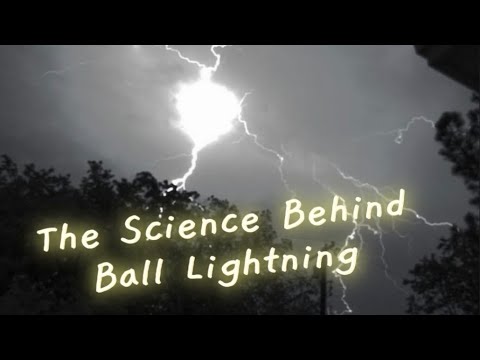
The Science Behind Ball Lightning
ConnectEd — a clear walkthrough of the leading physical mechanisms proposed for natural ball lightning.

Avi Loeb Weighs Ball Lightning Against UAP Orbs
NewsNation — Loeb discusses why ball lightning and current drone technology both struggle to explain some reported orb sightings.
Sources Cited
- Cen, J., Yuan, P., & Xue, S. (2014). "Observation of the Optical and Spectral Characteristics of Ball Lightning." Physical Review Letters, 112(3). physics.aps.org
- "First instance of ball lightning captured on video and spectrographs." Phys.org. phys.org
- "Strange Ball Lightning Caught on High-Speed Video." Live Science. livescience.com
- Loeb, A. (2026). "Are UAP Orbs an Extension of Ball Lightning?" Medium. avi-loeb.medium.com
- "Ball Lightning and the Unidentified Aerial Phenomena Mystery." The Debrief. thedebrief.org
- "Ball lightning." Max Planck Institute for Plasma Physics. ipp.mpg.de
- "Phenomena: St Elmo's fire explained." Geographical. geographical.co.uk
- "What Is St. Elmo's Fire?" Live Science. livescience.com
- "Saint Elmo's fire." Encyclopaedia Britannica. britannica.com
- "Hessdalen lights." Wikipedia. en.wikipedia.org
- "Project Hessdalen." web.hessdalen.org
- Stenhoff, M. (1999). Ball Lightning: An Unsolved Problem in Atmospheric Physics. Springer.
- Graff, G. M. (2023). UFO: The Inside Story of the US Government's Search for Alien Life Here—and Out There. Avid Reader Press.
- Kean, L. (2010). UFOs: Generals, Pilots, and Government Officials Go on the Record. Harmony Books.
- Hynek, J. A. (1972). The UFO Experience: A Scientific Inquiry. Da Capo Press.
- Peebles, C. (1994). Watch the Skies! A Chronicle of the Flying Saucer Myth. Smithsonian Institution Press.
- This site's own case files: Levelland and Minot Air Force Base, for the original Project Blue Book ball-lightning rulings and their documented evidentiary records.
Have corrections, additional research, or peer-reviewed sources? Help improve this entry.
Suggest an Edit