
The UFO Files
The Inside Story of Real-Life Sightings — The National Archives' Own History of Britain's Declassified UFO Record
Core Thesis
The UFO Files: The Inside Story of Real-Life Sightings is, uniquely among the books in this library, a UFO book published by a national government's own archive. The National Archives at Kew issued it in 2009, in the middle of the multi-year programme that released the Ministry of Defence's accumulated UFO correspondence to the public, and it was written by Dr David Clarke, the Sheffield Hallam University journalism academic who had been working with the Archives on that release since 2008. Its argument is neither that UFOs are extraterrestrial craft nor that they are nothing: it is that Britain kept an extraordinarily complete written record of what its citizens, its police, its airline pilots and its air-defence radar operators actually reported, that this record is now open, and that reading it changes the question. What emerges from the files, in Clarke's reading, is less a story about objects than a story about an institution — how a defence ministry with no scientific interest in the subject nonetheless spent six decades logging, sorting, occasionally investigating and consistently minimising reports it could not account for, and what its own internal reasoning looked like while it did so. The skepticism is genuine and stated: Clarke's framing throughout emphasises the role of social and cultural factors in shaping UFO belief. The documents are equally genuine, and he does not soften the ones that resist explanation.
About the Author
David Clarke is a senior lecturer in journalism at Sheffield Hallam University and, since 2008, has worked with The National Archives on the release of the Ministry of Defence's UFO files — a consultancy that makes him the only writer in this library with a formal role inside a government declassification programme. His academic background is in folklore as well as journalism, and both disciplines are visible in his method: he treats a sighting report as a document with a provenance, an author, an institutional destination and a cultural context, rather than as a raw data point to be believed or dismissed.
That dual training is what separates this book from the two adjacent genres it might be mistaken for. It is not a cover-up exposé in the Timothy Good tradition, and it is not a debunking in the Philip Klass tradition. Clarke's earlier work with Andy Roberts — including Out of the Shadows (2002) and Flying Saucerers (2007) — had already established the approach: a social history of British ufology written by people who take both the documents and the believers seriously as subjects.
Clarke's own FOI work is a substantive part of the record this book describes. He was the researcher whose Freedom of Information campaign brought Project Condign — the MoD's own classified 2000 study of "Unidentified Aerial Phenomena in the UK Air Defence Region" — into public view, and his subsequent writing remains the fullest single account of that study's origins and conclusions. A book about the archive written by someone who materially expanded the archive is an unusual arrangement, and worth noting on both sides of the ledger: it gives him access and standing no outside author has, and it means the book is not a disinterested assessment of the release programme he helped run.
He has continued the work since. Britain's X-traordinary Files (2014) applies the same archival method to a wider range of unexplained material at Kew, and his UFO Drawings from the National Archives (2017) reproduces witness sketches from the same collection. His personal list of the "Top 10 UFO documents at The National Archives" — which includes the AIR 20/9320 file on the 1957 West Freugh radar case, cited on this site's own case file for that incident — is a useful index of where he thinks the real material is.
Historical Context & Origins
The book belongs to a specific and now largely concluded moment in official transparency. Between 2008 and 2013 the Ministry of Defence transferred its entire surviving UFO correspondence archive — roughly 60,000 pages across more than 200 files — to The National Archives in tranches, each release generating a fresh wave of press coverage. The programme ran in parallel with comparable moves in the United States, Canada and France, and it followed the MoD's own decision in December 2009 to close its UFO desk entirely on the grounds that it served no defence purpose. This book was published into the middle of that process, not after it.
The archive it describes begins earlier than most readers expect. The MoD's institutional engagement with the subject starts with the Flying Saucer Working Party, a small classified body convened in 1950 under the Ministry of Defence's Directorate of Scientific Intelligence, whose 1951 report concluded that the phenomena reported to date were attributable to astronomical or meteorological misidentification, mistaken aircraft identification, optical illusions, psychological delusion, and deliberate hoaxes, and recommended no further investigation. That report set British policy for decades and is one of the earliest formal government assessments of the subject anywhere in the world.
The other bookend is Project Condign. Between 1996 and 2000 the Defence Intelligence Staff commissioned a classified study of Unidentified Aerial Phenomena in UK airspace; its report concluded that the phenomena were real but attributable to poorly-understood atmospheric plasma effects, and recommended that pilots not attempt to manoeuvre close to them. It was Clarke's FOI request that forced its release in 2006, and this site maintains a dedicated Project Condign file on it.
It also matters that this is a British archive rather than an American one, because the institutional posture is different in a way the files make visible. The MoD never ran anything comparable to Project Blue Book — no dedicated investigative unit, no case-closure methodology, no public findings. What it had was a desk that received reports, checked them against known air activity, and filed them. The absence of a research programme is itself the archive's central finding, and Clarke's book is largely an account of how that absence was maintained. The National Archives' own research guide records the specific mechanism: until 1967, MoD policy was to destroy UFO files at five-yearly intervals, "so many records have been lost," and only from 1970 were surviving files systematically reviewed for eventual public release.
Core Arguments & Key Concepts
The files are the story. Clarke's organising principle is that the documentary record of official handling is more informative, and more checkable, than any argument about what the objects were. A memo declining to investigate, a marginal note about press handling, a briefing prepared for a parliamentary question — these are recoverable facts about a real institution, in a subject where almost nothing else is.
Minimisation was policy, not conspiracy. The book's most useful corrective is its account of why the MoD said so little. Clarke's reading of the files is that the department's consistent public line reflected a genuine and openly-stated internal judgment that UFO reports had no defence significance, combined with an acute institutional anxiety about ridicule and about press management — not a program of concealment protecting recovered hardware. That is a materially different claim from either "nothing to see" or "cover-up," and it is one the documents support better than either alternative.
Some files genuinely resist explanation, and the book says so. Clarke is not writing a debunking. He has separately characterised the 1991 Alitalia AZ284 near-miss over west London — Captain Achille Zaghetti's report of a khaki-brown missile-shaped object passing above his MD-82 at 22,000 feet, with confirmed London ATC radar contact and a joint Civil Aviation Authority and RAF Uxbridge investigation recorded in file DEFE 24/1953 — as among the MoD's most impressive UFO cases. That a National Archives-published book identifies specific files as unexplained is more evidentially interesting than a hundred pages of assertion.
Cultural history is not a dismissal. Clarke's emphasis on social and cultural factors in shaping UFO myths is the part of his method most likely to be misread as debunking by proponents and as fence-sitting by skeptics. It is neither. His argument is that the shape a report takes — what witnesses expect to see, what vocabulary they use, which authority they contact — is culturally structured, and that recognising this is a prerequisite for isolating whatever residue is not.
Transparency has limits that are administrative rather than sinister. A recurring theme is how much of the record was routinely destroyed under ordinary retention schedules long before anyone thought it historically significant. The gaps in the archive are, in Clarke's account, mostly the ordinary attrition of government paperwork — a mundane explanation that is nonetheless genuinely consequential for what can now be known.
Key Cases & Evidence Discussed
Rendlesham Forest (Suffolk, December 1980). The best-known British case, and the one whose dedicated MoD file was opened at The National Archives in August 2009, the same year this book appeared. Clarke treats Rendlesham within the context of Cold War anxiety and public fear rather than as a standalone mystery, and the timing means the book is effectively a contemporaneous guide to a file release that was still news.
West Freugh (Wigtownshire, Scotland, April 1957). The multi-radar tracking incident at RAF West Freugh, documented in AIR 20/9320 — a file Clarke lists among his personal "Top 10 UFO documents at The National Archives." This site's West Freugh case file cites him for exactly that assessment.
The Calvine photographs (Perthshire, August 1990). The most consequential British photographic case of the modern era, and one where Clarke's own investigative work — not merely his archival commentary — is part of the record. This site's Calvine case file draws on his research directly.
The Berwyn Mountains incident (Wales, January 1974). Clarke and Andy Roberts' work on Berwyn is among the strongest examples of the archival method producing a real result: the combination of a documented earthquake, a documented meteor shower, and documented poaching activity accounts for the event's components without requiring anything unexplained, and it was reconstructed from records rather than asserted.
Lakenheath–Bentwaters (Suffolk, August 1956). The radar-visual sequence that became Case 2 of the Condon Report's unexplained residue, and one of the very few Anglo-American cases with substantial documentation on both sides of the Atlantic. This site's case file cites this book among its sources.
The Alitalia AZ284 near-miss (west London, April 1991). Discussed above, and the case Clarke has been most publicly willing to describe as impressive on the documents. See this site's West London / Heathrow UFO Sighting file for the full DEFE 24/1953 record.
Additional files cited on this site from this book. The book's reach across British cases is unusually wide for a single volume: this site's case files for the Livingston encounter (1979), the RAF Boulmer sighting (1977), the RAF Cosford / Shawbury sighting (1993), the St Athan police helicopter chase, the Captain William Schaffner incident (1970), and the Dimona/Negev shootdown all draw on it.
Critical Reception & Controversies
The book's reception was shaped decisively by its publisher. A UFO book issued under The National Archives' own imprint is reviewed as a work of official archival history rather than as a genre title, and it was covered accordingly in the British broadsheet press — The Sunday Times reviewed it in September 2009, and the file-release news cycle it accompanied gave it a level of mainstream attention no independent UFO book of the period received.
Within British ufology, the reception was more mixed and more interesting. Clarke's insistence on cultural and social explanation, and his willingness to reconstruct cases like Berwyn out of ordinary components, made him unpopular with proponents who had expected the file releases to vindicate them. His FOI work on Project Condign, meanwhile, made him indispensable to exactly the same audience. The result is a researcher who is simultaneously the field's most effective document-getter and one of its least sympathetic interpreters — a genuinely unusual position, and one the book occupies openly rather than hedging.
A criticism worth stating fairly, because Clarke does not raise it himself: this is a book about an archive written by a paid consultant to the programme that released it. Nothing in the text suggests that arrangement distorted his conclusions, and his prior published positions were the same before the consultancy began. But a reader is entitled to know that the book's assessment of the transparency of the release programme is not an outside assessment.
The most durable praise is functional rather than critical: twenty separate case files on this site cite this book or its companion volumes, across British, American, Israeli and Korean cases. That is not a measure of whether its interpretations are right. It is a measure of whether its documentary reporting can be relied on, and on that question the record is unusually good.
Note also that this book is one of three overlapping Clarke titles that circulate under confusingly similar names, a real source of citation error: The UFO Files (National Archives, 2009), the expanded Bloomsbury reissue, and The Government UFO Files (2012). They are the same author working the same archive, but they are not the same book, and this site's library treats the 2009 National Archives edition as the canonical text.
Influence & Legacy
The book's principal legacy is that it made the British archive usable. Sixty thousand pages of unindexed departmental correspondence is not, in practice, a resource anyone can consult; a guide written by the person who helped catalogue it is. Every serious treatment of a British case published since 2009 — including every one of the twenty on this site that cites it — works downstream of this volume.
Its second contribution is methodological, and it is the reason this book sits in the same shelf as Ruppelt rather than alongside the popular casebooks. Clarke demonstrated that the productive question about an official UFO archive is not "what did they hide" but "what did they actually write down, to whom, and why" — a question that has verifiable answers. The proliferation of FOI-driven UAP research in the 2017–2025 American disclosure period follows the same logic, whether or not its practitioners know where it came from.
Third, and least remarked, the book helped make the MoD's own 2009 decision to close its UFO desk legible. By documenting six decades of departmental reasoning about why the subject had no defence significance, it supplied the context in which that closure reads as the end of a long-stated position rather than as a sudden suppression — an interpretation proponents contest, but one grounded in the paperwork rather than in inference.
Within this site's library it functions as the standard reference for any British case, in the same way Jerome Clark's encyclopedia functions for American ones: the first place to check what the official record actually says before anyone's interpretation of it is consulted.
The Book
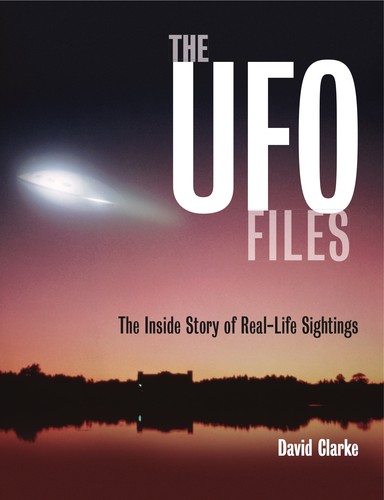
The UFO Files
The Inside Story of Real-Life Sightings — The National Archives' Own History of Britain's Declassified UFO Record
Find on Amazon →As an Amazon Associate, OverClassified may earn from qualifying purchases made through this link, at no extra cost to you.
Why This Is Essential Reading
Essential, and close to indispensable for any British case. The UFO Files is the only book in this library published by a national archive, written by the consultant who helped open the collection it describes, and it does the one thing almost no UFO book does: it tells you what is actually in the paperwork, file reference by file reference, without needing you to accept a thesis first. Clarke's skepticism is real and stated up front, and readers looking for vindication will not find it — but neither will readers looking for a debunking, since he is equally willing to name the files that remain unexplained, the 1991 Alitalia near-miss over west London chief among them. Read it before any other account of a British sighting, and treat its case-by-case documentary reporting as the baseline against which everything else gets checked.
Related Cases & Theories
Sources Cited
- Clarke, David. The UFO Files: The Inside Story of Real-Life Sightings. Kew: The National Archives, 2009. ISBN-10 1905615507 / ISBN-13 9781905615506. amazon.com
- The National Archives, published extract from The UFO Files (PDF, 2009) — the Archives' own promotional excerpt from the book. nationalarchives.gov.uk
- The National Archives, "UFOs" research guide — confirms that until 1967 MoD policy was to destroy UFO files at five-yearly intervals ("so many records have been lost"), and that since 1970 most surviving files have been reviewed for release; online records cover 1950–2002. nationalarchives.gov.uk
- Sheffield Hallam University C3RI Impact blog, "Dr David Clarke presents UFO files at The National Archives" — institutional record of Clarke's consultancy on the MoD file-release programme from 2008 onward. blogs.shu.ac.uk
- Wikipedia, "The UFO Files" — publication data, the 2009 National Archives imprint, the Rendlesham and Battle of Los Angeles material, Clarke's academic post, the cultural-factors framing, and the September 2009 Sunday Times review. en.wikipedia.org
- The National Archives media library, Dr David Clarke author page — his recorded talks and file guides for the Archives. media.nationalarchives.gov.uk
- Clarke, David. UFO Drawings from the National Archives. Four Corners Books, 2017 — the companion volume reproducing witness sketches from the same collection. goodreads.com
- Clarke, David, and Andy Roberts. Out of the Shadows: UFOs, the Establishment and the Official Cover-Up. Piatkus, 2002. OverClassified breakdown
- Clarke, David, and Andy Roberts. Flying Saucerers: A Social History of Ufology. Alternative Albion, 2007. OverClassified breakdown
- Clarke, David. Britain's X-traordinary Files. Bloomsbury, 2014. OverClassified breakdown
- OverClassified case file, The West Freugh UFO Sighting — records that Clarke lists the AIR 20/9320 West Freugh file among his personal "Top 10 UFO documents at The National Archives."
- OverClassified case file, West London / Heathrow UFO Sighting — the Alitalia AZ284 near-miss, Captain Achille Zaghetti's report, London ATC radar confirmation, and the declassified DEFE 24/1953 file Clarke has characterised as among the MoD's most impressive.
- OverClassified case file, The Berwyn Mountains Incident — the Clarke and Roberts reconstruction from the documentary record.
- OverClassified case file, The Calvine UFO Incident — draws directly on Clarke's investigative work and the 2022 recovery of the print.
- OverClassified case file, Project Condign Summary — the classified Defence Intelligence Staff study Clarke's FOI campaign brought into public view.
- OverClassified case file, The UK Flying Saucer Working Party — the 1950–51 Directorate of Scientific Intelligence body whose report set British policy for decades.
Have corrections, additional research, or peer-reviewed sources? Help improve this entry.
Suggest an Edit