
Alien Intervention
The Spiritual Mission of UFOs — A Christian Reading of the Contactee Movement, by a Researcher Who Grew Up Under the Wanaque Wave
Core Thesis
Alien Intervention: The Spiritual Mission of UFOs makes an argument the UFO field has never been comfortable with: that the contactee phenomenon is a religious movement, that its messages should be read as religious messages rather than as garbled technical briefings, and that the tradition it most closely resembles is the occult and Theosophical current running through the nineteenth and twentieth centuries rather than anything in aerospace. Paul Christopher writes as a Christian and does not conceal it — the book examines the connection between the occult, the New Age movement and the UFO phenomenon 'from both a Christian and objective perspective,' in the publisher's own framing — and that commitment is simultaneously the book's most useful feature and its most obvious limitation. Useful, because Christopher takes the messages seriously as content, which almost nobody in the field does; limiting, because a reader who does not share his theology will find his conclusions foreclosed before the evidence is weighed. The book is genuinely worth reading for the first half of that trade and worth discounting for the second.
About the Author
Paul Christopher was born and raised in northeast New Jersey and began his personal investigation of the UFO phenomenon in 1972, which places his formation squarely inside one of the most active regional sighting environments in American history. He has described periodically witnessing unusual nocturnal lights, including at the Wanaque Reservoir — a site this site covers in its own Wanaque Reservoir Incident file, where on January 11, 1966 the town's mayor, three councilmen, a civil defense director and multiple police officers watched a silent, colour-changing disc hover over the frozen reservoir for nearly three hours, opening a nine-month wave.
That biographical detail matters more than it usually would. A researcher who grew up under a genuine, multiply-witnessed, officially-reported wave and later concluded the phenomenon is spiritual rather than technological did not arrive there from ignorance of the physical case record. He arrived there having watched it and decided it did not explain what he was looking at.
The publisher is part of the argument. Huntington House Publishers of Lafayette, Louisiana was a Christian imprint whose list ran heavily to books warning about the occult, the New Age movement, and cultural threats to Christian belief. That determined the book's audience and its framing, and readers should know it going in — this is not a religious-studies analysis in the academic sense but a book written from inside a faith commitment for readers who share it.
Christopher's method is comparative rather than investigative. He is not gathering new case material; he is reading the existing contactee literature — Adamski, Fry, Klarer and their successors — alongside occult and Theosophical sources and identifying the continuities. This site's Klarer case file cites him specifically for his dedicated treatment of her claims within that spiritual-mission framework.
Historical Context & Origins
The connection Christopher is tracing is real and predates flying saucers by decades. The contactee literature's characteristic furniture — ascended masters, lost continents, a hierarchy of benevolent beings guiding human spiritual development, telepathic transmission, warnings about materialism and nuclear weapons — comes almost entirely from Theosophy, and specifically from Helena Blavatsky's late-nineteenth-century synthesis and its successors. Lemuria and Atlantis appear in Daniel Fry's 1954 account because they were already circulating in occult literature, not because an alien mentioned them.
The 1950s contactee movement was in practice a religious movement with organisational structure. Fry's Understanding, Inc. had chapters, dues and a periodical; George Van Tassel's Giant Rock conventions drew thousands; the Aetherius Society, founded by George King in 1954, survives as a registered religion today. Treating this as a phenomenon of belief rather than of aviation is not a rhetorical move; it is a description of what these organisations actually were.
The 1990s, when the book appeared, produced a specific and grim demonstration of the stakes. The Heaven's Gate group's mass suicide in March 1997 — thirty-nine deaths, tied to the Hale-Bopp comet and to a belief system that fused UFO expectation with millenarian Christianity and gnostic ideas — made the religious dimension of UFO belief impossible to dismiss as academic, and it is the immediate backdrop against which a 1998 book about the spiritual mission of UFOs was published and read.
Christian anti-occult publishing was itself a substantial genre in this period, and Huntington House was part of it. That context supplies the book's evangelistic register and its assumption that identifying the phenomenon as spiritual is equivalent to identifying it as spiritually dangerous — a step that does not follow logically and that Christopher does not argue for so much as assume.
The academic treatment of the same territory arrived much later and from a very different direction. D. W. Pasulka's American Cosmic (Oxford University Press, 2019) analyses UFO belief as a genuinely new religious form, from a religious-studies chair, without a confessional commitment. Reading Christopher and Pasulka together shows how much the framing of a shared insight depends on where the writer is standing.
It is also worth registering how large this literature is relative to its visibility in research bibliographies. Christian and broadly religious UFO writing — books arguing that the phenomenon is demonic, angelic, eschatological or a test of faith — has been published continuously since the 1950s, in volumes that rival the secular research literature, and is read by an audience that vastly exceeds the readership of any case study. Its near-total absence from ufology's own bibliographies is a real gap: whatever one thinks of its conclusions, it is a substantial part of how the subject has actually been received and argued about in the English-speaking world for seventy years.
Core Arguments & Key Concepts
The messages are the phenomenon. Christopher's central move. Where the research mainstream treats contactee messages as noise around a possible physical signal, he treats them as the actual content requiring explanation — and notes that their content is overwhelmingly religious rather than scientific.
The lineage is occult, not aerospace. The specific continuities he traces — ascended masters, root races, lost continents, spiritual hierarchy, channelled transmission — run from Theosophy through the New Age movement into contactee narratives, and the correspondence is close enough that coincidence is not a serious explanation.
The phenomenon is deceptive. Christopher's theological conclusion: that whatever is producing these experiences is not what it claims to be, and that the benevolence and spiritual authority the contactees report should be treated as a presentation rather than a fact. Stripped of its Christian vocabulary, this is structurally identical to the trickster reading Jacques Vallée developed in Passport to Magonia and John Keel in Operation Trojan Horse — a convergence Christopher does not fully exploit.
The New Age movement and ufology are one subject. Empirically defensible for the contactee strand specifically. Their publishers, conventions, bookshops, subscriber lists and vocabulary overlapped almost completely through the 1950s and again from the 1970s, and treating them separately is a taxonomy imposed after the fact.
Where the argument becomes theology rather than analysis. Christopher's identification of the phenomenon as demonic in origin is a conclusion available only from inside his prior commitments. A reader can accept every observation about the occult lineage and the religious character of the messages without accepting it, and this article does. The distinction between 'this is a religious phenomenon' and 'this is a religious phenomenon of the specific kind my tradition warns about' is where the book stops being generally useful.
What the book does not engage. The physical case record — radar-visual incidents, instrumented military encounters, physical trace cases — is essentially absent. That is a defensible scope decision for a book about the contactee movement, but it means the book has nothing to say about the part of the phenomenon that has driven the last decade of official attention.
A test the thesis passes that its author does not notice. If contactee messages were transmissions from a technological civilisation, one would expect their content to vary with the transmitting culture and to be difficult for the recipients to have produced. What the record shows instead is that the messages track their era's available religious vocabulary with almost embarrassing fidelity — Theosophical root races and lost continents in the 1950s, ecological warning and planetary consciousness in the 1970s, quantum-flavoured non-duality after 1990. Christopher assembles the first half of this observation. The second half, which he does not draw, is that a message which reliably arrives in the idiom of whoever receives it is telling you about the receiver.
Key Cases & Evidence Discussed
Elizabeth Klarer. The book gives a dedicated discussion of Klarer's claims within the broader spiritual-mission framework, and this site's Klarer case file cites it for exactly that. Klarer is an unusually good test case for Christopher's thesis: her account's core is a relationship and a spiritual transformation, with the technology almost incidental.
The Wanaque Reservoir wave (New Jersey, January–October 1966). Christopher's own formative sighting environment. The Wanaque case is the opposite of a contactee claim — officials, police officers, a mayor, three councilmen, three hours of observation, contradictory Air Force explanations — and its presence in the author's biography is a useful corrective to any assumption that a spiritual reading of UFOs comes from unfamiliarity with the hard cases.
The 1950s contactee canon. Adamski, Fry, Bethurum, Van Tassel and their successors, read as a single religious tradition with a shared source vocabulary rather than as competing witnesses.
The Theosophical and New Age antecedents. Blavatsky, the root-race doctrine, the ascended masters, Lemuria and Atlantis — the specific textual heritage Christopher argues the contactee messages were assembled from.
Heaven's Gate. Not the book's subject but its inescapable context in 1998, and the strongest available evidence that UFO belief can function as a full religious system with the consequences religious systems carry.
What a reader should compare it against. Vallée reached a structurally similar conclusion about deception and religious continuity from a computer scientist's chair without any theological commitment; Pasulka reached the religious-form conclusion from a religious-studies chair without any judgement about the phenomenon's nature. Christopher's version is the confessional one, and reading all three shows what the framing is doing.
Critical Reception & Controversies
The book has no critical reception in the ordinary sense. Huntington House was a Christian imprint publishing into a Christian readership, and neither the UFO research community nor the academic study of religion engaged with it. Its Amazon and bookseller presence is its entire public record.
Within UFO research the confessional framing is disqualifying for most readers, and understandably so: a book that concludes the phenomenon is demonic has adopted a position no evidence could revise. That is a fair objection to the conclusion and not to the observations that precede it, and the distinction is worth holding.
The strongest substantive criticism is that Christopher does not seriously consider the possibility his own analysis most obviously supports — that the contactee messages are religious because the contactees constructed them from religious materials available to them, with no external agency of any kind involved. A book that establishes the Theosophical lineage as thoroughly as this one does has assembled most of the case for a purely cultural explanation and then declines to draw it.
The scope limitation is real but honest. This is a book about the contactee and New Age strand, not about the phenomenon as a whole, and it does not pretend otherwise. Readers wanting the physical case record should go elsewhere in this library; readers wanting the messages taken seriously as content will find very few alternatives.
In its favour, and this is not a small thing: Christopher is one of a handful of writers in seventy years who noticed that the single most consistent feature of contact accounts is that the visitors deliver sermons, and took that seriously rather than embarrassedly skipping past it. The field's general reluctance to engage the religious content of its own primary sources is a real analytical failure, and this book does not commit it.
Influence & Legacy
Christopher's book belongs to a small tradition of Christian UFO writing that has had almost no influence on mainstream ufology and considerable influence on how a large section of the American public actually thinks about the subject. That asymmetry is itself worth noting: the research literature and the popular religious literature about UFOs have been running on parallel tracks for seventy years with very little contact between them.
Its analytical contribution — the occult and Theosophical lineage of contactee content — is genuinely sound and has been independently established by academic religious-studies work since. Anyone reading the 1950s contactee books cold will find Lemuria, ascended masters and root races inexplicable; Christopher explains where they came from.
Within this site's library it functions as the religious-framework lens on the contactee material, cited by the Klarer case file alongside Streicher's psychological reading and Cynthia Hind's regional documentation. Three incompatible frameworks applied to one case is a better guide to what a case actually supports than any one of them alone.
Read forward from 1998, the book also anticipates the direction serious analysis went. The consciousness turn in abduction research, the religious-studies engagement of American Cosmic, and the general recognition that UFO belief functions religiously for a substantial population all arrived after this book and largely without reference to it. Being early and unread is a common fate for confessional writing on a secular subject.
The Book
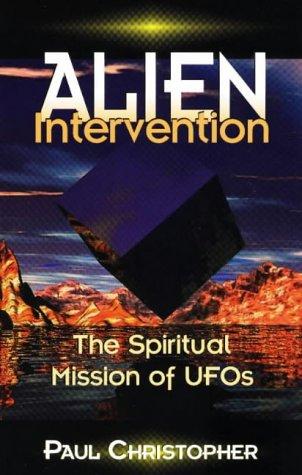
Alien Intervention
The Spiritual Mission of UFOs — A Christian Reading of the Contactee Movement, by a Researcher Who Grew Up Under the Wanaque Wave
Find on Amazon →As an Amazon Associate, OverClassified may earn from qualifying purchases made through this link, at no extra cost to you.
Why This Is Essential Reading
Read it for the lineage and stop before the conclusion. Paul Christopher grew up watching the Wanaque Reservoir wave and started investigating in 1972, so his spiritual reading of UFOs is not a product of unfamiliarity with the hard case record — it is what he concluded despite it. His central observation is correct and underappreciated: contactee messages are religious in content, their furniture comes from Theosophy rather than from anything in the sky, and the field's general embarrassment about that has prevented it from being analysed. Where the book stops being generally useful is at its theological conclusion, which is available only from inside its own commitments and which no evidence could revise. Take the occult-lineage argument, compare it against Vallée, who reached a structurally similar place with no theology at all, and against Pasulka, who reached it from a university chair twenty-one years later.
Related Cases & Theories
Sources Cited
- Christopher, Paul. Alien Intervention: The Spiritual Mission of UFOs. Lafayette, LA: Huntington House Publishers, October 1, 1998, 201 pp. ISBN-10 1563841487 / ISBN-13 9781563841484. amazon.com
- Google Books record, Alien Intervention: The Spiritual Mission of UFOs by Paul Christopher — publisher description of the book's examination of 'the mystifying connection between the occult, the New Age movement, and the UFO phenomenon' from a Christian and objective perspective, and the author's New Jersey background, 1972 start in UFO research, and Wanaque Reservoir sightings. books.google.com
- AbeBooks bibliographic record, ISBN 9781563841484 — Huntington House first edition, 201 pp. abebooks.com
- AbeBooks first-edition listing, Alien Intervention: The Spiritual Mission of Ufos — edition detail. abebooks.co.uk
- Biblio bibliographic record, Alien Intervention: The Spiritual Mission of Ufos by Paul Christopher — independent bookseller listing. biblio.com
- Amazon Canada listing, Alien Intervention: The Spiritual Mission of Ufos, ISBN-10 1563841487 — independent confirmation of the ASIN. amazon.ca
- Huntington House Publishers catalogue record via AbeBooks author search for Paul Christopher — the imprint's list context. abebooks.com
- Amazon Australia listing, Alien Intervention: The Spiritual Mission of UFOs, ISBN-10 1563841487 — independent bibliographic confirmation. amazon.com.au
- Wikipedia, "Heaven's Gate (religious group)" — the March 1997 mass suicide that formed the immediate context for a 1998 book on the spiritual mission of UFOs. en.wikipedia.org
- Wikipedia, "Aetherius Society" — the 1954-founded UFO religion that survives as a registered religious organisation, illustrating the contactee movement's institutional-religious character. en.wikipedia.org
- Pasulka, D. W. American Cosmic: UFOs, Religion, Technology. Oxford University Press, 2019 — the academic religious-studies treatment of the same territory. OverClassified breakdown
- Vallée, Jacques. Passport to Magonia: From Folklore to Flying Saucers, 1969 — a structurally similar deception-and-continuity argument with no theological commitment. OverClassified breakdown
- Keel, John A. UFOs: Operation Trojan Horse, 1970. OverClassified breakdown
- Streicher, Thomas James. Extra-Planetary Experiences, 2012 — the psychological lens on the same contactee material. OverClassified breakdown
- OverClassified case file, Elizabeth Klarer & the "Akon" Contact — cites this book for its dedicated discussion of Klarer's claims within the broader spiritual-mission framework many 1950s–80s contactees presented their messages under.
- OverClassified case file, Wanaque Reservoir Incident — the January 11, 1966 sighting by Wanaque's mayor, three councilmen, a civil defense director and multiple police officers, and the nine-month wave that followed, in the author's own formative region.
Have corrections, additional research, or peer-reviewed sources? Help improve this entry.
Suggest an Edit