
Extra-Planetary Experiences
Alien-Human Contact and the Expansion of Consciousness — A Doctoral Researcher's Phenomenological Study of Seven Contact Accounts
Core Thesis
Extra-Planetary Experiences: Alien-Human Contact and the Expansion of Consciousness asks a question most UFO books never get to: not whether contact accounts are true, but what kind of experience they are and what they do to the people who have them. Thomas James Streicher approaches seven first-person accounts as a phenomenological researcher — interviewing at length, coding for recurring features, and comparing the results against the established literature on near-death and out-of-body experience. His conclusion is that the accounts are not 'contrived hallucinations' but genuine transformative episodes with a consistent aftermath profile: loss of the fear of death, enhanced spiritual insight, a reported connection to something like cosmic consciousness, and increased motivation toward service. He then situates the modern accounts against much older material — Sumerian, Vedic, Egyptian, Tibetan and biblical records of encounters with non-human intelligences. The book's seven subjects include Apollo 14 astronaut Edgar Mitchell and the Stanford Research Institute-tested remote viewer Ingo Swann, and it carries a foreword by Stanley Krippner — a genuinely credentialed figure in the psychology of anomalous experience.
About the Author
Thomas James Streicher holds a doctorate and works in the transpersonal and consciousness-studies tradition, and the book is recognisably an academic study rewritten for a trade readership. Its method is phenomenological: rather than assessing whether the reported events occurred, it treats the experience as the object of study, documents its structure through long-form interview, and looks for pattern across cases.
That approach places him in a specific intellectual lineage. John Mack's Abduction (1994) had made the same move from a Harvard psychiatry chair, arguing that abduction experiences were real to the experiencers and not reducible to psychopathology; Kenneth Ring's Omega Project (1992) had compared UFO-encounter and near-death populations directly. Streicher is working that seam two decades later, with a smaller sample and a more explicitly spiritual frame.
The foreword by Stanley Krippner matters more than a foreword usually does. Krippner is a career psychologist with a long publication record in dream research, hypnosis, altered states and the psychology of anomalous experience — a former president of two American Psychological Association divisions. His association signals that this is a book operating inside a recognisable academic tradition rather than outside all of them.
Streicher's most-cited single contribution in this site's library has nothing to do with the book's main argument. His assessment of Elizabeth Klarer — that her claims are 'generally poorly substantiated, despite some of them being corroborated by witnesses,' with the specific suggestion that she may have been a 'fantasy-prone individual' who imagined most of her experiences — is the most quoted modern clinical judgement on that case, and this site's Klarer case file cites him directly for it.
Historical Context & Origins
The book belongs to a small but real academic tradition of taking anomalous experience seriously as experience. That tradition runs from William James through the parapsychology of the mid-twentieth century to transpersonal psychology, and it is distinguished from ufology proper by what it is trying to explain: not the object in the sky, but the effect on the person.
The near-death experience is the model, and the comparison is doing real work. NDE research had by 2012 accumulated standardised scales, a peer-reviewed journal, prospective hospital studies and a documented aftereffects profile — a level of methodological development ufology has never approached. Mapping contact accounts onto that framework imports its rigour and also its limits: the NDE literature establishes that people have these experiences and that they change them, not what causes them.
The choice of subjects is deliberate and consequential. Including Edgar Mitchell — the sixth man to walk on the Moon, and a man whose own transformative experience on the return from Apollo 14 led him to found the Institute of Noetic Sciences — and Ingo Swann, whose remote-viewing performance was formally tested at Stanford Research Institute under contract, gives the sample a credentialing weight a study of anonymous experiencers would lack.
The ancient-records material is the book's weakest structural element and the most conventional. Reading Sumerian, Vedic, Egyptian, Tibetan and biblical texts as records of contact with non-human intelligences is the ancient-astronaut move, and it has the same problem there as everywhere: the texts are religious literature written for religious purposes, and any sufficiently strange passage can be read as a garbled technological description by a reader who has decided in advance to do so. This site treats that literature at length in its ancient records section, generally with more caution than Streicher applies.
By 2012 the abduction paradigm that dominated the 1980s and 1990s had largely collapsed as a research programme, undone by the recovered-memory controversy and by the deaths or retirements of its principal investigators. A book proposing a consciousness-centred rather than physical reading of contact was, in that context, salvaging what could be salvaged — and it anticipates the direction the field genuinely took, toward the religious-studies framing of D. W. Pasulka and the experiencer-centred research that followed.
A note on why a book like this is unusually hard to place. Its subject matter is UFO contact, its method is phenomenological psychology, its publisher is a metaphysical imprint, and its foreword is by a career academic psychologist. Each of those pulls it toward a different readership with different standards, and none of them is fully served. Books that fall between disciplines tend to be judged by whichever discipline's reader picks them up, and the resulting reviews rarely engage what the author was actually attempting. That is the structural reason serious work on anomalous experience keeps disappearing between the cracks rather than accumulating.
Core Arguments & Key Concepts
The experiences are real as experiences. Streicher's foundational move, and the one that makes the book methodologically coherent. Whatever caused them, the seven subjects had something happen to them, reported it consistently, and were changed by it in documentable ways.
The aftereffects profile is consistent and matches the NDE literature. Loss of the fear of death, enhanced spiritual insight, a reported sense of connection to a larger consciousness, and increased motivation toward service to others recur across the sample. This is the book's strongest empirical claim and its most testable one.
These are spiritual awakenings, not pathology. Streicher argues explicitly against the psychiatric-dismissal reading, and his sample supports him at least to the extent that his subjects are demonstrably high-functioning — a Moon-walking astronaut and a laboratory-tested remote viewer are not people whose experiences can be waved away as breakdown.
The phenomenon has a long documented history. The ancient-records chapters argue for continuity backwards. Readers should treat this section with the caution the ancient-astronaut literature generally requires; it is the least evidenced part of a book that is otherwise careful about the limits of its claims.
What the method cannot establish, and Streicher does not claim. A phenomenological study of seven self-selected accounts establishes nothing about whether anything external occurred. Streicher is largely honest about this, which is what separates the book from the advocacy literature — and it is also why proponents find it unsatisfying.
The sample-size problem, stated plainly. Seven subjects, selected for willingness to be interviewed at length and for the salience of their accounts, is not a sample from which population-level conclusions follow. The consistency Streicher reports may reflect a real underlying phenomenology or may reflect a shared cultural script that experiencers absorb before they report. The book does not have a way to distinguish these, and neither does the NDE literature it borrows from.
A distinction the book makes better than most. Streicher is careful about the difference between what an experience was like and what it was. That sounds obvious and it is almost never observed in this literature: proponent writing routinely treats the vividness or emotional force of an account as evidence of its external reality, and sceptical writing routinely treats the absence of external evidence as grounds for denying the experience occurred at all. Both moves are errors, and the phenomenological method exists precisely to avoid them. Whatever else this book gets wrong, it gets that right, and a reader who takes only that discipline away from it will read the rest of this library better for it.
Key Cases & Evidence Discussed
Edgar Mitchell. The Apollo 14 lunar module pilot, whose own transformative experience returning from the Moon — a sense of universal connectedness he described as a savikalpa samadhi — led him to found the Institute of Noetic Sciences in 1973. Mitchell also became one of the highest-profile public figures to state that he believed the U.S. government held UFO information, and he wrote a foreword to Stanton Friedman's Flying Saucers and Science.
Ingo Swann. The artist and psychic whose remote-viewing performance was formally studied at Stanford Research Institute under government contract in the 1970s. Swann's inclusion connects the book to the documented history of American government-funded parapsychology, a subject with a real declassified paper trail behind it.
Norma Milanovich. A channelled-communication claimant included in the sample, and the case that most clearly marks the boundary between the book's careful subjects and its credulous ones.
Elizabeth Klarer. Streicher's assessment of the South African contactee, whose claimed encounters were set in the Drakensberg of Natal, is the passage this site cites most. His verdict — poorly substantiated, possibly the product of a fantasy-prone personality — is notable precisely because it comes from a researcher sympathetic to contact experience in general. This site's Klarer case file and its breakdown of her autobiography both draw on it.
The ancient comparison set. Sumerian, Vedic, Egyptian, Tibetan and biblical material, presented as continuity evidence. Compare this site's own ancient records treatment of the same texts, which generally separates what a document says from what an event was far more sharply.
The near-death literature as control. Not a case but the book's methodological anchor, and the reason its aftereffects claims have any comparative traction at all.
Critical Reception & Controversies
The book was published by Bear & Company, an Inner Traditions imprint specialising in metaphysical and consciousness titles, which determined its audience and its reception. It reached the transpersonal and New Age readership rather than either the academic psychology community or the UFO research community, and it has not been reviewed in a peer-reviewed venue.
Its endorsements are from within that world — the most-quoted describing Streicher as having 'successfully prepare[d] the ground for deeper questioning' and arguing that 'we should not dismiss these experiential reports.' That is a fair characterisation of what the book achieves and also a low bar.
The serious methodological criticism is the sample. Seven self-selected subjects, interviewed by a researcher who believes the experiences are genuine, produce data whose consistency cannot be separated from the selection and the interviewer. This is precisely the objection that dismantled the abduction research programme a decade earlier, and Streicher does not have an answer to it that the earlier work lacked.
The second criticism is the ancient-records section, which imports a body of interpretive claims with a very poor evidential track record into a book that had been carefully limiting itself. A study of seven modern experiences does not need Sumerian tablets, and including them costs more credibility than they add.
Against that, the book does something almost nothing else in this literature does: it applies a stated, recognisable methodology from an established discipline, and it reaches negative conclusions about specific claims when the evidence warrants. The Klarer assessment is the proof — a researcher writing sympathetically about contact experience in general who nonetheless judges one of the tradition's most famous claimants poorly substantiated and possibly fantasy-prone is not simply confirming his own priors.
A last note on Krippner's foreword. Lending a name is not the same as endorsing every claim, and readers should not treat a credentialed foreword as peer review. But Krippner's involvement does signal that the book operates inside the psychology-of-anomalous-experience tradition rather than outside all disciplinary norms, and that is a real, if modest, quality signal.
Influence & Legacy
Streicher's most concrete legacy in this library is the Klarer assessment, which has become the standard modern clinical framing of that case and is cited by this site's own case file. That is a narrow influence, and it is the kind that actually matters: a specific, quotable, sourced judgement that later researchers can use.
More broadly, the book belongs to the transition that reshaped this subject after 2010. The abduction paradigm's collapse left the experiential material without a framework, and the direction the field moved — toward consciousness, toward religious studies, toward treating contact as an experience with effects rather than an event with witnesses — is the direction this book was already pointing. Pasulka's American Cosmic (2019) is where that move became academically respectable.
Its inclusion of Edgar Mitchell and Ingo Swann also documents something worth preserving: that two men with genuine institutional credentials — a NASA astronaut and a laboratory-tested subject in a government-funded parapsychology programme — were willing to discuss anomalous experience at length on the record. That willingness has become rarer, not commoner, and the interviews are a resource independent of Streicher's argument about them.
Within this site's library the book functions as the psychological-assessment lens on the contactee material — paired with Klarer's own autobiography, Paul Christopher's religious reading, and Cynthia Hind's regional documentation as the four lenses through which that case has actually been examined.
The Book
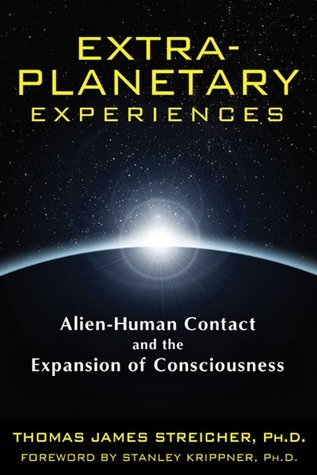
Extra-Planetary Experiences
Alien-Human Contact and the Expansion of Consciousness — A Doctoral Researcher's Phenomenological Study of Seven Contact Accounts
Find on Amazon →As an Amazon Associate, OverClassified may earn from qualifying purchases made through this link, at no extra cost to you.
Why This Is Essential Reading
A serious book with a small sample and one bad chapter. Streicher does what almost nobody in this literature does: he states a method, applies it consistently, and lets it produce negative results about specific claims — his judgement that Elizabeth Klarer was 'generally poorly substantiated' and possibly a 'fantasy-prone individual' is the standard modern assessment of that case and it comes from a researcher who takes contact experience seriously. The aftereffects analysis, mapped against the near-death literature, is genuinely worth having, and the interviews with Edgar Mitchell and Ingo Swann are a resource in themselves. Seven self-selected subjects interviewed by a sympathetic researcher cannot establish what the book sometimes implies, and the Sumerian-to-biblical continuity chapters should be read with the caution all ancient-astronaut argument requires. Read it for the method and the Klarer verdict, not for a conclusion about what happened.
Related Cases & Theories
Sources Cited
- Streicher, Thomas James. Extra-Planetary Experiences: Alien-Human Contact and the Expansion of Consciousness, foreword by Stanley Krippner, Ph.D. Bear & Company, March 19, 2012, 288 pp. ISBN-10 1591431360 / ISBN-13 9781591431367. amazon.com
- Simon & Schuster (Inner Traditions distribution) publisher page for Extra-Planetary Experiences, ISBN 9781591431367 — publisher description covering the seven interviews, the Edgar Mitchell and Ingo Swann subjects, the ancient Sumerian/Vedic/Egyptian/Tibetan/biblical comparison material, and the near-death and out-of-body framing. simonandschuster.com.au
- Simon & Schuster UK ebook listing, Extra-Planetary Experiences by Thomas James Streicher and Stanley Krippner, ISBN 9781591438946 — confirms the Krippner foreword credit. simonandschuster.co.uk
- AbeBooks bibliographic record, ISBN 9781591431367 — edition and format data. abebooks.com
- Apple Books listing, Extra-Planetary Experiences by Thomas James Streicher & Stanley Krippner — independent confirmation of authorship credits and publication data. books.apple.com
- Biblio bibliographic record, Extra-Planetary Experiences: Alien-Human Contact and the Expansion of Consciousness — independent bookseller listing. biblio.com
- ThriftBooks edition record, Extra-Planetary Experiences — printing data and reader reception. thriftbooks.com
- Everand (Scribd) edition listing, Extra-Planetary Experiences: Alien-Human Contact and the Expansion of Consciousness by Thomas James Streicher and Stanley Krippner — independent bibliographic confirmation. everand.com
- Wikipedia, "Elizabeth Klarer" — records Streicher's conclusion that Klarer's claims are 'generally poorly substantiated, despite some of them being corroborated by witnesses' and his suggestion that she may have been 'a fantasy-prone individual who merely imagined most of her experiences.' en.wikipedia.org
- Mack, John E. Abduction: Human Encounters with Aliens. Charles Scribner's Sons, 1994 — the Harvard clinical precedent for treating contact accounts as genuine experiences. OverClassified breakdown
- Ring, Kenneth. The Omega Project: Near-Death Experiences, UFO Encounters, and Mind at Large. William Morrow, 1992 — the direct NDE/UFO-encounter population comparison Streicher's method extends.
- Pasulka, D. W. American Cosmic: UFOs, Religion, Technology. Oxford University Press, 2019 — where the consciousness-and-religion framing became academically respectable. OverClassified breakdown
- Friedman, Stanton T. Flying Saucers and Science, 2008 — carries a foreword by Edgar Mitchell, one of this book's seven subjects. OverClassified breakdown
- OverClassified case file, Elizabeth Klarer & the "Akon" Contact — cites this book directly for Streicher's 'poorly substantiated' and 'fantasy-prone individual' assessment, situated within his broader academic survey of contact-experience psychology.
- OverClassified essential-reading breakdown, Beyond the Light Barrier — Klarer's own account, which Streicher assesses.
Have corrections, additional research, or peer-reviewed sources? Help improve this entry.
Suggest an Edit