
Passport to Magonia
From Folklore to Flying Saucers
Core Thesis
Passport to Magonia: From Folklore to Flying Saucers makes the argument that gives this list's other Vallée books their reason for existing: that modern UFO encounters and centuries of pre-modern folklore — fairies and elves abducting travelers to a hollow hill, demons and incubi visiting sleepers in the night, aerial ships sailing in from the cloud-realm of Magonia to steal grain — are not separate traditions but a single, continuous phenomenon that has adapted its outward form, or "mask," to whatever a given era is prepared to believe: gods in antiquity, demons and fairies in the Middle Ages, airships in 1897, flying saucers after 1947. Vallée's target is not proof that UFOs are alien spacecraft but the extraterrestrial hypothesis itself, which he treats as too narrow to account for a pattern of belief and encounter that long predates rocketry. The book pairs that interpretive argument with a genuinely novel piece of infrastructure: a 923-entry appendix, "A Century of UFO Landings," cataloging close-encounter-type reports from 1868 to 1968, coded by object type, witness behavior, presence of entities, and report quality — an early attempt to treat historical, folklore-adjacent sightings as a structured dataset rather than a set of retold anecdotes.
About the Author
Jacques Vallée was born in 1939 near Pontoise, France, and earned a Master's degree in astrophysics from the University of Lille before taking a position, in 1961, as a young astronomer on the satellite-tracking team at the Paris Observatory. Vallée has recounted in later interviews that it was there, not in any personal encounter with a craft, that he first became seriously interested in the subject: his team recorded eleven data points on a bright object in retrograde orbit that no rocket of the era could have launched, and a superior then erased the tape rather than risk the observatory's reputation on an unexplained report. The episode reoriented Vallée's question from whether anomalous aerial objects existed to whether scientific institutions could be trusted to preserve evidence that threatened their own credibility — a concern that runs through his work ever since.
He moved to the United States the following year, working as a research associate under astronomer Gérard de Vaucouleurs at the University of Texas, where the two produced NASA's first detailed computerized map of Mars. In 1963 he relocated to Chicago and Northwestern University, where he took work as a systems analyst and began his long informal collaboration with J. Allen Hynek, completing a Ph.D. in computer science there in 1967. Passport to Magonia, published two years later, was the first book-length statement of the folklore-continuity argument that would occupy the rest of Vallée's career; this site's other Vallée essential-reading entries cover the historiographical sourcebook (Wonders in the Sky, 2010) and field-investigation casebook (Confrontations, 1990) that argument eventually grew into; this entry stays with the earlier moment, when Vallée was still primarily a working astronomer and Hynek's Northwestern colleague rather than ufology's best-known theorist.
Historical Context & Origins
Vallée published Passport to Magonia in 1969, while still several years away from full-time UFO research and instead working alongside J. Allen Hynek at Northwestern, whose own case for taking the subject seriously would not reach book form until The UFO Experience in 1972. The two men's 1960s working relationship, not any formal co-authorship, is the real link between the two books: Hynek supplied institutional caution and astronomical authority, Vallée supplied the comparative-folklore argument and the computing background to catalog it at scale.
The book landed in a UFO culture still organized almost entirely around the extraterrestrial hypothesis, a year after the U.S. Air Force's Condon Report had recommended closing Project Blue Book on the grounds that continued study wasn't scientifically productive. Passport to Magonia did not argue UFO reports were nothing, the position Condon's own critics accused the report of implying; it argued the reports were real and worth taking seriously precisely because their content matched centuries of documented folklore too closely to dismiss — a position that fit neither the believers' spacecraft framework nor the skeptics' blanket dismissal.
The book arrived within a year of a real, independently developed parallel: John Keel's Operation Trojan Horse, published in 1970, reached a strikingly similar conclusion — that whatever produces UFO reports also produces the demons, ghosts, and religious visions of earlier centuries — from Keel's own years of independent field investigation rather than from reading Vallée's book, which had barely had time to circulate before Keel's own manuscript was substantially complete. This site's own Ultraterrestrial Hypothesis theory file documents both books' near-simultaneous arrival at the same historical-continuity argument as one of ufology's clearer cases of convergent, rather than derivative, theorizing.
The book's title borrows directly from a documented medieval source: Archbishop Agobard of Lyon's ninth-century treatise De Grandine et Tonitruis ("On Hail and Thunder"), which denounced a popular belief that ships sailed a cloud-realm called Magonia, trading with earthbound storm-conjurers who stole crops during magically raised tempests. Organizing an entire modern UFO argument around a specific, citable 815 CE document, rather than a generic gesture toward antiquity, previewed the source-first documentary standard Vallée's own Wonders in the Sky would apply across 500 cases four decades later.
Core Arguments & Key Concepts
The book's central claim is that a single continuity of "encounter" reports runs from antiquity's gods, through the Middle Ages' fairies, demons, and aerial ships from Magonia, to the twentieth century's flying saucers and their occupants — each era's account differing in surface detail (technology, terminology, cultural expectation) while sharing a strikingly consistent underlying structure: passage to another realm, missing time, strange small beings, paralysis, and an altered belief in the witness afterward. Vallée frames this recurring structure as the phenomenon's "mask," adapted to whatever a given culture is prepared to accept as real — airships during the American wave of 1896–97, interplanetary spacecraft after Kenneth Arnold's 1947 sighting popularized the term "flying saucer."
That continuity argument is Vallée's direct challenge to the extraterrestrial hypothesis specifically, not to the reality of the reports themselves. If the same encounter pattern recurs across two thousand years of documented folklore, long before spaceflight was a coherent concept for any culture to project onto the sky, then a literal interplanetary-visitor explanation cannot account for the earlier centuries of the pattern — leaving, in Vallée's own framing, either a psychological or social origin for the whole continuity, or some far stranger single phenomenon behind all of it, neither of which is a simple "aliens in spacecraft" story.
The book's second half, an appendix titled "A Century of UFO Landings," is a working structural argument in its own right: 923 close-encounter-type reports dated 1868 to 1968, drawn from Project Blue Book, the French GEPA organization, Britain's Flying Saucer Review, and Vallée's own case files, each coded for object type, object behavior, presence of entities, and report quality. Rather than a narrative retelling, it is a database assembled by hand in an era before computerized case-indexing was standard practice in ufology — foreshadowing, on a smaller and less individually sourced scale, the 500-case historiographical catalog Vallée and Chris Aubeck would publish four decades later as Wonders in the Sky.
Vallée is explicit that the book does not resolve what the underlying phenomenon actually is; it argues only that whatever produces these reports has been doing so for far longer, and far more consistently, than a 1947-onward spacecraft-visitation story can explain — a deliberately unresolved conclusion that left room for the "control system" and interdimensional frameworks he would spend the following decades developing, covered in depth in this site's own Confrontations entry.
Key Cases & Evidence Discussed
Because Passport to Magonia's evidentiary core is its 923-case landing catalog rather than a small set of flagship incidents, its overlap with this site's own case files runs wide rather than deep — the same pattern this site's Wonders in the Sky entry documents for Vallée's later, larger catalog.
This exact 2014 edition is cited directly on two of this site's own case-file pages, each drawing on the book's folklore-continuity argument specifically rather than its case catalog: the Kelly-Hopkinsville Cabin Siege (Case File #035, 1955), whose small, aggressive, goblin-like entities this site's own file connects to the book's wider argument about the structural overlap between UFO humanoid reports and pre-existing regional folklore, and the Westall UFO Encounter (Case File #030, 1966), where this site's file draws on Vallée's argument that abduction and contact narratives echo folkloric abduction motifs predating the flying-saucer era by centuries.
The book's own opening case, in a sense, is the one embedded in its title: Archbishop Agobard's 815 CE account of the Magonia belief itself, which Vallée treats not as a curiosity but as an early, well-documented instance of the exact pattern — ordinary people encountering beings from an inaccessible realm and describing them in the vocabulary their own era made available — that the book's later, twentieth-century cases repeat.
Critical Reception & Controversies
Reception on release split sharply along a line the book itself was partly responsible for creating: readers invested in the extraterrestrial-spacecraft framework, close to Vallée's own earlier public position, treated the folklore-continuity argument as a defection rather than a refinement. A 2024 retrospective review on the blog Talking the Weird put the contemporary reaction bluntly: "Upon its release, some explorers of the weird simply couldn't take it. The book was regarded not only as a radical departure, but as a betrayal."
That same review, writing more than five decades later, credits the book with having "set the table for the sort of expansive thinking today's most innovative ufologists and parapsychologists are doing" — a reversal in critical standing typical of how the book is now discussed: the position that once read as a betrayal of ufology's core assumption is now widely treated as the field's more intellectually serious alternative to it.
Skeptical reception, by contrast, was largely dismissive on different grounds: mainstream scientific skeptics of the period, working from Donald Menzel's and later Philip J. Klass's insistence that UFO reports resolved to misidentification and hoax, treated the folklore-continuity argument as speculative pattern-matching rather than a testable claim, unpersuaded that resemblance to older stories was evidence of anything beyond storytelling itself. Even so, the book's rigor drew a different response from within scientific ufology specifically: J. Allen Hynek, no folklore enthusiast himself, cited Vallée's fairy and elf parallels approvingly in his own 1972 The UFO Experience, treating the comparison as a genuine data point rather than a distraction from serious study.
A more durable, academic-adjacent critique concerns method rather than conclusion: comparative folklore work of this kind broadly risks what critics of similar cross-cultural pattern-hunting call "parallelomania" — finding structural resemblance wherever one looks hard enough for it, regardless of whether the underlying cases share any real causal connection. That the book's influence ran directly into professional folklore scholarship rather than around it is itself part of the record here: folklorists Thomas E. Bullard and Peter M. Rojcewicz each wrote doctoral dissertations applying a folkloric lens to UFO reports, crediting Passport to Magonia and Keel's Operation Trojan Horse as, in the words of one retrospective on the two dissertations, "the real inspiration" behind treating the UFO phenomenon as a folkloric theme worth dissertation-length study in its own right.
Influence & Legacy
The clearest single piece of evidence for this book's lasting influence is that a word it revived from a 1,200-year-old theological treatise became a working term of art in ufology on its own: the British research magazine Magonia, published continuously from the mid-1970s through 2009 (first as the Merseyside UFO Bulletin, then MUFOB), took its final name, in the magazine's own account of its history, "with a nod to Jacques Vallée" — institutionalizing the book's title as shorthand for exactly the folklore-continuity, high-strangeness research tradition this book helped found.
That same tradition produced formal academic study directly citing this book as its origin point: folklorists Thomas E. Bullard and Peter M. Rojcewicz each completed Ph.D. dissertations treating UFO reports as a folkloric theme — Bullard's "Mysteries in the Eye of the Beholder" and Rojcewicz's "The Boundaries of Orthodoxy" — crediting Passport to Magonia and John Keel's Operation Trojan Horse as the direct inspiration for treating the subject as worth a folklorist's dissertation-length attention rather than dismissing it as beneath the discipline.
Within ufology's own theoretical debates, this book is one of two works most often credited with opening the door the psycho-social hypothesis later walked through: French researchers including Michel Monnerie, Bertrand Méheust, and Thierry Pinvidic built the explicit psycho-social framework in the years after 1977 substantially on the ground this book and Keel's parallel study had cleared, even though, as this site's own Psycho-Social Hypothesis theory file discusses via Vallée's later Messengers of Deception (1979), Vallée's own "control system" model requires a deliberate external intelligence and is not itself a psycho-social account.
Within Vallée's own body of work, Passport to Magonia is the first public statement of the argument that would define his entire subsequent career: the same folklore-continuity thesis expands into the 500-case historical sourcebook of this site's own Wonders in the Sky (2010) and gets tested against direct field investigation in Confrontations (1990) — making this 1969 book, on the evidence of Vallée's own later bibliography, less a single argument than the founding document of a research program he spent the next five decades carrying out.
The Book
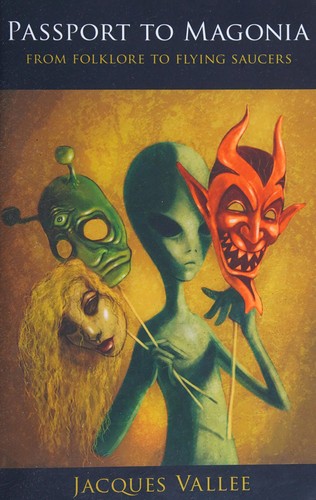
As an Amazon Associate, OverClassified may earn from qualifying purchases made through this link, at no extra cost to you.
Why This Is Essential Reading
Passport to Magonia earns its place on this list as the origin point the other two Vallée entries on this site both grow out of: not the systems analyst who would later cross-check five hundred historical documents in Wonders in the Sky, and not the field investigator who would fly to Brazil and France to test a control-system theory against real casework in Confrontations, but the younger Jacques Vallée who had just watched a Paris Observatory colleague erase evidence rather than risk institutional embarrassment, and who concluded the honest response to that experience was to ask whether the entire UFO phenomenon might be older, stranger, and more continuous with human folklore than either believers or skeptics were prepared to admit. That the book's title, borrowed from a 1,200-year-old theological treatise, went on to name an entire British research magazine and inspire two folklorists' doctoral dissertations is a genuinely rare kind of influence for a UFO book to have — matched, on this site's own evidence, only by the near-simultaneous, independently developed parallel argument John Keel published one year later in Operation Trojan Horse.
Related Cases & Theories
Essential Viewing
Passport to Magonia: UFOs, Folklore, and Parallel Worlds -- Jacques Vallée
ProfessorMystic — A dedicated discussion of this book's central folklore-continuity argument and its case for treating UFO encounters as part of a much older tradition of parallel-world contact, verified via YouTube oEmbed before inclusion.
I Finally Read Passport to Magonia | Jacques Vallee on UFOs, Fairies & Folklore
Idiot Mystic — A contemporary reader's chapter-by-chapter walkthrough of the book's fairy-lore and UFO parallels, illustrating this book's continued afterlife with newer audiences more than five decades after publication, verified via YouTube oEmbed before inclusion.
Sources Cited
- Vallée, Jacques. Passport to Magonia: From Folklore to Flying Saucers. Daily Grail Publishing, 2014 (reprint, with new foreword, of the 1969 Henry Regnery Company original; ISBN 9780987422477, cited here). openlibrary.org
- "Jacques Vallée." Wikipedia (biography: birth, education, Paris Observatory, move to the U.S., Northwestern, bibliography). en.wikipedia.org
- "Biography: Jacques Vallée." HandWiki (career background: astrophysics training, NASA Mars mapping, Northwestern, Hynek collaboration). handwiki.org
- "Magonia." Wikipedia (Archbishop Agobard of Lyon, De Grandine et Tonitruis, 815 CE origin of the term). en.wikipedia.org
- "History of Magonia." MAGONIA ARCHIVE (the British research magazine's own account of its 1970s name change "with a nod to Jacques Vallee"). magoniamagazine.blogspot.com
- "Indexing the Machine Elves: Fairy Tale Motifs in UFO Narratives." MAGONIA ARCHIVE, January 2014 (Thomas E. Bullard's and Peter M. Rojcewicz's folklore dissertations, and their direct debt to this book and Keel's Operation Trojan Horse). magoniamagazine.blogspot.com
- "Reviewing the Weird: Passport to Magonia." Talking the Weird (2024 retrospective review; contemporary "betrayal" reception and later reassessment). talkingtheweird.com
- Passport to Magonia: From Folklore to Flying Saucers, full text. Internet Archive (digitized copy, used to verify structure, appendix, and content). archive.org
- "Passport to Magonia." Open Library edition record (ISBN 0987422472 / 9780987422477, Daily Grail Publishing, 2014; original publisher and date). openlibrary.org
- "Passport to Magonia: From Folklore to Flying Saucers." Amazon.com product listing for ISBN 0987422472 / 9780987422477 (edition cited here, matching the ISBN this site's own resources library already cites twice). amazon.com
- "1969 PASSPORT TO MAGONIA, JACQUES VALLEE, Henry Regnery First Edition." eBay listing (bibliographic confirmation of the 1969 Henry Regnery Company Chicago first edition, hardcover, 372 pages). ebay.com
- This site's own case file: The Kelly-Hopkinsville Cabin Siege, which cites this exact edition directly.
- This site's own case file: The Westall UFO Encounter, which cites this exact edition directly.
- This site's own essential-reading entry: Wonders in the Sky, Vallée and Aubeck's 2010 historiographical expansion of this book's landing-catalog method.
- This site's own essential-reading entry: Confrontations, Vallée's 1990 field-investigation casebook testing the control-system framework this book's conclusion leaves open.
- This site's own essential-reading entry: Operation Trojan Horse, John Keel's 1970 near-simultaneous parallel argument.
- This site's own theory file: The Ultraterrestrial Hypothesis, which discusses this book directly alongside Keel's.
- This site's own theory file: The Psycho-Social Hypothesis, for the later French research program this book helped open the door to.
- This site's own key-figures entry: Jacques Vallée, for his broader career background and site-wide case connections.
- This site's own resources library: Full Reading List, where this exact edition (ISBN 0987422472) is cited across 2 case-file pages.
Have corrections, additional research, or peer-reviewed sources? Help improve this entry.
Suggest an Edit