
The Kelly-Hopkinsville Cabin Siege
On the night of August 21–22, 1955, eleven people at a rented farmhouse near Kelly, Kentucky, reported that small, shining, big-eyed figures appeared at the windows, on the roof and in a tree for about three hours, and seemed unharmed by shotgun and .22 fire. They drove to the Hopkinsville police, who searched the farm with state troopers, deputies and Army military police and found a hole in a screen and some shells, but no creatures, tracks or landing marks. Officers believed the family were genuinely terrified. Skeptics, following Joe Nickell, argue that a meteor and a pair of territorial great horned owls explain the night.
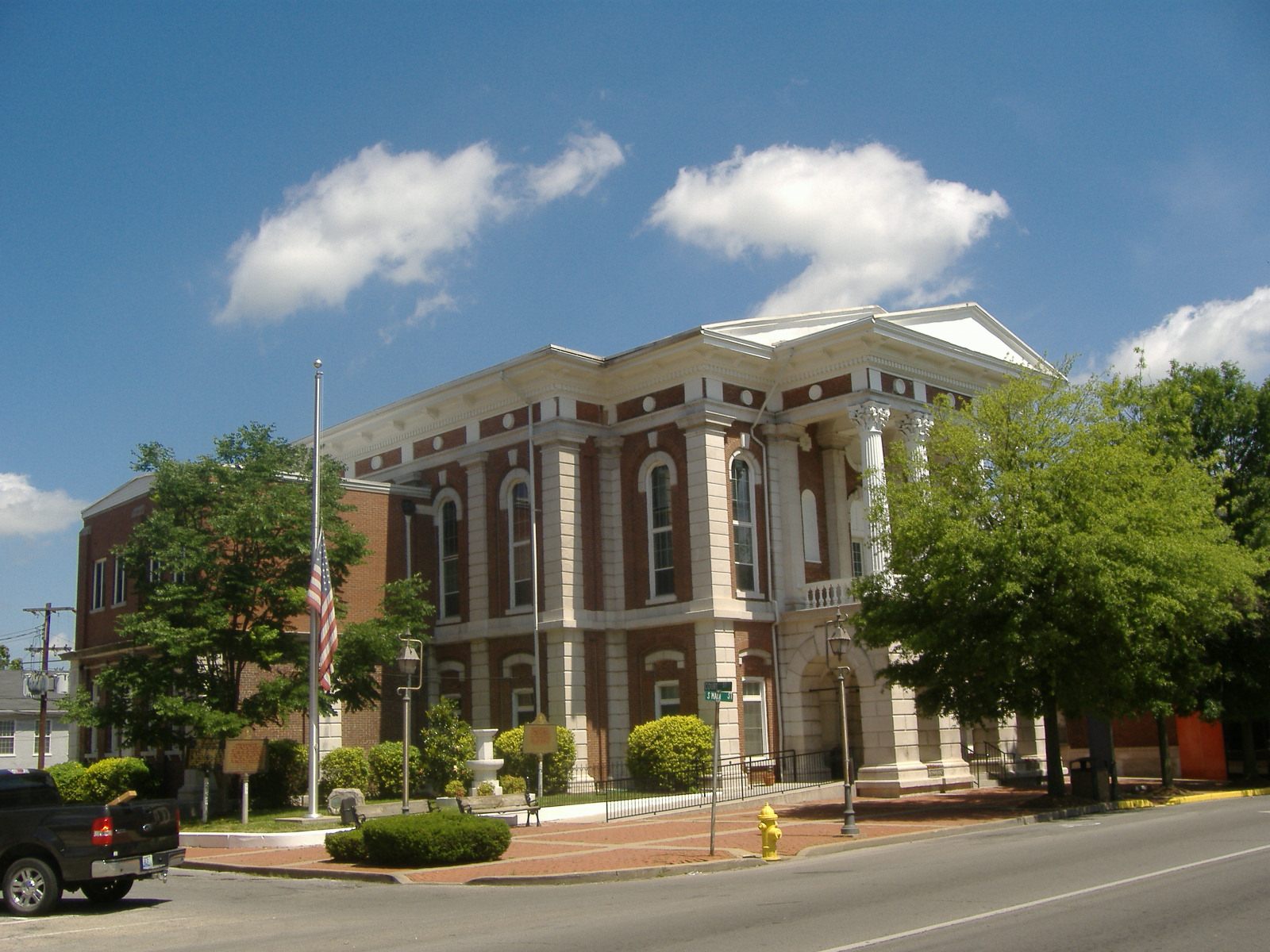
Pictured: the Christian County Courthouse in Hopkinsville, Kentucky, where the Sutton and Taylor families reported the siege to police in the early hours of August 22, 1955 — not the Sutton farmhouse itself, the actual site of the encounter near the rural community of Kelly. The family sold the property and moved away within a week of the story becoming public, and no rights-clear photograph of the farmhouse as it stood that night is known to survive.
Theoretical Alignment
These percentages are this archive's interpretive weights, not measurements. The Extraterrestrial and Interdimensional weightings reflect how the case has been told in UFO literature, where the “spaceship” landing, the little men and their apparent immunity to gunfire are taken as given. The record is less dramatic. The “spaceship” was a light that Billy Ray Taylor said came over the trees and landed in a field behind the house; the family ignored him, police found no landing marks, and there were meteor reports in the area that evening. The figures were seen at night, briefly, usually one at a time, by frightened people with guns, and their described appearance and behaviour closely match a great horned owl. Nothing physical was found except damage consistent with a few shots. The family's fear was real, which is why a psycho-social or misidentification reading deserves more weight than the grid gives it. Readers should treat the grid as a summary of competing readings, not a finding.
Background
Kelly was not a town but a cluster of farms on the highway about seven or eight miles north of Hopkinsville, the seat of Christian County in western Kentucky. In August 1955 Glennie Lankford, a 50-year-old widow, rented a small farmhouse there. The house had no running water (water came from a well in the yard) and, as far as the accounts say, no telephone. Lighting outside was limited to a single bulb on a small porch.
On the evening of Sunday, August 21, 1955, eleven people were in the house. Joe Nickell, drawing on Isabel Davis's 1956 investigation, lists them as Glennie Lankford (50); her children Lonnie (12), Charlton (10) and Mary (7); her two sons from a previous marriage, Elmer “Lucky” Sutton (25) and John Charley “J.C.” Sutton (21); their wives, Vera (29) and Alene (27); Alene's brother O.P. Baker (30 or 35); and a Pennsylvania couple, Billy Ray Taylor (21) and June Taylor (18). That is eight adults and three children. The Taylors and Lucky and Vera Sutton had been working as occasional carnival hands and were visiting.
The best record of what happened comes from two sources. The first is the contemporary press, especially Joe Dorris's reporting in the Hopkinsville Kentucky New Era, which the paper reprinted in a 12-page supplement, “It Came from Kelly,” for the fiftieth anniversary in 2005. The second is the field investigation by Isabel Davis of Civilian Saucer Intelligence of New York, who went to Hopkinsville in 1956 and interviewed Glennie Lankford, Alene Sutton and Police Chief Russell Greenwell, among others. Her report, with an introduction and comparative material by Ted Bloecher, was published by the Center for UFO Studies in 1978 as Close Encounter at Kelly and Others of 1955. A radio man, Andrew “Bud” Ledwith of WHOP, interviewed the family the next day, made drawings from their descriptions and collected signed statements.
These sources do not always agree, and the case has grown in the retelling. The first newspaper story described the beings as about four feet tall with big heads, huge eyes and long arms; Glennie Lankford's own statement made them two and a half feet. The early stories said twelve to fifteen creatures, but in only one instance did anyone see more than one at a time. They were not “little green men” in the early reports; the colour was added later by the national press.
Complete Timeline
| Date | Event |
|---|---|
| August 21, 1955, c. 7:00 PM | The light in the sky. Billy Ray Taylor, fetching water from the well, sees a bright light streak across the sky and disappear beyond a tree line. He tells the family he has seen a spaceship; they pay no attention. (The Kentucky New Era of August 22 reports him seeing what looked like a flying saucer come over the trees and land in a field about a city block behind the house, with “a semi-hissing sound.”) Meteors were reported in the area that evening. |
| c. 8:00 PM | The first figure. The dog barks and hides under the house. Taylor and Lucky Sutton see a small glowing figure with its hands raised approaching from the fields, fetch a .22 and a shotgun, and fire when it is about 20 feet away. It “flips” and runs off. |
| c. 8:00–11:00 PM | The encounters. Over about three hours the men fire at a face at a window, at a figure on the roof and one in a maple tree (which “floats” to the ground), and at one by the corner of the house, which sounds “like a metal bucket” when hit. A clawed hand is said to reach down from the porch roof towards Taylor's hair. Glennie Lankford urges them not to shoot and hides the younger children under a bed. |
| c. 11:00 PM | To the police. After a lull, the families drive the eight miles to Hopkinsville police headquarters in two cars and report that they have been fighting the creatures for nearly four hours. |
| c. 11:00 PM – 2:00 AM | The search. Four city police, five state troopers, three deputy sheriffs and four military police from the Army's Fort Campbell search the house and grounds. They find a hole in a window screen and some spent shells, no tracks and no sign of a landing; one account mentions a patch of luminous grass by a fence. Chief Russell Greenwell later said, “Something scared those people.” |
| c. 3:30 AM – dawn | The return. After the police leave, the family report the creatures back at the windows until just before dawn. |
| August 22, 1955 | The morning after. Bud Ledwith of WHOP interviews the family and makes drawings; reporter Joe Dorris visits for the Kentucky New Era. Officers returning are told by neighbours that the families have packed up and left for Evansville, Indiana. Sightseers arrive. |
| 1956 | Davis's investigation. Isabel Davis interviews Glennie Lankford, Alene Sutton, Chief Greenwell and others. |
| 1978 | The report. CUFOS publishes Davis and Bloecher, Close Encounter at Kelly and Others of 1955. |
| 2001 | First owl analysis. French researcher Renaud Leclet proposes that the figures were “eagle owls” (the genus that includes the great horned owl). |
| August 2005 | Fiftieth anniversary. Hopkinsville holds a Little Green Men Festival; the Kentucky New Era publishes “It Came from Kelly”; Joe Nickell, invited to speak, interviews surviving witnesses and studies the original clippings and records. |
| November/December 2006 | Nickell's article. “Siege of ‘Little Green Men’” in Skeptical Inquirer concludes the case is explained by a meteor and a pair of territorial great horned owls. |
| 2007 | A family account. Lucky Sutton's daughter, Geraldine Sutton Stith, publishes Alien Legacy. |
| October 2012 | Skeptoid. Brian Dunning reviews the case and the Blue Book records (episode #331). |
Detailed Analysis of the Siege
The Arrival of the Craft: Sighting in the Gully
Billy Ray Taylor went out to the well at about seven o'clock and saw a bright light streak across the sky and disappear beyond a tree line some distance from the house. He came back saying he had seen a spaceship land in a gully. Nobody believed him; nobody went to look. According to Isabel Davis, Taylor “was the only member of the group who appeared to arouse immediate doubt in everyone who talked to him,” had “a low standing” even in the family, “basked in the limelight of publicity,” and “elaborated and embroidered his description of the creatures,” eventually producing “the most imaginative and least credible of the little-men sketches.”
The first newspaper report, in the Kentucky New Era on August 22, gives the story as the police heard it that night: Taylor “saw what looked like a flying saucer come over the trees and land in a field at a point about a city block behind the house. There was no explosion, only a semi-hissing sound.” Brian Dunning later wrote that the paper's reporting had Taylor describing only a bright shooting star; the August 22 article does not bear that out. The rainbow exhaust, sharp banking turns and metallic, double-convex shape found in later accounts are not in it, and the police found no mark of anything having landed behind the house. Davis and Bloecher record other reports of meteors in the area that evening, and the late-summer sky that week included a minor meteor shower. The light may have primed everyone for what followed, but nothing connects it physically to the figures.
First Contact: The Creature at the Kitchen Door
About an hour later the dog began barking and then crawled under the house with its tail tucked; it would not come out until the next day. Lucky Sutton and Billy Ray Taylor went to look. Davis's description, from her interviews, is the classic one: a small “man” about three and a half feet tall, with an oversized, almost perfectly round head, arms reaching almost to the ground, huge hands with talons, large eyes glowing with a yellowish light and set between the front and the side of the head, and a body that seemed made of silver metal and gave off a glow “like the light from the radium dial on a watch.” Its hands were raised “as if someone had told him he was about to be robbed.”
Glennie Lankford's own 1955 statement used the word “shining,” not glowing, which may reflect the porch light. Lucky Sutton's son later said his father described the figures as silver with “a greenish silver glow.” Large pointed ears appear in several accounts. Details often added to this scene in later versions, such as bat-like ears that moved as the creature scanned the yard, a low-wattage yellow porch light, and a gliding, weightless approach across the yard before the first shot, are not in the sources cited here.
The Battle Begins: Shotguns, Rifles, and the Metallic Clank
When the figure was about twenty feet from the house, Lucky and Billy Ray fired. They said it went backwards, “did a flip,” and scurried off. Shortly afterwards a face appeared at a window and one of the men fired through the screen; again they said it flipped and vanished. Later, one figure by the corner of the house was hit at close range with a sound “like that of a metal bucket” but jumped up and ran.
How much shooting there was is disputed. The guns mentioned are a .22 (described variously as a rifle and as a target pistol), a 20-gauge shotgun and a 12-gauge shotgun. The men spoke of a great deal of firing, and the story has grown to whole boxes of ammunition. But the police found only one hole in a screen, which Nickell and Dunning describe as consistent with a .22 bullet, and some spent shells. Deputy Sheriff Batts said the men told him they fired about four boxes of .22 pistol shells, but he also quoted a neighbour who heard shooting at the Suttons' and distinguished only about four shots, which he took for firecrackers. Claims of a farmhouse “riddled” with bullet holes, melted screens and gouged siding have no basis in the police findings.
The Siege and the Roof Incident: Defending the Cabin
Over the next three hours the encounters came and went. At one point Taylor started outside and hesitated under the low porch roof; those inside screamed at the sight of a claw-like hand reaching down towards his hair, and he was pulled back. Lucky went into the yard and fired at a figure on the roof, and both men fired at another in a maple tree. Those figures “floated” rather than fell to the ground and ran off on thin legs that seemed to move only from the hip. This pair, one on the roof and one in the tree, was the only time anyone saw more than one figure at once.
The figures made no sound, never tried to break in, and showed no overt hostility; Glennie Lankford later said they had not tried to harm anyone. Davis noted that one of the women, apparently June Taylor, was “too frightened to look,” and Lonnie Lankford told Nickell in 2005 that his mother hid him and his brother and sister under a bed. Several of the eleven people in the house, in other words, did not see the figures at all.
The Flight to Hopkinsville: Panic at the Police Station
At about eleven o'clock, after a lull, everyone piled into two cars and drove to Hopkinsville. The police account, as reported by Dunning, has five adults and several children arriving agitated and frightened, saying, “We need help. We've been fighting them for nearly four hours.” Chief Russell Greenwell took them seriously enough to call out a large response. Accounts that describe dilated pupils, rapid heart rates and children treated for shock at the station could not be traced to any source.
The Law Enforcement Sweep: Sweeping the Farmhouse
The Kentucky New Era names Chief Greenwell and city officers T.C. Gross, Dorris Francis and Gray Salter, State Troopers R.N. Ferguson Jr. and G.W. Riley, and Deputy Sheriff George Batts, joined by four MPs and by two Hopkins County deputies and at least three troopers from Madisonville; later summaries give four city police, five state troopers, three deputy sheriffs and four military police from Fort Campbell. About 25 people were at the scene while the officers stayed. Fort Campbell is a U.S. Army base; Dunning found no record of who called the MPs or why and assumed the police wanted extra firepower after hearing of a gunfight. A newspaper photographer was also present by some accounts. The searchers found no creatures, no tracks and no sign that anything had landed; they found the hole in the screen and spent shells. One account describes a patch of luminous grass near a fence where a figure had been shot; Dunning notes this is consistent with foxfire, a glowing fungus on decaying wood. The paper and Davis both record a moment of comic tension when an MP stepped on a cat's tail: “You never saw so many pistols unholstered so fast in your life,” Greenwell said.
Greenwell was convinced the family's fright was genuine: “Something scared those people,” he said, “something beyond reason — nothing ordinary.” Former state trooper R.N. Ferguson, one of the original investigators, told Nickell in 2005 that he thought people had been drinking, though he saw no evidence of it at the site; a visitor the next day noticed a few beer cans in a rubbish basket, and the Kentucky New Era reported the next day that “all officials appeared to agree that there was no drinking involved.” The searchers left at around 2 a.m.
The Goblins Return: The Second Wave of the Siege
After the police had gone, the family reported that at about 3:30 a.m. the figures were back at the windows, and that they kept appearing until just before dawn. Glennie Lankford's statement, taken the next morning, says she saw “a small silver shining object about 2½ feet tall” with its hands on the bedroom window screen, called her sons, and “they shot at it and it left.” Dunning's summary of what the neighbours told police has no shots, only scratching and noises on the roof. Claims that the second phase was a two-hour gun battle that left the house “in a state of near-ruin” are not supported.
The Morning After: WHOP Radio, Sketches, and Public Backlash
The next day brought Bud Ledwith of WHOP, who interviewed the witnesses, made drawings from their descriptions and obtained signed statements. These drawings and his notes are the closest to a first-hand record that survives. Reporter Joe Dorris visited for the Kentucky New Era; he found Mrs. Lankford shooing away sightseers and her daughter struggling to hold a cat, which tore one of the screen doors. Police officers who came back were told by neighbours that the families had packed up and gone to Evansville, Indiana.
The house was rented, not owned, so the family did not sell it. Earlier versions of this page said they charged admission, sold the farm at a loss and refused to speak to anyone for decades; none of this could be confirmed. What is documented is that they were ridiculed, left the farm, and were reluctant to talk when Davis came in 1956. Lucky Sutton's children later defended his account, and his daughter Geraldine Sutton Stith wrote Alien Legacy (2007).
Key Witnesses
Glennie Lankford
She rented the farmhouse and was mother of the Sutton brothers and the three younger children. She urged the men not to shoot, hid the younger children, and later said the figures had not tried to harm anyone. Her statement taken on the morning of August 22 by Maj. John E. Albert (now in the Blue Book file) describes a “small silver shining object about 2½ feet tall” at her window at 3:30 a.m., and says the others saw “this little man that looked like a monkey.” Isabel Davis interviewed her in June 1956, after much persuasion, and found it “impossible to picture her taking part in a hoax.”
Elmer "Lucky" Sutton
Saw the first figure with Billy Ray Taylor and fired at it and others with a shotgun. He later described the figures as silver with a greenish-silver glow, according to his son. Earlier versions of this page called him a Korean War combat veteran; no source for that was found.
Billy Ray Taylor
Reported the light in the sky and was at the centre of the encounters, including the claw reaching for his hair. Isabel Davis found him the one witness who aroused “immediate doubt” in everyone who talked to him; he embroidered his descriptions over time and produced the least credible of the sketches. His accounts were not consistent.
Russell Greenwell
Received the families at the station and led the search. He found no creatures but was convinced the family's fear was real: “Something scared those people … something beyond reason — nothing ordinary.” Davis interviewed him in 1956.
The Five Observables Assessment
The Five Observables framework is applied to the performance characteristics reported in this case:
Assessment: The figures were said to “float” down from the roof and a tree rather than fall, which is marked Speculative: it is reported, briefly, at night, by frightened witnesses, and is also how a bird leaving a perch would look. The light in the sky was most likely a meteor and is not counted as an anomalous observation. No radar or instrument data exist, so low observability is not documented; earlier versions of this page marked it Present on the ground that the figures had “no radar signature,” which is not evidence of anything.
Evidence Assessment
Supporting Anomalous Origin
- Several adults reported the same kind of figure, and Bud Ledwith collected signed statements and drawings the next day.
- Police Chief Russell Greenwell and other officers were convinced the family's fear was genuine.
- Investigators, including Isabel Davis and Joe Nickell, found no evidence of a hoax by the main witnesses.
- The family gained nothing and suffered ridicule; they left the farm the next day.
Supporting Conventional Explanation
- Only Billy Ray Taylor saw the “flying saucer,” police found no sign of a landing, and meteors were reported in the area that evening.
- Only once was more than one figure seen at a time; height estimates ranged from two and a half to four feet.
- The figures' big round head, large yellow eyes, ear-like points, talons, thin legs, silent “floating” from roof and tree, and aggressive approaches match a great horned owl defending its territory.
- Police found one hole in a screen, some shells, no tracks and no landing marks; a neighbour heard four shots.
- The witness who first reported the “spaceship” was, in Davis's assessment, the least reliable of the group.
Why "Disputed"
The Kelly–Hopkinsville case carries a DISPUTED stamp. What is credible is that a household of eleven people had a long, frightening night, called the police, and convinced experienced officers that their fear was real. Earlier versions of this page supported the stamp with claims that do not hold: that the witnesses were interviewed separately and described identical creatures (their descriptions varied, and Billy Ray Taylor's grew more elaborate), that the house was riddled with bullets (one hole in a screen was found), that military police logs and Fort Campbell command records documented a landing investigation (no such records have been identified), and that the family sold the farm at a loss (it was rented). With those removed, the case rests on sincere testimony of brief nighttime sightings that a well-supported conventional explanation fits closely. That is why it is rated Disputed.
Sensor & Instrumentation Detection Profile
No instrument recorded anything. No radar data, photographs or measurements exist. Earlier versions of this page said WHOP radio engineers logged electromagnetic static during the “landing window”; no source for that was found, and it has been removed. The “sensors” in this case are the witnesses' eyes and ears, at night, with one porch bulb and flashlights for light.
Environmental & Geospatial Context
The area around Kelly is flat farmland in the Pennyroyal region of western Kentucky, with fields separated by tree-lined hollows; Dunning describes it as having “not a knob or a hill of any kind as far as the eye can see.” The farmhouse stood among fields with trees nearby, including the maple from which one figure “floated.” Sunset that evening was at about 7:30 p.m., and the moon was a thin waxing crescent, so most of the encounters happened in near-darkness lit only by the porch bulb and flashlights.
The setting matters for the owl explanation. Great horned owls are common in Kentucky farmland and woodlots, begin hunting at dusk, and defend their territory and young aggressively; in August they may still be tending young. Fort Campbell lies about fifteen miles south-west of Hopkinsville. Davis records that there were no footprints on the hard ground; the claim that a severe heat wave had baked it, and that the gully behind the house was an “ideal landing site,” could not be traced. Mrs. Lankford later said nobody went out to the gully that night because everyone was too scared.
Observer Credibility & Occupational Profile
The household were working people: tenant farmers and occasional carnival hands. Nothing suggests they planned a hoax, and the officers who saw them believed they were frightened. But the group's reliability varied. Isabel Davis, a sympathetic investigator, singled out Billy Ray Taylor as a source of doubt. Several people in the house did not see the figures. The descriptions changed between the first newspaper report and later accounts. Earlier versions of this page described the family as Bible-only readers with no exposure to science fiction and called Lucky Sutton a combat veteran; none of that could be confirmed.
Physical & Material Assays
No physical evidence of the figures or of any craft was found, and no assay of anything was made. The first officer at the house noticed a few shotgun shells in the front yard, none of which were kept, and everyone saw a squarish hole in the living-room window screen, which early sceptics joked about. Nickell and Dunning describe the screen damage as a single hole consistent with a .22. Bud Ledwith obtained the screen from the later occupants in August 1956; Davis records five small perforations of about half an inch and two larger holes, one roughly rectangular (about 1¾ by 7/8 inches) and one about two inches across, though by then the screen had been in use for another year. A luminous patch of grass was reported near a fence but apparently not sampled, and was gone by the next day. Earlier versions of this page described extensive ballistic damage, melted screens and an analysis of shell-casing distribution and shot angles by “independent researchers”; none of that could be traced.
Historical Precedents & Archive Matches
Kelly is the classic American “entity siege.” Nickell compares it with two West Virginia cases he attributes to owls: the Flatwoods monster of 1952 (a barn owl) and the 1966–67 “Mothman” reports (a barred owl). Jacques Vallée and others have compared the Kelly figures with the goblins and little people of European folklore. The case's influence on popular culture is large: it fed into Steven Spielberg's unmade Night Skies project, and the film Critters (1986).
The U.S. Air Force's involvement was slight and unofficial: a reserve officer's visit on the morning after, and a small Blue Book file assembled in 1956–57 when a magazine article was expected (see “The Air Force and Project Blue Book” below). Brian Dunning found an Air Force lecture note listing the case among hoaxes. No Kelly file appears among the August 1955 Blue Book files digitised on the Internet Archive; the documents are known from Davis and Bloecher's reproduction.
Material Analysis
There is almost nothing to analyse. The physical record consists of the screen hole, some spent shells, an unsampled patch of luminous grass, Bud Ledwith's drawings and signed statements, and later interviews. No debris, residue, tracks or landing marks were found in the field or the hollow where Taylor thought the light came down. The “metallic clang” when a figure was hit is testimony, not a measurement, and a shot striking anything hard near a target in the dark would produce a similar sound. The sightseers who arrived on August 22 would in any case have destroyed most traces.
The Conventional Explanation Candidates
Explanations were offered from the first day: hoax, drink, escaped monkeys, and later owls. The owl explanation is the only one that has been worked out in detail, by Renaud Leclet (2001), Joe Nickell (2006) and Brian Dunning (2012). It treats the light in the sky as a meteor and the figures as one or two great horned owls defending their territory, seen in near-darkness by people who had just been told a spaceship had landed.
The Great Horned Owl Hypothesis
Nickell's comparison is point by point. The great horned owl (Bubo virginianus), common in Kentucky farmland, stands about 25 inches tall. It has very large, staring yellow eyes; long ear tufts that could read as pointed ears; a large, round head set on its shoulders without an apparent neck; a light grey underside that could look silvery in a porch light; long wings that, seen edge-on, could be taken for arms reaching nearly to the ground; thin legs; and talons. An owl on a roof or in a tree that drops off its perch looks as if it “floats” to the ground. Great horned owls are “extremely aggressive when defending the nest,” begin hunting at dusk, and will swoop at people who come too close, which fits figures that kept returning after being shot at. Glennie Lankford's word for the figures was “shining,” not glowing, which Nickell suggests may be an effect of the farm lights on the eyes and pale plumage.
The owl explanation also fits the numbers better than the legend. Despite the “twelve to fifteen” in the first newspaper story, the witnesses saw more than one figure at once only when one was on the roof and another in a tree, which matches a pair of birds. The witnesses said the figures made no sound, and owls fly silently.
The objections are real but weaker than earlier versions of this page suggested. The encounters spanned three hours and resumed later, which seems long for owls; but they were intermittent, and territorial birds return. The witnesses were country people who knew local wildlife; but they saw the figures briefly, by a single bulb and flashlights, after being primed by Taylor's “spaceship,” and several were not looking at all. The clawed hand reaching for Taylor's hair is the hardest detail to fit, though an owl's foot reaching from a roof edge is not impossible. The “metallic” clang when a figure was hit is testimony from a shooter in the dark, not a measured sound.
The Escaped Primate Hypothesis
The monkey theory came partly from the Air Force side. Maj. John E. Albert, a reservist at Campbell Air Force Base who visited the farm on the morning of August 22, told the base adjutant in 1957 that the family had been looking at a magazine picture of what appeared to be a little man but was “a monkey, painted silver,” and that a monkey escaped from a circus in the area might explain the sighting. Mrs. Lankford's statement taken by Albert says the others saw “this little man that looked like a monkey.” Capt. George T. Gregory of Project Blue Book later wrote that a local resident had reported a circus train near town a day or two before, and that in his and Dr. J. Allen Hynek's opinion escaped monkeys or apes were possible. Isabel Davis criticised Albert's account as unchecked, and Nickell and Clark both note that no evidence of any escape was ever found. It fits the reported silence, floating and roof-and-tree appearances less well than the owl explanation.
Meteorite Impact, Mass Hysteria, and Hoax
The light in the sky is the easiest part to explain. Only Taylor saw it, the police found no landing marks, Davis and Bloecher record other meteor reports in the area that evening, and nothing physically connects the light to the figures. A hoax is unlikely: no investigator, sceptical or not, found evidence of one by the main witnesses, though some contemporaries and the Air Force lecture note Dunning found treated it as one. Drink was suggested from the start. Former trooper R.N. Ferguson told Nickell he believed the monsters “came in a container,” while admitting he saw no evidence of drinking at the site; a visitor the next day saw a few beer cans in a rubbish basket; and a 2014 paper by Rodney Schmaltz and Scott Lilienfeld in Frontiers in Psychology suggested intoxication may have played a part. Contemporary press reported that officials saw no drinking. “Mass hysteria” in the clinical sense is not needed: a frightened household reacting to brief, ambiguous sightings at night is enough.
Great Horned Owls
Highly PlausibleMatches the head, eyes, ear-like tufts, pale “shining” appearance, talons, silent “floating” from roof and tree, aggressive returns, and the fact that no more than two figures were seen at once. Proposed by Leclet (2001) and argued by Nickell (2006) and Dunning (2012). Weakest on the reported hand reaching for Taylor's hair and on the length of the night.
Escaped Circus Monkey / Primate
ImplausibleSuggested in 1955–57 by Maj. John E. Albert and, as a possibility, by Capt. George Gregory and J. Allen Hynek, on the strength of an unconfirmed report of a circus train nearby. No escape was ever confirmed, and the explanation fits the figures on the roof and in the tree less well than owls do.
Meteorite Impact, Mass Hysteria & Hoax
Plausible (Meteor Only) Implausible (Entire Siege)A meteor plausibly explains Taylor's light. A deliberate hoax by the family is not supported by any investigator. Drink was suspected by some at the time but not observed by officials. None of these explains the figures on its own; combined with owls and a frightened household, they need not.
Isabel Davis's 1956 Investigation
The most detailed record of the case comes from four days of interviews in Hopkinsville, June 12–15, 1956, by Isabel Davis of Civilian Saucer Intelligence of New York. By then the family had left the farm and were bitter about the ridicule they had received; the house was occupied by Mrs. Juanita McCord, whose husband was Mrs. Lankford's nephew and who supplied an accurate list of the people present and the guns in the house. Davis also drew on Bud Ledwith's notes. Ledwith had gone to the farm on the morning of August 22, interviewed the women (the men had gone to Evansville), made a sketch at their direction, then returned later in the day to interview the men and draw from their descriptions. Davis regarded this material, taken “before publicity and ridicule had made them angry and bitter,” as uniquely valuable.
Davis's interview with Glennie Lankford was short. Mrs. Lankford answered laconically: “I didn't see that myself … I only saw two of them, different times, one each time.” She complained of “the lies they told about us. Said we were drinking” and of newspapers “saying there were twelve or fifteen of them.” A rumour that mysterious magazine and kitchenware “salesmen” had called at the farmhouse turned out to refer to people who wanted to set up concessions and sell souvenirs in the yard; none of their offers were accepted. Chief Greenwell told Davis that Mrs. Lankford was “the most impressive witness. She's the type of person who wouldn't tell a lie if her life depended on it,” and her son Tillman, who did not believe the story at first, changed his mind on hearing she had seen the creatures: “If Mama saw it, it was there.”
Davis was candid about Chief Greenwell's own outlook. He had seen a UFO himself in 1952, a glowing oval object watched for half an hour or more by dozens of people near Kentucky Lake, and Davis thought this, and his own background, made him “a good deal less inclined to scoff” than other townspeople. That makes him a fair-minded source, but not a neutral one. Davis also recorded that the first officer at the scene saw a few shotgun shells that were not kept, that everyone saw a square hole in the screen, that there were no footprints on the hard ground, and that a policeman's report of a greenish light in the woods was searched for without result.
The report, published by CUFOS in 1978 with Ted Bloecher's survey of other entity reports of 1955, also reproduces the Air Force documents described below and a firearms list. The guns were J.C. Sutton's 20-gauge shotgun, an old 12-gauge “duck gun” used by Lucky Sutton, a .22 rifle used by Billy Ray Taylor, and a small German pistol that was apparently not used. Davis's careful work is the main reason the case is taken seriously; it is also the source of several of the details, such as Billy Ray Taylor's unreliability and the fact that most figures were seen singly, on which the conventional explanation rests.
How the Story Grew
Kelly–Hopkinsville is a clear example of a case that became bigger with each retelling. Nickell, Dunning and Blake Smith, writing for The Skeptic in 2024, all trace the same process. Taylor's light coming “over the trees” with a “semi-hissing sound” became a silent, iridescent, rainbow-trailed saucer making sharp turns. The figures went from “about four feet tall” with big heads and eyes to green, then silver, then glowing “goblins” with bat ears. One or two at a time became an “army of little men.” A screen hole and some shells became a four-hour gun battle that riddled the house. Four Army military police called to a reported shooting, and an unofficial visit the next morning by an Air Force reserve officer who thought the culprit was a monkey, became an official military investigation of a landing.
The version of this page before October 2026 had gone further still. It gave the family 7 adults and 4 children instead of 8 and 3, made O.P. Baker Glennie Lankford's son (he was Alene's brother) and swapped the brothers' wives, gave timings to the quarter-hour and a second siege ending at 4:45 a.m., described dilated pupils and children treated for shock, called Lucky Sutton a Korean War combat veteran, cited Kentucky State Police dispatch logs and a Fort Campbell duty-officer log that have not been identified, said WHOP engineers recorded electromagnetic interference, said the family sold the farm at a loss and refused to speak for decades, and listed the case as Blue Book “Case #035” (that is this archive's own number). None of these could be traced to a source.
None of this means the family invented anything. The most careful investigators, sympathetic and sceptical alike, agree that something frightened them badly that night. The disagreement is about what, and the answer depends on which version of the story one starts from. Starting from the earliest reports, the conventional explanation fits well.
The Air Force and Project Blue Book
The Air Force's role was real but small and unofficial. Project Blue Book does hold a file on the case, which Isabel Davis and Ted Bloecher obtained from Maxwell Air Force Base in 1975 and reproduced in their report. Its first document is a request of August 29, 1957 from the Air Technical Intelligence Center (ATIC) at Wright-Patterson to Campbell Air Force Base, adjoining Fort Campbell, asking for facts because a magazine article was expected. ATIC wrote that “as the incident has never been officially reported to the Air Force, it has not taken official cognizance of the matter,” and that “lacking factual, confirming data, no credence can be given this almost fantastic report.”
Campbell AFB's reply of October 1, 1957 said that no official investigation had ever been ordered and that neither the sheriff's office nor the Hopkinsville police had a report of investigation on file, and it enclosed a statement by Maj. John E. Albert. Albert, a reservist on his way to training, heard the news on the radio at about 8 a.m. on August 22, 1955, was asked by the base to see if there was anything to it, and drove to the farm. He found Deputy Sheriff Batts there, who could show no evidence that anything had landed, took a short statement signed by Glennie Lankford, and concluded that the family had either seen an escaped circus monkey or, after a religious meeting and looking at a magazine picture of a silver-painted monkey, let their imaginations run away with them. Davis was sharply critical of Albert's account, which was written two years later.
The file also contains a September 10, 1956 memo to Capt. George T. Gregory, who had become head of Blue Book that year, from Dr. J. Allen Hynek, noting among other things that Chief Greenwell said two men from an unidentified agency at Standiford Field in Louisville had looked into the case; and an undated memo by Gregory saying the case “has not yet been brought to the ‘official’ attention of the Air Force” and “may cause some embarrassment,” and floating the escaped-monkey idea. Brian Dunning separately found an undated Air Force lecture note listing “Hopkinsville ‘Little Green Men’ case” among examples of hoaxes. Jerome Clark's encyclopedia, cited by Nickell, says the case was listed as “unidentified”; this revision did not see a Blue Book record card confirming either classification.
In August 1955 Project Blue Book was headed by Capt. Charles Hardin, appointed in March 1954. Capt. George T. Gregory, named in earlier versions of this page as directing it at the time of the sighting, took over in 1956 and dealt with the case only afterwards, on paper. The military police at the farm on the night were from Fort Campbell, an Army post, and there is no evidence that they came to investigate a landing rather than a reported shooting.
Related Cases
Confirmed Documents & Official Records
A small file assembled in 1956–57: ATIC’s request of August 29, 1957 to Campbell AFB (“never officially reported to the Air Force”), the base’s reply of October 1, 1957, Maj. John E. Albert’s statement and Glennie Lankford’s signed statement of August 22, 1955, a 1956 Hynek memo to Capt. George Gregory, and an undated Gregory memo. Reproduced in Davis and Bloecher (1978). (“#035” is this archive’s own case number.)
Released (obtained from Maxwell AFB, 1975)Not a government record, but the nearest thing to one that survives: the paper’s first report, naming the responding officers and quoting the account they took from the family that night. Davis records that the Kentucky State Police trooper report, filed at Frankfort, could not be obtained, and that neither the sheriff nor the city police had a report on file in 1957.
PUBLIC (newspaper archive)Isabel Davis’s 1956 field investigation, with copies of the Blue Book documents. No Fort Campbell duty log or other Army record of the military police response has been identified; earlier versions of this page described one.
PUBLICFurther Reading — Recommended Literature
Close Encounter at Kelly and Others of 1955
The fullest investigation of the case, based on Davis’s June 1956 interviews and Bud Ledwith’s notes, with diagrams and copies of the Blue Book documents. Sympathetic to the witnesses but candid about their differences.
The Kelly-Hopkinsville UFO and Alien Shootout
A short self-published retelling of the case for general readers rather than an original investigation.
Alien Legacy
Written by the daughter of witness Elmer "Lucky" Sutton, this book provides a personal, family-focused perspective on the siege and its traumatic aftermath.
DISCLOSURE: Some links above are affiliate links. If you purchase through them, OverClassified receives a small commission at no additional cost to you. This helps support independent research.
Essential Viewing
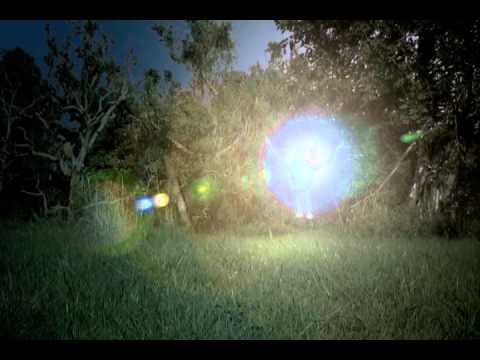
Little Green Men | Kentucky Life | KET
Kentucky Educational Television’s Kentucky Life segment on the 1955 Kelly “little green men” story and its place in local memory.
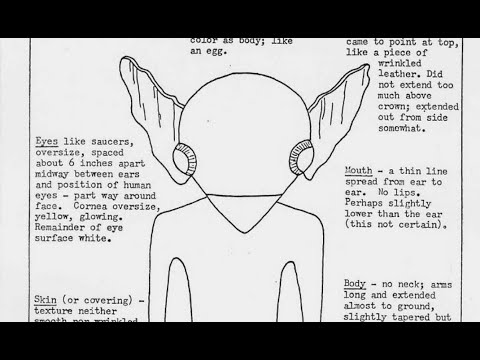
Little Green Men in Kelly, Kentucky | Kentucky Life | KET
Kentucky Educational Television’s Kentucky Life segment on the 1955 Kelly “little green men” story and its place in local memory.
Sources
- “Story of space-ship, 12 little men probed today.” Kentucky New Era (Hopkinsville), August 22, 1955, reprinted unedited 2017. kentuckynewera.com
- Davis, Isabel, and Ted Bloecher. Close Encounter at Kelly and Others of 1955. Center for UFO Studies, 1978 (Davis’s June 12–15, 1956 interviews; Ledwith’s notes; firearms list; screen diagram; Blue Book documents A–H). cufos.org (PDF)
- Project Blue Book file, “Hopkinsville Incident 21 August 1955”: ATIC letter of August 29, 1957; Campbell AFB reply of October 1, 1957; statement of Maj. John E. Albert (September 26, 1957); statement of Glennie Lankford (August 22, 1955); J. Allen Hynek memo to Capt. George Gregory (September 10, 1956); undated Gregory memo. As reproduced in Davis and Bloecher (1978), ch. V. See also patrickgross.org.
- Ledwith, Andrew “Bud” (WHOP, Hopkinsville). Interview notes, signed statements and sketches, August 22, 1955 (as used by Davis and Bloecher).
- Nickell, Joe. “Siege of ‘Little Green Men’: The 1955 Kelly, Kentucky, Incident.” Skeptical Inquirer 30, no. 6 (November/December 2006). skepticalinquirer.org
- Dunning, Brian. “The Kelly Hopkinsville Encounter.” Skeptoid #331, October 9, 2012. skeptoid.com
- Smith, Blake. “Guns and Goblins: what really happened during the Kentucky Alien Invasion?” The Skeptic, January 2024. skeptic.org.uk
- McFie, Annie. Article on the Kelly–Hopkinsville case, Bluegrass Bulletin, as transcribed by Patrick Gross (quoting Chief Greenwell). patrickgross.org
- “It Came from Kelly.” Special supplement, Kentucky New Era, August 2005 (cited via Nickell and Dunning; not seen).
- Leclet, Renaud. Articles on the Kelly case (2001; 2008), proposing great horned (“eagle”) owls (cited via Nickell and Wikipedia; not seen).
- Schmaltz, Rodney, and Scott O. Lilienfeld. “Hauntings, homeopathy, and the Hopkinsville Goblins: using pseudoscience to teach scientific thinking.” Frontiers in Psychology 5 (2014) (cited via Wikipedia; not seen).
- Clark, Jerome. The UFO Encyclopedia, 2nd ed. Omnigraphics, 1998 (cited via Nickell).
- Sutton Stith, Geraldine. Alien Legacy: Based on a True Event. AuthorHouse, 2007 (later revisited as The Kelly Green Men, 2015 and 2016).
- Dudding, George. The Kelly-Hopkinsville UFO and Alien Shootout. CreateSpace, 2015.
- Vallée, Jacques. Passport to Magonia: From Folklore to Flying Saucers. Henry Regnery, 1969.
- Hynek, J. Allen. The UFO Experience: A Scientific Inquiry. Henry Regnery, 1972.
- Hendry, Allan. The UFO Handbook. Doubleday, 1979 (cited via Wikipedia; not seen).
- “Kelly–Hopkinsville encounter,” Wikipedia (used as a pointer). en.wikipedia.org
Corrections (October 2026)
This page was rewritten in October 2026 after checking it against the Kentucky New Era’s first report (August 22, 1955), Isabel Davis and Ted Bloecher’s 1978 report and the Project Blue Book documents it reproduces, Joe Nickell’s 2006 Skeptical Inquirer article, Brian Dunning’s 2012 Skeptoid episode and Blake Smith’s 2024 article. Much of the previous text was inflated or invented. The most important corrections: the household was eight adults and three children, not seven and four; O.P. Baker was Alene Sutton’s brother, not Glennie Lankford’s son; Vera was Lucky’s wife and Alene was J.C.’s. The police found a hole in a screen and a few shells, not a farmhouse riddled with bullets, and a neighbour heard about four shots. In only one instance was more than one figure seen at a time. The house was rented, not sold. Project Blue Book does hold a file, compiled in 1956–57: it says the case was “never officially reported to the Air Force,” and it contains an Air Force reserve officer’s unofficial visit and his escaped-monkey theory. Capt. George T. Gregory headed Blue Book from 1956, not in 1955. “Case #035” is this archive’s own number, not a Blue Book designation. The owl explanation is supported by the record far better than the previous page allowed.
Following this review, the rating was changed from Credible 85 to Disputed 40 (October 26, 2026), because the higher rating had rested partly on claims corrected or removed above.
Removed as unsourced: minute-by-minute times and a siege ending at 4:45 a.m.; a sixteen-officer “convoy” arriving at 12:30 a.m. (the paper says officers went out between 11 p.m. and midnight); dilated pupils and children treated for shock; Lucky Sutton as a Korean War combat veteran using the 20-gauge (Davis says J.C. used the 20-gauge and Lucky an old 12-gauge); a family without television who read only the Bible; a heat-wave-baked yard and a gully as an “ideal landing site”; WHOP logs of electromagnetic interference; melted screens, gouged siding and analysis of shell distribution and shot angles; Ledwith interviewing seven adults separately to produce consistent sketches; charging admission, selling the farm at a loss and refusing to speak for decades; Kentucky State Police dispatch logs and a Fort Campbell duty-officer log as documents; and the source entries for Ledwith “interview transcripts,” a Greenwell “official police statement,” Keyhoe’s Flying Saucers Top Secret, Hall’s UFO Evidence II, a Michael Swords Journal of UFO Studies “case study,” and Steuart Campbell’s The UFO Mystery Solved, none of which could be confirmed to discuss the case as cited. Also corrected: Brian Dunning’s statement that the first newspaper report described only a “shooting star” is contradicted by the August 22, 1955 article, which reports a “flying saucer” landing in a field. The Five Observables tiles were changed (lift Present to Speculative; acceleration Speculative to Not documented; low observability Present to Not documented). The stamp and score have not been changed and are under review.
See something inaccurate? Have additional information or sources?
Suggest an Edit →Last Updated: October 2026