
Alderney UFO Sighting
Shortly before 3 p.m. on April 23, 2007, Captain Ray Bowyer, a 50-year-old Aurigny Air Services pilot with more than eighteen years of flying experience, was flying a scheduled Trislander service south toward Alderney in the Channel Islands when he sighted a huge, brilliant yellow-gold object hanging motionless in the sky roughly 2,000 feet below his aircraft. As he watched, a second, identical object appeared further off toward Guernsey. Two passengers aboard his aircraft independently reported unusual colored lights at the same moment, and Bowyer relayed what he was seeing to Jersey air traffic control — who told him that a second airline captain, flying a Blue Islands aircraft to Jersey, had reported a similar object in the same position, seen from the other side. Bowyer filed a report with the UK Civil Aviation Authority, which he labelled a near-miss, and estimated the objects, at a distance he put at about 40 miles, at up to a mile wide. Jersey's radar recorded no solid corroborating return. The Ministry of Defence's file on the case was released to the National Archives in August 2011 as DEFE 24/2081/1. A detailed 2008 study by four researchers could not identify the objects; it left a rare atmospheric-optical effect and an earthquake precursor as the two remaining candidates.
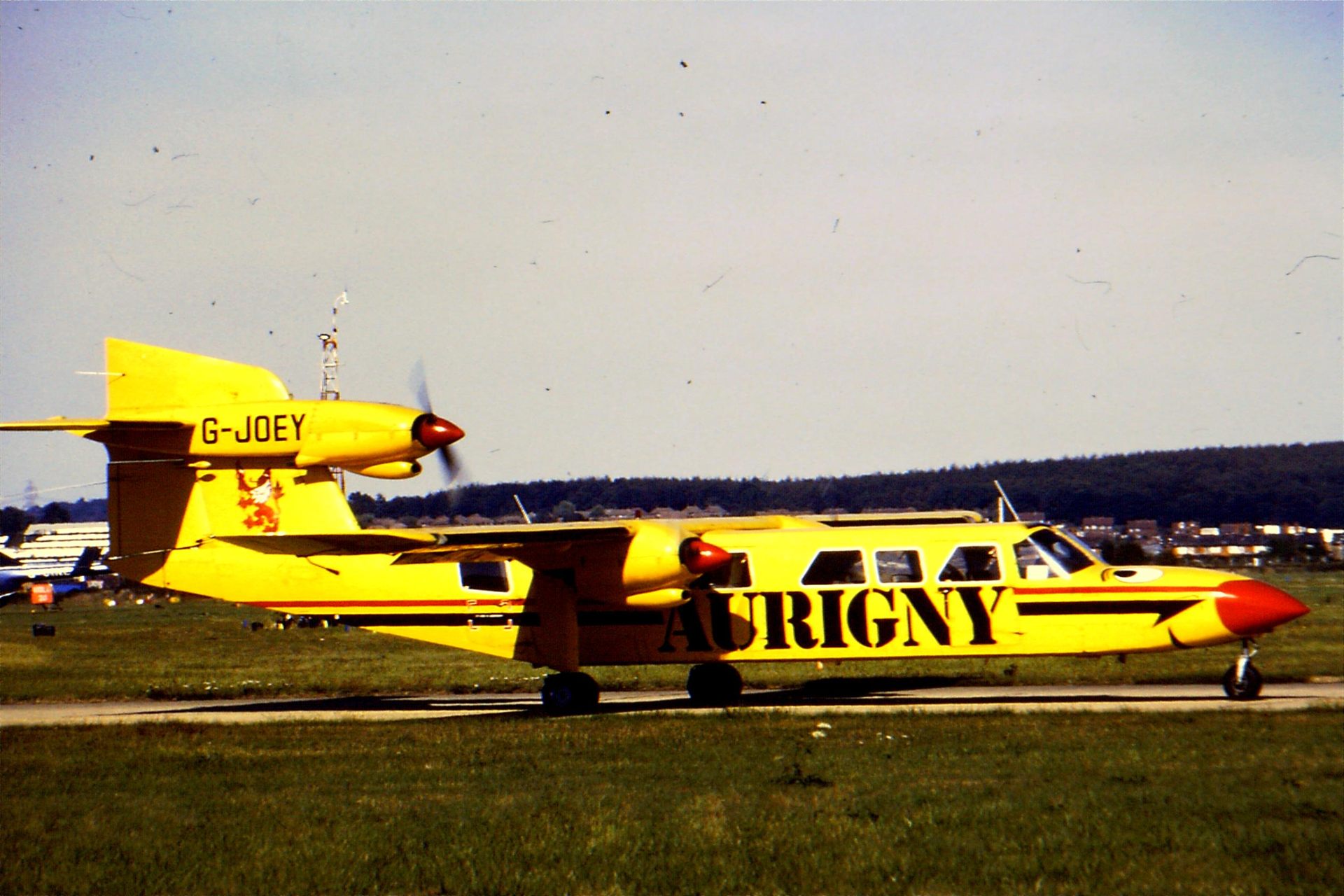
Pictured: an Aurigny Air Services Britten-Norman BN-2A Mk III Trislander — the same aircraft type, operator, and Southampton–Alderney (SOU–ACI) route Captain Bowyer was flying on April 23, 2007 — photographed at Southampton Airport. This is not a photograph of the sighting itself; no photograph or video of the object(s) is known to exist, since neither Bowyer nor his passengers had a camera to hand and no ground observer captured an image. (CC BY-SA 2.0, Gordon Bevan, Wikimedia Commons.)
Theoretical Alignment
The case aligns only weakly with any single UAP framework, largely because the objects were reported as stationary and non-interactive throughout the encounter. There was no approach, no pursuit and no maneuver of the kind that would favor a controlled-craft interpretation over a natural or optical one. What keeps the Extraterrestrial Hypothesis in play is the reported solidity, sharp edges and internal banding, and the fact that two pilots on different aircraft placed an object in the same position, viewing it from opposite sides. The case aligns poorly with Psycho-Social explanations because the primary witness was an on-duty commercial pilot, corroborated within minutes by a second captain who had no chance to coordinate a story with him.
Background
Aurigny Air Services, the airline Bowyer flew for, has served as the primary lifeline carrier for the Channel Islands since 1968, operating short inter-island hops connecting Guernsey, Jersey, Alderney, and the UK mainland with a fleet that, in 2007, still relied heavily on the Britten-Norman BN-2A Mk III Trislander — a three-engined, high-wing utility airliner purpose-built for exactly this kind of short, low-altitude island-hopping route, and an aircraft type Aurigny operated in greater numbers, and for longer, than any other airline in the world. Bowyer's own route that afternoon, Southampton to Alderney, was one he had flown as a matter of routine for years; by his own account this was an ordinary working day, not a special or unusual flight in any respect, which is itself part of what makes the sighting notable — it was witnessed by a pilot with no reason to be primed for anything out of the ordinary and every professional incentive to interpret ambiguous stimuli conservatively.
The wider context in the spring of 2007 was, in UK ufology terms, a relatively quiet one: the Ministry of Defence's small UFO desk (staffed, at various points in earlier decades, by figures like Nick Pope) was in the process of winding down its involvement in individual case assessment, a process that would culminate a few years later in the closure of the dedicated UFO reporting line altogether. The MoD's operating position, consistently applied across the department's history, was that its interest in any reported sighting began and ended with the narrow question of whether UK airspace or defense was under threat — a mandate that, whatever its logic for a defense ministry, meant a case like Alderney, involving no military assets and no approach toward populated UK territory, was destined for minimal official investigation regardless of how well-corroborated the underlying testimony turned out to be. It is against that institutional backdrop that Bowyer's report entered the system: not investigated for its own sake, but processed, filed, and eventually declassified as one of hundreds of similar reports the department had quietly logged and set aside over the decades.
Complete Timeline
| Date / Time | Event |
|---|---|
| Apr 23, 2007, afternoon | Captain Ray Bowyer is flying a scheduled Aurigny Air Services Trislander service to Alderney, with passengers aboard. |
| ~15:00 BST, ~30 miles from Alderney, 4,000 ft | Bowyer spots a bright yellow-gold light approximately 10 miles west of Alderney (roughly 40 miles from his aircraft). His initial impression is that it may be sunlight reflected off large greenhouse glasshouses on Guernsey. |
| Shortly after | Using binoculars, Bowyer resolves the light into a sharply defined, flattened disc- or cigar-shaped object — "like a CD on its edge" — bright yellow-gold with a dark grey/black band roughly two-thirds of the way along its length, aspect ratio approximately 15:1. The object appears stationary, at an altitude he estimates at roughly 2,000 feet. |
| Same period | A second, apparently identical object becomes visible further off, positioned closer to Guernsey. Two passengers aboard the aircraft independently report seeing unusual colored lights at the same time. |
| ~15:00–15:10 BST | Bowyer radios Jersey Air Traffic Control. Zone controller Paul Kelly checks his radar and reports no solid contact, at most a very faint, ambiguous primary return he considers likely meteorological. |
| Same period, separately | Captain Patrick Patterson of Blue Islands, en route to Jersey at 3,500 ft, sees as he passes Sark an object behind him to his left, well below his aircraft, which he describes as very similar to Bowyer's and in the same position, seen from the opposite side (Guernsey Press, April 26, 2007). |
| Same period | Jersey ATC relays word to Bowyer that a second pilot has separately reported a similar sighting — the first either man learns of the other's observation. |
| Same afternoon | According to BBC Radio Guernsey (as summarised in later accounts), two visitors staying on Sark report seeing two bright yellow objects in the sky while returning to their hotel, unaware of either pilot's sighting. |
| ~15:00–15:15 BST | By Bowyer's account the sighting is "clearly visual" for about nine minutes. Considering a closer look but deciding against it for his passengers' safety, he continues to land at Alderney. On the return leg to Southampton he does not see the objects again. |
| After landing, Apr 23 | Bowyer files an occurrence report with the Civil Aviation Authority, labelling it a "near-miss." |
| Apr 25, 2007 | The Ministry of Defence states publicly it will not investigate the sighting, citing its standard policy of assessing reports only for UK defense significance. |
| ~Late April/early May 2007 | The MoD subsequently states the incident occurred within French, not UK, airspace, placing it outside its jurisdiction. |
| ~2 weeks later | The MoD releases further information, including the second pilot's statement: "First object was bright orange/yellow. There was a gap in light or darker area. Second object was identical." |
| June 22, 2007 | The Evening Standard runs the story as a "mile-wide UFO," with comments from two of Bowyer's passengers. |
| 2007 | Bowyer later adds a sketch of the objects and, in Pilot magazine, describes them as about the size of a "reasonably large town." |
| Nov 12, 2007 | Bowyer speaks at a UFO panel event at the National Press Club in Washington, D.C., organized by filmmaker James Fox and journalist Leslie Kean and moderated by former Arizona Governor Fife Symington III, alongside military and civilian witnesses from seven countries. |
| 2008 | Jean-François Baure, David Clarke, Paul Fuller and Martin Shough publish their Report on Aerial Phenomena Observed near the Channel Islands, UK, April 23 2007, using the ATC tapes, ATC and weather-radar recordings, CAA documents and witness interviews (also in the Journal of Scientific Exploration 22(3)). They find that media claims of radar-tracked, mile-wide formations rest on speculation and misunderstanding, that "the radar evidence examined is not helpful," and that "we are unable to conclusively identify the UAPs observed." A rare atmospheric-optical effect and an earthquake precursor remain as candidates. |
| Jul 30, 2008 | "Alderney Lights," the fourth episode of the documentary series Britain's Closest Encounters, covers the case, including Bowyer's account. |
| Aug 11, 2011 | The MoD's file on the case is released to the UK National Archives as part of a further tranche of declassified UFO records, catalogued as DEFE 24/2081/1. |
| 2013 | David Clarke publishes a partial transcript of the recorded conversation between Bowyer and the Jersey controller. |
| 2021 | Bowyer, quoted in Gideon Lewis-Kraus's New Yorker feature on the Pentagon and UAP, offers a larger retrospective size estimate ("the size of five or six battleships") than his original 2007 statements. |
The Sighting Begins
Bowyer's Trislander was roughly thirty miles out from Alderney, cruising at 4,000 feet on a routine, entirely uneventful leg of a route he had flown for years, when he first noticed a bright yellow-gold light off to the side, roughly ten miles west of the island and, by his estimate, some forty miles from his own position. His first, unremarkable explanation was that he was seeing sunlight reflecting off one of the large commercial greenhouse structures — "vineries" — that dot Guernsey's landscape, a plausible enough guess for a pilot who flew this corridor daily and had likely seen exactly that kind of glare before. What broke that assumption was continued observation: raising his binoculars, Bowyer found the light resolving into something with a definite, sharply bounded shape rather than the diffuse, flickering character of a distant reflection. He would later describe it in strikingly specific, almost technical language — "a very sharply defined, solid, bright yellow-gold object with a couple of black bands on the side that were kind of shimmering," elsewhere comparing it to "a CD on its edge": a thin, elongated form with a length-to-height ratio he estimated at roughly 15:1, carrying a distinct dark grey or black band about two-thirds of the way along its length, with what he described as a shifting, sparkling boundary of blues and greens along one interface, strobing gently every second or so. Nothing in the object's visual profile, he was clear, resembled any aircraft he recognized from two decades of professional flying.
As Bowyer continued toward Alderney, a second object came into view beyond the first, positioned further west, closer to Guernsey, and by his account effectively identical in appearance to the first — the same yellow-gold coloring, the same banded structure, the same apparently motionless hang in the sky. Both objects remained, by every account, entirely stationary throughout the period Bowyer observed them: no directed movement, no approach toward his aircraft, no visible change in altitude or heading. He estimated their altitude at approximately 2,000 feet, well below his own cruising level, positioning them somewhere in the open airspace over the sea between the three islands rather than over any single one of them. Bowyer would later tell interviewers he found he was able to look directly at the object through binoculars "without discomfort" — a detail he and later commentators would cite as one argument against the object being anything related to direct sunlight glare, since staring at the sun itself, or its immediate reflected glare, is reliably uncomfortable even briefly.
Several passengers noticed the light, and two of them spoke to the Evening Standard; one described "an orange light... like an elongated oval," a somewhat different color characterization from Bowyer's "yellow-gold." The 2008 report by Baure, Clarke, Fuller and Shough, which interviewed two passengers identified as Kate and John, records that they disputed Bowyer's later size estimates: Kate said the objects were "nothing like as large," and John thought them possibly "smaller than the Channel merchant vessels." Passengers in the same aircraft share the pilot's field of view, and the public record does not establish whether Bowyer first pointed the light out to them, so their accounts carry less independent weight than a separate witness group. They do confirm that more than one person aboard saw an unusual bright light in that part of the sky, and they temper the largest size claims.
The Radio Call and the Second Pilot
With the sighting ongoing, Bowyer notified air traffic control, both to have the observation logged in real time and because an unidentified object near his route raised a safety concern; he later labelled his CAA report a "near-miss." He reached Jersey's zone controller, Paul Kelly. According to the recording, later published in partial transcript form, Kelly said he had no radar contacts ahead of Bowyer's aircraft, only "a very faint primary contact," which he thought meteorological. Speaking to the Guernsey Press afterwards, Kelly added that "if the object was stationary, our equipment would not have picked it up because the radar would have screened it out."
What happened next is the detail that sets Alderney apart from most single-witness sightings. Jersey ATC told Bowyer that another pilot had reported a similar object. That second pilot was Captain Patrick Patterson of Blue Islands, en route to Jersey at 3,500 ft. As he passed Sark, he saw an object behind him and to his left, well below his aircraft (Wikipedia's summary of later reports puts it at about 1,950 ft). According to Kelly, Patterson's report matched Bowyer's, placing the object at the same altitude and location, though the two pilots viewed it from opposite sides. The two accounts were connected only by air traffic control, which rules out the most common explanation for multi-witness UFO reports: one witness priming another before both impressions have formed. The MoD later released Patterson's statement: "First object was bright orange/yellow. There was a gap in light or darker area. Second object was identical." The 2008 report adds a complication: Patterson "could not see anything at 1413UTC from above FL65," and a FlyBe 146 in a similar position a little later also reported no visual contact.
Independent Ground Witnesses
The aerial sighting may not have been the only observation that afternoon. According to accounts that trace back to BBC Radio Guernsey, two visitors staying on the island of Sark, the small car-free Channel Island between Guernsey and Alderney, asked at their hotel about "two bright yellow objects" they had seen in the sky. They are unnamed, and this file found no first-hand statement from them, so the report cannot bear much independent weight. If it is accurate, observers on two aircraft and on the ground described two large, stationary, bright yellow objects in the same narrow window on the same afternoon.
The Object's Reported Characteristics in Detail
Several of the more specific details Bowyer provided bear directly on how well any conventional explanation fits. In his account the object's edges were sharp and well defined rather than soft or diffuse, which cuts against simple glare. Its colour was a saturated yellow-gold with a darker band roughly two-thirds along its length, and he described a narrower zone at that boundary as shimmering. He compared the shape to "a CD on its edge" and estimated a length-to-height ratio of about 15:1, describing something long, thin and flattened. His estimate of the object's size grew substantially over the years. In 2007 he first compared it to a Boeing 737 at 10 miles; after deciding it was about 40 miles away, he put it at "as much as a mile wide." In Pilot magazine he likened it to a "reasonably large town," and by 2021 he called it "the size of five or six battleships." His own passengers disputed the larger figures. That growth over fourteen years is a caution about memory and narrative drift, even though the core description (shape, colour, banding, apparent stationarity) stayed consistent.
The Official Response and the Press
The Ministry of Defence's handling of the report followed its usual pattern. On April 25, 2007, two days after the sighting, it said it would not investigate. About a week later it said the incident had taken place in French airspace and was therefore outside its responsibility. About two weeks after that it released further information, including the second pilot's statement: "First object was bright orange/yellow. There was a gap in light or darker area. Second object was identical." That file, with Bowyer's report and related correspondence, was among the 34 MoD UFO files opened at the National Archives on Thursday, August 11, 2011, as DEFE 24/2081/1. In David Clarke's summary of that release it is listed as papers on "the unexplained sighting of two cigar-shaped UFOs by pilot Ray Bowyer and passengers on a Trislander aircraft near Alderney." The MoD closed its UFO desk and public reporting line at the end of 2009, two and a half years after the sighting, and this file found no record of any later departmental review of the case.
The early press coverage was restrained. The Guernsey Press and the Jersey Evening Post of April 26, 2007 quoted Bowyer calling the experience "quite scary" and saying he was not claiming it was "something of another world," only that he had never seen anything like it in his years of flying. Both papers quoted the duty controller at Jersey, Paul Kelly, who confirmed that he had received similar reports from the Aurigny and Blue Islands pilots, and that a stationary object would have been screened out by the radar. Within days the story had spread nationally and abroad. The Register ran it on April 27 under a "mile wide" headline, and in June the Evening Standard called it a "mile-wide UFO" and quoted two of Bowyer's passengers. The Times later called Bowyer's report one of the most impressive and perplexing testimonies in the MoD archives. In 2008 the Daily Telegraph cited the case in a story about a sharp rise in British UFO reports.
What the 2008 Investigation Found
The most detailed study of the case is the 2008 report by Jean-François Baure, David Clarke, Paul Fuller and Martin Shough, published on the web and in shorter form in the Journal of Scientific Exploration (vol. 22, no. 3). Its abstract describes "unusual atmospheric phenomena (UAPs)... observed in daylight by multiple observers on board two civil aircraft." The authors worked from the radio exchanges with Jersey ATC, the ATC radar and weather-radar recordings, Civil Aviation Authority documents, and interviews and statements from witnesses. One of their first findings concerned the coverage: stories of objects "up to a mile wide" tracked on radar were, they wrote, "based on speculation and misunderstandings."
On the radar, the report found little support for anything unusual. Kelly's faint primary contact, which he placed at about ten o'clock and three miles from the Trislander, did not match the position of the visual objects, and Kelly himself suggested it might be a false echo from anomalous propagation. An echo below the estimated position of one object "may have been associated with an identifiable moving surface vessel," possibly also visible on weather radar. Moving-target-indication filtering and a poor sample rate limited what the recordings could show. The authors noted that the ATC data had not yet been examined in enough detail to rule out every interesting primary echo, pending a study by France's GEIPAN. Their overall verdict was that "the radar evidence examined is not helpful in establishing the presence of unusual phenomena."
The witness interviews added useful detail. Passengers used phrases such as "sunshine yellow" and "sunlight coloured." A passenger identified as Kate thought the nearest object was perhaps 10 miles away, between the aircraft and Alderney, and much smaller than Bowyer later claimed; another, John, thought it might have been smaller than the Channel merchant ships they had seen during the flight. Bowyer later lost sight of the objects as he descended through a haze layer at about 2,000 ft. Those accounts put the objects closer and smaller than the "mile wide" headlines suggested.
Two observations in the report point toward an optical cause. The average line of sight from the Trislander to the lights was "not far from the sun azimuth," the direction in which reflections, glints and sun-related halo effects would appear. And the second pilot's view raises a geometric puzzle the authors stated directly: "if Patterson could not see anything at 1413UTC from above FL65 and reciprocal to the Trislander's LOS, why not?" A FlyBe 146 that passed through a similar position a little later also reported no visual contact. A large solid object hanging in clear air should have been visible from those vantage points; an effect that depends on the observer's position relative to the sun and a haze layer might not be.
The authors' conclusion was cautious in both directions: "we are unable to conclusively identify the UAPs observed." They wrote that "it proves possible to eliminate a number of theories with a fairly high level of confidence," and that two broad types of explanation remained: "a rare atmospheric-optical effect or an earthquake precursor." Neither, they said, accounted for every reported feature, and some features could point to unusual physical processes. The study therefore supports neither the popular picture of a mile-long craft tracked on radar nor a confident dismissal. It leaves a real, unexplained, probably natural phenomenon seen by competent observers.
Key Researchers
- Dr. David Clarke — Journalist and academic at Sheffield Hallam University who has tracked the National Archives' UFO file releases for years. With Jean-François Baure, Paul Fuller and Martin Shough he co-wrote the 2008 report on the case (also published in the Journal of Scientific Exploration). The report found that "the radar evidence examined is not helpful in establishing the presence of unusual phenomena," that one radar echo "may have been associated with an identifiable moving surface vessel," and that "we are unable to conclusively identify the UAPs observed." In 2013 Clarke published a partial transcript of the ATC recording.
- Michael Maunder — Alderney astronomer and author of Lights in the Sky: Identifying and Understanding Astronomical and Meteorological Phenomena (Springer, 2007). In the Alderney Journal (May 26, 2007) he attributed the sighting to sun dogs (parhelia), saying the weather was "just right for setting up sundogs and similar phenomena" and that the lights would have been about 22 degrees from the Sun.
- Nick Pope — Former MoD UFO desk officer (1991–1994), with a particular interest in pilot and radar cases, and a frequent media commentator on UK sightings. A quotation previously attributed to him on this page about Alderney could not be found and has been removed.
- Leslie Kean and James Fox — Journalist and documentary filmmaker who organized the November 2007 National Press Club UFO panel in Washington, D.C., at which Bowyer presented his account alongside military and civilian witnesses from seven countries, moderated by Fife Symington III. Bowyer's own chapter, "Gigantic UFOs Over the English Channel," appears in Kean's 2010 book (pp. 73–81).
Key Witnesses
Captain Ray Bowyer
Primary witness and the case's best-documented voice. A 50-year-old Aurigny captain with about eighteen to twenty years of flying experience, he watched two stationary, sharply defined, banded yellow-gold objects for about nine minutes, partly through binoculars. He filed a CAA report labelled a "near-miss," later added a sketch, wrote a chapter for Leslie Kean's 2010 book, appeared in the 2008 documentary Britain's Closest Encounters, and spoke at the November 2007 National Press Club panel in Washington, D.C. His account has stayed structurally consistent, though his size estimate grew from a Boeing 737 in 2007 to "five or six battleships" by 2021.
Captain Patrick Patterson
The case's second commercial-pilot witness. Flying a Blue Islands service to Jersey at 3,500 ft, he saw as he passed Sark an object behind him and to his left, well below his aircraft, which he described as very similar to Bowyer's and in the same position. He had no prior knowledge of Bowyer's report. The MoD later released his statement: "First object was bright orange/yellow. There was a gap in light or darker area. Second object was identical."
Paul Kelly
The on-duty controller Bowyer contacted during the sighting. Kelly reported no radar contacts ahead of Bowyer's aircraft, only "a very faint primary contact" that he thought meteorological, and told the Guernsey Press that a stationary object would have been screened out by the radar. He was also the intermediary who told Bowyer that a second pilot had reported a similar sighting.
Passengers Aboard the Trislander
Several passengers noticed the light. Two spoke to the Evening Standard, one describing "an orange light... like an elongated oval." Interviewed for the 2008 report, two passengers said the objects were "nothing like as large" as Bowyer later claimed, possibly "smaller than the Channel merchant vessels." Their accounts share Bowyer's vantage point but add a modest corroborating data point and a check on the size estimates.
Visitors on Sark
Two unnamed visitors on Sark reportedly asked at their hotel about "two bright yellow objects" they had seen that afternoon, according to accounts tracing back to BBC Radio Guernsey. No first-hand statement from them was found, so the report is weak, if suggestive, ground corroboration.
The Five Observables Assessment
Assessment: A sustained, apparently unsupported hover at roughly 2,000 feet implies some form of lift with no visible propulsion or structure, but because the entire case is testimonial rather than instrumented, this is classified as speculative rather than confirmed. No instant acceleration, hypersonic movement, or maneuvering of any kind was reported at any point — the objects, by every witness account, remained stationary for the full duration of the sighting, which is itself one of the case's more unusual features relative to typical "dogfight" or high-performance UAP reports. Low observability is explicitly absent: the object was brightly self-luminous and easily, continuously tracked by binoculars from a moving aircraft for up to fifteen minutes without difficulty. No air-to-water or other trans-medium transition was ever reported, consistent with an encounter that took place entirely over open water without the object approaching either the sea surface or land.
Evidence Assessment
Supporting Anomalous Origin
- Two commercial pilots, flying separate aircraft on different routes, gave broadly matching descriptions of a large, stationary, structured object in the same position within the same narrow time window
- Patterson's report reached the record without any prior knowledge of Bowyer's sighting, ruling out simple witness contamination between the two primary observers
- Passengers aboard Bowyer's aircraft also saw an unusual light, one describing "an orange light... like an elongated oval"
- Two visitors on Sark reportedly saw two bright yellow objects the same afternoon (second-hand, via BBC Radio Guernsey)
- Bowyer's initial, mundane explanation (sunlight off Guernsey greenhouses) was his own first hypothesis, which he abandoned only after sustained observation revealed a sharply bounded, banded, structured object — the behavior of a careful, non-credulous observer rather than someone primed to see a UFO
- Bowyer filed a named report with the Civil Aviation Authority, and Patterson's statement was released by the MoD; both pilots were on the record with their professional standing at stake
- The most detailed investigation, the 2008 report by Baure, Clarke, Fuller and Shough, concluded "we are unable to conclusively identify the UAPs observed," and noted some features that could point to unusual physical processes
- The sighting's roughly nine-minute duration, far longer than a momentary glimpse, reduces the likelihood of simple misperception
Supporting Conventional Explanation
- No radar system reliably confirmed a discrete physical object at the reported position; the one faint contact recorded may correspond to a surface vessel rather than anything aerial
- Sun dogs (parhelia), a well-documented atmospheric optical phenomenon, were proposed by Alderney astronomer Michael Maunder, and the 2008 report kept a rare atmospheric-optical effect as one of two surviving candidates
- No photograph, video, or any instrumented sensor recorded the object; the entire case rests on testimony
- Bowyer's absolute size estimate grew substantially (from Boeing 737-scale to "five or six battleships") between his original 2007 statements and a 2021 retrospective interview, a pattern consistent with some degree of narrative or memory drift over time
- Bowyer's own passengers judged the objects much smaller than his later estimates, and Patterson saw nothing from above FL65 at 14:13 UTC; a FlyBe 146 in a similar position a little later also saw nothing
Why "Credible"
Alderney is rated CREDIBLE because the basic event is well documented. Two airline captains on separate aircraft, in contact only through air traffic control, described a bright, stationary, banded object in the same position at the same time. Bowyer reported it to the CAA as it happened, the second pilot's statement is in the released MoD file, the ATC tape survives, and passengers on Bowyer's aircraft saw the light too.
The case is not rated higher because nothing beyond testimony recorded the objects. No radar track exists: the controller saw only a faint return he thought meteorological, and the 2008 report found "the radar evidence examined is not helpful." There is no photograph. Bowyer's size estimates grew over time and were disputed by his own passengers, and the Sark witnesses are second-hand. The most thorough study could not identify the objects, but it did not conclude they were anomalous either: it left a rare atmospheric-optical effect and an earthquake precursor as live candidates. Each of those fits some features and struggles with others, such as the reported 2,000 ft altitude and the agreement between two aircraft.
Sensor & Instrumentation Detection Profile
The case's instrumented record is thin and unhelpful to either side of the debate. During the encounter Jersey controller Paul Kelly reported no radar contacts ahead of Bowyer's aircraft, only "a very faint primary contact" he thought meteorological, and he later explained that a stationary object would have been screened out by the radar. Popular retellings claim that Jersey radar recorded two slow-moving targets for 55 minutes; the 2008 report by Jean-François Baure, David Clarke, Paul Fuller and Martin Shough examined the ATC and weather-radar recordings and found that media accounts of radar-tracked, mile-wide formations rested on speculation and misunderstanding. Their conclusion was that "the radar evidence examined is not helpful in establishing the presence of unusual phenomena." They noted that a radar echo below one of the objects "may have been associated with an identifiable moving surface vessel," and that moving-target-indication (MTI) filtering and a poor sample rate limited what the data could show. No other instrument is known to have recorded the object.
Environmental & Geospatial Context
Alderney is the northernmost of the inhabited Channel Islands, part of the Bailiwick of Guernsey, lying about ten miles off the Cotentin coast of Normandy. The sighting took place over the sea between Alderney, Guernsey and Sark, open airspace with unobstructed sightlines crossed daily by short inter-island flights. The afternoon was sunny. Bowyer described descending through a haze layer, and local astronomer Michael Maunder judged the weather "just right" for sun dogs; no observation confirming cirrus at the relevant altitude has been located. Five days after the sighting, on April 28, 2007, a magnitude 4.2–4.3 ML earthquake struck near Folkestone, Kent, more than 130 miles to the northeast. The 2008 report kept an "earthquake precursor" as one of its two surviving candidates, though without tying it to that particular event. No military exercise or restricted airspace is documented at the sighting position.
Observer Credibility & Occupational Profile
The case's evidentiary weight rests largely on its two primary witnesses, both commercial airline captains. Ray Bowyer was a 50-year-old Aurigny captain with eighteen to twenty years of flying experience, most of it on the same short inter-island routes, where telling familiar traffic, coastal lights and weather from something unusual is part of the job. His own first explanation was mundane: sunlight reflecting off Guernsey's greenhouses ("vineries"). He changed his assessment only after watching through binoculars. Patrick Patterson was a Blue Islands captain flying to Jersey, and his report reached the record independently of Bowyer's, with air traffic control the only link between them. Bowyer filed a named CAA report, and Patterson's statement is in the released MoD file. The passenger testimony is weaker because the passengers shared Bowyer's vantage point, and those interviewed in 2008 disputed his size estimates. The Sark report is second-hand.
Physical & Material Assays
No physical or material evidence exists in this case. Nothing was recovered from the ground or sea, no trace was reported over the open water, and no photograph or video of the object is known. The durable record is documentary: Bowyer's CAA occurrence report and later sketch, the second pilot's statement, the ATC recording, and the Ministry of Defence file released to the National Archives in August 2011 as DEFE 24/2081/1. These are contemporaneous primary sources, but they document testimony, not the object itself.
Historical Precedents & Archive Matches
Alderney belongs to a small category of UK cases anchored by professional pilot testimony rather than lay reports. The best-known UK comparison is the Rendlesham Forest Incident of December 1980, which also generated an official MoD file but involved military witnesses and physical-trace claims Alderney does not share. Structurally closer is the 1986 JAL Flight 1628 case over Alaska, in which a cargo captain's sighting drew an FAA investigation and a disputed conventional explanation. The two-aircraft corroboration at Alderney also echoes, in miniature, the multi-witness radar-visual pattern of RAF Lakenheath-Bentwaters in 1956, which had a far stronger, if also contested, radar component.
Material Analysis
As with most purely visual aerial encounters, Alderney produced no physical evidence: no debris, no sample and no trace. The closest thing is documentary: Bowyer's CAA report and sketch, Patterson's statement, the ATC recording and the MoD file released in 2011. These are dated, institutionally preserved records made close to the event, which makes them stronger than a later retelling, but none is physical evidence of the object. The one quasi-instrumented record, the faint radar contact, was never confirmed as a target, and the 2008 report associated an echo below one object with a possible surface vessel.
Supporting Non-Terrestrial or Genuinely Anomalous Origin
- A contemporaneous CAA occurrence report from Bowyer and a released statement from the second pilot exist, a documentary record more substantial than an undated retelling
- The Ministry of Defence's own file on the case, preserved and eventually declassified rather than destroyed, indicates the report was taken seriously enough within government to be retained for years
Supporting Terrestrial or Misidentification Origin
- The complete absence of any physical trace, photograph, or instrumented recording is consistent with a purely optical/atmospheric phenomenon, which by definition leaves nothing behind to recover or photograph accidentally
- Without a reliable radar track, there is no independently re-examinable instrument record the way an archived, printed Blue Book radar plot sometimes offers researchers
The Conventional Explanation Candidate
Three genuinely distinct terrestrial explanations have been proposed for the Alderney sighting, plus a narrower fourth candidate addressing the radar component alone. Each deserves serious, honest evaluation on its own terms — OverClassified's editorial standard is to weigh the strongest available conventional case exactly as carefully as the anomalous reading, not to dismiss it because the case is a favorite of ufology, and not to accept it uncritically because a credentialed expert proposed it.
Sun Dogs (Parhelia) — Atmospheric Ice-Crystal Optics
The most prominent conventional explanation comes from Michael Maunder, an Alderney astronomer and author of Lights in the Sky: Identifying and Understanding Astronomical and Meteorological Phenomena. In the Alderney Journal on May 26, 2007, he attributed the sighting to sun dogs (parhelia): bright, often coloured patches of light produced when sunlight refracts through hexagonal ice crystals, typically about 22 degrees to either side of the sun. He said the weather was "just right for setting up sundogs and similar phenomena" and that the lights would have been about 22 degrees from the Sun. A sun dog would also account for the yellow-gold colour.
The explanation has specific problems. Sun dogs form in ice-crystal cloud, usually high cirrus, not at the roughly 2,000 feet Bowyer estimated, and Bowyer rejected the theory. A sun dog has no fixed location: it moves with the observer, like a rainbow, so two pilots on different headings should not see it in the same geographic position, although two pilots at similar sun angles could each see similar halos. Bowyer's report that he could look at the object "without discomfort," and its sharp, steady edges, add further friction. The 2008 report by Jean-François Baure, David Clarke, Paul Fuller and Martin Shough did not settle the question either way: they eliminated several theories with fairly high confidence and kept "a rare atmospheric-optical effect" as one of two remaining candidates, while noting that neither candidate fits every reported feature.
Earthquake Lights (Seismic Luminescence)
Bowyer himself told a BBC interviewer he would accept earthquake lights as a possible explanation. Earthquake lights are a debated phenomenon in which flashes of light are reported over areas of seismic activity. A magnitude 4.2–4.3 ML earthquake struck near Folkestone, Kent, five days later, on April 28, 2007, and the 2008 report kept "an earthquake precursor" as one of its two surviving candidates. The objections are real. Folkestone lies more than 130 miles northeast of Alderney, on the other side of the Channel. The sighting came five days before the earthquake. And the objects were over open sea, not over land.
Sunlight Reflection off Greenhouses (Guernsey Vineries)
Bowyer's own first, immediate hypothesis — that he was seeing sunlight reflecting off Guernsey's large commercial greenhouse glass structures — deserves inclusion precisely because it was the leading witness's own initial, non-anomalous instinct, evidence of a cautious observer rather than one primed to see a UFO. It does not survive the rest of the sighting, however: a fixed ground-based reflection would present at a essentially constant bearing from a single, specific point on Guernsey as Bowyer's aircraft continued to move, not as a large, stable object independently locatable by a second aircraft on an entirely different heading and route; nor would greenhouse glare naturally explain the internal banding, the sharply defined edges, or the extended duration over which the object's apparent size and position remained essentially unchanged from two different, non-stationary vantage points.
Radar Contact as a Misidentified Surface Vessel
A narrower partial explanation addresses only the radar component. The 2008 report found that a radar echo below one of the objects "may have been associated with an identifiable moving surface vessel," that is, a ship rather than anything aerial. This is probably the most defensible conventional finding in the case, but it explains only the ambiguous radar return, not the visual sighting by two pilots and Bowyer's passengers.
Sun Dogs (Parhelia)
InconclusiveINCONCLUSIVE. A genuinely credible optical explanation for some features (color, sun-relative position), seriously undermined by the reported 2,000 ft altitude (versus the 20,000+ ft cirrus layer sun dogs require) and by the geometric difficulty of two separately positioned observers triangulating a true observer-relative optical artifact to one shared location. Even the case's own formal investigators could not resolve it either way.
Earthquake Lights
InconclusiveINCONCLUSIVE. The 2008 report kept an earthquake precursor as one of its two surviving candidates, but the nearest recorded earthquake struck 130+ miles away, on the other side of the Channel, five days later, and the sighting was over open water.
Sunlight Reflection off Guernsey Greenhouses
ImplausibleIMPLAUSIBLE as a complete explanation, though plausible only as Bowyer's own first, brief misimpression before continued observation and independent triangulation from a second aircraft ruled it out.
Radar Contact as Misidentified Surface Vessel
Inconclusive (radar leg only)INCONCLUSIVE, and the single most defensible conventional finding on offer — but it addresses only the faint, ambiguous radar blip, not the independently corroborated multi-witness visual sighting that anchors the case.
Related Cases
Confirmed Documents & Official Records
The MoD's own file on the Alderney sighting, containing Bowyer's report and related correspondence, released as part of the department's ongoing UFO file declassification program and catalogued under reference DEFE 24/2081/1.
UNCLASSIFIED (declassified, with redactions)The National Archives' overview of the full Ministry of Defence UFO file collection, within which the Alderney case (DEFE 24/2081/1) is catalogued alongside hundreds of other declassified reports spanning six decades.
UNCLASSIFIED (declassified)The CAA's official page describing the Mandatory Occurrence Reporting (MOR) scheme under which Bowyer and Patterson each filed their same-day and follow-up safety reports on the sighting; individual MOR submissions are not published, but the regulatory framework itself is a matter of public record.
Public regulatory informationSearch Government Archives Directly
Further Reading — Recommended Literature
UFOs: Generals, Pilots, and Government Officials Go on the Record
By the journalist who co-organized the November 2007 National Press Club panel at which Bowyer spoke; the book includes Bowyer's own chapter, "Gigantic UFOs Over the English Channel" (pp. 73–81).
The UFO Files: The Inside Story of Real-life Sightings
By the Sheffield Hallam academic who co-wrote the 2008 report on the Alderney case, drawing on his work with the National Archives' declassified MoD UFO files; later editions include material on the case.
Out of the Shadows: UFOs, the Establishment and the Official Cover-Up
Clarke's earlier study of how the British government's UFO files were compiled, restricted and eventually released, the same process that produced the Alderney file (DEFE 24/2081/1), opened in 2011.
Lights in the Sky: Identifying and Understanding Astronomical and Meteorological Phenomena
A practical-astronomy guide to natural lights in the sky by the Alderney astronomer who proposed the sun dog explanation for the sighting in the Alderney Journal; useful for weighing that hypothesis.
DISCLOSURE: Some links above are affiliate links. If you purchase through them, OverClassified receives a small commission at no additional cost to you. This helps support independent research.
Essential Viewing
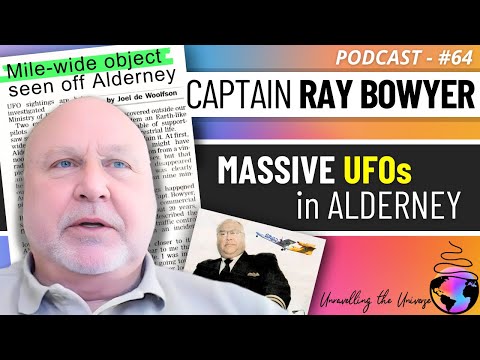
Captain Ray Bowyer on His Encounter w/ MASSIVE UFOs, Alderney 2007
A first-person, in-depth interview with Captain Ray Bowyer, walking through the sighting, the CAA report, and the radar and MoD aftermath directly in his own words.
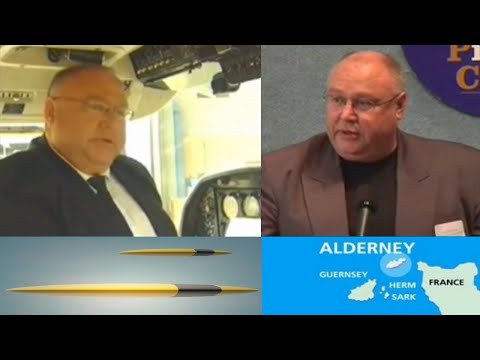
2007-04-23: Alderney UFO with Captain Ray Bowyer
A case-focused review of the April 23, 2007 sighting, dedicated specifically to the Alderney encounter and its documentary record.
Sources
- Wikinews. "Pilots spot 'UFOs' near the Channel Islands," April 26, 2007 (sourcing Joel de Woolfson, This is Guernsey, and BBC News). en.wikinews.org
- The Register. "UK airline pilots spot giant UFO — 'Mile wide' mystery object hovers off Channel Islands," April 27, 2007. theregister.com
- How and Whys. "UK Most Credible UFO Incident: British Channel Islands UFO Sighting In 2007." howandwhys.com
- British UFO Research Association (BUFORA). "The Alderney Channel Islands UFO Incident." bufora.org.uk
- Mysterious Britain & Ireland. "2007 Alderney UFO Sighting." mysteriousbritain.co.uk
- Metabunk (discussion forum, quoting the abstract and passages of the 2008 Baure/Clarke/Fuller/Shough report). "The Alderney UFO sighting." metabunk.org
- Openminds.tv. "Credible UFO sighting by pilots and crew in new UK files." openminds.tv
- On This Day in Guernsey. "Aurigny pilot Ray Bowyer spots a UFO near Alderney." history.gg
- Clarke, David. blog post of August 7, 2011 listing the DEFE 24/2081/1 papers in the tranche opened on Thursday, August 11, 2011. drdavidclarke.co.uk
- Clarke, David. "Air Traffic Control, UFOs and the FOIA," August 19, 2012 (CAA Mandatory Occurrence Reports, including the Alderney case). drdavidclarke.co.uk
- The National Archives (UK). "Digital copy of DEFE 24/2081: UFO reports; with redactions." discovery.nationalarchives.gov.uk
- The National Archives (UK). "UFO reports," Explore the Collection. nationalarchives.gov.uk
- UK Civil Aviation Authority. "Occurrence reporting" (Mandatory Occurrence Reporting Scheme). caa.co.uk
- British Geological Survey. "Folkestone Earthquake, 28 April 2007, 07:18 UTC, 4.2–4.3 ML." earthquakes.bgs.ac.uk
- Maunder, Michael. Lights in the Sky: Identifying and Understanding Astronomical and Meteorological Phenomena, Springer, 2007 (sun dog/parhelia analysis proposed for this case).
- Lewis-Kraus, Gideon. "How the Pentagon Started Taking U.F.O.s Seriously," The New Yorker, April 30, 2021 (2021 retrospective interview with Bowyer).
- Wikipedia contributors. "2007 Alderney UFO sighting" (used only for cross-checking uncontested chronological facts against the primary sources above). en.wikipedia.org
- Wikipedia contributors. "Britten-Norman Trislander" (aircraft type background). en.wikipedia.org
- Bevan, Gordon. "Aurigny Trislander G-JOEY at SOU," Wikimedia Commons (hero photograph source and license). commons.wikimedia.org
- "Britain's Closest Encounters," Season 1, Episode 4: "Alderney Lights" (documentary, first broadcast July 30, 2008, per TheTVDB; not seen).
- Baure, Jean-François; Clarke, David; Fuller, Paul; Shough, Martin. Report on Aerial Phenomena Observed near the Channel Islands, UK, April 23 2007 (2008); also "Unusual atmospheric phenomena observed near Channel Islands, UK, 23 April 2007," Journal of Scientific Exploration 22(3): 291–308 (abstract and passages as quoted on Metabunk and Sheffield Hallam's repository).
- Guernsey Press, "Pilots' UFO shock," April 26, 2007 (reproduced by Patrick Gross). ufologie.patrickgross.org
- Maunder, Michael. "UFO Explanation," Alderney Journal no. 873, May 26, 2007 (via Wikipedia; not seen).
- Bowyer, Ray. "Gigantic UFOs Over the English Channel," in Leslie Kean, UFOs: Generals, Pilots, and Government Officials Go on the Record (Harmony, 2010), pp. 73–81.
- National Press Club UFO panel, Washington, D.C., November 12, 2007 (organized by James Fox and Leslie Kean, moderated by Fife Symington III; Bowyer among the panelists).
Corrections (October 2026)
This page was corrected in October 2026 after checking it against the 2008 report by Baure, Clarke, Fuller and Shough (abstract and quoted passages), the Guernsey Press and The Register reports of April 2007, David Clarke's 2011 blog post on the file release, and the Wikipedia summary of the case. The main corrections: the radar quotations ("the radar evidence examined is not helpful"; an echo that "may have been associated with an identifiable moving surface vessel") come from the 2008 report, not a 2013 assessment by Clarke alone. That report concluded "we are unable to conclusively identify the UAPs observed" and kept a rare atmospheric-optical effect and an earthquake precursor as candidates. The page had instead quoted it as unable to "explain the UAP sightings satisfactorily" and rated earthquake lights implausible; that rating is now Inconclusive. The second pilot, Patrick Patterson, was flying to Jersey at 3,500 ft; the "Isle of Man" origin, and the claim that he filed his own CAA report, were not found in any source checked. Bowyer's passengers, interviewed in 2008, disputed his larger size estimates, and Patterson saw nothing from above FL65 at 14:13 UTC. The MoD file was opened on August 11, 2011, not August 7. Michael Maunder made his sun-dog proposal as a local astronomer in the Alderney Journal.
Following this review, the rating was changed from Credible 75 to Credible 65 (October 27, 2026), because the higher rating had rested partly on claims corrected or removed above.
Removed as unconfirmed: an RAF statement that Jersey radar was "secondary only"; a Nick Pope quotation about the case; David Clarke describing Alderney as one of the more intriguing MoD "X-Files"; "five passengers"; October 2007 drawings submitted to the CAA; June 2007 CNN and ITV interviews; a 12–15 minute total duration; a report near Les Casquettes lighthouse; and a director credit and David Clarke appearance for the 2008 documentary. The lenticular-cloud explanation sometimes mentioned in connection with the case was not found in the sources checked.
See something inaccurate? Have additional information or sources?
Suggest an Edit →Last Updated: August 2026