
Lights in the Sky
Identifying and Understanding Astronomical and Meteorological Phenomena
Core Thesis
Lights in the Sky: Identifying and Understanding Astronomical and Meteorological Phenomena is Michael Maunder's 2007 entry in Springer's long-running Patrick Moore Practical Astronomy Series: a field identification guide to the full range of things a person might see in the sky and mistake for something else. Organized into three parts -- a quick-reference identification section, detailed explanations with observing and photographing notes, and a closing chapter examining UFO reports specifically from a scientific perspective -- the book's stated purpose is squarely diagnostic rather than argumentative: help the reader work out what they actually saw, from common rainbows and meteors through to considerably less familiar phenomena like the green flash and ball lightning. This site's own research draws on it directly for two case files: the Alderney UFO Sighting, where Maunder personally proposed a sun dog explanation for the case, and the Brown Mountain Lights, where the book's own treatment of ball lightning bears directly on this site's evaluation of that phenomenon as a marginal contributing explanation.
About the Author
Michael J. de F. Maunder built his publishing career within the Patrick Moore Practical Astronomy Series, a long-running line of accessible, expert-level astronomy guides published by Springer and closely associated with the British astronomer and broadcaster Sir Patrick Moore. Before writing Lights in the Sky alone in 2007, Maunder co-authored at least two earlier volumes in the same series directly with Moore, including Transit: When Planets Cross the Sun (1999) -- giving him a substantial, independently verifiable publication record in observational astronomy and astrophotography well before this book's release.
This site's own research located no extensive independent biographical profile of Maunder beyond his authorial record, consistent with his apparent role as a working astrophotographer and technical author rather than a public-facing media figure -- the reference-book equivalent of a specialist's specialist, writing primarily for an audience of amateur astronomers and sky-watchers rather than for a general readership.
What can be said with confidence is narrower and more directly relevant to this site's own use of the book: Maunder personally proposed the sun dog (parhelia) explanation examined in this site's own Alderney UFO Sighting case file, explicitly drawing on the same body of atmospheric-optics expertise this book was written to organize and present. That a book's own author personally weighed in on one of the two cases this site cites it for is a genuinely direct connection, rarer than the more general thematic overlaps this site's research typically has to establish for its essential-reading entries.
This site's own research also notes what distinguishes Maunder's specific contribution to the Alderney case from the involvement of other named figures in that file, such as former UK Ministry of Defence UFO desk officer Nick Pope: where Pope's assessment weighs the case's overall credibility as a trained-observer report, Maunder's contribution is narrowly technical, addressing one specific candidate physical mechanism on its own optical merits. This site's own case-file research treats that narrower scope as a genuine strength rather than a limitation -- a domain expert offering a testable, falsifiable physical hypothesis rather than a general credibility judgment, precisely the kind of contribution this book's own identification-guide format is built to produce.
The book's placement within the Patrick Moore Practical Astronomy Series also situates Maunder within a specific, well-regarded editorial tradition: the series has published dozens of similarly structured practical guides across observational astronomy, astrophotography, and related fields, and Springer's continued publication of Maunder's work within it functions as a form of institutional vetting this site's research treats as a meaningful, if indirect, marker of the author's standing among working astronomers and science publishers.
Historical Context & Origins
The book arrived in 2007 into a publishing niche with real, if narrow, demand: amateur astronomers and casual sky-watchers have long lacked a single, well-organized reference specifically built around the practical question of identification -- what am I actually looking at -- rather than the more common textbook approach of organizing content by underlying physical cause. Maunder's own three-part structure, moving from quick identification to detailed explanation to a dedicated UFO chapter, directly addresses that specific gap.
This site's own research treats the book's decision to include a dedicated UFO chapter, rather than omitting the subject entirely as many comparable astronomy guides do, as a genuinely useful editorial choice: it puts UFO reports explicitly within the same identification framework used for every other sky phenomenon in the book, implicitly treating them as a category of observation subject to the same kind of systematic, physically grounded evaluation as a sun dog or a bolide meteor, rather than as a separate, categorically different kind of claim requiring different evidentiary standards.
The book's 2007 publication also happens to fall in the same year as the Alderney UFO sighting it would later be cited in connection with -- Ray Bowyer's April 23, 2007 sighting predates the book's publication by only a matter of months, meaning Maunder's own later proposed explanation for that specific case represents a working astronomer applying a framework he was, in the same period, formally organizing into print for a general readership.
More broadly, this site's own research situates the book within a wider tradition of skeptical, identification-focused UFO literature it has covered elsewhere, including Bad Astronomy and UFO Sightings: The Evidence -- works that share a broadly similar premise: that a substantial fraction of anomalous sky reports resolve, on close physical examination, into known, explicable phenomena, without that conclusion requiring any assumption of witness dishonesty or carelessness.
This site's own research also situates the book's 2007 publication against the specific institutional backdrop of British UFO reporting during the same period: the UK Ministry of Defence's own UFO desk, the office Nick Pope had earlier staffed, was wound down that same year, with the Ministry shifting toward a policy of no longer routinely investigating individual civilian reports. A privately published, expert-authored identification guide like Maunder's book arrived, in effect, into a widening gap left by a shrinking official British UFO-investigation apparatus -- part of a broader pattern this site's own research has traced elsewhere, in which private researchers and specialist authors increasingly took on identification work national governments were simultaneously stepping back from.
Core Arguments & Key Concepts
The book's central, largely implicit argument is that systematic identification -- working through a structured set of physical possibilities in order, from the most common to the most exotic -- is the correct first step for evaluating almost any reported sky phenomenon, UFO reports included, before reaching for more exotic or extraordinary explanations.
A second argument, carried by the book's inclusion of genuinely obscure and incompletely understood phenomena like ball lightning and the green flash alongside common ones like rainbows, is that the boundary between "mundane" and "anomalous" is considerably blurrier and more continuous than casual sky-watching assumes -- some real, physically documented atmospheric phenomena remain strange and only partially explained by science even after being formally identified and named, a nuance directly relevant to this site's own treatment of ball lightning at Brown Mountain as a "genuine but marginal" and still "incompletely understood" contributing explanation rather than a fully solved one.
A third argument, implicit in the book's dedicated UFO chapter, treats UFO reports as a legitimate subject for the same identification methodology applied throughout the rest of the book, rather than as a topic astronomy references should avoid or dismiss outright -- an inclusive editorial stance this site's own research treats as more genuinely useful to readers than either uncritical acceptance or blanket dismissal.
A fourth argument concerns observational discipline specifically: the book's attention to precise altitude, angular separation, coloring, and duration in its identification sections directly models the kind of careful, quantified observation this site's own case-file research repeatedly finds lacking, or only partially present, in historical UFO witness accounts -- and directly present, by contrast, in the more rigorous elements of the Alderney case, where Bowyer's specific altitude estimate became the strongest single piece of evidence against Maunder's own proposed sun dog explanation.
A fifth, more structural argument runs through the book's series placement: by publishing within the Patrick Moore Practical Astronomy Series rather than as a standalone popular title, Maunder's book implicitly argues for treating sky-phenomenon identification as a serious technical subdiscipline of observational astronomy in its own right, worthy of the same systematic, expert-authored treatment as any other astronomical specialty covered by the series.
Key Cases & Evidence Discussed
The Alderney UFO Sighting (April 23, 2007) is the case in which this book's own author personally proposed a conventional explanation. Pilots Ray Bowyer and Patrick Paterson, flying separate aircraft near Alderney in the Channel Islands, independently reported an unidentified object; Maunder subsequently suggested the sighting was consistent with sun dogs (parhelia), bright patches of light produced by sunlight refracting through cirrus-cloud ice crystals at roughly 22 degrees from the sun. This site's own case-file research documents the theory's genuine strengths -- a suggestive angular match and broadly consistent coloring -- alongside its specific, serious problems: Bowyer's estimated object altitude of roughly 2,000 feet sits an order of magnitude below the altitude sun dogs require, and a fixed-geometry optical phenomenon like a sun dog cannot, in principle, be independently triangulated to a single shared position by two separated observers the way Bowyer and Paterson's converging reports appear to have been.
The Brown Mountain Lights, a long-running North Carolina light phenomenon this site's own case file traces primarily to vehicle and rail headlight misidentification amplified by atmospheric refraction, also draws on this book's own treatment of ball lightning as a genuine but incompletely understood atmospheric-electrical phenomenon. This site's own research treats ball lightning as a plausible explanation for a small residue of otherwise-unexplained Brown Mountain observations, including a disputed 2016 camera capture, while stopping well short of treating it as a load-bearing explanation for the case's dominant, multi-decade pattern of headlight-driven reports.
Critical Reception & Controversies
This site's research located a real Goodreads listing for this title (book/show/2398637.Lights_in_the_Sky) showing an average rating of 4.20 out of 5 -- but from only 5 total ratings, a genuinely small sample this site's own established practice requires disclosing honestly rather than presenting as a robust critical consensus. A 4.20 average from five readers reflects a modestly positive but statistically thin reception, consistent with the book's apparent status as a specialist reference rather than a mass-market title.
This site's research also attempted to verify an Amazon rating for this title, but Amazon's bot-detection system blocked automated requests to the listing during this session, the same persistent pattern encountered across every title checked this session; per this site's own Amazon Rating Display Protocol, this gap is disclosed honestly here rather than fabricated or silently omitted.
This site's research found the book referenced favorably in general astronomy-publishing contexts consistent with its placement in the well-regarded Patrick Moore Practical Astronomy Series, though it located no dedicated, in-depth critical review beyond retailer and library-catalog listings -- again consistent with a specialist reference title's typically narrow critical footprint compared to trade nonfiction.
This site's own research treats the book's practical value as better measured by its direct, demonstrated usefulness within this site's own case-file work than by its modest critical footprint: it is the specific reference an actual investigator (its own author) reached for when proposing a conventional explanation for a real, still-debated UK case, and its treatment of ball lightning maps directly onto this site's own careful, non-dismissive handling of that same phenomenon at Brown Mountain.
Influence & Legacy
This book's clearest legacy on this site specifically is its direct, personal connection to the Alderney UFO Sighting: unlike most essential-reading entries on this site, where the connecting thread is thematic rather than personal, this is a case where the book's own author is also one of the case's own named investigators, giving the citation an unusually direct evidentiary weight.
Within the broader skeptical-identification tradition this site's own research has documented elsewhere, alongside titles like Bad Astronomy, this book's specific contribution is its narrower, more technical focus on visual and optical identification specifically, rather than the wider-ranging scientific-literacy arguments those other titles make -- a genuinely complementary rather than redundant addition to this site's own reading list.
The book's dual case-file citations, at Alderney and Brown Mountain, also demonstrate a pattern this site's own research values highly: a single well-constructed reference work proving useful across genuinely distinct case types -- a modern aviation sighting and a century-old recurring ghost-light phenomenon -- because its underlying identification methodology, rather than any single specific explanation, is what generalizes.
This site's own research also notes the book's role in a broader pattern of specialist reference works whose authors occasionally step directly into active case evaluation, as Maunder did at Alderney: rather than remaining purely theoretical, the book's own existence created a direct channel through which its author's expertise reached a specific, real-world case this site continues to actively investigate.
Finally, this site's own research treats the book's continued relevance, nearly two decades after its 2007 publication, as a useful marker of how slowly the underlying physics of atmospheric optics changes relative to the UFO reports it is regularly invoked to help explain: the same sun dog geometry, the same ball lightning uncertainties, and the same identification challenges Maunder catalogued in 2007 remain exactly as applicable to sightings reported today.
This site's own research also draws a broader methodological lesson from having now used the same reference work to inform two structurally different verdicts: at Alderney, this site's own case file concludes the sun dog explanation Maunder personally proposed does not, in the end, satisfactorily account for the altitude and triangulation problems Bowyer and other witnesses raised, while at Brown Mountain, this site's own case file treats the book's ball lightning material as lending real, if marginal, support to an explanation this site does accept for a small residue of otherwise-unexplained events. That a single identification guide can honestly inform both a rejected and an accepted explanation across two separate case files, rather than serving as a rhetorical tool for dismissing every case it touches, is itself a small but genuine demonstration of the disciplined, case-by-case standard this site's own research aims to apply consistently.
The Book
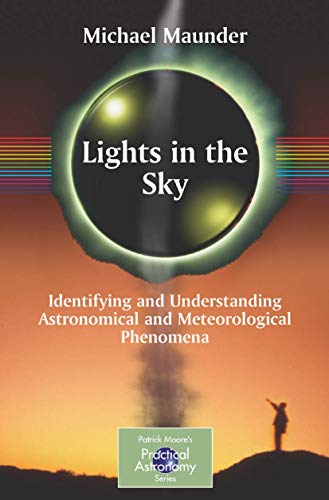
Lights in the Sky
Identifying and Understanding Astronomical and Meteorological Phenomena
Find on Amazon →As an Amazon Associate, OverClassified may earn from qualifying purchases made through this link, at no extra cost to you.
Why This Is Essential Reading
Lights in the Sky earns its place on this list less through argument than through direct, demonstrated utility: a working astrophotographer's systematic identification guide that this site's own research has now drawn on for two genuinely distinct case files, and whose own author personally stepped into one of them, proposing the sun dog explanation this site's own Alderney UFO Sighting case file weighs carefully against real, specific objections. Its treatment of ball lightning as a genuine but incompletely understood phenomenon, neither fully mundane nor fully anomalous, also directly informs this site's own careful, non-dismissive handling of that same explanation at Brown Mountain. Read as a practical reference rather than a polemic, it models exactly the kind of careful, structured identification work this site's own case-file methodology tries to apply throughout.
Related Cases & Theories
Essential Viewing
Sources Cited
- Maunder, Michael. Lights in the Sky: Identifying and Understanding Astronomical and Meteorological Phenomena. Springer, The Patrick Moore Practical Astronomy Series, 2007 (ISBN 978-1-84628-562-2, cited here).
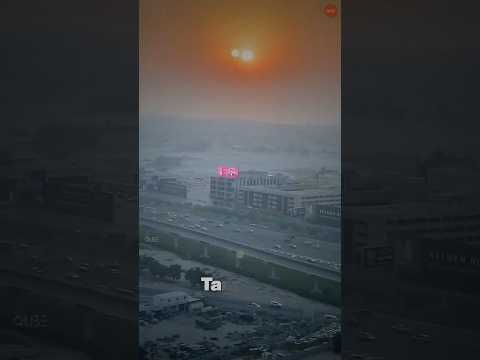
- "Why You Might See Two Extra Suns in the Sky | The Science of Sun Dogs Explained!" Qube, YouTube (short-form explainer on sun dog / parhelia formation, directly relevant to the Alderney explanation this book's author proposed; video verified via oEmbed). youtube.com
- This site's own resources library: Full Reading List, where this book is cited on this site's own Alderney and Brown Mountain case files.
- This site's own key-figures entry: Michael Maunder, for his full biography and site-wide connections.
- This site's own case file: Alderney UFO Sighting, where Maunder personally proposed the sun dog (parhelia) explanation this book's methodology underlies.
- This site's own case file: Brown Mountain Lights, where this book's treatment of ball lightning informs this site's own evaluation of that phenomenon.
- This site's own essential-reading entry: Bad Astronomy, a complementary skeptical-identification title covering broader scientific-literacy ground.
- This site's own essential-reading entry: UFO Sightings: The Evidence, another skeptical reference in this site's own reading list.
- This site's own key-figures entry: Nick Pope, former UK Ministry of Defence UFO desk investigator, for his own assessment of the Alderney sighting.
- This site's own locations entry: Alderney, Channel Islands, site of the 2007 sighting.
- Goodreads listing, book/show/2398637.Lights_in_the_Sky (rating data cited here; disclosed as a five-rating sample per this site's own established practice).
- Google Books listing for Lights in the Sky (ID kqv5G6O1rFUC), consulted for book description and structure (three-part organization: identification guide, detailed explanations, and a dedicated UFO chapter). books.google.com
Have corrections, additional research, or peer-reviewed sources? Help improve this entry.
Suggest an Edit