
The Tarija / El Zaire UFO Crash
On the afternoon of May 6, 1978, residents across a chain of towns straddling the Bolivia–Argentina border watched a fiery, smoke-trailing object streak toward the hill of El Zaire, outside Tarija, Bolivia, and explode with a blast some witnesses said shattered windows up to thirty miles away. A Bolivian departmental commission combed the hillside for months and found no crater and no debris. Separately, and far more unusually, declassified U.S. State Department and military attaché cables confirm that American officers were dispatched to Tarija under the U.S. Air Force's Project Moon Dust reentry-object program — and that their own investigation, too, came up empty before the official search was formally closed on May 20, 1978.
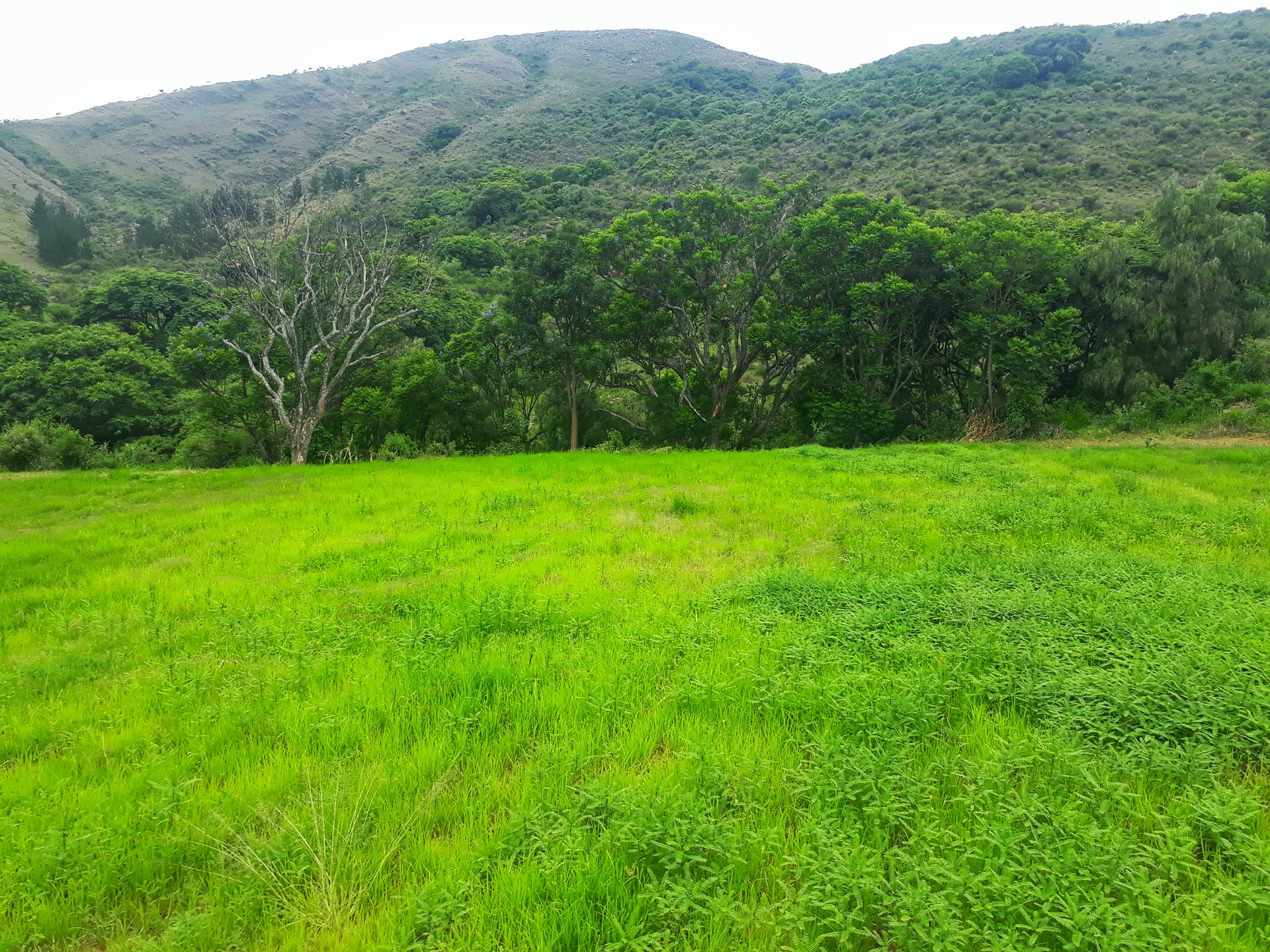
Pictured: countryside near Tolomosa in the Tarija Valley, Bolivia — representative of the Andean foothill terrain of the department where the crash reports originated, not the actual impact site itself, which lies roughly 50–90 miles south toward Padcaya and Mecoya on the Argentine border. No period photograph of Cerro El Zaire, the search expeditions, or the reported object is known to survive in any publicly accessible archive; contemporary Argentine press ran only an illustrated sketch of the object, not a photograph.
Theoretical Alignment
Weak alignment with the Extraterrestrial Hypothesis: the case's entire evidentiary weight rests on witness description of a falling object and a genuine but ultimately fruitless U.S. military inquiry, not on any recovered material. A natural bolide (meteoric fireball) airburst is the best-supported conventional candidate, with a smaller allowance for psycho-social amplification explaining how a null search result became, in later retellings, a "recovered craft."
Background
By 1978, Tarija was Bolivia's southernmost departmental capital, a quiet Andean valley city known for vineyards and cattle ranching, sitting roughly 300 miles south of the country's administrative core in La Paz and barely 30 miles from the Argentine border at its closest points. The department's rural south — the corridor running from Padcaya down through Mecoya to the border town of Bermejo on the Bermejo River — was, and remains, sparsely populated ranchland threaded by a single unpaved road, with little in the way of independent verification infrastructure: no seismographs, no radar coverage, no dedicated meteor-tracking network. Whatever fell from the sky on the afternoon of May 6, 1978 did so in one of the harder places in South America to document rigorously after the fact.
The case arrived at an unusual moment for U.S. government interest in reentering space objects. Since the early 1950s, the U.S. Air Force had maintained Project Moon Dust, a standing, low-profile program — administered through Air Force Intelligence and coordinated with the Foreign Technology Division at Wright-Patterson Air Force Base — tasked with investigating and, where feasible, recovering objects of foreign or unknown origin that reentered the atmosphere, including Soviet satellite debris, rocket boosters, and unidentified material. Moon Dust rarely surfaces in the documentary record: cases in which a U.S. military attaché is confirmed, by the government's own paper trail, to have been dispatched to investigate a specific fallen-object report are uncommon enough that the Bolivian case is cited by researchers as one of the clearer examples of the program actually operating in the field.
Cold War satellite reentry was not a hypothetical concern in the region. Two years earlier, in January 1978, the Soviet nuclear-powered reconnaissance satellite Kosmos 954 had disintegrated over northern Canada, scattering radioactive debris across the Northwest Territories in an internationally publicized incident that sharpened U.S. interest in tracking uncatalogued reentries anywhere in the world. A bright, fire-trailing object falling over a South American border region four months later was, from Washington's perspective, worth checking — whatever it actually turned out to be.
Complete Timeline
| Date | Event |
|---|---|
| May 6, 1978, ~4:30–5:00 PM | A bright, fire- and smoke-trailing object is seen crossing the sky over Tarija's southern border towns — Aguas Blancas, Cañas, Padcaya, Bermejo, La Mamora, and Mecoya — on both the Bolivian and Argentine sides of the Bermejo River. Witnesses including Juan Hurtado, Cpl. Natalio Farfán Ruiz, and Argentine border officers Eduardo Salmón and Bienvenido Ortega report a loud, roaring explosion moments after the object disappears toward the hill of El Zaire. |
| May 6, 1978 (evening) | Panic spreads through the border towns. Early rumor holds that the impact gouged an enormous crater into the hillside and that the ground shook "like an earthquake." Some residents report shattered window glass in homes and vehicles. |
| May 7–8, 1978 | News of the "fallen object" reaches Tarija city and, from there, the Argentine press across the border in Salta Province. Bolivian departmental prefect Gen. Yamil Taja Kruger orders an official investigative commission, appointing 31-year-old geologist Daniel Centeno, formerly of Bolivia's National Commission of Nuclear Energy, to lead it. |
| Mid-May 1978 | Centeno's commission, joined by a military specialist and given aerial reconnaissance support by a Bolivian Air Force officer, conducts the first of two ground expeditions into the Cañas–Mecoya corridor and briefly across the border into northern Argentina, searching for the reported crater and any wreckage. |
| May 15, 1978 | U.S. Embassy telegram. The American Embassy in La Paz cables Washington requesting assistance investigating the Bolivian press reports of a fallen object — the first confirmed U.S. government paper trail on the case. |
| May 18, 1978 | State Department response. Washington replies that it finds no correlation between the Bolivian reports and any known, catalogued space object reentering Earth's atmosphere on May 6, 1978, and requests further information from the field. |
| Mid-to-late May 1978 | Project Moon Dust dispatch. U.S. Air Force officers Col. Robert Simmons and Maj. John Heise, attached to the Defense Attaché Office at the U.S. Embassy in La Paz, fly to Tarija, accompanied by a Bolivian Air Force officer, to independently verify the press accounts under Moon Dust's standing authority to investigate reentering-object reports. |
| May 20, 1978 | Official search terminated. The Bolivian search for the object is formally declared closed. No crater, wreckage, or recovered object has been produced for independent examination by any party. |
| May 24, 1978 | The "Moon Dust Message." The U.S. military attaché's office in La Paz sends a cable, classified CONFIDENTIAL/NOFORN and addressed to the Foreign Technology Division at Wright-Patterson AFB and Air Force headquarters at the Pentagon, reporting that it verified the press accounts and that the Bolivian Air Force General Staff and Army command stated they had sent search troops to the area "but have found nothing." |
| Late May–June 1978 | Argentine outlets — including the newspaper Crónica, El Tribuno de Salta, the magazine Gente, and the weekly Radiolandia 2000 — run dramatic coverage, including an illustrated depiction of the object and a headline reading (translated) "When the UFO fell, the earth trembled and we were overcome by panic." Reports spread as far as Buenos Aires and São Paulo. |
| ~July–August 1978 | After roughly two to three months of intermittent searching, Prefect Taja Kruger requests Centeno's final report. The commission's conclusion: no impact crater, no wreckage, and no unusual material — only naturally occurring colluvial (slope-wash) rock debris that panicked residents had mistaken for blast damage. The departmental inquiry closes without a definitive explanation. |
| 1990s–2020s | The case circulates and grows in English-language UFO literature, increasingly described as a "Bolivian Roswell" in which a recovered metallic object was flown to the United States aboard a U.S. Air Force C-130 Hercules — a claim with no support in any of the declassified cables that have actually surfaced. |
The Sighting Over the Bermejo Valley
The Bermejo River marks the border between Bolivia's Tarija Department and Argentina's Salta Province for much of its course, and on the afternoon of May 6, 1978 residents on both banks had a clear, if brief, view of whatever crossed the sky above them. Multiple independent accounts converge on the core details: a bright object, trailing dark or bluish smoke, crossed the valley at low altitude — witness Juan Hurtado, a Bolivian frontier intelligence agent stationed near the border, later described it as resembling "a huge wine container," metallic and cylindrical, estimated at roughly four to five meters in diameter with a tapering, conical upper end, moving at an altitude he judged at around 90 meters. Argentine border police Eduardo Salmón and Bienvenido Ortega, stationed at Aguas Blancas on the Argentine side amid a crowd of several hundred people attending a local soccer match, independently described a bright flash followed by a "distinctly metallic, oval-shaped object" trailing smoke toward the Bolivian side of the river.
Seconds after the object passed from view toward the hill of El Zaire, witnesses across the valley — in Aguas Blancas, Cañas, Padcaya, Bermejo, La Mamora, and Mecoya — reported a loud, roaring explosion. Cpl. Natalio Farfán Ruiz of the Bolivian National Guard, on duty in the border region, recalled thinking "the end of the world was coming." Hurtado said the shockwave "threw me down to the ground" and that "the whole Earth trembled." A civil engineer conducting a survey nearby, identified in later accounts only as Vélez Orozco, stated the explosion was "much louder than one caused by a meteorite" — an observation that, taken at face value, argues against the very bolide explanation many of the case's other physical details otherwise support, though a single lay observer's acoustic impression of a genuine airburst is not a reliable substitute for instrumented data that was never collected.
Multiple later compilations describe the sonic-boom-like report as audible over 100 miles away and window glass shattering in homes and vehicles within a radius most commonly cited at roughly 30 miles — a figure that appears in secondary UFO-literature treatments of the case (Randle's own brief, single-page mention of it does not include this specific figure or the "El Zaire" name; see the Further Reading note on his book below) and is consistent with Argentine press descriptions of shattered glass reported as far away as towns well outside the immediate Aguas Blancas–Bermejo corridor. No engineering survey of actual broken-window reports was ever compiled, and the true radius cannot be independently verified against a contemporaneous damage inventory; it is reported here as the consistent claim across the available secondary sources, not as a measured fact.
Panic, Rumor, and the "Enormous Crater"
Within hours, rumor in the border towns had transformed the explosion into a confirmed impact: residents spoke of an "enormous hole" torn into the southern slope of El Zaire, with some early accounts describing a crater hundreds of meters across. This account moved quickly — first through word of mouth along the single road connecting the border towns to Tarija city, then into the regional and Argentine press, which by the following week was running the story as a near-certain crash. No journalist appears to have physically visited the reported impact site before these early accounts were filed; the crater description at this stage rests entirely on secondhand relay of villager testimony, not direct observation.
This is the point at which the case's two very different narrative threads begin to diverge — a divergence that matters enormously for how the evidence should be weighed. One thread, carried by the initial wave of press coverage and repeated uncritically in most English-language retellings written decades later, holds that a large crater and metallic wreckage were found on El Zaire. The other thread, grounded in the actual on-the-ground investigation conducted by Bolivian civil authorities in the weeks and months that followed, tells a considerably less dramatic story.
The Official Investigation: Daniel Centeno's Commission
Tarija's departmental prefect, Gen. Yamil Taja Kruger, responded to the press furor by ordering a formal investigative commission rather than leaving the matter to rumor. He appointed Daniel Centeno, a 31-year-old geologist formerly with Bolivia's National Commission of Nuclear Energy, to lead it — a choice that gave the inquiry genuine technical standing rather than handing it to a purely administrative or military figure with no training in reading terrain for impact evidence. Centeno was joined by a military specialist, Capt. Francisco Mariaca, and received aerial reconnaissance support from Bolivian Air Force officer Capt. (later Col.) Omar Forti, who provided an aircraft for overflights of the search area.
Centeno's team conducted at least two ground expeditions into the Cañas–Mecoya corridor, supplemented by aerial reconnaissance, and briefly crossed into northern Argentina in pursuit of leads generated by cross-border witness accounts. The search continued intermittently over roughly two to three months. The result, delivered to Taja Kruger in the commission's final report, was unambiguous: no impact crater was found, no metallic wreckage or unusual material was recovered, and the "enormous hole" reported by panicked residents proved on inspection to be a patch of naturally occurring colluvial material — loose rock and soil that had slid or washed down the hillside through ordinary erosion, unrelated to any impact event. After roughly two to three months, Taja Kruger requested Centeno's final report and the departmental inquiry was formally closed without ever producing a definitive explanation for what residents had actually seen fall from the sky.
This finding is the single most important fact in the entire case, and it is routinely omitted or buried in later retellings that lead instead with the "recovered craft" narrative. A trained geologist, appointed by the regional government specifically because of his qualifications to distinguish genuine impact damage from natural terrain features, conducted a multi-month search with military and aerial support and found nothing consistent with a crashed object of any kind — conventional or otherwise.
International Press and the Birth of a Legend
While Centeno's commission worked methodically and largely out of the spotlight, the story had already crossed the border. Argentine outlets sent correspondents to the frontier region: the national daily Crónica, the Salta regional paper El Tribuno de Salta, the illustrated weekly magazine Gente, and the entertainment weekly Radiolandia 2000 all ran coverage in the weeks following the sighting. Gente published an illustration depicting startled witnesses watching the cylindrical object fall, captioned (translated from Spanish) "Saturday 6 [May 1978], 17:15 Hours. The strange object falls in Bolivia." Radiolandia 2000's headline, translated, read: "When the UFO fell, the earth trembled and we were overcome by panic." Coverage reportedly reached as far as Buenos Aires and São Paulo, and Bolivian outlets including El País (Tarija) have continued to revisit the case in retrospective features published decades later.
None of this contemporary press coverage waited for Centeno's commission to finish its work, and none of it appears to have been meaningfully revised once the commission's null result became known regionally. The dramatic early framing — a crater, a metallic craft, an official cover-up — simply continued circulating and was picked up decades later by English-language UFO researchers and web aggregators, several of which added further unverified embellishments over time, including specific claims that the recovered object was an "egg-shaped" craft roughly four meters in diameter transported to the United States aboard a U.S. Air Force C-130 Hercules. No primary document identified in the course of researching this case file supports any of those later, more elaborate claims; they appear to be a case of a genuinely null search result being progressively re-narrated, over more than four decades of retelling, into a full crash-retrieval story.
Project Moon Dust and the U.S. Military Attaché
What makes the Tarija case unusual among South American UFO reports is not the sighting itself — bright bolides and fireballs are reported with some regularity across the continent — but the fact that it drew a confirmed, documented U.S. government response. The paper trail begins with a routine diplomatic act: on May 15, 1978, the U.S. Embassy in La Paz sent a telegram to the State Department in Washington requesting assistance in evaluating the Bolivian press reports. Washington replied on May 18, 1978, stating that it found "no correlation with known space objects reentering Earth's atmosphere on May 6th, 1978" and asking the embassy for additional field information — language indicating that whatever fell over Tarija was not a catalogued, previously tracked satellite or rocket body known to U.S. space-surveillance networks at the time.
That non-correlation is precisely the trigger condition under which Project Moon Dust was designed to activate. Moon Dust's standing mandate covered exactly this scenario: an uncatalogued object, reentering or falling from the sky, reported by a foreign government or press, with no immediate match in existing U.S. tracking data. Acting under that authority, U.S. Air Force officers Col. Robert Simmons and Maj. John Heise, both attached to the Defense Attaché Office at the U.S. Embassy in La Paz, flew to Tarija, accompanied by a Bolivian Air Force liaison officer, to conduct their own verification of the press accounts. Contemporary Bolivian press coverage noted that although the two officers were nominally traveling on leave, a U.S. Air Force Hercules transport was reportedly standing by at La Paz — a detail later inflated in some retellings into confirmation that a recovered object was actually loaded aboard it, though no primary document locates the aircraft at Tarija itself or confirms it carried anything at all.
The Moon Dust Message: What the Declassified Cable Actually Says
The clearest primary-source window into the U.S. side of the investigation is a cable now commonly referred to by researchers as the "Moon Dust Message," dated May 24, 1978. Sent from the office of the U.S. military attaché in La Paz and addressed to the U.S. Air Force's Foreign Technology Division at Wright-Patterson Air Force Base and to Air Force headquarters at the Pentagon, the cable was classified CONFIDENTIAL, NOFORN ("No Forwarding To Foreign Nationals") and referenced Project Moon Dust by name in its subject line. According to researchers who have reviewed the declassified text, the attaché's office reported that it had "taken pains to verify" the Bolivian press accounts, and that in the course of doing so it had directly queried the General Staff of the Bolivian Air Force and the command of the Bolivian Army. Both declared, in substance, that they had dispatched search troops to the reported impact area and found nothing.
That single sentence is the most consequential in the entire documentary record of this case. It means the declassified U.S. government cable most frequently cited as proof of a genuine crash-retrieval operation actually records the opposite: an official, contemporaneous confirmation from both the Bolivian Air Force and Army that their own search of the area came up empty — corroborating, from an entirely independent chain of authority, the same null result Daniel Centeno's civilian commission had already reached. The cable exists because two U.S. officers were sent to investigate a fallen-object report under a real, if obscure, standing military program — not because a craft was found, examined, or recovered. This distinction is routinely lost in retellings of the case that treat "the U.S. military sent officers under Project Moon Dust" and "the U.S. military recovered a UFO" as though they were the same claim.
Independent CIA reporting from the same period is consistent with this picture of confusion and unconfirmed rumor rather than confirmed recovery. Declassified CIA reading-room documents from May 1978 record conflicting radio reports reaching Bolivian station La Plata describing an "egg-shaped mechanical device with a diameter of 4 meters" supposedly moved to Tarija, alongside separate Argentine authorities' claims — never substantiated — that the object was an artificial satellite reentry, and unrelated witness reports from Argentina's San Luis and Mendoza provinces describing what observers called a "flying saucer squadron" seen the same general period. None of these threads converge on a single, confirmed physical object; they read, collectively, as the kind of noisy, second-hand reporting environment that surrounds most fireball events reported across a wide geographic area before any of it can be run down on the ground.
The Search Terminated: May 20, 1978
The Bolivian search for the object was formally declared closed on May 20, 1978 — four days before the "Moon Dust Message" cable was even sent, meaning the U.S. attaché's own verification effort was, if anything, following up on an already-closed local search rather than racing to intercept a live recovery in progress. No party to the case — not the Tarija departmental commission, not the Bolivian Air Force or Army, and not the U.S. Defense Attaché Office — ever produced a crater, a piece of wreckage, or a recovered object for independent examination. The formal record on both the Bolivian and U.S. sides ends the same way: an inconclusive, unresolved sighting with a documented, and ultimately unsuccessful, search.
The Recovered-Craft Mythology
The version of the Tarija case that circulates most widely today — often under the label "Bolivia's Roswell" — holds that a metallic, egg-shaped or cylindrical object roughly four meters across was located, recovered by or handed over to U.S. personnel, and flown out of Bolivia aboard a U.S. Air Force C-130 Hercules for study in the United States, with the Bolivian government's tacit consent. This is the version repeated across most English-language aggregator sites and social-media retellings of the case.
Weighed against the primary documentary record actually available, this version does not hold up. The only declassified cable that specifically addresses the outcome of the search — the May 24, 1978 Moon Dust Message — explicitly states that Bolivian search troops found nothing. The Bolivian departmental commission's own final report, delivered to Prefect Taja Kruger after two to three months of fieldwork, likewise found no crater and no debris. No manifest, flight log, customs record, or subsequent U.S. Air Force document identified in researching this case confirms that a C-130 Hercules ever carried any physical object out of Bolivia in connection with this event, and no laboratory, museum, or archive has ever produced a fragment claimed to originate from the Tarija incident for independent testing — a marked contrast with crash-retrieval cases elsewhere on this site, such as Roswell, where at minimum specific, named witnesses describe handling specific physical material. Here, the "recovered craft" claim rests entirely on the presence of a standby transport aircraft at La Paz and on the simple fact that Moon Dust officers were dispatched at all — both real, documented details that later writers appear to have combined into a recovery narrative the primary sources themselves do not support.
Key Witnesses
Juan Hurtado
Among the closest witnesses to the event, Hurtado described the object as resembling "a huge wine container," metallic and cylindrical with a conical upper section, roughly four to five meters in diameter, trailing bluish smoke as it passed at an estimated altitude of about 90 meters. He said the impact "threw me down to the ground" and that "the whole Earth trembled" — among the most physically vivid firsthand accounts on record for this case. His professional role as a frontier intelligence agent gives his testimony somewhat more institutional weight than an ordinary civilian bystander's, though his account, like every other witness account in this case, was never cross-checked against any instrumented data.
Corporal Natalio Farfán Ruiz
An on-duty National Guard corporal in the border region who witnessed the object's passage and the explosion that followed, later recalling that he thought "the end of the world was coming." His military status places him among the trained-observer tier of witnesses for this case, alongside Hurtado, though the National Guard had no standing mandate or equipment for aerial-object identification.
Eduardo Salmón & Bienvenido Ortega
Two Argentine border-police officers stationed across the river in Aguas Blancas who were among several hundred people at a local soccer match when the object passed overhead, independently describing a bright flash followed by a "distinctly metallic, oval-shaped object" trailing smoke. Their account is significant chiefly for its independence: two trained law-enforcement observers on the opposite side of an international border, with no coordination with the Bolivian witnesses, describing broadly the same phenomenon at broadly the same time.
Daniel Centeno
The 31-year-old geologist, formerly with Bolivia's National Commission of Nuclear Energy, appointed by Prefect Gen. Yamil Taja Kruger to lead the official investigation. Centeno is not a witness to the sighting itself but the case's single most important investigative figure: his multi-month, technically qualified search of the El Zaire hillside is the primary source for the case's central, and frequently overlooked, negative finding — no crater, no debris, only natural colluvial material.
General Yamil Taja Kruger
The departmental prefect who, facing a rapidly spreading and increasingly sensational press narrative, chose to order a formal technical investigation rather than let the story go unaddressed. His decision to appoint a qualified geologist rather than a purely political or military figure, and to request and act on that geologist's final report, is a meaningful data point in assessing the case's overall credibility on the Bolivian side.
Col. Robert Simmons & Maj. John Heise
The two U.S. Air Force officers dispatched to Tarija under Project Moon Dust to independently verify the Bolivian press accounts. Their mission, and the "Moon Dust Message" cable their office subsequently filed, is the documentary core of this case's genuine, unusual evidentiary strength: a real, declassified confirmation that a U.S. military reentry-object program treated the report seriously enough to investigate in person — and that its own inquiry, like the Bolivian civilian one, came up empty.
The Five Observables Assessment
The Five Observables framework, developed by former AATIP director Luis Elizondo, is used to classify UAP encounters based on performance characteristics that exceed known technology:
Assessment: The witness testimony describes a fast-moving, descending object consistent with a natural bolide entry — a scenario that would technically qualify as "hypersonic" velocity but says nothing about controlled or engineered propulsion, hence its rating as merely speculative rather than present. None of the other four observables are supported by any witness account or document: no maneuvering, no instant acceleration or deceleration, no radar-confirmed stealth signature, and no water-entry or trans-medium behavior was ever reported. Unlike cases with instrumented sensor data or corroborated radar tracks, Tarija offers only unaided visual testimony and a negative search result, placing it near the bottom of the Five Observables scale regardless of how the object is ultimately explained.
Evidence Assessment
Supporting Anomalous Origin
- A real, falling, fire-and-smoke-trailing object was independently witnessed by multiple people on both sides of an international border, including trained observers (a frontier intelligence agent, a National Guard corporal, two Argentine gendarmería officers)
- The U.S. government took the reports seriously enough to dispatch two Defense Attaché officers under a real, standing military reentry-object program (Project Moon Dust)
- A declassified May 24, 1978 CONFIDENTIAL/NOFORN cable exists specifically documenting that dispatch and investigation — a rare, confirmed field activation of Moon Dust in the public record
- The U.S. State Department's own May 18, 1978 cable found no correlation with any known, catalogued reentering space object for that date, leaving the object's origin formally unidentified rather than conventionally explained by elimination
- Witness descriptions of the object's shape (cylindrical/conical, metallic) are broadly consistent across independent Bolivian and Argentine accounts
Supporting Conventional Explanation
- A qualified geologist's multi-month, aerially supported search of the reported impact site found no crater and no debris — only natural colluvial rock material
- The declassified Moon Dust cable itself states that Bolivian Air Force and Army search troops "found nothing," directly undercutting any recovery claim
- No physical fragment, photograph of wreckage, or laboratory analysis of any kind has ever been produced by any party in over four decades
- A bright, smoke-trailing, explosively terminating object witnessed across a wide area with no recovered debris is the classic signature of a natural bolide (meteoric fireball) airburst, a well-documented and common atmospheric phenomenon
- The most dramatic claims in circulation today (a specific 4-meter egg-shaped craft, transport aboard a named C-130, delivery to the United States) postdate the primary documentary record by years and are unsupported by any cable, report, or manifest located in researching this case
- The official Bolivian search and the official U.S. attaché inquiry reached the same negative conclusion independently, which is a stronger corroboration of "nothing was found" than of "something was found and hidden"
Why "Disputed"
The Tarija / El Zaire case earns a DISPUTED classification because it sits, unusually cleanly, on both sides of the ordinary UFO-case ledger at once. On one hand, this is a real, multiply-witnessed atmospheric event that generated a genuine, still-declassified U.S. military investigation under a real government reentry-object program — a level of confirmed official interest that most reported UFO sightings never receive. That alone rules out dismissing the case as pure fabrication or misidentification of a mundane light with no follow-up at all.
On the other hand, every investigative thread that was actually run to ground — the Bolivian departmental commission's fieldwork and the U.S. attaché's own verification effort — independently concluded that nothing was found. No crater. No debris. No recovered object of any kind, mundane or otherwise. The case's most dramatic and widely repeated claims (a recovered egg-shaped craft, a C-130 flight to the United States) are not supported by any primary document identified in this research and appear to have accumulated in the retelling over more than four decades, well after the actual, more modest, and more honest documentary record was already public. A case with real government interest but zero confirmed physical evidence, and with its most sensational claims directly contradicted by its own best-documented primary source, is the textbook definition of disputed rather than credible or debunked.
Sensor & Instrumentation Detection Profile
No radar station, seismograph, or other instrumented sensor is known to have recorded the event; rural southern Tarija had no such infrastructure in 1978. The only "instrumentation" involved was the U.S. government's own space-surveillance cataloguing system, invoked negatively: the May 18, 1978 State Department cable confirming no match to any known tracked reentry object. All primary evidence is unaided witness testimony and the negative results of two independent ground searches (Bolivian civilian and Bolivian military).
Environmental & Geospatial Context
Clear late-afternoon sky in the dry season of the southern Bolivian Andes, a period when the region typically sees minimal cloud cover and high visibility — conditions that favor an unobstructed view of a genuine bolide entry over a wide geographic area, consistent with the sighting being reported simultaneously from towns many miles apart on both sides of the Bermejo River.
Observer Credibility & Occupational Profile
Juan Hurtado (Bolivian frontier intelligence agent), Cpl. Natalio Farfán Ruiz (Bolivian National Guard), and Argentine gendarmería officers Eduardo Salmón and Bienvenido Ortega represent a meaningfully above-average tier of witness for a rural South American sighting: three of the four primary named witnesses held formal law-enforcement, military, or intelligence roles at the time, and the fourth, engineer Vélez Orozco, held professional technical credentials. None, however, had training specific to aerial-object or meteor identification, and none of their accounts were gathered under a standardized interview protocol close in time to the event — most of the detailed quotes now in circulation come from press interviews conducted in the days and weeks afterward, not a contemporaneous formal debrief. Investigator Daniel Centeno's formal geological training gives the negative search finding itself unusually strong technical credibility for a case of this era and region. On the U.S. side, Col. Robert Simmons and Maj. John Heise were career Defense Attaché officers rather than UFO specialists, which cuts both ways for credibility purposes: their institutional position means their reporting followed standard military cable-writing discipline rather than sensationalized framing, but it also means neither had specialized training in meteoritics, aerospace debris identification, or any field specifically suited to adjudicating what actually fell. Their cable reports what the Bolivian military told them, not an independent U.S. physical examination of the terrain itself.
Physical & Material Assays
No physical material of any kind was ever recovered, tested, or produced by any investigating party — Bolivian civilian, Bolivian military, or U.S. military. The only material examined on-site was the colluvial (naturally slope-deposited) rock and soil that Daniel Centeno's commission identified and ruled out as the source of the "crater" rumor. No metallurgical, isotopic, or chemical analysis exists for this case because no candidate sample was ever collected.
Historical Precedents & Archive Matches
The Tarija case sits within a broader pattern of Andean and Southern Cone border-region UAP reports that this site has documented elsewhere, including the September 2019 Licancabur Volcano Contact Event on the Chile–Bolivia border roughly 300 miles to the northwest, and the region's broader ancient-astronaut-adjacent archaeological record at Puma Punku in western Bolivia. More directly relevant as a precedent for the specific evidentiary pattern here — witnessed fireball, dramatic early press, and a null recovery result — is the general worldwide literature on bolide airbursts investigated as suspected crashes before being reclassified as natural events, a pattern well documented in meteoritics going back to the 1908 Tunguska event in Siberia, itself originally probed for signs of a metallic impactor that was never found.
Argentina's own UFO-reporting record independently documents a cluster of fireball and "falling object" cases from the same general period, several concentrated in the northwestern provinces bordering Bolivia. Contemporary Argentine outlets covering Tarija drew explicit comparisons to earlier reports from Salta Province, and the case has since been folded into regional retrospectives under names like "the Orán case" (after the Salta city nearest the border crossing used by journalists reaching the site) alongside genuinely separate, later Argentine fireball reports that are sometimes conflated with it in less careful summaries — a reminder that precise place-name and date discipline matters as much for comparative analysis as it does for the primary case record itself. No formal NUFORC- or GEIPAN-style centralized case database existed for Bolivia or Argentina in 1978, so cross-referencing this case against a broader regional dataset relies entirely on the secondary press record rather than a structured reporting archive.
Material Analysis
Because no physical sample was ever recovered from the reported impact site, "material analysis" for this case is necessarily an analysis of the absence of material rather than of any tested substance. Daniel Centeno's commission examined the terrain directly and specifically ruled out a genuine impact origin for the debris field residents had reported, identifying it instead as naturally occurring colluvium — loose rock and soil deposited by ordinary slope erosion and gravity, not by any explosive or high-velocity impact event. Colluvial deposits are common on steep Andean hillsides and can, after a landslide or heavy rain loosens a slope, present a visually dramatic scar that an untrained eye under the stress of a recent loud explosion could plausibly mistake for impact damage.
What a Genuine Bolide Impact Site Would Show
A true meteoritic impact or a low-altitude airburst typically leaves one of two signatures: either a genuine, geometrically consistent impact crater with associated shocked or fused rock (for a surviving, ground-striking mass), or no ground signature at all beyond the sonic boom and light show (for a mass that fully airbursts and vaporizes at altitude, as most small-to-medium bolides do). Centeno's team found neither a true crater nor any fragmentary meteoritic material (which would typically include fusion-crusted stony or metallic fragments, distinguishable on sight from ordinary terrestrial rock by a geologist of his training) — a result fully consistent with a complete atmospheric airburst that left no ground-level debris field to find, exactly as a majority of witnessed fireball events do.
Supporting Non-Terrestrial or Artificial Origin
- Witness descriptions of a defined cylindrical/conical metallic shape are more specific and structured than a typical description of an amorphous meteor fireball
- The U.S. government's own space-catalogue check found no match to a known reentering object, leaving the object's identity formally open rather than closed
- A real military intelligence program (Project Moon Dust) treated the report as worth a field verification, rather than dismissing it outright as a routine meteor
Supporting Terrestrial/Natural Origin
- A qualified geologist's direct site examination found no crater and no debris of any kind, terrestrial or otherwise
- The complete absence of a ground signature is the expected outcome of a natural bolide fully airbursting at altitude, not evidence against a mundane explanation
- Panicked, secondhand witness descriptions of shape and size, filtered through days of rumor before being recorded by press, are known to embellish and standardize toward "craft"-like language even for confirmed meteor events elsewhere in the historical record
- No chain of custody exists for any physical sample because no sample was ever collected in the first place
The Conventional Explanation Candidate: Natural Bolide Airburst
The single best-supported conventional explanation for the Tarija / El Zaire event is a bolide — a large meteoric fireball entering the atmosphere and, in this scenario, fully disintegrating (airbursting) at altitude rather than surviving to strike the ground as an intact mass. It deserves serious evaluation because, unlike most competing hypotheses for this case, it is directly consistent with every confirmed physical finding on record: a bright, fire-trailing object; a loud, delayed sonic-boom-like report; wide-area visibility across multiple towns and both sides of an international border; and, critically, the complete absence of any crater or recovered debris despite three independent search efforts.
What a Bolide Explanation Accounts For
Small-to-medium bolides are a well-documented, common atmospheric phenomenon, and a majority of witnessed fireball events that generate a sonic boom leave no ground-level debris at all, because the object fully vaporizes or fragments into dust-sized particles at high altitude. This matches Daniel Centeno's negative search finding precisely: a genuine impact crater or a field of fusion-crusted meteoritic fragments would have been immediately recognizable to a trained geologist, and neither was found. The wide geographic spread of the sighting — visible simultaneously from towns many miles apart on both the Bolivian and Argentine sides of the border — is also a signature more consistent with a very high-altitude atmospheric event than with a genuinely low, close-range object, since a bolide's light and sound are visible and audible across a far larger ground footprint than its actual altitude would suggest to an observer unfamiliar with the phenomenon.
Where the Bolide Explanation Falls Short
The account is not perfect. Witness descriptions of a defined cylindrical or oval shape with a tapering conical end are more specific than the amorphous, irregular light typically reported for a bolide fireball, though eyewitness shape perception under a few seconds of high-stress observation is known to be unreliable and prone to pattern-imposing after the fact. Engineer Vélez Orozco's specific comparison of the sound to "much louder than one caused by a meteorite" is a genuine, if isolated, complication — though it rests on one untrained observer's subjective acoustic comparison rather than any measurement, and no instrumented sound-pressure data exists to adjudicate it either way. Finally, a bolide explanation does not, on its own, account for why the U.S. State Department's May 18, 1978 correlation check came back negative; a genuine, sufficiently large bolide would not be expected to correlate with a catalogued satellite or rocket body in the first place, since natural meteoroids are not tracked the way artificial objects are, so this is arguably not really a complication at all once the check's actual purpose (ruling out man-made debris, not ruling out meteors) is understood.
The Assessment
Natural Bolide Airburst
PlausibleThe best-supported conventional explanation. Fully consistent with the observed light, sound, wide-area visibility, and — most importantly — the total absence of any recovered debris after three independent searches. The main complication (a relatively defined described shape) is explainable by known limitations of brief, stress-affected eyewitness perception.
Uncatalogued Re-entering Space Debris
InconclusiveThe scenario Project Moon Dust exists to investigate, and the reason U.S. officers were dispatched at all. The State Department's own check found no match to a known catalogued object, which neither confirms nor rules out an uncatalogued fragment (e.g. unlisted debris from a Soviet launch). No physical evidence exists either way, leaving this candidate formally open rather than supported.
Recovered Extraterrestrial Craft
Implausible / UnprovenThe version of the case most widely repeated today. Directly contradicted by the one declassified cable that specifically addresses the search's outcome (Bolivian troops "found nothing") and by the Bolivian civilian commission's own independent null result. No manifest, sample, or document of any kind has ever been produced to support a recovery, despite more than four decades for such evidence to surface.
Related Cases
Confirmed Documents & Official Records
Declassified CIA reading-room document recording conflicting Bolivian radio reports of an "egg-shaped mechanical device" reportedly moved to Tarija, amid a wide cordon of the search area.
DECLASSIFIED (CREST collection)Declassified CIA document covering Argentine authorities' unsubstantiated claim that the object was a satellite reentry, and separate contemporaneous "flying saucer" reports from Argentina's San Luis and Mendoza provinces.
DECLASSIFIED (CREST collection)Search Government Archives Directly
Further Reading — Recommended Literature
Crash: When UFOs Fall From the Sky
Randle's broad chronological survey of crash-retrieval claims includes a brief, single-page mention of the Tarija case within its 1966–1978 chapter, sourced to a 1993 magazine article rather than original investigation — not the chapter-length treatment sometimes attributed to it, and the book's own index and full text do not use the term “El Zaire” or describe a shattered-window radius.
Clear Intent: The Government Coverup of the UFO Experience
The foundational FOIA-based investigation into Project Moon Dust and other classified U.S. government UFO-related programs, drawing on the same category of declassified State Department and military attaché cables at the center of the Tarija case.
UFOs In Central and South American AirSpace
A regional survey of UFO reports across Latin America, providing broader context for how border-region sightings like Tarija fit into the continent's wider UAP reporting pattern.
UFO Crash Retrievals: The Complete Investigation, Status Reports I–VII (1978–1994)
Stringfield pioneered the systematic cataloguing of alleged UFO crash-retrieval cases beginning the same year as the Tarija incident; useful for weighing how this case's evidentiary pattern compares to the broader retrieval literature.
The UFO Encyclopedia, 4th Edition
The standard general reference for UFO case history, useful for cross-checking Tarija's place within the wider chronology of 1970s South American UAP reports.
DISCLOSURE: Some links above are affiliate links. If you purchase through them, OverClassified receives a small commission at no additional cost to you. This helps support independent research.
Essential Viewing
Sources
- "Mecoya: El misterio sobre el ovni en la Tarija de 1978," El País (Tarija), August 22, 2021. elpais.bo
- "¿SABIAN QUE EN 1978 CAYÓ UN OVNI EN TARIJA?" Historias de Bolivia, June 2020. historias-bolivia.blogspot.com
- "Mecoya: El misterio sobre un OVNI en Tarija, 1978," Revista Rascacielos, January 13, 2022. revistarascacielos.com
- "Realizarán expedición al cerro 'El Zaire' donde supuestamente se estrelló un ovni," El Periódico (Tarija). elperiodico.com.bo
- "EL ZAIRE Y EL EXTRATERRESTRE," El Gran Chaco, December 2021. diarioelgranchaco.com
- Randle, Kevin D. Crash: When UFOs Fall From the Sky: A History of Famous Incidents, Conspiracies, and Cover-Ups, New Page Books, 2010.
- Fawcett, Lawrence & Greenwood, Barry J. Clear Intent: The Government Coverup of the UFO Experience, Prentice-Hall, 1984.
- Central Intelligence Agency. CREST declassified document DOC_0000015258, May 1978 (Bolivian radio reports of fallen object). cia.gov/readingroom
- Central Intelligence Agency. CREST declassified document DOC_0000015257, May 1978 (Argentine sightings and satellite reentry claims). cia.gov/readingroom
- U.S. Department of State. Virtual Reading Room FOIA search portal (State Department telegrams, May 15 & May 18, 1978, La Paz–Washington cable traffic). foia.state.gov
- "Bolivia UFO Crash 1978: Most Credible UFO Case Of South America, Thousands of Witnesses," background aggregation of press and declassified-document summaries citing the May 24, 1978 Moon Dust Message cable.
- "The Tarija Case: UFO Crash In Bolivia Witnessed By Hundreds!" UFO Insight — secondary compilation of named witness testimony (Juan Hurtado, Natalio Farfán Ruiz, Eduardo Salmón, Bienvenido Ortega, Vélez Orozco) cross-checked against Bolivian press sources.
- myufophotos.com UFO Archive. "Bolivia UFO files (disclosure documents)" — index of the specific CIA CREST and State Department FOIA document identifiers cited in this case file.
- "1978 in Zaire" and general Cold War satellite-reentry context; Kosmos 954 reentry and debris incident, Northwest Territories, Canada, January 1978, for comparative Project Moon Dust-era case context.
- Tarija Department geography and Padcaya/Bermejo/Aniceto Arce Province municipal data, Gobierno Autónomo Municipal de Tarija. tarija.bo
- Wikipedia contributors, "Bermejo, Bolivia" and "Padcaya," for population and geographic reference data on the border towns named in witness accounts.
- YouTube. "La historia del ovni estrellado de Orán Tarija," Canal REDMÁSTV. youtube.com
- Comparative case reference: this site's own Licancabur Volcano Contact Event case file, for regional Andean UAP-reporting context.
See something inaccurate? Have additional information or sources?
Suggest an Edit →Last Updated: August 2026