
Puma Punku's Precision Stonework
On the windswept Bolivian Altiplano, roughly 70 kilometers west of La Paz and a short walk from the shore of Lake Titicaca, a ruined platform mound sits scattered with some of the most precisely worked stone blocks anywhere in the pre-Columbian Americas. Puma Punku is not a stand-alone site but the western terrace complex of the much larger Tiwanaku civilization's ceremonial core — a Middle Horizon Andean society that dominated the Titicaca Basin for centuries before the Inca ever existed. Its builders shaped red sandstone and hard grey andesite into flat-faced, standardized "H-blocks" and monumental gateway fragments, fitted together with joints so tight that a blade reportedly cannot slide between them, using cramps cast from an unusual copper-arsenic-nickel bronze alloy documented nowhere else in comparable quantity. Erich von Däniken singled out this stonework in his 1968 bestseller Chariots of the Gods? as evidence beyond ordinary human capability, and Puma Punku has since become one of the single most-featured sites in History Channel's long-running Ancient Aliens franchise, invoked repeatedly by co-executive producer Giorgio Tsoukalos and machinist-author Christopher Dunn as proof of "machine-tooled," laser-precision engineering no Bronze Age Andean culture could plausibly have achieved. This file documents both halves of that story honestly: Puma Punku's stonework is genuinely remarkable, among the finest pre-industrial masonry documented anywhere on Earth, and real Andean archaeology — grounded in radiocarbon dating, quarry surveys, recovered stone tools, and hands-on experimental replication by researchers including Jean-Pierre Protzen, Alexei Vranich, and John Wayne Janusek — explains it in full without requiring anything beyond skilled human hands, stone hammers, abrasive sand, and generations of accumulated engineering knowledge.
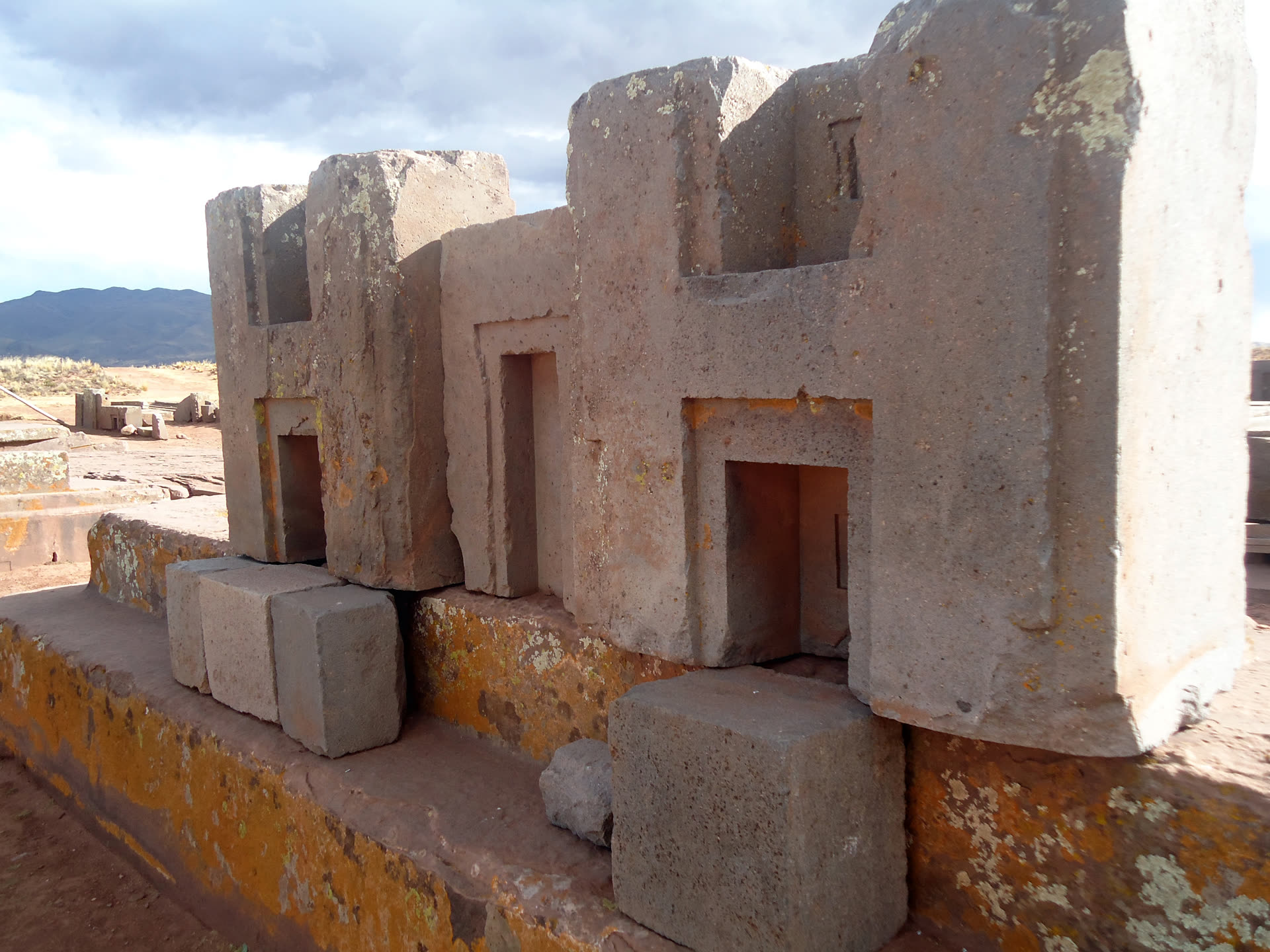
Theoretical Alignment
This file sits closest, among this site's Ancient Records entries, to the Baalbek Trilithon and the Antikythera Mechanism: a real, extensively excavated structure around which a specific and well-documented strand of ancient-astronaut media has built a "this precision could not have been achieved by the people who supposedly achieved it" claim that the archaeologists and experimental stoneworking researchers who have actually studied the site do not share. Puma Punku's physical reality, its place within the Tiwanaku civilization's broader ceremonial core, and the basic outline of its construction materials and methods are not seriously disputed by anyone who has excavated or measured it. What remains genuinely open — and is treated honestly in this file's Historical Precedents and Mainstream Interpretation sections — is a narrower, ordinary archaeological question: the precise internal sequencing of Puma Punku's several building phases within the broader multi-century Tiwanaku chronology, not whether human beings built it at all.
Sensor & Instrumentation Detection Profile
As with every entry in this site's Ancient Records series, there is no modern sensor record of Puma Punku's construction in progress; the entire evidentiary record consists of the standing (and, more often, fallen and scattered) stonework itself, the two quarries that supplied it, and the instruments and survey methods researchers have used to measure, date, and model all three without further damaging a UNESCO World Heritage property to do it. The site itself covers roughly 17 hectares, of which only a small fraction has ever been formally excavated, and its platform mound measures approximately 167.4 meters north-south by 116.7 meters east-west. Direct measurement of the surviving blocks is the foundation of every serious study of the site: the largest red sandstone block on the "Plataforma Lítica" measures roughly 7.8 by 5.2 by 1.1 meters and is estimated at approximately 131 metric tons, with a second large sandstone slab measuring roughly 7.9 by 2.5 by 1.86 meters at an estimated 85 tons — figures directly measurable today, not estimated from photographs, and considerably smaller than some popular claims (a handful of fringe sources inflate the largest block toward 800 tons, nearly six times its actual surveyed weight).
The site's smaller, harder grey andesite elements — the famous "H-blocks," fragments of at least five monumental carved gateways (with foundation evidence suggesting the platform may once have supported as many as eight), and a number of deliberately non-functional "blind miniature gateways" — are where Puma Punku's reputation for extreme precision is most concentrated. Direct measurement by Jean-Pierre Protzen and Stella Nair, published in their 2013 monograph The Stones of Tiahuanaco, documents flat, planar block faces, consistently sharp interior and exterior right angles, and joint precision in places measured to within roughly half a millimeter — a genuinely remarkable, directly measurable engineering achievement using only the tools this file's Material Analysis section documents in detail below. Recovered I-shaped architectural cramps, cast in place from an unusual copper-arsenic-nickel bronze alloy chemically analyzed by MIT archaeometallurgist Heather Lechtman in a 1998 study, physically confirm the fastening technology the Tiwanaku actually used to lock adjoining blocks together — a real, laboratory-verified detail, not speculation.
Environmental & Geospatial Context
Puma Punku sits at roughly 16.555° S, 68.674° W, at an elevation of approximately 3,850 meters (12,630 feet) on Bolivia's high Altiplano plateau — among the highest major urban ceremonial centers built anywhere in the ancient world, a genuinely demanding environment for large-scale construction in its own right, quite apart from any claim about the stonework's precision. The site forms the western terrace of the much larger Tiwanaku archaeological complex, which also includes the stepped Akapana platform mound and the walled Kalasasaya enclosure (home to the separate, famous Gateway of the Sun, a carved andesite portal von Däniken's own writing on "Tiahuanaco" discusses at length — a detail this file's Primary Source Document section addresses directly, since fringe literature routinely blurs the boundary between Puma Punku specifically and the wider Tiwanaku site generally). Lake Titicaca's southern shoreline lies only a few kilometers away, and the lake itself supplied both a transport route and, per petrological sourcing studies, the origin point for Puma Punku's raw stone: the softer red sandstone was quarried roughly 10 kilometers away near the lakeshore and hauled up a steep incline, while the harder grey andesite was quarried some 90 kilometers distant, across the lake's southern arm, from volcanic outcrops on the Copacabana Peninsula — principally the Kimsachata and Mount Ccapia formations, where archaeologists have directly documented ancient quarry faces, discarded pounding stones, and unfinished blocks abandoned mid-extraction.
The wider Tiwanaku civilization that built Puma Punku is generally dated from roughly the final centuries BCE through about 1000 CE, with recent Bayesian modeling of multiple independent radiocarbon series placing the settlement's formal founding around 110 CE (with a calibrated range of roughly 50–170 CE) and its core urban phase spanning roughly 200–1000 CE; the city's monumental ceremonial architecture, including Puma Punku's own platform, is most closely associated with the civilization's political and demographic peak between roughly 700 and 1000 CE, when the urban core supported an estimated population in the tens of thousands and Tiwanaku's political and religious influence extended across a large swath of the southern Andes, into parts of modern Peru, Chile, and Argentina. John Wayne Janusek's scholarship situates this monumental building program within a much longer local architectural tradition rather than a sudden, unexplained appearance: earlier Titicaca Basin sites including Chiripa (roughly 550 BCE–100 CE) and Pukara show developmental continuity in sunken-court and platform-mound ceremonial architecture that Tiwanaku's builders elaborated on and scaled up over succeeding centuries, using shared regional iconography — including the widespread pre-Tiwanaku "Yaya-Mama" religious tradition's carved imagery — as a documented visual and organizational framework, even in the absence of a formal writing system.
Observer Credibility & Occupational Profile
Every substantive figure who has reshaped this site's interpretation across more than a century of study holds a real, checkable credential in a directly relevant field — a very different profile from the ancient-astronaut authors most responsible for popularizing the "impossible precision" claim. Formal survey of the wider Tiwanaku site for a Western readership dates to 1877, when U.S. diplomat and antiquarian E. George Squier documented and illustrated the ruins in his book Peru: Incidents of Travel and Exploration in the Land of the Incas, devoting an entire chapter to the site under the title "Tiahuanaco — The Baalbek of the New World." Sustained, systematic Bolivian-led excavation began under Carlos Ponce Sanginés, a Bolivian archaeologist trained at the Universidad Mayor de San Andrés and the National University of Córdoba who founded Bolivia's Center for Archaeological Research at Tiwanaku in 1958, later established the National Institute of Archaeology, and directed Bolivian archaeology for most of the second half of the 20th century — a career that included, with his wife Julia Elena Fortún, the 1964 discovery of the well-preserved Ponce Monolith. Ponce Sanginés's original site chronology, based in part on now-outdated dating assumptions, has since been substantially revised by more recent radiocarbon work, a genuine and ordinary process of scholarly refinement addressed directly in this file's Historical Precedents section.
Jean-Pierre Protzen, whose experimental stoneworking research is addressed in full in this file's Material Analysis section, held a diploma in architecture from EPF Lausanne and spent his career on the UC Berkeley architecture faculty, twice serving as department chair, before shifting his research focus to Inca and Tiwanaku masonry techniques in the early 1980s — a working architect's hands-on, tool-and-material-based analysis, not speculation from a distance. His co-author on The Stones of Tiahuanaco, Stella Nair, personally conducted the book's replication experiments. Alexei Vranich, whose radiocarbon chronology and 3D reconstruction of Puma Punku are addressed throughout this file, holds a Ph.D. from the University of Pennsylvania (1999) on the site's own ritual spaces, has held research and teaching positions at Penn, Harvard, UCLA, MIT, and UC Berkeley's Archaeological Research Facility, and is currently based at the University of Warsaw's Center for Andean Studies. John Wayne Janusek held a Ph.D. from the University of Chicago (1994), taught at Bolivia's Universidad Mayor de San Andrés early in his career, and spent more than two decades on the Vanderbilt University anthropology faculty conducting fieldwork across the Tiwanaku region, including excavations at the important precursor site of Khonkho Wankane, until his death in October 2019. Metallurgist Heather Lechtman of MIT, whose 1998 chemical analysis of the site's bronze cramps is addressed above, is a founding figure of modern archaeometallurgy.
Set against this record, the claim's own most prominent modern proponents hold no comparable credential in archaeology, materials science, or Andean studies. Erich von Däniken, a Swiss hotelier whose 1968 Chariots of the Gods? first popularized Tiahuanaco's stonework as an unexplained mystery to a global readership, holds no archaeology credential and conducted no original excavation or measurement of the site. Giorgio Tsoukalos, Ancient Aliens' co-executive producer and on-camera "ancient astronaut theorist," holds a 1998 bachelor's degree in communications from Ithaca College and spent 1999–2007 as a bodybuilding-competition promoter before turning to ancient-astronaut media full time; he holds no archaeology, engineering, or materials-science credential. Christopher Dunn, the specific claimant most responsible for popularizing the phrase "machine-tooled" in connection with Puma Punku, is a career industrial machinist, toolmaker, and laser-operations manager — a real, relevant hands-on manufacturing background, but not a credential in archaeology, Andean stoneworking history, or the specific abrasive hand-tool methods this file's Material Analysis section documents as the actual attested Tiwanaku technique.
Historical Precedents & Archive Matches
Two kinds of precedent bear directly on this file. The first is internal to this site's own Ancient Records archive: Puma Punku joins the Baalbek Trilithon, the Antikythera Mechanism, and the Nazca Lines as a real, extensively documented site around which a specific "impossible precision" or "lost/non-human technology" reading has grown up, generally rejected by the archaeologists and materials specialists who actually study it. As with Baalbek and Nazca, Erich von Däniken is directly responsible for introducing this file's version of the claim to a mass readership; unlike those two, the claim's largest modern audience reaches it not through print but through more than a decade of dedicated television coverage, addressed in full in this file's Ancient-Astronaut Interpretation section.
The second, more directly probative precedent is a genuine, still-active scholarly dating debate — not the fringe dating claim this file exists to evaluate, but a real, narrower disagreement among credentialed Andean archaeologists. In 1945, Bolivian-Austrian engineer and self-taught archaeologist Arthur Posnansky published Tihuanacu: The Cradle of American Man, arguing from a claimed astronomical alignment of the nearby Kalasasaya enclosure's corner stones with solstice sunrise positions that the wider Tiwanaku site could be dated to as early as roughly 15,000 BCE — a figure some later ancient-astronaut writers, including sources Ancient Aliens has drawn on, have rounded to "15,000 to 17,000 years old" when discussing Puma Punku specifically. Posnansky's method assumed the Kalasasaya's stone alignments had remained undisturbed since original construction, an assumption 21st-century archaeoastronomers have specifically and directly rejected: the site's masonry has been documented as extensively looted, reworked, and rebuilt across centuries of post-abandonment reuse (including deliberate stone removal for colonial-era Spanish construction projects and, later, railway ballast), meaning the specific stones Posnansky measured cannot be assumed to sit in their original Tiwanaku-era positions at all. Modern archaeoastronomical review has called Posnansky's calculation a textbook example of misapplied method, and it carries no support in current radiocarbon-based Tiwanaku chronology, which places the site's founding around 110 CE and Puma Punku's own earliest dated construction fill in the 6th century CE — a difference of roughly fifteen millennia from Posnansky's estimate. The real, live scholarly refinement that remains genuinely open is far narrower and entirely conventional: precisely how Ponce Sanginés's mid-20th-century excavation-based chronology, Vranich's later radiocarbon series, and ongoing stratigraphic work should be reconciled into a single, internally consistent building sequence for Puma Punku's several distinct construction phases — a real, ordinary, peer-reviewed archaeological question, not a 15,000-year mystery.
Historical Background
The Tiwanaku Civilization and Its Titicaca Basin Roots
Long before Puma Punku's platform was raised, the Titicaca Basin was already home to a sequence of increasingly complex societies building monumental ceremonial architecture. The Chiripa culture (roughly 550 BCE–100 CE) and the Pukara culture built sunken-court and platform-mound temple complexes that John Wayne Janusek and other Titicaca Basin specialists identify as direct architectural and religious precursors to Tiwanaku's later monumental core, sharing elements of the region's broader "Yaya-Mama" religious iconographic tradition. Tiwanaku itself emerged as a modest settlement in the final centuries BCE, and recent Bayesian modeling of independent radiocarbon series places its formal founding as a political center at roughly 110 CE. Over the following centuries the settlement grew into the capital of a major regional power, its cultural and religious influence eventually extending across a wide area of the southern Andes reaching into parts of modern Peru, Chile, and Argentina, sustained by an intensive raised-field agricultural system that supported a substantial urban population.
Puma Punku's Place in the Ceremonial Core
Puma Punku forms the westernmost major structure of Tiwanaku's monumental ceremonial precinct, positioned apart from — but clearly designed in relationship to — the stepped Akapana platform mound and the walled Kalasasaya enclosure closer to the site's center. Alexei Vranich's doctoral research and subsequent publications document Puma Punku as a distinct, multi-phase temple complex in its own right, combining a raised earthen and rubble-core platform faced and capped with large red sandstone slabs, a network of smaller, extraordinarily precise grey andesite architectural elements including the H-blocks and at least five fragmentary monumental gateways, and evidence — addressed fully below — of standardized, near-interchangeable block production consistent with a form of ancient prefabrication.
Flourishing, Drought, and Abandonment
Tiwanaku's urban core, including Puma Punku, reached its demographic and political peak roughly between 700 and 1000 CE, supporting an urban population most commonly estimated in the range of 10,000 to 20,000 residents at the city's core (with some broader estimates for the wider metropolitan area running higher), sustained by an extensive raised-field irrigation and agricultural system. The civilization's collapse, generally dated to around 1000–1100 CE, has been linked by paleoclimate researchers — drawing on Lake Titicaca sediment-core and ice-core records — to a sustained, multi-decade regional drought that would have severely disrupted the raised-field agriculture the city's population depended on; Puma Punku itself shows clear archaeological evidence of having been left in an unfinished state, with in-progress and never-installed stonework abandoned partway through construction, consistent with a relatively abrupt disruption to the building program rather than a long, gradual decline.
Post-Abandonment Disturbance and Rediscovery
Unlike a site lost to jungle growth or sand, Tiwanaku and Puma Punku remained visible and, at various points, actively quarried by later populations: colonial-era Spanish administrators documented removing dressed stone for use in nearby construction projects, and 19th- and 20th-century railway construction crews are independently documented to have removed additional blocks for use as ballast — a real, physically consequential history of post-abandonment disturbance directly relevant to this file's treatment of Posnansky's disputed alignment-based dating claim above. Formal Western scholarly documentation began with E. George Squier's 1877 survey and illustrated account; sustained, systematic Bolivian-led excavation began under Carlos Ponce Sanginés from 1958 onward, and UNESCO inscribed the wider Tiwanaku complex, including Puma Punku, as a World Heritage Site in 2000.
Complete Timeline
| Date | Event |
|---|---|
| c. 550 BCE–100 CE | The Chiripa culture builds sunken-court and platform-mound ceremonial architecture in the Titicaca Basin, an identified precursor tradition to Tiwanaku's later monumental core. |
| c. 110 CE | Per recent Bayesian radiocarbon modeling, Tiwanaku is formally founded as a political center (calibrated range c. 50–170 CE). |
| c. 200–1000 CE | Tiwanaku's core urban phase, per current radiocarbon chronology. |
| c. 536–600 CE | Radiocarbon dating of the deepest, oldest mound-fill layer beneath Puma Punku's stonework, obtained by Alexei Vranich, marks the platform's earliest documented construction phase. |
| c. 700–1000 CE | Tiwanaku's demographic and political peak; Puma Punku's finest andesite stonework is most plausibly completed within this window. |
| c. 1000–1100 CE | Tiwanaku's collapse, linked by paleoclimate researchers to a sustained regional drought; Puma Punku is left with stonework unfinished mid-construction. |
| Colonial & 19th–20th c. | Spanish colonial administrators and later railway construction crews remove dressed Tiwanaku stone for reuse elsewhere, physically disturbing the site. |
| 1877 | U.S. diplomat E. George Squier surveys and illustrates the site in Peru: Incidents of Travel and Exploration in the Land of the Incas. |
| 1945 | Arthur Posnansky publishes Tihuanacu: The Cradle of American Man, proposing a roughly 15,000 BCE dating based on a Kalasasaya alignment measurement later rejected by archaeoastronomers. |
| 1958 | Carlos Ponce Sanginés founds the Center for Archaeological Research at Tiwanaku, beginning sustained, systematic Bolivian-led excavation. |
| 1964 | Ponce Sanginés and Julia Elena Fortún discover the well-preserved Ponce Monolith at the site. |
| 1968 | Erich von Däniken discusses "Tiahuanaco"'s precision stonework in Chariots of the Gods?, introducing the claim to a mass audience. |
| 1998 | MIT archaeometallurgist Heather Lechtman publishes her chemical analysis of Tiwanaku's copper-arsenic-nickel bronze architectural cramps. |
| 1999 | Alexei Vranich completes his University of Pennsylvania doctoral dissertation on Puma Punku's ritual spaces, later obtaining the site's first radiocarbon date from mound fill. |
| 2000 | UNESCO inscribes Tiwanaku, including Puma Punku, as a World Heritage Site. |
| March 16, 2012 | Ancient Aliens (History Channel), Season 4 Episode 6, "The Mystery of Puma Punku," featuring Giorgio Tsoukalos and Christopher Dunn, repeats the "machine-tooled" claim to a mass television audience. |
| 2013 | Jean-Pierre Protzen and Stella Nair publish The Stones of Tiahuanaco: A Study of Architecture and Construction, the foundational experimental-archaeology study of the site's stoneworking methods. |
| 2013 | Yaeger & Vranich publish a fuller radiocarbon chronology of the Puma Punku complex, refining the site's construction sequence. |
| 2014 | In Search of Aliens (H2), Season 1 Episode 7, hosted by Tsoukalos, revisits Puma Punku for a second dedicated television treatment. |
| December 2018 | Vranich and UC Berkeley's Archaeological Research Facility publish a 3D-printed physical and virtual reconstruction of Puma Punku in npj Heritage Science. |
| January 10, 2021 | Jean-Pierre Protzen dies, together with his wife Elsbeth Protzen. |
| September 13, 2024 | Ancient Aliens, Season 20 Episode 20, "Resurrecting Puma Punku," returns to the site for a third dedicated network episode. |
The Primary Source Document
Von Däniken's Original 1968 Claim
The modern "impossible precision" claim traces to a specific, identifiable passage. In Chariots of the Gods?, Erich von Däniken described "Tiahuanaco" broadly — without clearly distinguishing Puma Punku from the adjoining Kalasasaya and its separate Gateway of the Sun, a conflation later ancient-astronaut media has generally continued — presenting its stonework, carved water conduits, and copper cramps as evidence conventional archaeology could not adequately explain, and citing an unverified claim relayed to him that the site's remains might represent the debris of a catastrophic ancient disaster. Von Däniken's own treatment involved no original excavation, measurement, or engagement with the Bolivian archaeological record then already being compiled under Carlos Ponce Sanginés.
Ancient Aliens and the "Machine-Tooled" Claim
The claim reached a far larger modern audience through television rather than print. History Channel's Ancient Aliens has returned to Puma Punku repeatedly across more than a decade — a dedicated Season 4 episode in 2012, a companion In Search of Aliens episode in 2014, and a further dedicated Season 20 episode in 2024 — making it one of the franchise's single most-featured sites. Christopher Dunn, a career machinist and toolmaker previously known for comparable "impossible precision" claims about ancient Egyptian stonework, argued on camera that certain Puma Punku surfaces could only be explained as having been cut on a machine, and conducted an on-camera comparison of modern laser- and diamond-saw-cut stone against ancient cut surfaces under magnification. Giorgio Tsoukalos has repeatedly amplified this framing on the program, and other featured commentators have compounded the claim with material misidentifications — describing the stones as granite or diorite rather than their actual, laboratory-identified red sandstone and andesite, a factual error addressed directly in this file's Material Analysis section, since diorite and true granite are substantially harder than andesite and would indeed be far more difficult to shape by hand.
Confirmed Institutional & Archival Holdings
UNESCO's official inscription record covering the full Tiwanaku complex, including Puma Punku.
OFFICIAL INSTITUTIONAL RECORDThe peer-reviewed publication documenting UC Berkeley's physical and virtual 3D reconstruction of Puma Punku's scattered stone elements.
PEER-REVIEWED ACADEMIC RECORDThe research facility's own institutional profile of Vranich's Tiwanaku and Puma Punku research program.
OFFICIAL INSTITUTIONAL RECORDSearch Institutional & Academic Archives Directly
Evidence Assessment
Supporting Puma Punku's Genuine Tiwanaku-Era Human Construction
- Radiocarbon dating of the platform's own mound fill places its earliest construction at c. 536–600 CE, squarely within the documented Tiwanaku civilization's occupation of the region
- Protzen and Nair's peer-reviewed 2013 experimental study, using period-attested stone hammers and abrasive sand, physically replicated the site's characteristic flat faces and precise angles
- Both source quarries — sandstone roughly 10 km away, andesite roughly 90 km away on the Copacabana Peninsula — show direct physical evidence of ancient extraction, including discarded pounding stones and abandoned unfinished blocks
- Recovered architectural cramps, chemically identified as a distinctive copper-arsenic-nickel bronze alloy by MIT archaeometallurgist Heather Lechtman, physically confirm the fastening technology actually used, directly contradicting claims of unknown or non-terrestrial materials
Undermining the "Machine-Tooled/Non-Human" Interpretation Specifically
- No credentialed archaeologist or materials scientist who has directly studied the site has ever endorsed a non-human or extraterrestrial construction origin
- The stones are red sandstone and andesite, not granite or diorite as some fringe-media sources claim — a material misidentification that overstates the hardness challenge involved
- Surviving drag marks and rope-hoisting grip channels on the blocks themselves directly contradict on-camera claims of levitation or anti-gravity lifting
- The specific 15,000–17,000-year dating some ancient-astronaut sources attach to the site traces to Arthur Posnansky's 1945 astronomical-alignment method, which 21st-century archaeoastronomers have specifically rejected given the site's documented history of post-abandonment stone disturbance
Comparative Analysis
A Genuine Engineering Achievement, Not a Contextless One
It is worth stating plainly, because it cuts against a purely dismissive reading without supporting the "impossible" claim either: Puma Punku's andesite stonework really is among the most precisely fitted pre-industrial masonry documented anywhere on Earth, and the site's evident ambition — standardized, near-interchangeable modular blocks; multiple monumental gateways; a level of joint tolerance genuinely startling to see in person — is a real, sobering reminder of just how sophisticated the Tiwanaku civilization's engineering and organizational capacity actually was. Nothing about documenting the platform's human origin requires minimizing that achievement. What separates a genuinely extraordinary human engineering feat from an "impossible" one is exactly the kind of evidence this file has laid out — attested materials, attested tools, a directly replicated stoneworking methodology, and quarry-to-site chains of physical evidence — all of which Puma Punku has, and all of which a true out-of-place artifact, by definition, would lack.
The Pattern Elsewhere on This Site
Compared to the Baalbek Trilithon, this file's underlying claim resolves along a strikingly similar path: a genuinely large-scale, materially attested engineering feat, misrepresented in fringe literature as exceeding its builders' plausible technological capacity, with the misrepresentation traceable to a specific, quotable, and checkable original source (von Däniken's 1968 book in both cases). As with the Antikythera Mechanism, direct hands-on experimental replication — not just theoretical argument — is the strongest single rebuttal available here: Protzen and Nair did not merely argue Tiwanaku stoneworkers could have achieved this precision with period tools, they physically reproduced comparable results using those exact tools, the same evidentiary standard that settled the mechanism's own "impossible" gearing claim through working replicas.
Material Analysis: Tools, Techniques, and Standardized Production
The strongest direct rebuttal to the "machine-tooled" claim comes from the same kind of hands-on, physical-evidence-grounded analysis that has settled comparable claims elsewhere on this site: researchers actually reproducing the disputed result using only the tools and materials genuinely available to the original builders. Jean-Pierre Protzen and Stella Nair's experimental program, published in their 2013 monograph The Stones of Tiahuanaco, directly tested andesite- and sandstone-shaping using a documented toolkit consistent with what has actually been recovered at Puma Punku and its supplying quarries: hard hammerstones including quartzite and hematite cobbles, rated around 5.5 on the Mohs hardness scale — harder than the andesite's own weaker mineral bonds, though softer than the stone's individual crystal grains — used in a percussive pounding-and-pecking technique that exploits andesite's natural tendency to flake along its cooling-formed internal structure rather than requiring a harder cutting edge at all. Flat, planar surfaces were achieved by pounding progressively with finer-grained stones, then finishing by grinding and polishing with flat abrasive stones and quartz sand — a slow, skilled, labor-intensive process, but not a mysterious one. Nair's own hands-on replication trials, using tools including flint, agate, jasper, obsidian, greywacke, quartzite, and hematite, achieved precision within roughly half a millimeter of a target line using obsidian microblades for fine edge work, with individual small decorative elements taking an experienced worker on the order of 25 hours to complete — a real, physically demonstrated production cost entirely consistent with a large, organized labor force working over an extended construction period, not evidence of a shortcut technology.
Bronze tools, by contrast, proved largely ineffective for cutting hard andesite in Protzen and Nair's testing — an important, specific finding, because it directly narrows what the recovered Tiwanaku bronze objects (including the site's distinctive copper-arsenic-nickel architectural cramps, chemically identified by MIT archaeometallurgist Heather Lechtman in a 1998 study) were actually for: fastening finished stones together, not cutting them. Those I-shaped cramps were cast directly in place at Puma Punku, while comparable cramps at the nearby Akapana platform were cold-hammered into position instead — a genuine, documented variation in technique across the same broader construction tradition, and itself a small piece of evidence for a skilled, experimenting human workforce rather than a single monolithic "lost technology." No cutting tool of any kind — metal, diamond, or otherwise — has ever been recovered from the site or its quarries; every tool that has been recovered is consistent with the hammerstone-and-abrasive tradition Protzen and Nair's experiments replicate.
The site's celebrated standardization — H-blocks and gateway fragments sharing closely matching dimensions, joint profiles, and proportions — is itself directly, physically evidenced rather than merely inferred. Among the recovered elements is a small stone object nicknamed the "Escritorio del Inca" ("the Inca's Desk"), which functions as an accurate, reduced-scale model of a full-size Puma Punku gateway — direct physical evidence the builders used scaled templates or models as part of a standardized design-and-production process, addressed further in Vranich's 2018 reconstruction study below. Multiple nearly identical "blind" miniature gateways, sealed rather than functional, appear to have served a similar templating or ritual-replication purpose. None of this requires positing prefabrication technology beyond what the recovered tool evidence, quarry evidence, and Protzen and Nair's direct experimental replication already document.
Consistent with Ordinary, Highly Skilled Tiwanaku-Era Stoneworking
- Protzen and Nair's peer-reviewed 2013 experiments physically replicated the site's characteristic precision using only period-attested hammerstones and abrasives
- Andesite's natural flaking properties under percussive pounding, not an exotic cutting technology, explain how the stone was shaped by hand
- Both source quarries preserve direct physical evidence of ancient extraction, including discarded pounding stones and abandoned unfinished blocks
- The "Escritorio del Inca" scale-model gateway and multiple near-identical blind gateways are physical evidence of a genuine, human, template-based standardized production process
No Physical Trace Supporting Non-Human or Anachronistic Construction
- No metal, diamond, laser, or other advanced cutting tool has ever been recovered from the site or its quarries
- Recovered bronze objects, chemically analyzed as a copper-arsenic-nickel alloy, tested as ineffective for cutting andesite — consistent only with a fastening (cramp) function, not a cutting one
- The stones are laboratory-identified red sandstone and andesite, not the granite or diorite some fringe-media sources claim, a real factual error that overstates the hardness challenge
- Surviving drag marks and rope-hoisting grip channels directly contradict on-camera claims of levitation or anti-gravity lifting
The Ancient-Astronaut Interpretation
The claim this file exists to evaluate is narrower and more specific than "Puma Punku's stonework is remarkable" — it is the assertion, made by name in identifiable, widely circulated fringe literature and repeated across more than a decade of mass-audience television, that the site's precision exceeds what a Bronze Age Andean civilization without writing or (per the traditional archaeological view) the wheel could plausibly have achieved unaided, implying either direct extraterrestrial involvement or the use of lost advanced technology. Erich von Däniken, the Swiss author most responsible for popularizing the modern "ancient astronaut" hypothesis, introduced "Tiahuanaco" to a mass readership in his 1968 bestseller Chariots of the Gods?, presenting its stonework, carved conduits, and metal cramps as evidence conventional archaeology could not adequately explain. Von Däniken holds no credential in archaeology or materials science, and his original treatment involved no original excavation or measurement.
The claim reaches its largest modern audience through History Channel's long-running Ancient Aliens franchise, which has returned to Puma Punku for at least three separate dedicated episodes across more than a decade: "The Mystery of Puma Punku" (Season 4, Episode 6, aired March 16, 2012), a companion 2014 episode of the H2 spin-off series In Search of Aliens hosted by Giorgio Tsoukalos, and "Resurrecting Puma Punku" (Season 20, Episode 20, aired September 13, 2024) — making it one of the single most-repeated featured sites in the franchise's entire run, alongside sites like the Great Pyramid and Baalbek. On camera, Christopher Dunn, a career industrial machinist and toolmaker previously known for comparable claims about ancient Egyptian stonework, has argued that certain surfaces "could only be described as cut on a machine" given their precision, and staged a direct visual comparison between modern laser- and diamond-saw-cut stone and ancient cut surfaces under magnification. Other program segments have gone further, describing the stones as granite or diorite requiring diamond-hardness tools, and have paired the "impossible precision" framing with Posnansky's long-superseded 15,000–17,000-year dating claim and suggestions that moving multi-ton blocks would have required levitation or anti-gravity technology. Per this site's standing editorial policy, Ancient Aliens and the History Channel are treated here strictly as a documented, real cultural-impact fact — the claim genuinely does circulate through this specific, identifiable, high-reach media franchise, repeatedly and over many years — and never as a citable source of evidence for the claim itself.
A separate, smaller fringe strand, associated with the "geopolymer" hypothesis more commonly applied to the Egyptian pyramids, holds that Puma Punku's H-blocks were not carved from natural stone at all but cast in place from an artificial, concrete-like material — a claim with essentially no support among Andean archaeologists or geologists, who have directly documented the blocks' natural andesite mineral structure, matching quarry sourcing, and consistent stone-tool percussion marks. What unites every version of this file's claim, from von Däniken's original 1968 passage through the geopolymer variant to Dunn's on-camera machining argument, is that none engages directly with the specific, physical, peer-reviewed evidence — recovered tools, documented quarries, and successful hands-on replication — that this file's Material Analysis section lays out above; each instead argues from the finished result's visual impressiveness alone, without addressing how the actual excavated and experimentally tested evidence explains it.
The Mainstream Archaeological & Engineering Interpretation
How the Stonework Was Actually Shaped
The mainstream archaeological account, built on Protzen and Nair's direct experimental replication and consistent with recovered tool and quarry evidence, treats Puma Punku's precision as a solvable, if genuinely demanding and highly skilled, stoneworking problem rather than a mystery. Andesite's volcanic cooling structure allows it to be shaped by percussive pounding with hammerstones significantly harder than 5.5 on the Mohs scale, exploiting natural planes of weakness rather than requiring a harder cutting edge; flat faces and sharp angles were then achieved through progressively finer pounding, followed by grinding and polishing with abrasive stones and quartz sand. This is slow, labor-intensive, highly skilled work — Nair's own replication trials put a single small decorative element at roughly 25 hours of expert labor — but it is fully achievable, and has been directly, physically achieved by modern experimenters using only period-attested materials, not a hypothetical capability argued from a distance.
Standardization Without Writing
Puma Punku's evident standardization — matching block dimensions, repeated joint profiles, and the physical "Escritorio del Inca" scale-model gateway — demonstrates sophisticated planning and quality control without requiring a written language. John Wayne Janusek's broader Tiwanaku scholarship situates this within a documented regional tradition of visual, iconographic, and likely template-based design communication, continuous with the earlier Chiripa and Pukara ceremonial-architecture traditions and expressed through the widely shared "Yaya-Mama" religious imagery found across Titicaca Basin sites of the period — a real, if non-literate, mechanism for coordinating a large, standardized construction program across what was likely a multi-generational building effort.
Vranich's Reconstruction and the Genuine Open Question
Alexei Vranich's 2018 3D-printed reconstruction project, conducted with UC Berkeley's Archaeological Research Facility, physically and digitally reassembled scaled models of 140 andesite pieces and 17 sandstone slabs based on more than a century of accumulated field measurements, allowing researchers to test different possible arrangements by hand — work Vranich has described as resembling "an elaborate Lego set." The reconstruction revealed that Puma Punku's several gateways were most plausibly arranged to create a deliberate visual "mirror" effect of decreasing size, a real architectural design choice with likely ritual significance rather than evidence of anything beyond ordinary human planning. What remains honestly unresolved is not whether Tiwanaku builders could achieve this precision — that question is well-answered by direct experimental replication — but the finer-grained internal sequencing of Puma Punku's several distinct construction phases within the broader multi-century Tiwanaku chronology, a genuine, live, entirely ordinary archaeological question actively being refined through Vranich's radiocarbon series and colleagues' continuing stratigraphic work, not a mystery awaiting a non-human explanation.
Five Observables Assessment
The Five Observables framework, developed decades later by former AATIP director Luis Elizondo to classify modern UAP performance characteristics that exceed known technology, is included here for structural consistency with the rest of OverClassified's case files, but does not meaningfully apply to a static, in-situ stone platform with no flight characteristics, propulsion signature, or direct observational encounter of any kind.
Assessment: As with this site's other pre-modern and site-based files, the Five Observables framework is the wrong instrument here. Its inclusion should not be read as suggesting genuine exotic-performance or non-human-technology evidence exists for this case.
Conventional Explanation Candidates
Four candidates are assessed below.
Tiwanaku-Era Hand Stoneworking Using Hammerstones and Abrasives (Mainstream Consensus)
Highly PlausibleDirectly supported by Protzen & Nair's peer-reviewed 2013 experimental replication using period-attested tools, by recovered hammerstones and quarry evidence, and by radiocarbon dating placing construction squarely within the documented Tiwanaku civilization. This is the position of essentially every credentialed archaeologist who has directly studied the site.
Internal Construction-Phase Sequencing Within the Tiwanaku Chronology
Plausible, Not Fully SettledA real, ordinary, peer-reviewed scholarly refinement (Vranich's radiocarbon series; ongoing stratigraphic work) reconciling Ponce Sanginés's original mid-20th-century chronology with more recent dating. Genuinely open in fine detail, but a dispute among credentialed specialists working from real excavated evidence, not an unexplained mystery.
Posnansky's 15,000 BCE Archaeoastronomical Dating
ImplausibleRejected by 21st-century archaeoastronomers on methodological grounds — the Kalasasaya's stone alignments cannot be assumed undisturbed given the site's documented history of post-abandonment looting and reuse — and contradicted by a fifteen-millennium gap against current radiocarbon-based Tiwanaku chronology.
Machine-Tooled, Laser-Precision, or Extraterrestrial Construction
ImplausibleContradicted on multiple independent grounds: no credentialed archaeologist or materials scientist who has studied the site endorses it; Protzen and Nair's direct experimental replication demonstrates the precision was achievable with ordinary period tools; and the specific "granite/diorite" and "levitation" claims made on camera are directly contradicted by laboratory material identification and surviving drag/hoisting marks.
Why "Debunked"
This file receives a DEBUNKED classification for the specific claim it exists to evaluate: that Puma Punku's stoneworking precision exceeds what the Tiwanaku civilization could plausibly have achieved unaided, implying extraterrestrial construction or the use of lost advanced technology. That claim is not a close call among the archaeologists and materials specialists who have actually excavated, measured, and experimentally tested the site's methods. Jean-Pierre Protzen and Stella Nair's peer-reviewed 2013 experimental program did not merely argue the precision was achievable with period tools — it physically reproduced comparable results using hammerstones, abrasive sand, and stone microblades directly attested at the site and its supplying quarries, the same standard of hands-on replication that has settled comparable "impossible technology" claims elsewhere on this site. MIT archaeometallurgist Heather Lechtman's chemical analysis of the site's recovered bronze cramps identifies their actual composition and fastening function, directly contradicting vaguer on-camera claims of unknown materials, and surviving drag marks and rope-hoisting grip channels on the transported blocks themselves physically contradict on-camera claims of levitation or anti-gravity lifting. The specific material misidentification underlying much of the "impossible hardness" framing — describing the stones as granite or diorite rather than their laboratory-confirmed red sandstone and andesite — is independently checkable and does not survive that check.
This DEBUNKED verdict should not be read as dismissing the site's genuine, remarkable engineering significance, or as papering over the real, honestly acknowledged research question this file has tried to represent fairly rather than explain away: the precise internal sequencing of Puma Punku's several distinct construction phases within the broader Tiwanaku chronology remains a live, ongoing subject of archaeological research (Vranich's radiocarbon series and 2018 reconstruction study; continuing stratigraphic work refining Ponce Sanginés's original mid-20th-century framework). That is a genuine, still-open dating-and-sequencing question being worked by credentialed specialists through ordinary excavation and radiocarbon methods — a world apart from Arthur Posnansky's long-superseded, archaeoastronomically indefensible 15,000 BCE claim, which some ancient-astronaut media has nonetheless continued to cite. Distinguishing "we are still refining exactly how this multi-century building program unfolded" from "this could not have been built by humans at all" is the single most important analytical move this file makes, and it is the distinction the "machine-tooled" claim collapses.
Related Entries
Further Reading — Recommended Literature
The Stones of Tiahuanaco: A Study of Architecture and Construction
The foundational experimental-archaeology study directly replicating Puma Punku's stoneworking methods using period-attested tools, by the architect-archaeologist whose 2013 research is central to this file's rebuttal.
Ancient Tiwanaku
A comprehensive synthesis of Tiwanaku civilization's rise, geopolitical influence, and collapse, by the Vanderbilt archaeologist whose scholarship anchors this file's account of the site's historical background.
The Tiwanaku: Portrait of an Andean Civilization
A widely cited scholarly history of the Tiwanaku civilization by a University of Chicago anthropologist, covering its rise, monumental architecture, agricultural system, and drought-linked collapse.
Chariots of the Gods?
The 1968 bestseller that first introduced "Tiahuanaco"'s stonework to a mass audience as an unexplained mystery; the original primary source this file's fringe claim traces to.
The Cult of Alien Gods
Traces the literary and pop-culture roots of ancient-astronaut claims, including how von Däniken's framework spread through print and later television.
DISCLOSURE: Some links above are affiliate links. If you purchase through them, OverClassified receives a small commission at no additional cost to you. This helps support independent research.
Essential Viewing
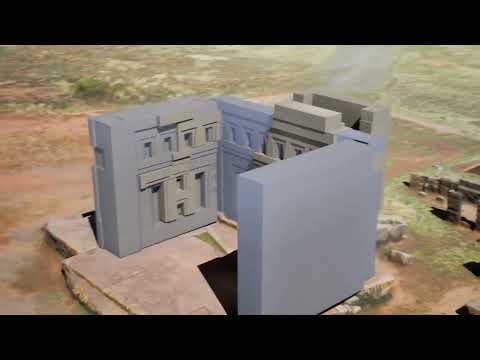
Puma Punku Animation for Alexei Vranich
Kevin Eslinger — a visualization created directly for Vranich's own reconstruction research, illustrating the platform's original standing form.
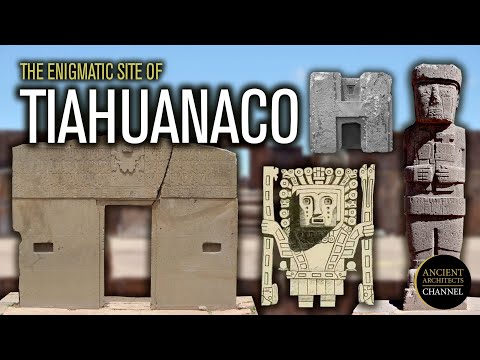
The Enigmatic Ancient Site of Tiahuanaco + Pumapunku
Ancient Architects — a direct look at the standing ruins and stonework at Tiwanaku and Puma Punku.
Sources
- "Pumapunku." Wikipedia. en.wikipedia.org
- "Tiwanaku." Wikipedia. en.wikipedia.org
- Protzen, Jean-Pierre, and Stella Nair. The Stones of Tiahuanaco: A Study of Architecture and Construction (Monograph 75). Los Angeles: Cotsen Institute of Archaeology Press, UCLA, 2013.
- Janusek, John Wayne. Ancient Tiwanaku (Case Studies in Early Societies). Cambridge: Cambridge University Press, 2008.
- Kolata, Alan L. The Tiwanaku: Portrait of an Andean Civilization. Cambridge, MA: Blackwell, 1993.
- Yaeger, Jason, and Alexei Vranich. "A Radiocarbon Chronology of the Pumapunku Complex and a Reassessment of the Development of Tiwanaku, Bolivia." Paper/report, 2013. researchgate.net
- Vranich, Alexei. "The Construction and Reconstruction of Ritual Space at Tiwanaku, Bolivia (A.D. 500-1000)." Journal of Field Archaeology 31, no. 2 (2006).
- Vranich, Alexei, et al. "Reconstructing ancient architecture at Tiwanaku, Bolivia: the potential and promise of 3D printing." npj Heritage Science 6, no. 65 (2018). nature.com
- Katz, Brigit. "This Crumbling Temple in Bolivia Has Been Reconstructed Using 3-D Printing Technology." Smithsonian Magazine, December 17, 2018. smithsonianmag.com
- Lechtman, Heather. "Architectural Cramps at Tiwanaku: Copper-Arsenic-Nickel Bronze." In Metallurgy and Civilisation: Eurasia and Beyond, 1998.
- University of California, Berkeley, Archaeological Research Facility. "Alexei Vranich." Associate Scholar Profile. arf.berkeley.edu
- University of California, Berkeley, College of Environmental Design. "CED Professor Emeritus Jean-Pierre Protzen and Wife Elsbeth Protzen Have Died." ced.berkeley.edu
- Vanderbilt University, Department of Anthropology. "John Janusek." Faculty Profile. as.vanderbilt.edu
- Browman, David L. "Carlos Ponce Sanginés, Godfather of Bolivian Archaeology." Bulletin of the History of Archaeology, 2021. archaeologybulletin.org
- "Arthur Posnansky, the Czar of Tiwanaku Archaeology." Bulletin of the History of Archaeology. archaeologybulletin.org
- UNESCO World Heritage Centre. "Tiwanaku: Spiritual and Political Centre of the Tiwanaku Culture." World Heritage List, Site No. 567, inscribed 2000. whc.unesco.org
- "Tiwanaku." Encyclopedia Britannica. britannica.com
- Squier, Ephraim George. Peru: Incidents of Travel and Exploration in the Land of the Incas. New York: Harper & Brothers, 1877.
- Von Däniken, Erich. Chariots of the Gods? Unsolved Mysteries of the Past. New York: Putnam, 1968 (English translation).
- "Erich von Däniken." Wikipedia. en.wikipedia.org
- "Giorgio A. Tsoukalos." Wikipedia. en.wikipedia.org
- "The Mystery of Puma Punku." Ancient Aliens, Season 4, Episode 6. A&E Television Networks (History Channel), aired March 16, 2012 — noted here strictly as a documented cultural-impact fact of the claim's media circulation, not cited as evidentiary support.
- "Resurrecting Puma Punku." Ancient Aliens, Season 20, Episode 20. A&E Television Networks (History Channel), aired September 13, 2024 — same editorial treatment as above.
- "Puma Punku." Ancient Aliens Debunked (companion research page). ancientaliensdebunked.com
- "File:Puma Punku H profile walls.JPG." File description and licensing. Wikimedia Commons (CC BY-SA 3.0), photo by Janikorpi. commons.wikimedia.org
See something inaccurate? Have additional information or sources?
Suggest an Edit →Last Updated: August 2026