
The Baalbek Trilithon's "Impossible" Platform
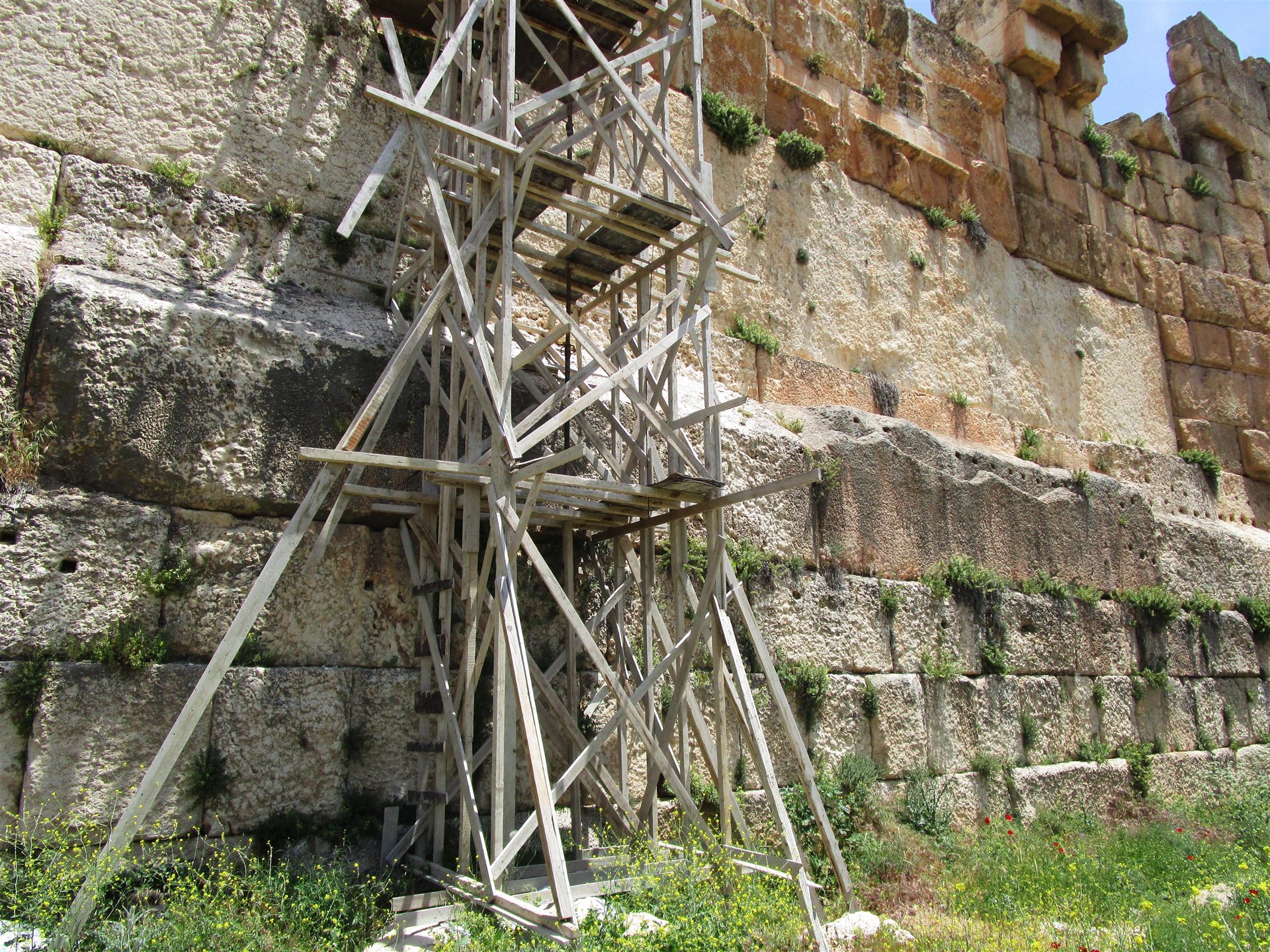
In the Beqaa Valley of eastern Lebanon, roughly 67 kilometers northeast of Beirut, the ruins of a Roman-era temple complex sit atop a raised stone platform of genuinely staggering scale. Built into the western retaining wall of the podium that once supported the Temple of Jupiter Heliopolitanus are three of the largest dressed stone blocks ever incorporated into a standing structure — the "Trilithon," each stone roughly 19–20 meters long, 4.3 meters high, 3.6 meters thick, and weighing an estimated 750–800 tons. Nine hundred meters away, in the hillside quarry that supplied them, three still-larger monoliths were cut free of the bedrock and then abandoned mid-extraction, unfinished and never moved: the "Stone of the Pregnant Woman" (Hajar al-Hibla, roughly 1,000 tons), the "Stone of the South" (roughly 1,242 tons), and the "Forgotten Stone," a sixth megalith found beneath the Pregnant Woman by a German Archaeological Institute excavation team in 2014 and estimated at roughly 1,650 tons — the largest ancient quarried stone block known anywhere on Earth. Erich von Däniken cited the Baalbek platform directly in his 1968 bestseller Chariots of the Gods? as evidence archaeology could not explain; Zecharia Sitchin built an entire chapter of his 1980 book The Stairway to Heaven around the claim that the platform was literally "the Landing Place," a spaceport from which the Anunnaki launched rocket ships into the heavens. This file documents both halves of that story honestly: the megaliths and the platform are entirely real, and moving stones of this mass really was, and remains, one of the most impressive feats of engineering attested anywhere in the ancient world; and the claim that doing so required non-human help is contradicted by real, peer-reviewed engineering scholarship — principally French architect-archaeologist Jean-Pierre Adam's 1977 haulage-mechanics study — and by a still-active, entirely mainstream archaeological research program investigating a genuinely different, much narrower open question: not whether the Romans could have built this, but exactly how far the platform's own history predates them.
Theoretical Alignment
This file sits closest, among this site's Ancient Records entries, to the Antikythera Mechanism and the Nazca Lines: a real, extensively studied structure, around which a specific and well-documented strand of ancient-astronaut literature has built a "this could not have been made by the people who supposedly made it" claim that the archaeologists and engineers who have actually studied the site do not share. The Trilithon's physical reality, its Roman-era placement within the temple podium, and the broad outline of its construction sequence are not seriously disputed by anyone who has worked the site — not by the structural engineers who have modeled its haulage, and, notably, not even by the ancient-astronaut authors making the "impossible" claim, who do not dispute the blocks' basic dimensions or findspot so much as add an unsupported interpretive layer about who built them and why. What remains genuinely open, and is treated honestly in this file's Historical Precedents and Mainstream Interpretation sections below, is a narrower and different question entirely: how much of the platform's lowest, least regular masonry courses predate the Roman colonial building program, and by how long. That is a real, live archaeological dating question with real, credentialed researchers actively working on it — not evidence of non-human intervention.
Sensor & Instrumentation Detection Profile
As with every entry in this site's Ancient Records series, there is no modern sensor record of the platform's construction in progress; the entire evidentiary record consists of the standing structure itself, the three abandoned monoliths still lying in the adjacent quarry, and the instruments and survey methods researchers have used to measure, date, and model all four without demolishing a UNESCO World Heritage Site to do it. The Trilithon's own three blocks are fully exposed and directly measurable in the western podium wall: each is documented at roughly 19–20 meters long, 4.2–4.3 meters high, and 3.6 meters thick, resting on a lower course of supporting stones themselves estimated at roughly 350 tons and 11 meters wide. The blocks are cut and fitted so precisely that, in the same way widely reported of other ancient megalithic masonry, a knife blade cannot be inserted at their joints — a real, physically verifiable detail, and one entirely consistent with attested Roman precision stone-dressing rather than evidence against it.
The three unfinished quarry monoliths have each been directly surveyed rather than estimated by eye. A 1996 geodetic survey by Austrian researchers measured the "Stone of the Pregnant Woman" (Hajar al-Hibla) at approximately 20.3–20.76 meters long, 4–5.29 meters wide at various points, and 4.2–4.3 meters high, confirming a weight estimate of roughly 1,000 tons; the stone remains partially embedded in bedrock and was the subject of a 2015 structural study identifying stress cracks on its northwestern face. The "Stone of the South," rediscovered and cleared in the 1990s, was surveyed at roughly 19.5–20.5 meters long and 4.3–4.6 meters wide, yielding an estimate of roughly 1,242 tons. The largest and most recently identified is the "Forgotten Stone," found in the summer of 2014 directly beneath and adjacent to the Pregnant Woman by a German Archaeological Institute (DAI) team under Margarete van Ess, working with Jeanine Abdul Massih of the Lebanese University and the Lebanese Directorate General of Antiquities: measured at 19.6 meters long, 6 meters wide, and at least 5.5 meters high, and estimated at roughly 1,650 tons, making it the single largest ancient quarried stone block documented anywhere in the world. Close examination of its surface by the DAI team found one narrow face already worked smooth, consistent with preparation for eventual transport, while close examination of the adjacent Pregnant Woman's edges found visible poor-quality fracturing in the stone itself — a specific, physical, non-speculative candidate explanation, addressed in full in this file's Material Analysis section, for why these particular blocks were abandoned mid-extraction rather than moved.
Environmental & Geospatial Context
Baalbek sits in the fertile Beqaa Valley of eastern Lebanon, between the Lebanon and Anti-Lebanon mountain ranges, at roughly 34.006° N, 36.207° E — a location continuously settled since at least the Neolithic period, with Bronze Age occupation layers documented beneath the later temple complex on the same rise, Tell Baalbek. The Hellenistic Greeks who arrived with Alexander the Great's conquests renamed the existing settlement Heliopolis, "Sun City," reflecting the site's association with a solar deity cult that predates Rome entirely; Roman colonization followed under Julius Caesar and, more substantially, Augustus, who established it as Colonia Julia Augusta Felix Heliopolitana. The great temple complex the Romans built here honored a local triad — Jupiter Heliopolitanus, Venus Heliopolitana, and Bacchus — syncretizing an existing Phoenician-derived Baal cult with imported Roman state religion, with a fourth, smaller temple to Mercury on a nearby hill. Column-drum graffiti and architectural analysis place the Temple of Jupiter's own main construction as largely complete by around 60 CE, on a raised platform measuring roughly 47.7 by 87.75 meters, itself sitting atop an earlier T-shaped stone foundation whose lowest courses include some two dozen individual monoliths estimated at roughly 300 tons apiece even before reaching the Trilithon's own three blocks higher in the same wall.
The quarry that supplied the Trilithon and its three abandoned companion stones lies roughly 800–900 meters from the temple complex, at a point on the hillside slightly higher in elevation than the podium itself — a genuinely significant piece of real engineering geography, not a coincidence, because it meant the roughly 800-ton blocks needed to be hauled essentially downhill and across a nearly level final approach rather than lifted, a distinction this file's Material Analysis and Mainstream Interpretation sections return to directly. The wider Roman province this construction sat within, Syria (later subdivided; the Beqaa fell within the growing sphere of the great regional center of Berytus, modern Beirut, and its own massive colonial refoundation as Colonia Iulia Augusta Felix Berytus in 15 BCE), was, in genuine, well-documented historical fact, home to exactly the kind of large-scale imperial engineering and skilled quarry labor this construction required: contemporary Herodian building projects at Jerusalem's Temple Mount, whose retaining-wall masonry has been directly compared to Baalbek's own podium coursing by modern archaeologists (discussed in full below), and a Roman logistical and engineering tradition already capable of moving obelisks weighing hundreds of tons across the length of the Mediterranean to erect them in Rome itself.
A separate, more recent line of scholarship complicates this picture usefully rather than undermining it. The Baalbek project led since 2001 by Margarete van Ess of the German Archaeological Institute, together with architectural historian Klaus Rheidt, set out specifically to re-examine the sanctuary's full occupational sequence from its Bronze Age origins on Tell Baalbek through the Roman, Byzantine, and Islamic periods. Their published findings have pushed back against an older, more speculative assumption — associated with earlier 20th-century excavator Friedrich Ragette — of unbroken cult continuity in the Jupiter sanctuary reaching back to the Hellenistic period; current archaeological opinion instead treats the temple as substantially a new Roman-era construction, even as it acknowledges the site's genuinely older Phoenician religious roots and leaves the platform's own lowest, least regular masonry courses as a real, actively studied open question, addressed in detail in the Historical Precedents section below.
Observer Credibility & Occupational Profile
Every substantive figure who has reshaped this site's interpretation across more than a century of study holds a real, checkable credential in a directly relevant field — a very different profile from the ancient-astronaut authors most responsible for popularizing the "impossible platform" claim. German excavation work at Baalbek began formally in 1898, prompted by a visit from Kaiser Wilhelm II, and was carried out by trained field archaeologists and architects across the following decades, establishing the site's basic plan and chronology that later research has refined rather than overturned. French architect and archaeologist Jean-Pierre Adam, whose 1977 study of the Trilithon's haulage mechanics is addressed in full in this file's Material Analysis section, combined formal training in classical architecture with direct measurement of the site's own surviving lifting-boss tooling marks and quarry roller-bed grooves — a working structural-engineering analysis grounded in physical evidence at the site itself, not speculation from a distance. His subsequent 1994 textbook, Roman Building: Materials and Techniques, remains a standard academic reference on attested Roman construction methods generally, cited independently of the Baalbek-specific paper that first established his reputation in this area.
Margarete van Ess, who has directed the German Archaeological Institute's Baalbek research program since 2001, holds a doctorate in Near Eastern archaeology and has published extensively on the site's full Bronze Age-through-Islamic occupational sequence in peer-reviewed venues and DAI institutional monographs, working in direct partnership with architectural historian Klaus Rheidt and the Lebanese Directorate General of Antiquities. Classicist Andreas Kropp and architectural historian Daniel Lohmann's 2011 study in the peer-reviewed journal Levant, comparing the Baalbek podium's masonry directly against the retaining walls Herod the Great built for Jerusalem's Temple Mount, represents exactly the kind of comparative, credentialed, published archaeological argument this file's Historical Precedents section relies on for the platform's genuinely open dating question. Set against this record, the claim's own most prominent proponents hold no comparable credential in archaeology, classics, or structural engineering: Erich von Däniken, a Swiss hotelier whose 1968 Chariots of the Gods? first popularized the platform as an unexplained mystery, and Zecharia Sitchin, a writer trained in economic history at the University of London whose Sumerian and Akkadian translations underlying the specific "landing platform" claim have found essentially no support among professional Assyriologists. Old Testament scholar Michael S. Heiser, who held a doctorate in Hebrew Bible and Semitic languages and appeared as an expert commentator in the 2012 documentary Ancient Aliens Debunked, directly fact-checked Sitchin's specific textual claims about Baalbek against the primary sources Sitchin cited — addressed in full below.
Historical Precedents & Archive Matches
Two kinds of precedent bear directly on this file. The first is internal to this site's own Ancient Records archive: the Baalbek Trilithon joins the Antikythera Mechanism and the Nazca Lines as a real, extensively documented site or artifact around which a specific "impossible technology" or "lost/non-human civilization" reading has grown up, generally rejected by the archaeologists and engineers who actually study it. As with the Nazca Lines, Erich von Däniken is directly responsible for popularizing this file's version of the claim in print; unlike Nazca, a second major ancient-astronaut author, Zecharia Sitchin, built an entire, far more elaborate mythological framework specifically around this site, discussed in full in the Ancient-Astronaut Interpretation section below.
The second, more directly probative precedent is architectural and comparative, and it is the single most important piece of real, mainstream evidence bearing on this file's genuinely open question — not whether Rome could build the Trilithon, but how much older the platform beneath it might be. Andreas Kropp and Daniel Lohmann's 2011 paper in the peer-reviewed journal Levant, titled "'Master, look at the size of those stones! Look at the size of those buildings!' Analogies in Construction Techniques Between the Temples at Heliopolis (Baalbek) and Jerusalem," directly compares the masonry of Baalbek's T-shaped podium foundation against the well-dated retaining walls Herod the Great built for the Temple Mount in Jerusalem in the decades around 20–15 BCE. The two building programs show striking technical parallels in stone-dressing style and coursing, leading Kropp and Lohmann to argue the massive Baalbek podium was most likely begun under Ptolemaic or Seleucid Hellenistic patronage and brought to completion under Augustus, with Herodian-linked masons plausibly involved in the Augustan-era work — but whether the very lowest, largest, and least regularly shaped courses of the podium were begun even earlier, before Rome's arrival in the region at all, remains, in the authors' own assessment, a genuinely unresolved question that the archaeological record as currently excavated cannot yet close either way. A separate 2019 monograph by Simone Eid Paturel, reviewed in the Bryn Mawr Classical Review, complicates the picture further by pushing back against an older assumption of unbroken Hellenistic-to-Roman cult continuity at the site — current scholarly opinion is genuinely split on how much pre-Roman construction survives in the podium's lowest courses, not settled in favor of either an entirely Roman platform or a much older one. This is precisely the honest, live archaeological debate this file's Mainstream Interpretation section addresses directly: a real dating question among credentialed specialists working from published, peer-reviewed evidence, not a mystery requiring anything outside the historical record to explain.
A third, non-Levantine comparative precedent speaks directly to the "impossible to move" half of the claim rather than the dating question. The Thunder Stone (Grom-kamen), a roughly 1,500-ton granite boulder moved across roughly six kilometers of Russian marshland in 1770 to serve as the pedestal for Falconet's equestrian statue of Peter the Great in St. Petersburg, is heavier than even the largest Trilithon block and comparable in scale to the quarry's unfinished monoliths — and it was moved using entirely 18th-century, pre-industrial technology: bronze ball-bearing rails, block-and-tackle rigging, and roughly 400 men working through the winter so the frozen ground itself could bear the load. The Thunder Stone's move is independently documented in period Russian court records and engineering accounts, not reconstructed from archaeological inference alone, and stands as direct, physically demonstrated proof that moving stones of Trilithon-and-larger scale does not require any technology beyond coordinated human labor, rope, timber, and leverage — a comparison Michael Heiser has made explicitly in his own published rebuttal of the Baalbek "landing platform" claim, discussed in full below.
Historical Background
From Phoenician Cult Site to Roman Colonia
Long before any Roman stone was cut, the rise now called Tell Baalbek was a place of continuous religious significance, with archaeological layers documenting occupation from the Neolithic period onward and a Bronze Age settlement beneath the later monumental architecture. The site's Semitic name, Baalbek, preserves a reference to the Canaanite/Phoenician storm-and-fertility god Baal, worshipped here in some form for a very long span before Alexander the Great's conquests brought the eastern Mediterranean into the Hellenistic Greek cultural orbit in 334 BCE, after which Greek settlers and administrators renamed the town Heliopolis. Roman interest followed within roughly three centuries: settlers arrived under Julius Caesar's influence, and the town was formally reorganized as a Roman colony, Colonia Julia Augusta Felix Heliopolitana, most likely under Augustus in the last decades of the first century BCE, a designation that came with the full weight of imperial patronage for monumental construction.
The Augustan-to-Neronian Building Program
Construction of the Temple of Jupiter Heliopolitanus and its supporting podium is generally dated to have begun in earnest around 16 BCE, when Baalbek's colonial status was formalized, with graffiti left by workers on surviving column drums indicating the main structure was substantially complete by around 60 CE, under Nero. The finished temple was, by any measure, one of the largest religious structures the Roman world ever built: its podium alone measures roughly 47.7 by 87.75 meters, and its standing columns — six of which still tower over the site today — reach 19.9 meters, the tallest columns of any known classical temple, supporting an entablature and pediment whose apex would have stood some 44 meters above the temple court. The complex grew over the following two centuries to include the adjoining Temple of Bacchus (among the best-preserved Roman temples anywhere in the world) and a separate Temple of Venus, cementing Baalbek-Heliopolis as one of the largest and most lavishly funded religious complexes in the entire Roman East.
The Trilithon's Place in the Podium
The three Trilithon blocks were not laid at ground level but incorporated roughly seven meters up the podium's western retaining wall, above a lower course of already-massive supporting stones estimated at roughly 350 tons each and resting, in turn, atop the platform's lowest and most architecturally debated courses. This vertical placement is itself informative: whoever quarried, hauled, and set the Trilithon needed not just to move nearly 800-ton blocks across level or gently sloping ground but to raise them the final several meters into precise position within an already-standing wall, a genuine engineering sequence addressed directly in this file's Material Analysis section rather than glossed over.
Decline, Destruction, and Rediscovery
The Temple of Jupiter's active pagan cult ended with the broader Christianization of the Roman Empire; the emperor Theodosius I ordered the temple demolished, or at minimum stripped of its cultic function, around 379 CE, and later Byzantine and early Islamic-period construction reused parts of the complex as a fortress, known in Arabic as al-Qala'a. Muslim forces took control of the town during the Rashidun-era conquests of 634–637 CE, and the site continued in use as a fortification and settlement through the medieval and Ottoman periods, sustaining damage from repeated earthquakes along the way — the ruins were never lost or forgotten in the way a jungle-swallowed ruin might be, but remained continuously visible, if increasingly encumbered by later construction, until systematic European archaeological interest began in the late 19th century. UNESCO inscribed the site as a World Heritage property in 1984, citing it as one of the finest surviving examples of Imperial Roman architecture at its height.
Complete Timeline
| Date | Event |
|---|---|
| Neolithic–Bronze Age | Earliest documented occupation of Tell Baalbek, the rise on which the later temple complex was built. |
| 334 BCE | Alexander the Great's conquest brings the region under Hellenistic Greek administration; the settlement is renamed Heliopolis ("Sun City"). |
| 64 BCE | Pompey's conquest brings the Beqaa Valley into the Roman province of Syria. |
| c. 24–15 BCE | Per Kropp & Lohmann (2011), the massive T-shaped podium foundation is most plausibly begun in this window, on masonry paralleling Herod the Great's contemporary Temple Mount retaining walls in Jerusalem; the far lower, less regular courses may predate even this. |
| c. 16 BCE | Baalbek is formally reorganized as the Roman colony Colonia Julia Augusta Felix Heliopolitana under Augustus; main construction of the Temple of Jupiter podium and Trilithon most plausibly begins around this period. |
| c. 60 CE | Column-drum graffiti indicate the Temple of Jupiter's main structure is substantially complete, under Nero. |
| 1st–3rd c. CE | The complex expands to include the Temple of Bacchus and the Temple of Venus. |
| 379 CE | Emperor Theodosius I orders the Temple of Jupiter's pagan cult ended and the structure stripped/demolished as part of empire-wide Christianization. |
| 634–637 CE | Muslim forces take control of Baalbek during the Rashidun conquests; the ruined temple platform is later fortified as al-Qala'a. |
| 1898 | Formal German archaeological excavation begins at Baalbek, prompted by a visit from Kaiser Wilhelm II. |
| 1968 | Erich von Däniken cites the Baalbek platform in Chariots of the Gods? as an unexplained ancient mystery. |
| 1977 | Jean-Pierre Adam publishes "À propos du trilithon de Baalbek" in Syria, the foundational engineering study of the Trilithon's haulage mechanics. |
| 1980 | Zecharia Sitchin publishes The Stairway to Heaven, elaborating Baalbek as an Anunnaki "Landing Place" and spaceport. |
| 1984 | UNESCO inscribes Baalbek as a World Heritage Site. |
| 1990s | The "Stone of the South" quarry monolith is rediscovered and cleared, surveyed at roughly 1,242 tons. |
| 1996 | An Austrian geodetic survey confirms the "Stone of the Pregnant Woman"'s roughly 1,000-ton weight estimate. |
| 2001 | Margarete van Ess and the German Archaeological Institute launch a long-term research program re-examining Baalbek's full occupational sequence. |
| 2011 | Ancient Aliens (History Channel), Season 3 Episode 3, "Aliens and Sacred Places," repeats the Baalbek "spaceport" claim to a mass television audience. |
| 2011 | Andreas Kropp and Daniel Lohmann publish their comparative Baalbek/Jerusalem masonry study in Levant. |
| 2012 | Ancient Aliens Debunked, featuring Michael Heiser, directly rebuts the Sitchin-derived "landing place" claim. |
| Summer 2014 | Van Ess's DAI team, working with Jeanine Abdul Massih (Lebanese University), identifies the "Forgotten Stone" beneath the Pregnant Woman — at roughly 1,650 tons, the largest ancient quarried stone block known. |
| 2015 | A structural study documents stress cracking on the Pregnant Woman's northwestern face. |
| 2019 | Simone Eid Paturel publishes Baalbek-Heliopolis, the Bekaa, and Berytus from 100 BCE to 400 CE, further reassessing the site's Roman-era landscape history. |
The Primary Source Document
Von Däniken's Original 1968 Claim
The modern "impossible platform" claim traces to a specific, quotable passage. In Chariots of the Gods?, Erich von Däniken wrote: "To the north of Damascus lies the terrace of Baalbek — a platform built of stone blocks, some of which have sides more than 65 feet long and weigh nearly 2,000 tons. Until now archaeologists have not been able to give a convincing explanation why, how, and by whom the terrace of Baalbek was built." Von Däniken went on to cite a claim from Soviet mathematician Matest Agrest that the platform might be "the remains of a gigantic airfield" — the earliest identifiable seed of the "spaceport" framing that Sitchin would later elaborate into a full mythology. Note that von Däniken's own cited weight figure, nearly 2,000 tons, overstates even the largest surveyed quarry monolith (the Forgotten Stone, at roughly 1,650 tons) by a substantial margin, and vastly overstates the roughly 750–800-ton Trilithon blocks that are the platform's actual visible, in-place structural elements — a factual inflation this file's sources make it possible to check directly rather than take on faith.
Sitchin's "The Landing Place"
Zecharia Sitchin built a far more elaborate framework around the same platform in his 1980 book The Stairway to Heaven, the second volume of his "Earth Chronicles" series. Sitchin identified Baalbek as "the Landing Place," arguing the platform was the surviving remnant of a much older Anunnaki spaceport facility that, after a catastrophic deluge roughly 13,000 years ago destroyed an earlier post-diluvial landing site, served as the sole functioning launch and recovery point for the Anunnaki's "Shuttlecraft" until a replacement could be built. Sitchin further claimed this "Landing Place" formed one point of a precise geographic grid connecting Baalbek to Mount Ararat and the Giza pyramids, and asserted that the hero of the Sumerian Epic of Gilgamesh personally witnessed rocket launches from the site. As addressed directly in the Ancient-Astronaut Interpretation section below, this specific textual claim does not hold up against the actual surviving text of the Gilgamesh epic, which contains no reference to rockets, launches, or Baalbek by any identifiable name.
Confirmed Institutional & Archival Holdings
UNESCO's official inscription record and justification, citing Baalbek as one of the finest examples of Imperial Roman architecture at its apogee.
OFFICIAL INSTITUTIONAL RECORDThe foundational peer-reviewed engineering analysis of how the Trilithon blocks were plausibly quarried, hauled, and set using attested Roman methods.
PEER-REVIEWED ACADEMIC RECORDThe peer-reviewed comparative study underlying this file's honest treatment of the podium's genuinely open pre-Roman dating question.
PEER-REVIEWED ACADEMIC RECORDThe institute's own project page documenting its long-term excavation and research program at the site.
OFFICIAL INSTITUTIONAL RECORDSearch Institutional & Academic Archives Directly
Evidence Assessment
Supporting the Platform's Genuine Roman-Era Human Construction
- Column-drum graffiti and architectural analysis date the Temple of Jupiter's main construction to c. 16 BCE–60 CE, squarely within the documented Roman colonial building program
- Jean-Pierre Adam's peer-reviewed 1977 study, grounded in surviving lifting-boss tooling marks and quarry roller-bed grooves at the site itself, models a plausible haulage method using attested Roman rope, capstan, and roller technology
- The quarry sits at a slightly higher elevation than the temple, meaning the roughly 800-ton Trilithon blocks needed to be moved largely downhill and across a near-level final approach — a genuine engineering advantage, not an obstacle requiring exotic explanation
- The directly comparable Thunder Stone (c. 1,500 tons, moved 1770 in St. Petersburg using entirely pre-industrial methods) physically demonstrates that stones of this scale and larger have been moved by ordinary human technology within recorded history
Undermining the "Non-Human/Spaceport" Interpretation Specifically
- No credentialed archaeologist or structural engineer who has directly studied the site has ever endorsed a non-human or extraterrestrial construction origin
- The specific textual claim underlying Sitchin's "Landing Place" framework — that the Epic of Gilgamesh describes rocket launches at Baalbek — does not appear in the actual surviving text of the epic
- Von Däniken's own cited weight figure for the platform (nearly 2,000 tons) exceeds even the largest directly surveyed quarry monolith by a substantial margin, an inflation any reader can check against the site's own documented measurements
- Neither von Däniken nor Sitchin conducted original engineering analysis of the site's haulage mechanics; Jean-Pierre Adam's study, the only such peer-reviewed analysis, finds the Trilithon's movement fully explicable with attested Roman-era methods
Comparative Analysis
A Genuine Engineering Achievement, Not a Contextless One
It is worth stating plainly, because it cuts against a purely dismissive reading without supporting the "impossible" claim either: the Baalbek Trilithon really is among the largest dressed and placed stone blocks in any standing structure anywhere on Earth, ancient or modern, and the three still-larger monoliths left in the quarry are a genuine, sobering reminder of just how ambitious — and, at points, over-ambitious — this particular building program was. Nothing about documenting the platform's human origin requires minimizing that achievement. What separates a genuinely extraordinary human engineering feat from an "impossible" one is exactly the kind of evidence this file has laid out — attested materials, attested tools, a traceable haulage methodology grounded in physical tooling marks at the site itself, and a directly comparable later precedent (the Thunder Stone) achieved with no more advanced technology — all of which the Trilithon has, and all of which a true out-of-place artifact, by definition, would lack.
The Pattern Elsewhere on This Site
Compared to the Antikythera Mechanism, this file resolves more cleanly in one respect and less cleanly in another. The mechanism's own function and Hellenistic origin are essentially settled since 2006, with the genuinely open question confined to a narrower historical puzzle about surviving comparanda; here, the haulage-and-placement engineering question is comparably well-settled by Adam's 1977 study and the Thunder Stone precedent, but a real, separate, still-actively-published dating question — how far the podium's lowest courses predate Rome — remains genuinely open in a way the mechanism's own core identification no longer is. As with the Nazca Lines, this file's fringe claim also traces to a specific, identifiable, and quotable original source (von Däniken's 1968 passage), letting readers check the claim's own factual accuracy directly against the site's real, measured dimensions — which, as shown above, it does not survive intact.
Material Analysis: Quarrying, Haulage, and Why Three Stones Were Left Behind
The strongest direct rebuttal to the "impossible to move" claim comes from the same kind of hands-on, physical-evidence-grounded analysis that has settled comparable claims elsewhere on this site: an engineer actually working out, from measurable tooling marks left at the site, how the job was plausibly done. Jean-Pierre Adam's 1977 study in the peer-reviewed journal Syria is built directly on two categories of physical evidence still visible at Baalbek today: the lifting-boss and pry-point tooling marks preserved on the Trilithon's own block faces, and the graded roller-bed grooves and leveled roadway remains between the quarry and the temple platform. Adam's key structural insight is a genuine engineering reframing rather than a new claim of exotic technology: because the quarry sits at a slightly higher elevation than the temple, and because blocks were cut with space already left beneath them for rollers before final freeing from the bedrock, the Trilithon's movement was never primarily a lifting problem at all — it was a horizontal-hauling problem, solved with log rollers running on a graded, leveled earthen roadway and multiple rope-and-capstan winch stations providing coordinated pulling force. Adam's reconstruction, using attested Roman capstan dimensions and rope-tensile figures, estimated that a coordinated team of roughly 144 workers operating multiple capstans in relay could haul a single Trilithon-scale block along this route — a dramatic, physically grounded revision downward from earlier, far less rigorous popular estimates that had run into the tens of thousands of laborers.
The final placement of the Trilithon, roughly seven meters up the podium's western wall, required a separate raising stage once the blocks reached the temple site, for which Roman builders are independently and extensively attested to have used compound-pulley cranes and earthen embankment ramps elsewhere in their own construction record — a documented capability, not a speculative one. Examined together, quarrying, horizontal haulage, and final vertical placement each map onto specific, textually and physically attested Roman engineering methods; no stage of the process, as reconstructed by Adam and later engineering commentators, requires a capability outside what the Roman world is independently known to have possessed.
The three unfinished quarry monoliths tell a complementary, and in some ways even more informative, story: not of impossible success, but of an honest, physically documented engineering failure. The German Archaeological Institute's 2014 survey of the newly identified "Forgotten Stone," conducted alongside a fresh close examination of the adjacent, already-known "Stone of the Pregnant Woman," found a narrow face of the Forgotten Stone already worked smooth — consistent with active preparation for eventual transport — while the Pregnant Woman's own edges showed visible, poor-quality stone fracturing. That is a specific, physical, non-speculative explanation for why these particular monoliths, despite representing an even more ambitious extraction than the Trilithon itself, were abandoned mid-quarry rather than completed and moved: ancient quarrymen appear to have identified structural flaws in the stone itself and cut their losses rather than risk transporting and setting a block that might crack under its own handling stress, exactly the kind of practical, cost-conscious engineering judgment attested throughout the ancient construction record and entirely absent from any account requiring lost or non-human technology.
Consistent with Ordinary, Highly Skilled Roman-Era Quarrying and Haulage
- Surviving lifting-boss and pry-point tooling marks on the Trilithon blocks and roller-bed grooves in the quarry approach are both fully consistent with attested Roman stone-working and haulage techniques
- Adam's 1977 peer-reviewed reconstruction, using attested Roman capstan and rope specifications, models the haulage as achievable by a coordinated team of roughly 144 workers — a large but entirely ordinary ancient labor mobilization for a major imperial building project
- The quarry's own slightly elevated position relative to the temple removed the need for uphill hauling on the single longest leg of the journey, a real and favorable piece of site geography rather than a mystery
- The abandoned quarry monoliths show a physically documented, non-speculative cause — visible stone-quality flaws — consistent with ordinary ancient engineering risk management, not an unexplained interruption
No Physical Trace Supporting Non-Human or Anachronistic Construction
- No tool mark, material, or construction technique documented anywhere at the site is inconsistent with attested Roman-era quarrying, haulage, or lifting technology
- The directly comparable Thunder Stone (c. 1,500 tons, moved 1770 with 18th-century pre-industrial methods) demonstrates that stones exceeding the Trilithon's own mass have been moved without any technology beyond coordinated human labor
- The specific "rocket launches" textual claim central to Sitchin's framework does not appear anywhere in the actual surviving Gilgamesh epic text he cited it from
- Von Däniken's own originating weight claim for the platform is measurably inflated against the site's real, independently surveyed dimensions
The Ancient-Astronaut Interpretation
The claim this file exists to evaluate is narrower and more specific than "the Baalbek platform is remarkable" — it is the assertion, made by name in identifiable, widely circulated fringe literature and repeated on mass-audience television, that the platform's construction exceeds what Roman-era (or any purely human) civilization could plausibly have achieved unaided, implying either direct extraterrestrial involvement or a lost advanced civilization operating a spacecraft launch facility. Erich von Däniken, the Swiss author most responsible for popularizing the modern "ancient astronaut" hypothesis, introduced Baalbek to a mass readership in his 1968 bestseller Chariots of the Gods?, describing it as a site "archaeologists have not been able to give a convincing explanation" for and relaying a fringe suggestion that it might be an ancient airfield. Von Däniken holds no credential in archaeology, classics, or engineering, and his brief treatment of Baalbek involves no original measurement, haulage analysis, or engagement with the site's own excavation record.
Zecharia Sitchin took the claim considerably further in his 1980 book The Stairway to Heaven, building an elaborate, internally consistent mythology in which Baalbek's platform is "the Landing Place" — a spaceport used by the Anunnaki, a species Sitchin argued had genetically engineered early humans and periodically returned to Earth from a hidden planet he called Nibiru. In Sitchin's account, the Landing Place became the sole functioning Anunnaki spaceport after an earlier facility was destroyed in a catastrophic deluge roughly 13,000 years ago, remaining in continuous use for "Shuttlecraft" launches until a permanent replacement spaceport could be constructed elsewhere; Sitchin further tied Baalbek into a claimed geographic grid running through Mount Ararat and the Giza pyramids, and cited the Sumerian Epic of Gilgamesh as an eyewitness account of rocket launches at the site. Sitchin's Sumerian and Akkadian translations underlying this and his broader Anunnaki framework have found essentially no support among professional Assyriologists and Sumerologists, who reject his readings as linguistically unfounded; Michael S. Heiser, an Old Testament scholar with a doctorate in Hebrew Bible and Semitic languages who catalogued specific instances of both von Däniken and Sitchin misrepresenting their own cited primary sources, has pointed out directly that no surviving text calls Baalbek "the landing place," and that the actual, translated Gilgamesh epic contains no reference to rockets ascending or descending anywhere in it — a textual claim readers can verify for themselves against any standard scholarly translation of the epic, and one that does not survive that check.
The claim reaches its largest modern audience through television rather than print. History Channel's long-running Ancient Aliens franchise featured Baalbek prominently in its Season 3 episode "Aliens and Sacred Places" (2011), presenting the platform's scale and the claimed antiquity of its lowest courses as though sophistication and disputed dating alone constituted evidence of non-human intervention, without engaging the specialist haulage-mechanics or comparative-masonry literature summarized throughout this file. Per this site's standing editorial policy, Ancient Aliens and the History Channel are treated here strictly as a documented, real cultural-impact fact — the claim genuinely does circulate through this specific, identifiable, high-reach media franchise — and never as a citable source of evidence for the claim itself. The 2012 documentary Ancient Aliens Debunked, featuring Heiser as an on-camera expert specifically addressing the Sitchin-derived Baalbek claims, represents the same claim's most direct point-by-point rebuttal to reach a comparably wide audience.
What makes the Baalbek version of this argument distinctive within this site's Ancient Records archive is that it rests on two genuinely separable claims that fringe literature routinely collapses into one. The first — that the Trilithon's roughly 800-ton blocks are too large to have been moved by Roman-era human technology — is directly and specifically contradicted by Adam's peer-reviewed haulage-mechanics reconstruction and the Thunder Stone precedent, addressed in full above. The second — that the platform's lowest courses might substantially predate Roman construction — is not a fringe fabrication at all, but a real, live, mainstream archaeological research question that credentialed specialists including Kropp, Lohmann, and van Ess's DAI team are still actively working to resolve through ordinary peer-reviewed scholarship. Treating the second, genuine question as though it somehow validates the first, thoroughly rebutted one is the specific interpretive move this file's Mainstream Interpretation section below addresses directly.
The Mainstream Historical & Engineering Interpretation
How the Trilithon Was Actually Moved
The mainstream engineering account, built on Adam's 1977 analysis and refined by subsequent structural commentary, treats the Trilithon's movement as a solvable, if genuinely demanding, logistics problem rather than a mystery. Quarrymen cut each block free from the bedrock while leaving space beneath it for log rollers, meaning the stone was already resting on its transport mechanism the moment it separated from the quarry face — eliminating any need to lift a nearly 800-ton mass onto rollers after the fact. Because the quarry itself sits at a slightly higher elevation than the temple platform roughly 800–900 meters away, the haulage route ran largely downhill and across a graded, leveled final approach, meaning gravity did a meaningful share of the work rather than working against the haulage crews. Multiple rope-and-capstan winch stations, using attested Roman rope-tensile strength and capstan gearing figures, provided the remaining coordinated pulling force; Adam's own reconstruction estimates a team of roughly 144 workers operating in relay could move a single block along this route, a labor mobilization well within the documented scale of major Roman imperial building projects elsewhere in the empire. Once at the temple site, raising the blocks the final several meters into position within the standing podium wall drew on Roman lifting technology independently and extensively attested elsewhere — compound-pulley cranes and graduated earthen embankment ramps — rather than any technique unique or exotic to this one site.
The Genuinely Open Dating Question
What remains honestly unresolved is not whether Rome could build the Trilithon — that question is well-answered — but how much of the platform beneath it predates Rome's arrival at all. Andreas Kropp and Daniel Lohmann's 2011 Levant study found the T-shaped podium foundation's masonry carries striking technical parallels to the retaining walls Herod the Great built for Jerusalem's Temple Mount in the decades around 20–15 BCE, leading them to propose the podium was most plausibly begun under Hellenistic (Ptolemaic or Seleucid) patronage and completed under Augustus, with Herodian-linked masons plausibly involved in the later Augustan phase. Whether the platform's very lowest, largest, and least regularly shaped courses — positioned beneath even the Trilithon's own elevated placement in the wall — were begun still earlier, under purely Hellenistic or even pre-Hellenistic patronage before Rome ever reached the region, remains, in Kropp and Lohmann's own published assessment, a genuine open question the excavated evidence has not yet closed. Margarete van Ess's ongoing German Archaeological Institute research program, and Simone Eid Paturel's 2019 monograph reassessing the site's full Roman-era landscape history, represent exactly this kind of live, mainstream, peer-reviewed effort to resolve the question — not a fringe mystery awaiting a non-human explanation, but an ordinary, if unusually consequential, archaeological dating problem being worked by credentialed specialists using ordinary excavation, comparative masonry analysis, and material dating methods.
Why Three Stones Were Never Moved
The quarry's three abandoned monoliths — larger, in every case, than the Trilithon blocks that were successfully moved and set — are best read not as evidence the ancient builders lacked the capability to move stones of this scale, but as direct, physical evidence they had already demonstrated that capability and were pushing its outer limit when something went wrong. The 2014 DAI survey's finding of poor-quality fracturing on the Pregnant Woman's edges, alongside the Forgotten Stone's evidence of active pre-transport preparation, points to a specific, physically grounded failure mode: quarrymen identifying structural risk in an already-extracted block and abandoning it rather than risk a catastrophic failure during transport or, worse, after it had been set into a temple wall. This is the ordinary calculus of ancient engineering risk management, directly attested at the site itself, and requires no explanation beyond it.
Five Observables Assessment
The Five Observables framework, developed decades later by former AATIP director Luis Elizondo to classify modern UAP performance characteristics that exceed known technology, is included here for structural consistency with the rest of OverClassified's case files, but does not meaningfully apply to a static, in-situ stone platform with no flight characteristics, propulsion signature, or direct observational encounter of any kind.
Assessment: As with this site's other pre-modern and site-based files, the Five Observables framework is the wrong instrument here. Its inclusion should not be read as suggesting genuine exotic-performance or non-human-technology evidence exists for this case.
Conventional Explanation Candidates
Four candidates are assessed below.
Roman Imperial-Era Construction Using Attested Haulage Methods (Mainstream Consensus)
Highly PlausibleSupported by Jean-Pierre Adam's peer-reviewed 1977 reconstruction, grounded in surviving lifting-boss tooling marks and quarry roller-bed grooves at the site itself, and by the directly comparable Thunder Stone (c. 1,500 tons, moved 1770 with pre-industrial methods). This is the position of essentially every credentialed archaeologist and engineer who has directly studied the site.
Podium's Lowest Courses Predate the Roman Building Program (Hellenistic or Earlier)
Plausible, Not Fully SettledA real, published, peer-reviewed scholarly debate (Kropp & Lohmann, 2011; the ongoing DAI research program) about how much of the podium's foundation predates Augustus. Genuinely unresolved by the current excavated evidence, but a dispute among credentialed specialists working from real comparative masonry and material evidence, not an unexplained mystery.
Quarry Monoliths Abandoned Due to Identified Stone-Quality Flaws
PlausibleDirectly supported by the German Archaeological Institute's 2014 survey finding visible poor-quality fracturing on the Pregnant Woman's edges alongside evidence of active pre-transport preparation on the Forgotten Stone — a specific, physical, non-speculative explanation for why these three larger monoliths were never moved.
Extraterrestrial or Anunnaki Spaceport Construction
ImplausibleContradicted on multiple independent grounds: no credentialed archaeologist or engineer who has studied the site endorses it; Adam's haulage analysis and the Thunder Stone precedent directly demonstrate the movement was achievable with ordinary ancient human technology; and the specific textual claim underlying Sitchin's framework — rocket launches described in the Gilgamesh epic — does not appear in the actual surviving text.
Why "Debunked"
This file receives a DEBUNKED classification for the specific claim it exists to evaluate: that the Baalbek platform's scale exceeds what Roman-era human civilization could plausibly have achieved unaided, implying extraterrestrial construction or use as a non-human spaceport. That claim is not a close call among the archaeologists and engineers who have actually measured, excavated, and modeled the site. Jean-Pierre Adam's 1977 peer-reviewed haulage-mechanics study, grounded in physical tooling marks and quarry evidence still visible at Baalbek today, models the Trilithon's movement as achievable by a coordinated team of roughly 144 workers using attested Roman rope, capstan, and roller technology — and the directly comparable Thunder Stone, a roughly 1,500-ton granite monolith moved across Russian marshland in 1770 using nothing more advanced than block-and-tackle and bronze rollers, physically demonstrates that stones exceeding the Trilithon's own mass have been moved by ordinary human effort within recorded history. Sitchin's specific textual claim that the Gilgamesh epic describes rocket launches at the site does not survive a direct check against the actual surviving translated text, and von Däniken's own originating weight figure for the platform is measurably inflated against the site's real, independently surveyed dimensions.
This DEBUNKED verdict should not be read as dismissing the site's genuine, remarkable engineering significance, or as papering over the real, honestly acknowledged historical question this file has tried to represent fairly rather than explain away: exactly how much of the podium's lowest masonry courses predate the Roman colonial building program — potentially reaching back into the Hellenistic or even earlier period — remains a live, ongoing subject of peer-reviewed archaeological research (Kropp & Lohmann, 2011; the German Archaeological Institute's Margarete van Ess-led program, active since 2001; Paturel's 2019 monograph). That is a genuine, still-open dating question being worked by credentialed specialists through ordinary comparative masonry analysis and excavation — not a gap that requires, or that any credentialed archaeologist has ever concluded requires, an explanation outside ordinary human history. Distinguishing "we do not yet know exactly how old the platform's lowest courses are" from "this could not have been built by humans at all" is the single most important analytical move this file makes, and it is the distinction the "impossible platform" claim collapses.
Related Entries
Further Reading — Recommended Literature
Roman Building: Materials and Techniques
The standard academic reference on attested Roman construction methods, by the same architect-archaeologist whose 1977 study first modeled the Trilithon's haulage mechanics.
Chariots of the Gods?
The 1968 bestseller that first introduced the Baalbek platform to a mass audience as an unexplained mystery; the original primary source this file's fringe claim traces to.
The Stairway to Heaven
The 1980 Earth Chronicles volume elaborating Baalbek as the Anunnaki "Landing Place," the primary source for this file's spaceport claim.
The Cult of Alien Gods
Traces the literary and pop-culture roots of ancient-astronaut claims, including how von Däniken's and Sitchin's frameworks spread and reinforced one another.
Frauds, Myths, and Mysteries
A long-running textbook examining how ancient-astronaut and lost-civilization claims about sites like Baalbek are constructed and why they persist despite specialist rebuttal.
DISCLOSURE: Some links above are affiliate links. If you purchase through them, OverClassified receives a small commission at no additional cost to you. This helps support independent research.
Essential Viewing
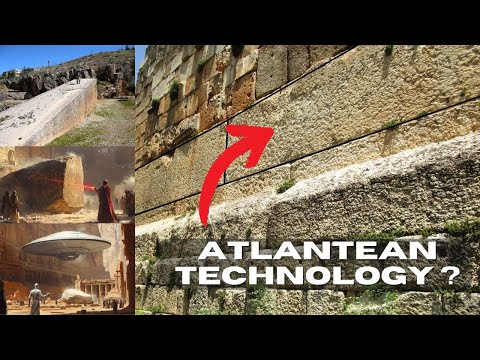
Who Built The Massive Baalbek/Heliopolis Temple Complex?
Maiorianus — a Roman-history-focused channel examines the temple complex's construction history and the competing claims made about it.
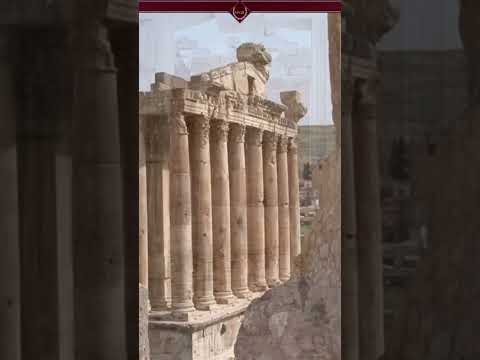
Well Preserved Roman Temple — Baalbek (Lebanon)
The SPQR Historian — a direct look at the standing temple ruins and podium wall at Baalbek.
Sources
- "Baalbek." Wikipedia. en.wikipedia.org
- "Baalbek Stones." Wikipedia. en.wikipedia.org
- "Temple of Jupiter (Baalbek)." Wikipedia. en.wikipedia.org
- Adam, Jean-Pierre. "À propos du trilithon de Baalbek: Le transport et la mise en oeuvre des mégalithes." Syria 54, no. 1/2 (1977): 31–63. persee.fr
- Adam, Jean-Pierre. Roman Building: Materials and Techniques. Bloomington: Indiana University Press, 1994.
- Kropp, Andreas J. M., and Daniel Lohmann. "'Master, look at the size of those stones! Look at the size of those buildings!' Analogies in Construction Techniques Between the Temples at Heliopolis (Baalbek) and Jerusalem." Levant 43, no. 1 (2011): 38–50. tandfonline.com
- Paturel, Simone Eid. Baalbek-Heliopolis, the Bekaa, and Berytus from 100 BCE to 400 CE: A Landscape Transformed. Leiden: Brill, 2019. Reviewed in Bryn Mawr Classical Review, 2020. bmcr.brynmawr.edu
- German Archaeological Institute (Deutsches Archäologisches Institut). "The Baalbek Project." dainst.org
- "Research team discover the world's largest ancient stone block in Baalbek." HeritageDaily, December 2014. heritagedaily.com
- "Biggest ancient stone block in Baalbek/ancient Heliopolis." Archaeology Wiki, November 2014. archaeology.wiki
- "Baalbek's Stone of the Pregnant Woman: How Was This 1000-Ton Megalith Moved?!" Ancient Origins. ancient-origins.net
- UNESCO World Heritage Centre. "Baalbek." World Heritage List, Site No. 294, inscribed 1984. whc.unesco.org
- "Baalbek." Encyclopedia Britannica. britannica.com
- "Thunderstone." Wikipedia (Thunder Stone, St. Petersburg pedestal for the Bronze Horseman, moved 1770). en.wikipedia.org
- Von Däniken, Erich. Chariots of the Gods? Unsolved Mysteries of the Past. New York: Putnam, 1968 (English translation).
- "Erich von Däniken." Wikipedia. en.wikipedia.org
- Sitchin, Zecharia. The Stairway to Heaven (Book II, The Earth Chronicles), Chapter 9: "The Landing Place." New York: Avon Books, 1980.
- Heiser, Michael S. "Transporting the Trilithon Stones of Baalbek: It's About Applied Physics, Not Ancient Aliens." Dr. Michael S. Heiser. drmsh.com
- "Baalbek." Ancient Aliens Debunked (Chris White, dir., 2012), companion research page. ancientaliensdebunked.com
- "Ancient Aliens," Season 3, Episode 3, "Aliens and Sacred Places." A&E Television Networks (History Channel), 2011 — noted here strictly as a documented cultural-impact fact of the claim's media circulation, not cited as evidentiary support.
- "Michael S. Heiser." Wikipedia. en.wikipedia.org
- "Zecharia Sitchin." Wikipedia. en.wikipedia.org
- "Temple of Jupiter, West wall, Trilithon, Baalbek." File description and licensing. Wikimedia Commons (CC BY-SA 3.0), photo by Lodo27. commons.wikimedia.org
- "Baalbek-Heliopolis, the Bekaa, and Berytus from 100 BCE to 400 CE: A Landscape Transformed" (review). Bryn Mawr Classical Review, 2020.11.35. bmcr.brynmawr.edu
See something inaccurate? Have additional information or sources?
Suggest an Edit →Last Updated: August 2026