
The Stairway to Heaven
Book II of the Earth Chronicles — The Sinai Spaceport, the Giza Beacons and Gilgamesh's Search for Immortality
Core Thesis
The Stairway to Heaven is the second volume of Zecharia Sitchin's Earth Chronicles, and where The 12th Planet established his cosmology, this book supplies the geography. Its claims are specific: that the post-Deluge Anunnaki spaceport stood on the central plain of the Sinai Peninsula; that the platform at Baalbek was the surviving pre-Deluge landing facility; that the Giza pyramids were built as landing beacons for the Sinai facility rather than by human pharaohs; and that Gilgamesh's journey in search of immortality was an attempt to reach it. Published by St. Martin's Press in 1980, the book is more testable than its predecessor because it makes claims about places — and every one of those places has been excavated.
About the Author
Zecharia Sitchin (1920–2010) built a seven-volume series and an enormous readership on a single foundation: that he could read Sumerian cuneiform and that the standard scholarly translations were wrong. Everything in the Earth Chronicles depends on that claim.
It does not survive examination, and the person who established this most thoroughly was well placed to do it. Michael S. Heiser, a scholar with a doctorate in Hebrew Bible and Semitic languages, went through Sitchin's translations against the cuneiform sources and the standard lexica and documented the errors item by item, publicly and at length.
The pattern Heiser identified is consistent rather than occasional. Sitchin renders Sumerian and Akkadian terms with meanings the lexicographical literature does not support, treats determinatives and logograms as though they carried the senses his argument requires, and builds interpretive weight on readings no Assyriologist accepts. This is not a dispute between scholars; it is a body of work resting on translations its author was not qualified to make.
Sitchin's own credentials were in economics and journalism. He described himself as one of a small number of people able to read Sumerian, and no professional Assyriologist has ever endorsed either that description or the readings built on it.
The Nibiru material from The 12th Planet also acquired a life he did not intend. It fed the 2012 doomsday industry and a continuing stream of imminent-catastrophe claims, and NASA has spent years publicly explaining that no such planet exists — an unusual afterlife for a work of speculative philology.
None of that has affected his sales. The Earth Chronicles have sold in the millions across dozens of languages and remain in print, and the audio edition linked here is a 2021 issue — forty-one years after the book first appeared and eleven after its author's death.
Historical Context & Origins
The Earth Chronicles' framework, established in the 1976 first volume, holds that the Anunnaki of Sumerian texts were inhabitants of a planet Sitchin calls Nibiru on a 3,600-year orbit, that they came to Earth roughly 450,000 years ago seeking gold, and that they engineered humanity as a labour force. This site treats that volume separately.
This second book applies the framework to specific locations, which is what makes it assessable in a way the cosmology is not. A claim about an undiscovered planet can be deferred; a claim about the Sinai plain, Baalbek and Giza runs immediately into excavation reports.
Giza is the most decisively answered. The Fourth Dynasty pyramids have quarry marks, workers' villages, administrative papyri recording the delivery of materials, tomb inscriptions of the officials who supervised construction, and a documented development sequence running from earlier mastabas through the Meidum and Dahshur pyramids. The Egyptological record of who built them and how is among the best-documented topics in ancient history.
Baalbek is the claim with the most persistent life, and this site examines it in its own ancient record file. The essential facts are that the trilithon blocks are Roman-period construction, that the very largest stones were never moved and remain in the quarry, and that the blocks actually placed are within the demonstrated range of Roman engineering.
The Sinai spaceport claim rests on identifying features of the peninsula's central plain with an installation. The Sinai has been surveyed archaeologically, its ancient sites are catalogued, and the mining and trade activity that did take place there — Egyptian turquoise extraction at Serabit el-Khadim above all — is documented.
The Gilgamesh material is where Sitchin's philology matters most directly. The epic exists in multiple recensions across a millennium and a half, its transmission is well understood, and its treatment of mortality is one of the most studied topics in ancient Near Eastern literature. Reading it as a travel account requires the translations Heiser has shown to be wrong.
The book's publication in 1980 placed it in the ancient-astronaut genre's second wave, twelve years after Chariots of the Gods. Sitchin's distinctive contribution was to claim philological authority, which von Däniken never did, and it is what gave the Earth Chronicles their air of scholarship.
Core Arguments & Key Concepts
The Anunnaki maintained a spaceport in the Sinai and Giza served as its landing beacons. The book's central claim and its most testable. It requires that the Fourth Dynasty pyramids were not built by the pharaohs the Egyptological record says built them, against quarry marks, workers' villages, administrative papyri and a documented construction sequence.
Baalbek was the surviving pre-Deluge landing platform. The claim with the longest afterlife, and the one this site addresses directly in its Baalbek trilithon file. The blocks are Roman, the largest were never moved, and those that were placed are within demonstrated Roman capability.
Gilgamesh's journey was an attempt to reach the spaceport. The literary claim, and it depends entirely on the translations. Read in the standard scholarly renderings the epic is about mortality, kingship and the limits of human aspiration; read in Sitchin's it becomes a travel narrative.
The Egyptian afterlife texts describe a route to a physical destination. The pyramid texts and mortuary literature read as instructions for reaching the Sinai facility rather than as ritual and theological material — a reading with no support in Egyptological scholarship.
The whole edifice rests on translations no Assyriologist accepts. The decisive criticism and the one that applies to every volume in the series. Michael Heiser's work documented the errors against the standard lexica item by item, and no professional in the field has defended Sitchin's readings.
Specificity is the book's distinguishing virtue and its undoing. Unlike most ancient-astronaut writing, this volume names places and makes claims that excavation can address. That is a genuinely better way to argue — and it means the claims have been addressed and have failed.
The scholarly apparatus is the persuasive mechanism, not the evidence. Sitchin's books look like scholarship: cuneiform transliterations, citations, plates, a specialist's vocabulary. Readers who cannot check the underlying philology are persuaded by the form, and the form is the argument's real work.
The flood chronology is doing structural work and cannot bear it. The book divides Anunnaki infrastructure into pre- and post-Deluge phases, which requires the flood traditions of Mesopotamia and the Hebrew Bible to record a single datable global event. The scholarly reading of those traditions — a shared Near Eastern literary inheritance developing across recensions, with local riverine flooding as the likeliest kernel — supports nothing of the kind, and without a datable Deluge the whole two-phase geography loses its organising principle.
Key Cases & Evidence Discussed
The Sinai spaceport. The claimed post-Deluge Anunnaki facility on the central plain of the Sinai Peninsula, and the surveyed archaeological record of the region against which it has to be assessed.
Baalbek as the landing platform. The Lebanese site's megalithic blocks read as pre-Deluge infrastructure, covered in this site's Baalbek trilithon file — Roman-period construction, with the largest stones still lying uncut in the quarry.
The Giza pyramids as beacons. The claim that the Fourth Dynasty monuments were built as navigation aids rather than by the pharaohs, against the quarry marks, workers' settlements, administrative papyri and documented architectural development sequence.
The Great Sphinx. Read within the same framework as part of the Giza complex's function, against the Egyptological dating and attribution.
Gilgamesh's journey. The epic's hero read as travelling toward the spaceport in pursuit of immortality — a reading dependent on Sitchin's renderings of the Akkadian.
Tilmun / Dilmun, the land of the rocket ships. The Sumerian toponym, identified in the scholarly literature with Bahrain and the Persian Gulf trade network, read here as a launch facility.
The Egyptian mortuary literature. The pyramid texts and afterlife journey material read as directions to a physical destination rather than as ritual and theological text.
The Deluge chronology. The flood traditions of Mesopotamia and the Hebrew Bible read as a datable global event dividing two phases of Anunnaki infrastructure.
Critical Reception & Controversies
The book has never been reviewed in any scholarly venue, and neither has any other volume of the Earth Chronicles. Assyriology, Egyptology and ancient Near Eastern studies do not engage with the series, and the reason is specific rather than dismissive: the translations it rests on are not renderings the field recognises.
The decisive critical work came from Michael S. Heiser, whose doctorate is in Hebrew Bible and Semitic languages. Heiser went through Sitchin's translations against the cuneiform sources and the standard lexica, documented the errors individually, and published the results in a form any reader can follow. Sitchin never answered the substance.
That exchange is worth noticing as a model. Heiser did not argue that Sitchin's conclusions were implausible; he showed, word by word, that the Sumerian and Akkadian do not say what Sitchin says they say. Where a claim rests on a translation, checking the translation is the whole of the criticism required.
The archaeological claims fail independently of the philology, which is why this volume is easier to assess than the first. Giza's construction is documented from quarry to tomb inscription; Baalbek's trilithon is Roman; the Sinai has been surveyed. None of these requires an opinion about Sumerian.
The Nibiru material's afterlife has been the series' most damaging legacy and it belongs to the first volume rather than this one. It fed the 2012 catastrophe industry and has required NASA to issue repeated public explanations that no such planet exists.
Popular reception has been enormous and undisturbed by any of this. The Earth Chronicles have sold in the millions, remain in print in many languages, and continue to appear in new formats — the edition linked here is a 2021 audio release.
The fair placement is as the most checkable volume in an unsustainable series. Read it to see what happens when an ancient-astronaut argument commits to specific locations, and read Heiser alongside it to see what happens when someone qualified checks the translations.
There is one respect in which Sitchin compares favourably with the rest of his genre, and it should be recorded because it is unusual. He committed to specifics. Von Däniken reads myths and leaves the reading unfalsifiable; Sitchin names a peninsula, a temple platform and a pyramid complex and says what each was for. That is a better way to be wrong, because it can be checked — and the reason this volume is the one to read if you are going to read any of the series is precisely that its claims collided with excavation reports rather than floating free of them.
Influence & Legacy
The Earth Chronicles created a distinct branch of the ancient-astronaut genre — one claiming philological rather than merely interpretive authority — and that claim is why Sitchin has been more durable than his competitors. A reader who cannot assess a cuneiform translation has no way to test the foundation, and the scholarly apparatus does the persuasive work.
The Anunnaki have escaped the books entirely. The term now circulates through popular culture, conspiracy discourse and the contactee literature largely detached from the Sumerian material it came from, and the meaning attached to it is Sitchin's rather than Assyriology's.
This volume's specific geography has had a long afterlife of its own. Baalbek as an ancient landing platform is still repeated in documentary television and online, and this site's Baalbek file exists partly because the claim keeps returning.
The cautionary legacy is about apparatus. A book with transliterations, citations, plates and a specialist vocabulary looks like scholarship to a reader who cannot check it, and Sitchin's series is the clearest demonstration in this library that the appearance of rigour is separable from the fact of it. The remedy is the one Heiser applied: find someone who can read the source and ask them.
It is also worth registering how the series functions for its readers, because dismissing it as credulity misses something. The Earth Chronicles offer a unified account — of human origins, of why civilisation appeared where and when it did, of what the oldest texts are describing, and of why people have always looked upward — and it is internally coherent across seven volumes. Mainstream scholarship offers nothing comparable, not because it cannot but because it does not work that way: Assyriology, Egyptology and archaeology each answer their own questions and decline to assemble a single story. The appetite Sitchin satisfies is real, and the field that could satisfy it honestly has not tried.
The Book
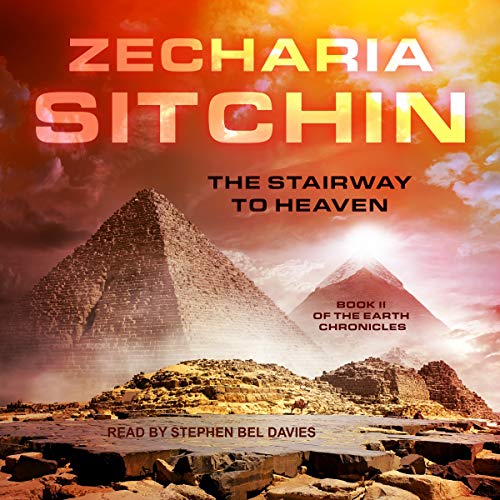
The Stairway to Heaven
Book II of the Earth Chronicles — The Sinai Spaceport, the Giza Beacons and Gilgamesh's Search for Immortality
Find on Amazon →As an Amazon Associate, OverClassified may earn from qualifying purchases made through this link, at no extra cost to you.
Why This Is Essential Reading
Read it as the volume where the claims become checkable, and read Heiser with it. The Stairway to Heaven is the most assessable book in the Earth Chronicles because it commits to places rather than to an undiscovered planet: an Anunnaki spaceport on the Sinai plain, the Baalbek platform as its pre-Deluge predecessor, the Giza pyramids as landing beacons rather than pharaonic monuments, and Gilgamesh travelling toward the facility in search of immortality. Every one of those places has been excavated, and the answers are not in dispute: Giza has quarry marks, workers' villages, administrative papyri and a documented development sequence; the Baalbek trilithon is Roman, with the largest stones still lying in the quarry; the Sinai has been surveyed. Underneath all of it sits the series' real foundation — Sitchin's claim to read Sumerian — which Michael Heiser, a Semitic-languages scholar, went through against the standard lexica and found to fail item by item. Read it with The 12th Planet and this site's Baalbek file, and take away the general rule: when an argument rests on a translation, check the translation.
Related Cases & Theories
Sources Cited
- Sitchin, Zecharia. The Stairway to Heaven: Book II of the Earth Chronicles. St. Martin's Press, 1980 (ISBN-10 0312755058); Avon Books paperback 1983; Tantor / Blackstone audio edition, March 1, 2021, ISBN-10 1665245778. amazon.com
- Internet Archive holding, The stairway to heaven by Zecharia Sitchin — the scanned text. archive.org
- Open Library work record, The Stairway to Heaven — the edition history from the 1980 St. Martin's first printing onward. openlibrary.org
- Google Books record, The Stairway to Heaven: Book II of the Earth Chronicles — bibliographic data and publisher description. books.google.com
- Goodreads edition record — the chapter list, including 'Tilmun: Land of the Rocketships', 'The Landing Place', 'The Pyramids of Gods and Kings' and 'The Gaze of the Sphinx', plus reader reception and the cover-art source. goodreads.com
- AbeBooks catalogue record, ISBN 9780312755058 — the 1980 St. Martin's Press first edition. abebooks.com
- Wikipedia, "Zecharia Sitchin" — his 1920–2010 dates, his background in economics and journalism, his claim to read Sumerian, the Earth Chronicles series and the scholarly assessment of his translations. en.wikipedia.org
- Wikipedia, "Michael S. Heiser" — the Hebrew Bible and Semitic languages scholar whose item-by-item examination of Sitchin's translations against the standard lexica is the decisive critical work on the series. en.wikipedia.org
- Wikipedia, "Anunnaki" — the Sumerian and Akkadian deities as understood in Assyriology, against the meaning Sitchin's series attached to the term. en.wikipedia.org
- Wikipedia, "Epic of Gilgamesh" — the poem's recensions, transmission history and treatment of mortality, against the travel-narrative reading. en.wikipedia.org
- Wikipedia, "Giza pyramid complex" — the Fourth Dynasty construction, the quarry marks, workers' settlements, administrative papyri and documented development sequence. en.wikipedia.org
- Wikipedia, "Baalbek" — the Lebanese site, the Roman-period trilithon and the unmoved stones remaining in the quarry. en.wikipedia.org
- Wikipedia, "Dilmun" — the Sumerian toponym identified in the scholarly literature with Bahrain and the Persian Gulf trade network, read in this book as a launch facility. en.wikipedia.org
- Wikipedia, "Nibiru cataclysm" — the doomsday industry that grew from the series' cosmology and the repeated public explanations that no such planet exists. en.wikipedia.org
Have corrections, additional research, or peer-reviewed sources? Help improve this entry.
Suggest an Edit