
The 12th Planet
Book I of The Earth Chronicles
Core Thesis
The 12th Planet, the first volume of Zecharia Sitchin's seven-book "Earth Chronicles" series, argues that Sumerian cuneiform tablets and the Hebrew Bible alike preserve a genuine historical record of contact with an advanced extraterrestrial civilization: the Anunnaki (Sitchin renders the Sumerian as "those who from heaven to earth came"), inhabitants of an undiscovered planet he calls Nibiru, whose extreme, 3,600-year elliptical orbit carries it from beyond Pluto through the inner solar system and back out again. Sitchin claims the Anunnaki first arrived on Earth roughly 450,000 years ago in search of gold to repair Nibiru's failing atmosphere, that a catastrophic collision between Nibiru and a primordial planet he calls Tiamat — an episode he reads directly out of the Babylonian creation epic Enuma Elish — produced Earth, the asteroid belt, and comets, and that the Anunnaki eventually spliced their own genetic material into Homo erectus to produce Homo sapiens, Sitchin's literalist reading of Genesis's Adam, as a slave labor force for the mines. Where Erich von Däniken's earlier Chariots of the Gods? gestured broadly at unspecified "ancient astronauts" scattered across many unrelated cultures and monuments, Sitchin claimed something far more specific, and in principle far more checkable: a direct, personally rendered translation of named Sumerian and Akkadian primary texts, presented with the authority of primary-language scholarship that the professional field actually trained in those languages has, in the nearly five decades since, not found him to possess.
About the Author
Zecharia Sitchin was born on July 11, 1920, in Baku, in what had just become the Azerbaijan Soviet Socialist Republic, and was raised from early childhood in Mandatory Palestine. He earned a degree in economic history from the University of London and, by his own account, developed fluency in modern and ancient Hebrew along with other Semitic and European languages and a working familiarity with the Old Testament and the history and archaeology of the ancient Near East. He worked as an editor and journalist in Israel before emigrating to New York in 1952, where he spent the following decades as an executive in the shipping industry. It was during this business career, not any period of academic study, that Sitchin taught himself Sumerian and Akkadian cuneiform — working from published grammars and tablet transcriptions rather than through formal coursework in Assyriology, Sumerology, biblical Hebrew, or any accredited ancient Near Eastern philology program — while visiting archaeological sites and museum collections on his own time.
That self-directed, three-decade research project culminated in 1976 with The 12th Planet, published by Stein and Day, which Sitchin described as the product of more than thirty years of study. The book became the first of seven main "Earth Chronicles" volumes released between 1976 and 2007 — The 12th Planet, The Stairway to Heaven (1980), The Wars of Gods and Men (1985), The Lost Realms (1990), When Time Began (1993), The Cosmic Code (1998), and The End of Days (2007) — alongside multiple companion volumes, including Genesis Revisited (1990), and two novels, all built on the same Anunnaki/Nibiru framework. Sitchin's final book, There Were Giants Upon the Earth: Gods, Demigods, and Human Ancestry, appeared in 2010, the year of his death.
The series sold in the millions of copies across more than twenty-five languages and built a devoted readership almost entirely outside mainstream academic and trade-publishing channels — in alternative-history, New Age, and, later, online conspiracy-research communities. That gap between academic dismissal and popular following was itself the subject of a New York Times profile, Corey Kilgannon's "Origin of the Species, From an Alien View" (January 8, 2010), published shortly before Sitchin's death, which described his continued devoted following even as it noted the near-total absence of support for his claims among professional scholars of the ancient Near East.
Sitchin died on October 9, 2010, in New York City, at age 90. In the years immediately preceding his death, as the idea of a rogue "Nibiru" colliding with Earth spread rapidly online and became fused with 2012 Maya-calendar doomsday predictions (a claim examined in detail in the Influence & Legacy section below), Sitchin explicitly and repeatedly denied any connection between his own work and those apocalyptic predictions; his own internal chronology, laid out across the Earth Chronicles books and finalized in 2007's The End of Days, placed Nibiru's most recent close pass at roughly 556 BCE, with the next one not due for centuries — a timeline flatly incompatible with the 2012 collision date attributed to him by the doomsday movement that borrowed his planet's name.
Historical Context & Origins
The 12th Planet arrived eight years into the publishing wave Erich von Däniken's 1968 Chariots of the Gods? had opened, and Sitchin positioned his own book carefully within, and against, that wave. Von Däniken's method, as this site's own Chariots of the Gods? entry documents, was impressionistic and comparative: a wide survey of monuments, artifacts, and scripture passages from many unrelated cultures, read as garbled folk-memory of unspecified visitors. Sitchin instead staked his book's authority on a single, much narrower and, on its face, more rigorous-sounding claim — that he had gone back to the actual primary texts, the Sumerian and Akkadian cuneiform tablets themselves, and translated them directly, without the intermediate layer of secondary and thirdhand sourcing that critics had already begun cataloguing in von Däniken's work by the mid-1970s.
That claim landed inside a publishing and cultural environment already primed to receive it. The 1970s New Age movement's appetite for lost civilizations and hidden histories was accelerating, and a parallel catastrophist subculture — built around Immanuel Velikovsky's earlier, separately controversial claims about planetary collisions in human historical memory — had already normalized the idea of dramatic solar-system-scale events as recoverable ancient history. Sitchin's Nibiru-Tiamat collision cosmology drew on the same catastrophist appetite Velikovsky's readership had cultivated, even though Sitchin's specific mechanism and chronology differed from Velikovsky's; later critic C. Leroy Ellenberger, a former Velikovsky collaborator turned skeptic of both writers, would go on to critique Sitchin's claims using tools sharpened on his earlier engagement with Velikovsky's work, discussed further below.
Sitchin's own account of the book's origin traces to decades of independent, self-funded research: visits to Mesopotamian archaeological sites and museum cuneiform collections, and self-directed study of Sumerian and Akkadian grammar through published academic reference works rather than through the graduate training the field itself requires. That gap between his stated method and his stated conclusions — a business executive with a University of London economics degree, working from published grammars in his own time, arriving at readings of specific tablets that directly contradict the consensus of the small, highly specialized community of professionally trained cuneiformists who had spent careers on the same texts — is not incidental biographical color; it is the central fact any reader has to weigh when evaluating the book's central evidentiary claim, and this site treats it as essential context rather than optional detail, consistent with how it treats von Däniken's own lack of relevant credentials in the entry immediately preceding this one.
Core Arguments & Key Concepts
Sitchin's cosmology begins before human history. He argues Nibiru is a former rogue planet, captured into an extreme, 3,600-year elliptical orbit that carries it from far beyond Pluto through the inner solar system on each pass. In the deep past, he claims, Nibiru catastrophically collided with a primordial planet he calls Tiamat, once orbiting between Mars and Jupiter; the collision, in his reading, split Tiamat into the fragments that became Earth, the asteroid belt (his "Hammered Bracelet"), and comets. Sitchin presents this as his own decoding of the Babylonian creation epic Enuma Elish, read not as myth but as a literal, if garbled, astronomical record composed by beings who had witnessed the event directly.
The book's central historical claim follows from that cosmology: roughly 450,000 years ago, Sitchin argues, the Anunnaki (a real term from Sumerian and Akkadian mythology, referring there to a group of deities, which Sitchin reinterprets as flesh-and-blood extraterrestrials) arrived on Earth specifically to mine gold, needed to repair Nibiru's deteriorating atmosphere. Facing a labor shortage, the Anunnaki, in Sitchin's account, genetically combined their own genetic material with that of Homo erectus to engineer Homo sapiens as a compliant mining workforce — his literalist reading of the Genesis creation of Adam, extended further to the biblical Nephilim of Genesis 6 (traditionally read as "giants" or a class of divine-human hybrids), whom Sitchin translates as "those who from the sky came down." He extends the same reading to the Sumerian King List's implausibly long pre-Flood royal reigns — individual kings credited with tens of thousands of years on the throne — treating the figures as literal evidence of Anunnaki longevity rather than, as mainstream Assyriology holds, a scribal convention using an inflated sexagesimal (base-60) numbering system to convey mythic antiquity and dynastic legitimacy rather than a literal chronology. Sitchin worked from tablets and translations tied to major excavated sites across ancient Sumer and Babylonia, including material from Nippur, the religious center whose temple archives supplied much of the Sumerian literary and lexical corpus scholars still work from today.
The book's single most-cited piece of physical "evidence" is Mesopotamian cylinder seal VA 243, held by Berlin's Vorderasiatisches Museum. Sitchin describes the seal as depicting a full solar system: a central sun surrounded by eleven smaller globes, which, plus the sun itself, he reads as twelve bodies confirming that the Sumerians already knew of an additional planet beyond Pluto. This single seal has functioned, across all seven Earth Chronicles volumes and in nearly every secondary popularization of Sitchin's work since, as the book's closest approach to direct documentary proof, in contrast to the largely textual and etymological argument surrounding it.
Running underneath these specific claims is a consistent method: Sitchin repeatedly assigns his own preferred, extraterrestrial-friendly meanings to Sumerian and Akkadian words and signs — for example, reading the cuneiform sign DIN.GIR, conventionally understood by Assyriologists as the generic determinative for "god" or "deity," as encoding a phrase historian Ronald H. Fritze characterizes Sitchin translating along the lines of "pure ones of the blazing rockets." He treats "Nibiru" itself, a real term that appears in Babylonian astronomical texts as an astronomical or astrological "crossing point" associated with the planet Jupiter (identified with the god Marduk) at a specific point in its observed cycle, as instead the proper name of his undiscovered twelfth planet. The pattern, as the Critical Reception section below documents with named specialists, is one of consistently strained philology in service of a predetermined conclusion, not an emergent reading arrived at from the primary texts themselves.
Key Cases & Evidence Discussed
This site's own Ancient Astronaut Hypothesis theory file (Theory File AAH-001) already treats The 12th Planet at length as the hypothesis's second great popularizing text after Chariots of the Gods?, walking through the Nibiru/Anunnaki narrative, Sitchin's University of London credentials versus his lack of any relevant cuneiform-language training, and the specific rejection of his translations by professional Assyriologists and Sumerologists — the same ground this entry covers in book-length detail rather than survey form.
Alexander the Great's "Flying Shields" (Ancient Record File #005) documents Sitchin, alongside von Däniken, incorporating the uncited "flying shields" claim into his own broader paleocontact narrative without ever producing an ancient citation for it — a smaller-scale example of the same evidentiary looseness this entry's Core Arguments section documents at the level of Sitchin's central cuneiform translations.
This book is the direct, book-length source of the Anunnaki/Nibiru material this site's own Chariots of the Gods? and The Cult of Alien Gods entries already reference in passing: the Chariots entry's Influence & Legacy section names Sitchin's Anunnaki mythology as one of the writers directly following the commercial and thematic path von Däniken opened, while Jason Colavito's Cult of Alien Gods, examined in this site's companion entry, traces that same Anunnaki material back through von Däniken and Pauwels and Bergier's The Morning of the Magicians to H.P. Lovecraft's invented Cthulhu Mythos — making this book the direct downstream product of exactly the literary chain that entry documents.
Critical Reception & Controversies
The response from scholars of the ancient Near East, professional astronomers, and the broader skeptical community has been immediate, sustained, and remains essentially unanimous across nearly five decades: Sitchin's Sumerian and Akkadian translations have found no support among credentialed Assyriologists and Sumerologists, and no astronomical survey has ever detected an object matching Nibiru's description. This is not a case of one interpretation among several live scholarly possibilities; it is a claim built on primary-source translation work that the small, highly specialized professional field actually trained in these languages has specifically examined and rejected.
The most sustained, specialist-level rebuttal came from Michael S. Heiser (1963–2023), who held a Ph.D. in Hebrew Bible and Semitic Languages from the University of Wisconsin–Madison (2004) and an M.A. in Ancient History from the University of Pennsylvania, and who built and maintained sitchiniswrong.com specifically to catalogue detailed, text-by-text refutations of Sitchin's work. Heiser's essay "The Myth of a 12th Planet: A Brief Analysis of Cylinder Seal VA 243" directly rebuts the book's central piece of physical evidence: he argues the seal's circular "sun" symbol does not match the consistent Mesopotamian iconographic convention for the sun, which is depicted as a circle with rays or as a six- or eight-pointed star, not as a plain undifferentiated disc; that the surrounding smaller circles read more plausibly as stars, in keeping with comparable seals (Heiser points specifically to Shamash seals bearing the Pleiades) rather than as a deliberate planetary count; and that VA 243 is, in form, a standard Mesopotamian presentation or investiture scene — a worshipper led before a seated deity, framed by a conventional, non-astronomically-precise cluster of celestial symbols — of a type well attested across hundreds of comparable seals, none of which have ever been read by professional Assyriologists as star charts. Heiser produced a multi-part video series, "Why Zecharia Sitchin Is Wrong," and appeared as an on-camera Hebrew Bible and ancient Near East specialist in Chris White's 2012 documentary Ancient Aliens Debunked. He continued rebutting Sitchin-descended claims until shortly before his own death from pancreatic cancer on February 20, 2023, including a piece responding to renewed "Nibiru" chatter after astronomers Konstantin Batygin and Michael Brown's genuine 2016 Planet Nine hypothesis — a real, evidence-based proposal for an undiscovered outer planet that shares no specific claims with Sitchin's Nibiru beyond the general idea of an undiscovered body, but that some Sitchin-influenced sources nonetheless cited as vindication.
Historian Ronald H. Fritze, professor of history at Athens State University, examined Sitchin's method at length in Invented Knowledge: False History, Fake Science and Pseudo-Religions (Reaktion Books, 2009), a broader survey of pseudohistorical and pseudoscientific claims that also covers von Däniken and Velikovsky. Fritze concluded that "Sitchin's assignment of meanings to ancient words is tendentious and frequently strained," citing as one example Sitchin's rendering of the Sumerian determinative sign DIN.GIR — conventionally translated simply as "god" or "deity" — as instead encoding a reference to "pure ones of the blazing rockets." Fritze further wrote that "when critics have checked Sitchin's references, they have found that he frequently quotes out of context or truncates his quotes" in ways that distort the underlying evidence to fit his predetermined conclusions — a methodological critique that applies as much to the book's handling of the Sumerian King List and the Enuma Elish as to its individual word-level translations.
C. Leroy Ellenberger, a former Immanuel Velikovsky collaborator who became one of Velikovsky's own most detailed critics after re-examining the underlying evidence in the early 1980s, turned the same close-reading scrutiny on Sitchin. Ellenberger highlighted a specific internal implausibility in the Nibiru chronology: Sitchin's own account has the Nephilim/Anunnaki evolving on Nibiru roughly 45 million years ahead of comparable development on Earth despite what Sitchin describes as a broadly equal starting point, even though, on Sitchin's own orbital model, Nibiru would spend well over 99 percent of its 3,600-year cycle far beyond Pluto, in conditions Ellenberger argued are radically inhospitable to the kind of accelerated biological and technological development the story requires.
The astronomical case against Nibiru's existence is independent of, and in some respects stronger than, the philological case against Sitchin's translations. NASA's Wide-field Infrared Survey Explorer (WISE), which completed an all-sky infrared survey between 2010 and 2011, found no object the size of Saturn or larger within 10,000 astronomical units of the Sun, and no object the size of Jupiter or larger within 26,000 astronomical units — a direct, published result (NASA/JPL, March 2014) incompatible with a large planet on a 3,600-year orbit that would, by definition, periodically cross the inner solar system. David Morrison, a planetary astronomer at NASA's Ames Research Center and senior scientist at the NASA Astrobiology Institute, spent years publicly rebutting Nibiru-collision questions through NASA's "Ask an Astrobiologist" service, explaining that an object massive enough and close enough to threaten Earth on such an orbit would have visibly and measurably perturbed the orbits of the known outer planets over the solar system's 4.5-billion-year history — a disturbance that has never been observed. Separately, the actual attested meaning of "Nibiru" (Neberu) in surviving Babylonian astronomical texts, including the compendium MUL.APIN, is an astronomical or astrological term for a celestial "crossing point" tied to the planet Jupiter's observed cycle and its identification with the god Marduk — not the proper name of an inhabited planet, undiscovered or otherwise.
That near-total scholarly and scientific rejection did not translate into any meaningful check on the book's commercial trajectory or cultural reach, a gap the New York Times's Corey Kilgannon captured directly in his January 2010 profile, describing Sitchin's continued devoted following even as academic specialists in the relevant fields dismissed his central claims outright. The 12th Planet remains, simultaneously, one of the most commercially successful and one of the most specifically, professionally rebutted books in the ancient-astronaut genre, and, as with this list's Chariots of the Gods? entry, both facts have to be held together to understand its place in the literature.
Influence & Legacy
The 12th Planet and its six Earth Chronicles sequels sold in the millions of copies across more than twenty-five languages, making Sitchin arguably the second most commercially and culturally influential ancient-astronaut writer after Erich von Däniken himself, and the Anunnaki/Nibiru framework the single most recognizable individual mythology the genre produced after von Däniken's own broader "ancient astronauts" umbrella term.
The book's most consequential, and most clearly unintended, downstream legacy is its role in the Nibiru-cataclysm doomsday movement. That movement did not originate with Sitchin: self-described contactee Nancy Lieder founded the ZetaTalk website in 1995 and began predicting a catastrophic close encounter with a rogue planet, a prediction she and her followers subsequently attached, without Sitchin's involvement or endorsement, to his "Nibiru" name, and which later merged with the unrelated popular panic around the 2012 end date of the Maya Long Count calendar. As documented in the About the Author section above, Sitchin explicitly and repeatedly denied any connection between his own research and these apocalyptic predictions before his 2010 death, and his own published chronology placed Nibiru's next return centuries in the future rather than in 2012 — but the borrowed name stuck regardless, illustrating how thoroughly a claim can escape even its own originator's stated limits once it enters wider circulation. The resulting panic was not merely academic: NASA's David Morrison has described receiving daily messages, some from anguished or suicidal members of the public, in the years surrounding the 2012 date, a real, documented instance of harm flowing from a claim Sitchin himself never made.
Sitchin's Anunnaki framework also fed directly into other, separately documented fringe movements. British conspiracy writer David Icke's reptilian-elite theory, developed from the early 1990s onward, draws its core Anunnaki terminology and Sumerian sourcing directly from Sitchin's books, reinterpreting Sitchin's extraterrestrial gold-miners as a still-active, shape-shifting reptilian ruling class — a transformation Sitchin himself never endorsed and that illustrates the same pattern of downstream appropriation seen in the Nibiru-cataclysm case. The Anunnaki/Nibiru material also became a recurring subject on the History Channel's Ancient Aliens franchise, which this site does not use as a source for its own case-file or theory research, consistent with its general sourcing standards, as documented in the site's Ancient Astronaut Hypothesis theory file.
Within the more specifically literary-historical account this site's own The Cult of Alien Gods entry documents, Jason Colavito places Sitchin's Anunnaki-as-astronauts reading of Sumerian myth directly downstream of the same Lovecraft-to-Bergier-and-Pauwels-to-von-Däniken transmission chain that produced Chariots of the Gods? eight years earlier — meaning The 12th Planet's core imaginative template arguably traces back, several literary generations removed, to a self-consciously invented pulp-fiction mythology rather than to any genuine ancient tradition, exactly the kind of checkable paper trail this site's own Ancient Connections archive exists to trace.
The Book
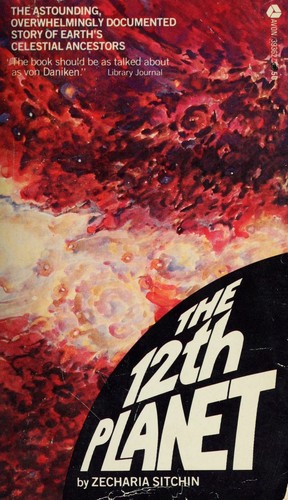
As an Amazon Associate, OverClassified may earn from qualifying purchases made through this link, at no extra cost to you.
Why This Is Essential Reading
The 12th Planet earns its place on this list as arguably the second-most influential single text in the ancient-astronaut genre, after only Chariots of the Gods? itself — and as a useful, specific counterexample to the idea that a more narrowly focused, more scholarly-sounding claim is automatically a more defensible one. Where von Däniken offered a broad, impressionistic survey, Sitchin staked his entire case on a claim that was, in principle, directly checkable against the primary Sumerian and Akkadian texts he said he had translated — and when professional Assyriologists, Sumerologists, and astronomers actually checked it, across nearly five decades and by scholars including Michael S. Heiser and Ronald H. Fritze, they found translations a small, highly specialized field considers unsupported by the source texts' actual grammar and vocabulary, a central piece of physical evidence (cylinder seal VA 243) that does not show what the book says it shows, and an astronomical claim directly contradicted by NASA's own dedicated infrared sky surveys. What makes the book essential reading, rather than merely another fringe title, is the combination of that specific, checkable, and specifically rebutted evidentiary record with the book's genuinely enormous and still-active cultural footprint — including a documented, real-world doomsday panic Sitchin himself explicitly disowned before his death. Understanding both halves of that record is necessary background for this site's own Ancient Astronaut Hypothesis theory file and its broader Ancient Connections archive, much of which exists specifically to trace individual claims this book and its six sequels popularized back to the actual, checkable sources Sitchin claimed, and professional scholarship has since found him not to have accurately rendered.
Related Cases & Theories
Essential Viewing
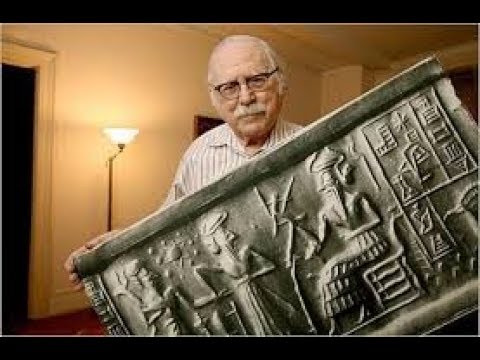
Zecharia Sitchin - Anunnaki Lecture
Forbidden-KnowledgeX — Zecharia Sitchin presenting his Anunnaki/Nibiru thesis directly in his own words — included here as the book's own promotional and public-lecture legacy rather than as an endorsement of its claims. Verified via YouTube oEmbed before inclusion.
Michael Heiser - Why Zecharia Sitchin is wrong - 1
ErikS22 (Michael S. Heiser) — The first installment of biblical scholar Michael S. Heiser's multi-part video series methodically rebutting Sitchin's Sumerian and Akkadian translation claims, part of the same sitchiniswrong.com project this entry's Critical Reception section documents in detail. Verified via YouTube oEmbed before inclusion.
Dr Michael Heiser - The Nibiru Hoax - Debunking Zecharia Sitchin & Wormwood
William Wallace (Michael S. Heiser) — A longer-form Heiser lecture debunking the Nibiru-cataclysm claims that grew out of, but were explicitly disowned by, Sitchin's own work — directly relevant to this entry's Influence & Legacy discussion of the doomsday movement Sitchin's Nibiru name was borrowed into. Verified via YouTube oEmbed before inclusion.
Sources Cited
- "Zecharia Sitchin." Wikipedia (biography, education, career, publication history, death, scholarly reception). en.wikipedia.org
- "12th Planet." Wikipedia (book's specific claims: Nibiru orbit, Tiamat collision, Anunnaki genetic-engineering claim, documented scholarly criticism of translations and sourcing). en.wikipedia.org
- "Nibiru cataclysm." Wikipedia (Nancy Lieder/ZetaTalk origin, 2012 fusion, Sitchin's own denial of the connection). en.wikipedia.org
- "Anunnaki." Wikipedia (Sumerian/Akkadian mythological background Sitchin reinterpreted). en.wikipedia.org
- "Michael S. Heiser." Wikipedia (credentials, career, death February 20, 2023). en.wikipedia.org
- Heiser, Michael S. "Zecharia Sitchin's '12th Planet' Cylinder Seal." drmsh.com (VA 243 seal rebuttal, iconographic analysis). drmsh.com
- Heiser, Michael S. "The Myth of a 12th Planet: A Brief Analysis of Cylinder Seal VA 243." sitchiniswrong.com (full detailed rebuttal PDF). sitchiniswrong.com
- Heiser, Michael S. "A New Planet Beyond Pluto? Sitchin is Still Wrong." drmsh.com (response to the genuine 2016 Planet Nine hypothesis and its Sitchin-influenced misappropriation). drmsh.com
- Fritze, Ronald H. Invented Knowledge: False History, Fake Science and Pseudo-Religions. Reaktion Books, 2009 (DIN.GIR mistranslation example, "tendentious and frequently strained" assessment, quote-truncation critique).
- "C. Leroy Ellenberger." Wikipedia (Velikovsky background, critique of Sitchin's Nibiru evolutionary chronology). en.wikipedia.org
- "NASA's WISE Survey Finds Thousands of New Stars, But No 'Planet X'." NASA/JPL, March 2014 (WISE all-sky survey results ruling out large undiscovered outer-solar-system planets). jpl.nasa.gov
- "Nibiru: The Nonexistent Planet." Space.com (David Morrison/NASA Ask an Astrobiologist rebuttals, orbital-stability physics problem). space.com
- Kilgannon, Corey. "Origin of the Species, From an Alien View." The New York Times, January 8, 2010 (profile capturing the gap between academic dismissal and devoted popular readership).
- "The 12th planet." Internet Archive / Open Library, item 12thplanet00sitc, edition record OL5210125M (bibliographic record: Stein and Day, 1976, ISBN 081281939X, 384 pp.). archive.org
- This site's own key-figures entry: Zecharia Sitchin, for his full biography and case connections.
- This site's own theory file: The Ancient Astronaut Hypothesis (Theory File AAH-001), for this book's place within the broader hypothesis this site tracks.
- This site's own essential reading entry: Chariots of the Gods?, for the earlier book that opened the publishing wave this one followed into.
- This site's own essential reading entry: The Cult of Alien Gods, for the literary-historical chain (Lovecraft → Bergier/Pauwels → von Däniken) this book's Anunnaki material descends from.
Have corrections, additional research, or peer-reviewed sources? Help improve this entry.
Suggest an Edit