
Ancient Astronaut Hypothesis (Paleocontact)
Investigating the claim that extraterrestrial visitors made contact with humanity in antiquity, influencing early religion, monument-building, and mythology long before the modern UFO era began.
Rejected by Mainstream ArchaeologyCore Thesis
Extraterrestrial visitors made contact with humanity in the distant past, and traces of that contact survive as monuments too advanced for their era, texts describing "gods" who arrived from the sky, and artifacts that could not have been built with the technology conventionally attributed to the civilizations that built them.
The Ancient Astronaut Hypothesis, also called paleocontact, holds that some or all of the "gods," sky-beings, and culture-bringing visitors described across world mythology were not supernatural figures or later invention, but extraterrestrial beings who visited Earth in antiquity and were remembered — however imperfectly — by the cultures who encountered them. Its proponents argue that a range of ancient megalithic sites, technically sophisticated artifacts, and religious texts describing flying "chariots" or "wheels" are best explained not by the conventional archaeological record but by a lost history of direct alien contact, later filtered through myth, scripture, and folk memory.
Unlike most other frameworks on this site, the Ancient Astronaut Hypothesis is not a live scientific debate with open questions on both sides — it is, by the near-unanimous judgment of professional archaeologists, historians, and linguists, a rejected fringe theory. This page documents the hypothesis, its origins, and its most commonly cited "evidence" honestly, while giving equal or greater weight to the specific, well-documented reasons the scholarly consensus rejects it. Several individual claims discussed below — the Tulli Papyrus, the Dropa Stones, the 1974 Vaimanika Shastra — have their own dedicated entries in this site's Ancient Records archive, cross-referenced throughout.
The distinction this page draws throughout — between a claim's cultural significance and its evidentiary weight — matters because the two are often conflated in popular discussion. That the Nazca Lines, Puma Punku, and Baalbek are genuinely remarkable feats of ancient engineering and art is not in dispute; professional archaeologists study, protect, and often marvel at these sites for exactly that reason. What is in dispute is the specific inferential leap the Ancient Astronaut Hypothesis makes from "remarkable" to "could not have been achieved by the people who are independently documented, through dating, tool-mark analysis, and comparative engineering, to have achieved it." That leap, examined site by site and claim by claim below, does not hold up.
Origins and Development
The hypothesis has intellectual roots earlier than its 1968 breakthrough into mass popularity. American writer Charles Fort spent decades in the early twentieth century compiling newspaper and scientific-journal reports of anomalous phenomena, cataloging thousands of unexplained events without committing to a single explanatory theory — a habit of mind later ancient-astronaut writers would draw on freely. The first fully modern, book-length ancient-astronaut argument arrived in 1960 with The Morning of the Magicians by French writers Louis Pauwels and Jacques Bergier, which wove together UFO reports, occultism, alternate history, and conspiracy theory into a single speculative framework. French author Robert Charroux followed in 1963 with One Hundred Thousand Years of Man's Unknown History, adding lost-continent claims (Atlantis, Mu, Hyperborea) to the same paleocontact thread.
It was Swiss hotel manager Erich von Däniken who took the idea to a global mass audience. His 1968 book Chariots of the Gods? sold more than 60 million copies worldwide and became the defining popular text of the hypothesis, drawing on the Tulli Papyrus, the Sanskrit vimana passages of the Mahabharata and Ramayana, Nazca Lines, Puma Punku, and dozens of other sites and artifacts as evidence of ancient extraterrestrial visitation. Von Däniken was convicted of fraud and embezzlement in Switzerland in 1970 over falsified business records predating the book's success, a fact critics have repeatedly raised alongside his later claims.
Eight years later, in 1976, American writer Zecharia Sitchin published The 12th Planet, the first of a seven-volume "Earth Chronicles" series proposing that a hidden planet called Nibiru, with an elongated 3,600-year orbit, was home to an advanced species Sitchin called the Anunnaki. Sitchin argued the Anunnaki mined gold on Earth roughly 450,000 years ago, genetically engineered early Homo erectus into a labor force, and left their history encoded in Sumerian cuneiform texts he claimed to have personally translated. Unlike von Däniken, whose background was in hospitality management, Sitchin held a University of London degree in economic history and presented himself as working directly from primary Sumerian and Akkadian sources — a claim examined in the Observer Credibility section below.
The hypothesis found a third, television-driven wave of popularity beginning March 8, 2009, when the History Channel aired a two-hour documentary special that became the ongoing series Ancient Aliens, hosted and produced by Swiss-born ufologist Giorgio A. Tsoukalos. The show, still airing seasons more than fifteen years later, reintroduced von Däniken's and Sitchin's core claims — along with many new ones — to a mass audience largely unfamiliar with the archaeological rebuttals published decades earlier, and became a byword (and internet meme, via Tsoukalos's on-camera catchphrase "aliens") for confident speculation presented as historical argument. Tsoukalos went on to found and headline AlienCon, a touring fan convention pairing the show's cast with ufology figures, further blending the hypothesis with broader UAP fandom in a way von Däniken's and Sitchin's original print-era work never had the platform to do. This site does not use Ancient Aliens or other History Channel programming as a source for case-file or theory analysis, consistent with its general sourcing standards.
Sitchin himself continued publishing within the same "Earth Chronicles" framework for over three decades after The 12th Planet, eventually completing seven main volumes plus companion works before his death in 2010, expanding the Anunnaki narrative into a comprehensive alternate history of human civilization, technology, and religion. His books found a particularly durable following outside mainstream publishing and academic channels — in the alternative-history, New Age, and later online conspiracy-research communities — a pattern common to most paleocontact literature, which has rarely been reviewed in academic archaeology or history journals but has sold in the millions through popular trade publishing.
Key Claimed Evidence
Ancient-astronaut proponents draw their case from a recurring set of sites, artifacts, and texts spanning multiple continents and millennia. The most frequently cited include:
- The Nazca Lines (Peru): Enormous geoglyphs etched into roughly 200 square miles of desert, some depicting animals and geometric shapes visible only from significant height. Proponents argue their scale and aerial-only visibility indicate they were built as landing strips or signals for aircraft.
- Puma Punku (Bolivia): Part of the Tiwanaku archaeological complex near Lake Titicaca, featuring red sandstone and andesite blocks — some over 100 tons — cut with sharp, precise right angles and interlocking joinery. Proponents argue the precision exceeds what hand tools could achieve.
- The Baghdad Battery (Iraq): A clay jar containing a copper cylinder and iron rod, dated to the Parthian or Sasanian period, discovered near Baghdad in the 1930s. Proponents argue the assembly functioned as an electrochemical battery, implying lost ancient electrical technology.
- The Piri Reis Map (Ottoman Empire, 1513): A surviving fragment of a world map compiled by Ottoman admiral Piri Reis. American college professor Charles Hapgood argued in his 1966 book Maps of the Ancient Sea Kings that its southern coastline matched an ice-free Antarctica, implying a source map predating the last ice age.
- Dogon knowledge of Sirius B (Mali): Anthropologists Marcel Griaule and Germaine Dieterlen reported in the mid-twentieth century that the Dogon people held detailed cosmological knowledge of Sirius's invisible companion star. British author Robert Temple's 1976 book The Sirius Mystery argued this knowledge could only have come from direct extraterrestrial contact.
- The Baalbek Trilithon (Lebanon): Three roughly 800-ton limestone blocks forming part of the podium of the Roman-era Temple of Jupiter, alongside an unfinished quarried block (the "Stone of the Pregnant Woman") estimated near 1,000 tons. Proponents cite ancient Sumerian references to Baalbek as a "landing place" and argue blocks of this scale could not have been quarried or moved with Roman-era technology.
- The Tulli Papyrus, Vedic vimana passages, and Ezekiel's Wheel: Textual claims covered in detail in this site's own Tulli Papyrus, Vimana, and Ezekiel's Wheel entries.
- The "Nazca mummies" (Peru, 2017): Small humanoid specimens with elongated skulls and three-fingered hands, presented to journalists and a 2017 Mexican congressional hearing by journalist Jaime Maussan as non-human remains recovered near Nazca. Their unusually recent, well-documented fate — examined below — makes them one of the clearest test cases of how ancient-astronaut claims fare under direct forensic and prosecutorial scrutiny.
- Sumerian king lists and the Anunnaki "genetic engineering" narrative: Sitchin read the ancient Sumerian King List's accounts of reigns lasting tens of thousands of years, and Mesopotamian creation myths describing the god Enki fashioning humans from clay, as garbled folk memory of literal genetic engineering performed by the Anunnaki on early hominids to create a mining workforce.
Government & Military Programs
Unlike theories centered on contemporary UAP sightings, the Ancient Astronaut Hypothesis has essentially no classified-program or intelligence-community dimension — there is no equivalent here to AARO, AATIP, or a Grusch-style whistleblower, because the claimed events are prehistoric rather than ongoing. The one recurring point of institutional contact is cultural-heritage law: national governments with jurisdiction over the theory's key sites treat unauthorized excavation, sale, or misrepresentation of archaeological material as a legal matter, not a speculative one. Peru's Ministry of Culture, which oversees both Puma Punku (jointly with Bolivia's own heritage authority) and the Nazca Lines as protected UNESCO World Heritage sites, directly investigated and forensically debunked the 2017 "Nazca mummies" through its General Directorate of Heritage, and Peruvian prosecutors pursued the matter as a case of cultural-heritage fraud. Mexico's Congress held a formal, nationally televised hearing on the same specimens in September 2023 — the closest the hypothesis has come to a government body treating a specific piece of its evidence as worthy of formal review — which concluded without any government finding supporting the specimens' extraterrestrial origin.
Skeptical Critiques & Limitations
Professional archaeology, history, and linguistics reject the Ancient Astronaut Hypothesis with a consistency rare among contested UAP-adjacent theories, for reasons that are specific and evidentiary rather than merely dismissive. Archaeologist Kenneth Feder, professor emeritus at Central Connecticut State University and author of the widely used textbook Frauds, Myths, and Mysteries: Science and Pseudoscience in Archaeology, has argued that the ancient-astronaut framework as popularized by von Däniken and later by Ancient Aliens collapses into a small number of sub-claims, each of which is either "transparently ludicrous or thoroughly falsified" once checked against the archaeological and documentary record. Feder has also identified a pattern he and other critics describe as an implicitly racial double standard in which the framework: the megalithic architecture of non-European civilizations — Egyptian, Andean, Cambodian, Rapa Nui — is repeatedly treated as too advanced to have been built without outside help, while comparably monumental European achievements, such as the Parthenon or the Colosseum, are never subjected to the same doubt.
The specific claimed-evidence sites fare no better under direct examination. Puma Punku's red sandstone and andesite blocks, radiocarbon-dated to roughly 500–600 CE as part of the Tiwanaku civilization's peak, show tool marks consistent with bronze chisels, wooden wedges, and abrasive sand — a slow, labor-intensive process, but not one requiring technology beyond the Tiwanaku's documented capabilities. The Nazca Lines were created by the simple technique of clearing a thin layer of reddish, iron-oxide-coated stones to expose the lighter clay-colored ground beneath; while many are indeed best appreciated from height, archaeologist Maria Reiche's decades of on-site study and subsequent research support ceremonial, astronomical, and water-ritual interpretations rooted in Nazca culture, not an aviation function nobody in that culture would have had a use for. The Baghdad Battery's actual function remains genuinely debated among archaeologists — most consider it more likely a container for storing papyrus or parchment scrolls, based on comparable vessels from the same region and period, with electrochemical use a minority hypothesis — but even the electrochemical reading, if correct, would represent a modest, explicable galvanic curiosity rather than evidence of any technology beyond what Parthian-era metalworkers are independently known to have possessed.
Hapgood's Piri Reis claim has been directly examined by professional cartographic historians, including Gregory McIntosh, whose analysis for the Library of Congress and other institutions concluded the disputed southern landmass is not Antarctica at all, but a distorted rendering of the South American coastline bent eastward to fit the available parchment — a standard limitation of the portolan-chart-compilation techniques Piri Reis is independently documented to have used, and consistent with contemporary Ottoman and European mapmaking conventions of the era, including inherited Terra Australis traditions, rather than evidence of a lost, pre-glacial source map. The Dogon-Sirius claim faced the most direct empirical test of any item on this list: Dutch anthropologist Walter van Beek conducted his own extended fieldwork among the Dogon beginning in 1991, specifically to verify Griaule and Dieterlen's reported astronomical knowledge, and found no one among his informants who displayed the claimed familiarity with Sirius B; van Beek's subsequent published work argues the original findings likely reflect leading questions during Griaule's own fieldwork rather than genuine indigenous tradition — Griaule himself had studied astronomy in Paris before beginning his ethnographic work in Mali. Baalbek's Trilithon, unlike Puma Punku or Nazca, is not even pre-Roman: archaeological and epigraphic evidence firmly dates the podium and its temple to the Roman period, and a joint Lebanese University/German Archaeological Institute excavation led by Jeanine Abdul Massih documented Roman lifting bosses — projecting stone knobs used to anchor ropes and pulleys — on the quarried blocks' faces, matching the orientation the stones would have had while still being moved on rollers and ramps at the adjacent quarry. The unfinished "Stone of the Pregnant Woman" itself shows exactly why the site is informative rather than mysterious: it was abandoned mid-quarrying after Roman workers apparently discovered a structural crack, direct physical evidence of a documented, fallible human quarrying process rather than a flawless lost technology.
Sitchin's Sumerian and Akkadian translations, the intellectual foundation of the Anunnaki/Nibiru claim specifically, have found essentially no support among professional Assyriologists and Sumerologists, who hold advanced training in the cuneiform languages Sitchin worked from; his readings of specific tablets as astronomical and genetic-engineering narratives are considered, in the professional linguistic literature, unsupported by the actual grammar and vocabulary of the source texts. Mainstream Assyriology instead reads the Sumerian King List's implausibly long pre-Flood reigns (tens of thousands of years for individual kings) as a scribal convention using an inflated sexagesimal (base-60) numbering system to convey mythic antiquity and legitimacy, not literal chronology, and reads Enki's clay-fashioning of humanity as origin mythology of the kind found across unrelated ancient cultures worldwide, not a garbled genetic-engineering memory specific to Mesopotamia. No planet corresponding to Nibiru has ever been observed by any astronomical survey, despite more than four decades of dedicated amateur searching following the book's publication.
The clearest modern test case is the 2017 "Nazca mummies," small humanoid specimens with elongated skulls and three-fingered hands that journalist Jaime Maussan presented to reporters and, in 2023, to Mexico's national congress as apparent non-human remains. Peru's own Ministry of Culture opened a direct investigation: Blanca Alva, director of the Ministry's General Directorate of Heritage, concluded the specimens were "most likely not pre-Hispanic" and probably not genuine archaeological heritage at all, and Peruvian prosecutors subsequently determined the bodies were "recently manufactured dolls" built from a mixture of paper and synthetic glue over a bone substructure. Peruvian archaeologist Flavio Estrada's forensic analysis went further, identifying the underlying bones as assembled from multiple different terrestrial animal species using modern synthetic adhesives, dating the construction itself to the recent past rather than any pre-Hispanic period. The case is instructive precisely because it moved past debate and into a formal government forensic and legal investigation — the same standard of scrutiny the theory's older claims (Sitchin's translations, the Baghdad Battery, the Piri Reis map) have also failed once independently examined, but compressed here into a single, recent, well-documented episode.
Theory Development Timeline
| Date | Development |
|---|---|
| Early 20th c. | American writer Charles Fort catalogs thousands of anomalous reports from scientific journals and newspapers, establishing an evidentiary style later ancient-astronaut writers would adopt without his own studied agnosticism. |
| 1960 | Louis Pauwels and Jacques Bergier publish The Morning of the Magicians in France, the first fully-formed modern statement of the paleocontact idea, blending UFOs, occultism, and alternate history. |
| 1963 | Robert Charroux publishes One Hundred Thousand Years of Man's Unknown History, adding lost-continent claims to the paleocontact framework. |
| 1966 | Charles Hapgood publishes Maps of the Ancient Sea Kings, arguing the 1513 Piri Reis map depicts an ice-free Antarctic coastline. |
| 1968 | Erich von Däniken publishes Chariots of the Gods?, which sells over 60 million copies and becomes the defining popular text of the hypothesis. |
| 1970 | Von Däniken is convicted of fraud and embezzlement in Switzerland over falsified business records predating Chariots of the Gods?'s publication. |
| 1974 | Retired NASA engineer Josef Blumrich publishes The Spaceships of Ezekiel, reinterpreting the biblical prophet's "wheel within a wheel" vision as a description of a spacecraft; see this site's Ezekiel's Wheel entry. |
| 1976 | Zecharia Sitchin publishes The 12th Planet, introducing the Anunnaki/Nibiru narrative; the same year, Robert Temple publishes The Sirius Mystery and Ronald Story publishes The Space-Gods Revealed, a direct scholarly rebuttal of von Däniken assisted by Carl Sagan, Frank Drake, and Thor Heyerdahl. |
| 1991 | Anthropologist Walter van Beek conducts original fieldwork among the Dogon of Mali and reports finding no evidence of the Sirius B knowledge central to Temple's 1976 claim. |
| 2009 | The History Channel airs the two-hour special that becomes the ongoing series Ancient Aliens, hosted and produced by Giorgio A. Tsoukalos, reintroducing the hypothesis to a mass television audience. |
| 2010 | Zecharia Sitchin dies on October 9, having published seven "Earth Chronicles" volumes. |
| 2012 | Filmmaker Chris White releases the three-hour documentary Ancient Aliens Debunked, a point-by-point critique of the History Channel series' claims. |
Theoretical Alignment
The Ancient Astronaut Hypothesis occupies a distinct position relative to this site's other frameworks: rather than proposing an explanation for present-day UAP sightings, it makes a historical claim about events allegedly occurring thousands of years in the past, evidenced by archaeology, mythology, and religious texts rather than radar returns, photographs, or witness testimony. It is, in principle, compatible with the Extraterrestrial Hypothesis — both propose a genuinely non-human, technologically advanced visiting species — but the two are evidentially independent; nothing about modern UAP reports depends on or is strengthened by paleocontact claims, and the great majority of ETH researchers who take contemporary sighting reports seriously do not endorse the ancient-astronaut evidentiary base, precisely because that evidentiary base has been so thoroughly examined and rejected by archaeologists. Where most theories on this site occupy a genuine range from "credible but unproven" to "actively disputed among credentialed researchers," the Ancient Astronaut Hypothesis is unusual in having a virtually unanimous professional verdict against its specific evidentiary claims, even among researchers otherwise open to the possibility of non-human intelligence and technology.
Sensor & Instrumentation Detection Profile
Because the hypothesis makes claims about events in the ancient past rather than an ongoing or recurring phenomenon, it generates no sensor, radar, or instrumentation predictions in the way contemporary UAP theories do. Its evidentiary claims are archaeological, textual, and radiometric (site dating) rather than electromagnetic or optical, and are addressed instead in the Material Analysis and Historical Precedents sections below.
Environmental & Geospatial Context
The hypothesis's claimed evidence spans a strikingly wide geography rather than clustering around any single region — part of its own internal logic, since a genuine global visitation pattern would be expected to leave traces across unconnected ancient cultures. Puma Punku sits on the Bolivian altiplano near Lake Titicaca, at roughly 12,800 feet elevation, part of the Tiwanaku civilization's ceremonial center. The Nazca Lines cover roughly 200 square miles of arid coastal desert in southern Peru, a preservation-friendly environment (extremely low rainfall) that is itself the mundane explanation for the geoglyphs' millennia-long survival, rather than evidence of unusual construction. The Baghdad Battery was recovered from a site near Ctesiphon, in modern Iraq, in the heart of the historical Parthian and Sasanian heartland. The Piri Reis map fragment survives in the Topkapı Palace archives in Istanbul. The Dogon homeland lies in the Bandiagara Escarpment of central Mali, a remote plateau region that made independent verification of Griaule's original claims difficult for nearly six decades until van Beek's 1991 fieldwork. Baalbek sits in Lebanon's fertile Bekaa Valley, roughly 53 miles northeast of Beirut, chosen by Roman builders precisely because the site had already been a regional cult center for the Canaanite/Phoenician storm-god Baal for centuries before Rome incorporated it — continuity of religious use across cultures being a well-documented, mundane reason for the site's monumental investment, rather than evidence of anything left behind by earlier visitors. This geographic breadth is, in practice, a double-edged feature of the theory: it makes a coordinated hoax across every site simultaneously implausible, but it equally means each claim must be evaluated entirely independently, on its own specific archaeological merits — and each one, examined that way, has an accepted conventional explanation grounded in the archaeology of its own specific culture and period.
Observer Credibility & Occupational Profile
The hypothesis's two most influential popularizers held no relevant academic training in archaeology, ancient languages, or the natural sciences their claims depend on. Erich von Däniken worked as a Swiss hotel manager before Chariots of the Gods?'s publication and holds no archaeological, historical, or scientific credentials; his 1970 fraud and embezzlement conviction, over business records predating the book, is a matter of Swiss court record rather than allegation. Zecharia Sitchin held a genuine University of London degree, but in economic history rather than Assyriology, Sumerology, or any cuneiform-language specialty; professional translators of Sumerian and Akkadian — a small, highly specialized field requiring years of dedicated graduate training — have not validated his central textual claims. Robert Temple, author of The Sirius Mystery, held a Master's degree in Oriental Studies from the University of Pennsylvania, giving him more directly relevant training than von Däniken or Sitchin, though still not in the field (astrophysics or observational astronomy) his central claim actually turns on. Charles Hapgood held a genuine academic post as a history professor at Keene State College, but his cartographic and geological claims about the Piri Reis map fall well outside his own field and have not been endorsed by professional cartographic historians.
Set against this is a body of directly relevant credentialed expertise that has examined and rejected the specific claims: Kenneth Feder, professor emeritus of archaeology at Central Connecticut State University; Walter van Beek, an anthropologist who conducted his own original fieldwork among the Dogon specifically to test Temple's claim; Gregory McIntosh, a cartographic historian who has published peer-reviewed analysis of the Piri Reis map for institutions including the Library of Congress; and the broader community of professional Assyriologists and Sumerologists who work directly with the cuneiform texts Sitchin claimed to translate. Ronald Story's 1976 rebuttal The Space-Gods Revealed was itself assisted by working astronomers and archaeologists, including Carl Sagan, Frank Drake, William Hartmann, and Thor Heyerdahl — credentialed specialists directly engaging with von Däniken's specific claims rather than dismissing them without examination. The credentials gap extends to the hypothesis's most recent high-profile promoter as well: Jaime Maussan, the journalist behind the 2017 and 2023 "Nazca mummies" presentations, trained and worked as a television journalist and news anchor in Mexico rather than in archaeology, forensic pathology, or any biological science relevant to evaluating purported non-human remains, and had separately promoted other UFO photographs and videos later shown to be hoaxes or misidentifications well before the mummies episode.
Historical Precedents & Archive Matches
Every major site or artifact cited as ancient-astronaut evidence has an independently dated, conventionally explained archaeological history that predates its adoption by paleocontact writers. Puma Punku's construction is placed within the well-documented Tiwanaku civilization's florescence, roughly 500–600 CE, via radiocarbon dating of organic material recovered from the site — a chronology developed entirely independent of any paleocontact framework. The Nazca Lines are dated, via associated pottery and site stratigraphy, to the Nazca culture of roughly 500 BCE to 500 CE, and their construction technique (clearing surface stone to expose lighter subsoil) has been experimentally replicated by archaeologists using only tools available to that culture. The Baghdad Battery's clay-jar-and-metal-cylinder design closely matches other, uncontroversial storage vessels recovered from the same Parthian/Sasanian-era sites, undermining the assumption that its function must have been exotic. The Piri Reis map's own colophon (the mapmaker's marginal notes) explicitly states it was compiled from roughly twenty earlier source charts, including some attributed to Christopher Columbus's own voyages — a documented compilation method, not a mystery requiring an unknown ancient source. Baalbek's Trilithon blocks are dated by their position within the podium of the Temple of Jupiter, a securely Roman-era structure built up through the first and second centuries CE, and by comparison with other, smaller Roman monolith-moving projects (including obelisk transports to Rome itself) that establish the general engineering capability — large labor forces, timber rollers, ramps, and rope-and-pulley systems anchored to lifting bosses — without requiring it to be exceptional or otherwise unattested.
Several of these sites also carry a modern institutional precedent worth noting: Puma Punku (as part of the wider Tiwanaku complex) and the Nazca Lines are both inscribed on UNESCO's World Heritage List, meaning their conventional archaeological chronology and cultural attribution has been formally reviewed and accepted by an international body of specialists as a condition of that designation — a level of institutional, cross-national scholarly vetting the paleocontact reading of the same sites has never undergone or requested.
Material Analysis
Physical & Material Assays: where physical material has actually been tested, the results consistently favor conventional archaeology over the paleocontact reading. Puma Punku's red sandstone and andesite blocks show tool marks under close inspection consistent with repeated percussion and abrasion by bronze-age tools, not the clean, uniform cuts a powered or laser-based cutting technology would leave; the site's H-shaped interlocking blocks, often cited as evidence of "impossible" precision, show measurable variation between supposedly identical pieces inconsistent with machine manufacture. The Baghdad Battery's copper cylinder does show evidence of acidic corrosion consistent with having held an acidic liquid (such as vinegar or wine) at some point, which is the basis for the minority electrochemical-battery hypothesis, but replica experiments producing a small voltage from the assembly do not by themselves establish the vessel's original intended purpose over the majority storage-vessel explanation, nor do they imply any use beyond a curiosity, since no corresponding wiring, electrode arrays, or any device the "battery" might have powered has ever been found at any Parthian or Sasanian site. No physical trace of Nibiru — a planet, debris field, or any astronomical signature — has been detected by any survey in the near half-century since Sitchin's claim was published. Baalbek's Trilithon blocks, when measured directly, show a level of individual dimensional variation between the three stones inconsistent with either machine cutting or a single flawless quarrying method — irregularities fully consistent with skilled but manual Roman stonecutting, and the lifting bosses documented by the Abdul Massih excavation are themselves physical, load-bearing features whose function (anchoring rope for pulley systems) is independently attested at other, smaller Roman monolith-transport sites, not a unique or unexplained design element specific to Baalbek. The 2017 Nazca specimens, when x-rayed and later dissected by Peruvian government forensic examiners, showed a composite internal structure of disarticulated animal bones bound with modern adhesive rather than an intact skeletal system of any kind, human or otherwise — a material finding fundamentally incompatible with the specimens being any organism, extraterrestrial or terrestrial, that had ever been alive in the form presented.
The Conventional Explanation Candidate
For every specific claim examined above, professional archaeology, cartography, anthropology, and linguistics offer a conventional explanation grounded in the independently documented capabilities of the specific historical culture involved — not a single unifying rebuttal, but a consistent pattern of case-by-case conventional explanation holding up under direct examination, which is itself the strongest argument against the hypothesis's core claim that these achievements exceed what their builders could plausibly have accomplished.
Beyond the site-by-site archaeology, historians of pseudoscience have also offered a candidate explanation for the hypothesis's durable popular appeal independent of its evidentiary merits: a combination of genuine wonder at real ancient achievements, unfamiliarity with the specific engineering and labor-organization techniques available to pre-modern societies, and — as Feder's racial-double-standard critique highlights — an inherited, culturally specific reluctance to credit certain ancient non-European societies with the same ingenuity routinely assumed for ancient Greece, Rome, or Egypt's own well-known pyramid-building tradition. Television formats built around confident narration and dramatic music, most visibly Ancient Aliens, compound this by presenting speculation with the same tone and pacing as settled documentary fact, without the qualifying context a peer-reviewed archaeological source would include as a matter of course.
Supporting This Hypothesis
- Numerous independent world cultures describe "gods" or beings arriving from the sky, a genuine cross-cultural pattern proponents argue is easier to explain by a shared real event than coincidence
- Some ancient engineering achievements (Puma Punku's stonework, Nazca's scale) remain genuinely impressive even under conventional explanation, and were dismissed by some early Western observers as implausible for their attributed builders — a judgment later shown to reflect observer bias rather than technical fact
- The Baghdad Battery's actual original function remains formally unresolved among archaeologists, even though the majority storage-vessel view is far better supported than the electrochemical reading
Against This Hypothesis
- Every specific site or artifact examined (Puma Punku, Nazca, the Piri Reis map, the Dogon/Sirius claim) has a conventional archaeological or cartographic explanation supported by independent dating, tool-mark analysis, or direct fieldwork
- Zecharia Sitchin's Sumerian/Akkadian translations, the theory's central textual evidence, are not supported by professional Assyriologists or Sumerologists working from the same primary texts
- No astronomical survey has ever detected Nibiru, despite more than four decades of searching following Sitchin's 1976 claim
- Erich von Däniken's 1970 fraud conviction and Charles Hapgood's, Robert Temple's, and Sitchin's own lack of relevant field credentials undermine the theory's principal sources, while directly relevant credentialed specialists (Feder, van Beek, McIntosh, professional Assyriologists) have specifically examined and rejected its core claims
- Archaeologist Kenneth Feder and others have identified a consistent pattern in which only non-European cultures' achievements are treated as requiring outside help, while comparable European monuments are not
Theoretical Assessment Profile
Six-domain evaluation of this hypothesis
Key Proponents
Erich von Däniken
Swiss hotel manager turned author whose 1968 book Chariots of the Gods? sold more than 60 million copies and defined the hypothesis for a mass audience, despite his 1970 Swiss conviction for fraud and embezzlement and his lack of any archaeological or historical credentials. He went on to publish more than 40 further books over the following decades, and later helped establish a themed visitor attraction, the "Mystery Park," in Interlaken, Switzerland, built around his central claims.
Zecharia Sitchin
Author of the seven-volume "Earth Chronicles" series beginning with The 12th Planet (1976), which introduced the Anunnaki/Nibiru narrative. Held a University of London degree in economic history, not Assyriology or Sumerology; his translations are not accepted by professional cuneiform specialists. Born in Russia and raised in Palestine, Sitchin worked for years as a journalist and editor in Israel before turning to full-time writing, giving his work a distinctive command of Hebrew and Near Eastern culture that his critics say did not extend to the specialized cuneiform philology his central claims actually required.
Giorgio A. Tsoukalos
Swiss-born ufologist and producer who has hosted the History Channel's Ancient Aliens since its March 2009 premiere, reintroducing von Däniken's and Sitchin's core claims — and many new ones — to a mass television audience across more than fifteen years of continuous broadcast. Founder of the touring AlienCon fan convention, which pairs the show's cast with broader ufology programming, extending the hypothesis's reach well beyond its original print-era audience.
Related Cases
Further Reading & Recommended Literature
Chariots of the Gods?
The book that took the paleocontact idea to a global mass audience of over 60 million readers, and the primary text every subsequent ancient-astronaut work builds on or reacts against.
The 12th Planet (Book I, Earth Chronicles)
The foundational text of the Anunnaki/Nibiru narrative, presenting Sitchin's disputed translations of Sumerian and Akkadian sources as evidence of ancient genetic engineering by extraterrestrials.
The Space-Gods Revealed
A direct, contemporaneous rebuttal of von Däniken's claims, assisted by Carl Sagan, Frank Drake, William Hartmann, and Thor Heyerdahl, and praised by Time magazine as a "much-needed refutation."
The Sirius Mystery
Argues that Dogon cosmological knowledge of Sirius B proves ancient extraterrestrial contact — the specific claim later fieldwork by anthropologist Walter van Beek was unable to corroborate, discussed in this page's Skeptical Critiques section.
Frauds, Myths, and Mysteries: Science and Pseudoscience in Archaeology
The standard university textbook treatment of pseudoarchaeology, including a direct, detailed critique of the ancient-astronaut hypothesis and the History Channel's Ancient Aliens franchise by a working professional archaeologist.
DISCLOSURE: Some links above are affiliate links. If you purchase through them, OverClassified receives a small commission at no additional cost to you. This helps support independent research.
Essential Viewing

Carving the Earth | National Geographic
National Geographic's own documentary treatment of the Nazca Lines — how they were made, and the conventional archaeological interpretations of their purpose, direct from a mainstream, non-paleocontact source.
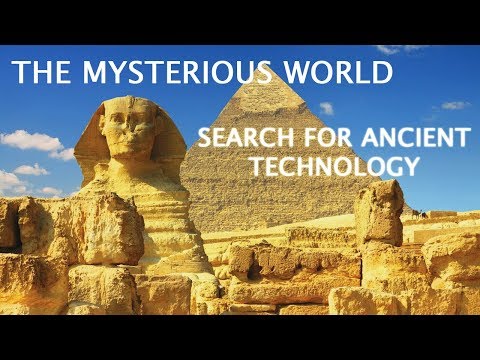
The Mysterious World — Search For Ancient Technology with Erich von Daniken
A segment from the 1980s documentary series exploring ancient-technology claims, including a direct, on-camera interview with von Däniken laying out his own case in his own words.
Sources Cited
- von Däniken, E. (1968). Chariots of the Gods? Unsolved Mysteries of the Past. Econ-Verlag / Putnam.
- Sitchin, Z. (1976). The 12th Planet. Stein and Day / Avon.
- Story, R. (1976). The Space-Gods Revealed: A Close Look at the Theories of Erich von Däniken. Harper & Row. Introduction by Carl Sagan.
- Temple, R. K. G. (1976). The Sirius Mystery. St. Martin's Press.
- Feder, K. L. Frauds, Myths, and Mysteries: Science and Pseudoscience in Archaeology. McGraw-Hill / Oxford University Press.
- Hapgood, C. H. (1966). Maps of the Ancient Sea Kings: Evidence of Advanced Civilization in the Ice Age. Chilton Books.
- Pauwels, L., & Bergier, J. (1960). Le Matin des Magiciens [The Morning of the Magicians]. Éditions Gallimard.
- Charroux, R. (1963). Histoire inconnue des hommes depuis cent mille ans [One Hundred Thousand Years of Man's Unknown History]. Éditions Robert Laffont.
- Blumrich, J. F. (1974). The Spaceships of Ezekiel. Bantam Books.
- van Beek, W. E. A. (1991). "Dogon Restudied: A Field Evaluation of the Work of Marcel Griaule." Current Anthropology, 32(2), 139–167.
- McIntosh, G. C. (2000). The Piri Reis Map of 1513. University of Georgia Press.
- "Giorgio A. Tsoukalos." Wikipedia. en.wikipedia.org
- "Ancient Aliens." Wikipedia. en.wikipedia.org
- "The Morning of the Magicians." Wikipedia. en.wikipedia.org
- "The Space Gods Revealed." Wikipedia. en.wikipedia.org
- Killgrove, K. (2015, September 3). "What Archaeologists Really Think About Ancient Aliens, Lost Colonies, And Fingerprints Of The Gods." Forbes. forbes.com
- Ohio History Connection. "Archaeologist Ken Feder Blasts the Fantasy of Ancient Astronauts at SunWatch Village Program." ohiohistory.org
- "Puma Punku." Ancient Origins. ancient-origins.net
- "Did the Dogon of Mali know about Sirius B?" Bad Archaeology. badarchaeology.com
- "Nasca Lines." National Geographic. nationalgeographic.com
- "Piri Reis Map: 1513 Chart Showing Ice-Free Antarctica?" The Archaeologist. thearchaeologist.org
- "Ancient Aliens Debunked." IMDb. imdb.com
- "Kenneth Feder." Wikipedia. en.wikipedia.org
Have corrections, additional research, or peer-reviewed sources? Help improve this entry.
Suggest an Edit