
The Sirius Mystery
New Scientific Evidence of Alien Contact 5,000 Years Ago
Core Thesis
The Sirius Mystery argues that the Dogon people of Mali, in West Africa, preserve a genuinely ancient oral tradition describing contact with amphibious extraterrestrial beings — the Nommo — who arrived from the Sirius star system and transmitted advanced cosmological and astronomical knowledge to early humans. Robert K. G. Temple's central evidentiary claim, built almost entirely on the real published ethnographic fieldwork of French anthropologists Marcel Griaule and Germaine Dieterlen, is that the Dogon possessed detailed knowledge of Sirius B, the White Dwarf companion of Sirius A — a star invisible to the naked eye, indeed to any telescope of the era in which Temple says the Dogon tradition originated, and confirmed by professional astronomy only in the 19th and 20th centuries — including its extreme density, its roughly fifty-year orbital period, and its status as the heaviest of Sirius's several described companions. Because no known pre-telescopic culture could plausibly have observed Sirius B directly, Temple concludes the knowledge must have an extraterrestrial origin, transmitted by the Nommo and preserved afterward in parallel form in the mythology of ancient Egypt (Sirius as the goddess Sopdet/Sothis, tied to Isis and the Egyptian calendar), Sumer (the fish-man culture-hero Oannes, recorded centuries later by the Babylonian priest Berossus), and classical Greece. Unlike Zecharia Sitchin's contemporaneous, self-taught cuneiform translations, Temple's book draws its authority not from a claimed original reading of primary texts but from citing, at length, genuine peer-published anthropological fieldwork — which is precisely what makes the methodological problem at its center, examined in full in this entry's Critical Reception section, a different and in some ways more instructive case study than Jason Colavito's invented-mythology critique of the wider ancient-astronaut genre: the question is not whether Temple faked his sources, but whether the sources themselves, gathered by real, credentialed field anthropologists, already contained contamination from the very 20th-century Western astronomy the book claims the Dogon could not have known.
About the Author
Robert K. G. Temple was born in the United States in 1945 and earned a degree in Oriental Studies and Sanskrit from the University of Pennsylvania — a genuine academic credential, but one in a field with no direct bearing on the anthropology of West Africa, professional astronomy, or Egyptology, the three disciplines The Sirius Mystery's central argument actually depends on. Temple worked for years as a science writer and journalist, contributing to the Sunday Times and the Guardian in Britain, serving as a science reporter for Time-Life, and writing for both Nature and New Scientist — a working journalistic familiarity with how scientific claims are reported that is not the same thing as formal training in producing or evaluating them. He has since become a Fellow of the Royal Astronomical Society and a member of the Egypt Exploration Society, the Royal Historical Society, the Institute of Classical Studies, and the Society for the Promotion of Hellenic Studies, and holds visiting academic appointments as a research fellow of the University of the Aegean in Greece and, more recently, as a visiting professor of the history and philosophy of science at Tsinghua University in Beijing, where he co-directs the Project for Historical Dating with Professor Ioannis Liritzis.
By his own account, Temple spent roughly eight years researching The Sirius Mystery before its 1976 publication by St. Martin's Press, a project that grew out of his and physicist Arthur M. Young's earlier interest in the Dogon material as an unusually specific test case for a broader ancient-astronaut hypothesis. The book became an international bestseller and Temple's best-known work, but it was not his last venture into similarly contested territory: The Genius of China (1986) surveyed early Chinese scientific and technological achievement, drawing heavily on the pioneering scholarship of Joseph Needham; The Crystal Sun (2000) argued that ancient civilizations possessed sophisticated optical lens technology far earlier than mainstream archaeology accepts; Netherworld (2002) examined the ancient Egyptian conception of the afterlife realm of the Duat; The Sphinx Mystery (2009, co-written with his wife and research partner Olivia Temple) and Egyptian Dawn (2010) both argued, contrary to Egyptological consensus, for redating the Great Sphinx and the origins of Egyptian civilization thousands of years earlier than the conventional chronology — a pattern of consistently proposing dramatically revised timelines and hidden transmissions of advanced ancient knowledge that runs through Temple's work as a whole, not just through this one book. He also wrote, produced, and presented Descent into Hell, a National Geographic Channel documentary built around Oracles of the Dead (2001), his book on the ancient Greek Necromanteion oracle site.
Temple's second edition of The Sirius Mystery, published by Destiny Books in 1998 under the expanded title New Scientific Evidence of Alien Contact 5,000 Years Ago, added new material responding to the two decades of criticism the first edition had by then attracted — criticism this entry's Critical Reception section documents in detail. In that edition Temple also wrote of what he described as "extreme and virulent hostility" toward him from unnamed security agencies, "most notably the American ones," a claim that remains entirely Temple's own and is not independently corroborated by any of the sourcing this entry draws on. He has separately and explicitly distanced himself from occult groups his book helped inspire, specifically naming the Typhonian Order (Typhonian O.T.O.), whose Sirius-focused ceremonial magic drew directly on Temple's Nommo material — an unusual instance of a nonfiction author disclaiming a religious movement built on his own research, discussed further in this entry's Influence & Legacy section.
Historical Context & Origins
The Sirius Mystery arrived in 1976, eight years into the ancient-astronaut publishing wave Erich von Däniken's 1968 Chariots of the Gods? had opened, and in the same year Zecharia Sitchin published The 12th Planet — making 1976 an unusually dense year for the genre's two most methodologically distinctive entries. Where von Däniken had offered a broad, impressionistic survey of monuments and artifacts across unrelated cultures, and Sitchin staked his case on his own self-taught reading of Sumerian and Akkadian cuneiform, Temple took a third approach: rather than translate primary texts himself or survey artifacts broadly, he built his book almost entirely around a single, narrow, and already-published body of professional anthropological fieldwork — French ethnographers Marcel Griaule and Germaine Dieterlen's decades of research among the Dogon people of the Bandiagara escarpment in what is now Mali.
That fieldwork was itself genuine and academically serious, which is precisely what gives Temple's argument its distinctive shape. Griaule, a trained astronomer as well as an ethnographer, conducted field missions among the Dogon intermittently from 1931 and then annually from 1946 until his death in 1956; Dieterlen continued the collaboration and further Dogon fieldwork for decades afterward. The core of the disputed material traces to thirty-three consecutive days of conversations in late 1946 between Griaule and a blind Dogon elder named Ogotemmêli, published first as Dieu d'eau: Entretiens avec Ogotemmêli (1948; translated into English in 1965 as Conversations with Ogotemmêli) and then, with Dieterlen, in the article "Un système soudanais de Sirius" (Journal de la Société des Africanistes, 1950) and the fuller monograph Le Renard Pâle ("The Pale Fox," 1965). These were peer-published works appearing in a respected French Africanist journal and an established ethnological institute's monograph series — not fringe or self-published material, and not, on their face, obviously comparable to the disputed self-taught cuneiform translations this site's own The 12th Planet entry documents in Zecharia Sitchin's work.
It is exactly that academic legitimacy Temple leans on. His own contribution is not new fieldwork among the Dogon — Temple, by his own account, never conducted independent ethnographic research in Mali himself — but a synthesis: taking Griaule and Dieterlen's reported Dogon cosmology at face value, then tracing what he presents as parallel, corroborating strands through ancient Egyptian religion centered on Egypt's Sirius-linked goddess Sopdet (Sothis) and her association with Isis and the flooding of the Nile, through the Sumerian fish-man culture-hero Oannes as recorded centuries later by the Hellenistic Babylonian priest Berossus, and through assorted classical Greek sources, to argue that a single ancient global tradition of contact with Sirius-originating beings survived independently across three unrelated civilizations. As this entry's Critical Reception section documents in detail, this is where the book's real vulnerability lies: not in whether Temple accurately summarized Griaule and Dieterlen's published findings, but in whether those findings themselves, however professionally gathered, actually captured an ancient, uncontaminated Dogon tradition in the first place.
Core Arguments & Key Concepts
The book's central and most quoted claim concerns Sirius B, the White Dwarf companion of the visible "Dog Star" Sirius A. Sirius B was first inferred from gravitational perturbations by the German astronomer Friedrich Bessel in 1844 and directly observed for the first time by American telescope-maker and optician Alvan Graham Clark in 1862; its true nature as an extraordinarily dense white dwarf star, packing roughly a solar mass of material into a body the size of Earth, was not established until the 1920s. Griaule and Dieterlen reported that Dogon informants described a star they called pò tolo ("digitaria star," after a small West African grain, evoking the star's minuteness and weight) as the smallest and heaviest of all stars, invisible, and orbiting the visible star Sirius (sigi tolo) once every fifty years — a period strikingly close to Sirius B's real orbital period of roughly fifty years, and a resemblance that is the genuine hook at the center of the whole controversy: it is close enough to the correct astrophysics that it demands an explanation, not close enough to be dismissed as pure coincidence, and specific enough that both Temple's extraterrestrial-contact explanation and his critics' terrestrial-transmission explanations have to reckon with it directly rather than talking past it.
Temple builds outward from that single astronomical claim into a broader mythological structure. The Dogon, per Griaule and Dieterlen's material, associate the Sirius system with the Nommo — amphibious, fish-tailed culture-bringing beings, sent to Earth (in the version Temple relies on) to civilize humanity, teach agriculture and social order, and in some tellings arrive in a vessel connected to the star system. Temple reads the Nommo as literally extraterrestrial and amphibious in a biological, not symbolic, sense, and connects them explicitly to the Sumerian Oannes — a fish-bodied being that, per Berossus's Hellenistic-era Greek-language summary of much older Babylonian tradition, emerged from the sea to teach early Mesopotamians writing, agriculture, and civilization — treating the resemblance between Nommo and Oannes as independent corroboration of a genuine shared historical event rather than, as mainstream comparative mythology holds more parsimoniously, a widespread and independently recurring narrative motif (a wise, non-human culture-bringer arriving from water or sky) documented across many unrelated mythological traditions worldwide.
The book's Egyptian material runs parallel: Temple ties Sirius's ancient prominence in Egyptian religion — the star's heliacal rising, observably tied to the annual Nile flood and used to fix the Egyptian civil calendar, and its identification with the goddess Sopdet (Sothis) and, by extension, with Isis — into the same web of claimed corroborating evidence, alongside more speculative etymological and iconographic arguments linking Egyptian, Dogon, and Sumerian symbolism. Temple additionally proposed the existence of a hypothetical third star in the system, which the Dogon material describes as emme ya ("Sorghum female"), a still-larger fourth-magnitude companion he suggested might be Sirius C. No such object has ever been confirmed by professional astronomy; a 1995 dynamical study of the Sirius system's orbital mechanics could not entirely rule out a very low-mass, undetected third companion, but found no evidence supporting one of the size or brightness Temple's reading of the Dogon material implied, and no astronomical survey since has detected it.
Running underneath all of this is a single, load-bearing methodological choice: Temple treats Griaule and Dieterlen's published Dogon material as a settled, faithfully transcribed record of an ancient and internally consistent tradition, rather than as one interpretive rendering, by a small number of researchers working primarily through one aging, but singularly forthcoming, informant, of material the Dogon themselves — as later fieldwork discussed below would show — did not present with anything like the internal consistency Temple's synthesis requires.
Key Cases & Evidence Discussed
This site's own Ancient Astronaut Hypothesis theory file (Theory File AAH-001) situates The Sirius Mystery within the broader hypothesis it tracks, alongside Chariots of the Gods? and The 12th Planet, both already covered in this site's Essential Reading library and both explicitly invoked as comparison points throughout this entry.
The book's evidentiary core is the Sigui ceremony, a major Dogon ritual cycle Griaule and Dieterlen documented as occurring roughly once every sixty years (not the fifty-year period sometimes loosely paired with the claimed Sirius B orbital period in popular retellings of Temple's thesis, a discrepancy this entry's Critical Reception section addresses directly), and the associated sigi tolo/pò tolo star lore recorded primarily through the blind elder Ogotemmêli in 1946. Understanding the book requires understanding this ceremony is the actual primary source material Temple worked from at one remove, filtered entirely through Griaule and Dieterlen's published English- and French-language accounts rather than through any original fieldwork of Temple's own.
Temple's parallel Egyptian material draws on the ancient Egyptian civil calendar's use of Sirius's heliacal rising to predict the Nile flood, and on the star's identification with the goddess Sopdet (Sothis) and Isis — genuine, well-documented features of pharaonic religion centered on Egypt, though Temple's specific claim that this Egyptian material independently corroborates an extraterrestrial Sirius-contact event, rather than simply reflecting the ordinary and well-attested ancient importance of a bright, astronomically useful star, is where his synthesis moves well past what the Egyptological evidence on its own actually establishes.
This entry's companion pieces on The 12th Planet and The Cult of Alien Gods both document, in different registers, how ancient-astronaut writers borrow authority from real scholarship — Sitchin from his own claimed command of primary cuneiform texts, and the wider genre, per Jason Colavito's research, from a traceable literary chain running back through Bergier and Pauwels to H.P. Lovecraft's self-consciously invented fiction. The Sirius Mystery represents a third, distinct pattern within that same family: borrowing authority not from a claimed personal translation and not from earlier fiction, but from genuine, peer-published anthropological fieldwork whose own reliability the professional discipline that produced it would go on to specifically re-examine and dispute, discussed in full below.
Critical Reception & Controversies
The most immediate and detailed rebuttal came from British astronomer and science writer Ian Ridpath, a member of the UK branch of the Committee for the Scientific Investigation of Claims of the Paranormal, in "Investigating the Sirius 'Mystery'" (Skeptical Inquirer, Fall 1978). Ridpath concluded that "the whole Dogon legend of Sirius and its companions are riddled with ambiguities, contradictions, and downright errors" when read literally, and catalogued specific discrepancies Temple's synthesis smooths over — including that the Dogon material Griaule and Dieterlen recorded actually describes two companions to Sirius with male and female attributes functioning as fertility symbols, not simply the single companion star Temple's popular retelling emphasizes, and that the Sigui ceremony's documented sixty-year cycle does not cleanly match the fifty-year Sirius B orbital period Temple's argument depends on. Ridpath also catalogued the specific, plausible channels by which 20th-century Western astronomical knowledge could have reached the Dogon well before Griaule and Dieterlen's fieldwork: French colonial schools operating in the Dogon region since 1907, missionary contact from the Catholic White Fathers order beginning in the 1920s, and the area's position along an established Niger River and overland trade route — all predating the period, the 1930s through 1950s, in which the disputed material was actually recorded.
Astronomer and writer Carl Sagan reached a similar conclusion in the chapter "White Dwarfs and Little Green Men," part of his 1979 book Broca's Brain: Reflections on the Romance of Science. Sagan agreed the specificity of the Sirius B material required some genuine transfer of advanced astronomical knowledge, but argued the source was terrestrial rather than extraterrestrial — that a European visitor with an interest in astronomy, at some point between the 1920s and the 1940s, when Sirius B's dense, invisible nature was a subject of real excitement in the popular scientific press, could plausibly have discussed it with Dogon interlocutors, who then wove the borrowed detail into existing indigenous star lore. Sagan also noted a specific asymmetry in the Dogon material as reported: it shows no comparable knowledge of Uranus or Neptune, both also invisible to the naked eye and both discovered by the same European astronomical tradition Temple's amphibious-visitor hypothesis would presumably have had to also transmit, a pattern more consistent with a partial, secondhand echo of a specific 20th-century magazine or lecture than with a complete inherited system of extraterrestrial astronomy.
The most consequential critique, however, came not from an outside skeptic but from within professional Africanist anthropology itself, and it goes to the heart of why this book, more than most in the ancient-astronaut genre, deserves to be read as a case study in contaminated source material rather than simple fabrication. Dutch anthropologist Walter E. A. van Beek conducted his own extended fieldwork among the Dogon starting in 1991, explicitly to test Griaule and Dieterlen's earlier findings, and published the results as "Dogon Restudied: A Field Evaluation of the Work of Marcel Griaule" in Current Anthropology, vol. 32, no. 2 (April 1991), with published comments from a panel of specialists including anthropologist Mary Douglas. Van Beek reported that Dogon informants outside the specific circle of people Griaule himself had originally worked with had never heard of sigu tolo or pò tolo at all, and that among those who had, there was no agreement on which star was even meant — some describing multiple stars, others confusing the reference with Venus. Most tellingly, van Beek reported that those informants who did know the material were explicit about where it came from: as later summarized in Michael S. Heiser's own detailed review of the case, "all agree... that they learned about the star from Griaule" himself — not the reverse. Van Beek proposed that Griaule, who had formal astronomical training from his time in Paris and a documented reputation for forceful, leading questioning of informants, may have introduced his own astronomical framework into his conversations with Ogotemmêli and then received it reflected back, a phenomenon he described as informants confabulating new material to satisfy an insistent, expert interviewer rather than reciting a preserved tradition. That is the specific, serious methodological objection this entry's task was built to represent honestly: not that the Dogon lied, and not that Griaule and Dieterlen fabricated their notes outright, but that the published anthropological record Temple treats as bedrock evidence may itself already be the product of contamination running in the opposite direction Temple's book assumes — from the 20th-century, astronomically trained French anthropologist into the tradition, not out of an ancient tradition and into 20th-century French scholarship.
Van Beek's restudy did not go unanswered within anthropology. Geneviève Calame-Griaule, Marcel Griaule's own daughter and a professional Africanist ethnologist in her own right, along with anthropologist Luc de Heusch, criticized van Beek's conclusions as methodologically and politically motivated, defending the authenticity and internal coherence of the esoteric Dogon material her father and Dieterlen had recorded. Michael S. Heiser — the same Hebrew Bible scholar this site's own The 12th Planet entry documents rebutting Zecharia Sitchin's cuneiform translations — separately reviewed Temple's book on his own site, drmsh.com, identifying a further compounding problem: the entire disputed Sirius B tradition traces to essentially one primary informant, the blind elder Ogotemmêli, during those thirty-three days of conversation in 1946, a single-source dependency Heiser judged incompatible with treating the material as representative, widely shared Dogon cultural knowledge, and one Temple's book does not meaningfully engage with or disclose to its readers.
A parallel line of critique focused on identifying the specific historical channel of transmission rather than simply asserting one existed. Astrophysicist Noah Brosch, in his 2008 book Sirius Matters (Springer), proposed that cultural transfer plausibly occurred during a French scientific expedition, led by astronomer Henri-Alexandre Deslandres, that spent roughly five weeks in Dogon territory observing the solar eclipse of April 16, 1893 — decades before Griaule and Dieterlen's own fieldwork began, giving any borrowed astronomical material ample time to be absorbed into and reworked within local oral tradition before it was recorded. Science writer James Oberg, writing in 1982, argued independently that the specific character of the reported Dogon knowledge — consistent with what an amateur with a small portable telescope and access to 1920s popular astronomy writing could plausibly relay, rather than with professional-grade precision — and researcher Philip Coppens more directly proposed Griaule himself as the likely proximate source, a conclusion van Beek's own "they learned about the star from Griaule" finding directly supports. On the physical astronomy itself, astronomers have separately noted that Sirius B has been a white dwarf, and therefore invisible to the naked eye, for far longer than any plausible timeframe for an ancient Dogon tradition; it would need to have still been a comparatively bright, easily visible red giant within the last few thousand years for an unaided-eye ancient sighting to be physically possible at all, which the star's known cooling rate rules out.
Read together, these critiques do not simply dispute Temple's interpretation, as is often the case with ancient-astronaut claims built on genuinely ambiguous evidence. They identify multiple independent, plausible, well-documented channels — colonial schools, missionaries, trade routes, a specific 1893 eclipse expedition, and Griaule's own astronomical training and leading interview style — by which 20th-century Western knowledge of Sirius B could have entered Dogon oral tradition before or during the very period it was recorded, and, in van Beek's restudy, direct testimonial evidence from Dogon informants themselves naming Griaule as their source. That combination is what separates this book's central evidentiary problem from simple, generic skepticism: it is a specific, checkable claim about the contamination of primary anthropological source data, examined by the discipline that produced that data, and found wanting on its own terms.
Influence & Legacy
The Sirius Mystery became an international bestseller and remains, alongside Chariots of the Gods? and The 12th Planet, one of the most widely recognized single texts in ancient-astronaut publishing, translated into multiple languages and reissued in an expanded second edition in 1998 that remains in print today. The Dogon-Sirius claim it popularized continues to circulate widely online and in video form decades after the book's specific evidentiary problems were documented, a durability this entry's own Essential Viewing section illustrates directly: material built around Temple's own 1998-era presentations of the thesis still circulates on YouTube alongside newer video treatments repeating the same claims with little reference to the anthropological critique examined above.
The book's most unusual downstream legacy is religious rather than literary: the Nommo material fed directly into the Sirius-centered ceremonial magic of the Typhonian Order (Typhonian O.T.O.), a magical organization descended from Aleister Crowley's Ordo Templi Orientis that built ritual practice explicitly around Sirius as a cosmic source. Temple has since publicly distanced himself from this and other "sinister cults" his research helped inspire, an unusual instance, within this site's own Essential Reading library, of a nonfiction author explicitly disclaiming a religious movement built on the back of his own book.
Within the broader ancient-astronaut and lost-civilization publishing ecosystem this site's Ancient Astronaut Hypothesis theory file tracks, The Sirius Mystery helped normalize the specific rhetorical move of citing real, credentialed academic fieldwork as the evidentiary anchor for an extraterrestrial-contact argument, a pattern later writers in the same broad tradition — including some working the Giza-correlation and Göbekli Tepe material this site's own Essential Reading library already covers — have continued to varying degrees, treating narrowly stated, genuinely peer-reviewed research as license for a much larger interpretive claim than the original researchers themselves advanced.
The Dogon material's persistence in popular culture stands in sharp contrast to its reception within the discipline that actually produced the underlying data: professional Africanist anthropology, led by Walter van Beek's 1991 restudy and the discussion it generated in Current Anthropology, treats the Sirius B tradition as, at minimum, seriously compromised by informant-researcher contamination, and Temple's book is correspondingly absent from serious archaeoastronomical or ethnographic scholarship on the Dogon published since. That gap — between a still-thriving popular legend and a specific, professionally documented finding that the legend's own primary source may have created rather than recorded it — is the single most important fact for any reader encountering this book today.
The Book
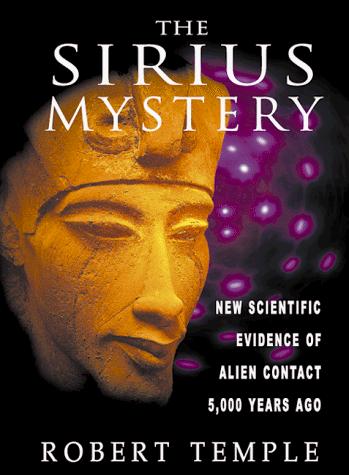
As an Amazon Associate, OverClassified may earn from qualifying purchases made through this link, at no extra cost to you.
Why This Is Essential Reading
The Sirius Mystery earns its place on this list as the ancient-astronaut genre's clearest case study in a distinct and, in some ways, more instructive failure mode than outright fabrication or self-taught mistranslation: it shows how a real, credentialed field anthropologist's own published data can become the unwitting vehicle for exactly the kind of "impossible ancient knowledge" claim that data was never designed to support. Robert Temple did not invent the Dogon's reported knowledge of Sirius B, and Griaule and Dieterlen were not charlatans; the problem, as Walter van Beek's own 1991 restudy for Current Anthropology documented directly from Dogon informants themselves, is that the chain of transmission likely ran the opposite direction from the one Temple's book assumes — from a Paris-trained, astronomically literate French ethnographer's own leading questions, through one elderly blind informant's confabulated answers across thirty-three days in 1946, into a published anthropological record Temple then treated as untouchable bedrock. Read against Ian Ridpath's catalogue of internal contradictions, Carl Sagan's terrestrial-transmission alternative, Noah Brosch's specific 1893 eclipse-expedition mechanism, and van Beek's direct testimonial evidence, this book is essential less as a reliable account of ancient extraterrestrial contact than as a demonstration of how thoroughly even genuine academic fieldwork can be compromised by the ordinary, well-documented hazards of ethnographic interviewing — and of how readily a popular-audience synthesist, working entirely at second hand from someone else's data, can build an entire cosmology on top of a methodological crack the original researchers' own professional discipline would spend the next several decades identifying and debating. Understood that way, alongside this site's own entries on The 12th Planet and The Cult of Alien Gods, it rounds out a genuinely useful trio: three different ways a claim of ancient extraterrestrial contact can borrow the appearance of scholarly authority, and three different, specifically documented ways professional scholarship has gone on to show that authority does not hold.
Related Cases & Theories
Essential Viewing
The Sirius Mystery - Robert Temple interviewed by James Whale, January 1998
Mitchell Barr — Robert Temple presenting the Sirius Mystery thesis directly in his own words around the time of the 1998 second edition — included here as the book's own promotional and public-appearance legacy rather than as an endorsement of its claims. Verified via YouTube oEmbed before inclusion.
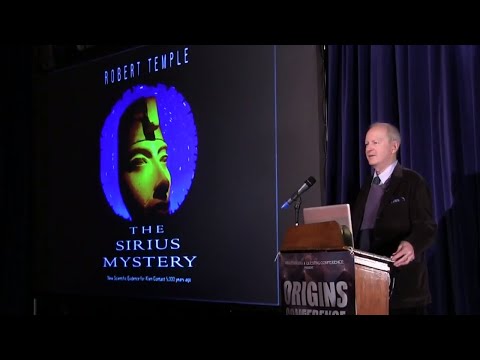
The Sirius Mystery Revisited | Prof. Robert Temple | Origins Conference
MegalithomaniaUK — A later Temple conference lecture revisiting the book's central Dogon/Sirius B/Nommo argument decades after original publication, from the same Megalithomania/Origins conference circuit this site's Andrew Collins-authored Cygnus Mystery entry also draws a verified video from. Verified via YouTube oEmbed before inclusion.
Sources Cited
- "The Sirius Mystery." Wikipedia (book's publication history, editions, claims, and documented critical reception). en.wikipedia.org
- "Robert Temple." Wikipedia (biography, controversies, second-edition claims of security-agency hostility). en.wikipedia.org
- "Dogon people." Wikipedia (Marcel Griaule and Germaine Dieterlen's fieldwork timeline, Ogotemmêli, publication history of Dieu d'eau / Le Renard Pâle, Walter van Beek's 1991 restudy and its central finding). en.wikipedia.org
- Ridpath, Ian. "Investigating the Sirius 'Mystery'." Skeptical Inquirer, Fall 1978 (contradictions in the Dogon material, colonial-school/missionary/trade-route transmission channels, Sigui ceremony period discrepancy). skepticalinquirer.org
- Sagan, Carl. "White Dwarfs and Little Green Men." In Broca's Brain: Reflections on the Romance of Science. Random House, 1979 (terrestrial-transmission argument, Uranus/Neptune knowledge-gap observation).
- van Beek, Walter E. A., et al. "Dogon Restudied: A Field Evaluation of the Work of Marcel Griaule [and Comments and Replies]." Current Anthropology, vol. 32, no. 2 (April 1991), pp. 139–167 (1991 fieldwork finding that Dogon informants outside Griaule's own circle had never heard the Sirius B tradition, and that those who had cited Griaule as their source; published comments including Mary Douglas). home.iscte-iul.pt
- Heiser, Michael S. "The Sirius Mystery: You Don't Need Columbo For This One." drmsh.com (review documenting the single-informant problem, quoting van Beek's "learned about the star from Griaule" finding). drmsh.com
- Brosch, Noah. Sirius Matters. Springer, 2008 (1893 solar eclipse expedition transmission hypothesis, Sirius B astrophysics). springer.com
- "Did the Dogon of Mali know about Sirius B?" Bad Archaeology (summary of Ian Ridpath, Carl Sagan, Robert Burnham, and Walter van Beek critiques; classification of the book as pseudoarchaeology). badarchaeology.com
- "Dogon and Sirius." The Skeptic's Dictionary, skepdic.com (summary of the contamination hypothesis and van Beek's fieldwork findings). skepdic.com
- Oberg, James. "The Sirius Mystery." debunker.com (1982 critique proposing early-20th-century European transmission via traders, missionaries, and WWI veterans). debunker.com
- "The Sirius mystery." Open Library, edition record OL5073363M (bibliographic record: St. Martin's Press, New York, 1976, 290 pp., LCCN 74083583). openlibrary.org
- "The Sirius mystery: new scientific evidence of alien contact 5,000 years ago." Open Library, edition record OL348584M (bibliographic record: Destiny Books, Rochester VT, 1998, ISBN 089281750X / 9780892817504, cover art source). openlibrary.org
- "Robert Temple." Simon & Schuster (official publisher author biography: credentials, memberships, bibliography). simonandschuster.com
- This site's own key-figures entry: Robert Temple, for his full biography and case connections.
- This site's own theory file: The Ancient Astronaut Hypothesis (Theory File AAH-001), for this book's place within the broader hypothesis this site tracks.
- This site's own essential reading entry: The 12th Planet, for the same year's parallel case of a claimed direct-translation ancient-astronaut argument and its own specific scholarly rebuttal.
- This site's own essential reading entry: The Cult of Alien Gods, for the literary-historical account of how the wider ancient-astronaut genre borrows authority from earlier sources.
Have corrections, additional research, or peer-reviewed sources? Help improve this entry.
Suggest an Edit