
The Space-Gods Revealed
A Close Look at the Theories of Erich von Däniken
Core Thesis
The Space-Gods Revealed: A Close Look at the Theories of Erich von Däniken is not a competing theory but a direct, claim-by-claim rebuttal: the first full-length book to take Erich von Däniken's ancient-astronaut argument apart site by site, photograph by photograph, using the same specific examples von Däniken himself had made famous in Chariots of the Gods? (1968) and his following books. Ronald Story, a UFO researcher and science writer rather than an archaeologist himself, assembled a foreword from Carl Sagan and contributions from working astronomers and archaeologists — SETI pioneer Frank Drake, planetary scientist William Hartmann, explorer-anthropologist Thor Heyerdahl, and archaeologist William Rathje — to work through the Piri Reis map, the Nazca Lines, the Easter Island moai, and the Palenque sarcophagus lid individually, checking each of von Däniken's specific factual assertions against the archaeological and cartographic record rather than dismissing the ancient-astronaut idea in the abstract. Published eight years after Chariots of the Gods? and in the same year as two more ancient-astronaut bestsellers it happened to appear alongside, the book's method — recruit a credentialed specialist for each disputed claim, show the reader the primary evidence von Däniken left out, and let the comparison speak for itself — became, and by most accounts remains, the standard against which every later von Däniken rebuttal is measured.
About the Author
Ronald D. Story was born February 12, 1946, in Joplin, Missouri, and spent his childhood moving between Missouri, California, and Arizona — six years in Mill Valley, California, from 1955 to 1961, then Tucson, Arizona, where his path to becoming von Däniken's most persistent early critic began not in a library or a laboratory but on stage. At twelve, inspired by Duane Eddy, Bob Bogle, and Buddy Holly, Story developed his own alternate guitar tuning to fit Holly's style; by 1963, playing lead guitar in the Tucson instrumental group the Travelers, he wrote and recorded "Spanish Moon" on his own regional label, Yellow Sand Music, with encouragement from the Beach Boys' Carl Wilson. Picked up successively by Princess Records and the nationally distributed Vault Records, "Spanish Moon" reached number one on the charts in Bakersfield, California, and number three in Tucson, and the Travelers spent part of the mid-1960s backing a singing duo who would go on to become the Righteous Brothers. After the band broke up, Story served two years in the U.S. Navy before enrolling at the University of Arizona, where he graduated with honors in 1970, having studied philosophy, anthropology, astronomy, logic, and the scientific method — the exact combination of disciplines his first book would apply to Erich von Däniken six years later.
That combination arrived at a specific moment. Von Däniken's Chariots of the Gods? had become a runaway international bestseller starting in 1968, and by the mid-1970s Story, working as an internationally published science writer, set out to do what he later said most credentialed scientists considered beneath their dignity: check von Däniken's specific claims against the specific evidence, one at a time, in print. The resulting book, The Space-Gods Revealed (1976), carried a foreword from Carl Sagan and drew contributions from astronomers and archaeologists including SETI pioneer Frank Drake, planetary scientist William Hartmann, explorer-anthropologist Thor Heyerdahl, and archaeologist William Rathje. According to artist Andy Warhol, who praised the book directly in a New York Times interview as a "sustained, book-length attack on von Däniken's theories and evidence," Sagan agreed to contribute specifically because he "was so glad someone was taking time to investigate von Däniken's contentions" — a rare instance of one of the era's most famous popularizers of science going on record in the pages of a rock-and-roll paper's book review to endorse a specialist rebuttal of a pseudoscience bestseller. On February 27, 1976, Story appeared opposite von Däniken himself in a televised debate on Detroit's The Lou Gordon Program (WKBD-TV), a confrontation Story would later cite directly, quoting von Däniken's own on-air description of the Palenque sarcophagus carving, in his own follow-up writing on the subject.
Story did not stop at the one book. In the Fall/Winter 1977 issue of The Zetetic — the journal, founded the previous year by philosopher Paul Kurtz's newly formed Committee for the Scientific Investigation of Claims of the Paranormal (CSICOP), that would shortly be renamed Skeptical Inquirer — Story published "Von Däniken's Golden Gods," a follow-up article applying the same claim-by-claim method to the Palenque astronaut, the Nazca "spaceport," the Piri Reis map, the Easter Island statues, and von Däniken's third book, The Gold of the Gods (1972), whose claimed Ecuadorian treasure caves Story traced to a fabricated account contradicted on the record by von Däniken's own named source, Juan Moricz. Story followed with a second book-length treatment, Guardians of the Universe? (St. Martin's Press, 1980), continuing the same critique of von Däniken and the broader "space-gods" genre his first book had helped define as a target. That same year, 1976, he also founded the original UFO Encyclopedia Project, which produced The Encyclopedia of UFOs (Doubleday / New English Library, 1980) and, two decades later, its successor The Encyclopedia of Extraterrestrial Encounters (New American Library, 2001) — reference works this site's own key-figures archive already credits him for, independent of this specific book.
Story's later career took an unexpected further turn. Since 1983 he has worked as a technical writer and editor for aerospace and defense contractors including Raytheon, McDonnell Douglas, Boeing, and Northrop Grumman, and served as a script consultant to Reader's Digest, CBS News, the National Geographic Society, Time-Life Books, FilmRoos, and PAX TV. Decades after publishing the first sustained rebuttal of the ancient-astronaut genre, he went on to work as a consultant on the History Channel's Ancient Aliens — the very television franchise this site's own Chariots of the Gods? entry documents as von Däniken's most durable cultural legacy — a career arc that closes an odd loop rather than contradicting his earlier work: Story's own writing, including his 1977 Zetetic article, treats von Däniken's popularity itself as a subject worth explaining honestly rather than simply dismissing. Now in his eighties and living in the Tampa Bay area of Florida, Story still performs locally on guitar with the New Travelers, more than six decades after "Spanish Moon" first charted in Bakersfield.
Historical Context & Origins
By 1976, the ancient-astronaut publishing boom Chariots of the Gods? had opened eight years earlier was at its commercial peak, and it was producing bestsellers faster than any single rebuttal could plausibly answer them. This site's own Ancient Astronaut Hypothesis theory file documents 1976 specifically as the year Zecharia Sitchin published The 12th Planet, introducing the Anunnaki/Nibiru narrative, and Robert Temple published The Sirius Mystery, arguing that Dogon cosmological knowledge of Sirius B proved ancient contact — the same year Story's rebuttal appeared. Three ancient-astronaut-adjacent books, two extending the genre and one systematically checking its factual claims, reached bookstores within months of one another; The Space-Gods Revealed was, by design, a direct response to that specific commercial moment rather than a freestanding theoretical work.
The book also landed inside the first year of organized skepticism's own modern institutional history. Paul Kurtz and colleagues founded the Committee for the Scientific Investigation of Claims of the Paranormal (CSICOP) and its journal The Zetetic in 1976, the same year Harper & Row published Story's book; Story's own follow-up article in that journal's second volume the following year situates The Space-Gods Revealed at the very beginning of what would become a decades-long, CSICOP-adjacent tradition of specialist rebuttal this site's own The Cult of Alien Gods entry traces forward through Prometheus Books, CSICOP's frequent publishing partner, nearly thirty years later.
Unlike Kenneth Feder's later academic textbook treatment or Jason Colavito's literary-history approach in The Cult of Alien Gods, Story's book was written and published in near-real time, within a decade of Chariots of the Gods?'s original release, by a science writer working outside any university appointment — closer in position to von Däniken himself, a credentialed outsider, than to the professional archaeologists he recruited to help him. That structural choice, an outsider assembling insiders rather than an insider writing alone, is itself part of what the book was responding to: Story wrote that most academicians capable of refuting von Däniken "simply thought it beneath their dignity to do so," and treated that reluctance, not merely von Däniken's own claims, as part of the problem his book needed to solve.
Core Arguments & Key Concepts
The book's central method is comparison rather than theory: for each of von Däniken's showcase claims, Story and his contributors lay out exactly what von Däniken asserted, then supply the archaeological, cartographic, or engineering context von Däniken's own books omitted. On the Palenque sarcophagus lid — the carved tomb cover of the Maya king Pacal, which von Däniken described as showing a figure "bending forward," manipulating controls with a mask over his nose and a flame like an exhaust behind him — Story's own account, published the following year in The Zetetic using the same evidence assembled for the book, walks through the glyphic record identifying the tomb's occupant and dates by name, and reorients the carving to show a composite religious design built from a cross, a two-headed serpent, and maize leaves: an object identifiable, once placed in its correct Maya religious context, as royal iconography rather than a rocket.
On the Nazca Lines, the book (again mirrored in Story's 1977 article) works through von Däniken's claim, from his book Gods from Outer Space, that the Peruvian markings were "an improvised airfield for their spacecraft," and lays out the specific physical objections: the soft desert soil could not support a landing vehicle, many of the lines run directly into hills and ridges, and the astronomer Maria Reiche's own verdict — "I'm afraid the spacemen would have gotten stuck" — is quoted directly. In its place, Story presents Paul Kosok's 1941 discovery that specific lines align with solstice sunsets, supporting a reading of the markings as a large-scale astronomical calendar, and cites contemporaneous 1975 experimental archaeology by balloonist Jim Woodman and Julian Nott, who flew a reed-and-cotton hot-air balloon called Condor I over the plain to demonstrate that the Nazca could plausibly have viewed and planned their own work from the air without any assistance at all.
On the Piri Re'is map — which von Däniken called "absolutely accurate," citing it as evidence of a coastline surveyed from orbit — the book relies on the map's own surviving 1513 marginal notes, which the Ottoman admiral and cartographer Piri Re'is signed and annotated himself, describing it as a compilation from roughly twenty earlier charts. Story catalogues the map's specific, documented errors: some 900 miles of missing South American coastline, a duplicated Amazon River, an omitted Drake Passage, and a landmass von Däniken read as Antarctica positioned roughly 4,000 miles from where Antarctica actually sits — a level of inaccuracy, Story argues, that fits comfortably within the ordinary limitations of sixteenth-century cartography and requires no orbital vantage point to explain.
On Easter Island, the book draws directly on contributor Thor Heyerdahl's own 1955–56 field expedition, during which islanders demonstrated, on camera and under observation, that the moai could be carved from volcanic tuff with basalt hand tools in as little as three days per statue, transported across sand and hard ground by teams of men pulling rope, and raised onto stone platforms using wooden levers and careful under-building — a live archaeological rebuttal to the claim that the statues' construction required outside technological assistance, delivered by the same explorer-anthropologist whose earlier Kon-Tiki and Aku-Aku expeditions had already made him one of the era's most publicly recognizable field researchers.
This site's own Vimana: The Vedic Aerial Chariots case file independently documents that the book extended the same method to von Däniken's reading of the Sanskrit vimana passages — his claim that Ramayana descriptions of Rama's flying chariot constituted textual evidence of ancient aircraft — treating it with the same source-checking rigor applied to the physical archaeological claims elsewhere in the book, rather than leaving von Däniken's literary and religious-text arguments as a separate, less scrutinized category.
Key Cases & Evidence Discussed
The Space-Gods Revealed is, by design, less a book about UFO sightings or contact cases than a book about specific archaeological and textual claims, and this site's own Chariots of the Gods? entry is its single most direct point of contact: that entry's own Critical Reception section already identifies Story's book as "the standard point-by-point refutation" of von Däniken's central claims, quoting the same Time and Isaac Asimov reviews discussed below, and names the Piri Reis map, the Nazca Lines, Easter Island, the Egyptian pyramids, and the Palenque sarcophagus as the specific claims Story's contributors worked through individually — the identical claim list this entry documents from Story's own side of the argument.
The Egyptian pyramids — among the claims the book addresses, and the site of von Däniken's own working years as a hotel-industry employee in Cairo, Egypt, as this site's Chariots of the Gods? entry documents — receive the same treatment as Story's other examples: a claim that the structures exceeded the engineering capacity of the culture that built them, checked against the actual, well-documented body of Egyptological evidence for how the pyramids were built by their own society's labor and technology.
This site's own Vimana: The Vedic Aerial Chariots case file records that Story's book directly rebutted von Däniken's reading of the Pushpaka Vimana passage from the Ramayana — the same textual misreading that file traces forward into the entirely separate, later "Vaimanika Shastra" hoax popularized by subsequent ancient-astronaut writers — making this one of the few points where Story's 1976 rebuttal and this site's own independent case-file research intersect directly on the same specific claim.
Von Däniken's third book, The Gold of the Gods (1972), and its claim to have personally toured a vast Ecuadorian treasure cave, is addressed at length in Story's 1977 follow-up article rather than confirmed as appearing in the 1976 book itself; either way it belongs to the same documented pattern of fabrication this site's own Chariots of the Gods? entry catalogues independently, including cave guide Juan Moricz's on-the-record statement to Der Spiegel that von Däniken had never entered the caves himself and that the claimed photographic evidence was "fiddled."
Critical Reception & Controversies
Contemporary reviews were largely and specifically favorable, and unusually so for a rebuttal of a book that outsold it many times over. Time magazine's R.Z. Sheppard (August 2, 1976) called it "a coherent and much-needed refutation of Von Däniken's theories," and The Atlantic's Phoebe Lou-Adams, writing the same month, credited Story with demolishing "von Däniken's notion that visitors from outer space are responsible for all human progress." Isaac Asimov's assessment, quoted on the book's own jacket copy and independently corroborated by this site's own Chariots of the Gods? entry, called it "a clear, dispassionate look at the von Däniken mythology" that "neatly demonstrates the intellectual bankruptcy of this cultish nonsense." Even artist Andy Warhol, an unlikely reviewer for a work of applied archaeology, praised it in a New York Times interview as a "sustained, book-length attack" that succeeded despite Story's own status, in Warhol's words, as merely "a college philosophy major" taking on claims most credentialed scientists had declined to engage.
Carl Sagan's own foreword is itself a documented piece of the book's critical reception rather than simple promotional material: Sagan, who separately and repeatedly argued that intelligent extraterrestrial life was scientifically plausible, used his introduction to distinguish that general possibility sharply from von Däniken's specific, evidence-thin claims, writing elsewhere of von Däniken's books that he knew "of no contemporary books that are as full of logical and factual errors." That same critique, quoted directly in this site's own Chariots of the Gods? entry, functions here as the book's own organizing premise rather than an external commentary on it.
The book's reception was not universal celebration once its author's own subsequent writing is taken into account. Story's 1977 Zetetic follow-up article closes not with a triumphant dismissal of von Däniken but with an unusually candid admission that no single list of factual corrections had actually stopped the ancient-astronaut phenomenon: von Däniken's books had by then sold roughly thirty-four million copies, more than Dr. Benjamin Spock's Baby and Child Care or Valley of the Dolls, and Story devoted a full section of that article to explaining why factually accurate rebuttal alone was proving insufficient to slow the theory's popularity — citing psychological comfort with a supernatural human origin, the cultural appeal of god-as-astronaut imagery, and simple publishing economics as forces the book's evidence-based method could document but not, by itself, overcome.
Measured against later entries in the same rebuttal tradition, The Space-Gods Revealed is narrower and more tightly focused than either Kenneth Feder's academic textbook treatment or Jason Colavito's The Cult of Alien Gods, and it does not attempt Colavito's literary-genealogy argument tracing the ancient-astronaut idea back through H.P. Lovecraft and French writers Jacques Bergier and Louis Pauwels. Its narrower scope is also its distinguishing strength: written within a decade of Chariots of the Gods?'s original publication, by contributors working the same claims von Däniken had just made famous, it reads less like a retrospective and more like a courtroom cross-examination conducted while the witness was still on the stand.
Influence & Legacy
The book's most direct legacy on this site runs through its point-by-point companion relationship with Chariots of the Gods?, which already cites it as the standard rebuttal in its own Critical Reception section; this entry completes that cross-reference from the rebuttal's own side, the same structural pairing this site's The Cult of Alien Gods entry documents for Jason Colavito's later, differently framed critique of the same publishing genre.
Story did not treat the 1976 book as a closed case. His 1977 Zetetic article extended the same method to von Däniken's third book, and his 1980 sequel Guardians of the Universe? continued the critique across a wider field of "space-gods" proponents, establishing a sustained authorial project rather than a single response — the same pattern this site's own The Cult of Alien Gods entry documents for Colavito's own multi-book career built on a single originating argument.
Story's parallel career as founder of the original UFO Encyclopedia Project, producing The Encyclopedia of UFOs (1980) and later The Encyclopedia of Extraterrestrial Encounters (2001), gave the specific skeptical, source-checking discipline this book applied to von Däniken's claims a second, much longer institutional life within ufology's own reference literature — work this site's own key-figures archive already credits him for independent of this book, built by the same author on the same underlying method.
The book's afterlife carries an irony its author has never obscured: decades after producing the first sustained rebuttal of the ancient-astronaut genre, Story went on to work as a consultant on the History Channel's Ancient Aliens, the direct televised descendant of the claims his 1976 book spent 139 pages checking against the archaeological record. That trajectory does not undercut the book's original argument so much as illustrate, from the inside, the same durability problem Story identified in his own 1977 follow-up article: a genre whose commercial appeal has repeatedly outlasted its own most careful, credentialed refutations.
The Book
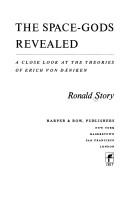
As an Amazon Associate, OverClassified may earn from qualifying purchases made through this link, at no extra cost to you.
Why This Is Essential Reading
The Space-Gods Revealed earns its place on this list as this archive's direct, necessary companion to Chariots of the Gods? — the book that entry's own Critical Reception section already names as the standard rebuttal, and the natural place this site's coverage of von Däniken's claims completes itself. Where The Cult of Alien Gods traces the ancient-astronaut idea's literary ancestry back through Lovecraft, Bergier, and Pauwels, Story's book does something narrower and, in its own way, harder: it took von Däniken's own specific, named, checkable claims — the Palenque "astronaut," the Nazca "spaceport," the Piri Reis map, the Easter Island statues — and put a credentialed specialist against each one, within a decade of the original book's publication, while the argument was still live in bookstores rather than safely historical. That it did not stop the ancient-astronaut genre from becoming a decades-running cable franchise, one its own author would later consult for, is not a failure of the book's evidence; it is exactly the gap between being right and being heard that this site's own Ancient Connections archive exists to keep documenting.
Related Cases & Theories
Essential Viewing
In Search of Ancient Astronauts (1973) | Rod Serling Carl Sagan
Reelblack One — The NBC television special that helped popularize von Däniken's claims to a mass American audience the same decade Story's book set out to rebut them, narrated by Rod Serling and featuring Carl Sagan — the same Carl Sagan who wrote this book's foreword. Verified via YouTube oEmbed before inclusion.

Piri Reis Map - What Does It Really Reveal?
FringePop321 — Biblical scholar Dr. Michael S. Heiser — independently cited in this site's own Chariots of the Gods? entry — walks through the actual documented history of the Piri Reis map, one of the specific claims this book's contributors addressed directly in 1976. Verified via YouTube oEmbed before inclusion.
Sources Cited
- Story, Ronald D. The Space-Gods Revealed: A Close Look at the Theories of Erich von Däniken. Harper & Row, 1976 (ISBN-13 9780060141417, hardcover, foreword by Carl Sagan, contributions from Frank Drake, William Hartmann, Thor Heyerdahl, and William Rathje). amazon.com
- "The Space Gods Revealed." Wikipedia (publication data, foreword, contributor list, contemporary review quotations). en.wikipedia.org
- Story, Ronald D. "Von Däniken's Golden Gods." The Zetetic (later Skeptical Inquirer), Vol. 2, Fall/Winter 1977, pp. 22–35 (Story's own follow-up claim-by-claim critique of the Palenque sarcophagus, Nazca Lines, Piri Reis map, Easter Island statues, and The Gold of the Gods). skepticalinquirer.org
- "Ronald Story." UFO Evidence (researcher biography: University of Arizona education, script-consulting career, UFO Encyclopedia Project). ufoevidence.org
- "Ron Story." The Travelers (official band history site: music career, "Spanish Moon," Navy service, University of Arizona, later life). thetravelers.wixsite.com
- "Ronald D. Story." Goodreads (author biography: birth date and place, bibliography). goodreads.com
- "Ronald Story: books, biography, latest update." Amazon.com (author page: bibliography, music career, UFO Encyclopedia Project, Ancient Aliens consulting). amazon.com
- "The Space-Gods Revealed." AbeBooks (bibliographic record, ISBN 9780060141417, Harper & Row, 1976). abebooks.com
- "Guardians of the Universe?" Internet Archive (bibliographic record for Story's 1980 sequel critique). archive.org
- "Erich von Däniken." Wikipedia (biography, 1970 fraud conviction, Chariots of the Gods? publication history, later career). en.wikipedia.org
- "Chariots of the Gods?" Wikipedia (publication history, core claims, sales figures this book responds to). en.wikipedia.org
- This site's own essential reading entry: Chariots of the Gods?, the von Däniken book this one directly and systematically rebuts.
- This site's own essential reading entry: The Cult of Alien Gods, Jason Colavito's later literary-history companion to this same rebuttal tradition.
- This site's own case file: Vimana: The Vedic Aerial Chariots, which independently documents this book's rebuttal of von Däniken's Sanskrit vimana reading.
- This site's own theory file: The Ancient Astronaut Hypothesis (AAH-001), which situates this book within 1976's broader ancient-astronaut publishing boom.
- This site's own key-figures entry: Ronald D. Story, for his broader career and other case connections.
- This site's own resources library: Full Reading List, where this title was previously cited via its Vimana case-file backlink.
Have corrections, additional research, or peer-reviewed sources? Help improve this entry.
Suggest an Edit