
The Kecksburg Incident
At about 4:44 PM EST on December 9, 1965, a brilliant fireball crossed the sky over southern Ontario, Michigan, Ohio and Pennsylvania. People in the village of Kecksburg, about 30 miles southeast of Pittsburgh, reported that something had come down in the woods, and State Police and military personnel searched the area that evening. Officially nothing was found, and astronomers identified the fireball as a meteor whose path ended over western Lake Erie. Decades later, local witnesses described an acorn-shaped object with "hieroglyphic" markings and its removal on an Army flatbed truck. A NASA statement attributing fragments to a Soviet satellite, the loss of NASA records, and a FOIA lawsuit kept the case alive. It is often called "Pennsylvania's Roswell."
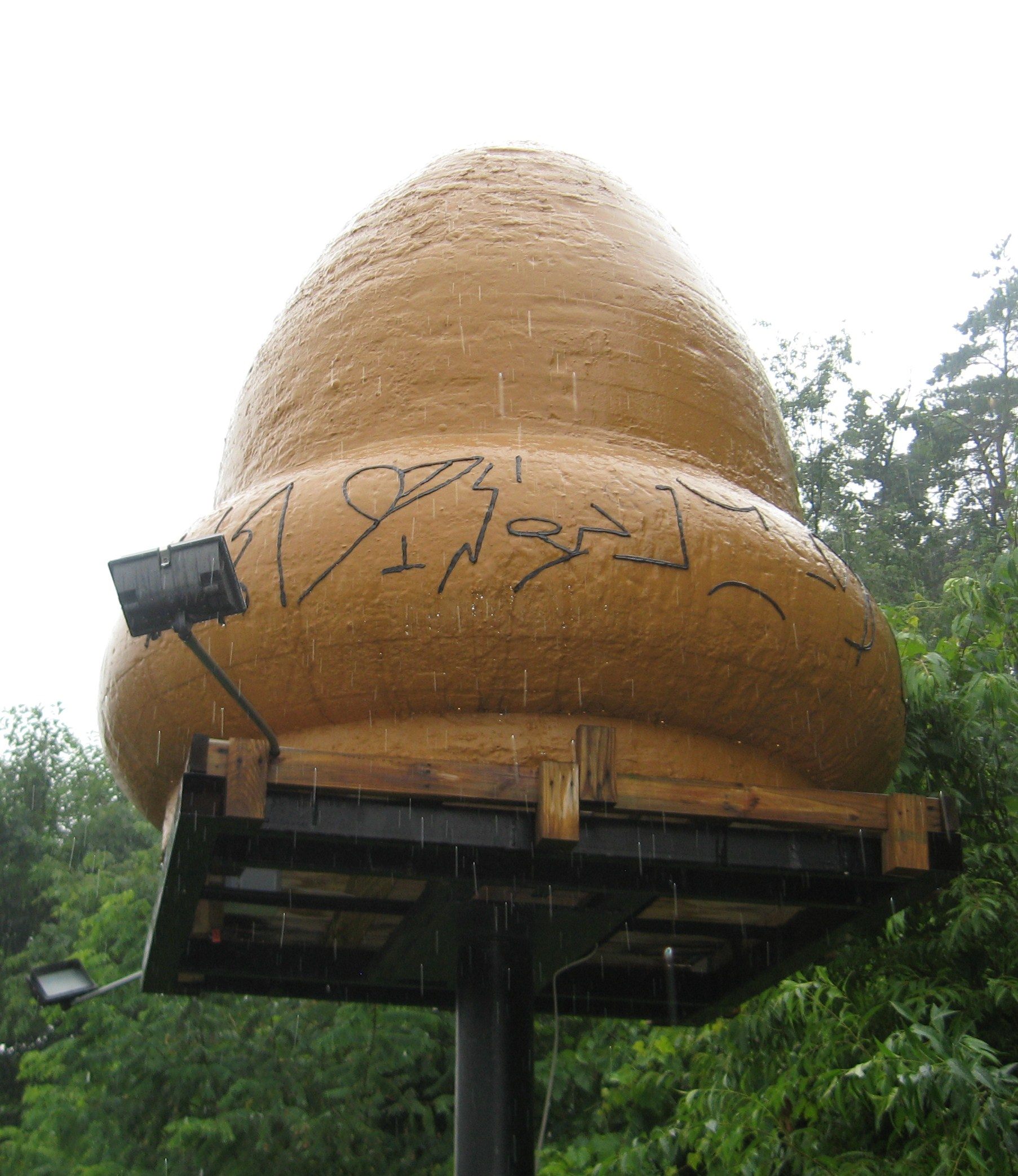
Pictured: the "Space Acorn," a permanently installed, life-size replica of the acorn-shaped object described by witnesses, on public display in the town of Kecksburg, Pennsylvania. This is not a photograph of the actual object recovered from the ravine on December 9, 1965 — the U.S. Army cordoned off and removed whatever came down there under classified conditions before any known photograph of it could be taken.
Theoretical Alignment
The Kecksburg incident sits between two very different stories. One is the documented fireball of December 9, 1965: a bright bolide photographed from the Detroit area, recorded on a seismograph, reported by 23 aircraft pilots and studied in the Journal of the Royal Astronomical Society of Canada. The other is the account built from local testimony, much of it first recorded in the 1980s and 1990s. In it, an acorn-shaped object with a band of strange symbols lay in a ravine near Kecksburg and was removed on a military truck. The extraterrestrial and secret-hardware alignments rest entirely on the second story. Proponents argue that no known spacecraft of 1965 looked like the acorn. Skeptics answer that the acorn itself first appears in accounts given decades later, and that the fireball's measured path did not reach Pennsylvania.
Background: The Fireball in the Twilight
On Thursday, December 9, 1965, at about 4:43–4:44 PM EST, a large, brilliant fireball streaked over the Detroit–Windsor area. It was reported from Ontario and at least six U.S. states. The Federal Aviation Administration received 23 reports from aircraft pilots beginning at 4:44 PM, and a seismograph about 25 miles southwest of Detroit recorded its shock wave (Sky & Telescope, February 1966). Reports of hot metal debris in Michigan and northern Ohio, small grass fires, and sonic booms in the Pittsburgh area were attributed to it. Astronomers interviewed at the time, among them Paul Annear, George Wetherill, William Bidelman and Fred Hess, called it a meteor or bolide. The Defense Department said first reports indicated a natural phenomenon (AP, December 10, 1965). In 1967 astronomers Von Del Chamberlain and David J. Krause triangulated the trail from two photographs taken north of Detroit, and timed its passage from the seismograph record at 4:43 PM. They concluded that the fireball was descending steeply from the southwest toward the northeast and probably ended near the northwestern shore of Lake Erie, near Windsor (JRASC 61, 1967, pp. 184–190).
In Kecksburg, a village in Mount Pleasant Township, Westmoreland County, about 30 miles southeast of Pittsburgh, some residents reported wisps of blue smoke, vibrations, a "thump," and something from the sky coming down in the woods. Greensburg Tribune-Review reporter Robert Gatty interviewed an eight-year-old boy who said he saw the object fall, and his mother, Mrs. Arnold Kalp (Frances Kalp). She saw blue smoke rising and alerted the authorities. WHJB radio news director John Murphy also went to the scene. Gatty's December 10 story, headlined "Unidentified Flying Object Report Touches off Probe near Kecksburg," reported that the area had been sealed off on the order of U.S. Army and State Police officials, and that he had been denied access by order of the Army. Later editions and other papers ran "Searchers Fail to Find Object" (Kean 2005; Tribune-Review via CFi).
Complete Timeline
| Date | Event |
|---|---|
| Dec 9, 1965 — ~4:43–4:47 PM | A bright fireball is seen over the Detroit–Windsor area and across several states and Ontario; 23 pilots report it, and a seismograph near Detroit records its shock wave. The Greater Pittsburgh Airport tower reports an object in the sky at "13 minutes before 5" (Murphy's broadcast, per Kean 2005). In Kecksburg, Mrs. Arnold (Frances) Kalp and her son report something falling into the woods. |
| Dec 9, 1965 — evening | State Police, firemen and reporters gather; State Police Fire Marshal Carl Metz and another investigator search the woods with a Geiger counter. John Murphy of WHJB records interviews. The Tribune-Review reports the area sealed off on the order of Army and State Police officials. |
| Dec 9–10, 1965 | Per the Project Blue Book file, a "three man team" from the 662nd Radar Squadron at Oakdale is sent "to investigate and pick up an object that started a fire"; the searchers find nothing and stop at about 2 AM. Officials announce that nothing was found. |
| Dec 10–11, 1965 | AP and other papers report that "state troopers and Air Force personnel tramped through the area for hours with Geiger counters" and found nothing. Astronomers describe the fireball as a meteor. |
| Dec 1965 | Murphy airs his radio documentary Object in the Woods; by later accounts, some interviewees asked to be removed and some tapes were taken by visitors in plain clothes. He dies in 1969. |
| 1967 | Chamberlain and Krause's trajectory study in JRASC places the fireball's end near the northwestern shore of Lake Erie. |
| 1980s–1990 | Researcher Stan Gordon gathers witness accounts; James Romansky takes Gordon to the site in 1987, and Bill Bulebush comes forward in 1988. NBC's Unsolved Mysteries airs the "acorn" story in 1990; its prop acorn later goes on display in the village. |
| 2003 | The Sci Fi Channel documentary The New Roswell: Kecksburg Exposed airs. On December 9, Leslie Kean, with the Coalition for Freedom of Information (CFi), sues NASA under FOIA. |
| Dec 2005 | NASA states that experts examined fragments from the area and found them to be from a Soviet satellite, but that the records had been lost in the 1980s. |
| Oct 26, 2007 | Under court order, NASA agrees to search again for Kecksburg records; its FOIA public liaison officer testifies that two boxes of papers from the period are missing. |
| 2015 | Researchers John Ventre and Owen Eichler propose that the object was a General Electric Mark 2 re-entry vehicle (Pittsburgh Post-Gazette, December 6, 2015). |
Detailed Narrative
The Landing in the Woods
The descriptions of an object on the ground come from people who say they reached the wooded ravine before or around the time the authorities did. They were recorded years later, mostly by Pennsylvania researcher Stan Gordon from the late 1980s onward, and are summarized in Leslie Kean's 2005 article for the International UFO Reporter.
Bill Bulebush said he was working on his car in nearby Mammoth when he saw the object "hesitate and make a turn" before descending into the woods. He told Gordon in 1988 that he had then approached it at close range. James Romansky, a volunteer fireman, described "a bronze-colored, acorn-shaped object with no windows, doors, or seams, partially buried in a gully." He put it at about 10–12 feet tall, "large enough for a man to stand up in," and 8–12 feet across, with "strange symbols that looked like Egyptian hieroglyphics" on its back or "bumper area." He said he stayed with a group of firemen until "two men in trench coats followed by uniformed military" ordered them out. In August 1987 he was the first witness to take Gordon to the site (Kean 2005).
Police, Military and the Search
The 1965 record of the search is thinner than later accounts. Murphy's own broadcast, as Kean summarizes it, says that at 8:30 PM he saw State Police Fire Marshal Carl Metz and another investigator go into the woods with a Geiger counter and a flashlight and come back about 16 minutes later. Asked whether he had found anything, Metz "looked puzzled for a second and said, I'm not sure," and told Murphy he had better get his information from the Army. An official statement then said there was "nothing whatsoever in the woods." Murphy also said a state police officer told him, "We got something out there... It's blue and it's pulsating." Years later, former Greensburg police dispatcher Howard Burns told Gordon that Metz had said in the early 1980s that he had seen an object "like no object he had ever seen before." That is hearsay; Metz himself never said so publicly (Kean 2005).
The only official record found is the Project Blue Book file. A handwritten memo says a "three man team" was sent from Oakdale, Pennsylvania, "to investigate and pick up an object that started a fire." The file says members of the 662nd Radar Squadron searched until 2 AM and found nothing, and an officer at Oakdale, James Cashman, later phoned Blue Book to report that nothing had been found. The 662nd's historical record for December 1965 was released to Gordon and to CFi (Kean 2005). Later witnesses, including fireman Bob Bitner, John Hays (then a boy whose parents' house was used by officials) and jazz musician Jerry Betters, described military trucks going in and out, and some described a large object on a flatbed truck leaving that night. Claims on an earlier version of this page could not be traced to any source, and have been removed. They included missing State Police and Oakdale logs, erased telephone billing records, a "Captain Maurand," lead shielding, untraceable crane rentals, and a stop at Lockbourne AFB.
John Murphy and Object in the Woods
Murphy, WHJB's news director, reached the scene early. His former wife, Bonnie Milslagle, and WHJB office manager Mabel Mazza later said he had photographed the object. Milslagle recalled him saying "some of the film had been confiscated. But he'd gotten one roll through," and Mazza said she saw one dark picture of "a sort of a cone-like thing." Murphy prepared a radio documentary, Object in the Woods, with interviews recorded that night. WHJB employee Linda Foschia recalled that after a visit from authorities in plain clothes some of his tapes were confiscated. Murphy aired a shortened version, explaining on air that some interviewees had asked to be removed for fear of trouble with the police and the Army (Kean 2005). Murphy died in 1969. Later retellings say he was killed by a hit-and-run driver in California while writing about the case; those details have not been verified here. The "Men in Black" visit at his home and the missing files are later embellishments of the Foschia account.
Leslie Kean's FOIA Lawsuit (2003–2007)
In 2002–2003 the Sci Fi Channel funded an effort, led by journalist Leslie Kean and the Coalition for Freedom of Information (CFi), to obtain government records on Kecksburg. Larry Landsman of Sci Fi directed it, the law firm Lobel, Novins & Lamont handled the legal work, and former White House chief of staff John Podesta spoke at its press conferences. After NASA released only 36 pages that CFi considered unresponsive, Kean filed suit in the U.S. District Court for the District of Columbia on December 9, 2003, the incident's 38th anniversary. The requests included NASA's "fragology" files on recovered space debris and documents on the Air Force's Project Moon Dust (Kean 2005).
The case, Kean v. National Aeronautics and Space Administration (Civil Action No. 03-2509, D.D.C.), was heard by Judge Emmet G. Sullivan. In a memorandum opinion of March 27, 2007, he noted that NASA admitted its first two searches had been inadequate. Most of its field centers had simply asserted that a "thorough" search found no records, and only the Jet Propulsion Laboratory documented how it had searched. The court did not accept NASA's claim that its search was adequate. On October 26, 2007, NASA agreed to search again; according to the Reporters Committee for Freedom of the Press, it also agreed to pay $50,000 in attorney's fees and costs. At the hearing its FOIA public liaison officer, Steve McConnell, testified that two boxes of papers from the time of the Kecksburg incident were missing. NASA then searched and released further material over the following months. Kean and CFi regarded the result as confirming poor records management. Space writer James Oberg called the suit a publicity stunt, arguing that any "NASA" team at the site was probably Air Force personnel in civilian clothes, so NASA would not hold the records sought (Oberg 2008).
Physical Evidence and Debris Details
No physical evidence from Kecksburg is publicly available. The descriptions of an object come from witnesses' accounts, recorded mostly two decades or more later. Romansky described a seamless, bronze-colored acorn about 10–12 feet tall and 8–12 feet in diameter, with symbols around its lower "bumper." Bulebush saw it come down slowly, and others described a large object on a flatbed truck. Romansky also said the Unsolved Mysteries prop on display in the village has a "bumper" end that is too wide (Kean 2005). Claims on an earlier version of this page have been removed because no source for them could be found. They included the object glowing blue-white on the ground, being "hot to the touch" with steaming soil, a landing with "no broken branches," and size estimates presented as measurements. Kean's account mentions tree damage photographed by Gordon at the site.
The Acorn and the Writing
James Romansky's description of the symbols is the most distinctive detail of the case. He has compared them to Egyptian hieroglyphics and has sketched them from memory, including for one of CFi's FOIA requests to the Army (Kean 2005). No expert has identified them, and they cannot be checked against anything.
Writing or insignia on reported craft is an occasional feature of UFO reports. In the 1964 Socorro, New Mexico case, Lonnie Zamora reported a red insignia on the object. At Rendlesham Forest in 1980, Jim Penniston later described symbols on the craft, an account he expanded years after the event. Researchers such as Jacques Vallée have treated such motifs as part of the phenomenon's symbolic character. Skeptics note that in Kecksburg, as at Rendlesham, the symbols appear in testimony given long after the event.
The acorn or bell shape is unusual among reported UFO shapes. Some writers have connected it with the "Glocke" (Bell), a supposed Nazi device described in Igor Witkowski's and later Nick Cook's work (The Hunt for Zero Point, 2001). That connection was popularized by television programs from 2008 onward, and no documentary evidence supports it. A more mundane parallel is the blunt, rounded shape of early U.S. re-entry vehicles such as the General Electric Mark 2, which some researchers have proposed as the object.
The NASA FOIA Suit and Lost Documents
Kean's lawsuit grew out of the Sci Fi Channel's "UFO Advocacy Initiative." CFi learned from earlier released documents that NASA had a role in tracking and identifying space debris. A 1968 news report described a NASA employee named Schulherr who had "flashed fancy government credentials" to take possession of a cone-shaped object in an unrelated case. When NASA's FOIA office returned "no records" responses, CFi appealed in May 2003 and then sued (Kean 2005).
The suit established that NASA had held records from the period that could no longer be found. NASA's December 2005 statement, issued as the 40th anniversary approached, said that its experts had examined metallic fragments from the area and determined that they came from a Soviet satellite, but that the records of those findings had been lost in the 1980s. At the 2007 hearing, NASA's FOIA liaison testified that two boxes of documents were missing. The loss of records is not unique to this case. NASA also misplaced or reused the original Apollo 11 telemetry tapes.
The documents NASA did release did not identify the object, and the missing boxes have not been found. Claims on an earlier version of this page could not be verified and have been removed. They said NASA archivists admitted "under oath" that the boxes were lost at the National Archives, that the records were destroyed in a "1987 archive project," and that the lawsuit set a precedent later cited in Congress.
Kecksburg in the Post-AARO Era
No AARO assessment of Kecksburg has been published. An earlier version of this page said that AARO in 2024 released an Oak Ridge National Laboratory analysis of a "Kecksburg" magnesium and lead specimen. That was a confusion with AARO's 2024 report on a different specimen, a magnesium-zinc-bismuth sample associated with Roswell claims, and the statement has been removed.
The village's engagement with the incident is real and long-standing. The acorn prop made for Unsolved Mysteries in 1990 stands near the Kecksburg Volunteer Fire Department, which since about 2005–06 has run an annual UFO Festival to raise money for the fire company. No source has been found for claims that the town has sent delegations to Washington.
How the Story Grew
The Kecksburg story can be traced in layers. In December 1965 the record was a regional fireball and a local report. Hot metal fragments were said to have fallen in Livonia, Jackson and Battle Creek, Michigan, and in Elyria, Ohio. Small grass fires and sonic booms were attributed to the fireball, and Pittsburgh astronomer Nicholas Wagman told UPI he believed it was a Geminid meteor. At Kecksburg there were reports of something falling, blue smoke and a thump, followed by a search by State Police and Air Force personnel that found nothing. Papers ran headlines such as "Searchers Fail to Find Object," and the story faded.
The second layer came in the 1980s, when Pennsylvania researcher Stan Gordon began collecting accounts from residents. James Romansky took him to the site in 1987, John Hays in 1988, and Bill Bulebush came forward that year (Kean 2005). In 1990 NBC's Unsolved Mysteries told the story to a national audience, with an acorn about the size of a Volkswagen Beetle bearing hieroglyph-like writing and removed by the military on a flatbed truck. The show's prop acorn has stood in the village ever since. In 2003 the Sci Fi Channel's The New Roswell: Kecksburg Exposed, hosted by Bryant Gumbel, revisited the witnesses. In it Hays again described seeing, as a ten-year-old, a flatbed truck carrying something "the size of a VW," repeating his 1990 account. The program accompanied the CFi lawsuit.
The third layer began with NASA's 2005 statement about Soviet satellite fragments and lost records, and the 2007 court-ordered search, which kept the case in the news. Television then added new theories, including the Nazi "Bell" (2008–2011) and the "UFO Hunters" military conspiracy (2009). The case also inspired fiction: the 2019 film Kecksburg about John Murphy, The Vast of Night (2019), and BBC Radio 4's Limelight: The Skies Are Watching (2024). Robert Young's 2023 study of the witness accounts argues that this layering transformed the story. Proponents reply that the core witnesses told consistent accounts once they were asked, and that their reluctance to speak in 1965 reflected the military's instructions.
Competing Hypotheses
Four main hypotheses have been proposed for the Kecksburg event. The first is that the fireball was a natural meteor and nothing landed at Kecksburg, which was the view of astronomers in 1965 and of the 1967 trajectory study. The second is that debris from the Soviet Cosmos 96 probe came down there; that has been ruled out by the timing. The third is that an American re-entry vehicle or satellite capsule, perhaps a GE Mark 2, landed and was recovered. The fourth is that a craft of unknown or extraterrestrial origin was recovered. The meteor hypothesis explains the documented fireball well. It does not explain the later testimony of an acorn on the ground, so skeptics regard that testimony as unreliable. The re-entry-vehicle hypothesis would explain a military recovery and an acorn-like shape, but it has no documentary support and conflicts with the trajectory study. The extraterrestrial hypothesis rests entirely on the later testimony.
Soviet and German Technology Hypotheses
Cosmos 96, a failed Soviet Venera probe launched on November 23, 1965 that never left Earth orbit, was long the leading conventional candidate, argued from 1991 by James Oberg. The U.S. Space Command reported that it re-entered over Canada at about 3:18 AM on December 9, more than 13 hours before the fireball. At Kean's request in 2003, Nicholas L. Johnson, NASA's chief scientist for orbital debris, examined its orbit and said: "I can tell you categorically that there is no way that any debris from Cosmos 96 could have landed in Pennsylvania anywhere around 4:45 p.m." (Kean 2005). NASA's own spacecraft catalog entry now says the fireball's path was "probably too steep" for a re-entering spacecraft, and that "other analyses of the spacecraft orbit definitively indicate it could not have been the Cosmos 96 spacecraft" (NSSDCA).
An American re-entry vehicle is a more recent suggestion. In 2015 John Ventre of MUFON and Owen Eichler proposed a General Electric Mark 2 re-entry vehicle, a blunt, rounded capsule from early U.S. missile and satellite programs, while acknowledging that confirmation from NASA or the Air Force was lacking (Pittsburgh Post-Gazette, 2015). No record of a lost Mark 2 or other U.S. vehicle on that date has been released. Film-return capsules of the Corona reconnaissance program (KH series) were designed to be caught in mid-air or recovered at sea, and their shape does not match Romansky's description well.
The Nazi "Bell" hypothesis, that the object was captured German technology, appeared in television programs from 2008 (Discovery's Nazi UFO Conspiracy; History's Ancient Aliens in 2011). It draws on writings about the alleged "Glocke," including Nick Cook's The Hunt for Zero Point (2001). No historical evidence supports the existence of a flyable "Bell," let alone a link to Kecksburg.
The Object’s Trajectory and Impact Assessment
The fireball's trajectory was reconstructed by astronomers from photographs and witness reports. Sky & Telescope (February 1966) concluded that the path "extended roughly from northwest to southeast" and ended "in or near the western part of Lake Erie." Chamberlain and Krause (1967) triangulated two photographs taken north of Detroit and found the fireball descending at a steep angle from southwest to northeast, probably ending on the northwestern shore of Lake Erie near Windsor. On either reconstruction the fireball ended well over 150 miles from Kecksburg. NASA's catalog entry describes it as "more likely a meteor in a prograde orbit from the vicinity of the asteroid belt."
The claims that tie the fireball to Kecksburg come from ground witnesses near the village. Bulebush and others later said they saw the object slow, turn and descend gently, and residents reported a thump and blue smoke. Proponents take this as evidence of a controlled descent by something other than the fireball. Skeptics, including Robert Young in a 2023 study of the witness accounts, argue that the local accounts changed and grew over the decades (the detailed acorn description first appears in testimony from the late 1980s), and that some Kecksburg residents attached their memories to the widely publicized fireball. The specific claims on an earlier version of this page could not be found in the 1965 record and have been removed. They included NORAD and SPADATS tracking, a "non-ballistic" path or course corrections over Pittsburgh, and a DoD assessment that the trajectory was "unusual."
The Community Memory and the Annual Festival
The village marks the incident each year with the Kecksburg UFO Festival, organized by the Kecksburg Volunteer Fire Department since about 2005–06 to raise money for the fire company and EMS squad (local press). The festival's centerpiece is the acorn built as a prop for NBC's Unsolved Mysteries in 1990, based on witnesses' descriptions. The case has also inspired a 2019 feature film, Kecksburg, about John Murphy, and contributed to Andrew Patterson's film The Vast of Night (2019).
The Recovery Operation and Military Presence
What the military actually did at Kecksburg is documented only in outline. The Blue Book file confirms that a three-man team from the 662nd Radar Squadron at Oakdale, about 50 miles away, was sent to look for "an object that started a fire," searched until about 2 AM, and reported finding nothing. The Tribune-Review reported Army and State Police officials sealing off the area that evening. AP reported state troopers and Air Force personnel searching with Geiger counters. Witness accounts recorded later describe a larger presence: trucks entering the ravine, soldiers barring access, officials using a family's telephone, and a flatbed truck leaving with a covered object. The 1965 record contains no flatbed truck, armed cordon or recovered object.
Some later accounts say the truck took the object to Wright-Patterson AFB. Kean's article reproduces a sketch by Charles Hanna of an object a witness said he saw in a building there. No document supports the claim, and no destination for any truck is recorded.
The Unresolved Question
Kecksburg is unresolved in a narrow sense. There is no official record of what, if anything, was found in the woods, NASA lost relevant files, and local witnesses continue to describe a recovered object. But the best-documented part of the event, the fireball, has a well-supported natural explanation, and its measured path ended over Lake Erie. The conventional explanation the case is usually measured against, Cosmos 96, has been excluded. The others, a meteor with no local landing or an unrecorded U.S. re-entry vehicle, have not been.
The Questions That Remain
Several questions remain. Did anything come down near Kecksburg, given that the fireball's measured path ended over Lake Erie? What was the "object that started a fire" that the Oakdale team was sent to pick up, and was it ever found? What did NASA's lost boxes contain, and what fragments did NASA's 2005 statement refer to? And how much of the acorn-and-truck story was observed in 1965, rather than assembled from memory and media in the decades that followed?
The Five Observables Assessment
The Five Observables framework is applied to the characteristics of the sighting:
Assessment: The documented object, the fireball, behaved like a meteor: fast, steep and bright, with a sonic boom. The "slow, banking turn" and gentle descent into the ravine come from local testimony given years later, and no instrument recorded them. Anti-gravity lift is therefore entered only as reported testimony, and none of the observables is confirmed. Low observability is speculative: the object on the ground, if there was one, was not tracked by any sensor that has been released.
Evidence Assessment
Supporting Anomalous Origin
- Local witnesses, including volunteer fireman James Romansky and resident Bill Bulebush, later described a bronze, acorn-shaped object with symbols in the ravine.
- Bill Bulebush said he saw the object turn and descend slowly before it went into the woods; James Romansky described symbols like "Egyptian hieroglyphics."
- The Project Blue Book file records that a "three man team" from the 662nd Radar Squadron at Oakdale was sent "to investigate and pick up an object that started a fire."
- Colleagues of WHJB news director John Murphy later said some of his film and tapes were taken, and he aired a shortened documentary after interviewees withdrew.
- Several later witnesses described a covered object leaving on a military flatbed truck that night.
- NASA said in 2005 that fragments from the area had been examined and identified as Soviet satellite debris, but its records were lost; in 2007 it agreed under court order to search again, and two boxes were missing.
- The Tribune-Review reported Army and State Police officials sealing off the area on the night of December 9, 1965.
- Cosmos 96, the main conventional candidate for a landed object, has been excluded on timing.
Supporting Conventional Explanation
- Astronomers in 1965 and the 1967 JRASC trajectory study identified the fireball as a meteor whose path ended near western Lake Erie, far from Kecksburg.
- The lack of any physical debris, soil samples, or radiation traces available for public or peer-reviewed scientific analysis.
- The detailed acorn-and-truck accounts were first recorded in the late 1980s and 1990s; the 1965 record shows a search that found nothing.
- If something did land, a conventional U.S. re-entry vehicle (e.g., a GE Mark 2) has been proposed, though without documentary support.
- No photograph of an object in the ravine is known to survive; the one picture recalled by a WHJB employee showed "a sort of a cone-like thing."
- The Blue Book file, State Police statements and AP reporting all say the searchers found nothing.
Why "Disputed"
The Kecksburg incident carries a DISPUTED stamp on this site. Part of the record is solid. The fireball is thoroughly documented. A search by State Police and a three-man Air Force radar-squadron team on the night of December 9, 1965, is confirmed by the Blue Book file and contemporary press, which also report the area sealed off. NASA's 2005 statement and its lost records are on the court record. And several local witnesses have consistently described an object in the woods since the late 1980s. What is disputed is the heart of the story, a craft found and recovered. The official record says nothing was found, the fireball's measured path ended over Lake Erie, and the detailed acorn account dates from decades after the event.
Sensor & Instrumentation Detection Profile
The Kecksburg fireball was recorded by instruments in a limited way. A seismograph about 25 miles southwest of Detroit registered its shock wave, two photographs taken north of Detroit allowed triangulation of its path, and the FAA logged 23 pilot reports (Sky & Telescope, 1966; Chamberlain & Krause 1967). Murphy's broadcast cited the Greater Pittsburgh Airport tower as confirming "an object in the sky" at 4:47 PM. No radar track of the fireball or of any object near Kecksburg has been released. Claims on an earlier version of this page that "air defense radar networks detected the object," and that its path showed "course corrections," could not be sourced and have been removed.
WHJB news director John Murphy reached the scene early, and his former wife and a WHJB colleague later said he had photographed the object. If so, no picture survives. His colleagues' accounts are the only record that some of his film and tapes were taken.
NASA's statements have changed over the years. In December 2005 it said that fragments from the area had been identified as Soviet satellite debris, with the records lost in the 1980s. Its current spacecraft catalog entry for Cosmos 96 rejects that probe as the source and describes the fireball as probably a meteor. NASA did not acknowledge transferring the lost files to the National Archives; its FOIA liaison testified in 2007 that two boxes were missing.
Environmental & Geospatial Context
Kecksburg is a small unincorporated community in Mount Pleasant Township, Westmoreland County, southwestern Pennsylvania, about 30 miles southeast of Pittsburgh. In 1965 it was a rural village of a few hundred people, set among farmland and wooded hollows. The reported site is a wooded ravine near the village, which Stan Gordon identified with the help of Romansky in 1987 and John Hays in 1988 (Kean 2005).
The fireball was reported from Ontario, Michigan, Ohio, Pennsylvania, New York and West Virginia, and reportedly as far as Indiana and Idaho. That spread is typical of a bright bolide seen at high altitude. The trajectory studies place its end over or near western Lake Erie, not over Pennsylvania. Sonic booms reported in the Pittsburgh area, and debris reports in Michigan and Ohio, were attributed to it at the time.
Because the fireball crossed a populous region at dusk, it produced a large number of reports, which helped astronomers reconstruct its path. The Kecksburg reports are a separate local cluster. They describe smoke, a thump and something falling into the woods, and are geographically distant from the fireball's computed endpoint. No NICAP survey of "hundreds of witnesses," as an earlier version of this page claimed, has been found.
Observer Credibility & Occupational Profile
The Kecksburg case's best-known witness is James Romansky, then a young volunteer fireman, who has described the object in detail since the late 1980s: bronze, acorn-shaped, seamless, 10–12 feet tall, with a band of symbols. Bill Bulebush, a local resident, said he saw it come down slowly and approached it. Other residents, including fireman Bob Bitner, John Hays and Jerry Betters, have described the military presence and a covered object on a flatbed truck. Their accounts have been broadly consistent since they were first recorded. But they were first recorded, for the most part, twenty or more years after the event, after the case had been publicized.
Claims on an earlier version of this page that Romansky "passed multiple polygraph examinations" and "declined multiple offers to commercialize his account" could not be traced to any source and have been removed. The 1965 witnesses who are documented at the time, including Mrs. Kalp and her son, a State Police fire marshal, the radio news director and the Tribune-Review reporter, described a reported fall, smoke, a search and an official finding of nothing. None of them described an acorn in the 1965 record.
The community of Kecksburg has kept the incident alive. The Unsolved Mysteries acorn prop is displayed near the fire hall, and the volunteer fire department has run an annual UFO Festival since about 2005–06. Local memory and festival culture show how much the story matters to the village. They are not evidence about what happened in 1965.
Physical & Material Assays
The Kecksburg case has no publicly available physical evidence. No government agency has produced material from the site, and the Blue Book file and contemporary statements say nothing was found. NASA's 2005 statement that fragments were examined and found to be from a Soviet satellite has no surviving documentation, and its records were lost. Proponents read the absence of evidence as concealment of a recovery; skeptics read it as the absence of an object.
The Sci Fi Channel-sponsored site investigation of 2003, carried out for the documentary The New Roswell: Kecksburg Exposed (hosted by Bryant Gumbel and broadcast that October), was not an archaeological excavation in the usual sense. The network engaged two West Virginia University academics — Dr. J. Stephen Kite, a professor of geology and geography, and Dr. Ray Hicks, a professor of forestry — for several days of on-site work, guided to the reported location with the assistance of witnesses Bill Bulebush and John Hays. Their methods were soil sampling and tree-core sampling rather than digging, and Hicks reported that the results indicated a “traumatic event” at the site on or near 1965. No material artifact of any kind was recovered, and no publicly released laboratory report has ever accompanied the on-camera findings, which remain the only scientific work ever performed at the reported impact site.
That absence is the case’s central evidentiary problem and it cuts both ways. A dated disturbance in the tree-ring and soil record is consistent with a substantial object coming down in December 1965; it is equally consistent with a range of ordinary forest disturbances and with the logging, construction and visitor traffic the site has seen since. Without a published methodology, control samples, or peer review, the 2003 work cannot bear the weight either side of the argument has placed on it.
Historical Precedents & Archive Matches
The Kecksburg incident is often compared with the Roswell incident, and called "Pennsylvania's Roswell." Both involve a reported object, a military presence, an official "nothing found" or conventional explanation, and a detailed recovery story that emerged decades later through researchers and television. Proponents see the same pattern of recovery and suppression in both cases. Skeptics such as Joe Nickell and James McGaha describe a "Roswellian syndrome," in which a minor event grows into a crash-retrieval myth over time.
Journalist Leslie Kean's 2003 FOIA lawsuit against NASA established that NASA had searched inadequately and that two boxes of records from the period were missing. Kean later included material on Kecksburg in UFOs: Generals, Pilots, and Government Officials Go on the Record (2010), which was publicly supported by former Arizona governor Fife Symington, among others.
The Soviet spacecraft hypothesis, specifically Cosmos 96, has been excluded on timing. The U.S. Space Command put its re-entry over Canada at about 3:18 AM, and NASA's orbital-debris chief scientist ruled out any Cosmos 96 debris reaching Pennsylvania at 4:45 PM. Arguments about the "Cyrillic" lettering expected on a Soviet craft are moot once the timing is accepted. Classified American re-entry hardware remains a speculative possibility; no record of a loss on that date has been released.
Material Analysis
No object from the Kecksburg woods ravine is documented as recovered. Witnesses later described an acorn-shaped, seamless metallic object with hieroglyph-like markings. NASA said in 2005 that it had examined fragments from the area and identified them as Soviet satellite debris, but that the records had been lost. The 2003 Sci Fi Channel site work by two West Virginia University scientists reported soil and tree-ring indications of a disturbance around 1965, but no material was recovered and no laboratory report was published.
The Conventional Explanation Candidate: Meteor, Soviet Probe, or Re-entry Vehicle
Three main conventional explanations have been put forward.
1. The Bolide Meteor (no landing at Kecksburg)
This is the explanation favored by astronomers in 1965 and by the 1967 JRASC trajectory study, and now by NASA's own catalog: the fireball was a natural meteor whose path ended over or near western Lake Erie. On this view nothing from the fireball landed at Kecksburg. The local reports of smoke and a "thump" were coincidental or mistaken associations with a widely publicized event, and the acorn story grew later. The usual objection, that a meteor would leave a crater, does not apply, because on this view nothing landed in the ravine at all. Its weakness is that it requires the later testimony of an object in the woods to be wrong, and it does not say what the Oakdale team was sent to "pick up."
2. Soviet Cosmos 96
Proposed by James Oberg from 1991 and implied by NASA's 2005 statement about Soviet satellite fragments, this explanation is now excluded. The U.S. Space Command put Cosmos 96's re-entry over Canada about 13 hours before the fireball, NASA's orbital-debris chief scientist said its debris could not have reached Pennsylvania at 4:45 PM, and NASA's catalog rejects it.
3. GE Mark 2 Re-entry Vehicle
Proposed by John Ventre and Owen Eichler in 2015, this explanation holds that the object was a General Electric Mark 2 re-entry vehicle, a blunt, rounded heat-shield body used in early U.S. ballistic-missile and satellite work. A lost classified vehicle would account for a military search and an "acorn" shape. Its proposers acknowledged that they needed confirmation from NASA or the Air Force, and none has come. It also conflicts with the trajectory studies, unless the Kecksburg object was unrelated to the fireball. Claims on an earlier version of this page that the Mark 2 "matches the dimensions" and that the symbols "could be manufacturing labels or heat-shield weld lines" are speculation.
Bolide Meteor (no landing at Kecksburg)
PlausibleThe fireball is well documented as a meteor, and its measured path ended near western Lake Erie, far from Kecksburg. This explains the regional event, but it requires the later local testimony of an object in the woods, recorded mostly from the late 1980s on, to be mistaken.
Soviet Kosmos 96
ImplausibleExcluded on timing: the U.S. Space Command placed its re-entry about 13 hours earlier, over Canada, and NASA's orbital-debris specialist and NASA's catalog both rule it out.
GE Mark 2 Re-entry Vehicle
InconclusiveIt would explain a military search and an acorn-like shape, but no record of a lost vehicle has been released, and it conflicts with the fireball's measured path unless the two were unrelated.
The Assessment: Why Kecksburg Remains Open
A fully conventional account, a meteor over Lake Erie and nothing in the Kecksburg woods, fits the documented record of 1965: a fireball, local reports, a search, and an official finding of nothing. It does not fit the later testimony of residents who say they saw an object, or the Blue Book wording about picking up "an object that started a fire." The exotic account fits that later testimony but nothing in the 1965 record. With NASA's files lost and no physical evidence, neither has been proven.
Related Cases
Confirmed Documents & Official Records
The link is to the National Archives' UFO research guide, not to the file itself. The Blue Book material on this case includes a handwritten memo that a "three man team" from the 662nd Radar Squadron at Oakdale was sent to Acme "to investigate and pick up an object that started a fire," and that the searchers found nothing.
UNCLASSIFIED (declassified)The NASA FOIA office has no online index of the documents released after the October 2007 agreement in Kean v. NASA. In that case NASA admitted its first two searches were inadequate, and its FOIA liaison testified that two boxes of records from the period were missing. NASA's 2005 statement said its records on fragments from the area had been lost in the 1980s; the "1987 archive reorganization" wording that appeared here could not be sourced.
UNCLASSIFIED (FOIA released)Search Government Archives Directly
Further Reading & Recommended Literature
UFOs: Generals, Pilots, and Government Officials Go on the Record
Kean's 2010 book on official UFO testimony. Her detailed account of the Kecksburg FOIA effort is in her 2005 International UFO Reporter article, cited in the sources.
Silent Invasion: The Pennsylvania UFO-Bigfoot Casebook
Stan Gordon's casebook of the 1973–74 Pennsylvania UFO and Bigfoot wave. Gordon is also the principal investigator of Kecksburg, whose witness work is summarized in Kean (2005) and in his 1998 documentary Kecksburg: The Untold Story.
UFOs over Pennsylvania
A compilation of Pennsylvania cases by MUFON's former state director, including Kecksburg and the GE Mark 2 hypothesis he later promoted with Owen Eichler.
DISCLOSURE: Some links above are affiliate links. If you purchase through them, OverClassified receives a small commission at no additional cost to you. This helps support independent research.
Essential Viewing

Unsolved Mysteries with Robert Stack: Season 3, Episode 1
The classic, highly researched 1990 investigative segment featuring interviews with local firefighters, residents, and eyewitnesses.
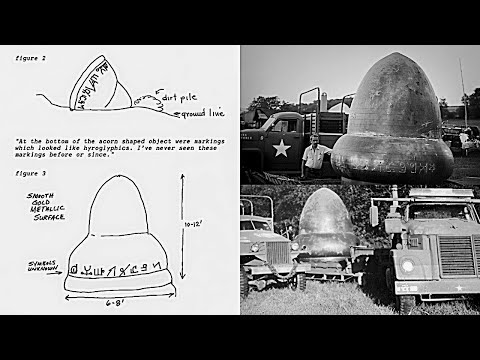
The Kecksburg UFO Incident: What Witnesses Saw That Day
Eyes On Cinema's compilation of archival interviews with Greensburg firefighters and residents who stood within feet of the acorn craft.

Kecksburg UFO Crash: The Untold Story
The full-length UFOTV documentary detailing Stan Gordon's field investigation notes and the legal fight for declassification.
Sources
- [1] U.S. Air Force, Project Blue Book file, Acme/Kecksburg, Pennsylvania, December 9, 1965 (handwritten memo on the Oakdale "three man team"), as reproduced and summarized in Kean (2005). NARA UFO records guide: archives.gov
- [2] Kean v. National Aeronautics and Space Administration, Civil Action No. 03-2509 (EGS), U.S. District Court for the District of Columbia; memorandum opinion of March 27, 2007 (Judge Emmet G. Sullivan). courtlistener.com
- [3] Kean, Leslie. "Forty Years of Secrecy: NASA, the Military, and the 1965 Kecksburg Crash," International UFO Reporter 30(1), 2005. archived PDF
- [4] Chamberlain, Von Del, and Krause, David J. "The Fireball of December 9, 1965 – Part I," Journal of the Royal Astronomical Society of Canada 61 (1967), pp. 184–190.
- [5] "Great Lakes Fireball," Sky & Telescope 31(2), February 1966, p. 78.
- [6] Gatty, Robert. "Unidentified Flying Object Report Touches off Probe near Kecksburg," Greensburg Tribune-Review, December 10, 1965 (as reproduced by CFi; see Kean 2005).
- [7] Associated Press, December 10, 1965 (troopers and Air Force personnel searched with Geiger counters and found nothing; Defense Department called it a natural phenomenon), as cited in the Wikipedia article on the incident.
- [8] NASA National Space Science Data Center, NSSDCA/COSPAR ID 1965-094A (Cosmos 96) catalog entry. nssdc.gsfc.nasa.gov
- [9] Oberg, James. "Jim Oberg on the 'NASA lawsuit over Kecksburg UFO Documents,'" January 7, 2008.
- [10] Reporters Committee for Freedom of the Press. "Judge forces NASA to take a giant leap in FOIA suit," 2007. rcfp.org
- [11] Keim, Brandon. "NASA Will Re-Open Kecksburg UFO Files," Wired, October 29, 2007; Luscombe, Richard, "Nasa told to solve 'UFO crash' X-File," The Guardian, November 11, 2007.
- [12] Majors, Dan. "Five decades later, the Kecksburg UFO is identified (probably)," Pittsburgh Post-Gazette, December 6, 2015 (Ventre and Eichler's GE Mark 2 hypothesis).
- [13] Young, Robert R. "Metamorphosis: Claimed Witness Accounts of the Great Lakes Fireball of December 9, 1965," in Ballester-Olmos, V. J., and Heiden, R. W. (eds.), The Reliability of UFO Witness Testimony, UPIAR, 2023, pp. 229–238.
- [14] Nickell, Joe, and McGaha, James. "The Roswellian Syndrome: How Some UFO Myths Develop," Skeptical Inquirer.
- [15] Dunning, Brian. "Alien Visitation and Kecksburg," Skeptoid #681, June 25, 2019.
- [16] Kean, Leslie. UFOs: Generals, Pilots, and Government Officials Go on the Record. Harmony Books, 2010.
- [17] Ventre, John. UFOs over Pennsylvania. Self-published (Kindle edition), September 17, 2012. ASIN B009D62PSM. Ventre was MUFON’s Pennsylvania State Director; the volume is a compilation of Pennsylvania case material, not an independently sourced study, and is cited here for its case summaries only.
- [18] WTAE-TV Pittsburgh, news feature: "I do believe something happened: Search for answers about Kecksburg UFO." youtube.com
- [19] Unsolved Mysteries, Season 3, Episode 1 (NBC, 1990), Kecksburg segment. youtube.com
- [20] Wikipedia, "Kecksburg UFO incident" (used as a pointer to the 1965 press, NASA statements and later coverage; consulted October 2026).
Corrections (October 2026)
A fact-check of this page found extensive invented detail. It has been removed or corrected using contemporary press, the Blue Book note, the 1966–67 fireball studies, NASA's statements, the court record and Leslie Kean's 2005 account.
Removed (no source found):
- Missing State Police and Oakdale logs, erased telephone billing records, untraceable crane rentals and lead shielding.
- A stop at Lockbourne AFB with "B-29/C-47" manifests, and a "Captain Maurand."
- Fire chiefs named "J. Edward Duquette" and "James/Rick Mayes."
- Carl Metz described as a local resident; he was the State Police fire marshal.
- "Men in Black" seizing Murphy's photos at his home, and the hit-and-run details of his death.
- A 2024 AARO/Oak Ridge analysis of a "Kecksburg specimen," which confuses it with AARO's report on a Roswell-associated sample.
- NORAD and SPADATS tracking, a "non-ballistic" path and "course corrections."
- Astronomer Paul Annear's supposed finding of a non-ballistic trajectory. He called it a meteor.
- The object glowing, hot and steaming on the ground with no broken branches.
- Romansky's "multiple polygraphs."
- Kecksburg "delegations to Washington," and a festival "since 1994." It dates from about 2005–06.
- Ariel School children "drawing similar markings."
- NASA archivists admitting "under oath" that the boxes were lost at the National Archives, and a "1987 archive project."
- Invented sources: an "SAO report" by "Dr. Herbert Roth," a 1966 NICAP report by Raymond Fowler, a 1966 APRO "Acorn Craft Recovered" article (the acorn description dates from the 1980s), "intercept logs" of the 662nd, Stan Gordon "field notes" dated December 1965, invented Tribune-Review and Post-Gazette headlines, and "NASA FOIA request logs."
Added: the 1966–67 trajectory studies placing the fireball's end near western Lake Erie, the court's 2007 findings, the Kalp, Metz and Murphy accounts from Kean (2005), and Nicholas Johnson's exclusion of Cosmos 96. The "Why" heading was changed from "Unresolved" to match the page's stamp. Following this review, the rating was lowered from Credible 85 to Disputed 50 (October 26, 2026): the higher rating had rested partly on claims removed above.
Have declassified documents, photographic evidence, or witness updates regarding the Kecksburg UFO incident? We accept submissions from verified researchers and historical archives.
Suggest an Edit