
UFO Abductions in Gulf Breeze
The Walterses' 1994 Sequel — How a Photographic Claim Became a Lifelong Abduction Narrative After the Model Was Found
Core Thesis
UFO Abductions in Gulf Breeze is the sequel to the most thoroughly documented photographic controversy in ufology, published four years after that controversy had, in most researchers' view, been settled against its author. Between November 11, 1987 and May 1, 1988, the Gulf Breeze, Florida contractor Ed Walters produced roughly three dozen Polaroid photographs of a hovering, dome- or top-shaped craft with a ring of square portholes and a blue beam, and became for a period the most famous UFO photographer in the world. In 1990 a nine-inch foam model matching the photographed object — bearing handwriting Walters acknowledged as his own — was found in the attic of a house he had formerly occupied. This book, written with Frances Walters and published in 1994, does not principally re-argue the photographs. It expands the case, through hypnotic-regression sessions, into a lifelong abduction narrative. This site's case file is stamped Debunked, and this book is essential for tracing how the claim evolved after the model was found.
About the Author
Ed Walters was a building contractor in Gulf Breeze, Florida, with no prior involvement in UFO research, when he brought the first Polaroids to the local newspaper in late 1987. He and his wife Frances Walters co-authored the case's two principal books, and the shift from a single-author photographic account to a joint abduction narrative is itself part of the story this article is about.
The Walterses' first book, The Gulf Breeze Sightings (1990), is covered separately in this library. It presented the photographs, the polygraph results, and the corroborating local sighting wave, and it was published in the same year the model was discovered — a coincidence of timing that shaped everything afterward.
The 1990 model discovery is the fixed point in the case, and this site's case file records it precisely: a nine-inch foam model matching the photographed object, found in the attic of a house Walters had previously occupied, bearing handwriting he acknowledged as his own. Walters' explanation has been that the model was planted to discredit him. That is not impossible and it is not evidenced.
The book's method for the sequel is hypnotic regression, and the timing is the point. By 1994 the recovered-memory controversy was in full flight and the technique's reliability was collapsing; the Walterses' use of it to expand a discredited photographic claim into a decades-long abduction history is not a coincidence of fashion but a category shift — from a claim testable by forensic examination of an object to one that cannot be tested at all.
Historical Context & Origins
Gulf Breeze in 1987–1991 was not one claim but two, and keeping them separate is essential. Walters produced the photographs; and, independently, somewhere between one and two hundred other Gulf Breeze residents reported sightings over the following years, producing what this site's case file calls 'a genuine mass sighting wave.' The second phenomenon is real and requires explanation whatever one concludes about the first.
That relationship is the case's most important general lesson and the reason it stays in this library despite the Debunked stamp. This site's case file describes it as 'a landmark study of how a single unverified claim can seed a genuine mass sighting wave' — a documented instance of the mechanism sceptics have always proposed and rarely been able to demonstrate.
The photographic evidence was unusually rich for its period: thirty-seven to thirty-eight Polaroids, roughly ninety seconds of videotape, and two polygraph examinations Walters passed. Polaroid film was itself part of the case's appeal, since instant film was believed harder to manipulate than negative film — a belief that did not survive the model's discovery.
The case divided serious researchers more sharply than almost any other. Bruce Maccabee, an optical physicist at the Naval Surface Warfare Center, examined the photographs extensively and defended their authenticity; MUFON's own investigators split; and the discovery of the model in 1990 did not end the argument so much as harden it. The proponent position after 1990 required the model to have been planted; the sceptical position required Walters' polygraphs and the corroborating witnesses to be discounted.
The 1994 book arrived into a specific publishing environment. The abduction paradigm was at its commercial peak, Strieber and Hopkins had made the format enormously saleable, and a hypnotic-regression narrative was the one move available to a claimant whose physical evidence had been compromised.
It is worth setting out why Gulf Breeze mattered so much at the time, because the case's later collapse makes its 1988–90 standing hard to reconstruct. For roughly two years these were the best UFO photographs anyone had. They were numerous rather than single, they were instant film rather than negatives, they were accompanied by video, the photographer passed polygraphs, a credentialed optical physicist defended them, and an entire town appeared to be seeing the same thing. If any photographic case in the history of the subject was going to survive scrutiny, the field's own consensus in 1989 was that it would be this one. That is the height from which the model discovery dropped it, and it explains why the community's response was so bitter and so prolonged.
Core Arguments & Key Concepts
The encounters were lifelong, not a six-month episode. The book's central new claim, recovered under hypnosis: that the 1987–88 photographic period was one visible stretch of a relationship extending back through Walters' life. This is the standard abduction-literature move, and applying it retroactively to a photographic case is the specific thing that makes this book worth studying.
Frances Walters was involved too. Converting the case from one claimant to two, via a co-authored account, addresses the single-witness problem without introducing an independent witness — a spouse recovering corroborating memories under regression is not corroboration in the sense the case needed.
The model was planted. The Walterses' standing explanation for the 1990 discovery. A reader should note what would be required: someone with access to a house Walters had vacated, motive, means to produce a matching model, and the ability to reproduce his own acknowledged handwriting.
The polygraphs and the mass wave are corroboration. The case's genuine strengths, and the ones the book leans on hardest. Both are real; neither establishes what the book needs. Polygraphy does not reliably detect deception, and a mass wave following a heavily-publicised local claim is exactly what contagion predicts.
The category shift is the actual event. Stated plainly, because the book does not: a photographic claim can be tested by examining a photograph and an object; an abduction narrative recovered under hypnosis cannot be tested by anything. Moving from the first to the second, four years after the first was compromised, converts a falsifiable claim into an unfalsifiable one. Whether that was deliberate is not knowable; that it is what happened is.
Why this site publishes the book anyway. This site's case file cites it as 'useful for tracing how the claim evolved after the 1990 model controversy,' and that is exactly right. Documented instances of a claim mutating in response to refutation are rare and analytically valuable, and this is the clearest one in the field.
A pattern worth naming because it recurs. The Gulf Breeze sequence — strong testable claim, intensive investigation, compromising physical finding, category shift to untestable material, expanded narrative — is not unique to this case. This library contains at least three other instances of the same arc, and recognising it early is the most practically useful skill a reader of this literature can develop. The diagnostic question is simple: when the claim's most testable element came under pressure, did the claimant engage with the pressure or move the claim? Walters moved it, and the move is documented in this book.
Key Cases & Evidence Discussed
The 1987–88 photographic sequence. Thirty-seven to thirty-eight Polaroids of a dome- or top-shaped object with a ring of square portholes and a blue beam, taken between November 11, 1987 and May 1, 1988, mostly between dusk and the early hours. See this site's Gulf Breeze UFO Sightings case file.
The 1990 foam model. Nine inches, matching the photographed craft, found in the attic of a house Walters had formerly occupied, bearing handwriting he acknowledged as his own. The case's decisive physical finding.
The polygraph examinations. Two, both passed. Their evidentiary weight is limited by the general unreliability of polygraphy, a point this library makes consistently and applies equally to Daniel Fry's failure of a televised test and to Walters' passes.
The Gulf Breeze wave (1987–1991). One to two hundred secondary residents reporting sightings after the Walters photographs became public. The genuinely interesting phenomenon in the case, and the one that does not depend on Walters at all.
The Maccabee analysis. Bruce Maccabee's photographic examination and defence, from a credentialed optical physicist, is why the case could not simply be dismissed and why the research community split as sharply as it did.
The journalistic investigation. Craig Myers of the Pensacola News Journal broke the model story in 1990 and later wrote War of the Words, the most detailed account of the case's unravelling. Reading the two books against each other is the single most instructive exercise this case offers.
Critical Reception & Controversies
Within UFO research the 1994 book was received considerably more coolly than its 1990 predecessor, and for the obvious reason: an abduction sequel to a photographic case whose physical evidence had been compromised read to many researchers as a retreat rather than a development.
The sceptical assessment is straightforward and this site shares it. The case's testable element was tested and failed; the sequel replaced it with material that cannot be tested; and the recovered-memory method used to produce it was, by 1994, in the middle of a professional collapse.
The proponent position deserves a fair statement. Walters passed two polygraph examinations; a credentialed optical physicist examined the photographs and defended them; a substantial local sighting wave followed; and the model's discovery, while damaging, was not accompanied by a demonstration that the photographs were made using it. Those facts are why the case stayed contested for years rather than closing in 1990.
The strongest criticism of the book specifically is that it does not do the work its own situation demanded. A claimant whose physical evidence has been compromised owes his readers a direct, detailed engagement with the compromising evidence. This book largely changes the subject.
This site's Debunked stamp is worth explaining, since the distinction from Disputed is deliberate elsewhere in this library. Gulf Breeze is Debunked rather than Disputed because a physical object matching the photographs, in the claimant's own former property, bearing his acknowledged handwriting, is affirmative evidence of fabrication rather than merely an absence of corroboration — a different evidentiary situation from, say, Coyame, which is uncorroborated but not refuted.
One further point in fairness to the Walterses, since this article is otherwise unsparing. The Gulf Breeze wave was not manufactured by them and could not have been. Between one and two hundred residents of a small Florida town reported sightings over four years, and whatever caused those reports — contagion, expectation, genuine misidentification of ordinary objects newly attended to, or something else — they were made by people with nothing to gain. The case's photographic claim failed. The community-level phenomenon it triggered is a real event that happened to real people, and it is more interesting than the photographs ever were.
The book has never been seriously defended in the research literature since. Even authors sympathetic to Walters generally rest their case on the 1990 volume and the photographs, treating the abduction sequel as a separate matter best not raised. That silence is itself a form of critical judgement, and it is worth noticing that it comes from the proponent side rather than the sceptical one.
Influence & Legacy
Gulf Breeze's lasting contribution to this subject is not the photographs but the wave, and it is a contribution to the sceptical case. A well-documented instance in which one heavily-publicised local claim is followed by one to two hundred secondary reports from the same small community is the clearest demonstration available of the contagion mechanism, and it is available because the case was so intensively documented.
The book itself is a case study in claim evolution. Researchers assessing any long-running claim should ask what happened to it when its most testable element was challenged, and Gulf Breeze provides the textbook answer: the claim moved to less testable ground and grew larger. That pattern recurs throughout this library — in the Andreasson series, in the Coyame literature, and elsewhere.
It also damaged the field institutionally. The public split between MUFON investigators, the Maccabee defence, and the eventual weight of the model discovery consumed enormous research attention through the early 1990s and left the community more divided than it found it. Cases that cannot be resolved consume more than they return.
Within this site's library the book is paired with Craig Myers' War of the Words and with the earlier Gulf Breeze Sightings, and cited by the case file specifically for tracing the claim's post-1990 evolution.
The Book
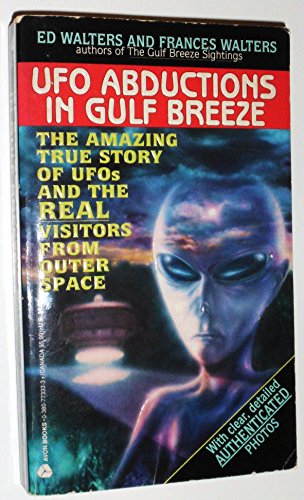
UFO Abductions in Gulf Breeze
The Walterses' 1994 Sequel — How a Photographic Claim Became a Lifelong Abduction Narrative After the Model Was Found
Find on Amazon →As an Amazon Associate, OverClassified may earn from qualifying purchases made through this link, at no extra cost to you.
Why This Is Essential Reading
Read it as evidence about the claim rather than evidence for it. Four years after a nine-inch foam model matching his photographed craft was found in his old attic bearing his own acknowledged handwriting, Ed Walters and his wife published a book that does not seriously re-argue the photographs and instead expands the case, through hypnotic regression, into a lifelong abduction history. That move — from a claim a forensic examination can test to one nothing can test — is the most instructive thing about the book, and it is why this site's Debunked case file cites it. Read it alongside Craig Myers' War of the Words, by the reporter who broke the model story, and keep the two Gulf Breeze phenomena separate: Walters' photographs are one thing, and the hundred-plus residents who reported sightings afterward are a genuinely different and more interesting one.
Related Cases & Theories
Sources Cited
- Walters, Ed, and Frances Walters. UFO Abductions in Gulf Breeze. Avon Books, 1994. ISBN-10 0380773333 / ISBN-13 9780380773336. amazon.com
- Open Library edition record, UFO Abductions in Gulf Breeze, ISBN 0380773333 — bibliographic verification and cover-art source. openlibrary.org
- Wikipedia, "Gulf Breeze UFO incident" — the November 1987 – May 1988 photographic sequence, the roughly three dozen Polaroids, the 1990 discovery of the foam model in Walters' former attic, the polygraph examinations, Bruce Maccabee's analysis, the MUFON split, and the subsequent local sighting wave. en.wikipedia.org
- Wikipedia, "Recovered-memory therapy" — the professional collapse of hypnotically recovered testimony over exactly the period this book was written and published. en.wikipedia.org
- National Research Council, The Polygraph and Lie Detection, National Academies Press, 2003 — the standing scientific assessment bearing on Walters' two passed examinations. nap.nationalacademies.org
- Center for Inquiry / Skeptical Inquirer archives — the standing venue for published criticism of the Gulf Breeze photographs and of the case's post-1990 development. skepticalinquirer.org
- ThriftBooks edition record, UFO Abductions in Gulf Breeze by Ed Walters and Frances Walters — printing and format data. thriftbooks.com
- Wikipedia, "Bruce Maccabee" — the optical physicist whose analysis and defence of the Gulf Breeze photographs divided the research community. en.wikipedia.org
- Myers, Craig R. War of the Words: The True But Strange Story of the Gulf Breeze UFO, 2006 — by the Pensacola News Journal reporter who broke the 1990 model story. OverClassified breakdown
- Walters, Ed, and Frances Walters. The Gulf Breeze Sightings, 1990 — the case's first book. OverClassified breakdown
- Hopkins, Budd. Intruders: The Incredible Visitations at Copley Woods, 1987 — the abduction template this sequel adopts. OverClassified breakdown
- Strieber, Whitley. Communion: A True Story, 1987 — the commercial precedent for the format. OverClassified breakdown
- Fry, Daniel W. The White Sands Incident, 1954 — the comparison case for how this library treats polygraph evidence in both directions. OverClassified breakdown
- OverClassified case file, Gulf Breeze UFO Sightings — source for the November 11, 1987 to May 1, 1988 date range, the 37–38 Polaroids and roughly ninety seconds of videotape, the two polygraphs, the nine-inch foam model found in Walters' former attic in 1990 bearing his acknowledged handwriting, the 100–200+ secondary witnesses of the 1987–1991 wave, and this site's Debunked assessment. Cites this book as useful for tracing how the claim evolved after the model controversy.
- OverClassified case file, Coyame, Mexico UFO Crash Claim — the Disputed-versus-Debunked comparison discussed above.
Have corrections, additional research, or peer-reviewed sources? Help improve this entry.
Suggest an Edit