
Intruders
The Incredible Visitations at Copley Woods
Core Thesis
Intruders: The Incredible Visitations at Copley Woods is Budd Hopkins's second book and, on every measure that matters for this site, a fundamentally different kind of book from his 1981 debut Missing Time, already covered here. Where Missing Time was a survey text built from seven pseudonymous case fragments assembled to establish a diagnostic method, Intruders is a single, sustained, years-long case study: the story of an Indianapolis woman Hopkins calls "Kathie Davis" — a pseudonym for Debbie Jordan-Kauble, who later published her own account under her real name — who wrote to Hopkins in 1983 after finding an unexplained circular burn mark in her backyard the morning after a night of missing time. What began as an investigation into one physical trace evolved, over roughly four years of hypnotic-regression sessions with Jordan-Kauble, her sister, and other family members, into a hypnotically reconstructed history of abduction experiences reaching back across multiple generations of the same family, and culminating in Jordan-Kauble's hypnotically recovered claim that she had been impregnated during an abduction, had the resulting fetus removed weeks later, and was subsequently shown a frail, pale, partly grown child she came to believe was her own bred human-alien hybrid offspring. That claim, and the broader "genetic hybridization program" theory Hopkins built around it, is this book's real historical significance: Intruders is the book that moved the hybrid-breeding hypothesis from a speculative aside in Missing Time to the dominant organizing narrative of American abduction lore for the next decade, sold enough copies to reach The New York Times bestseller list and support a 1992 CBS television miniseries starring Richard Crenna, and drew, in return, direct and substantially more pointed scientific and journalistic criticism than its predecessor had — criticism this entry treats as central rather than incidental, because the hypnotic-regression reliability question Missing Time first raised in 1981 is the same question this far more commercially successful and far more scrutinized 1987 book never resolved.
About the Author
This site's own Missing Time entry covers Budd Hopkins's full biography — his career as a critically established abstract-expressionist painter in the same New York circle as Franz Kline and Mark Rothko, his 1964 Cape Cod sighting, and the 1975 George O'Barski case investigation that produced his 1981 debut — in detail, and that account is not repeated here. What matters for Intruders is what happened in the six years between the two books. Missing Time's 1981 success established Hopkins, a working painter with no clinical or scientific credentials of any kind, as American ufology's most visible investigator of abduction claims, and the letters and phone calls that followed its publication gave him a far larger pool of self-identified witnesses to draw on than the reader correspondence that had produced his first book. Debbie Jordan-Kauble's 1983 letter, describing a circular burn mark discovered in her rural Indianapolis backyard the morning after a night of unexplained missing time, arrived into exactly that expanded practice, and Hopkins pursued it personally and, by his own account, at his own expense over the following four years.
Hopkins's investigative method in Intruders extended the hypnosis-centered approach Missing Time had first codified, but at a scale and depth his first book had not attempted. Where the earlier book worked from seven relatively brief case histories, Hopkins spent roughly four years on the Jordan-Kauble family alone, conducting or overseeing dozens of hypnotic-regression sessions not just with Jordan-Kauble herself but with her sister Kathy Mitchell (called "Laura" in the book), her mother, and other relatives, building outward from one physical trace into what he presented as a multi-generational family abduction history. That expanded scope is the book's central methodological escalation: a single, deeply excavated case, rather than a survey of several, became Hopkins's template for the rest of his career, including his 1996 book Witnessed, which applied the identical single-case, deep-excavation method to the Linda Cortile "Brooklyn Bridge" case this site's own case file covers directly.
The book's commercial success reshaped the rest of Hopkins's public life in ways Missing Time alone had not. Intruders reached The New York Times bestseller list, and its sales gave Hopkins the standing to found the Manhattan-based Intruders Foundation in 1989, coordinating abduction research and running a monthly free support group for self-identified experiencers out of the same Manhattan base from which he would later investigate the Cortile case. Working with historian David Jacobs, Hopkins spent the years after Intruders's publication developing the "genetic hybridization program" theory this book had first advanced at length into the far more systematized form this site's own Genetic Hybridization Program Hypothesis file examines in full, and in 1991–92 he partnered with Jacobs and Harvard psychiatrist John E. Mack on a Roper Organization poll of nearly 6,000 Americans that Hopkins argued suggested millions of undiagnosed abduction experiences nationwide.
Hopkins died on August 21, 2011, at his home in Manhattan, of complications from cancer, at age 80; his New York Times obituary credited him as the abduction movement's central popularizer while noting the deep and lasting scientific skepticism his methods had drawn. That obituary's framing applies with particular force to Intruders specifically: it is the single book most responsible for both halves of his legacy, the one that made the hybrid-breeding narrative a mainstream cultural fixture and the one whose central hypnotically recovered claim — a bred human-alien child Jordan-Kauble said she was shown but never kept — his critics would spend the following decade citing as exhibit one for what hypnotic suggestion could produce.
Historical Context & Origins
Intruders arrived six years after Missing Time had already made "missing time" a recognized term in ufology and established hypnotic regression as the field's default investigative tool. That head start changed what Hopkins's second book needed to accomplish: rather than introducing a method, Intruders could apply it, at far greater depth, to a single case Hopkins believed demonstrated the method's full explanatory power. The book's central innovation was one of scale and structure rather than method — where Missing Time surveyed seven witnesses briefly, Intruders spent roughly four years excavating one family's history across three generations, treating the depth of a single sustained investigation as more persuasive than the breadth of several shorter ones.
The book also landed inside a specific and increasingly consequential moment in American psychology. Elizabeth Loftus's foundational experimental work on the malleability and "misinformation effect" of eyewitness memory, published through the early and mid-1980s, was already reshaping how memory researchers thought about confidently held but inaccurate recollections, even as Intruders was built almost entirely on the assumption that hypnosis could reliably recover memories the conscious mind had suppressed. Hopkins's own appendix on hypnosis in Intruders, according to later critics including Frederick Crews, showed no engagement with the possibility that hypnosis itself involves suggestion, treating the only real risk as a subject recalling something that had been misperceived in the first place rather than a memory the hypnotic process itself had helped construct. That gap between Hopkins's confidence in the method and the direction memory science was already moving would only widen over the following decade.
Intruders also predates, by roughly five years, the founding of the False Memory Syndrome Foundation in March 1992, the organization whose advocacy work anchored what critics and defenders alike came to call the "memory wars" — the bitter national dispute over recovered-memory therapy and hypnotically "recovered" abuse allegations that consumed American psychology and psychiatry through the early-to-mid 1990s, and that this site's own entries on John E. Mack's Abduction and Susan Clancy's Abducted describe in full. Hopkins wrote and published Intruders in the calm before that storm, with hypnotic regression still broadly treated as a legitimate memory-recovery tool across much of clinical psychology; by the time the CBS miniseries brought the book's central claims to a mass television audience in May 1992, the wider recovered-memory controversy was breaking open in earnest, and the book's reception over the following years increasingly took place inside that larger fight rather than apart from it.
The book's television adaptation was itself historically consequential in a narrower way. Screenwriter Tracy Tormé, who had tried unsuccessfully to get an abduction-themed project made since the early 1980s, spent time observing Hopkins conduct regression-hypnosis sessions while developing the script and later said the experience left him "98 percent convinced that this stuff was real." His teleplay, co-written with Barry Oringer, drew on both Hopkins's casework and Harvard psychiatrist John E. Mack's parallel research for its psychiatrist protagonist, Dr. Neil Chase, played by Richard Crenna — airing two years before Mack's own Abduction was published, and giving millions of CBS viewers a dramatized version of the hybrid-breeding narrative years ahead of The X-Files, which premiered on Fox the following year, in September 1993.
Core Arguments & Key Concepts
Hopkins's central claim in Intruders is that a single, deeply investigated case — rather than a survey of many shallower ones — could demonstrate the abduction phenomenon's coherence more convincingly than Missing Time's seven-case format had. The book is built almost entirely around Kathie Davis (Debbie Jordan-Kauble) and her extended family, and Hopkins presented the internal consistency of what different family members separately recalled under hypnosis, none of whom he said had discussed their sessions' content with one another in advance, as stronger evidence than agreement across unrelated strangers would have been.
His second claim extended Missing Time's generational logic into an explicit multi-generational thesis: that abduction experiences did not happen to isolated individuals but ran in families, recurring across Jordan-Kauble's mother's generation, her own, and eventually her children's, in patterns Hopkins argued were too specific and too consistent to be coincidental. This reframed the abduction phenomenon as a sustained, longitudinal program targeting particular bloodlines rather than a series of unconnected individual encounters — the interpretive leap that gave the later "generational abduction" framework used across the field's subsequent literature its clearest early statement.
The book's most consequential and most controversial claim was reproductive and interpretive: that Jordan-Kauble's hypnotically recovered memory of a 1978 pregnancy that inexplicably ended without a detectable miscarriage, followed years later by a hypnotically recovered memory of being shown a frail, pale, partly human child aboard a craft, represented direct evidence of a coordinated program in which abducted women were impregnated, had the resulting hybrid fetuses removed mid-term, and were later permitted supervised contact with the resulting offspring. Hopkins extended this single case into a general theory, reporting that patterns across roughly 125 cases in his files pointed toward what he called "the apparent interbreeding of an alien species with our own" — the fullest published statement, to that point, of the hybrid-breeding-program hypothesis Missing Time had only gestured toward.
Running through all three claims was Hopkins's continued insistence, carried over directly from Missing Time, that hypnotic regression conducted by cooperating professionals was a safe and reliable memory-recovery tool rather than a suggestive process capable of generating false content. Critics, discussed at length below, read the same evidence — independently regressed subjects converging on strikingly specific, thematically consistent narratives — as more plausibly explained by shared cultural material, an increasingly well-established abduction script already circulating by 1987, and the leading structure of Hopkins's own hypnosis sessions, than by a real, external, patterned phenomenon.
Key Cases & Evidence Discussed
Intruders is organized almost entirely around a single case rather than a survey, so its clearest connections to this site's own case-file library run through the people, methods, and later work it set in motion, more than through a catalogue of other incidents.
The book's central case is the one this site does not currently maintain a dedicated file for: the Kathie Davis / Copley Woods case, centered on Debbie Jordan-Kauble of rural Indianapolis, Indiana. Jordan-Kauble first wrote to Hopkins in 1983 after discovering an unexplained circular burn mark, roughly eight feet across with a wider swath extending from it, in her family's backyard the morning after a night of missing time; the mark reportedly persisted, visibly altering how grass grew there, for nearly five years afterward. Hopkins's subsequent investigation, conducted over roughly four years and centered on hypnotic-regression sessions with Jordan-Kauble, her sister Kathy Mitchell ("Laura" in the book), and other family members, produced the multi-generational abduction history and hybrid-child claim this book is built around. Jordan-Kauble went public under her own name in 1992, the same year the CBS miniseries aired, and later co-authored Abducted!: The Story of the Intruders Continues (1994) with her sister, and published a further memoir, Extraordinary Contact: Life Beyond "Intruders" (White Crow Books, 2021), on her own.
The book connects directly to two of Hopkins's own other documented cases already covered on this site. The Fort Benning Abduction Case (Case File #132) file documents that researchers connected to Hopkins's investigative team personally interviewed primary witness John Vasquez in the early 1990s, in the years immediately following Intruders's publication, and ultimately declined to pursue the case, with one participating researcher describing the account as "extremely convoluted." And Hopkins's 1989 Linda Cortile "Brooklyn Bridge" case, documented in his 1996 book Witnessed and covered on this site's own Linda Cortile "Brooklyn Bridge" Abduction file (Case File #290), applied the identical single-case, multi-year, hypnosis-centered investigative model this book first built around Jordan-Kauble to what Hopkins considered the most thoroughly corroborated case of his career — a claim his own former wife and collaborator, filmmaker Carol Rainey, later publicly disputed.
Read alongside this site's Missing Time entry, Intruders sits in a direct chronological line: six years after Missing Time introduced Steven Kilburn and six other pseudonymous witnesses as a diagnostic survey, this book narrowed to one family and went far deeper, and five years before John E. Mack's Harvard-credentialed Abduction would apply comparable case-depth methods with institutional psychiatric backing this book's artist-investigator author never claimed for himself.
Critical Reception & Controversies
Intruders drew substantially more pointed skeptical scrutiny than Missing Time had, in significant part because its greater commercial success and single-case depth gave critics a much larger, much more specific target to examine. Veteran aerospace journalist and CSICOP UFO Subcommittee chairman Philip J. Klass reviewed the book directly in Skeptical Inquirer under the title "Intruders of the Mind," arguing that Hopkins, whom Klass elsewhere credited as a genuinely careful gatherer of testimony, had not attempted to verify even one easily checkable claim Jordan-Kauble made about her own medical history — a history that, by Klass's account of the book, included high blood pressure, a gallbladder removal, hepatitis, pneumonia, an undiagnosed spinal condition, a collapsed lung, an irregular heartbeat, and kidney failure, none of which Klass found any indication Hopkins had cross-checked against actual medical records before treating the broader narrative as reliable.
Klass returned to the same case at greater length in his 1988 book UFO Abductions: A Dangerous Game, this site's own Missing Time entry's central book-length rebuttal source, which examined the Jordan-Kauble case's physical evidence directly and argued the yard mark and other claimed corroboration admitted mundane explanations Hopkins had not seriously pursued. Klass paired that specific critique with a broader argument, developed across the same book, that hypnotherapy conducted the way Hopkins conducted it made it dangerously easy to implant, rather than recover, a detailed and internally convincing false narrative.
The New York Times's own review, by science writer Bettyann Kevles, took a more ambivalent position that became one of the book's most frequently cited lines: Kevles wrote that she was "willing to believe that he believes everything he has written," and was likewise willing to believe that Jordan-Kauble and the other witnesses had genuinely experienced real time losses and disturbing dreams — while remaining explicitly "wary of the accuracy of the information he gathered through hypnosis," a distinction between a witness's sincerity and a method's reliability that later critics of hypnotic-regression abduction research would return to repeatedly.
The most direct methodological indictment came a decade later from literary and cultural critic Frederick Crews, whose 1998 New York Review of Books essay "The Mindsnatchers" — already cited on this site's own Missing Time entry — argued that Hopkins's own appendix on hypnosis in Intruders showed "no awareness whatsoever that hypnosis involves suggestion," treating the only real danger as a subject misremembering something that had been misperceived in the first place rather than a memory the hypnotic process itself might have helped construct. Crews extended the same critique to David Jacobs's later, more systematized version of the same method, and grouped both researchers among the abduction field's "leading boosters" making only "token gestures of caution" against the confabulation risk their own casework demonstrated.
Hopkins did not let that critique stand unanswered. In an October 1998 New York Review of Books exchange responding directly to Crews, titled "'When Words Collide': An Exchange," Hopkins and Jacobs both defended their methodology in print, with Hopkins arguing that the volume of eyewitness testimony, claimed physical evidence, and consistent narrative detail he had assembled across thousands of cases by 1998 demanded serious investigation rather than dismissal on purely theoretical grounds — a defense that, notably, did not directly rebut Crews's specific claim about the hypnosis appendix's silence on suggestion.
Social psychologist Richard Ofshe, a leading figure in the broader recovered-memory controversy this book's publication preceded, separately raised a related concern specific to how Hopkins's practice had grown by the 1990s: that the support-group setting the Intruders Foundation provided created its own suggestive influence, since a subject convinced of a false memory could react to it emotionally and elaborate on the story as if it were real, reinforced by other group members' own accounts rather than by any external professional check. That critique, arriving after Intruders's publication but describing infrastructure the book's success had directly built, extended the same fundamental concern — that Hopkins's hypnosis-centered method could not reliably distinguish a recovered memory from one it had just helped construct — from the individual hypnosis session to the institution built around it.
Influence & Legacy
Intruders's most durable legacy is the hybrid-breeding-program narrative itself: the book took the reproductive-focus claim Missing Time had raised only briefly in 1981 and, through roughly 125 cases Hopkins said he had by then investigated, turned it into ufology's dominant organizing framework for what abductions were understood to be about across the following decade. This site's own Genetic Hybridization Program Hypothesis file traces that framework's most systematized later form, developed jointly by Hopkins and David Jacobs, directly back to the claims this 1987 book first advanced at length.
Commercially and institutionally, Intruders did for Hopkins's career what Missing Time alone had not: its bestseller status funded and legitimized the 1989 founding of the Manhattan-based Intruders Foundation, gave Hopkins the public standing to co-design the 1991–92 Roper poll of nearly 6,000 Americans with Jacobs and John E. Mack, and set the single-case, multi-year investigative template — rather than the multi-witness survey model of Missing Time — that Hopkins would apply again in his 1996 book Witnessed and the Linda Cortile case it documents.
The book's most visible cultural legacy is the 1992 CBS miniseries itself. Airing May 17 and 19, 1992, and directed by Dan Curtis from a script by Tracy Tormé and Barry Oringer, the two-part broadcast starred Richard Crenna, Mare Winningham, and Daphne Ashbrook, earned Ben Vereen a Primetime Emmy nomination for Outstanding Supporting Actor, and brought a dramatized version of the hybrid-breeding narrative to a mainstream network audience roughly sixteen months before The X-Files premiered on Fox in September 1993 — giving the miniseries a credible claim, made by several retrospective critics, to having helped normalize alien-abduction storytelling for the television audience that show would go on to build much further.
Within the abduction-research community, the book's central figure built her own independent legacy separate from Hopkins's. Debbie Jordan-Kauble went public under her real name in 1992, co-authored Abducted!: The Story of the Intruders Continues with her sister Kathy Mitchell in 1994, and published a further memoir, Extraordinary Contact: Life Beyond "Intruders," through White Crow Books in 2021 — continuing to discuss the case in interviews and podcast appearances for more than three decades after the book that first told her story under a pseudonym.
The book's most consequential downstream effect, though, runs through the same hypnotic-regression method it shares with Missing Time: David Jacobs's continued use of the identical technique, developed in direct collaboration with Hopkins across the years following Intruders's publication, drew a serious, well-documented controversy after research subject "Emma Woods" released recordings of their sessions alleging Jacobs had led her toward increasingly extreme confabulated memories — a controversy this site's own key-figures entry on Jacobs treats as "a central case study in broader concerns about hypnotic regression's reliability," and one whose investigative template traces directly back to the four-year, single-family excavation method this 1987 book pioneered.
The Book
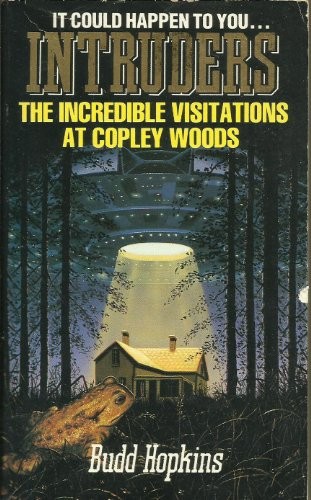
As an Amazon Associate, OverClassified may earn from qualifying purchases made through this link, at no extra cost to you.
Why This Is Essential Reading
Intruders earns its place on this list as the book that turned Budd Hopkins's 1981 diagnostic method from a survey technique into a single-case investigative template, and turned his tentative hybrid-breeding suggestion into the defining abduction narrative of the following decade — making it, on any fair reading, more consequential to the field than Missing Time itself, even though this site's earlier entry on that 1981 book necessarily came first. Where Missing Time is essential as an origin document, Intruders is essential as the book that proved the method's cultural and commercial power at scale: four years spent on one Indianapolis family produced a New York Times bestseller, a network television miniseries watched by millions, and a hybrid-breeding hypothesis that outlived every specific claim made about Debbie Jordan-Kauble's own case in particular. That power is also exactly what makes the book's critical reception essential reading in its own right. Philip Klass's Skeptical Inquirer review and book-length rebuttal, Bettyann Kevles's pointed distinction between believing a witness's sincerity and trusting a method's accuracy, and Frederick Crews's direct charge that Hopkins's own published appendix on hypnosis showed no understanding that hypnosis involves suggestion, together describe a book whose central, most dramatic claim — a bred, half-human child its author's own subject was allegedly shown but never kept — rests entirely on a technique the wider discipline of psychology was already, by 1987, beginning to seriously doubt. Read alongside Missing Time, which built the method, and Whitley Strieber's Communion, published the same year from the opposite direction — a first-person account rather than an investigator's case file — Intruders is essential because it is the moment the modern hybrid-abduction narrative stopped being one investigator's working theory and became, for a period of years, something close to public common knowledge.
Related Cases & Theories
Essential Viewing

UFO Alien Abductions RARE FOOTAGE Budd Hopkins Intruders Debbie Tomey Kathie Davis Wallace Wallis
ufosupclose — Rare 1989 footage of Debbie Tomey (Debbie Jordan-Kauble) and fellow Intruders subject Dorothy Wallace publicly discussing their cases with Budd Hopkins on Canada's Dini Petty Show, filmed roughly three years before the CBS miniseries aired. Verified via YouTube oEmbed before inclusion.

The terrifying alien abduction experiences of Kathie Davis (Debbie Jordan)
Eyes On Cinema — A documentary-style overview of the Kathie Davis / Copley Woods case that forms the core of this book, covering the 1983 backyard mark, the hypnotic-regression sessions, and the hybrid-child claim. Verified via YouTube oEmbed before inclusion.

ALIEN INTRUDERS (Shocking Encounters)
Cristina Gomez — An interview with Debbie Jordan-Kauble discussing her case and its portrayal in Hopkins's book, decades after Intruders first told her story under the pseudonym "Kathie Davis." Verified via YouTube oEmbed before inclusion.
Sources Cited
- Hopkins, Budd. Intruders: The Incredible Visitations at Copley Woods. Random House, 1987 (hardcover, ISBN 0394560760 / 9780394560762); Ballantine Books mass-market pbk., December 1987 (ISBN 0345346335 / 9780345346339, cited here). openlibrary.org
- "Budd Hopkins." Wikipedia (biography, including publication and bestseller details for Intruders and the founding of the Intruders Foundation). en.wikipedia.org
- "Intruders (miniseries)." Wikipedia (1992 CBS miniseries: broadcast dates, cast, crew, and production details). en.wikipedia.org
- Klass, Philip J. "Intruders of the Mind." Skeptical Inquirer, Fall 1987 (contemporary book review disputing Hopkins's verification of Kathie Davis's claimed medical history). centerforinquiry.org
- Klass, Philip J. UFO Abductions: A Dangerous Game. Prometheus Books, 1988 (book-length critique examining the Kathie Davis case and Hopkins's hypnosis methodology directly; already cited on this site's own Missing Time entry).
- Kevles, Bettyann. "Sampling the DNA." The New York Times Book Review, April 5, 1987 (contemporary review of Intruders).
- Crews, Frederick. "The Mindsnatchers." The New York Review of Books, June 25, 1998 (critique of Hopkins's published appendix on hypnosis in Intruders and of the broader abduction-research field; already cited on this site's own Missing Time entry). nybooks.com
- Hopkins, Budd, David M. Jacobs, and David F. Maier. "'When Words Collide': An Exchange." The New York Review of Books, October 8, 1998 (Hopkins's and Jacobs's own published response to Crews's critique). nybooks.com
- "False Memory Syndrome Foundation." Wikipedia (founding date and mission of the organization that anchored the broader 1990s recovered-memory controversy Intruders preceded). en.wikipedia.org
- "Looking Back at 'Intruders'." ExoNews, retrieved 2026 (retrospective on the 1992 miniseries, including screenwriter Tracy Tormé's own account of observing Hopkins's hypnosis sessions). exonews.org
- "The Copley Woods, Indiana Encounter, Debbie Jordan-Kauble." UFO Casebook (case background on the 1983 backyard mark and Jordan-Kauble family's own account of the case). ufocasebook.com
- "Intruders: The Incredible Visitations at Copley Woods." Publishers Weekly, March 1987 (contemporary trade review and publication details). publishersweekly.com
- Jordan, Debbie, and Kathy Mitchell. Abducted!: The Story of the Intruders Continues. Carroll & Graf Publishers, 1994 (Jordan-Kauble's and her sister's own account, published after going public under their real names).
- Jordan-Kauble, Debra. Extraordinary Contact: Life Beyond "Intruders". White Crow Books, 2021 (Jordan-Kauble's later, independent memoir).
- This site's own essential-reading entry: Missing Time by Budd Hopkins, the 1981 book whose diagnostic method and hypnosis-methodology criticism this article traces directly into Intruders's own, far larger case study.
- This site's own essential-reading entry: Communion by Whitley Strieber, published the same year as Intruders from the opposite narrative direction.
- This site's own case file: Fort Benning Abduction Case, which documents Hopkins's own investigative team personally interviewing and declining to pursue primary witness John Vasquez in the years after Intruders's publication.
- This site's own case file: The Linda Cortile "Brooklyn Bridge" Abduction, which documents Hopkins's later application of the single-case, multi-year investigative template this book first built.
- This site's own theory file: Genetic Hybridization Program Hypothesis, which traces the fully systematized later form of the theory this book first advanced at length.
- This site's own resources library: Full Reading List, where Budd Hopkins's work is cited across multiple case-file and essential-reading pages.
Have corrections, additional research, or peer-reviewed sources? Help improve this entry.
Suggest an Edit