
The Kathie Davis / Copley Woods Case
On the evening of June 30, 1983, Debbie Jordan, a young Indianapolis mother, reported being struck by a "blinding fist of light" in her parents' backyard and losing roughly two hours she could not account for. Over the following two years, artist and abduction researcher Budd Hopkins conducted extensive hypnotic regression sessions that recovered a sweeping abduction history stretching back to her childhood, culminating in a claimed 1977 alien-fathered pregnancy and a 1983 reunion with a hybrid daughter she called "Emily." Published pseudonymously as "Kathie Davis" in Hopkins's bestselling 1987 book Intruders: The Incredible Visitations at Copley Woods, the case did more than almost any other single account to popularize the "alien breeding program" narrative that came to dominate 1980s and 1990s American abduction literature — while also becoming a central exhibit in the era's fiercest methodological debate over what hypnotic regression can and cannot reliably recover.

Pictured: Budd Hopkins, photographed by his wife Carol Rainey in Rome, 1997 — the investigator whose two years of hypnotic regression sessions with Debbie Jordan produced this case's central evidentiary content and whose subsequent book made it internationally famous. Not a photograph of Jordan-Kauble, her family, or the Copley Woods property itself; no photograph of any kind directly documenting this case's claimed events is known to exist.
Theoretical Alignment
This case aligns most strongly with a psycho-social framework, driven specifically by its evidentiary structure: nearly the entire detailed narrative — the childhood encounters, the alien pregnancy, the hybrid child, the multi-generational family pattern — was recovered across two years of hypnosis sessions conducted by an investigator with no formal psychological or hypnotherapy training, using a technique the broader scientific literature on suggestibility and false memory treats as a documented risk factor for confabulation rather than a reliable memory-recovery tool. The Extraterrestrial Hypothesis retains modest alignment on the strength of the case's genuinely striking original sighting (the "blinding fist of light," the reported eye injury, the witnessed ball of light) and the claimed barren yard patch, neither of which required hypnosis to be reported. The Interdimensional Hypothesis finds little specific support in this case's own content.
Background
Debbie Jordan was, in the summer of 1983, a young mother of two living with her parents on the east side of Indianapolis, Indiana, in a neighborhood Budd Hopkins gave the pseudonym "Copley Woods" in his subsequent book to protect the family's privacy — a pseudonym this file preserves throughout, consistent with how the case has always been publicly discussed, rather than attempting to identify or publish the family's actual home address. Jordan had no documented prior involvement in UFO research or contactee culture before this case, though her later, hypnotically-recovered account would eventually trace a claimed pattern of unusual experiences back to early childhood.
The case reached Budd Hopkins, a professional artist and sculptor who had become one of the most prominent civilian UFO abduction researchers following his 1981 book Missing Time, after Jordan wrote to him describing her experience. By 1983, Hopkins had already established the basic methodology — extended hypnotic regression conducted personally by himself, without formal clinical training in hypnotherapy or psychology — that would define his approach to this and every subsequent case he investigated, including the later Linda Cortile case. Hopkins worked with Jordan over roughly two years, eventually involving psychologist Dr. Aphrodite Clamar and reporting psychological and physiological testing (including EEG and EKG) intended to establish the sincerity, though not the objective accuracy, of her account.
The book's cultural reach extended well beyond its initial 1987 publication and bestseller run. In May 1992, CBS broadcast a two-part television miniseries adaptation, also titled Intruders, directed by Dan Curtis and written by Barry Oringer and Tracy Tormé, starring Richard Crenna and Mare Winningham alongside Daphne Ashbrook, Susan Blakely, and Ben Vereen, whose performance earned a Primetime Emmy nomination. Critical reception was genuinely mixed rather than uniformly dismissive: Variety's review found the first half compelling before judging the second half fell into familiar science-fiction cliché, while Tom Shales, reviewing for The Washington Post, called it "too much fun to miss" and "the eeriest and daffiest miniseries of the year." Screenwriter Tormé later described becoming personally persuaded of the phenomenon's underlying authenticity partly through his own direct exposure to sincere-seeming abductees during the production — a detail this file notes as a further, if secondhand, illustration of how directly and personally this specific case shaped the broader cultural and professional environment around 1990s American ufology, well beyond its own narrow evidentiary content.
The case arrived during a period, the mid-1980s, when hypnotic regression had become the dominant investigative tool across American abduction research, following the template established more than two decades earlier by the Betty and Barney Hill case and reinforced by numerous intervening reports. What distinguished the Copley Woods case from most of its predecessors was scale: where earlier cases typically recovered a single encounter's details under hypnosis, Hopkins's sessions with Jordan progressively assembled a decades-spanning personal history and, eventually, a family-wide pattern extending to her mother and sister — making this case a genuinely pivotal moment in the specific development of what would become known as the alien "breeding program" hypothesis, formalized further by researcher David Jacobs in his own subsequent books.
Indianapolis itself carries no particular prior association with UFO reporting comparable to, say, the Nevada or New Mexico desert corridors that recur across so many other American case files; this was, by every account, an ordinary suburban Midwestern setting with no documented history of unusual aerial activity before 1983. That ordinariness is itself a detail worth noting explicitly: unlike cases arising near a military test range or a location with a pre-existing local UFO-sighting culture, nothing about the property or its surroundings offers an obvious environmental explanation for why this particular family, in this particular neighborhood, became the subject of what would become one of the decade's most publicized abduction narratives. Whatever one concludes about the underlying events, the case's origin in an unremarkable residential backyard, rather than a location with any prior UFO-adjacent reputation, is a genuine data point distinguishing it from cases where a location's own history offers at least a partial, independent account of why reports cluster there.
Complete Timeline
Exact dates for individual hypnosis sessions across the 1983–1985 investigation are not consistently documented in published secondary sources and are given here by year or period where a more specific date is unavailable.
| Date | Event |
|---|---|
| Jun 30, 1983, ~6:00 P.M. | Jordan reports being struck by a "blinding fist of light" in her parents' backyard while investigating an unusual light near the pool pump house; her mother separately reports a ball of light near a bird feeder |
| Jun 30, 1983 | Jordan reports approximately two hours of missing time, recalling only about fifteen minutes; neighbors report nausea and eye irritation after visiting the yard |
| Following days | Jordan's eyes reportedly swell shut, compared by a physician to an unprotected arc-welding flash burn; a roughly 8-foot barren, hardened patch with a trailing flattened swath is reported to appear in the backyard |
| 1983 | Jordan writes to Budd Hopkins, who begins an investigation and hypnotic regression process that continues for roughly two years |
| 1983–1985 | Hypnosis sessions progressively recover a childhood-onward abduction history, a claimed 1977 pregnancy and fetal removal, and a 1983 reunion with a hybrid child referred to as "Emily"; Jordan's sister Kathy Mitchell is drawn into related sessions |
| 1987 | Hopkins publishes Intruders: The Incredible Visitations at Copley Woods, using the pseudonym "Kathie Davis"; the book reaches the New York Times bestseller list |
| May 1987 | Hopkins and psychologist Martin Reiser debate the case's methodology on ABC's 20/20 |
| 1988 | Philip J. Klass publishes a dedicated critical chapter on the case in UFO Abductions: A Dangerous Game |
| May 17–19, 1992 | CBS broadcasts Intruders, a two-part television miniseries adaptation starring Richard Crenna and Mare Winningham; Jordan's real identity becomes publicly known around this time |
| 1994 | Jordan-Kauble and her sister Kathy Mitchell publish Abducted! The Story of the Intruders Continues under their real names |
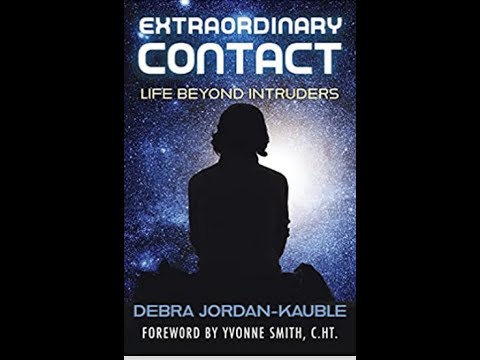
| 2021 | Jordan-Kauble publishes a third book, Extraordinary Contact: Life Beyond "Intruders", describing four further decades of claimed paranormal experiences |
The June 30, 1983 Sighting
By Jordan's account, she was washing dishes at her parents' kitchen sink around 6:00 P.M. after a takeout chicken dinner when she noticed an unusual bright or fluorescent-seeming light coming from the locked pool pump house in the backyard. Going outside to investigate, she reported being struck in the chest by what she described as a "blinding fist of light" — an electrifying, burning sensation that paralyzed her. Her next clear memory placed her ten to fifteen feet away on the patio, watching figures she described as "gliding, not walking" approach from the yard, alongside a glowing, white or egg-shaped object, before her conscious memory of the event ends.
Jordan's mother, present in the house at the time, separately reported seeing a basketball-sized ball of light near a backyard bird feeder that same evening — a detail this file treats as the case's single most significant piece of contemporaneous, non-hypnotically-recovered corroboration, since it was reported independently and close in time to the event itself, rather than emerging only later under regression. Neighbors who visited the yard to swim in the following days reportedly experienced nausea and sore or fuzzy eyes, and a teenage visitor reported a burning sensation after stepping on something in the grass, though none of these secondary reports were ever medically documented or independently investigated at the time.
When ordinary awareness returned, Jordan discovered that roughly two hours had passed beyond what she could consciously account for, of which she recalled only about fifteen minutes — the same basic "missing time" structure present in the Hill case more than two decades earlier and in the overwhelming majority of subsequent American abduction reports. In the days that followed, her eyes reportedly swelled shut, with a treating physician said to have compared the injury to unprotected exposure to arc-welding light, and she experienced an extended period of poor health (allergies, hair loss, an irregular heartbeat, and panic attacks) lasting more than a year. The family dog was also reported to have developed rapid hair loss and sores in the following months, ultimately requiring euthanasia — a detail Hopkins's investigation treated as circumstantially supportive of a genuine environmental or energetic event having occurred in the yard, though no veterinary record establishing a specific cause has ever been published.
The Barren Patch
Approximately a week after the incident, an area of ground in the backyard, reported at roughly eight feet in diameter with a longer trailing swath (estimates in published sources range from about twenty to nearly fifty feet), reportedly became bare, hardened, and resistant to grass regrowth — a condition some accounts describe as persisting for years, including remaining visibly bare through winter snow cover. This is the case's most frequently cited claimed physical evidence, and this file's own research was unable to locate any specific, named soil-science laboratory, university department, or published numerical test result establishing what, if anything, was actually found in the soil. One secondary account describes Hopkins collecting soil samples that required heating to roughly 800°F before laboratory analysis was possible, but no sourced report of what that analysis subsequently showed has been located. This file treats the barren patch as a genuinely reported, physically observable phenomenon — unlike the hypnotically-recovered narrative content, something visitors to the property could have seen with their own eyes without any hypnotic mediation — while explicitly flagging the absence of any traceable scientific analysis as a significant evidentiary gap rather than a confirmed anomalous finding.
The Hypnotic Regression Process
Over roughly two years following the initial sighting, Hopkins conducted an extended series of hypnotic regression sessions with Jordan, personally serving as the hypnotist despite having no formal clinical training in psychology or hypnotherapy — a fact both Hopkins and his supporters generally acknowledged openly rather than concealed, but one his critics treated as centrally disqualifying given hypnosis's well-documented capacity to shape rather than simply reveal recalled content. The sessions progressively recovered a childhood-onward pattern of claimed encounters: an incident at approximately age seven involving a boy with unusually large, dark eyes who reportedly lured her into a strange, toy-filled house; a teenage-years incident in which she and a friend were allegedly extracted from a car enveloped in a "black mist" for what she described as a medical examination; and, most consequentially, a claimed 1977 encounter in which she was reportedly impregnated by an alien father, followed some months later by a claimed non-surgical fetal removal.
The narrative reached its most publicized point in content Jordan recovered describing a 1983 reunion, in which she was reportedly shown a pale, frail hybrid child she named "Emily" and given to understand the child was the product of the 1977 pregnancy, raised in some non-terrestrial environment in the intervening years. Hopkins, and subsequently David Jacobs in his own independent research and books, treated this pattern — genetic material taken from human abductees, hybrid offspring produced and later shown to the human parent — as evidence of a systematic, generations-spanning alien breeding or hybridization program being conducted across many separate human subjects, of which Jordan's case became one of the most detailed and frequently cited individual examples.
The investigation's scope expanded beyond Jordan herself as it progressed: her sister Kathy Mitchell (given the pseudonym "Laura Davis" in Hopkins's book) was drawn into her own related hypnosis sessions and reported an independent abduction history of her own, and other family members and neighbors were incorporated into Hopkins's broader case file as the pattern of claimed encounters was traced across the extended family. This "spreading" structure, in which an initial witness's family and social circle progressively produce their own hypnotically-recovered abduction histories under the same investigator's guidance, closely parallels the earlier multi-generational pattern in Betty Andreasson's case and is a specific, recurring feature of Hopkins-investigated cases generally, discussed further in Historical Precedents below.
The specific narrative arc Hopkins's sessions produced — a witness's memory expanding, session by session, from a single recent encounter into an entire lifelong pattern of contact stretching back to early childhood — is itself a documented characteristic of extended hypnotic-regression investigations more broadly, not something unique to this case. Each individual session did not simply retrieve a static, pre-existing memory; it actively reconstructed one, and any detail introduced in an earlier session, whether through the hypnotist's own phrasing, an association drawn from something read or seen elsewhere, or the subject's own developing sense of what the narrative "should" contain to be complete, had ample opportunity to become incorporated as apparently-recovered memory in later sessions. Across roughly two years and, by extension, a correspondingly large number of individual sessions, this compounding effect had substantially more room to operate than in the single- or few-session hypnotic regressions used in many other, more evidentially conservative abduction cases — a specific methodological concern this file returns to in greater depth in Material Analysis below.
According to Hopkins's own published account, Jordan was also referred, during the course of the investigation, to a psychologist, Dr. Aphrodite Clamar, for standardized psychological testing intended to screen for conditions — psychosis, dissociative disorder, or a deliberate hoax — that might independently account for her reported experiences without requiring an anomalous explanation. The testing reportedly found no indication of pathology or conscious fabrication. This file notes that such a finding, while a genuine and appropriate step for an investigator to take, addresses only two of several possible non-anomalous explanations; it says nothing about the separate and better-documented possibility of unintentional confabulation under hypnosis, a process that occurs in psychologically healthy, non-pathological, entirely sincere subjects and was not the condition the testing was designed to detect. A negative pathology screen and a hypnotically-confabulated memory are not mutually exclusive, and treating the former as evidence against the latter conflates two distinct clinical questions.
Key Witnesses
Debbie Jordan-Kauble
The case's central witness and the source of virtually all specific narrative content beyond the original sighting, recovered across two years of hypnotic regression conducted by Budd Hopkins. Publicly revealed her real identity around 1992 and has remained an active figure in the UFO research community for decades, publishing two further books of her own and continuing to describe ongoing paranormal experiences as recently as 2021.
Kathy Mitchell
Drawn into Hopkins's investigation after her sister's case came to his attention, and underwent her own hypnotic regression sessions that reportedly recovered an independent abduction history. Co-authored Abducted! The Story of the Intruders Continues (1994) with Jordan-Kauble under their real names.
Budd Hopkins
Conducted every hypnotic regression session that produced this case's detailed evidentiary content, despite having no formal clinical training in psychology or hypnotherapy. Already prominent from his 1981 book Missing Time, Hopkins's investigation of this case and his subsequent bestselling book made it one of the most culturally influential single abduction cases of the 1980s, and his methodology here is directly comparable to his later investigation of the Linda Cortile case.
The Five Observables Assessment
Because nearly every specific claim in this case beyond the original sighting originates from hypnotically-recovered testimony, the assessment below documents what was reported rather than any independently confirmed data.
The Five Observables framework is applied to the performance characteristics reported in this case:
Assessment: The consciously-observed portion of this case — a glowing egg-shaped light and approaching figures — includes no specific claim of extreme flight performance; Jordan's account never describes the object in dynamic flight, only present and then, after the memory gap, gone. Anti-gravity lift is marked speculative rather than present or absent because the object's means of departure was never consciously witnessed at all, only inferred from its absence when awareness returned. This case's Five Observables profile is consequently thin even relative to other case files on this site, since its evidentiary weight rests almost entirely on witness/medical content (the missing time, the eye injury, the barren patch, the hypnotic narrative) rather than on any observed craft performance.
Evidence Assessment
Evaluating this case requires distinguishing clearly between three evidentiarily distinct layers: the brief, consciously-witnessed sighting itself; the physical aftereffects (the eye injury, the barren patch) reported in the days following; and the extensive hypnotically-recovered narrative that constitutes the great majority of the case's published content. Each layer carries different evidentiary weight, and this file's overall rating reflects that layered structure rather than treating the case as a single undifferentiated block of evidence.
Supporting Anomalous Origin
- Jordan's mother independently reported a ball of light in the yard that same evening, a detail not dependent on any subsequent hypnosis
- The reported eye injury, compared by a treating physician to arc-welding flash exposure, represents a real, physically observable medical presentation consistent with (though not proof of) intense light exposure
- The barren yard patch was a physically visible feature of the property that visitors could observe directly, independent of any hypnotic testimony
- Jordan had no documented prior involvement in UFO literature or contactee culture before this case, and the resulting fame brought as much scrutiny and skepticism as celebrity
- A prominent, established investigator (Hopkins) with an existing professional reputation found the case worth two years of sustained personal investigation
Supporting Conventional Explanation
- Nearly the entire detailed narrative — the childhood history, the pregnancy, the hybrid child — was recovered by a hypnotist with no formal clinical training, using a technique the broader scientific literature treats as a documented confabulation risk
- No named soil-science laboratory or published numerical test result establishing the barren patch's actual cause has ever surfaced despite decades of the claim's circulation
- The investigation progressively drew in Jordan's sister and other family members through the same hypnotist's sessions, a "spreading" pattern skeptics specifically cite as evidence of investigator-induced narrative contamination rather than independent corroboration
- No contemporaneous medical documentation of the neighbors' reported nausea or eye irritation, or of the family dog's reported illness, has ever been published
- The narrative's escalation over multiple books (1987, 1994, 2021) toward broader, less specific paranormal claims (poltergeist activity, EVP, ongoing entity communication) is a pattern more consistent with a developing personal belief system than with a single, bounded, verifiable event
Why "Disputed"
This case receives a DISPUTED classification reflecting a genuinely mixed evidentiary record in which real, physically observable elements (the mother's independent light sighting, the eye injury, the barren patch) coexist with an enormous body of hypnotically-recovered narrative content that this site's own general standards, applied consistently across every comparable case file, treat as carrying substantially reduced evidentiary weight.
The case's strongest point in its favor is structural: unlike many single-witness hypnotic-regression cases, this one begins with an independent, non-hypnotic corroborating observation (Jordan's mother's separately reported light) and includes physically observable aftereffects that did not require hypnosis to be documented. These are genuine strengths this file does not minimize. Working forcefully against the case, however, is the sheer scale of what was subsequently built from that initial kernel: a two-year, untrained-hypnotist-led investigation that produced an entire alternate personal history spanning childhood to the present, a claimed alien pregnancy and hybrid child, and a family-wide pattern replicated across Jordan's sister through the same investigative process — precisely the combination of factors (extended hypnosis, an untrained hypnotist, a "spreading" pattern across a witness's social circle) that the scientific literature on suggestibility, from Baker and Loftus through the later Clancy and McNally research on recovered-memory abduction claims, most directly identifies as producing confabulated rather than genuinely recovered content.
This rating is calibrated against this site's other major hypnotic-regression cases, including the Betty and Barney Hill case that established the template this case extended, and the later Linda Cortile case Hopkins investigated using the same essential methodology. It sits in a comparable evidentiary tier to those cases: not simply unconvincing, but a case whose most detailed and dramatic content is inseparable from a specific, well-documented methodological vulnerability, while its more modest, non-hypnotic elements remain genuinely unresolved rather than debunked.
Sensor & Instrumentation Detection Profile
No radar, military, or civilian aviation instrumentation of any kind is documented anywhere in the available record for this case. The sighting occurred at a private residence rather than any location where such instrumentation would ordinarily be present, and no source indicates any attempt was made to request contemporaneous FAA or military radar data for the area around the reported time.
The closest analogue to instrumented data in this case is the psychological and physiological testing (EEG, EKG) Hopkins arranged with psychologist Dr. Aphrodite Clamar. This testing, as generally reported, was directed at assessing Jordan's psychological state and the sincerity of her account rather than at independently verifying any specific claimed event, and this file treats it accordingly — as evidence potentially relevant to her credibility as a witness, not as instrumented confirmation of the abduction narrative itself.
Environmental & Geospatial Context
"Copley Woods" is understood to be a pseudonym Hopkins assigned to protect the family's privacy, for a residential neighborhood on the east side of Indianapolis, Indiana. This file does not attempt to identify or publish the family's actual historical address, consistent with the pseudonymous framing the case has always been publicly discussed under and with this site's general practice of not publishing private individuals' home addresses.
No specific environmental or atmospheric phenomenon has been proposed in the published literature as an explanation for the original light sighting, and this file was unable to identify any published misidentification analysis (aircraft, ball lightning, atmospheric electrical phenomenon) specific to this case's original sighting despite its overall prominence — a genuine gap in the existing literature, since the great majority of published commentary on this case, both supportive and skeptical, focuses on the hypnotically-recovered narrative content rather than on the conventional-explanation question for the brief original sighting itself.
Indianapolis sits within regular, heavy commercial and general-aviation traffic corridors, including approach paths associated with Indianapolis International Airport to the southwest, a factor any future conventional-explanation analysis of the original light sighting would need to account for but which no located source has yet formally and rigorously examined in connection with this specific case.
Observer Credibility & Occupational Profile
Jordan-Kauble had no documented prior involvement in UFO research, contactee culture, or comparable extraordinary claims before this case, a detail her supporters have consistently cited as evidence against a motive for fabrication. She was, at the time, a young mother with no public profile, and the resulting fame — a bestselling book, a network television miniseries, decades of subsequent media attention — arrived only after Hopkins's investigation and book publication, rather than being sought from the outset.
Working against this consideration is Jordan-Kauble's own subsequent, sustained, and expanding public engagement with the paranormal over four decades: continued UFO conference appearances into the 2020s, a self-founded paranormal research organization, and a 2021 book describing an escalating range of claimed phenomena well beyond the original 1983 case (poltergeist activity, electronic voice phenomena, ongoing entity communication). This pattern does not, on its own, establish that the original 1983 account was fabricated, but it is a genuine and relevant data point about how the witness's relationship to extraordinary claims generally has evolved since the case first became public, one this file weighs when assessing how much independent standing the original account retains apart from everything built onto it in the decades since.
It is worth stating explicitly what this file does and does not conclude from that later trajectory. A witness whose engagement with the paranormal deepens rather than fades over decades is not, by that fact alone, less credible about a single specific event that occurred before any of that later engagement began; sincere believers are not automatically unreliable narrators of their own original experience, and treating ongoing paranormal interest as itself disqualifying would apply an inconsistent standard this site does not apply to comparable witnesses elsewhere. What this file does conclude is narrower: that an evaluator attempting to isolate exactly what happened on the single evening of June 30, 1983 must do so without simply importing the credibility, or lack of it, that decades of subsequent, evidentially unrelated claims might seem to lend or subtract. The original sighting and its immediate physical aftereffects stand or fall on their own specific evidentiary merits, discussed throughout this file, independent of whatever the witness has said or experienced in the years since.
Physical & Material Assays
The two claimed physical elements in this case — the reported eye injury and the barren backyard patch — represent this file's most substantive physical evidence discussion, and both are treated with appropriate caution given the absence of surviving primary documentation for either.
The reported eye injury, compared by an unnamed treating physician to unprotected arc-welding exposure, is not documented in any published medical record this file's research was able to locate; the comparison exists only as a detail relayed in secondary retellings of the case rather than as a citable clinical finding. The barren patch, discussed at length in Background above, likewise lacks any traceable soil-science laboratory report despite the specific, repeated claim that samples were collected and analyzed. Neither absence proves the underlying physical observations were fabricated — contemporaneous documentation for private, non-newsworthy-at-the-time medical and property conditions from the early 1980s is frequently simply lost to time — but neither can this file treat either claim as scientifically established without a surviving primary record to examine.
Historical Precedents & Archive Matches
These comparisons situate the case within its broader historical genre; none imply that this file's conclusions about any comparison case automatically transfer to Jordan-Kauble's own account, which this site evaluates independently on its own specific evidence.
The case follows and substantially extends the missing-time-plus-hypnotic-recovery template established by the 1961 Betty and Barney Hill case, sharing that case's basic structure (an ordinary evening interrupted, a memory gap, a detailed narrative recovered only under hypnosis) while going considerably further in scale and in the specific claimed content (a multi-decade personal history, a hybrid child, a family-wide pattern). It is also directly and specifically comparable to The Linda Cortile "Brooklyn Bridge" Abduction, Budd Hopkins's other major case, investigated using the identical core methodology roughly a decade later; comparing the two cases together is instructive for isolating what, if anything, is specific to Jordan-Kauble's own account versus what may simply reflect Hopkins's own general investigative approach and its particular strengths and vulnerabilities, independent of any individual witness.
The Pascagoula Abduction of 1973 offers a useful contrast rather than a close parallel: unlike this case, Pascagoula's central content was recovered through immediate, non-hypnotic testimony from two independent witnesses corroborating each other within hours of the event, a structurally stronger evidentiary foundation than a narrative built almost entirely across two years of hypnotic sessions with a single primary witness. The "family-spreading" pattern in this case, in which Jordan's sister independently produced her own abduction history under the same hypnotist's guidance, closely parallels a similar multi-generational pattern documented in Betty Andreasson's own case history, and this file notes the recurrence of this specific structural feature across multiple different Hopkins-adjacent and hypnosis-heavy cases as itself a relevant pattern for evaluating the methodology's general reliability, independent of any single case's specific content.
The broader "abduction wave" this case both drew from and substantially reinforced also owes a significant debt to Whitley Strieber's 1987 bestseller Communion, published the same year as Hopkins's own book, which brought a strikingly similar narrative of childhood-onward contact and hypnotically-assisted recall to an even larger mainstream readership. The near-simultaneous commercial success of both books is itself a data point worth noting: it suggests a reading public and publishing industry already primed for this specific narrative structure by the late 1980s, an environment in which any individual case's hypnotically-recovered content, however sincerely reported by both witness and investigator, cannot be evaluated in full isolation from the surrounding cultural narrative it was also, inevitably, shaped by and contributing to in turn.
This case's specific role in codifying the "breeding program" narrative also deserves comparison to how that narrative developed afterward, beyond Hopkins's own subsequent work. David Jacobs's later research, drawing on his own more than 700 hypnotic-regression sessions conducted across the 1990s and 2000s, extended the same basic framework this case helped establish into an increasingly systematized theory of covert societal infiltration by hybrid offspring, culminating in his 1998 book The Threat and 2015 book Walking Among Us. Jacobs's own methodology later drew serious, well-documented criticism after a research subject using the pseudonym "Emma Woods" released audio recordings of dozens of their 2004–2007 sessions, alleging Jacobs had guided her toward specific, increasingly extreme confabulated content — a controversy that became a central case study in the same broader debate over hypnotic regression's reliability this file's own Material Analysis section addresses in connection with Hopkins's methodology here. Tracing this direct methodological and thematic lineage — from the Hill case's original template, through Hopkins's development of the extended, untrained-hypnotist-led regression process in this specific case, to Jacobs's later, even more elaborate systematization of the same essential framework — situates this case not as an isolated data point but as a genuine hinge moment in the specific historical development of American abduction research methodology.
Material Analysis
This case's evidentiary record is dominated by testimonial rather than physical material, and this section examines both the specific skeptical literature that engaged directly with the case and the broader methodological critique of hypnotic regression it became a central exhibit for.
Philip Klass's Investigation
Philip J. Klass, the era's most prominent UFO skeptic, devoted a dedicated chapter to this case in his 1988 book UFO Abductions: A Dangerous Game, part of a broader project examining the reliability of hypnotically-recovered abduction testimony across several prominent contemporary cases. Klass's general position on hypnotic regression — that a hypnotist can, consciously or unconsciously, shape a suggestible subject's recovered content through leading questions and cumulative narrative pressure across repeated sessions — applies with particular force to a two-year investigation conducted by a hypnotist with no formal clinical training, and Klass's treatment of this specific case is generally understood to have argued that its physical claims (the barren patch, the reported injuries) admit of conventional, terrestrial explanations rather than requiring an anomalous cause.
Klass's chapter-length treatment was part of a broader pattern of skeptical engagement with the case that extended well beyond his own book. The Committee for the Scientific Investigation of Claims of the Paranormal, of which Klass was a founding fellow, covered the case's rise to national prominence in its journal Skeptical Inquirer as one of several representative examples of what the organization characterized as an emerging and, in its view, methodologically unsound "abduction industry" built around untrained hypnotists, popular books, and made-for-television dramatization outpacing any corresponding growth in rigorous, independently replicable evidence. This case, arriving as it did with a major network miniseries and sustained bestseller-list presence, was repeatedly cited in that broader critique as illustrative of how commercial and media incentives could accelerate a case's cultural reach far beyond what its underlying evidentiary record, on its own, would ordinarily support.
The Broader Scientific Critique of Hypnotic Regression
This case's investigative timeline places it near the height of what later researchers would call the "memory wars" — the broader 1980s and 1990s scientific and legal controversy over recovered-memory therapy generally, of which hypnotically-recovered abduction testimony became one prominent sub-genre. Psychologist Robert A. Baker, in his 1990 book They Call It Hypnosis, argued that hypnotic regression can transform "a dream, a hallucination, or a fantasy into a seemingly real event," a critique aimed directly at exactly the kind of extended, untrained-hypnotist-led regression process used in this case. Cognitive psychologist Elizabeth Loftus, whose foundational research on the misinformation effect and leading questions reshaped the broader scientific understanding of eyewitness memory, separately identified subtle but powerful suggestive cues embedded in Hopkins's hypnosis transcripts specifically. On live television, LAPD founding staff psychologist Martin Reiser directly challenged Hopkins on ABC's 20/20 in May 1987, arguing that mundane explanations existed for the reported sighting and that Hopkins's methodology pressured suggestible subjects toward a predetermined narrative conclusion.
Later academic research, conducted after this specific case's most active period but directly relevant to evaluating it retrospectively, lends further support to this general critique. Harvard psychologists Susan Clancy and Richard McNally, studying individuals reporting recovered or hypnotically-assisted alien-abduction memories in the early 2000s, found this population scored measurably higher than control subjects on standardized tests of false recall and false recognition, and identified elevated fantasy-proneness and "magical ideation" as associated personality traits — a general psychological finding this file notes as relevant context for the broader case category this file belongs to, without treating it as a specific, individualized diagnosis of Jordan-Kauble herself, whom this research did not study directly.
Psychologists Leonard Newman and Roy Baumeister separately proposed a specifically social-psychological account of the abduction-narrative phenomenon, arguing that hypnotic regression sessions do not merely fail to reveal a pre-existing abduction narrative but actively participate in creating one, through a collaborative process between hypnotist and subject in which each successive session's content is shaped by the expectations, however unintentional, both parties bring into the room. Applied to this case specifically, that framework offers a plausible account of how an initial, genuinely disorienting light experience could, across two years of sessions with an investigator already professionally and personally invested in the abduction-phenomenon hypothesis, progressively expand into a narrative as extensive and thematically coherent as the one this case ultimately produced — not through any single dramatic act of fabrication by either party, but through the ordinary, well-documented mechanics of how extended hypnotic regression actually operates.
The Methodological Case Against Extended Hypnotic Regression
- Hopkins had no formal clinical training in psychology or hypnotherapy despite personally conducting every regression session
- Sessions extended across roughly two years, providing extensive opportunity for cumulative narrative elaboration between sessions
- The investigation progressively drew in additional family members through the same hypnotist, replicating the exact pattern (investigator-induced "spreading") identified as a specific risk factor in comparable cases
- No independent replication of the case's central claims by a separately-trained hypnotist or clinical psychologist has ever been documented
The Conventional Explanation Candidate: A Genuine, Misidentified Event Elaborated Through Untrained Hypnotic Regression
The most parsimonious conventional explanation does not require treating Jordan-Kauble as dishonest. It holds that she and her mother genuinely observed an unusual light phenomenon in the backyard that evening — conceivably a rare atmospheric electrical event, a misperceived conventional light source, or some other terrestrial phenomenon this file's research was unable to specifically identify given the absence of any published misidentification analysis — that produced genuine disorientation, a real subjectively-perceived time gap, and genuine subsequent physical symptoms (the eye irritation, the family's later illnesses), all without any abduction ever taking place. The subsequent two years of hypnotic regression, conducted by an investigator with no formal clinical training and using a technique with a well-documented capacity to generate rather than merely recover detailed narrative content, then progressively constructed the extensive childhood-to-present abduction history, the pregnancy narrative, and the hybrid-child content now associated with the case.
The Barren Patch as Conventional Soil Phenomenon
Absent any traceable laboratory report, this file cannot rule out entirely mundane causes for the reported barren patch — localized soil contamination from a spilled chemical or fuel, a buried utility line or septic feature affecting drainage and root growth, fungal or bacterial soil pathogens capable of producing a persistent bare patch (a well-documented, if less dramatically named, phenomenon in residential lawn care), or simple foot traffic compaction reinforced by the property's own subsequent reputation once the story became locally known. This candidate is offered honestly as one of several live possibilities rather than a confirmed finding, precisely because the absence of a real soil analysis cuts both ways: it neither confirms an anomalous cause nor definitively establishes a mundane one.
Deliberate Fabrication
No specific evidence of deliberate fabrication has surfaced in any source this file was able to locate regarding the original 1983 sighting: no documented financial motive at the outset (the book deal and subsequent fame followed the investigation rather than motivating it), no prior history of comparable claims before this case, and a family structure (a mother independently reporting a corroborating light) that would have required coordination to fabricate from the very beginning. This file finds no specific basis to treat the original sighting as a deliberate fabrication, while noting the candidate must still be formally acknowledged, and separately noting that this assessment applies most confidently to the original 1983 event rather than to the full, decades-expanded body of subsequent claims.
What Would Resolve This Case Further
Moving this case's rating beyond Disputed in either direction would most plausibly require locating any surviving contemporaneous medical record of the reported eye injury, any surviving soil sample or laboratory documentation from the barren-patch analysis, or Hopkins's own original, unpublished session-by-session hypnosis notes and recordings (his professional papers are known to be archived, though this file's research could not confirm public accessibility of the Copley Woods material specifically). None of this material is known to have surfaced publicly in the decades since the case's original investigation.
A Genuinely Anomalous Encounter
The candidate this file's own rating treats as least likely, though not impossible, holds the account largely at face value: that Jordan-Kauble underwent a real, sustained abduction and reproductive-program experience substantially as recovered under hypnosis, with the barren patch and physical symptoms representing genuine physical traces of a real anomalous event. Proponents of this reading, including Hopkins and subsequently David Jacobs, point to the volume and internal consistency of the recovered material, and to the corroborating elements (the mother's independent sighting, the physical aftereffects) as exceeding what pure confabulation would typically produce. This file's own assessment gives this candidate meaningfully less weight than the confabulation-atop-a-genuine-event candidate specifically because the overwhelming majority of the case's most distinctive and dramatic content — the pregnancy, the hybrid child, the childhood history — originates from the same untrained, extended hypnotic-regression process the broader scientific literature identifies as a documented risk factor for exactly this kind of elaborate, internally consistent, but ultimately confabulated narrative.
Genuine Event Elaborated Through Untrained Hypnotic Regression
PlausiblePLAUSIBLE. Best accounts for the independently-corroborated original sighting and physical aftereffects alongside the enormous, methodologically vulnerable body of hypnotically-recovered narrative content built atop it.
Barren Patch as Conventional Soil Phenomenon
InconclusiveINCONCLUSIVE. Several genuine mundane candidates exist, but the absence of any traceable laboratory analysis prevents confirming or ruling out either an anomalous or conventional cause.
Deliberate Fabrication
ImplausibleIMPLAUSIBLE as the primary explanation for the original 1983 sighting. No documented pre-existing motive, prior claims, or evidence of the coordination fabrication would have required from the outset.
Genuinely Anomalous Encounter (At Face Value)
InconclusiveINCONCLUSIVE. Supported by the case's internal detail and partial independent corroboration, but undercut by the same untrained, extended hypnotic process that produced nearly all of the case's most distinctive specific claims.
Related Cases
The three cases below each share this case's core hypnotic-regression methodology or its investigator, while differing in ways that usefully illustrate the range of outcomes that methodology can produce.
Confirmed Documents & Official Records
No Project Blue Book, U.S. Air Force, or other government agency investigation of this case is known to exist — Jordan reported her experience to a civilian researcher rather than through any official channel, and Project Blue Book had itself been formally terminated in December 1969, nearly fourteen years before this event.
Search Government & Military Archives Directly
Further Reading — Recommended Literature
This site's own Essential Reading feature on Intruders and its dedicated Genetic Hybridization Program Hypothesis theory page cover the book's arguments and the broader breeding-program framework this case helped establish in greater depth; the five titles below broaden that coverage to the witnesses' own later accounts and the leading skeptical literature.
Intruders: The Incredible Visitations at Copley Woods
The original bestseller that made this case internationally famous and helped establish the "breeding program" narrative in American abduction literature; essential primary-source reading for the investigator's own account of the case.
Abducted! The Story of the Intruders Continues
The witnesses' own account, published under their real names after their identities became public, offering the primary subjects' own retrospective perspective on the case.
Extraordinary Contact: Life Beyond "Intruders"
Jordan-Kauble's most recent book, describing four further decades of claimed experiences and offering insight into how her relationship to the original case has evolved over time.
UFO Abductions: A Dangerous Game
Includes a dedicated critical chapter on this specific case, part of the era's leading skeptic's broader project examining the reliability of hypnotically-recovered abduction testimony.
They Call It Hypnosis
A foundational scientific critique of hypnotic regression's reliability, directly relevant to evaluating the specific methodology used to produce this case's central content.
DISCLOSURE: Some links above are affiliate links. If you purchase through them, OverClassified receives a small commission at no additional cost to you. This helps support independent research.
Essential Viewing
Sources
- "Intruders (miniseries)," Wikipedia. en.wikipedia.org
- "Budd Hopkins," Wikipedia. en.wikipedia.org
- "Philip J. Klass," Wikipedia. en.wikipedia.org
- "Perspectives on the alien abduction phenomenon," Wikipedia. en.wikipedia.org
- "The Copley Woods Incident: Abduction or Supernatural Events?" UFO Insight. ufoinsight.com
- "Kathie Davis / Copley Woods," UFO Casebook. ufocasebook.com
- "Intruders in Indianapolis," Indiana UFOs. indianaufos.com
- "Debbie Jordan-Kauble," International UFO Congress biography. ufocongress.com
- "Debra Jordan Kauble," MUFON Symposium 2025. mufonsymposium.com
- "The Life of a UFO Contactee with Debra Jordan Kauble," New Thinking Allowed. newthinkingallowed.org
- "Intruders: Parts I & II" review, Variety, 1992. variety.com
- "Looking Back at Intruders," ExoNews. exonews.org
- "When Words Collide: An Exchange" (Hopkins/Jacobs and Frederick Crews), The New York Review of Books, 1998. nybooks.com
- Skeptics UFO Newsletter archive (Philip J. Klass, 1981–2003). archive.org
- Hopkins, Budd. Intruders: The Incredible Visitations at Copley Woods. Random House, 1987.
- Jordan-Kauble, Debbie & Mitchell, Kathy. Abducted! The Story of the Intruders Continues. Carroll & Graf, 1994.
- Klass, Philip J. UFO Abductions: A Dangerous Game. Prometheus Books, 1988.
- Baker, Robert A. They Call It Hypnosis. Prometheus Books, 1990.
- "Extraordinary Contact: Life Beyond 'Intruders,'" book listing. amazon.com
See something inaccurate? Have additional information or sources?
Suggest an Edit →Last Updated: August 2026