
Extraordinary Contact
Life Beyond "Intruders"
Core Thesis
Extraordinary Contact: Life Beyond "Intruders" is Debra Jordan-Kauble's own 2021 first-person account of the four decades that followed the case that made her famous under a pseudonym: on June 30, 1983, in her parents' backyard in Indianapolis, Indiana, she reported being struck by a "blinding fist of light" and losing roughly two hours to missing time — the event this site documents in full at The Kathie Davis / Copley Woods Case. Two years of hypnotic regression conducted by Budd Hopkins recovered a claimed decades-spanning abduction history culminating in an alien-fathered pregnancy and a hybrid child she named "Emily," published pseudonymously as "Kathie Davis" in Hopkins's 1987 bestseller Intruders: The Incredible Visitations at Copley Woods. This book is her own, third and most personal telling of that story, written under her real name and extending the narrative through poltergeist-type disturbances, electronic voice phenomena, premonitions, and continued claimed non-human contact she says has followed her for the rest of her adult life — a genuinely rare document in abduction literature: the primary subject's own long-view retrospective on a case that made her a public figure against her will.
About the Author
Debra Jordan-Kauble was an Indianapolis mother when her 1983 experience was recovered and published by Budd Hopkins under the pseudonym "Kathie Davis." She revealed her real identity publicly around 1992, the same year Intruders was adapted into a CBS television miniseries, and has remained an active, named figure in UFO research and media for more than three decades since.
Her first book under her own name, Abducted! The Story of the Intruders Continues (1994), co-written with her sister Kathy Mitchell, extended the original narrative shortly after her identity became public. Extraordinary Contact, published nearly three decades later in 2021, represents a substantially longer retrospective view — written by an author in her sixties looking back on a claimed lifetime of anomalous experience rather than a young mother in the immediate aftermath of a sudden public unmasking.
Jordan-Kauble has continued to appear in UFO-research media in the years since, including interviews on Whitley Strieber's Dreamland program, positioning her as one of the field's longest continuously active named abduction claimants — a distinction relatively few of the 1980s-era "classic" abduction cases share, since many of that era's central witnesses (including Hopkins's other prominent cases) either kept their pseudonyms permanently or did not remain public figures for decades afterward.
Historical Context & Origins
This book arrives at the far end of a publishing arc this site's own Kathie Davis / Copley Woods case file documents in full: Hopkins's 1987 Intruders established the pseudonymous case and its most famous details (the "blinding fist of light," the claimed hybrid daughter "Emily"); the 1992 CBS miniseries and Jordan-Kauble's own identity reveal that same year made her a public figure; her 1994 Abducted! extended the story in her own voice for the first time; and this 2021 book represents a further twenty-seven-year gap, during which the broader UAP research landscape shifted dramatically — from 1990s tabloid-adjacent abduction culture toward the more institutionally credentialed, Pentagon-adjacent UAP disclosure movement of the 2020s that this site's own case-file catalogue extensively covers.
The book's genre — a primary claimant's own late-life retrospective memoir, published decades after the case that made them notable rather than in its immediate aftermath — is genuinely uncommon in abduction literature, where most books are written either by the investigating researcher (as with Hopkins's own Missing Time and Intruders) or by the claimant shortly after the case becomes public rather than decades into a continuing claimed experience. This positions the book as a useful primary source for understanding how a claimed abduction experience is described by the same person across a genuinely long personal timeline, independent of whether the underlying claims themselves are accepted.
Core Arguments & Key Concepts
The book's central claim is continuity: that the 1983 Copley Woods experience was not an isolated incident but one recovered episode within a claimed lifetime pattern of non-human contact that has continued, in various forms, for the four decades since — an argument that extends rather than revises the basic framework Hopkins's original hypnotic-regression-based investigation established.
A second argument concerns scope: where Intruders focused narrowly on the reconstructed abduction history and the claimed hybrid pregnancy, this book widens the claimed phenomena considerably to include poltergeist-type household disturbances, electronic voice phenomena, premonitions, synchronicities, and what the book's own marketing describes as experiences with "the afterlife" — a broadening into general "high strangeness" territory beyond the more narrowly defined abduction-and-hybridization narrative that made the original case famous.
A third, more implicit argument runs through the book's own framing as a story of "resilience and growth in the face of trauma, tragedy and loss": Jordan-Kauble presents her decades of claimed experience as inseparable from her lived personal history rather than as a discrete research subject to be investigated and resolved — a framing this article treats as a legitimate and important part of understanding how a real person actually experiences being the center of one of ufology's best-known cases, distinct from any separate question about the objective reality of the claimed events themselves.
Key Cases & Evidence Discussed
This site's own The Kathie Davis / Copley Woods Case (Case File #324, June 30, 1983, Disputed) is this book's entire subject and the case that made its author a public figure. The case file's own account of the original sighting — Jordan's report of a "blinding fist of light" in her parents' backyard, her mother's independent, non-hypnotically-recovered corroborating report of a basketball-sized light near a bird feeder that same evening, and neighbors' undocumented secondary complaints of nausea and eye irritation in the following days — is the foundational event this book's four further decades of narrative build outward from.
This site's own essential-reading coverage of Budd Hopkins's Intruders covers the original 1987 investigation and pseudonymous publication this book directly continues; reading the two together traces the case's full arc from an outside investigator's hypnosis-based reconstruction to the claimant's own, much later, first-person retrospective in her own name.
The case file's own Essential Viewing section already features a 2021 video interview with Jordan-Kauble discussing both the original case and this book's publication, reflecting the same real-time continuity this article's own research documents between the case's original investigation and its author's continued, decades-long public engagement with her own story.
This site's own Allagash Waterway Abduction (Case File #45, August 20, 1976, Disputed) is a useful comparison case investigated using the same hypnotic-regression methodology Hopkins applied to Jordan-Kauble's own case, and shares the same basic evidentiary profile this article applies to both: a vivid, internally consistent recovered narrative resting almost entirely on hypnotically-assisted testimony, with limited independent, non-hypnotic corroboration.
Critical Reception & Controversies
Reader response is strongly positive (4.6 out of 5 stars across 172 ratings on Amazon.com at time of research, with UK and Goodreads figures in a similar range), with reviewers specifically praising the author's candor and the personal, vulnerable quality of a first-person account written by the actual claimant rather than an investigating researcher. One reader review specifically credited the book's "bravery and detailed account" of the claimed experiences.
At least one available review, while broadly positive, offered the same measured caveat any first-person paranormal memoir invites: that readers "may question the interpretations of the events" the book describes — a fair, unresolved tension this article does not attempt to settle either way. As with this site's treatment of Hopkins's original Intruders and Missing Time, the central methodological limitation of hypnotically-recovered abduction memory (the well-documented scientific controversy over hypnotic regression's reliability for accurate memory retrieval, rather than for producing vivid but potentially confabulated narrative) applies with equal force to this book's own claimed decades of continued experience, most of which rest on the author's own testimony without the kind of independent corroboration the original case's single strongest evidentiary point (her mother's same-night light report) provided.
This book has not, per available research, drawn the kind of dedicated skeptical rebuttal that higher-profile abduction literature (Hopkins's own Intruders, or Whitley Strieber's Communion) has received, likely reflecting its narrower readership and its framing as a personal memoir rather than a work of investigative argument — this article notes that absence honestly rather than manufacturing a skeptical counter-position the available record does not support.
Influence & Legacy
The book's most significant contribution is documentary: it gives one of ufology's most famous pseudonymous case subjects the final word on her own story, in her own name, after nearly forty years — a genuinely rare completion of a narrative arc that, for most comparable 1980s abduction cases, simply ends with the original researcher's book and the claimant's continued anonymity or silence.
On this site specifically, this book functions as the most current primary source for understanding how the Kathie Davis / Copley Woods case's own central claimant now frames her own decades-long experience, cited directly on that case file's own Further Reading list as describing "four further decades of claimed experiences and offering insight into how her relationship to the original case has evolved over time."
Within the broader abduction-literature genre, this book represents a small but real trend this site's own library has independently begun documenting: primary claimants (rather than only their investigating researchers) publishing their own long-view retrospective accounts decades after the cases that made them notable, extending rather than superseding the earlier, researcher-authored classics that first brought their stories to public attention.
The Book
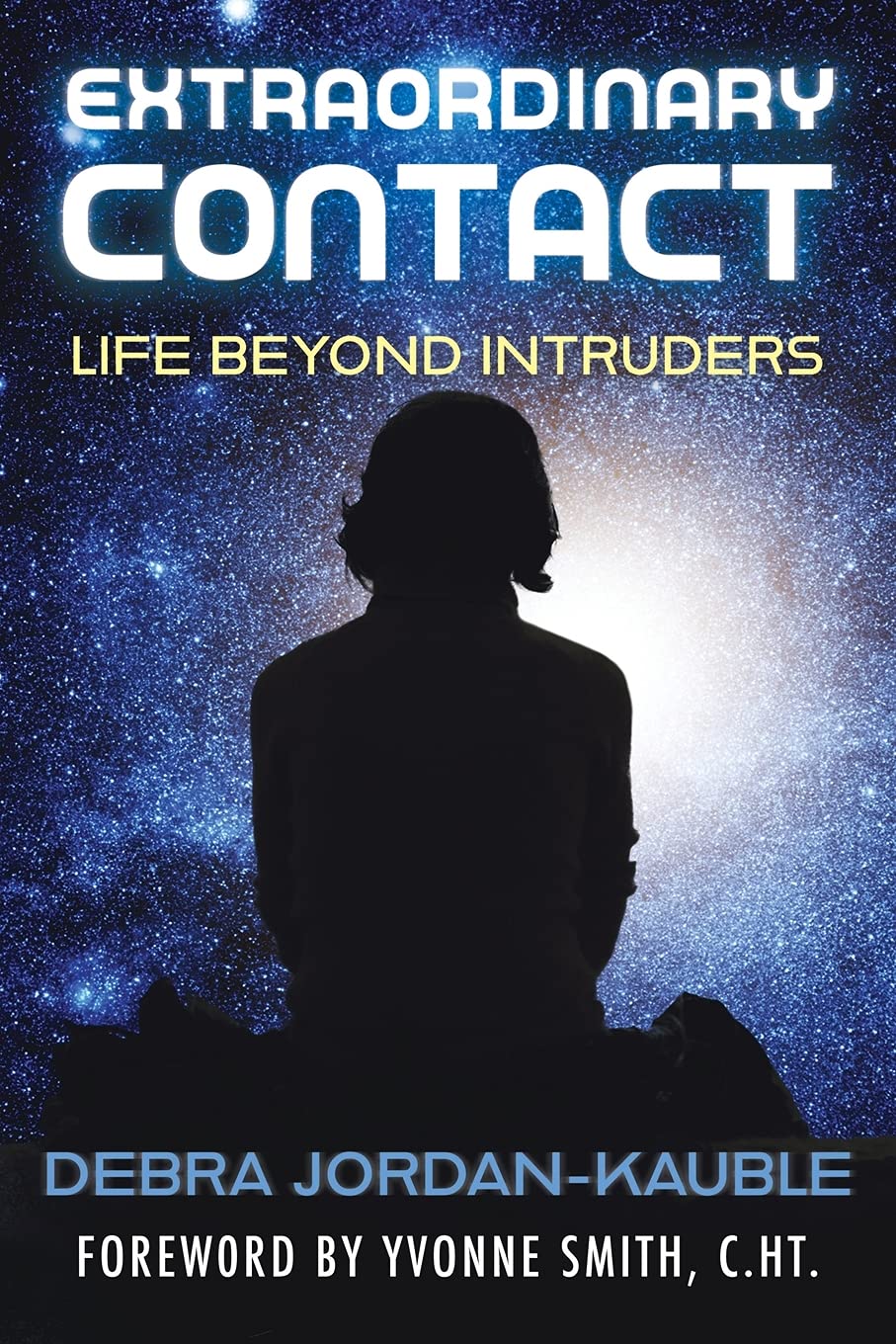
As an Amazon Associate, OverClassified may earn from qualifying purchases made through this link, at no extra cost to you.
Why This Is Essential Reading
Extraordinary Contact earns its place on this list not for new independently verifiable evidence — it offers essentially none beyond the author's own continued testimony — but for what it uniquely is: the primary subject of one of ufology's most famous cases telling her own story, under her own name, across a genuinely long personal timeline that few comparable cases have documented this completely. Read alongside this site's own Kathie Davis / Copley Woods case file and Budd Hopkins's original Intruders for the case's full documented arc, from a researcher's 1987 hypnosis-based reconstruction to the claimant's own 2021 retrospective in her own words — and hold the same methodological caution about hypnotically-recovered and decades-retold memory that applies to the original case equally here.
Related Cases & Theories
Sources Cited
- Jordan-Kauble, Debra. Extraordinary Contact: Life Beyond "Intruders". White Crow Books / August Night Press, 2021 (ISBN-13 9781786771551). amazon.com
- "Extraordinary Contact: Life Beyond 'Intruders'." White Crow Books (publisher's own product page, publication details). whitecrowbooks.com
- "Extraordinary Contact: Life Beyond Intruders." Goodreads (reader ratings and reviews). goodreads.com
- This site's own resources library: Full Reading List, where this book is cited on the Kathie Davis / Copley Woods case file's own Further Reading list.
- This site's own case file: The Kathie Davis / Copley Woods Case, for the full original 1983 case and its documented four-decade aftermath.
- This site's own key-figures entry: Debbie Jordan-Kauble, for her full biography and case connections.
- This site's own key-figures entry: Budd Hopkins, for the original investigating researcher's own career and methodology.
- This site's own essential reading entry: Intruders, for Hopkins's original 1987 investigation and pseudonymous publication of this same case.
- This site's own case file: Allagash Waterway Abduction, for a comparable hypnotic-regression-based case investigated by Hopkins.
- "Extraordinary Contact: Life Beyond 'Intruders'." Amazon.com (product listing, 4.6/5 across 172 ratings at time of research). amazon.com
- "Intruders (miniseries)." Wikipedia (1992 CBS television adaptation of Hopkins's original book). en.wikipedia.org
- "Hypnosis." The Skeptic's Dictionary (scientific controversy over hypnosis's unreliability for accurate memory retrieval, general background relevant to hypnotically-recovered abduction narratives). skepdic.com
Have corrections, additional research, or peer-reviewed sources? Help improve this entry.
Suggest an Edit