
UFO Abductions
A Dangerous Game
Core Thesis
UFO Abductions: A Dangerous Game is Philip J. Klass's 1988 skeptical critique of hypnotic-regression abduction investigation, cited on this site across four separate case files. Its strongest, best-documented connection is to the case this site's own Kathie Davis / Copley Woods file covers in full: Klass devoted a dedicated critical chapter to the case investigated by Budd Hopkins in Indianapolis, Indiana, and made famous by his bestselling book Intruders, and the book's title itself appears to derive directly from Klass's own characterization of Hopkins-style hypnotic regression as a "dangerous game" capable of producing false memories rather than recovering real ones.
About the Author
Philip J. Klass (1919–2005) trained as an electrical engineer at General Electric before spending more than three decades, from 1952 until his 1986 retirement, as senior avionics editor at Aviation Week & Space Technology, where he is credited with coining the term "avionics" itself. He was a founding member of CSICOP (the Committee for the Scientific Investigation of Claims of the Paranormal) in 1976, alongside Carl Sagan, Isaac Asimov, and James Randi, and later received CSI's Distinguished Skeptic Award in 1994. He authored seven UFO-related books, most notably UFOs Explained (1974) and UFOs: The Public Deceived (1983), and ran the Skeptics UFO Newsletter for years.
Klass's own reputation is itself a documented part of ufology's history, distinct from any specific case's merits: he was known for aggressively challenging critics, including a widely reported "UFO Curse" episode in which he offered cash bets to proponents willing to stake their credibility on specific claims. This site's own coverage of his other book, UFOs: The Public Deceived, already treats his combativeness as a documented, relevant fact about him as a source, and this article carries that same context forward rather than treating him as a neutral, disinterested critic.
Historical Context & Origins
The book's chapter list, confirmed via a full scanned copy, includes dedicated treatments of the Betty and Barney Hill case, Travis Walton, Betty Andreasson, and Whitley Strieber's Communion, alongside chapters titled "The truth about hypnosis," "'Missing-time' victims," and "Many dreams, many abductions." Its most consequential chapter for this site's purposes is its dedicated critical treatment of the Kathie Davis case, since that chapter's argument — that hypnotic regression can implant rather than recover memories — is the book's central, organizing thesis.
This article is careful about what could and could not be independently confirmed regarding the other three case files that cite this book. The Myrna Hansen case is plausibly covered given Klass's extensive parallel work on the Bennewitz/Dulce Base material in his newsletter, but this article could not confirm a specific chapter devoted to her case by name. The Stanford, Kentucky case (Louise Smith, Mona Stafford, and Elaine Thomas) is a plausible thematic fit as an early hypnosis-based multi-witness case but likewise could not be confirmed at the chapter level. This site's own Imphal Airport case file cites this book only as a general skeptical-framework reference, not a claim of specific coverage — correctly, since that 2023 incident postdates this 1988 book by thirty-five years, and this article does not suggest otherwise.
The Myrna Hansen case, from Cimarron/Eagle Nest, New Mexico in 1980, involved hypnosis conducted by Dr. R. Leo Sprinkle and testimony arranged through Paul Bennewitz, later feeding into the broader Dulce Base conspiracy material Klass separately addressed at length in his own newsletter. The Stanford, Kentucky case, from January 1976, involved three named witnesses, Louise Smith, Mona Stafford, and Elaine Thomas, investigated by MUFON's Jerry Black and CUFOS's own J. Allen Hynek. Both cases share the same basic structural profile the book's title thesis targets: hypnotically recovered testimony treated as reliable evidence of alien contact, the exact investigative pattern Klass argued was methodologically unsound regardless of which specific case it was applied to.
Core Arguments & Key Concepts
The book's central, title-defining argument is that hypnotic regression, as practiced by investigators like Budd Hopkins in the Kathie Davis case, is methodologically dangerous rather than merely unproven: Klass argued the technique's known susceptibility to leading questions and confabulation means it can actively create detailed, emotionally convincing false memories rather than reliably recovering suppressed real ones.
This argument runs parallel to, and is independently reinforced by, mainstream cognitive science on memory and suggestion — this site's own key-figures coverage of psychologist Elizabeth Loftus cites her influential research on leading questions and false-memory creation as the academic authority most frequently invoked against exactly this kind of hypnotic-regression testimony, treating Klass's ufology-specific critique and Loftus's broader psychological research as mutually reinforcing rather than independent claims.
Key Cases & Evidence Discussed
This site's own Kathie Davis / Copley Woods case file documents the full record in far greater depth than this book review needs to repeat, including Debbie Jordan-Kauble's later public identification as "Kathie Davis" and Budd Hopkins's original investigation and bestselling book, Intruders. This site's Myrna Hansen and Stanford, Kentucky case files also cite this book, and this site's Imphal Airport case file cites it as a general skeptical framework only. Readers wanting each case's complete, independently sourced record should consult those case files directly.
What is specific to this book is its role as one of the earliest and most influential single-volume skeptical treatments of the entire hypnotic-regression abduction genre, rather than a study of any one case in isolation — a broader critical project that happened to find its most consequential and best-documented target in the Kathie Davis case specifically.
Critical Reception & Controversies
As of this article's research (August 2026), no dedicated trade press review (Kirkus, Publishers Weekly) of this specific title was found, though the broader Hopkins/Klass methodological dispute is independently well documented: Klass, as chairman of CSICOP's UFO subcommittee, was a leading critic of Hopkins's hypnotic-regression approach, and the Center for Inquiry's own archive hosts period commentary addressing this exact controversy over Intruders and hypnotic-regression methodology generally.
This article could not confirm a direct published response from Hopkins to this specific book, though the broader dispute between the two men's methodologies is a well-documented feature of 1980s ufology, with this site's own case file on the Kathie Davis case positioned to weigh both sides of that dispute independently of this book's own framing.
Influence & Legacy
The book's legacy lies in codifying, in a single accessible volume, the skeptical case against hypnotic-regression abduction investigation at the height of that method's popularity following Hopkins's and Strieber's respective bestsellers — giving the skeptical position a comparably visible, citable counterpart to the proponent literature it directly targeted.
Set alongside this site's own case files on Kathie Davis, Myrna Hansen, and Stanford, Kentucky, this book is best read as the methodological skeptic's foundational text for the entire abduction genre, most directly and consequentially aimed at the Kathie Davis case specifically, and more generally applicable, with appropriate caution about unconfirmed chapter-level claims, to the other cases that cite it.
The Book
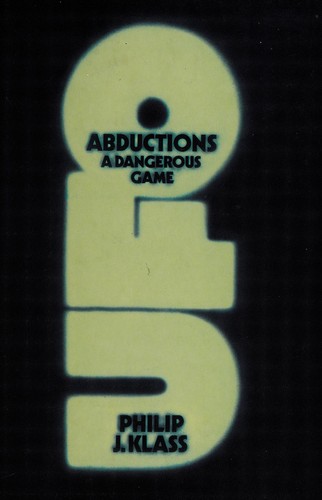
As an Amazon Associate, OverClassified may earn from qualifying purchases made through this link, at no extra cost to you.
Why This Is Essential Reading
UFO Abductions: A Dangerous Game earns its place on this reading list as the methodological skeptic's foundational critique of hypnotic-regression abduction investigation, written by a CSICOP co-founder whose own combative reputation is itself a documented part of the history he helped shape. Its dedicated critical chapter on the Kathie Davis case makes it essential reading alongside this site's own Kathie Davis / Copley Woods case file, which weighs Klass's critique against Hopkins's original investigation; its connection to the Myrna Hansen and Stanford, Kentucky cases, while plausible, should be read as thematic rather than chapter-confirmed until a primary-source check of the book's own index resolves the question.
Related Cases & Theories
Sources Cited
- Klass, Philip J. UFO Abductions: A Dangerous Game. Prometheus Books, 1988 (ISBN-13 9780879754303). amazon.com
- "UFO Abductions: A Dangerous Game." Internet Archive (full scanned copy, confirming chapter list and page count). archive.org
- "Philip J. Klass." Wikipedia (biographical detail, CSICOP founding, and career at Aviation Week). en.wikipedia.org
- This site's own Philip J. Klass key-figures entry (his broader career and reputation).
- This site's own Debbie Jordan-Kauble key-figures entry (the real identity of "Kathie Davis").
- This site's own Myrna Hansen key-figures entry.
- This site's own Mona Stafford key-figures entry (a Stanford, Kentucky witness).
- This site's own Elizabeth Loftus key-figures entry (independent psychological research on hypnotic suggestion and false memory, cited alongside Klass elsewhere on this site).
- Clark, Jerome. The UFO Encyclopedia, 4th Edition. Visible Ink Press, 2023 (reference-work entries on the abduction genre and its skeptical critics).
- This site's own Kathie Davis / Copley Woods Case file (full sourcing, including Klass's specific critical chapter documented there).
- This site's own Myrna Hansen Abduction Case file.
- This site's own Stanford, Kentucky Abduction case file.
Have corrections, additional research, or peer-reviewed sources? Help improve this entry.
Suggest an Edit