
Inside the Black Vault
John Greenewald Jr.'s 2019 Case for What Two Decades of FOIA Requests Actually Turned Up
Core Thesis
Inside the Black Vault: The Government's UFO Secrets Revealed is John Greenewald Jr.'s attempt to compress more than two decades of his own Freedom of Information Act requests — the same FOIA campaign that built The Black Vault, the online archive he founded in 1996 as a fifteen-year-old and has since grown to more than two million declassified pages — into a single narrative argument. Across fifteen chapters running roughly 190 pages, Greenewald works from the government's own paper trail rather than eyewitness testimony: he opens by challenging the U.S. Air Force's own explanation for the 1947 Roswell incident, works forward through the internal machinery of Project Blue Book (its case files, its investigators' private correspondence, and what Greenewald argues was a documented gap between the program's public reassurances and its own analysts' private uncertainty), through UFO reports tied to nuclear-weapons and military installations, into the CIA's and other agencies' documented involvement, and closes with a chapter explicitly titled "Debunking the Debunkers" that takes on the field's most prominent skeptical explanations directly. The book's own promotional framing, repeated on its back cover and in interviews, captures its evidentiary register precisely: "The evidence in this book may not ultimately give you the 'smoking gun' you are looking for on your journey, but I guarantee it will give you a box of bullets."
About the Author
John Greenewald Jr. was born April 17, 1981, and became one of ufology's more unusual figures almost by accident: as a fifteen-year-old sophomore encountering the Computer UFO Network on America Online in 1996, he read about the 1976 Tehran UFO Incident and, rather than simply accepting secondhand summaries, filed a Freedom of Information Act request of his own with the Defense Intelligence Agency for the underlying government record. Receiving an actual declassified document back convinced him the same method could work systematically, and what he initially hosted as "John's World" on a shared web server grew, request by request, into The Black Vault — by 2015 built on more than 5,000 individual FOIA filings, and by the time of this book's 2019 publication holding more than two million pages of declassified U.S. government material spanning UFOs, the JFK assassination, chemical and biological weapons programs, and classified aircraft. He receives no journalism fee waiver and historically has had to pay processing costs out of pocket, at times crowdfunding specific requests — among them a 97-page fax he submitted in 2016 documenting the existence of more than 300 missing CIA files related to the MKUltra program, whose $425.80 retrieval fee he covered through a public campaign before converting the recovered material into searchable PDFs and releasing it freely.
What distinguishes Greenewald from many of the researchers this site's Essential Reading list otherwise covers is less a theory than a documented operating discipline. Investigative journalist Tim McMillan, quoted in a Columbia Journalism Review profile of Greenewald's work, put it directly: "He's a rule follower… He's not somebody that seeks classified information through back-channel means," a description Greenewald's own public statements bear out — he has said he does not personally believe extraterrestrial visitation is proven, declines the "journalist" label for lack of formal training despite filing FOIA requests under the news-media fee category, and describes his own role as closer to an archivist providing "uneditorialized" primary-source material than an advocate for any particular conclusion. Alongside his FOIA work, Greenewald spent 2004 to 2007 as a producer, co-producer, and coordinating producer on eight episodes of the History Channel's UFO Files series, and has appeared as a commentator on programs including Unsealed: Alien Files and JJ Abrams's 2021 documentary series UFO. Inside the Black Vault was not his first book: Galde Press published his Beyond UFO Secrecy: The Story of the Black Vault's Pursuit of the Truth in 2008, more than a decade before Rowman & Littlefield brought out this fuller, more structured 2019 treatment.
Historical Context & Origins
By the time Inside the Black Vault reached bookstores in April 2019, The Black Vault itself was already twenty-three years old and had weathered a specific inflection point that reshaped both the archive and Greenewald's own public profile: in 2015, he obtained and uploaded roughly 130,000 pages of Project Blue Book case files in bulk, an event that Greenewald himself has said pushed the site's traffic from a few thousand daily visitors into the hundreds of thousands, and gave him, for the first time, a dataset large enough to argue from systematically rather than case by case. The book arrived, in other words, as the narrative distillation of an archive that had just gone from a niche research tool to one of the most heavily trafficked FOIA repositories on the open internet — a status later corroborated by citations from The Washington Post, Wired, and The Intercept.
The book also arrived at a moment when UFO-related government secrecy had re-entered mainstream U.S. political discussion for reasons largely outside Greenewald's own archive: the December 2017 New York Times report on the Pentagon's Advanced Aerospace Threat Identification Program, and the subsequent 2019 Navy-pilot encounter reporting that followed it, had already begun shifting UFO coverage away from tabloid framing and toward Congressional and Department of Defense sourcing by the time Rowman & Littlefield published this book. Greenewald's own FOIA-first methodology — publish the primary document, let readers draw their own conclusions — positioned Inside the Black Vault as a specifically document-grounded counterweight to that resurgent, but still largely anecdote-driven, national conversation.
Structurally, the book's fifteen chapters split roughly into two halves: the first several chapters ("Debunking the ‘Roswell’ Explanation," "The Company Line," "The Project Blue Book Dilemma," "Investigation or Explanation?," and "Inside the Desks of Project Blue Book") work through Project Blue Book's own internal record, while the back half ("The National Security Threat Begins," "The National Security Threat Deepens," "UFOs Invade the U.S. Military," "The Nuclear Connection," "The Reason for Secrecy," "UFOs and the CIA," "UFO Regulations That Should and Should Not Exist," "Canada Comes Through," "The Greatest Trick of a Magician," and "Debunking the Debunkers") widens the aperture to other agencies, other countries, and the specific skeptical rebuttals Greenewald sets out to answer directly — a table of contents independently preserved in Open Library's own bibliographic record for the April 2019 first edition.
Core Arguments & Key Concepts
The book's central methodological claim is that a large enough body of the government's own released paperwork, read carefully and in bulk, tells a different story than the government's own public statements about that paperwork did at the time. Rather than building toward a single unifying theory of what UFOs are, Greenewald's opening chapters build toward a narrower, more falsifiable claim: that Project Blue Book's internal case files and investigator correspondence show a documented gap between the program's public reassurance that sightings had mundane explanations and what its own analysts privately believed about specific unresolved cases — the same kind of investigator-attitude evidence Kevin Randle has separately cited from Blue Book's administrative files, including a 1969 Florida case in which the Air Force officer running the investigation is documented disparaging the witnesses' credibility despite their active military service.
A second argument runs through the book's military and nuclear chapters: Greenewald compiles FOIA-obtained reports of UFO activity specifically at or near nuclear weapons installations and military bases, using "The Nuclear Connection" chapter to argue that the pattern of documented incidents at facilities entrusted with the country's most sensitive weapons is itself evidence that the government's dismissive public posture was never fully consistent with what military commanders were reporting up their own chain of command.
A third argument concerns the specific mechanics of secrecy rather than the underlying phenomenon: "UFOs and the CIA" and "UFO Regulations That Should and Should Not Exist" walk through the formal reporting regulations — joint military-civilian instructions governing who was required to report unidentified aerial sightings and to whom — that Greenewald argues created a bureaucratic secrecy apparatus independent of whatever the underlying sightings actually were, a structural-secrecy argument that does not require any individual case to be extraordinary to be significant.
The book's international chapter, "Canada Comes Through," extends the same FOIA-transparency argument across the border, examining Canada's own declassified UFO holdings as a comparison case for how a different government handled broadly similar material — a theme this site's own Canada's UFOs: Declassified (ER-085) entry, covering Chris A. Rutkowski's later and more extensive treatment of the same Library and Archives Canada collection, picks up independently.
The closing chapter, "Debunking the Debunkers," is where Greenewald's evidentiary method turns explicitly argumentative: rather than simply presenting documents, he directly rebuts specific skeptical explanations that had accumulated around his own book's central cases over the preceding decades, applying the same document-first standard to skeptical claims that he applies to government secrecy claims — asking, in effect, what documentary evidence actually supports a given debunking rather than treating the debunking itself as self-evidently authoritative.
Key Cases & Evidence Discussed
The book opens with the 1947 Roswell Incident (Case File #001), the subject of its first chapter, "Debunking the ‘Roswell’ Explanation" — Greenewald's starting point for the broader argument that the U.S. Air Force's own explanations for its highest-profile cases have shifted and, in his reading, weakened rather than strengthened under closer documentary scrutiny.
Project Blue Book's own institutional record anchors several chapters, and The Black Vault's own document archive — the same FOIA-built repository underlying this book — separately hosts the full case file for the Chiles-Whitted Sighting (Case File #066, July 24, 1948, near Montgomery, Alabama), one of Blue Book's earliest and most-cited unresolved commercial-pilot encounters and exactly the kind of case-file-level material the book's Blue Book chapters draw on. This site's own Project Blue Book Special Report No. 14 (Case File #281, 1955) covers the Air Force's own later statistical review of the same program the book spends five chapters examining from the inside.
"The Nuclear Connection" chapter's subject matter maps directly onto this site's own Malmstrom AFB Missile Shutdowns (Case File #092, 1967, at Malmstrom Air Force Base, Montana) — a case built on the same category of FOIA-obtained military correspondence the book argues, in general, has never been adequately explained away.
The book's national-security chapters draw on the same category of Air Force intercept and radar-visual material as this site's own RB-47 Bomber Chase (Case File #150, 1957) — a case The Black Vault's own document archive separately hosts declassified material on, independent of this book's specific text.
The book predates, but is directly continuous with, Greenewald's single most personally consequential UFO find: the September 2014 anonymous letter that delivered him a high-resolution copy of the 2013 Aguadilla CBP FLIR Encounter footage (Case File #221, near Aguadilla, Puerto Rico), which Greenewald posted publicly and which this site's own key-figures entry on him documents in full, including his later 2025 repost of AARO's own officially released version after the Pentagon's case-resolution report.
Critical Reception & Controversies
No Kirkus Reviews notice of Inside the Black Vault turned up in this article's research, and Publishers Weekly's own listing for the book (ISBN 9781538118375) states plainly that the outlet "has not yet reviewed this book" — meaning, as with several other titles on this site's Essential Reading list, the book's clearest public reception comes from reader response rather than trade-press criticism. On Goodreads, the book holds a 3.75-star average across 197 ratings and 29 written reviews, a solidly positive but genuinely mixed record consistent with a book built to persuade an already-engaged readership rather than convert skeptics.
Favorable reader reception centers on the book's evidentiary breadth and organization: reviewers describe it as "well written and organized" and credit it with reinforcing an existing belief that government UFO secrecy is real and ongoing. Critical reader reviews are specific rather than dismissive: one reviewer characterizes Greenewald as mistaking "enthusiastic emotional extrapolations for quantifiable evidence," another finds the book "repetitive after awhile," and a third pushes back directly on the "Debunking the Debunkers" chapter's own rhetorical register, arguing Greenewald grows "more hostile" toward skeptical explanations as the book proceeds and lands on "exceedingly bias[ed]" readings of some of the more heavily redacted documents he presents.
Reception from within the UFO research community itself was more favorable and more personally engaged. UFO historian Kevin Randle interviewed Greenewald about the book on the X-Zone Broadcast Network shortly after its April 2019 release and, in his own published commentary on the conversation, called it "an important work that should grace every researcher's library… a good read for those interested in UFOs and the government" — while separately noting, from his own review of Blue Book's administrative files, that he had independently reached conclusions about investigator bias closely aligned with the book's own findings.
The most consistent thread across both favorable and critical reception is agreement about what kind of book this is: virtually no reviewer, favorable or not, treats Inside the Black Vault as offering definitive proof of extraterrestrial visitation. The disagreement runs instead over how persuasive Greenewald's document-based secrecy argument is on its own terms — precisely the "box of bullets, not a smoking gun" standard the book's own back-cover copy sets for itself.
Influence & Legacy
Greenewald extended this book's approach in two further directions after 2019. Secrets from the Black Vault: The Army's Plan for a Military Base on the Moon and Other Declassified Documents that Rewrote History (Rowman & Littlefield, 2020, ISBN 9781538134061) broadened the same FOIA-archive-into-narrative method beyond UFOs to the full range of Cold War-era government secrecy his archive documents, while his continued Black Vault reporting — including FOIA-obtained material underlying this site's own 2019 Navy Destroyer Drone Swarm (Case File #223) and Sary Shagan CIA Report (Case File #309) case files — kept applying this book's central method to cases that postdate its 2019 publication entirely.
Within the wider UFO research and journalism community, Inside the Black Vault functioned less as a standalone bestseller than as a formal announcement of a research method other outlets had already begun relying on: by 2019, publications including The Washington Post, Wired, and The Intercept were already citing Black Vault documents directly in their own reporting, and this book gave that existing citation practice a single, purchasable, narrative form for readers who wanted the underlying argument rather than just the raw PDFs.
On this site specifically, Greenewald's own key-figures entry already documents his direct connection to the Aguadilla CBP FLIR Encounter, the 2019 Navy Destroyer Drone Swarm, and the Sary Shagan CIA Report case files, and The Black Vault is cited as a source across dozens of this site's other case files, from Trans-en-Provence to the Socorro UFO Landing — making this book's own underlying archive one of the single most heavily relied-upon primary-source repositories in this site's entire citation footprint, independent of this specific title's own sales or review record.
The Book
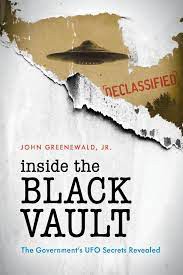
Inside the Black Vault
John Greenewald Jr.'s 2019 Case for What Two Decades of FOIA Requests Actually Turned Up
Find on Amazon →As an Amazon Associate, OverClassified may earn from qualifying purchases made through this link, at no extra cost to you.
Why This Is Essential Reading
Inside the Black Vault earns its place on this list less as a work of original theorizing than as the clearest single-volume statement of a research method this site relies on constantly without always naming it: John Greenewald Jr.'s decades-long practice of filing FOIA requests, appealing denials, and publishing the raw government paperwork that comes back rather than substituting his own interpretation for it. Its case for sustained UFO-related secrecy is built almost entirely from primary documents — Project Blue Book's own internal correspondence, military and nuclear-installation reports, CIA records, and the formal regulations governing who had to report what to whom — and its "Debunking the Debunkers" closing chapter holds skeptical explanations to the same documentary standard it applies to government secrecy claims. Its limitations are just as real: no major trade-press review ever weighed in, its Goodreads reception is genuinely mixed rather than uniformly enthusiastic, and even sympathetic reviewers note the book grows more argumentative and less document-driven in its final chapters. Read it not for a single smoking-gun case, but for what its own back cover promises and largely delivers — "a box of bullets" assembled by the same archive this site cites, directly or indirectly, on a remarkable share of its own case files.
Related Cases & Theories
Essential Viewing
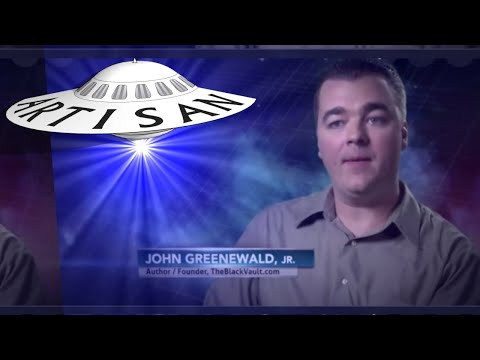
PiFi #47 - John Greenwald, Jr - Inside the Black Vault
ArtisanTony — An interview with John Greenewald Jr. discussing this book directly. Verified via YouTube oEmbed before inclusion.

John Greenewald, The Black Vault: UFO Disclosure - Roswell, Blue Book, FOIA, AATIP
The Vortex — Greenewald discusses Roswell, Project Blue Book, and his FOIA methodology — the same core subject matter covered across this book's chapters. Verified via YouTube oEmbed before inclusion.
Sources Cited
- Greenewald Jr., John. Inside the Black Vault: The Government's UFO Secrets Revealed. Rowman & Littlefield, April 8, 2019 (ISBN 9781538118375 / 1538118378, 192 pp.). amazon.com
- "Inside the Black Vault." Open Library edition record OL28937507M (publisher, publication date, page count, physical dimensions, and full 15-chapter table of contents for the April 2019 Rowman & Littlefield first edition). openlibrary.org
- "John Greenewald Jr." Wikipedia (biography; FOIA request history; The Black Vault's founding in 1996 and archive scope; MKUltra document recovery). en.wikipedia.org
- "The Black Vault." Wikipedia (archive history and scope). en.wikipedia.org
- "Inside the Black Vault." Columbia Journalism Review (profile of Greenewald's FOIA methodology, journalist Tim McMillan's "rule follower" characterization, MuckRock's Michael Morisy on the archive's value, and citations of Black Vault material by the Washington Post, Wired, and The Intercept). cjr.org
- "Inside The Black Vault: The Government's UFO Secrets Revealed by John Greenewald, Jr." Goodreads (reader ratings: 3.75-star average, 197 ratings, 29 written reviews). goodreads.com
- "Inside The Black Vault: The Government's UFO Secrets Revealed." Publishers Weekly (listing confirming no PW review has been published for this title). publishersweekly.com
- "Inside the Black Vault: The Government's UFO Secrets Revealed." Barnes & Noble (publisher and format listing). barnesandnoble.com
- Randle, Kevin. "A Different Perspective," April 2019 (commentary on Randle's X-Zone Broadcast Network interview with Greenewald about this book, including Randle's endorsement and his own independent findings on Project Blue Book investigator bias). kevinrandle.blogspot.com
- Greenewald Jr., John. Secrets from the Black Vault: The Army's Plan for a Military Base on the Moon and Other Declassified Documents that Rewrote History. Rowman & Littlefield, 2020 (ISBN 9781538134061), this book's direct sequel. amazon.com
- Greenewald Jr., John. Beyond UFO Secrecy: The Story of the Black Vault's Pursuit of the Truth. Galde Press, 2008 (ISBN 9781931942607), Greenewald's earlier book-length treatment of the same archive. amazon.com
- "John Greenewald Jr." IMDb (producer, writer, and on-camera credits, including History Channel's UFO Files, 2004–2007). imdb.com
- This site's own case file: The Roswell Incident (Case File #001), the subject of this book's opening chapter.
- This site's own case file: The Chiles-Whitted Sighting (Case File #066), documented in The Black Vault's own FOIA archive.
- This site's own case file: The Malmstrom AFB Missile Shutdowns (Case File #092), the subject matter of this book's "Nuclear Connection" chapter.
- This site's own case file: The RB-47 Bomber Chase (Case File #150), documented in The Black Vault's own FOIA archive.
- This site's own case file: Aguadilla CBP FLIR Encounter (Case File #221), Greenewald's own most consequential personal FOIA-adjacent find.
- This site's own key-figures entry: John Greenewald Jr., for his full site-wide case connections beyond this book.
- This site's own essential-reading entry: Canada's UFOs: Declassified (ER-085), Chris A. Rutkowski's later, more extensive treatment of the Canadian declassification material this book's "Canada Comes Through" chapter also covers.
Have corrections, additional research, or peer-reviewed sources? Help improve this entry.
Suggest an Edit