
In Plain Sight
An Investigation into UFOs and Impossible Science
Core Thesis
In Plain Sight: An Investigation into UFOs and Impossible Science is Ross Coulthart's attempt, as a veteran Australian investigative television journalist rather than a lifelong ufologist, to apply mainstream reporting standards — named sources, on-record interviews, cross-checked testimony — to a subject his own profession had spent decades treating as beneath serious coverage. Written in the wake of the Pentagon's December 2017 New York Times disclosure of the Advanced Aerospace Threat Identification Program (AATIP) and the U.S. Navy's 2019-2020 confirmation of its own "Gimbal," "GoFast," and FLIR1 cockpit videos, the book argues that decades of dismissed military, aviation, and intelligence-community testimony describe a real and unexplained phenomenon that mainstream science and government institutions have avoided investigating honestly. Coulthart's case rests almost entirely on the credibility of his interview subjects — named military officers, intelligence veterans, and scientists willing to speak on the record — rather than on new physical evidence he personally uncovered, a structural feature this article treats as central to evaluating the book rather than as an incidental limitation.
About the Author
Ross Coulthart was born August 30, 1962, and trained as a lawyer at Victoria University of Wellington in New Zealand before entering journalism at The New Zealand Herald in 1982. He moved into Australian television in 1989, joining the Nine Network's A Current Affair, where his investigation into Queensland businessman Sir Leslie Thiess's payments to Premier Sir Joh Bjelke-Petersen won a Penguin Award; he later spent time at the ABC's Four Corners before beginning a fourteen-year run, from 1995 to 2009, on the Nine Network's Sunday public-affairs program, and then moving to 60 Minutes Australia, where he remained a correspondent until his contract was not renewed in 2018.
Across more than three decades in Australian current affairs, Coulthart built a reputation as one of the country's most decorated investigative reporters: he has won five Walkley Awards, Australian journalism's top honor, including a Gold Walkley in 2008 for the "Butcher of Bega" medical-scandal exposé co-reported with Nick Farrow, a 1996 Logie Award for his reporting on corruption in Aboriginal legal services, and a 2002 Gold Medal at the New York Film Festival, shared with cameraman Max Stahl, for his coverage of the East Timor independence crisis. That track record of hard-news investigative credibility, rather than any prior ufology background, is the credential this book leans on to justify treating UAP testimony as a subject worthy of the same standards Coulthart had applied to political corruption and war crimes.
By his own account, Coulthart's interest in the UAP subject traces back to a 1978 sighting of unexplained lights near New Zealand's Kaikoura mountains, witnessed as a teenager, that he says stayed with him across a career otherwise spent on unrelated investigative subjects. He returned to the subject directly in 2021 with this book and a companion Seven News Australia special, The UFO Phenomenon, and has continued reporting on it since: he co-hosted the podcast Need to Know with Coulthart and Zabel, alongside screenwriter and UFO researcher Bryce Zabel, from 2021 until 2025, and in November 2023 joined NewsNation as a special correspondent and senior special investigations correspondent, a role in which UAP reporting became a significant part of his beat alongside other investigative subjects.
Coulthart's UAP-era reporting has not gone unchallenged by his own profession. In December 2023, Australian Skeptics awarded him the Bent Spoon Award — given annually to "the perpetrator of the most preposterous piece of paranormal or pseudoscientific piffle" — with the organization's executive officer Tim Mendham stating Coulthart had promoted claims that governments hold recovered alien bodies and wrecked spacecraft "based on hearsay with no evidence, no bodies, no space junk," and that Coulthart had "several times rejected the need for evidence to support his claims." The ABC's own media-criticism program, Media Watch, separately questioned his coverage of David Grusch's allegations in an August 28, 2023 episode, to which Coulthart published a direct written response defending his reporting. This article treats that direct, named professional pushback — from Coulthart's own country's leading skeptical organization and its national broadcaster's media desk — as a real and relevant part of his authorial record, not a footnote to be minimized.
Historical Context & Origins
Coulthart wrote In Plain Sight in the immediate aftermath of the modern UAP disclosure era's opening act: the December 16, 2017 New York Times story that first revealed AATIP's existence, co-reported by Ralph Blumenthal, Helene Cooper, and Leslie Kean — whose own earlier reporting this site covers in its breakdown of UFOs: Generals, Pilots, and Government Officials Go on the Record — and the Navy's subsequent 2019-2020 on-record confirmation that the leaked "Gimbal," "GoFast," and FLIR1 cockpit videos were genuine, unaltered Navy recordings of unidentified objects. Published by HarperCollins Australia in July 2021, with a U.S. edition following that October, the book arrived roughly a year after the Pentagon's August 2020 creation of the Unidentified Aerial Phenomena Task Force (which this site's own UAP Task Force Formation case file covers directly) and shortly before the Office of the Director of National Intelligence's June 2021 Preliminary Assessment on UAP, situating it squarely within the period when the U.S. government itself first began formally acknowledging the phenomenon as worth institutional study.
The book positioned Coulthart, a career mainstream investigative reporter with no prior public ufology track record, as a deliberate contrast to the subject's usual popular treatment: its stated ambition, reflected in reviews from the period, was to apply the same evidentiary rigor Coulthart had spent thirty years applying to political corruption, medical scandals, and war crimes to a subject Australian and international newsrooms had historically treated as tabloid fare. That framing places it in the same broad category as Garrett Graff's UFO: The Inside Story (2023) and Luis Elizondo's Imminent (2024), both published in the same three-year post-disclosure window and cited alongside In Plain Sight on this site's own AATIP and Battle of Los Angeles further-reading lists — though unlike Elizondo, Coulthart wrote as an outside investigator interviewing insiders rather than as a participant recounting his own government service.
HarperCollins Australia released a revised and updated edition in 2023, retitled in some catalog listings as covering material "fully updated and revised new edition for 2023," reflecting how quickly the book's subject matter continued to develop after its original release — including, within months of that update, Coulthart's own involvement in the David Grusch story that this article's Influence & Legacy section covers directly.
Coulthart's own history as a 60 Minutes Australia correspondent gives the book a specifically Australian throughline largely absent from its American counterparts: he discusses Australia's own most famous mass sighting, the 1966 Westall Encounter at Westall High School near Melbourne, a case Coulthart has also covered directly in his post-book video journalism, reflecting the book's dual identity as both an entry in the broader post-2017 American disclosure literature and a specifically Australian journalist's reckoning with a case from his own country's history.
Core Arguments & Key Concepts
The book's organizing argument is that a genuine pattern of unexplained aerial phenomena, independently reported by trained military and civilian aviation witnesses across decades and multiple countries, has been systematically under-investigated by government institutions and dismissed by mainstream media and science — not because the evidence is weak, Coulthart argues, but because of a combination of institutional stigma left over from Cold War-era ridicule campaigns and a genuine desire in parts of the national security apparatus to keep the subject quiet. He presents this less as a single unified theory of what UAP are than as an argument that the question deserves serious, well-resourced scientific and governmental investigation rather than reflexive dismissal.
A recurring structural device is Coulthart's own on-camera interviewing method, carried over directly from his television career: the book is built substantially around lengthy, named, on-the-record interviews with military pilots, retired intelligence officials, and scientists, including extended material drawn from his interviews with figures central to the post-2017 disclosure story, and Coulthart repeatedly foregrounds his subjects' institutional credentials — rank, security clearance, scientific credentials — as the primary basis for taking their testimony seriously, an evidentiary approach this article notes places significant weight on the assumption that credentialed witnesses are also reliable and disinterested ones.
The book gives substantial attention to the modern U.S. Navy encounters that anchored the 2017 disclosure story, including the USS Nimitz "Tic Tac" Encounter (2004) and the USS Theodore Roosevelt "Gimbal" and "GoFast" Encounters (2015), treating their officially confirmed authenticity as the strongest available evidence that trained military observers are recording genuinely anomalous flight performance, rather than treating those videos' authenticity as settling any question about the objects' actual nature or origin.
A significant and more heavily criticized portion of the book concerns Tom DeLonge's To The Stars Academy of Arts & Science and its associated figures, material several reviewers, including Jason Colavito, single out as disproportionate to its evidentiary value — a criticism this article addresses directly in its Critical Reception section rather than passing over.
The book's later chapters extend into more speculative territory, including claimed exotic propulsion research connected to physicist Salvatore Cezar Pais's defense patents, material that several reviewers flagged as thinly sourced and underdeveloped relative to the book's earlier, testimony-based chapters — a structural weakness this article treats as a genuine limitation of the book's back half rather than smoothing over.
Key Cases & Evidence Discussed
This site's own Advanced Aerospace Threat Identification Program (Case File #243, 2007–2017) is the institutional backbone of the book's American material, the same program whose December 2017 public disclosure gave Coulthart's project its news hook, and the same program covered from the inside by Luis Elizondo's own memoir Imminent (ER-040), this site's closest thematic sibling to this article — where Elizondo writes as a self-described former program director, Coulthart writes as the outside reporter interviewing him and others around the same institutional history.
This site's own USS Nimitz / Tic Tac Encounter (Case File #003, 2004) and USS Theodore Roosevelt "Gimbal" & "GoFast" Encounters (Case File #059, 2015) are the book's central evidentiary anchors, the same Navy-confirmed videos that gave the broader 2017-era disclosure story its physical documentation, discussed here as Coulthart's strongest available evidence of a genuinely unexplained aerospace phenomenon.
This site's own David Grusch Whistleblower Testimony (Case #019, June–July 2023) is not itself covered in this book's original 2021 text — Coulthart's on-record interview with Grusch came nearly two years after publication — but this article treats it as the single most direct, documented sequel to the book's own argument: the same reporter, applying the same on-record interviewing method this book demonstrates, going on to break the most consequential UAP whistleblower story of the disclosure era.
The book also discusses the Langley AFB UAP Incursions (Case File #100), incidents involving repeated drone-like objects near a sensitive East Coast military installation that this site's own case file covers as a contemporary test case for exactly the kind of trained-witness, no-physical-evidence reporting this book's overall evidentiary approach represents.
Coulthart's Australian television background surfaces directly in his discussion of the 1966 Westall Encounter (Case File #030) near Melbourne, Australia's own most famous mass sighting and a case Coulthart revisited again in his post-book video journalism — the clearest point at which the book's subject matter intersects directly with Coulthart's own national and professional background rather than the American disclosure story.
Critical Reception & Controversies
Reception on publication was substantially more favorable than the book's later, Grusch-era controversies might suggest. Ian Kirkwood, reviewing the book for the Newcastle Herald, praised Coulthart for "marshalling an unwieldy seven decade story into a coherent 300-page (plus references) book" and credited him with securing interviews with figures speaking publicly for the first time, calling it a useful resource for both UAP enthusiasts and skeptics alike. Similarly, the review site A Sky of Books and Movies called it "an excellent, well-written book that can serve as a useful primer for those who want to get a sense of the UFO/UAP problem," while noting plainly that readers "just have to take his word for it that his sources claim things" — an early, non-hostile statement of the same evidentiary limitation this article treats as central.
The most substantive UK literary-press engagement came from Pippa Goldschmidt, reviewing the book for The Times Literary Supplement, who credited Coulthart with providing "a balanced historical and global summary of UFO sightings" before adding a pointed qualification: "Fatally for his argument, however, he shows signs of wanting to believe it" — a genuine, named critique from a mainstream literary outlet that the book's evenhanded framing does not fully survive its author's own evident sympathies.
Writer and researcher Jason Colavito, who separately reviewed Elizondo's Imminent for this site's own breakdown, was considerably harsher here, rating the book 2.5 out of 5 stars and calling it "less a serious analysis and more of a book report" that largely rehashes decades of prior ufology, particularly the work of Richard Dolan and Stanton Friedman, without substantial original reporting of its own. Colavito specifically criticized Coulthart's treatment of military sources as inherently credible, writing that Coulthart "toggles between worshiping their masculine authority and blasting their secrecy," and flagged an internal contradiction in Coulthart's interview with retired Navy official Nat Kobitz, who is quoted claiming both to have only "hearsay information" about recovered UFOs and to have been separately "read into" such a program — statements Colavito argues cannot both be true.
Reader reception has been more mixed than either the trade press or the skeptical press: Goodreads reviewers have praised the book's readability and scope while others specifically complained, in the words of one reviewer, about "way too many chapters about Tom Delonge from Blink 182" and noted that Coulthart's underlying claims are, in that reviewer's words, "all third hand," and a separate reader flagged the book's closing chapter on physicist Salvatore Pais's exotic-propulsion patents as underdeveloped, arguing "his story merits more investigative work than is in here."
The book's reputation shifted meaningfully after publication, once Coulthart's continued UAP reporting culminated in his 2023 interview with whistleblower David Grusch. In December 2023, Australian Skeptics awarded Coulthart the Bent Spoon Award, with executive officer Tim Mendham stating on the record that Coulthart had promoted claims of governments holding recovered alien bodies and craft "based on hearsay with no evidence, no bodies, no space junk" and had "several times rejected the need for evidence to support his claims." The ABC's Media Watch separately scrutinized his Grusch coverage in an August 28, 2023 episode, prompting a direct written rebuttal from Coulthart defending the Inspector General's own characterization of Grusch's complaint as "urgent and credible." This article treats that dispute as genuinely unresolved rather than settled in either direction, consistent with how this site's own David Grusch case file handles the same underlying claims.
Influence & Legacy
The book's most immediate documented influence is on this very site: this exact 2021 HarperCollins Australia paperback, under ISBN 1460759060, is cited across resources.html in connection with at least nine separate case-file pages, including AATIP, The Battle of Los Angeles, David Grusch Whistleblower Testimony, and Langley AFB UAP Incursions, reflecting its standing here as a default reference for contemporary, testimony-based UAP journalism specifically.
The book's single most consequential real-world legacy arrived nearly two years after publication: in June 2023, Coulthart conducted the first on-camera interview with David Grusch, the former intelligence officer whose sworn allegations of a secret UAP crash-retrieval and reverse-engineering program reopened the entire disclosure story at a scale In Plain Sight itself had not reached. Grusch told Coulthart the U.S. possessed "quite a number" of non-human craft and stated flatly, "we're definitely not alone" — testimony that, this article notes, extended directly from the same on-record interviewing method and the same institutional relationships Coulthart had spent the preceding book building.
Within the broader UAP disclosure movement, In Plain Sight functions as a direct predecessor to Coulthart's own subsequent NewsNation career, where he became, in the description used by several outlets covering his 2023 reporting, one of the most recognizable mainstream media faces of the Grusch story; the Sydney Morning Herald has reported that the book itself achieved something close to cult status within American UFO research circles even before that later reporting made Coulthart's name broadly known in the United States.
The book's skeptical reception has itself become a standing reference point for how much evidentiary weight to place on Coulthart's later, more consequential claims: Jason Colavito's specific, named critique of the book's reliance on witness credibility over physical evidence, and Australian Skeptics' 2023 Bent Spoon Award for the same underlying pattern in his subsequent reporting, together form a documented record of professional skepticism that predates and, this article argues, meaningfully informs how Coulthart's Grusch-era journalism should be read — a throughline this site's own David Grusch case file treats as still unresolved rather than settled.
The Book
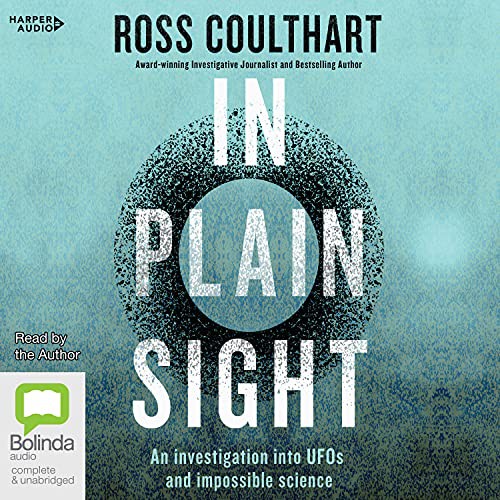
As an Amazon Associate, OverClassified may earn from qualifying purchases made through this link, at no extra cost to you.
Why This Is Essential Reading
In Plain Sight earns its place on this list not because its central claims have been independently verified — the book itself, like the testimony-driven journalism it exemplifies, ultimately asks readers to trust the credibility of named but unprovable sources, a limitation multiple reviewers, from the TLS's Pippa Goldschmidt to Jason Colavito, identified plainly on publication — but because it is the clearest full-length statement of the reporting method and institutional relationships that Ross Coulthart carried directly into his own 2023 David Grusch interview, the single most consequential UAP story of the post-2017 disclosure era. Read alongside this site's own AATIP case file, Luis Elizondo's insider account in Imminent, and the specific, named critiques of Jason Colavito and Australian Skeptics rather than in isolation, it belongs on this list as a documented waypoint in how a career mainstream investigative journalist's testimony-first methodology, applied to UAP, led directly to the story that reopened the entire disclosure debate — not as a settled account of what that testimony ultimately proves.
Related Cases & Theories
Essential Viewing
Booktopia Podcast: Ross Coulthart on In Plain Sight
Booktopia — Booktopia's own publisher-affiliated podcast interview with Ross Coulthart on In Plain Sight's August 2021 release, discussing his reporting process and the book's central claims. Verified via YouTube oEmbed before inclusion.
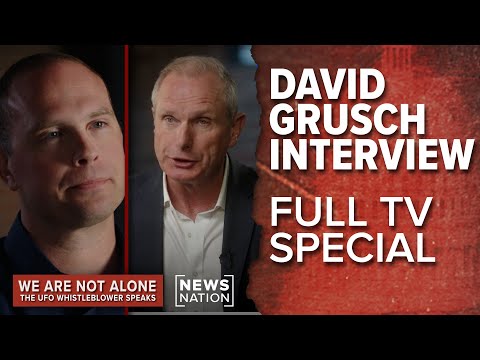
UFO whistleblower David Grusch: 'We are not alone' | Official Ross Coulthart NewsNation interview
NewsNation — Coulthart's own June 2023 on-camera interview with David Grusch, the book's single most consequential documented downstream legacy, conducted using the same on-record interviewing method In Plain Sight demonstrates at length. Verified via YouTube oEmbed before inclusion.
Sources Cited
- Coulthart, Ross. In Plain Sight: An Investigation into UFOs and Impossible Science. HarperCollins Australia, July 2021 (ISBN 1460759060 / 9781460759066, cited here, matching this site's own resources library citations). amazon.com
- "In Plain Sight." Booktopia (booktopia.com.au), official publisher/retailer listing (ISBN 9781460759066, 352 pp., HarperCollins Australia). booktopia.com.au
- "Ross Coulthart." Wikipedia (biography: birth date, education, A Current Affair, Four Corners, Sunday, 60 Minutes Australia, Walkley Awards, In Plain Sight, NewsNation, David Grusch interview, Bent Spoon Award). en.wikipedia.org
- Colavito, Jason. "Review of 'In Plain Sight' by Ross Coulthart." JasonColavito.com, book review (2.5/5 rating, criticism of sourcing and military-credibility framing). jasoncolavito.com
- Goldschmidt, Pippa. "In Plain Sight by Ross Coulthart." The Times Literary Supplement, book review ("balanced historical and global summary" but "shows signs of wanting to believe it"). the-tls.com
- Kirkwood, Ian. "Ross Coulthart's UFO book In Plain Sight raises serious questions for sceptics." Newcastle Herald, book review. newcastleherald.com.au
- "In Plain Sight: An Investigation into UFOs and Impossible Science, by Ross Coulthart (review)." A Sky of Books and Movies (jeroenthoughts.wordpress.com), book review. jeroenthoughts.wordpress.com
- "Walkley winner Coulthart wins 2023 Bent Spoon." Australian Skeptics Inc, December 2023 (Tim Mendham's on-record statement on the Bent Spoon Award). skeptics.com.au
- "UFO whistleblower David Grusch: 'We are not alone' | Official Ross Coulthart NewsNation interview." NewsNation, June 2023, YouTube. youtube.com
- Cooper, Helene; Blumenthal, Ralph; Kean, Leslie. "Glowing Auras and 'Black Money': The Pentagon's Mysterious U.F.O. Program." The New York Times, December 16, 2017 (background on AATIP's 2017 public disclosure, the story's institutional starting point). nytimes.com
- "In Plain Sight: An investigation into UFOs and impossible science." AbeBooks (bibliographic record, publisher and ISBN confirmation). abebooks.com
- "In Plain Sight" by Ross Coulthart. Goodreads (bibliographic listing and reader reviews, including reader complaints about the book's Tom DeLonge material and its closing Pais-patent chapter). goodreads.com
- This site's own resources library: Full Reading List, where this exact edition (ISBN 1460759060) is cited across at least nine case-file pages.
- This site's own case file: David Grusch Whistleblower Testimony, for the 2023 interview that is this book's most direct documented legacy.
- This site's own case file: Advanced Aerospace Threat Identification Program, for the institutional history this book's American material is built around.
- This site's own key-figures entry: Ross Coulthart, for his full biography and further case connections.
- This site's own essential-reading entry: Imminent, for Luis Elizondo's insider account of the same AATIP-era institutional history from the opposite vantage point.
Have corrections, additional research, or peer-reviewed sources? Help improve this entry.
Suggest an Edit