
Imminent
Inside the Pentagon's Hunt for UFOs
Core Thesis
Imminent: Inside the Pentagon's Hunt for UFOs is Luis Elizondo's first-person account of a twenty-year U.S. government intelligence career that culminated in directing, by his own telling, the Pentagon's Advanced Aerospace Threat Identification Program (AATIP) from roughly 2010 until his October 2017 resignation — a resignation he says was driven by excessive secrecy and internal opposition to taking the UAP subject seriously. Elizondo's central argument is that decades of individually anecdotal military encounters with unidentified aerial phenomena, when assessed through the specific performance characteristics he calls the "Five Observables" — instantaneous acceleration, hypersonic velocity without traditional propulsion signatures, low observability, transmedium travel, and positive lift — describe a real, physical, and urgent national security problem regardless of the phenomena's ultimate origin. The book is also, unavoidably, a case study in the limits of memoir-as-evidence: its most consequential claims rest on Elizondo's own credibility and clearance-bound recollection, and the Pentagon has directly and publicly disputed the central premise of his account — that he ever formally directed AATIP at all.
About the Author
Luis "Lue" Elizondo was born in Miami, Florida, and graduated from Riverview High School in Sarasota in 1990 before attending the University of Miami, where he earned a Bachelor of Science with double majors in microbiology and immunology and minors in chemistry and mathematics as a member of the campus ROTC program. He enlisted in the U.S. Army in 1995 and was assigned to Military Intelligence, serving tours in South Korea and the continental United States before being recruited in 1998 into a sensitive Department of Defense intelligence program as a civilian officer, where he eventually rose to Senior Intelligence Officer and Special Agent in Charge.
After the September 11, 2001 attacks, Elizondo served as an intelligence officer supporting U.S. Special Operations and then-General James Mattis during Operation Enduring Freedom, completing tours in Afghanistan and the Middle East as an intelligence case officer, operations officer, and battle captain. Returning to the United States in the mid-2000s, he oversaw worldwide counterespionage and counterterrorism investigations for the Department of Defense as a Special Agent in Charge — the counterintelligence background the book leans on heavily to establish his credibility for the specific claim at its center: that this same skill set was later turned toward the Pentagon's classified UAP effort.
That specific claim is also where Elizondo's biography becomes genuinely, publicly contested rather than simply impressive. He says he directed AATIP, under the Office of the Under Secretary of Defense for Intelligence, from around 2010 until his October 4, 2017 resignation letter to Secretary of Defense James Mattis, which cited excessive secrecy and bureaucratic resistance to the program's work. The Pentagon's own on-record response, delivered by spokesperson Christopher Sherwood, was that Elizondo "had no responsibilities with regard to the AATIP program" during his time in that office — a direct contradiction Elizondo has answered by filing a complaint with the Department of Defense Office of Inspector General alleging a coordinated campaign to discredit him. This site's own AATIP case file treats that dispute as genuinely unresolved rather than settling it in either direction, and this article does the same.
Within days of his resignation, Elizondo joined Tom DeLonge's newly launched To The Stars Academy of Arts & Science as its director of global security and special programs, a move that placed him at the center of the December 16, 2017 New York Times front-page story that first made AATIP's existence public, and that Elizondo's own account situates squarely inside the Pentagon's Office of the Under Secretary of Defense for Intelligence. He has since become one of the most recognizable public faces of the modern UAP disclosure movement, appearing before Congress in his own right on November 13, 2024 — three months after Imminent's publication — at a House Oversight Committee hearing titled "Unidentified Anomalous Phenomena: Exposing the Truth."
Historical Context & Origins
Elizondo wrote Imminent against the backdrop of a UAP disclosure landscape he himself had helped set in motion nearly seven years earlier. The December 16, 2017 New York Times article "Glowing Auras and 'Black Money': The Pentagon's Mysterious U.F.O. Program," co-reported by Helene Cooper, Ralph Blumenthal, and Leslie Kean — whose own earlier book this site covers in its breakdown of UFOs: Generals, Pilots, and Government Officials Go on the Record — disclosed AATIP's existence to the public for the first time, accompanied by the Navy's "FLIR1" cockpit video. That story ran the same month Elizondo's resignation became public and his move to Tom DeLonge's To The Stars Academy was announced, a sequencing that made him simultaneously the story's central source and its most visible beneficiary.
The seven years between that 2017 disclosure and the book's August 20, 2024 publication saw the UAP subject move from tabloid fringe to routine congressional business: the Pentagon publicly confirmed the "Gimbal" and "GoFast" videos' authenticity in April 2020, the Unidentified Aerial Phenomena Task Force stood up that August (this site's own UAP Task Force Formation case file covers its creation directly), the Office of the Director of National Intelligence released its Preliminary Assessment in June 2021, and the All-domain Anomaly Resolution Office (AARO) was established in 2022 as that task force's institutional successor. By the time Imminent reached shelves, David Grusch's July 2023 whistleblower testimony before the House Oversight Committee — which this site covers in its own David Grusch case file — had already reopened the crash-retrieval and reverse-engineering allegations Elizondo's book would go on to echo and elaborate.
Elizondo's book therefore arrived not as a lone whistleblower's revelation but as one entry, albeit an unusually well-connected one, in a fast-growing shelf of insider and journalistic UAP books published in the same three-year window, including Garrett Graff's UFO: The Inside Story (2023) and Ross Coulthart's In Plain Sight (2021), both cited alongside Imminent on this site's own AATIP and Battle of Los Angeles further-reading lists. Unlike Graff, an outside historian applying archival method to the subject, Elizondo wrote from directly inside the events he describes — a first-person vantage point that gives the book unusual immediacy but also means its most striking claims cannot be independently verified the way Graff's documentary sourcing can.
The book also underwent the Pentagon's standard prepublication security review before release, a process several reviewers noted approvingly as evidence its most sensitive passages had at least cleared a formal classification check, even though that review process assesses only whether classified material has been improperly disclosed, not whether the author's broader factual claims and interpretations are accurate.
Core Arguments & Key Concepts
The book's organizing intellectual framework is the "Five Observables," Elizondo's own term for a cluster of flight-performance characteristics he argues recur across credible military UAP encounters: instantaneous acceleration, hypersonic velocity achieved without a visible propulsion signature, low observability or apparent stealth, transmedium travel between air, water, and (he argues) space, and positive lift without conventional aerodynamic control surfaces. He presents these not as proof of any specific origin hypothesis but as an evidentiary pattern he says is inconsistent with any known human aerospace technology, and as the analytical lens AATIP itself used to triage which reports merited further study.
A second major thread is institutional: Elizondo narrates AATIP's funding origins under then-Senate Majority Leader Harry Reid, its contractor relationship with Robert Bigelow's Bigelow Aerospace Advanced Space Studies, and what he describes as his own struggle, as the program's self-described director, against bureaucratic indifference and active resistance within the Office of the Under Secretary of Defense for Intelligence — the same institutional history this site's own AATIP case file reconstructs independently, including the Pentagon's on-record dispute of Elizondo's specific leadership claim.
The book's most consequential and least independently verifiable claims concern alleged government possession of recovered, non-human-origin craft and materials, and reverse-engineering programs run by or through major defense contractors including Lockheed Martin, McDonnell Douglas, Northrop Grumman, Boeing, Raytheon, and BAE Systems. Elizondo presents these as things he became aware of through his clearances and professional relationships rather than as documents he can publish, a structural feature of the book's evidentiary base that this article does not gloss over: the claims are serious and specific, but by the book's own account they rest on classified, second-hand, and largely unnamed sourcing rather than on releasable material a reader can independently check.
A more unusual and more heavily criticized thread runs through the book's later chapters, where Elizondo connects his UAP account to broader claims about remote viewing and other parapsychological phenomena, arguing they represent a related, underexplored category of anomalous human and technological capability. Several reviewers, discussed in this article's Critical Reception section, single this material out as the point where the book's argument strays furthest from anything resembling verifiable intelligence work into territory closer to fringe physics and consciousness research.
Elizondo frames the entire account around the book's title: that whatever UAP represent, the pattern of encounters with sensitive military installations and aircraft constitutes an "imminent" and unaddressed national security problem, and that the government's institutional response — more interested, in his telling, in managing public perception than in genuinely investigating the phenomenon — has left that problem unresolved even as AATIP's successor offices, the UAP Task Force and AARO, have taken up the same basic mission with, in his assessment, only partial success.
Key Cases & Evidence Discussed
This site's own Advanced Aerospace Threat Identification Program (Case File #243, 2007–2017) is the book's institutional spine: Elizondo's account of Harry Reid's original funding, Robert Bigelow's contractor role, and his own self-described directorship is the same history this site's case file reconstructs independently — including the Pentagon's on-record dispute of Elizondo's leadership claim, which this site's case file treats as the program's central unresolved question rather than a settled fact either way.
This site's own USS Nimitz / Tic Tac Encounter (Case #003, 2004) and the related USS Theodore Roosevelt "Gimbal" & "GoFast" Encounters (Case File #059, 2015) anchor the book's Five Observables framework in specific, named military incidents — the same videos whose authenticity the Pentagon publicly confirmed in April 2020, and which Robert Sheaffer's critical review, discussed below, argues Elizondo's "instantaneous acceleration" observable misreads as a camera-zoom artifact rather than genuine flight performance.
This site's own UAP Task Force Formation (Case File #301, August 2020) is presented in the book as the direct institutional descendant of AATIP, and this site's own case file cites Imminent directly as "a firsthand memoir from AATIP's former director on the institutional lineage that led directly to the UAP Task Force's creation."
This site's own David Grusch Whistleblower Testimony (Case #019, June–July 2023) is treated by Elizondo as a vindicating moment for his own earlier, less formally documented claims; he has called Grusch's sworn testimony before Congress a "profound moment," though this site's own case file notes that AARO spokesperson Sue Gough responded on the record that the office had "not discovered any verifiable information to substantiate" Grusch's specific crash-retrieval and reverse-engineering allegations — the same evidentiary gap that separates Elizondo's own claims in Imminent from independently confirmed fact.
The book also revisits the Battle of Los Angeles (Case File #014, February 1942) as historical context for a decades-long pattern of unexplained aerial incursions over sensitive military and population centers, and discusses the Lake Huron UAP Shootdown (Case File #142, February 2023) as a recent example of the same institutional dynamics — AARO's response protocols and public-messaging habits — that Elizondo argues have changed less than the program's various name changes might suggest.
Critical Reception & Controversies
Imminent debuted as an instant #1 New York Times bestseller, an instant USA Today bestseller, and an instant #1 Sunday Times bestseller, reflecting Elizondo's substantial public profile built over the seven years since the 2017 AATIP disclosure. Favorable coverage, including a review at Punk Rock and UFOs, credited the book with successfully bringing casual readers up to speed on a complex seven-decade institutional history while presenting Elizondo's own claims with the direct, unhurried tone of an intelligence officer's after-action report, and noted approvingly that the manuscript had cleared the Pentagon's prepublication security review before release.
The most substantive skeptical critique came from Robert Sheaffer, writing at his long-running Bad UFOs blog, who challenged each of the Five Observables individually as an assumption rather than a genuine, independently measured observation. Sheaffer specifically cited fellow skeptic Mick West's frame-by-frame analysis of the "GoFast" video, arguing the apparent "instantaneous acceleration" Elizondo treats as a defining UAP characteristic is better explained as an artifact of the cockpit camera's zoom setting changing mid-recording rather than the object itself accelerating. Sheaffer also noted Elizondo's own shifting account of whether the program he led was formally called AAWSAP or AATIP, and argued that unresolved naming confusion undercuts confidence in the precision of his other institutional claims.
Writer and researcher Jason Colavito, reviewing the book at length on his own site, was considerably harsher on its execution, calling it an "amateurish production" that awkwardly combines memoir and UFO case-summary chapters without building sustained narrative momentum, and noting a specific internal contradiction: Elizondo portrays himself as centrally important to a secretive Pentagon program while simultaneously arguing that same government actively conceals what it knows, a tension Colavito argues the book never resolves. Colavito also flagged the book's practice of visually redacting some individuals' names in the text while listing those same names in its acknowledgments, and unfavorably compared its evidentiary rigor to Edward Ruppelt's 1956 The Report on Unidentified Flying Objects, already covered on this site, which he judged more serious and better sourced despite being nearly seven decades older.
A more measured, mixed assessment from the review site Leap Ahead credited the book with genuine authority as a Defense Department insider account while cautioning that it "leans heavily on classified anecdotes that cannot be independently verified," leaving highly skeptical readers frustrated by the absence of releasable, physical evidence to accompany its most striking claims. That review, along with several others, singled out the book's late chapters on remote viewing and parapsychology as its weakest and most speculative material, and noted that its final third grows repetitive, revisiting themes of institutional suppression and existential stakes without introducing substantially new information — a structural critique consistent with Colavito's separate complaint about the book's lack of narrative discipline.
Most fundamentally, the book's central credibility claim — that Elizondo formally directed AATIP — remains directly disputed by the Pentagon's own spokesperson, who stated on the record that Elizondo "had no responsibilities with regard to the AATIP program" during his time in the Office of the Under Secretary of Defense for Intelligence. Elizondo has responded by filing an Inspector General complaint alleging a coordinated effort to discredit him, but as of this book's publication that dispute remains unresolved rather than settled in his favor, a genuine and load-bearing limitation this article treats as central to evaluating the book's memoir claims rather than as a minor footnote.
Influence & Legacy
The book's most immediate documented influence is on this very site: this exact 2024 William Morrow hardcover edition, under ISBN 0063235560, is cited across resources.html in connection with at least nine separate case-file pages, including The Battle of Los Angeles, David Grusch Whistleblower Testimony, The Lake Huron UAP Shootdown, AATIP, and UAP Task Force Formation, reflecting its standing here as the default primary-source memoir for the modern, post-2017 phase of U.S. government UAP disclosure specifically.
Elizondo's most concrete post-publication influence arrived three months after the book's release: on November 13, 2024, he testified in his own right before the House Oversight Committee at a hearing titled "Unidentified Anomalous Phenomena: Exposing the Truth," alongside retired Navy Rear Admiral Tim Gallaudet, NASA UAP independent study team member Michael Gold, and journalist Michael Shellenberger. He told the committee "UAP are real" and that "the U.S. is in possession of UAP technologies," testimony that closely tracked the book's own claims and demonstrated a direct, documented pipeline from the memoir's arguments into sworn congressional record within a single publication cycle.
Within the broader UAP disclosure movement, Imminent functions as a companion and, at points, a rival account to Leslie Kean's earlier reporting and this site's own breakdown of Garrett Graff's UFO: The Inside Story: where Graff's book treats Elizondo as one source among many for an outside historian's archival reconstruction, Imminent gives Elizondo's own account top billing, unmediated by independent verification — a distinction genuinely useful for readers deciding how much evidentiary weight to place on either book's version of the same underlying institutional history.
The book's skeptical reception, particularly Robert Sheaffer's and Jason Colavito's specific, named critiques of the Five Observables framework and the book's evidentiary gaps, has itself become a standing reference point in ongoing debates over how much weight Elizondo's testimony and public claims should carry relative to documentary evidence — a debate this site's own AATIP case file treats as still live rather than resolved, seven years after the 2017 disclosure that first made Elizondo's name public.
The Book
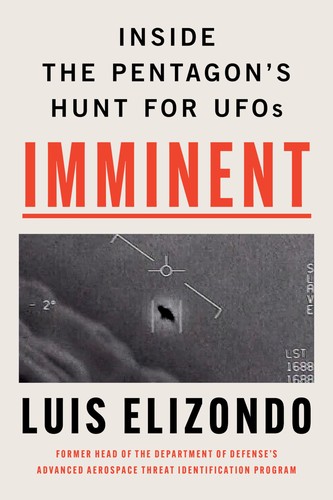
As an Amazon Associate, OverClassified may earn from qualifying purchases made through this link, at no extra cost to you.
Why This Is Essential Reading
Imminent earns its place on this list not because its most extraordinary claims have been independently verified — several remain genuinely, publicly disputed, including by the Pentagon's own spokesperson on the central question of whether Luis Elizondo ever formally directed AATIP — but because it is the fullest first-person account available from the single individual most responsible for moving UAP from tabloid fringe into mainstream congressional business via the December 2017 New York Times story and its aftermath. Read alongside this site's own AATIP case file, Garrett Graff's more independently sourced UFO: The Inside Story, and the specific, named skeptical critiques of Robert Sheaffer and Jason Colavito rather than in isolation, it is essential not as a settled record of what the U.S. government knows about UAP, but as the clearest available statement of what its single most consequential public source believes and is willing to say on the record — a distinction this book, more than almost any other title on this list, requires the reader to actively hold onto rather than collapse into simple belief or dismissal.
Related Cases & Theories
Essential Viewing
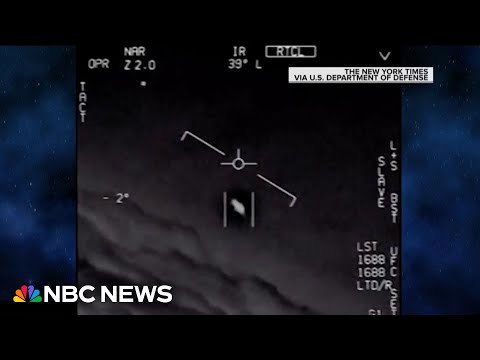
Former Pentagon insider shares details on UFOs in new book
NBC News — NBC News interview with Luis Elizondo timed to Imminent's August 2024 publication, discussing his AATIP account and the book's central claims. Verified via YouTube oEmbed before inclusion.
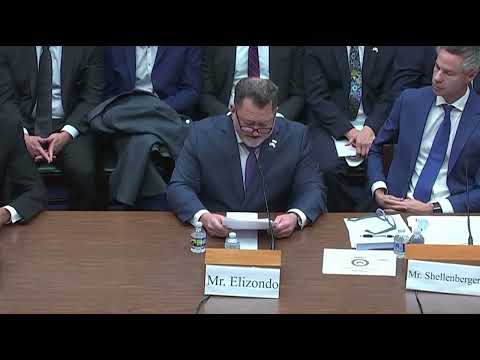
'Not alone in the cosmos' - Fmr. Pentagon UFO hunter says US government hides evidence
VideoFromSpace — Coverage of Elizondo's November 13, 2024 testimony before the House Oversight Committee, three months after Imminent's release — the book's most direct, documented downstream influence. Verified via YouTube oEmbed before inclusion.
Sources Cited
- Elizondo, Luis. Imminent: Inside the Pentagon's Hunt for UFOs. William Morrow, 2024 (ISBN 0063235560 / 9780063235564, cited here, matching this site's own resources library citations). amazon.com
- "Imminent: Inside the Pentagon's Hunt for UFOs." AbeBooks (William Morrow, 2024, ISBN 9780063235564, bibliographic record). abebooks.com
- "Luis Elizondo." Wikipedia (biography: military and intelligence career, AATIP, resignation, To The Stars Academy, congressional testimony). en.wikipedia.org
- "Bio." Luis Elizondo official site (luiselizondo-official.com), personal/professional biography page. luiselizondo-official.com
- Cooper, Helene; Blumenthal, Ralph; Kean, Leslie. "Glowing Auras and 'Black Money': The Pentagon's Mysterious U.F.O. Program." The New York Times, December 16, 2017. nytimes.com
- Sheaffer, Robert. "Elizondo and the 'Five Observables.'" Bad UFOs (badufos.blogspot.com), September 2018, critical analysis of Elizondo's Five Observables framework and AATIP/AAWSAP naming discrepancies. badufos.blogspot.com
- Colavito, Jason. "Review of 'Imminent' by Luis Elizondo." JasonColavito.com, book review. jasoncolavito.com
- "Imminent Book Review: Evaluating Luis Elizondo's UAP Whistleblower Claims." Leap Ahead (leapaheadapp.com), book review. leapaheadapp.com
- "Written Testimony of Luis Elizondo." U.S. House Committee on Oversight and Accountability, November 13, 2024 hearing, "Unidentified Anomalous Phenomena: Exposing the Truth." oversight.house.gov
- "Congressional UFO Hearing Features Eye-Opening UAP Claims." Forbes, November 14, 2024. forbes.com
- "Imminent: Inside the Pentagon's Hunt for UFOs." Goodreads (bibliographic listing, hardcover 1st ed.). goodreads.com
- This site's own resources library: Full Reading List, where this exact edition (ISBN 0063235560) is cited across at least nine case-file pages.
- This site's own case file: Advanced Aerospace Threat Identification Program, which documents the Pentagon's on-record dispute of Elizondo's self-described directorship.
- This site's own case file: David Grusch Whistleblower Testimony, for the 2023 testimony Elizondo calls a vindicating moment for his own earlier claims.
- This site's own case file: UAP Task Force Formation, for AATIP's direct institutional successor.
- This site's own key-figures entry: Luis Elizondo, for his full biography and further case connections.
- This site's own essential reading entry: UFO: The Inside Story, for Garrett Graff's independently sourced account of the same institutional history.
Have corrections, additional research, or peer-reviewed sources? Help improve this entry.
Suggest an Edit