
Encountering Mary
From La Salette to Medjugorje
Core Thesis
Encountering Mary is a 1991 religious-studies monograph by Sandra L. Zimdars-Swartz of the University of Kansas. It is not a UFO book, and it does not try to decide whether anyone saw the Virgin Mary. Its subject is what happens after someone says they did. In her own words the book is "an introduction to modern Marian apparitions" that traces the "transformation of private experience into public belief." She follows six cases through their documents: La Salette (1846), Lourdes (1858), Fátima (1917), San Damiano in Italy (1964–1981), San Sebastián de Garabandal in Spain (from 1961) and Medjugorje (from 1981). Her argument is that the experience of a seer is quickly taken over by families, crowds, priests, bishops and pamphleteers, and that the version the public receives is the product of that process. It is on this list because the same events have been reread by UFO writers, above all Jacques Vallée and the Portuguese authors of the Fátima trilogy, as anomalous aerial phenomena. Anyone weighing those readings needs to know how the source accounts were made, and this book explains that more carefully than any UFO title does. A note on this breakdown: it was written from the publisher-authorised Google Books preview (the front matter, most of the introduction and scattered chapter pages read as page images, plus keyword searches of the full text), the publisher's description, one review read in full, the opening pages of several journal reviews, and a 1987 student-newspaper profile of the author. This site has not read the book cover to cover.
About the Author
The book's copyright page carries a Library of Congress entry reading "Zimdars-Swartz, Sandra, 1949–." This site found no primary source for where she took her degrees and does not state them. Her preface and the journal reviews place her in the Department of Religious Studies at the University of Kansas. The University Daily Kansan described her in February 1987 as an assistant professor of religious studies who taught a class called "Mother as Religious Metaphor."
She came to apparitions from medieval studies. In 1983 Indiana University Press published Joachim of Fiore: A Study in Spiritual Perception and History, which she wrote with Delno C. West. Joachim, who died in 1202, was a medieval theorist of history and prophecy, and that background shows in Encountering Mary, which keeps returning to prophecy and the end of the world. The preface says her interest in modern apparitions began in the autumn of 1982, when she spent most of a day at Lourdes. She went on a whim, she writes, and found the place compelling in its own right.
After that she visited other sites and read the literature, most of which she describes as popular and devotional. The preface records University of Kansas funding for a trip to Ireland in the autumn of 1985 to study a new apparition at the Melleray grotto, further summer work on Melleray in 1986, and a 1987 study of the apparition reported at Necedah, Wisconsin. The Kansan article reports that she was in a crowd of about 50,000 at Medjugorje in June 1986, on the fifth anniversary of the first reported appearance there, researching the book. In 1989 she published a paper on the Necedah seer, Mary Ann Van Hoof, in the Journal of Religion and Health.
Princeton University Press lists the book as winner of the 1993 Byron Caldwell Smith Award at the University of Kansas. She went on writing about the subject for decades: in 2017 the journal Nova Religio published her article "Lipa Comes to Necedah," on how a Philippine apparition fed into the Wisconsin one. For readers of this site the point to hold on to is what she is not. She is a historian of religion. She is not a ufologist, a parapsychologist, a Catholic apologist or a debunker.
Historical Context & Origins
The introduction sets out the background a reader needs. Visions of Mary are old. The thirteenth-century collection of Caesarius of Heisterbach, which she cites, records sixty-four of them. But in medieval accounts the visionary was nearly always alone. What is new in the last two centuries, she argues, is the apparition that is both "serial" and "public": the seer expects the experience to recur, says so, and a crowd gathers at the announced time to watch. The crowd watches the seers and looks for signs.
She also explains the Catholic Church's position, which UFO writers often get wrong. Pope Benedict XIV, who reigned from 1740 to 1758, held that approval of a private revelation means only that it may be published for the good of the faithful. An approved apparition calls for what he termed "the assent of human faith," not the faith owed to doctrine, and a Catholic may decline to believe in it. The decision belongs to the local bishop, and she notes that most apparitions reported in the past two centuries were never formally investigated at all.
The book was written during a surge of interest. Medjugorje had been drawing pilgrims since June 1981. On 15 August 1988 about fifteen thousand people gathered at a Catholic parish in Lubbock, Texas, where many reported unusual behaviour of the sun and figures in the clouds. She mentions lesser-known recent cases in the Ukraine and "one in Egypt."
On why apparitions seemed to be multiplying, she reports two answers without adopting either. Skeptics pointed to "cultural malaise and anxiety" and spoke of "imitative" experiences. Believers read the same pattern as a sign that the end of time was near. That neutrality matches a wider turn in scholarship. Reviewing the book for the Journal of Ecclesiastical History, Frances Lannon of Lady Margaret Hall, Oxford, opened by observing that historians and social scientists had become newly interested in popular religion. Her own introduction and appendix draw on that work, including Thomas Kselman on nineteenth-century France and William A. Christian Jr. on Spanish visions.
The UFO literature had already claimed some of this ground. Vallée's Dimensions (1988) treated Fátima and Lourdes as cases on the border between apparition and close encounter, and Hilary Evans had compared visions of saints with alien contact in Gods, Spirits, Cosmic Guardians (1987). Zimdars-Swartz knew at least part of that literature. Her first endnote and her bibliography cite Evans's earlier Visions, Apparitions, Alien Visitors (1984) among general works on apparitions. Vallée's name did not turn up in this site's searches of the text.
Core Arguments & Key Concepts
The experience itself cannot be recovered; its history can. She calls the book a study of "the movement from private experience to public meaning." What a seer underwent is, she writes, "probably inaccessible and indescribable." What can be done is to go back to the earliest reports, set them in their personal and social context, and see when details were added or dropped. Read that way, the first accounts are usually fuller and messier than the devotional versions that followed. Whichever explanation a reader assumes, she says, the early records show complex events later pared down.
Phenomenology, not verdicts. The publisher describes the approach as phenomenological and "neither apologetic nor antagonistic," and reviewers agreed. She brackets the question of whether Mary appeared and attends to the human processes and interactions around the claim. She invites other disciplines to ask their own questions.
The public takes over. Part One, "Apparitions as Religious Experience," follows the tension between what the event meant to the seer and what it came to mean to everyone else. Children are questioned by parents, priests and officials. Visitors bring their own expectations. At Lourdes other people began having visions at the grotto within months. She describes some of what crowds perceive at such sites as "Rorschach tests": surfaces and objects in which people of faith discern sacred images. Others are signs that were expected in advance and then perceived on the day.
Suffering is turned into meaning. The preface names a second transformation running beside the first: the suffering of individuals, then of a community and the world, is given meaning. This is her own account of why apparitions matter to those who go. At Lourdes she was struck that the sick seemed to find peace whether or not they were cured. She says this transformation is usually accompanied by a sense of coming crisis of the kind called apocalyptic.
Secrets move authority. Part Two, "Apparitions as Religious Knowledge," is about secrets. The La Salette children said they had each been told something they could not reveal. Their secrets were sent to Pope Pius IX, and a text attributed to Mélanie Calvat was published in 1879. At Fátima a secret in three parts emerged over decades through the memoirs of Lúcia dos Santos. Garabandal and Medjugorje produced promised miracles, warnings and numbered secrets. She treats a secret as privileged knowledge, something through which authority is negotiated between seers, followers and Church officials, and which keeps an apparition open long after the visions stop.
The cases have fused into one apocalyptic worldview. The final chapter describes an ideology that, in her account, runs across countries: Mary as a mother warning her children that chastisement is close, with La Salette and Fátima read as chapters of one plan. She shows a darker variant at Necedah, Wisconsin, where from 1950 the messages reported by Mary Ann Van Hoof took on a theme of America under threat, and Senator Joseph McCarthy appears in them as a kind of saint. She notes that this outlook has often joined with conservative politics.
Key Cases & Evidence Discussed
La Salette, 1846. On 19 September 1846 two children herding cattle above the village of La Salette in the French Alps, Mélanie Calvat and Maximin Giraud, reported meeting a weeping woman who warned of failed harvests. The book follows the reports of miracles and prophecies that spread afterwards, the charges of exploitation made against local clergy, and the approval given by Bishop Philibert de Bruillard of Grenoble in a statement issued five years later to the day.
Lourdes, 1858. Bernadette Soubirous's experiences at the grotto of Massabielle began on 11 February 1858. Zimdars-Swartz reconstructs them from the documentary editions of René Laurentin and others, noting that most published accounts are highly selective. She gives space to what happened after Bernadette's visions ended, including the other visionaries at the grotto.
Fátima, 1917. This is the case that matters most to readers arriving from this site's file on the Miracle of the Sun. For 13 October 1917 she puts the crowd at the Cova da Iria at about seventy thousand. Her account has Lúcia crying "Look at the sun!" and the crowd taking up the cry. She adds that Lúcia later said she had not meant to direct anyone to look. Reports came in from people up to forty kilometres away, and the three children described seeing different things. For an earlier apparition she quotes witness descriptions of a sound "rather like a rocket, a long way off," a small greyish cloud on the oak and a buzzing. These are the details that Joaquim Fernandes and Fina d'Armada build on in Heavenly Lights. She reports them as testimony and draws no physical conclusion.
San Damiano, 1964–1981. The least known of the six, and the only one centred on a single adult seer. Rosa Quattrini, an Italian woman who had been ill for much of her adult life, reported a healing and then appearances of the Virgin, including one in October 1964 in which fruit trees were said to bloom out of season. She reads the case through illness and health, and through Church politics after the Second Vatican Council. The local bishop judged against it and Quattrini continued anyway.
Garabandal, from 1961. On 18 June 1961 four girls in a village in northern Spain reported seeing an angel. More than two thousand appearances were reported over the next two years. The chapter, "Can the Testimonies of Thousands Be Wrong?", is the closest the book comes to this site's usual material. She describes the growth of what she calls a cult of the paranormal: trances at all hours of the day and night, seers running through the village in ecstasy, visitors' objects handed back to the right owners, and a filmed episode in which a Communion host was said to appear on a girl's tongue. Paranormal claims of this kind, she writes, are an important and "little-studied aspect of most Marian apparitions." She also records the seers' retractions and the repeated finding of the bishops of Santander that the events had a natural explanation.
Medjugorje, from 1981. Six young people, aged ten to twenty when it began, reported almost daily appearances in a village in what was then Yugoslavia. Writing while the claims were still current, she concentrates on the ten secrets, the promised sign and the way secrets figure in the contest over authority. As with San Damiano and Garabandal, she notes, the Church's decisions to that date had been negative.
What is not in the book. Zeitoun is not one of her cases. This site's search of the text found it once in the body, as the unnamed apparition "in Egypt" on page 18, which the index identifies as Zeitoun, and four times in the bibliography. There is no account of the lights over the church or of the investigation under Pope Kyrillos VI. UFOs appear once. In the preface, among questions she says lie beyond her scope, she asks how these encounters relate to visionary phenomena outside a Catholic setting, "such as encounters with spiritual guides and UFOs." Searches for Vallée, flying saucers and extraterrestrials returned nothing, and the one UFO-adjacent title in her bibliography is the Evans book noted above. She makes no UFO claim of any kind.
Critical Reception & Controversies
The reviews this site could read were favourable. Princeton University Press quotes the New York Times Book Review calling it "a fascinating study of seven apparitions of the Virgin Mary reported since 1846." This site knows that notice only from the publisher's excerpt and could not identify its author or date.
The one review read in full is by David Hartman, a Disciples of Christ minister, in the Catholic monthly New Oxford Review for January–February 1992. He wrote that she is "neither a scoffer nor an apologist" and has "great respect for facts," and that she is sympathetic both to the Church as it sorts out competing claims and to people who believe they have met Mary. His one reservation concerned the prose. She writes, he said, in "cool, measured tones," a style he found "off-putting at first" before coming to value it as a source of the book's credibility.
Academic journals reviewed it widely: Thomas Kselman in the Catholic Historical Review, Frances Lannon in the Journal of Ecclesiastical History, Mary Zeiss Stange in the Journal of the American Academy of Religion, Miguel C. Leatham in the Journal for the Scientific Study of Religion, Eileen M. Condon in the Journal of American Folklore and James P. Gaffey in Church History. This site could read only the opening page or opening lines of each, and reports them on that basis. Gaffey wrote that the literature on apparitions was "largely dominated by uncritical studies" and that she had joined the scholars treating the subject "with caution and respect." Stange called the book "a most welcome addition" to a field she thought perhaps too crowded. Leatham called it "a welcome overview" of historical, ideological and some social-psychological features of modern apparitions.
That leaves a gap this article cannot honestly fill. Whatever objections those reviewers went on to make, about method, the choice of cases or the handling of sources, lie in pages this site did not see, and it will not guess at them.
Some limits are visible from the book itself. She states that the scholarly path is "not a very well paved" one and that questions about gender, nationalism and non-Catholic parallels go beyond her scope. The choice of cases was partly governed by which ones had enough published documents, and all six are European. And the book stops in 1991. It predates the Vatican's publication of the third part of the Fátima secret in 2000, which this site's article on Fatima Revisited covers.
For readers of this site there is a further limit, and it is this site's observation, not a published criticism. A method that brackets what happened cannot say what seventy thousand people saw in the sky at Fátima. Readers who want the physical arguments, from Joe Nickell's optical explanation to the anomalous reading, will find them in the case file, not here.
Influence & Legacy
The book has stayed in use. Princeton reissued it in 2014 in its Princeton Legacy Library, a print-on-demand series for backlist titles, and it remains available in paperback, hardcover and ebook. Amazon showed 4.2 stars from 16 ratings when checked for this article.
Later scholars cite it as a reference point. Carol Engelhardt Herringer, in a 2008 study of Victorian attitudes to Mary, listed it "among the most significant works" on how people responded to her. The anthropologists Michael D. Murphy and J. Carlos González Faraco borrowed its phrase about the movement from private experience to public meaning in a 2011 article on European vision narratives. When Nova Religio devoted a 2017 issue to Marian apparitions as new religious movements, Zimdars-Swartz was among the contributors.
Its use in the UFO field is indirect, and mostly a matter of what it could correct. The ufological reading of Fátima rests on the claim that the 1917 testimony was later reshaped. Fernandes and d'Armada argue in Celestial Secrets that Lúcia's memoirs of the 1930s and 1940s overlaid the original record. Zimdars-Swartz makes a similar structural point about every case she studies, sixteen years before their English editions appeared, and without proposing that anything unidentified was in the sky. A reader can accept her account of how the story changed and still reject, or accept, the trilogy's explanation of what the story was first about. This site does not suggest the trilogy's authors used her book.
The same applies to the psycho-social tradition. Evans's comparison of religious visions and alien encounters, and Carl Jung's reading of flying saucers as a modern visionary rumour in Flying Saucers, both argue from resemblance. Zimdars-Swartz cites Evans in a note and mentions Jung only once, for his praise of the 1950 dogma of the Assumption. She offers documented sequences in place of resemblances: who said what, to whom, and when it reached print. That is the kind of evidence this site's Psycho-Social Hypothesis file needs and rarely has.
On this site the book was first cited in the Zeitoun case file as context for a mass apparition that followed a national crisis. Preparing this article showed that the citation claimed more than the book says, and the file has been corrected. Zimdars-Swartz reports the crisis explanation as the view of skeptics and observers, sets the believers' explanation beside it, and treats Zeitoun itself in half a sentence. The tectonic-strain theory of John S. Derr and Michael Persinger, which that file discusses, did not turn up in searches of the book.
The Book
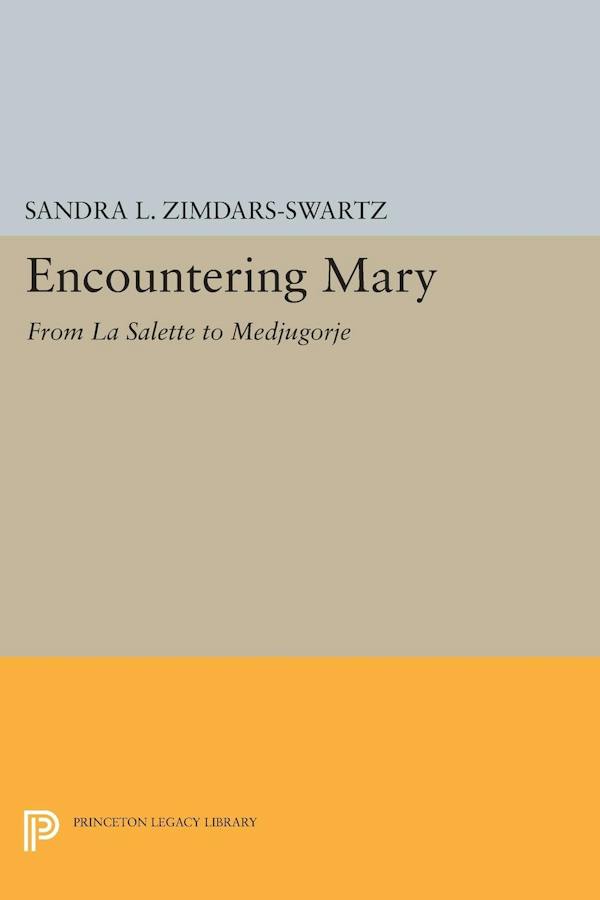
As an Amazon Associate, OverClassified may earn from qualifying purchases made through this link, at no extra cost to you.
Why This Is Essential Reading
Encountering Mary belongs on this list as a control, not as a source of UFO evidence. It is a calm, documented account of how six reports of the Virgin Mary became public events, and it shows that the versions most people know were shaped by interrogators, crowds, bishops and later memoirs. That is uncomfortable for more than one camp. It warns the devout that the familiar story is an edited one. It warns the debunker that the earliest reports are stranger and more detailed than the edited story. And it warns the UFO reader that plucking a buzzing sound or a spinning sun out of a devotional narrative, without asking how that narrative was assembled, is not research. Sandra L. Zimdars-Swartz says almost nothing about Zeitoun and nothing about UFOs beyond one question in her preface, and she should not be cited as if she did. Read it beside Heavenly Lights and Dimensions. This site worked from the preview and the reviews it could open, not a full reading, and will revise this assessment when it has read the whole text.
Related Cases & Theories
Essential Viewing
Marian Apparitions Explained: The Mysterious Appearances of the Virgin Mary
ReligionForBreakfast — An overview of reported Marian apparitions from the ReligionForBreakfast channel. It is not about this book. Verified via YouTube oEmbed before inclusion.
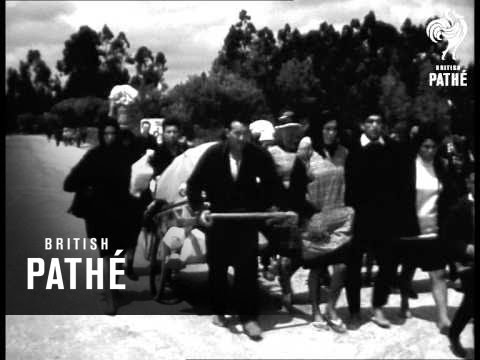
Pilgrimage To Fatima (1967)
British Pathé — British Pathé newsreel footage of pilgrims at Fátima in 1967, fifty years after the events the book examines. Verified via YouTube oEmbed before inclusion.
Sources Cited
- Zimdars-Swartz, Sandra L. Encountering Mary: From La Salette to Medjugorje. Princeton, NJ: Princeton University Press, 1991 (hardcover ISBN 0691073716; Princeton Legacy Library paperback, 2014, ISBN 0691600554 / 9780691600550). Consulted through the publisher-authorised preview: copyright page, contents, preface, introduction pp. 3–10 and 16–20, and pp. 67 and 131 read as page images; other passages located by keyword search of the full text. Not read in full. books.google.com
- "Encountering Mary." Princeton University Press catalogue page (description; Princeton Legacy Library series; 360 pp.; 1993 Byron Caldwell Smith Award, University of Kansas; New York Times Book Review excerpt). press.princeton.edu
- "Encountering Mary: From La Salette to Medjugorje (Princeton Legacy Library)." Amazon listing for the paperback, ISBN 0691600554 (Princeton University Press, July 14, 2014; 360 pages; customer rating read from the listing, October 2026). amazon.com
- "Encountering Mary: From La Salette to Medjugorje." Amazon listing for the original hardcover, ISBN 0691073716 (Princeton University Press, publication date given as May 26, 1991). The December 1992 paperback, ISBN 0380718855, 342 pages, is listed separately under the subtitle "Visions of Mary from La Salette to Medjugorje." amazon.com
- Hartman, David. "The Power of the Virgin." Review of Encountering Mary. New Oxford Review, January–February 1992. Read in full. newoxfordreview.org
- Gaffey, James P. Review of Encountering Mary. Church History 64, no. 3 (September 1995): 531–532. First page read from the publisher's preview image; the remainder was not consulted. doi.org
- Lannon, Frances. Review of Encountering Mary and Candace Slater, City Steeple, City Streets. Journal of Ecclesiastical History 43, no. 3 (July 1992): 499–501. First page read from the publisher's preview image; the remainder was not consulted. doi.org
- Stange, Mary Zeiss. Review of Encountering Mary. Journal of the American Academy of Religion 61, no. 1 (Spring 1993): 162–165. Opening lines only, as shown in JSTOR's search index. jstor.org
- Leatham, Miguel C. Review of Encountering Mary. Journal for the Scientific Study of Religion 32, no. 1 (March 1993): 99–100. Opening lines only, as shown in JSTOR's search index. doi.org
- Kselman, Thomas. Review of Encountering Mary. The Catholic Historical Review 78, no. 2 (April 1992): 312–313. Citation confirmed from JSTOR; the review's assessment was not consulted. jstor.org
- Condon, Eileen M. Review of Encountering Mary. The Journal of American Folklore 108, no. 428 (Spring 1995): 225–227. Citation confirmed from JSTOR; the review's assessment was not consulted. jstor.org
- Schrag, Paul. "Visions of the Virgin Mary attract many to Yugoslavia." University Daily Kansan, February 18, 1987 (Zimdars-Swartz's rank, her course and her June 1986 visit to Medjugorje). University of Kansas Libraries digital collection. digital.lib.ku.edu
- West, Delno C., and Sandra Zimdars-Swartz. Joachim of Fiore: A Study in Spiritual Perception and History. Bloomington: Indiana University Press, 1983 (xvi + 136 pp.). Catalogue record. findingaugustine.org
- Zimdars-Swartz, Sandra L. "Lipa Comes to Necedah: Personal Experiences, Signs, and a Confluence of Imagery at an American Cold War Apparition." Nova Religio 21, no. 2 (November 2017): 100–110. Repository record; article not consulted. hdl.handle.net
- Krebs, Jill M., and Joseph Laycock. "Marian Apparitions as New Religious Movements." Nova Religio 21, no. 2 (November 2017): 5–12 (names Zimdars-Swartz as a contributor to the issue). Seen in JSTOR's search index only. jstor.org
- Murphy, Michael D., and J. Carlos González Faraco. "Identifying the Virgin Mary: Disarming Skepticism in European Vision Narratives." Anthropos 106, no. 2 (2011): 511–527 (quotes Zimdars-Swartz 1991, p. 19). Seen in JSTOR's search index only.
- Herringer, Carol Engelhardt. Victorians and the Virgin Mary: Religion and Gender in England, 1830–1885. Manchester University Press, 2008, chapter 1 (lists Encountering Mary among the most significant works on responses to Mary). Seen in JSTOR's search index only.
- Zimdars-Swartz, Sandra L. "Religious Experience and Public Cult: The Case of Mary Ann Van Hoof." Journal of Religion and Health 28, no. 4 (1989): 36–57. Cited here from the book's own notes (p. 279); article not consulted.
Have corrections, additional research, or peer-reviewed sources? Help improve this entry.
Suggest an Edit