
Dimensions
A Casebook of Alien Contact
Core Thesis
Dimensions: A Casebook of Alien Contact is, on the evidence of its own publication history, a book routinely mis-slotted into Jacques Vallée's bibliography: it is not the middle volume of an informal "Magonia trilogy" bridging Passport to Magonia (1969) and Confrontations (1990), a framing that circulates in casual summaries of his career, but the first volume of the specific three-book sequence — Dimensions (1988), Confrontations (1990), Revelations (1991) — that Anomalist Books' own 2008 reissues brand outright as the "Alien Contact Trilogy," a structural fact this site's own Confrontations entry and Interdimensional Hypothesis theory file both already state and this entry confirms independently rather than repeats uncritically. What the looser "Magonia trilogy" description gets right is the intellectual lineage: Dimensions does directly continue the folklore-continuity argument Passport to Magonia opened nineteen years earlier and the "control system" hypothesis The Invisible College named in 1975, and multiple booksellers' own back-cover descriptions of this book call it the fullest scientific statement Vallée ever produced of the interdimensional hypothesis those two earlier books had only sketched. Structured in three parts and eight chapters — from an opening historical sweep through a four-chapter theoretical core examining the phenomenon's emotional, celestial, psychic, and spiritual dimensions, to a closing argument about what obstructs serious research into it — the book's throughline is that three specific evidentiary problems make UFOs poor candidates for literal extraterrestrial spacecraft: an implausibly high global volume of reported close encounters for a physical visitation campaign to sustain, a consistent physiological and psychological aftermath among witnesses regardless of culture or era, and a recurring pattern of apparent informational manipulation — claims that are partly true and partly false in ways that look deliberate rather than random. Vallée's own alternative is not a rejection of the phenomenon's reality but a relocation of its origin: not distant star systems, but something closer, stranger, and oriented toward human consciousness itself, a "control system" that Vallée argues has been "the means through which man's concepts are being rearranged" — the same formulation The Invisible College first supplied in 1975 and this book restates against thirteen additional years of case material.
About the Author
Jacques Vallée's fuller biography — his astrophysics training, his Northwestern collaboration with J. Allen Hynek, his ARPANET-era computer-science career, his later AATIP consulting and Stanford isotopic-ratio research — is covered across this site's other five Vallée essential-reading entries and does not need repeating here. What is worth stating narrowly is where Dimensions sits inside that career: thirteen years after The Invisible College (1975) had proposed the control-system idea as a largely untested theoretical claim, and two years before Confrontations (1990) would send Vallée into the field in Brazil and France to test it against forty individually investigated cases. Dimensions is the book written in between — still primarily an argument rather than a field report, but a far more developed and case-dense argument than the 1975 book that first proposed it, incorporating a decade's worth of additional witness material, abduction literature, and Vallée's own continuing engagement with the parapsychology-adjacent scientific network he and Hynek had called the "Invisible College."
The book's own internal structure reflects that in-between status directly. Its three parts move from "The Alien Chronicles" (a historical survey opening with ancient sky-reports and closing with a chapter on fairy-abduction folklore, "The Secret Commonwealth" — a title borrowed, as in Passport to Magonia before it, from Reverend Robert Kirk's 1691 treatise on Scottish fairy belief), through "Another Reality" (four chapters examining what Vallée calls the phenomenon's emotional, celestial, psychic, and spiritual components, the last of these built substantially around the 1917 Fatima apparitions discussed in this entry's Key Cases section below), to a concluding part, "A Challenge to Research," whose single chapter, "Fighting the Triple Coverup," argues that serious study of the phenomenon is blocked simultaneously on more than one front — official government secrecy, deliberate disinformation from parties with an interest in confusion, and the credulous, evidence-indifferent culture of ufology's own believer subculture — a compounding obstruction thesis Vallée treats as a research problem in its own right, independent of what the underlying phenomenon actually turns out to be.
Kirkus Reviews, assessing the book on its April 1988 release, situated it precisely against Vallée's two preceding books, calling him "the dean of UFO theorists" and describing Dimensions as the work in which he "vigorously cultivates the theory he seeded in Passport to Magonia and The Invisible College": that UFOs are not spacecraft but, in the review's own phrasing, "consciousness-controlling mechanisms from 'other dimensions beyond spacetime.'" That contemporary framing — a reviewer independently reconstructing the book's place in Vallée's bibliography from the text itself, three years before Revelations existed to complete the trilogy Anomalist Books would later name — is itself a useful, independently sourced check on this entry's own correction of the "Magonia trilogy" framing above.
Historical Context & Origins
Dimensions arrived in April 1988, one year after Whitley Strieber's Communion (1987) and Budd Hopkins's casework had pushed the hypnotically recovered abduction narrative into the center of American UFO publishing — the same genre shift this site's own Confrontations entry describes Confrontations reacting against two years later. Dimensions reacts against it from a different angle: rather than favoring waking testimony and physical trace evidence over hypnotic regression, as Confrontations would, Dimensions absorbs the abduction wave into its own theoretical framework, treating the era's proliferating contact reports as further data points for the interdimensional and control-system hypotheses rather than as a genre requiring a methodological corrective of its own.
The book's specific chronological position inside Vallée's own bibliography is the point this entry's core thesis section corrects directly: Dimensions is not a bridge volume slotted between Passport to Magonia (1969) and Confrontations (1990), the loose "Magonia trilogy" description that turns up in some secondary summaries of his career. It is the first of the three books — Dimensions, Confrontations, Revelations — that Vallée's own publisher packages and sells together as a named trilogy, with Dimensions supplying the fullest theoretical statement, Confrontations supplying the field-tested casework, and the 1991 Revelations: Alien Contact and Human Deception — not yet published when this book appeared, and not yet covered on this site — turning specifically toward government disinformation and hoax cases. Getting this structure right matters for more than bibliographic tidiness: it clarifies that Dimensions is where Vallée is doing the most theoretical construction, not the least, a fact obscured when the book is treated as a way station between two more famous titles rather than as the trilogy's actual foundation.
The book landed, as this site's own Interdimensional Hypothesis theory file documents, inside a specific, real scientific network rather than a vacuum: the loosely organized group of credentialed researchers Vallée and Hynek had begun calling the "Invisible College" in the 1970s was, by 1988, more than a decade into informally comparing case data outside conventional academic or military channels, and Dimensions's psychic-phenomena chapter draws on the same consciousness-research-adjacent network — parapsychologists, physicists, and a handful of scientifically credentialed contactee researchers — that this site's own The Invisible College entry documents at length for the 1975 book that first named the group.
It also arrived roughly a decade before the interdimensional hypothesis Vallée had spent two decades developing began attracting serious skeptical scrutiny of its own, distinct from the older extraterrestrial-hypothesis-versus-skepticism debate that had defined ufology since the 1950s: critics, including Robert Sheaffer and other researchers aligned with CSICOP's UFO Subcommittee, had already begun arguing by the late 1970s — discussed further in this entry's Critical Reception section — that Vallée's theoretical framework risked becoming unfalsifiable by design, a critique Dimensions inherited directly from The Invisible College rather than answered.
Core Arguments & Key Concepts
The book's opening part, "The Alien Chronicles," repeats in miniature the historical-catalog method Vallée had used at much larger scale in Passport to Magonia: a sweep from ancient sky-reports through the modern era, organized around the recurring observation that non-human encounter accounts long predate the twentieth-century "flying saucer" and share a persistent structural template regardless of the era's own explanatory vocabulary. Its third chapter, "The Secret Commonwealth," returns directly to the fairy-abduction folklore Passport to Magonia had built its case on nineteen years earlier — borrowing its title, as that book also had, from Reverend Robert Kirk's 1691 treatise on Scottish fairy belief — and treats the recurrence of that specific historical source across two Vallée books, nearly two decades apart, as evidence of how central the folklore-continuity argument remained to his thinking even after the theoretical apparatus built around it had grown far more elaborate.
The book's theoretical core, its four-chapter middle part "Another Reality," breaks the phenomenon down into what Vallée calls its emotional, celestial, psychic, and spiritual components — a structure that is itself an argument: rather than treating UFO encounters as a single undifferentiated category of anomalous event, Vallée insists the phenomenon must be studied across all four registers simultaneously, since a purely physical (celestial) or purely psychological (emotional) account, taken alone, fails to explain the reported psychic effects and the recurring quasi-religious framing witnesses themselves impose on their own experiences. The chapter titled "Metalogic" carries forward, largely unchanged, the concept The Invisible College had introduced in 1975 — that an encounter's internal contradictions and apparent absurdity may themselves be meaningful rather than noise to be filtered out, a claim this entry's Critical Reception section shows drew sustained, specific skeptical objection from the moment it was first proposed.
The book's central theoretical contribution, elaborated across roughly 250 pages rather than the shorter, more purely speculative treatment The Invisible College had given it in 1975, is the argument that three evidentiary patterns make the extraterrestrial hypothesis a poor fit for the accumulated case record: an implausibly large total volume of reported close encounters worldwide for a literal interstellar visitation campaign to have generated and sustained; physiological and psychological aftereffects — burns, missing time, altered belief, occasionally lasting psychic sensitivity — that recur with a consistency across culturally unrelated witness populations that a straightforward hallucination or fraud model struggles to explain; and a pattern of apparent deliberate deception in the information encounters convey, messages and predictions that prove partly true and partly false in ways Vallée reads as intentional rather than random noise. None of these three arguments originates in this book — each has an earlier statement somewhere in Vallée's 1969–1975 bibliography — but Dimensions is where all three receive their fullest, most explicitly integrated joint statement before Confrontations would go looking for physical evidence to test any of them against.
The book's closing chapter, "Fighting the Triple Coverup," is its most directly programmatic: rather than treating government secrecy as the sole obstacle to serious research, Vallée argues research is obstructed on at least three simultaneous fronts — genuine official classification, deliberate disinformation planted by parties with an interest in confusion or discreditation, and ufology's own believer culture, whose appetite for dramatic, unverified claims makes it an unwitting participant in obscuring whatever the phenomenon actually is. That argument gives the book's theoretical chapters a practical coda: even if the interdimensional and control-system hypotheses developed across "Another Reality" are correct, Vallée's own closing chapter concedes that proving them will remain difficult for reasons that have nothing to do with the phenomenon's own nature.
Key Cases & Evidence Discussed
The book's most substantively documented single case is the October 1917 Fatima Miracle of the Sun (Case File #275), examined at length in Chapter 7, "A Morphology of Miracles." Vallée reads the Cova da Iria apparitions — alongside the earlier 1858 Marian apparitions at Lourdes — as a hybrid case sitting directly on the boundary between religious apparition and close-encounter report, treating the tens of thousands of witnesses' accounts of a spinning, color-changing sun as the same underlying phenomenon that produces twentieth-century UFO sightings, filtered through an early-twentieth-century Catholic witness population's own interpretive framework rather than a secular one. The connection between this book and the case runs forward as well as back: Portuguese researchers Joaquim Fernandes and Fina D'Armada's own 2007 book-length reinterpretation of Fatima as a UFO-adjacent event, Heavenly Lights, carries a foreword written by Vallée himself — a direct, documented continuation, nearly two decades later, of the same argument this book's seventh chapter first made at length, and a source this site's own Fatima case file already cites.
The book's opening historical chapters revisit, at a much smaller scale than Passport to Magonia's 923-entry appendix, the same fairy-abduction and pre-modern "aerial visitor" folklore that book had catalogued in 1969, organized here under the chapter title "The Secret Commonwealth" rather than presented as new case material; this entry's Core Arguments section above discusses that chapter's direct debt to Robert Kirk's 1691 treatise of the same name. Readers looking for the fuller documentary version of that argument, rather than this book's more compressed restatement of it, should consult this site's own Passport to Magonia entry directly.
Beyond Fatima, the book's treatment of contemporaneous abduction testimony is thematic rather than built around a small number of extensively profiled named cases in the manner of Confrontations's forty field-investigated sites: Vallée draws on the broader body of hypnotic-regression and waking-testimony abduction reports circulating in the mid-to-late 1980s — the same genre Communion and Budd Hopkins's casework had recently popularized — as aggregate evidence for the recurring emotional and psychic patterns his "Another Reality" chapters describe, rather than isolating individual reports for the sustained case-by-case scrutiny this site's own case-file format applies. Where this book's argument does connect to a specific site case beyond Fatima, it is through the same control-system and interdimensional framework this site's own Interdimensional Hypothesis theory file applies directly to the 1977 Colares injury wave — the case Confrontations would investigate in the field two years after this book's more theoretical treatment of the same underlying framework.
Critical Reception & Controversies
Kirkus Reviews, assessing the book at its April 1988 release, called it "provocative" and "intensively researched, thoughtful," closing its review with a direct recommendation: "Watch the skies — and read this book." The same review situated Dimensions precisely inside Vallée's developing argument, describing it as the book in which "the dean of UFO theorists" builds on Passport to Magonia and The Invisible College to argue that UFOs function as "consciousness-controlling mechanisms from 'other dimensions beyond spacetime'" — a description this entry's own core-thesis section treats as an accurate contemporary summary of the book's actual argument, written before Confrontations or Revelations existed to complete the trilogy this book opens.
The book's most durable and most specific skeptical criticism, however, is not contemporary to 1988 but predates it by more than a decade, and targets a concept Dimensions carries forward essentially unchanged rather than one it originates. Robert Sheaffer, reviewing The Invisible College for The Zetetic (the journal that became Skeptical Inquirer) in its Spring/Summer 1977 issue, attacked Vallée's "metalogic" concept directly — the idea, restated in this book's own sixth chapter under the same title, that a UFO encounter's internal contradictions and apparent absurdity might be meaningful on a plane beyond ordinary logic rather than evidence of confabulation or error. Sheaffer argued the concept, taken seriously as a scientific paradigm, would immunize any claim whatsoever from disproof, warning that "if adopted as a legitimate scientific paradigm, it would mean the end of experimental science" and noting, pointedly, that the seventeenth-century Invisible College Vallée and Hynek had borrowed their own group's name from had followed Francis Bacon's empirical method precisely in order to reject the kind of mysticism Vallée's "metalogic" reintroduces. That this book reuses the identical chapter title and concept eleven years after Sheaffer's review, without directly answering the unfalsifiability objection, is a genuine continuity this entry treats as a real, unresolved weakness rather than an incidental detail.
A related, more recent critique targets the "control system" framework Dimensions shares with The Invisible College and Confrontations rather than this book's specific 1988 case material: writing in 2021, researcher Noah Hradek argued the hypothesis's core evidentiary claims — particularly the assertion of periodic, patterned activity across time that a controlling intelligence would produce — lack the kind of transparent, checkable data needed to distinguish a genuine control system from ordinary variation in sighting frequency, and questioned whether Vallée's confidence that the extraterrestrial hypothesis is inadequate is itself sufficiently justified. This entry's own Confrontations entry applies the same Hradek critique to that book's field-tested version of the theory; this entry notes that the critique arguably lands with even more direct force against Dimensions, since this is the book that presents the control-system and interdimensional arguments in their fullest theoretical form, two years before any of it was tested against physical case evidence at all.
General reader reception, by contrast, has remained largely favorable across the decades since: contemporary reader reviews collected on Goodreads and elsewhere describe the book as one of the more penetrating single-volume treatments of the UFO phenomenon available, and its status as the first volume of a publisher-branded trilogy has kept it in continuous print, across three separate publishers, for more than three decades — a commercial afterlife this entry's Influence & Legacy section discusses further.
Influence & Legacy
The book's most concrete, traceable legacy runs through Fatima specifically: Joaquim Fernandes and Fina D'Armada's 2007 Heavenly Lights: The Apparitions of Fatima and the UFO Phenomenon, a book-length academic reinterpretation of the 1917 apparitions along explicitly ufological lines, carries a foreword written by Vallée himself — a direct, nearly-twenty-year continuation of the argument this book's seventh chapter first made at length, and a source this site's own Fatima case file already cites independently of this entry.
Within Vallée's own bibliography, Dimensions functions as the hinge between the largely theoretical Invisible College (1975) and the field-tested Confrontations (1990): it is where the control-system and interdimensional hypotheses received their fullest, most integrated statement before either was tested against physical case evidence at all, and Anomalist Books' decision to reissue and market it in 2008 as the opening volume of a named "Alien Contact Trilogy" — rather than as a standalone title, or as a bridge between the earlier Magonia-era books — is itself part of that legacy: it fixes, in the book's own current marketing, the trilogy structure this entry's core-thesis section argues is the more accurate way to place this book inside Vallée's career.
Commercially, the book has had an unusually durable run for a single-author UFO theory text: after its 1988 Contemporary Books hardcover, it went through a Souvenir Press UK edition, at least one Ballantine mass-market paperback reissue, and the 2008 Anomalist Books "Alien Contact Trilogy" paperback this entry cites — more than three decades of continuous availability across four separate publishers, an afterlife matched among Vallée's own books only by Passport to Magonia.
The interdimensional hypothesis this book states in its fullest form has, in the decades since, become one of the more frequently cited alternative frameworks to straightforward extraterrestrial visitation in UAP research, discussed and debated across academic-adjacent venues this site's own Interdimensional Hypothesis theory file documents at length — an afterlife this entry attributes in substantial part to this book having been the moment the hypothesis moved from a proposal sketched across two earlier, shorter books into a single, sustained, book-length case for itself.
The Book

As an Amazon Associate, OverClassified may earn from qualifying purchases made through this link, at no extra cost to you.
Why This Is Essential Reading
Dimensions earns its place on this list first for a correction this entry makes rather than a claim it merely repeats: it is not the middle book of an informal "Magonia trilogy" wedged between Passport to Magonia and Confrontations, as loose summaries of Vallée's career sometimes describe it, but the actual opening volume of the specific three-book "Alien Contact Trilogy" his own publisher packages and sells today — a structural fact this site's own Confrontations entry and Interdimensional Hypothesis theory file already state, and one this entry now confirms directly rather than leaves ambiguous. Beyond that correction, the book earns its place for what it actually does: it is where thirteen years of accumulated theorizing, from Passport to Magonia's folklore argument through The Invisible College's control-system proposal, receives its single fullest, most integrated statement, tested against a decade's worth of additional case material and, in its seventh chapter, against the specific documentary record of the 1917 Fatima apparitions in a way that directly produced a real, cited scholarly afterlife two decades later. Its "metalogic" concept drew a specific, substantive skeptical rebuttal from Robert Sheaffer eleven years before this book restated it under the same chapter title without directly answering the objection — a genuine, unresolved weakness this entry does not paper over. But read as what it actually is, rather than as a way station between two more famous books, Dimensions is the volume where Vallée made his fullest case for taking the phenomenon's stranger, more consciousness-oriented possibilities seriously, two years before he went looking for physical evidence to test that case against in Confrontations.
Related Cases & Theories
Essential Viewing

Implications of UFO Phenomena with Jacques Vallée
New Thinking Allowed with Jeffrey Mishlove — A circa-1988 Thinking Allowed television interview that the New Thinking Allowed Foundation's own program notes list Dimensions: A Casebook of Alien Contact among the books discussed, verified via YouTube oEmbed before inclusion.
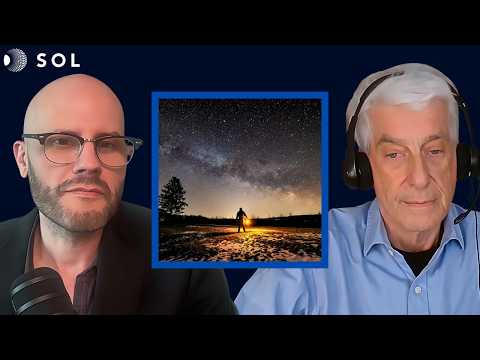
Are UAP a Control System? Jacques Vallée | The Sol Forum
The Sol Foundation — Vallée discusses the control-system and interdimensional framework this book gives its fullest early book-length statement to, verified via YouTube oEmbed before inclusion.
Sources Cited
- Vallée, Jacques. Dimensions: A Casebook of Alien Contact. Contemporary Books, 1988 (first edition, hardcover, Chicago; ISBN-13 9780809245864); this entry cites the Anomalist Books 2008 paperback "Alien Contact Trilogy" reissue (ISBN-13 9781933665283). amazon.com
- "Dimensions: A Casebook of Alien Contact." Kirkus Reviews (original review, issue of March 15, 1988; publisher Contemporary; contemporary assessment quoted throughout this entry). kirkusreviews.com
- "Dimensions: A Casebook of Alien Contact." Wikidata (bibliographic record: publication date, alternate titles, work identifiers). wikidata.org
- Dimensions: a casebook of alien contact, digitized copy (Anomalist Books 2008 edition, 328pp.). Internet Archive (used to verify edition details, page count, and chapter/part structure). archive.org
- "Jacques Vallée." Wikipedia (biography, career background, full UFO-book bibliography including Dimensions, Confrontations, and Revelations with publication dates). en.wikipedia.org
- "Dimensions: A Casebook of Alien Contact." Goodreads (reader reviews and reception). goodreads.com
- "DIMENSIONS: A Casebook of Alien Contact (Alien Contact Trilogy)." Amazon.com product listing for the Anomalist Books 2008 reissue, ISBN 1933665289 / 9781933665283, confirming the publisher's own "Alien Contact Trilogy" series branding. amazon.com
- "Implications of UFO Phenomena with Jacques Vallée." The New Thinking Allowed Foundation (program page for a circa-1988 Thinking Allowed television interview listing Dimensions: A Casebook of Alien Contact among the books discussed). newthinkingallowed.org
- Sheaffer, Robert. "Jacques Vallée's Invisible College Teaches 'Meta-logic.'" Originally published in The Zetetic (later Skeptical Inquirer), Spring/Summer 1977; republished at Bad UFOs (used for the direct quotations on "metalogic" and falsifiability discussed in this entry's Critical Reception section). badufos.blogspot.com
- Hradek, Noah. "The Problem With Vallee's Control System Hypothesis." Medium, 2021 (critical evaluation of the control-system framework's evidentiary basis, applied here to this book's own fuller theoretical statement of it). medium.com
- "Dimensions." Open Library edition record (Anomalist Books, 2008 paperback, 328pp., cover image cited in this entry). openlibrary.org
- This site's own case file: The Fatima Miracle of the Sun, the 1917 case this book discusses at length in its seventh chapter, and for which Vallée later wrote the foreword to Fernandes and D'Armada's 2007 book-length reinterpretation.
- This site's own theory file: The Interdimensional Hypothesis (IDH-001), which documents this book's place as the first of Vallée's three "Alien Contact Trilogy" titles.
- This site's own essential reading entry: Passport to Magonia, Vallée's 1969 folklore-continuity thesis this book's third chapter directly continues.
- This site's own essential reading entry: The Invisible College, Vallée's 1975 statement of the control-system and "metalogic" concepts this book restates and elaborates.
- This site's own essential reading entry: Confrontations, the trilogy's field-investigation second volume, published two years after this book.
- This site's own key-figures entry: Jacques Vallée, for his broader career background and site-wide case connections.
- This site's own resources library: Full Reading List, for this title's place among the site's wider Vallée bibliography.
Have corrections, additional research, or peer-reviewed sources? Help improve this entry.
Suggest an Edit